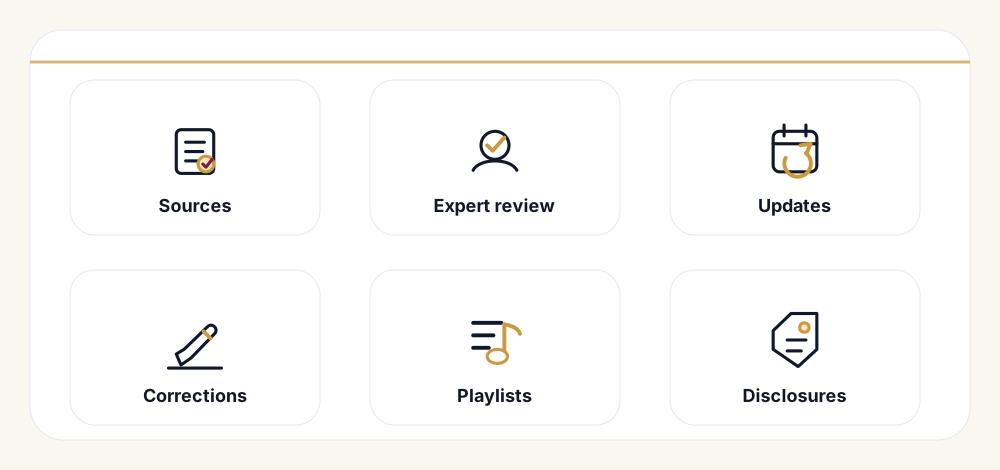
What Ballroom Pages covers
Ballroom Pages focuses on practical ballroom and partner dance education:
- Beginner Guides for new dancers.
- Dance Styles guides for Waltz, Tango, Foxtrot, Rumba, Cha Cha, Swing, Salsa, Argentine Tango, and related dances.
- Music & Timing resources, including count patterns, tempo references, and playlists.
- Wedding Dance planning and first-dance guidance.
- Social dance etiquette and partner-dance confidence.
- Ballroom Technique, including frame, posture, lead and follow, footwork, timing, and connection.
- Gear guides for dance shoes, practice wear, and related resources.
- Ballroom Dance Glossary definitions for ballroom terms.
- Competition explainers when official sources and expert review are available.
Ballroom Pages should link related topics together so readers can move from a beginner explanation to the next useful guide.
What Ballroom Pages does not do
Ballroom Pages does not replace a qualified dance teacher, medical professional, legal advisor, financial advisor, or safety professional.
Ballroom Pages does not guarantee that a reader will master a dance in a specific time. Dance progress depends on instruction, practice, body awareness, partner connection, music, and context.
Ballroom Pages does not present one studio, syllabus, teacher, community, or competition body as universal unless a source clearly supports that claim.
Ballroom Pages does not publish fake instructor quotes, fake reviewers, fake credentials, fake testimonials, fake playlist data, fake product testing, or fake event information.
Ballroom Pages is not being rebuilt as a marketplace, directory, event listing, shop, cart, login, or listing-page experience. Those old patterns should not define the editorial site.
How we create guides
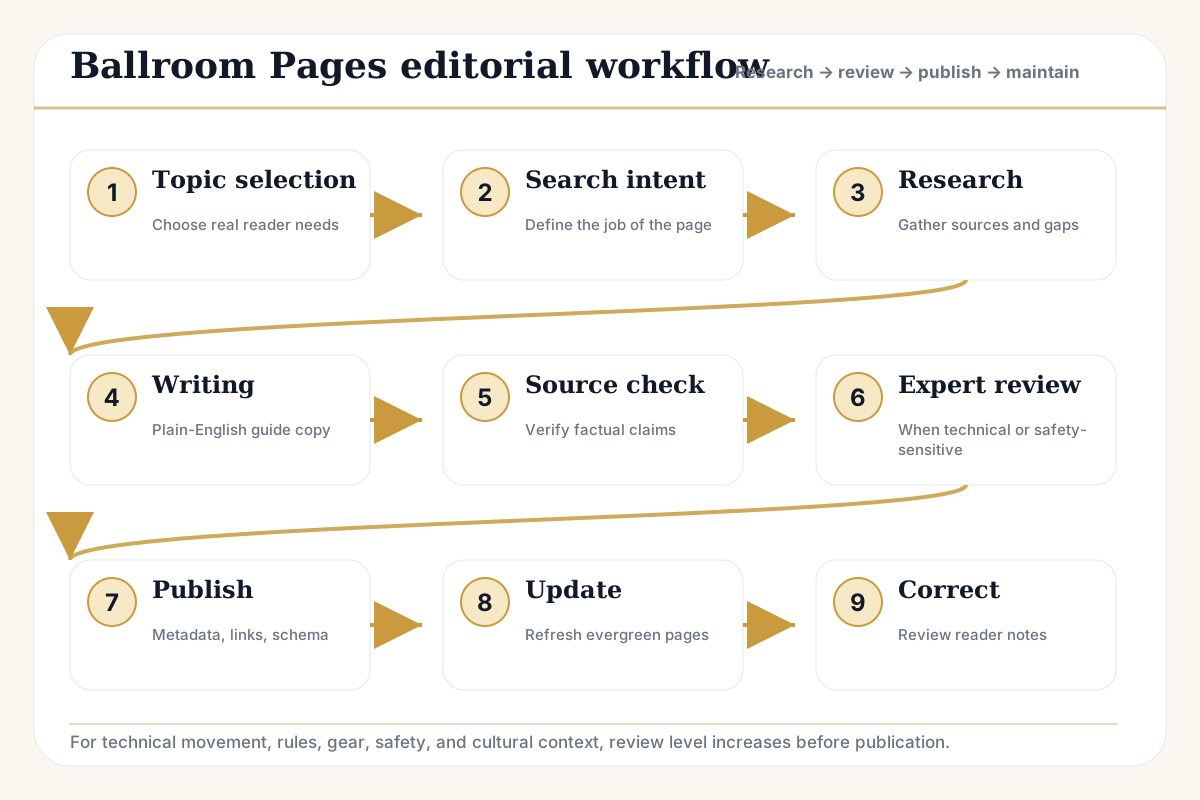
Ballroom Pages guides should follow a consistent editorial workflow.
| Step | What happens |
|---|---|
| 1. Topic selection | Choose topics that help real readers, such as beginners, wedding couples, social dancers, and dance students. |
| 2. Search intent review | Clarify whether the page should define, compare, teach, help plan, explain music, or support a purchase decision. |
| 3. Research | Gather official sources, credible dance education references, expert notes, original observations, and competing-page gaps. |
| 4. Writing | Write in plain English with short paragraphs, useful examples, and clear next steps. |
| 5. Source check | Verify factual claims, timing claims, competition references, history, cultural context, and product claims. |
| 6. Expert review when needed | Route technique, step tutorials, competition, safety, wedding, gear, and advanced content to appropriate reviewers. |
| 7. Media review | Check images, diagrams, videos, and playlist embeds for accuracy, accessibility, rights, and clarity. |
| 8. Publish | Add metadata, internal links, schema, alt text, dates, and source notes. |
| 9. Update | Review evergreen content periodically and update faster when information changes. |
| 10. Correct | Review reader corrections and update pages when necessary. |
Research and source standards
Ballroom Pages uses different sources depending on the type of claim.
For dance style and technique content, preferred sources include official dance organizations, syllabus references, experienced instructors, dance education publishers, books, original demonstrations, and expert review.
For competition content, preferred sources include current official rulebooks, competition organizations, governing bodies, and experienced competitors or instructors.
For history and cultural context, preferred sources include cultural institutions, official heritage references, academic or reputable historical sources, and community-informed dance education sources.
For music and timing content, preferred sources include official competition tempo references, reputable dance music resources, instructors, original listening notes, and verified playlist data. See the Ballroom Dance Tempo Chart for tempo references.
For gear content, preferred sources include product specifications, manufacturer information, expert fit guidance, original testing when available, and clearly disclosed affiliate methodology.
When sources disagree, Ballroom Pages should explain the uncertainty in beginner-friendly language instead of forcing a false universal answer.
Expert review standards
Ballroom Pages should only use “expert reviewed,” “instructor reviewed,” “medically reviewed,” “legally reviewed,” or similar labels when a real, verified person has reviewed the content and their scope is clear.
A page may say “review pending” only when that is true and visible as an editorial status, not as a substitute for actual review.
Reviewers should be listed with verified names, roles, relevant experience, and review date only after those details are confirmed.
Technique-heavy, safety-sensitive, competition, gear, and product claims need stronger review than basic overview content.
Review levels by content type
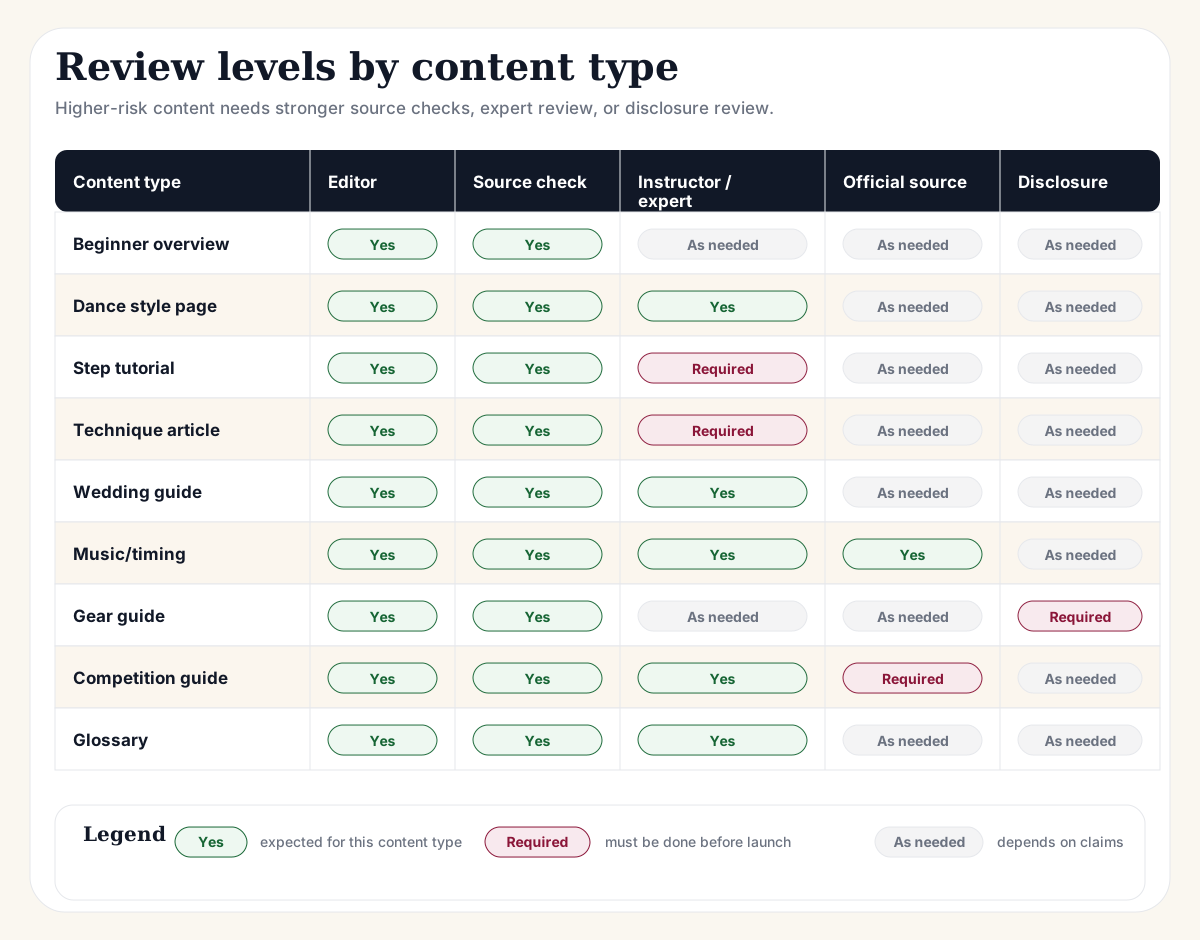
| Content type | Minimum editorial review | Higher review required when | Suggested page label |
|---|---|---|---|
| Beginner overview | Editor review + source check | The page includes technical movement, safety, or gear claims | Edited and source checked |
| Dance style page | Editor review + instructor or experienced dancer review | The page teaches steps, technique, cultural context, or competition details | Instructor review pending or verified reviewer label |
| Step tutorial | Instructor review + diagram/video verification | The page teaches footwork, counts, holds, turns, dips, or lifts | Instructor reviewed only after verified review |
| Technique article | Expert review mandatory | Always, especially for frame, posture, Cuban motion, rise and fall, dips, lifts, injury-prone movement | Expert reviewed only after verified review |
| Wedding guide | Editor review + instructor or wedding dance specialist review | The page recommends choreography, timelines, lessons, or song-to-style matching | Reviewed by wedding dance specialist when verified |
| Music/timing article | Editor review + source check; instructor review for technical timing | The page includes count, tempo, competition tempo, playlist, or song-fit claims | Timing review pending or verified reviewer label |
| Gear guide | Editorial methodology + disclosure review | The page includes product recommendations, affiliate links, fit, price, or safety claims | Methodology and disclosure included |
| Competition guide | Official source check + competitor/instructor review | Always when describing rules, levels, categories, or requirements | Official source checked plus reviewer if verified |
| Glossary | Editor review + periodic expert review | The term is technical, syllabus-specific, or often misunderstood | Plain-English definition; review status shown |
Dance technique and safety standards
Dance technique content needs care. A short beginner explanation of posture is not the same as a technical tutorial for dips, lifts, frame, Cuban motion, Argentine Tango connection, rise and fall, or competition movement.
Ballroom Pages technique pages should:
- Use leader/follower language unless a specific source requires different wording.
- Explain technical terms in plain English.
- Avoid promising quick mastery.
- Distinguish social, wedding, syllabus, and competition contexts.
- Include diagrams or videos only when they are accurate and reviewed.
- Avoid unsafe instructions for dips, lifts, tricks, or injury-prone movement without expert review.
- Remind readers that a qualified instructor can correct posture, balance, timing, and partner connection in person.
If a technique article has not yet been reviewed, the page should say so.
How we curate music, timing, and playlists
Music is one of Ballroom Pages’ most important preserved assets. The original site included a Music page and playlist pages across Telegram, Spotify, Apple Music, and YouTube/YouTube Music. The rebuilt site should organize that legacy into a clearer Music & Timing library.
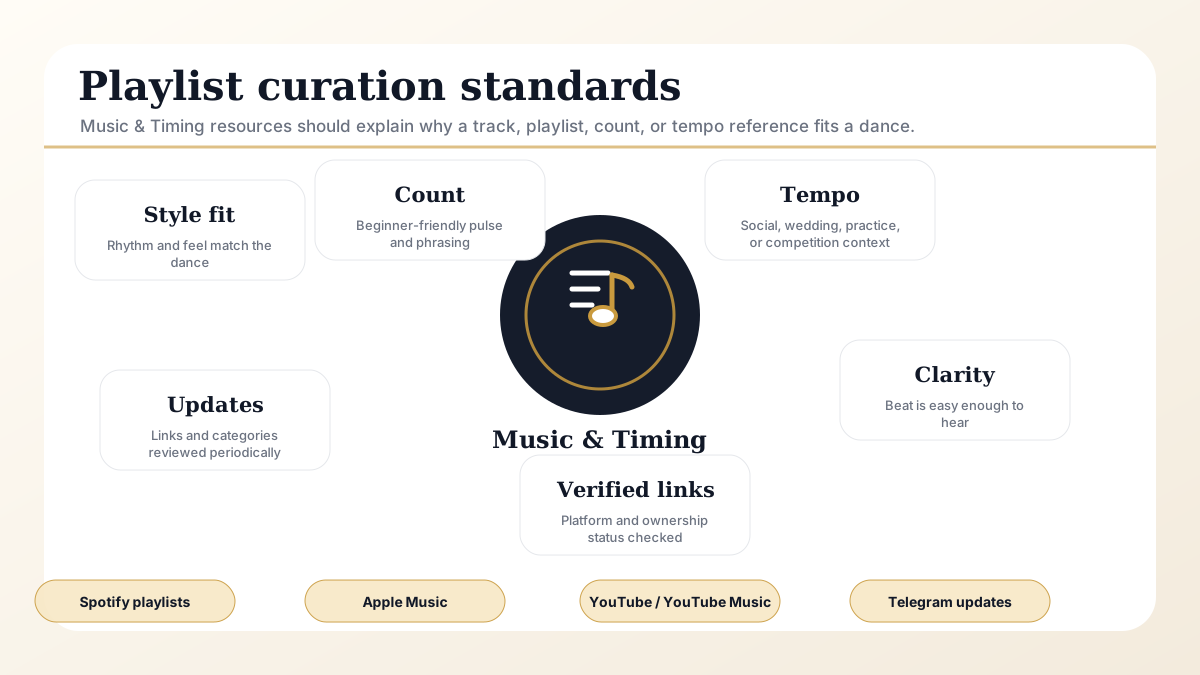
Ballroom Pages playlist and timing recommendations should consider:
- Dance style fit: whether the song’s rhythm and feel match the intended dance.
- Count and timing: whether the music supports beginner counting or more advanced interpretation.
- Tempo context: whether the song is useful for social, wedding, practice, or competition-style learning.
- Musical clarity: whether beginners can hear the beat, phrasing, and rhythm.
- Source accuracy: whether the playlist link, platform title, and ownership are verified.
- Update status: whether links are still live and playlists remain relevant.
- Context: whether a song is a practice example, social suggestion, wedding possibility, or competition-style reference.
Ballroom Pages should not list songs or playlists as “perfect for” a dance without explaining why they fit. It should also avoid fake song examples, fake playlist data, and unverified ownership claims.
Original Ballroom Pages playlist ecosystem
The original Ballroom Pages site included a music and playlist ecosystem that should be preserved, verified, and reorganized.
-
Music & Timing hub
The new editorial home for music, timing, tempo, counts, playlists, and song-to-style guidance.
-
Spotify playlists
Use verified Spotify playlist links after ownership and URL checks. Keep old Spotify playlist routes as redirects or references only if they map cleanly to the new Music & Timing hub.
Verification pending. Verified Spotify playlist links go here.
-
Apple Music playlists
Use verified Apple Music links after ownership and URL checks. Do not claim official ownership until account control is confirmed.
Verification pending. Verified Apple Music playlist links go here.
-
YouTube / YouTube Music playlists
Use verified YouTube or YouTube Music playlist links after ownership and URL checks. Where videos are embedded, use accurate video metadata and avoid fake thumbnails.
Verification pending. Verified YouTube / YouTube Music playlist links go here.
-
Telegram BallroomPages Music
The Telegram channel should be linked only after ownership and moderation status are verified.
Verification pending. Verified Telegram BallroomPages Music link goes here.
Ballroom Pages is preserving its original playlist ecosystem and rebuilding it into clearer Music & Timing resources.
Image, video, and diagram standards
Images and diagrams should help readers understand the topic. They should not be generic decoration.
Ballroom Pages media standards:
- Use original, licensed, or clearly permitted imagery when possible.
- Use custom diagrams for footwork, timing, posture, and connection.
- Avoid AI-generated images for technical step instruction unless the image is manually corrected and reviewed.
- Avoid fake staff portraits, fake reviewer headshots, fake event photos, fake product testing images, and fake testimonials.
- Use descriptive alt text and captions where helpful.
- Add explicit image dimensions to prevent layout shift.
- Do not lazy-load the hero image.
- Lazy-load below-the-fold images.
- Add captions, transcripts, or supporting text for instructional videos.
- Use VideoObject schema only when valid video metadata exists.
Product, gear, affiliate, and sponsorship standards
Gear content should be educational first. Ballroom Pages should explain how to choose ballroom shoes, practice shoes, attire, bags, books, or tools before recommending products.
Affiliate or sponsorship standards:
- Disclose affiliate links clearly before the first affiliate link.
- Do not let affiliate relationships determine editorial recommendations.
- Do not use “best” claims unless the methodology supports them.
- Do not publish fake product testing.
- Explain what was tested, researched, compared, or not tested.
- Avoid stale prices or availability claims unless they are automatically updated or checked often.
- Label sponsored content clearly.
- Separate editorial guidance from advertising.
AI-assisted content policy
Ballroom Pages may use AI-assisted tools to organize research notes, draft outlines, suggest plain-language explanations, create placeholder image briefs, or check clarity. AI tools should not replace editorial judgment, source verification, expert review, or owner/legal review.
AI-assisted content standards:
- Do not invent sources, quotes, reviewers, credentials, videos, playlists, song examples, product tests, or testimonials.
- Verify factual claims against reliable sources.
- Use human editorial review before publication.
- Use expert review when the content type requires it.
- Disclose AI involvement when it materially affects published content and disclosure is appropriate.
- Do not use AI-generated images for technical dance instruction unless reviewed and corrected.
- Do not publish AI-generated portraits as real people.
Updates and evergreen review process
Ballroom Pages should show a visible updated date on evergreen guides.
| Content type | Suggested review rhythm |
|---|---|
| Beginner guides | At least annually or when site standards change |
| Dance style pages | At least annually; sooner if corrections or expert notes arrive |
| Technique articles | Before launch and after expert feedback |
| Music/timing pages | At least annually; sooner for broken links, tempo references, playlist changes, or updated music resources |
| Wedding guides | At least annually; sooner for planning templates or checklist changes |
| Gear guides | More frequently, especially if products, prices, links, availability, or affiliate relationships change |
| Competition guides | Whenever official rules, categories, or governing-body references change |
| Glossary | Periodically, especially for terms linked across many pages |
| Editorial Policy | Whenever standards, ownership, disclosure, AI use, or correction processes change |
Pages should not display a fake “updated” date when no meaningful review occurred.
Corrections policy
Ballroom Pages welcomes corrections, source notes, and clarity suggestions.
What readers can report
- Factual errors.
- Outdated information.
- Broken links or playlist embeds.
- Misleading wording.
- Source conflicts.
- Incorrect dance terminology.
- Unsafe or unclear technique wording.
- Affiliate or sponsorship disclosure concerns.
- Accessibility issues.
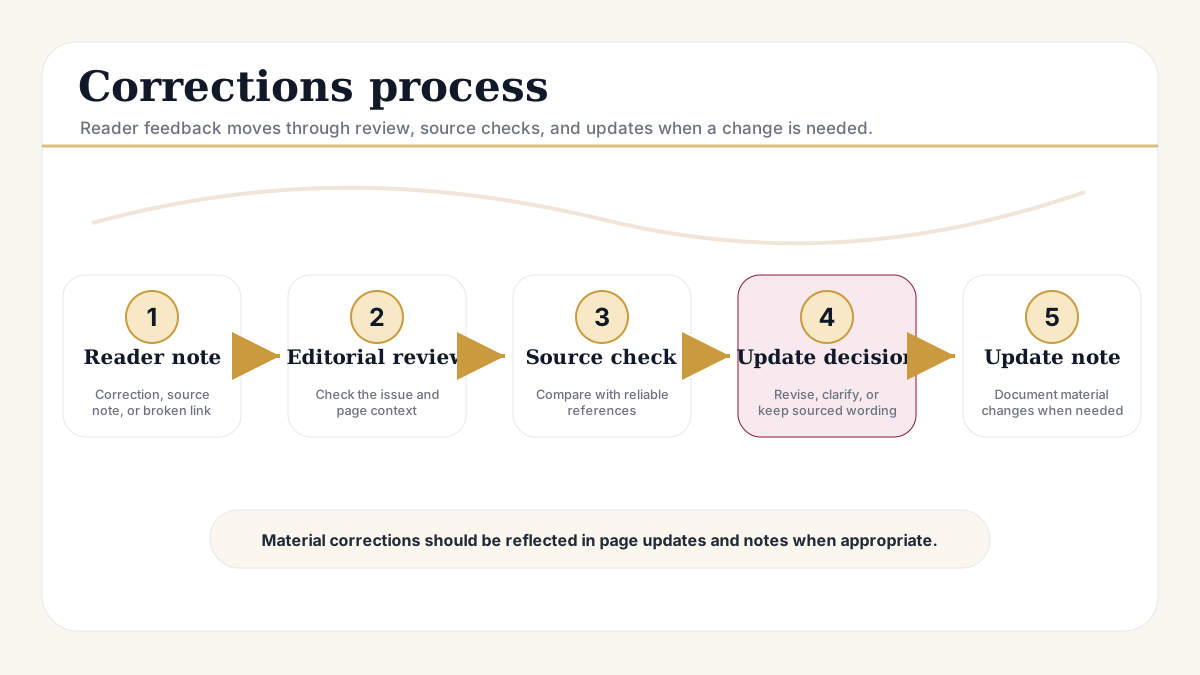
How corrections are handled
- The reader submits a correction through the contact page.
- Ballroom Pages reviews the report.
- The relevant claim is checked against sources, expert input, or project data.
- If a correction is needed, the page is updated.
- If the correction materially changes the meaning of the page, an update note may be added.
- If the correction cannot be verified, Ballroom Pages may update wording for clarity or keep the original claim with stronger sourcing.
Correction contact: please use the contact Ballroom Pages page.
Contributor and reviewer standards
Ballroom Pages may work with editors, instructors, competitors, social dancers, wedding dance specialists, gear reviewers, and subject-matter reviewers.
Contributor and reviewer standards:
- Relevant experience should be verified before publication.
- Credentials should be specific and not inflated.
- Conflicts of interest should be disclosed.
- Contributors should use leader/follower language unless a specific rule or source requires otherwise.
- Reviewers should review within their scope.
- No contributor or reviewer should be represented as a legal, medical, safety, or product-testing authority unless that role is verified.