Frame
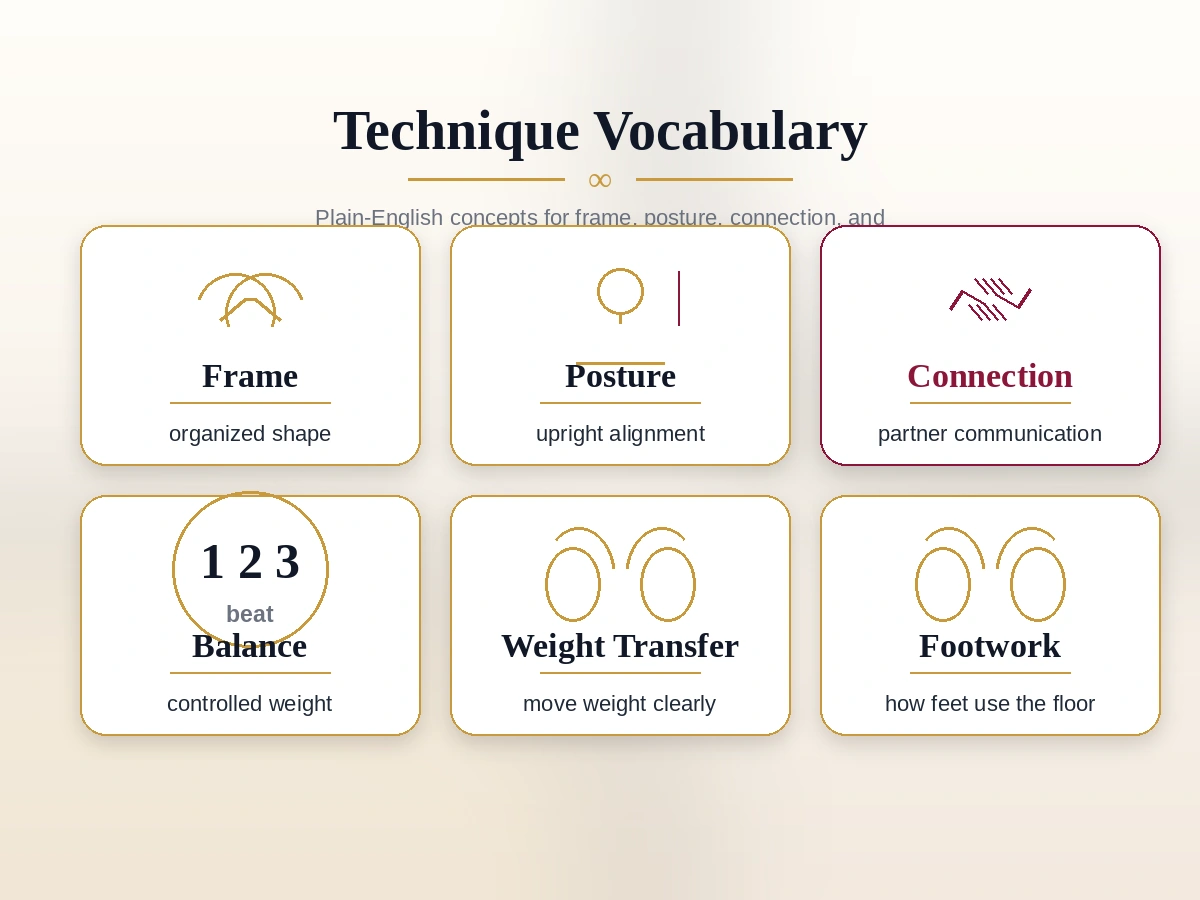
Frame is one of the first words many ballroom beginners hear. It means the shape and tone of your upper body and arms when you dance with a partner. A useful frame is not stiff. It is organized enough that your partner can feel direction and timing, but relaxed enough that you can move.
Example: “The instructor asked us to keep our frame lifted so we could turn more clearly.”
Timing
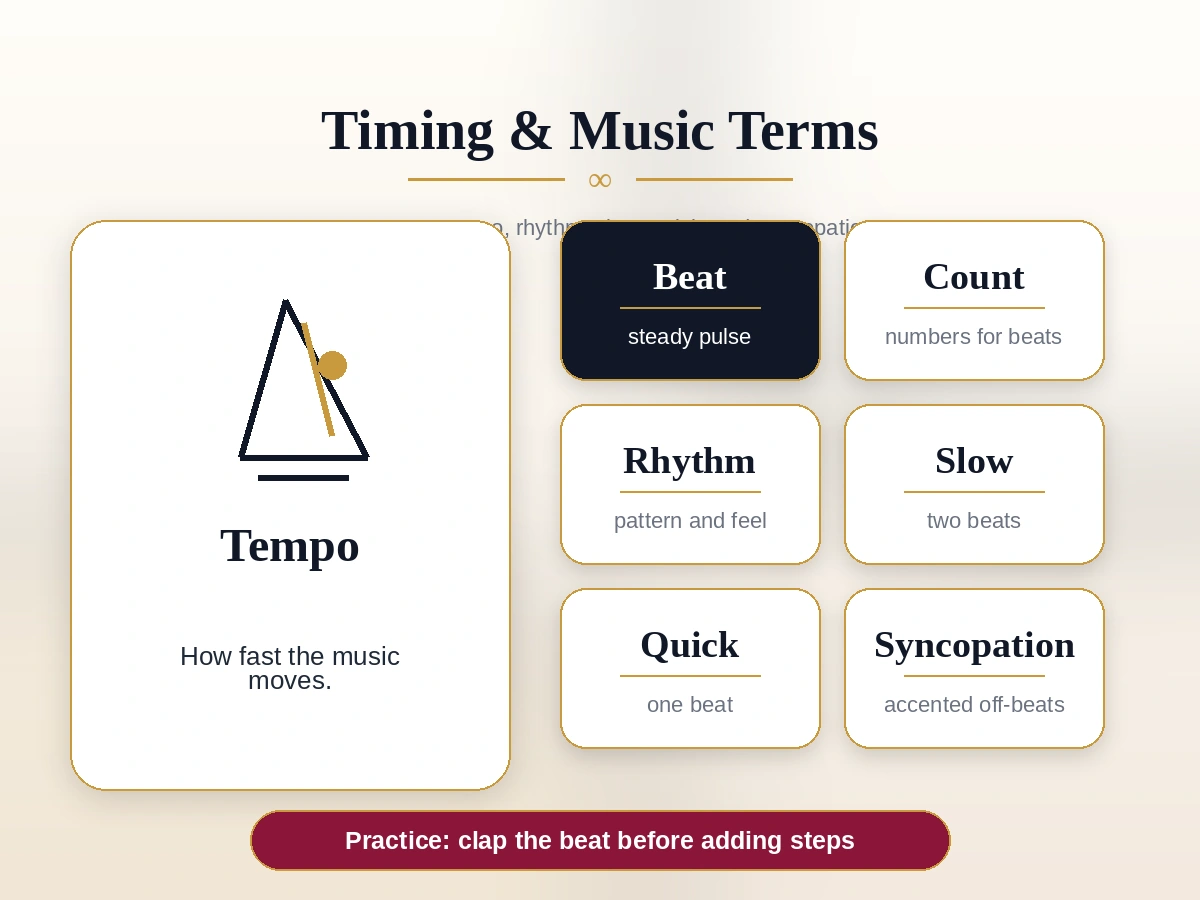
Timing means matching your steps to the music. It is often more important than knowing many patterns. A beginner who can dance one basic step on time is easier to dance with than a beginner who knows five patterns but cannot hear the beat.
Example: “We practiced the Rumba basic slowly so we could stay on time.”
Promenade position
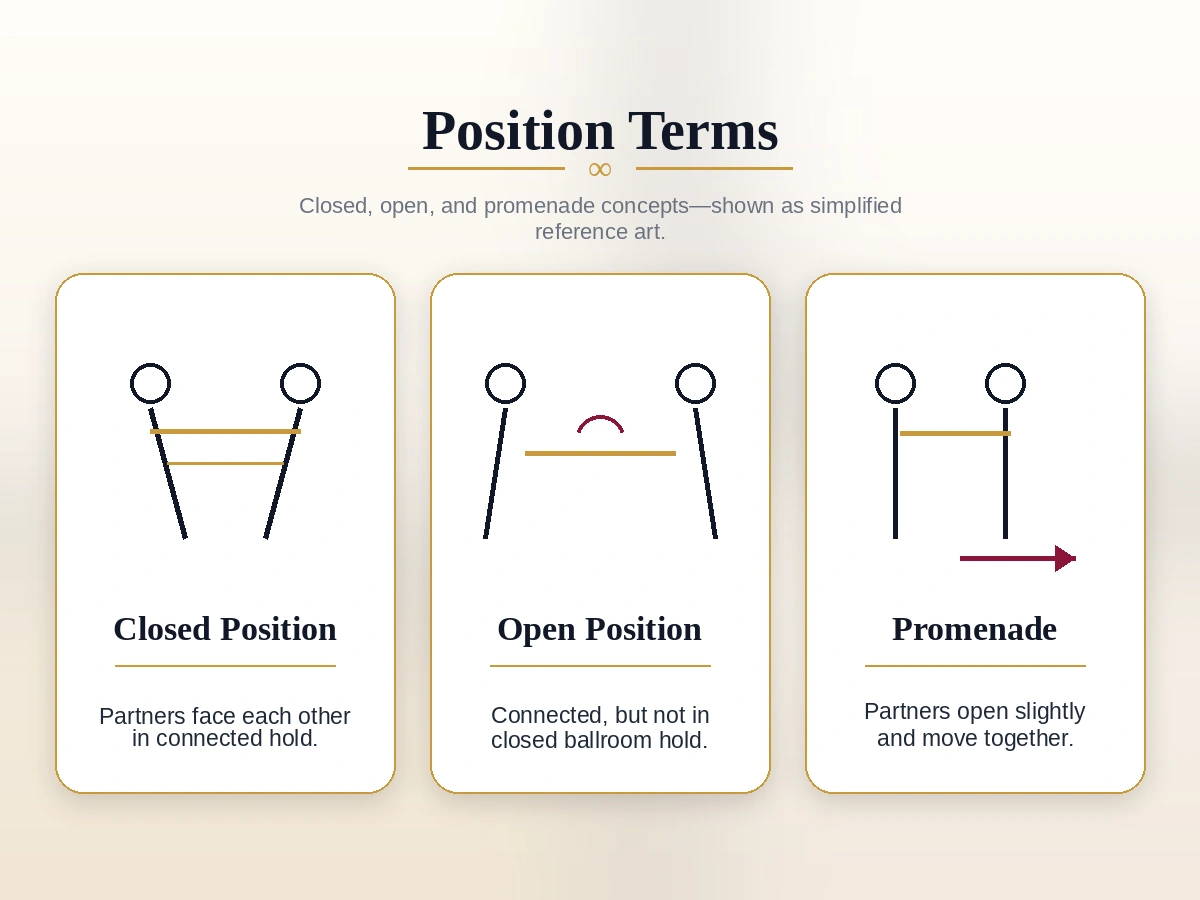
Promenade position is a partner position where both dancers open slightly and move in the same general direction. You do not need to master it on day one, but the term appears in Waltz, Tango, Foxtrot, and other dance contexts.
Example: “The couple moved from closed position into promenade.”
Cuban motion
Cuban motion is a Latin/Rhythm body action often associated with dances such as Rumba and Cha Cha. For beginners, the safest explanation is simple: it is not just “wiggling your hips.” It comes from weight transfer, leg action, body organization, and timing. Detailed instruction should be reviewed by a qualified ballroom instructor.
Example: “The teacher introduced Cuban motion slowly, starting with weight changes.”
Syllabus
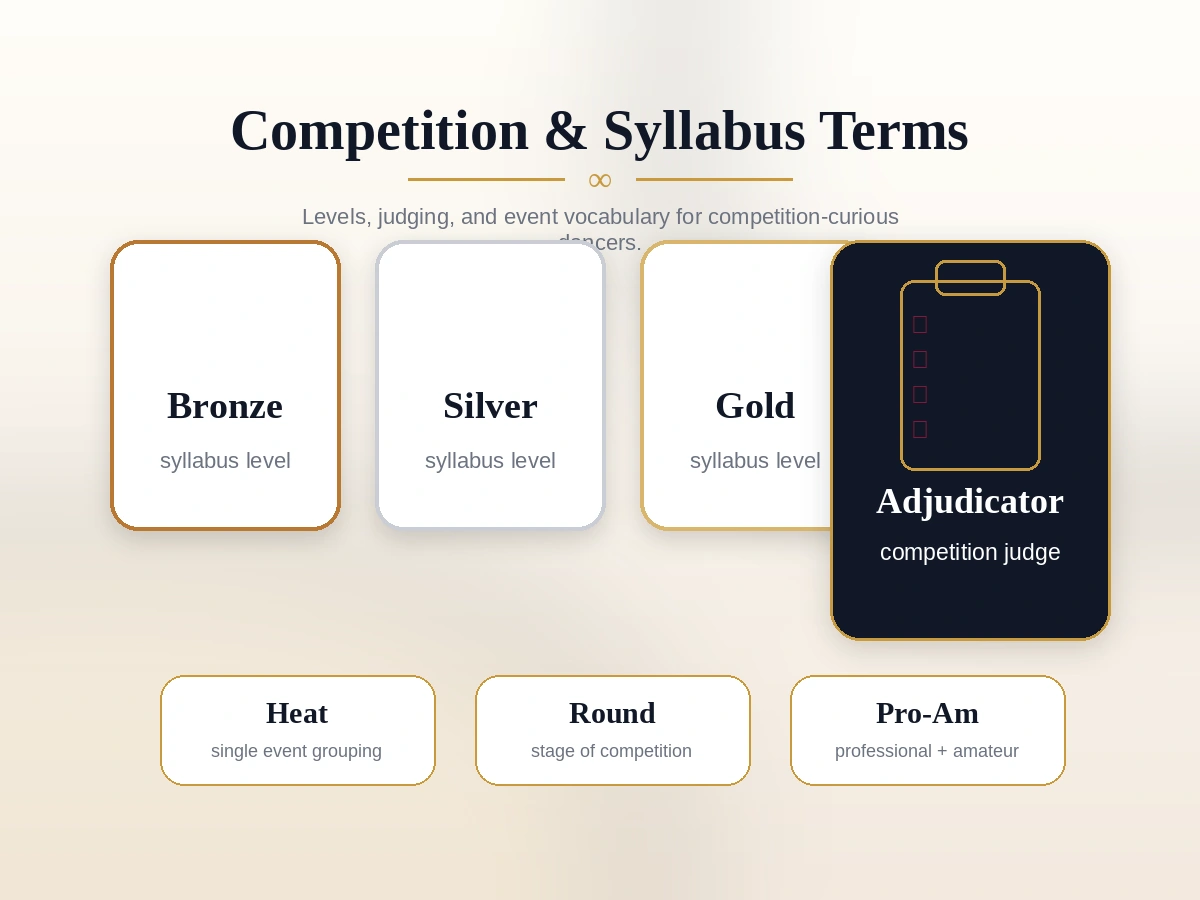
A syllabus is an organized list of figures or patterns used for teaching, exams, and competition levels. Many dancers first hear syllabus levels as bronze, silver, and gold.
Example: “The class worked on bronze syllabus figures before adding open choreography.”
Line of dance
Line of dance is the counterclockwise traffic flow around the ballroom floor. It helps couples travel safely in dances such as Waltz, Tango, and Foxtrot.
Example: “The instructor reminded us to move with the line of dance instead of cutting across the floor.”