
Start Here
Beginner Ballroom Dance Guides
New to ballroom dance? Start here. These guides help you understand the basics, choose your first dance, hear the music, prepare for lessons, practice with confidence, and learn the terms without feeling overwhelmed.
Clear pathways. Plain-English terms. Practical next steps for beginners, wedding couples, and social dancers.
The path
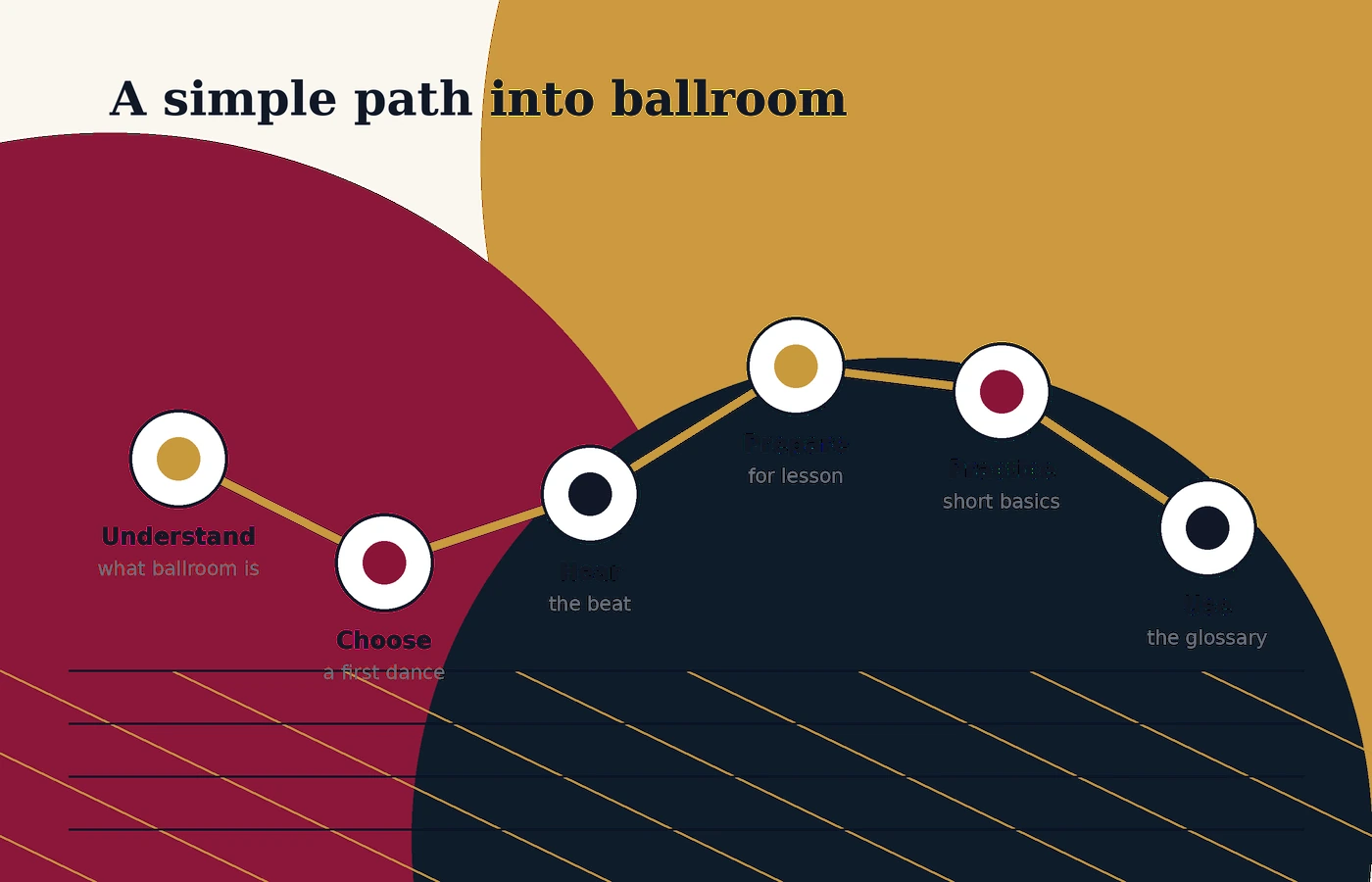
A calm first path into ballroom dance.
Six steps that work for almost every beginner. You can move through them at your own pace.
-
Understand what ballroom is
Start with the big picture: ballroom is partner dancing built around music, timing, movement, and connection. Read the definition guide.
-
Choose a beginner-friendly dance
Pick a first style based on your goal, music, comfort level, and whether you are learning for social dancing, lessons, or a wedding. Compare beginner dances.
-
Learn to hear the beat
Counting music helps every dance. Begin with beat, count, rhythm, and tempo before worrying about advanced technique. Learn to count music.
-
Prepare for a first lesson
Know what to wear, whether you need a partner, what shoes are safe, and what usually happens in a beginner class or private lesson. First lesson guide.
-
Practice short, repeatable basics
A focused 10–15 minute practice is more useful than trying to memorize every dance. Try the practice routine.
-
Use the glossary when terms get confusing
Frame, lead/follow, count, tempo, closed position, and line of dance become easier once you have simple definitions. Open the glossary.
Choose your starting goal
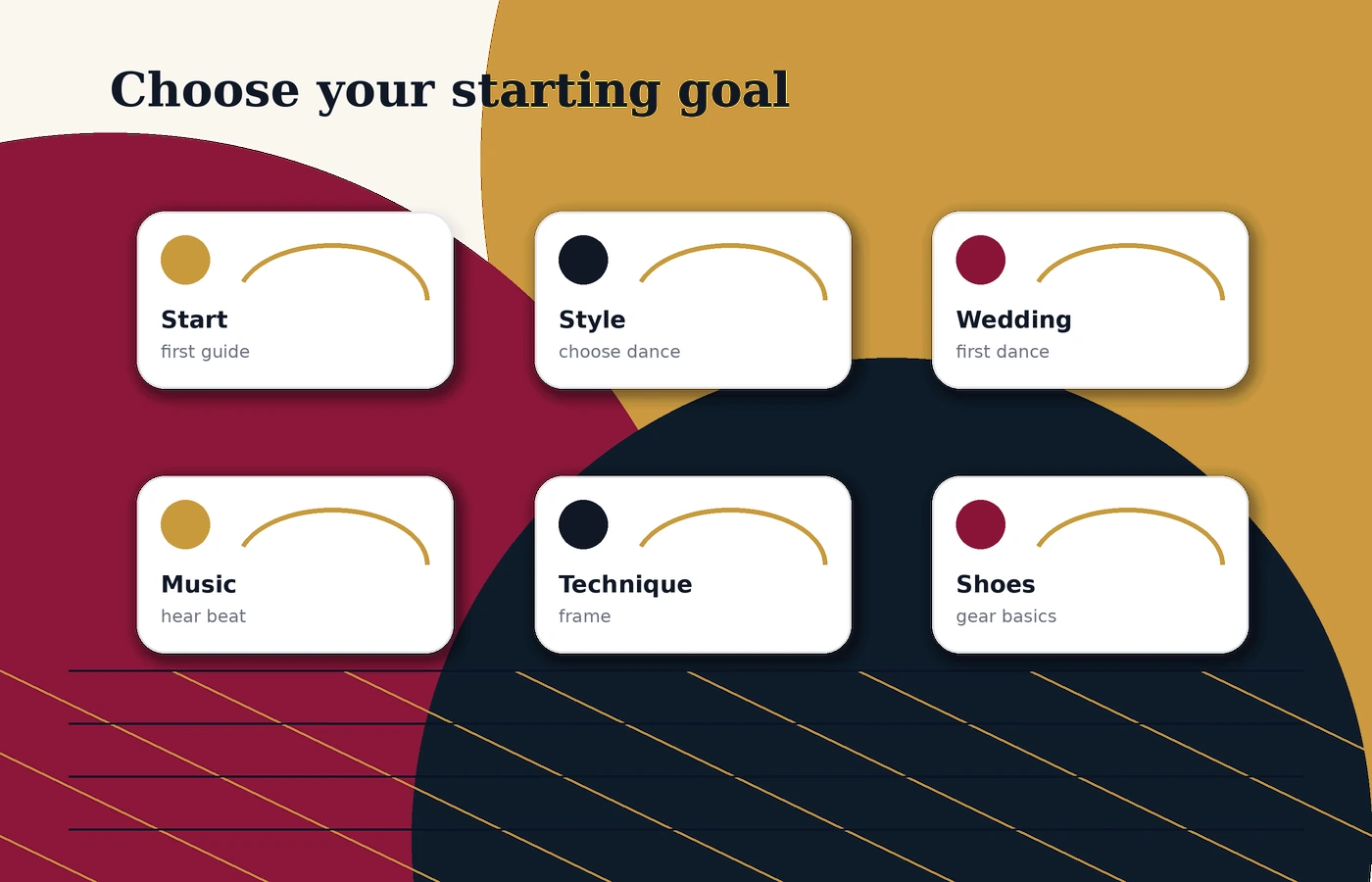
Pick the path that matches your reason for starting.
The right first step depends on why you are learning. Choose the goal that fits and follow the guide tailored to it.
-
I’m brand new
Start with Ballroom Dance for Beginners. It gives you the practical overview: what to learn first, what to expect, and what not to worry about yet.
Start here -
I’m planning a wedding dance
Start with the Wedding Dance Guide. You will learn how song choice, timing, shoes, dress, lessons, and practice all fit together.
Plan your first dance -
I want to choose a dance style
Start with Best Ballroom Dances for Beginners, then compare the full Dance Styles hub.
Choose a dance -
I struggle with timing or music
Start with How to Count Ballroom Dance Music. Timing is one of the best early skills because it helps every style.
Learn timing -
I want better posture or frame
Start with Lead and Follow and Frame and Posture. These topics help your dancing feel clearer and more comfortable.
Improve basics -
I need shoes or clothing help
Start with Ballroom Dance Shoes for Beginners. The first goal is safety and comfort, not buying the most advanced gear.
Read shoe guide -
I want to practice at home
Start with the Beginner Practice Routine. Keep practice short, simple, and repeatable.
Practice today


Essential beginner guides
The 11 guides every beginner should bookmark.
A curated short list. Each guide opens deeper into one part of the learning path.
Best beginner dances
Beginner-friendly dances to choose from.
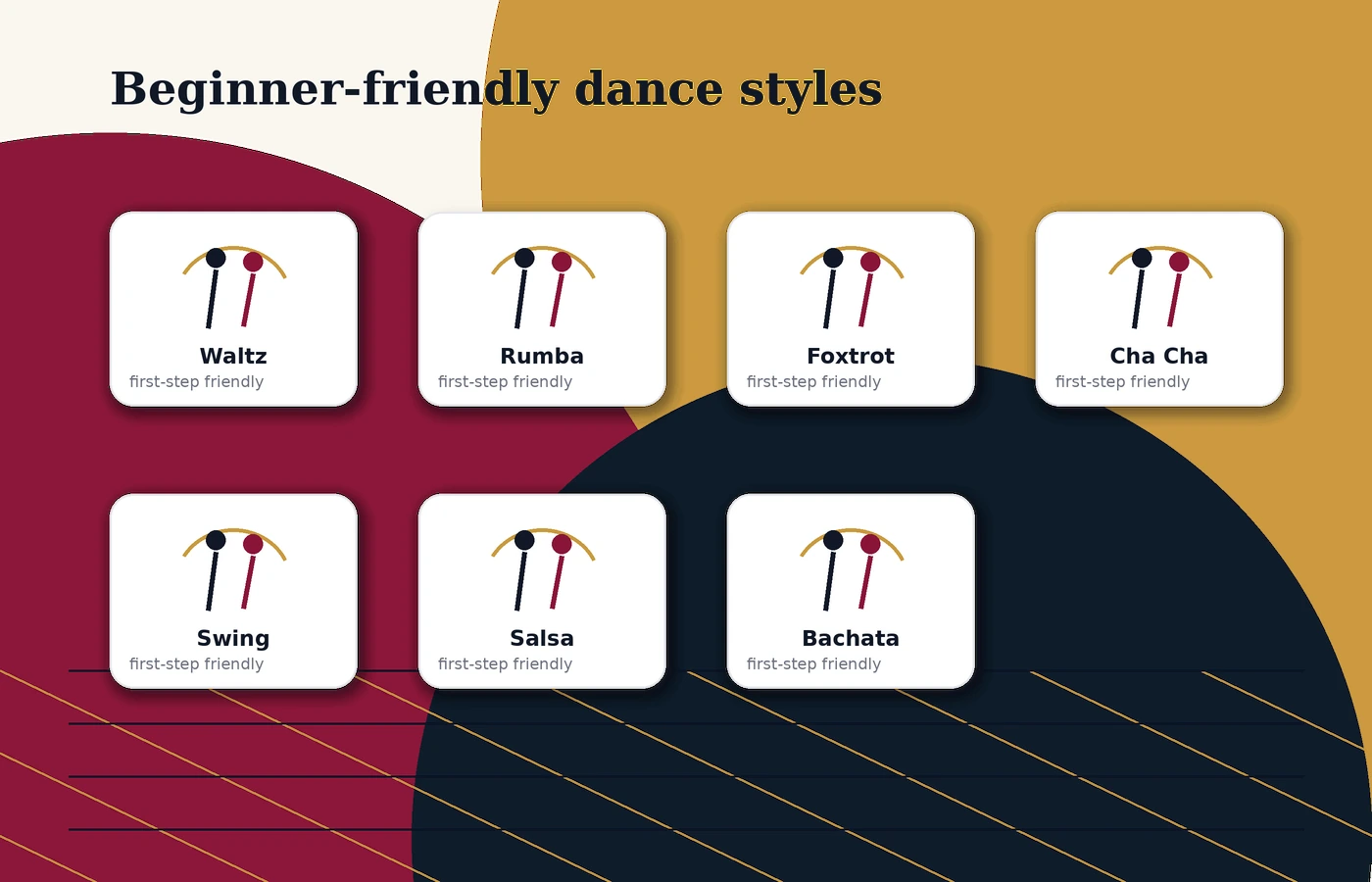
You do not have to choose the “perfect” first dance. A good beginner dance is one that gives you useful timing, simple patterns, and a reason to keep practicing.
-
Waltz
Elegant and smooth, with a clear 1-2-3 count.
-
Rumba
Slower, expressive, and useful for many romantic songs.
-
Foxtrot
Smooth and social, often useful for jazz, standards, and easy-listening music.
-
Cha Cha
Playful and rhythmic.
-
East Coast Swing
Upbeat, social, and fun.
-
Salsa
Popular socially and often taught in ballroom studios.
-
Bachata
Simple basic rhythm and strong social-dance appeal.
First lesson
First ballroom lesson: what to expect.
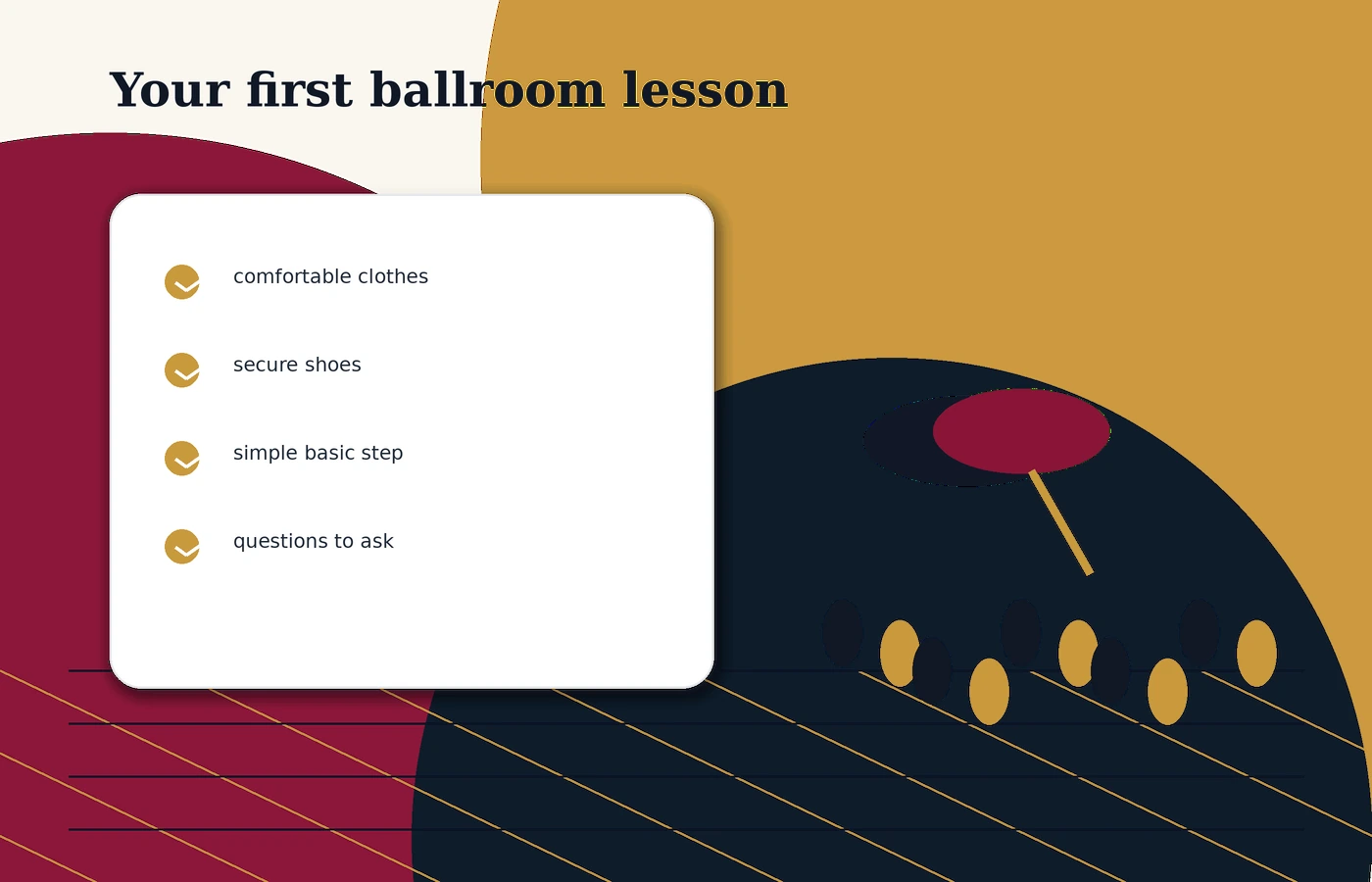
Your first lesson does not need to be perfect. Most beginners work on a basic step, how to stand, how to connect with a partner or instructor, and how to move to music.
Wear comfortable clothes that let you move. Bring shoes that stay secure on your feet and do not grip the floor too aggressively. You usually do not need a partner. In private lessons, the instructor can work with you directly. In many group classes, partners may rotate, although comfort and consent should always matter.
First-lesson checklist
- What to wear
- Whether you need a partner
- What shoes to bring
- What usually happens
- What to ask the instructor
- What not to worry about yet
Music & timing
Hear the beat before you memorize patterns.
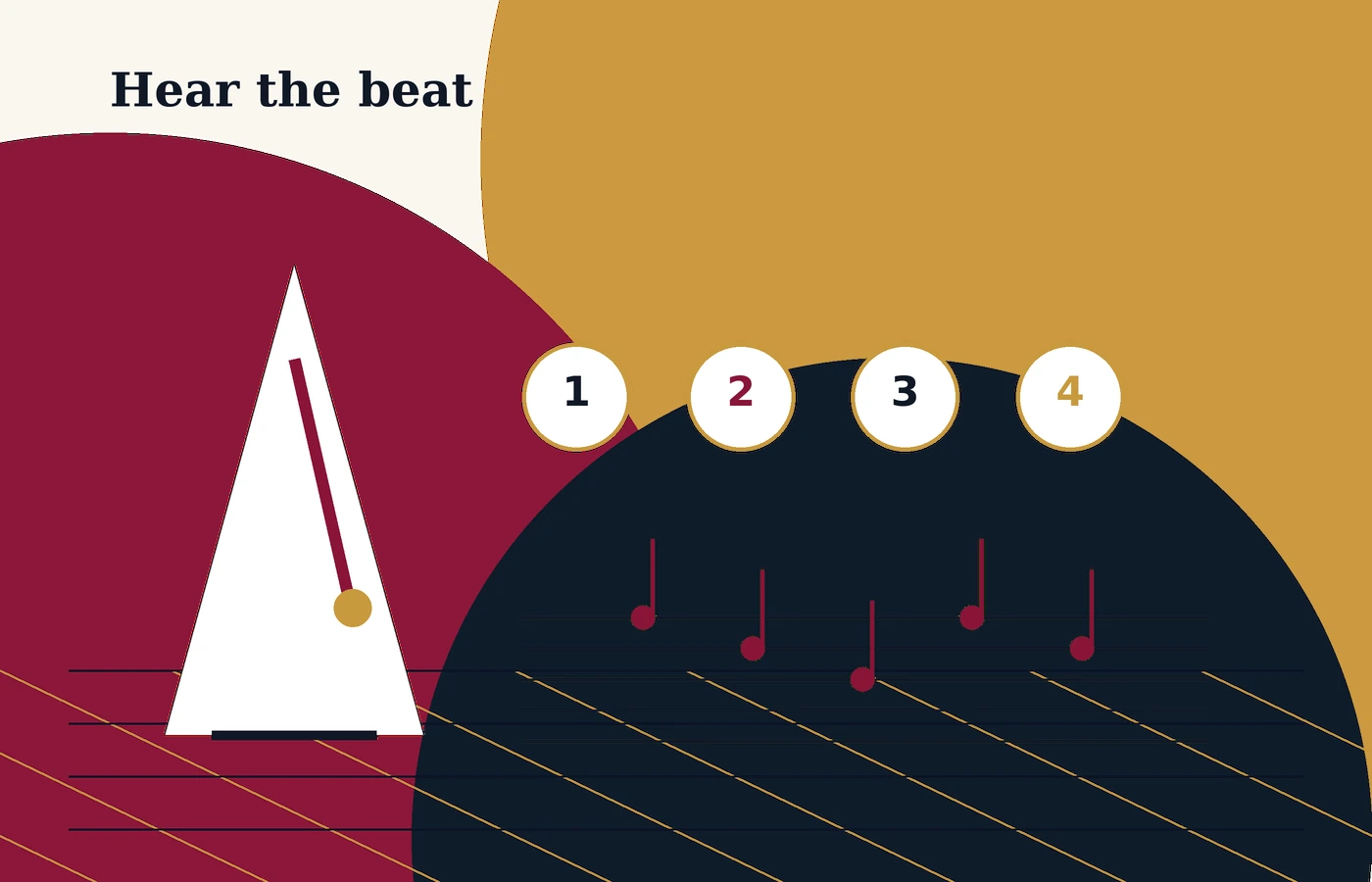
Timing is one of the most useful beginner skills. Before memorizing many patterns, learn to hear the beat. Then learn how your dance counts that beat.
A Waltz often feels like 1-2-3. Foxtrot may use slow and quick counts. Cha Cha has a syncopated “cha-cha-cha” feeling. Rumba is slower and more grounded. Swing has bounce and pulse.
Technique basics
Five foundations beginners actually need.
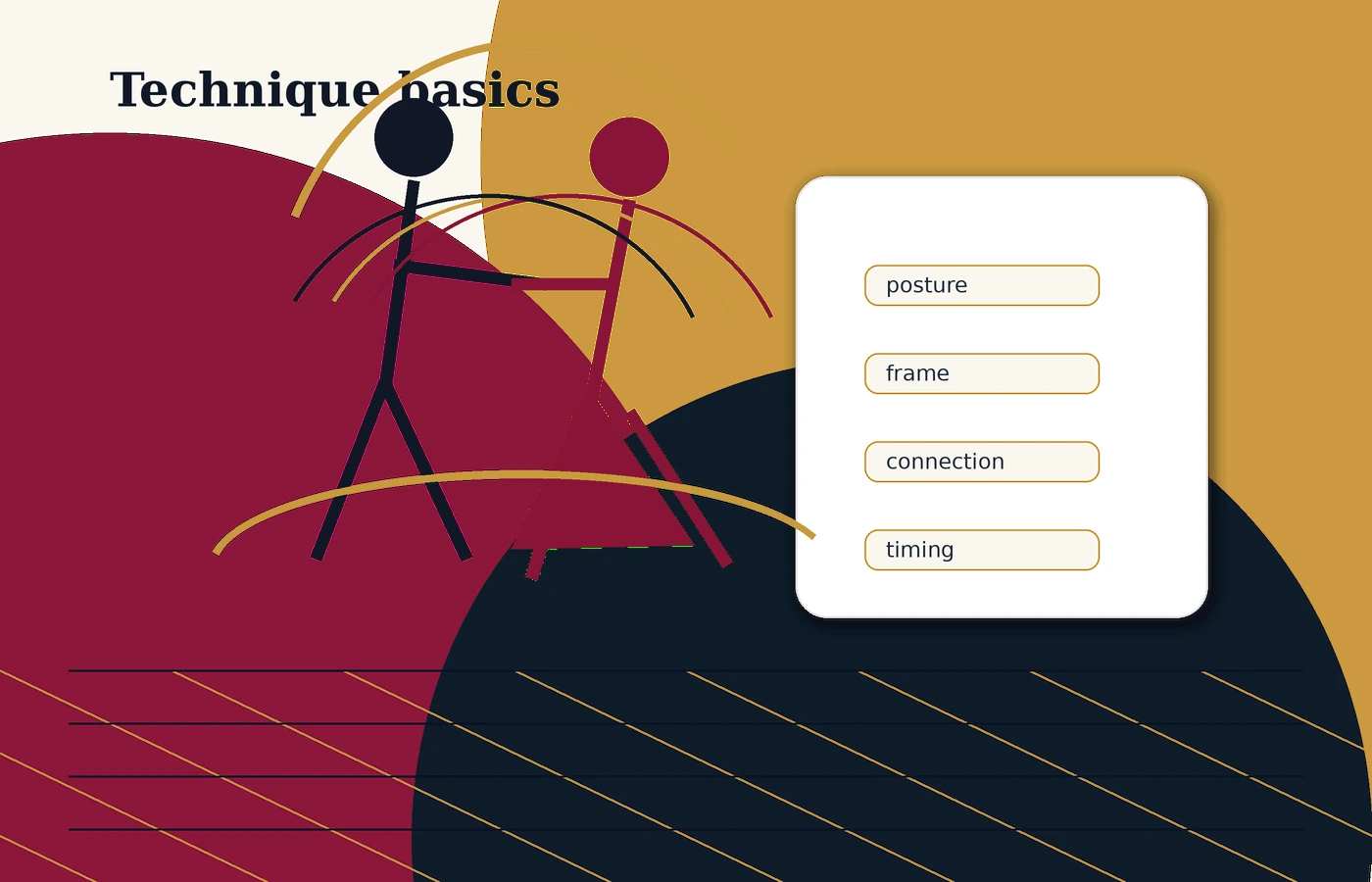
Technique can sound intimidating, but beginners only need a few foundations at first.
- Posture helps you stay balanced.
- Frame helps you communicate with a partner.
- Connection helps leader and follower feel timing and direction.
- Footwork helps movement become clearer and safer.
- Practice helps these ideas become natural.
Wedding dance
Planning a wedding dance? Start with the song.
If you are learning for a wedding, start with your song, timeline, comfort level, shoes, dress, and lesson plan. Your first dance does not need to be complicated to feel meaningful.
Good wedding dance choices often include Waltz, Rumba, Foxtrot, East Coast Swing, or Nightclub Two Step depending on the song. The most important goal is to look comfortable together and move confidently through the music.
Shoes, clothing & gear
Comfort and safety first. Specialized gear later.
For your first lesson, focus on safe movement. Wear clothes that let you raise your arms, rotate, step backward, and move comfortably. Avoid shoes that slip off, grip the floor heavily, or make balance difficult.
Ballroom shoes can help later because they are designed for dance floors, but beginners do not need to make gear the first obstacle. Start with comfort and safety, then learn what kind of shoes fit your dance goals.
Common beginner mistakes
What to avoid as you start.

Trying to learn too many dances at once.
Pick one or two beginner dances first; add more later.
Ignoring timing and only memorizing steps.
Drill counting first; the patterns make sense once the music does.
Looking down constantly.
Lift your head, lengthen the spine, and trust the lead-follow conversation.
Overthinking patterns before posture and frame.
Posture and frame are the foundation; build them before adding complex figures.
Wearing shoes that grip, slip, or hurt.
Pick secure, comfortable shoes that move with your feet on the floor.
Expecting instant confidence.
Comfort builds over weeks, not over one lesson.
Not practicing between lessons.
Even 10 minutes a day, a few days a week, makes a noticeable difference.
Beginner practice plan
A simple 10–15 minute practice you can repeat.
Short, repeatable sessions outperform long, occasional ones. Try this practice between lessons.
-
Stand tall and relax your shoulders.
Lengthen the spine. Soft knees. Weight balanced over the balls of your feet.
-
Clap or tap the beat of one song.
Pick a song you love. Find the steady pulse and clap with it for one minute.
-
Practice your basic step slowly.
Drop the music to half speed in your head if you need to. Slow before fast.
-
Count out loud.
1-2-3 for Waltz, slow-quick-quick for Rumba, 1-2-3-4-5 with “cha-cha-cha” for Cha Cha.
-
Repeat the same movement without looking down.
Eyes up. Trust your feet to do what you have rehearsed.
-
Write down one question for your next lesson.
Bringing one specific question speeds up your progress more than asking ten vague ones.
Glossary for beginners
Eight terms every beginner should know.

These come up in nearly every beginner class. Knowing them in plain English makes everything easier to follow.
- Leader / follower
- Partner-dance roles. The leader initiates direction or timing; the follower responds through connection. These roles are not gender requirements.
- Frame
- The organized shape of the body and arms that helps partners communicate.
- Posture
- Upright, aligned body position that supports balance and movement.
- Count
- The way dancers organize music into numbers or rhythm words.
- Tempo
- The speed of the music.
- Closed position
- A classic ballroom hold where partners face each other.
- Line of dance
- The counterclockwise direction dancers usually travel around a ballroom floor.
- Syllabus
- A structured set of figures or steps used for teaching or competition levels.
Recommended next
Where to go after Start Here.
When you are ready to move beyond the basics, these are the next stops.
FAQ
Beginner ballroom dance questions, answered.
The questions readers ask most often before their first lesson.
Is ballroom dancing beginner-friendly?
Yes. Ballroom dance is one of the most beginner-friendly partner dance traditions. Group classes welcome newcomers, lessons usually start with simple patterns, and timing matters more than memorizing many steps.
What ballroom dance should I learn first?
Most beginners start with Waltz, Rumba, Foxtrot, Cha Cha, or East Coast Swing. The best first dance is the one whose music you love or that matches your goal — social dancing, weddings, or general confidence.
Do I need a partner to learn ballroom dance?
No. Group classes typically rotate partners, and private lessons are taught with an instructor, so solo beginners can absolutely start without a partner.
What happens in a first ballroom dance lesson?
You will usually work on standing well, holding a frame, hearing the beat, and dancing a simple basic step in time with music. You will not jump into competition routines. See the first lesson guide.
What should I wear to a ballroom dance lesson?
Comfortable clothes that let you raise your arms, rotate, and step backward. Bring shoes that stay secure on your feet and do not grip the floor too aggressively.
Do beginners need ballroom dance shoes?
Not at first. Safe, comfortable, secure shoes are enough for your first lessons. Dedicated ballroom shoes can help later once you have chosen a dance and know what you need. See ballroom dance shoes for beginners.
How long does it take to learn ballroom dance?
Most beginners dance simple patterns to music within a few lessons. Comfort and timing usually develop over the first few months. Mastery takes years because technique, musicality, and connection keep improving.
Is ballroom dancing hard?
The basics are friendlier than newcomers expect. The hardest part is usually not the steps — it is hearing the beat, keeping a steady frame, and trusting the lead-follow conversation.
Should I learn Waltz, Rumba, Foxtrot, or Swing first?
Pick the dance whose music you love or that fits your goal. Waltz is gentle and elegant; Rumba is romantic and slower; Foxtrot is smooth and social; Swing is upbeat and playful. See best ballroom dances for beginners.
How do I learn to count ballroom music?
Start by clapping or tapping the steady beat of a song you like, then learn how your chosen dance counts that beat — 1-2-3 for Waltz, slow-quick-quick for Rumba, and so on. See how to count ballroom dance music.
Can I practice ballroom dance at home?
Yes. Short, repeatable sessions of 10 to 15 minutes work better than long, occasional ones. Practice posture, counting music, and your basic step before adding patterns. See the beginner practice routine.
Is ballroom dance good for weddings?
Yes. Many wedding first dances use Waltz, Rumba, Foxtrot, East Coast Swing, or Nightclub Two Step. The most important goal is to look comfortable together and move confidently through the music. See the wedding dance hub.
What terms should beginners know first?
Frame, lead and follow, posture, count, tempo, closed position, and line of dance. These come up most often in beginner classes and lessons. Browse the glossary for more.