Quick answer: best ballroom dances for beginners
| Goal | Best first choice | Why |
|---|---|---|
| Best overall first dance | Rumba | Compact, useful, musical, and friendly for beginners who want connection without traveling across the floor. |
| Shy or nervous beginner | Foxtrot | Walking-based, smooth, and less flashy than many Latin/Rhythm dances. |
| Classic ballroom feel | Waltz | Clear 1-2-3 count, elegant posture, and strong foundation for ballroom movement. |
| Fun group class | East Coast Swing | Upbeat, social, and rewarding quickly. |
| Rhythm practice | Cha Cha | Teaches clear rhythm, small steps, and playful energy. |
| Wedding slow song | Rumba or Nightclub Two Step | Both can work well for romantic songs when kept simple. |
| Social dancing | East Coast Swing, Salsa, Bachata, or Foxtrot | Choose based on your local scene and music taste. |
If you are still unsure, choose Rumba if you want something compact and romantic, Foxtrot if you want something relaxed and walking-based, or Waltz if you want the classic ballroom feeling.
How we chose the best beginner dances
There is no official global ranking of “easiest ballroom dances.” Official organizations define dance families, syllabi, and competition categories; they do not decide what every beginner should learn first.
For this guide, Ballroom Pages ranks beginner dances by practical first-lesson usefulness.
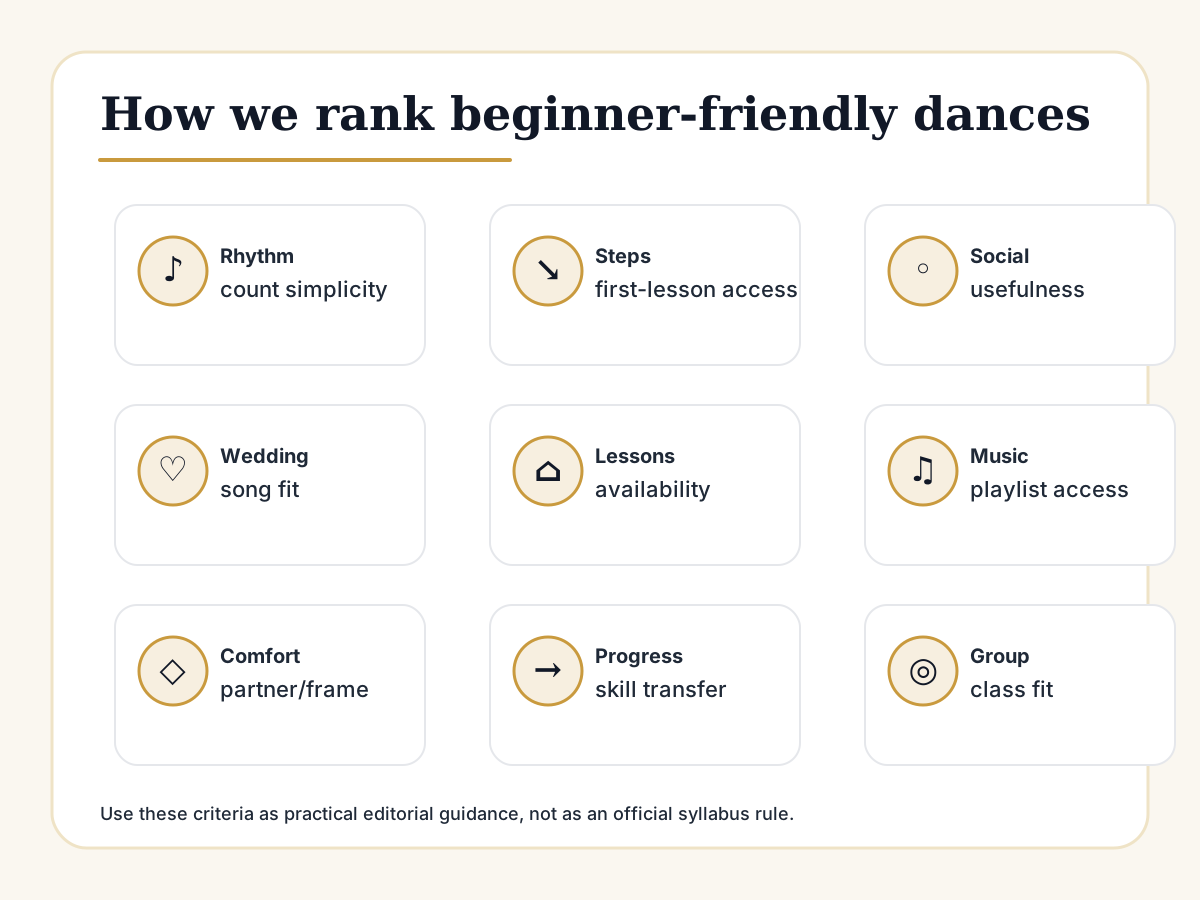
| Criterion | Beginner question |
|---|---|
| Rhythm/count simplicity | Can I hear and count the music? |
| Step accessibility | Can I learn a basic pattern in a first lesson? |
| Social usefulness | Will I use this at a party, studio social, or community event? |
| Wedding usefulness | Could this help with a first dance? |
| Lesson availability | Will most ballroom studios teach it? |
| Music availability | Can I easily find songs or playlists? |
| Partner comfort | Does it require intense closed frame or fast rotation right away? |
| Progression value | Does it teach skills that transfer to other dances? |
| Motivation | Will it feel fun before I become “good”? |
| Group-class fit | Does it work when partners rotate? |
| No-regular-partner fit | Can I practice basics solo? |
Best overall beginner ballroom dances ranked
1. Rumba — best overall first ballroom dance
Best for: beginners, wedding couples, shy dancers, romantic music, compact practice spaces. Start if you want: a useful first dance that does not require racing around the floor.
Rumba is the most practical first choice for many beginners because it is compact, musical, and useful in both social and wedding settings. You can practice the basic weight changes without needing a huge floor, and the dance gives you a clear introduction to partner connection, rhythm, and expressive movement.
Rumba also works well for people who feel nervous about looking silly. The early patterns can be kept simple, and the dance does not require the fast travel of Quickstep or the rotation of Viennese Waltz.
Beginner watch-out: Rumba can look simple while still requiring good timing and weight transfer. Do not worry about perfect hip action at the beginning. First, learn where your weight goes and how to stay on time.
First lesson focus: basic box or side basic; weight changes; slow-quick-quick rhythm (depending on style taught); comfortable leader/follower connection; one simple turn.
2. Foxtrot — best for shy beginners
Best for: nervous beginners, social dancers, classic music, people who want a walking-based start. Start if you want: something smooth, relaxed, and not too theatrical.
Foxtrot is one of the friendliest first dances because much of the beginner feeling comes from walking, side steps, and smooth timing. It is a strong choice for people who want to dance socially but do not want their first lesson to feel too dramatic or exposed.
Foxtrot also gives beginners useful skills: moving with a partner, changing direction, keeping a steady rhythm, and navigating the floor without rushing.
Beginner watch-out: Foxtrot timing can vary by teaching style. If “slow-slow-quick-quick” or “slow-quick-quick” feels confusing, clap it before stepping it.
First lesson focus: forward and back basics; slow and quick timing; smooth walking action; simple promenade or side basic; floorcraft awareness.
3. Waltz — best classic ballroom foundation
Best for: classic ballroom lovers, wedding couples, posture, frame, elegant movement. Start if you want: the dance that feels most like “ballroom” in your imagination.
Waltz is the classic ballroom answer for a reason. Its 1-2-3 count is clear, the music is distinctive, and the dance teaches posture, frame, partnership, and smooth movement. It is especially useful for wedding couples whose song is in 3/4 time, or for beginners who want a graceful first impression of ballroom.
Beginner watch-out: Waltz can feel formal because of closed hold, posture, rise and fall, and traveling movement. Start with a simple box step and clean timing before worrying about big sweeping motion.
First lesson focus: Waltz box step; count 1-2-3; closed or practice hold; basic rotation; moving smoothly without bouncing.
4. East Coast Swing — best fun group-class starter
Best for: upbeat music, social dancing, group classes, people who want quick fun. Start if you want: a dance that feels lively early.
East Coast Swing is one of the best beginner dances for people who need the first lesson to feel fun immediately. It is social, energetic, and often works well in group classes because partner rotation helps beginners practice leading, following, and adapting. It is also a strong confidence-builder.
Beginner watch-out: Keep the bounce small and comfortable. Do not turn the first lesson into tricks, dips, or fast spins.
First lesson focus: rock step; triple steps or single-time variation (depending on teacher); basic turn; staying relaxed in the arms; dancing small enough for a social floor.
5. Cha Cha — best for rhythm practice
Best for: rhythm, upbeat music, Latin/Rhythm energy, small steps. Start if you want: playful music and a clear challenge.
Cha Cha is a strong beginner dance, but it is not always the easiest first dance. It is excellent for rhythm practice because the count and footwork ask you to listen carefully. The dance feels playful and energetic, and many studios teach it early because it introduces useful Latin/Rhythm concepts.
Beginner watch-out: The syncopated “cha-cha-cha” action can feel fast. Keep steps small and focus on the count before styling.
First lesson focus: basic rock step; chassé / cha-cha-cha action; small steps; clear timing; one simple underarm turn.
6. Nightclub Two Step — best slow-song wedding option
Nightclub Two Step is not always taught as a core ballroom syllabus dance, but it is extremely practical for beginners who want to dance to slow contemporary music. It can be a strong first-dance option when Waltz does not fit the song and Rumba feels too stylized. Watch-out: teaching styles may vary — keep the first version simple.
7. Salsa — best popular social option
Salsa is a practical social dance for many beginners because it is widely danced and often easy to find in group classes or community events. It is especially useful if your local scene has salsa nights. Watch-out: Salsa timing and style vary by scene — do not panic if one teacher counts differently from another.
8. Bachata — best modern social option
Bachata is not a classic ballroom competition dance, but it is often useful for beginners who want a friendly social dance. The basic can be approachable, the music is accessible, and the dance can be practiced in a small space. Watch-out: social styling can vary widely — start with a clean basic and respectful partner connection.
9. Merengue — best confidence-builder
Merengue can be a helpful first social dance because the rhythm is straightforward and the basic movement is easy to understand. It can help new dancers get used to moving with a partner before learning more structured ballroom technique. Watch-out: Merengue builds confidence, but it does not teach as much classic ballroom frame or movement as Waltz, Foxtrot, or Rumba.
Best beginner dances by goal
| Your goal | Best first dance | Also consider | Why |
|---|---|---|---|
| I want the safest all-around start | Rumba | Foxtrot | Useful, compact, musical, and beginner-friendly. |
| I am shy or anxious | Foxtrot | Rumba | Less flashy and built from natural walking actions. |
| I want classic ballroom | Waltz | Foxtrot | Teaches posture, frame, timing, and smooth movement. |
| I am planning a wedding dance | Rumba | Waltz, Foxtrot, Nightclub Two Step | Depends on song meter, tempo, and mood. |
| I want to dance socially | East Coast Swing | Salsa, Bachata, Foxtrot | Fun, useful, and often available in group classes. |
| I like upbeat music | East Coast Swing | Cha Cha, Salsa | High motivation and clear energy. |
| I want rhythm training | Cha Cha | Rumba, Salsa | Small steps and clear rhythmic structure. |
| I do not have a partner | East Coast Swing | Cha Cha, Salsa, Merengue | Works well in rotating group classes and solo rhythm practice. |
| I want graceful movement | Waltz | Foxtrot, Bolero later | Strong classic ballroom foundation. |
Dances beginners often ask about but should approach carefully
- Tango: exciting and worth learning, but usually better after basic partner connection because the character, posture, staccato movement, and frame can feel intense.
- Hustle: useful for parties and disco/pop music, but spins and rhythm variations can surprise beginners.
- Mambo: fun and musical, but count-two phrasing is easier after Cha Cha, Salsa, or basic rhythm training.
- Bolero: beautiful and romantic, but better after Rumba and Waltz basics because it combines Rumba-like action with smoother rise-and-fall qualities.
- Viennese Waltz: elegant, but rotation and speed make it a poor first choice for most beginners.
- Quickstep: joyful and impressive, but travel-heavy and timing-sensitive. Save it until frame, posture, and floorcraft improve.
Beginner dance comparison table
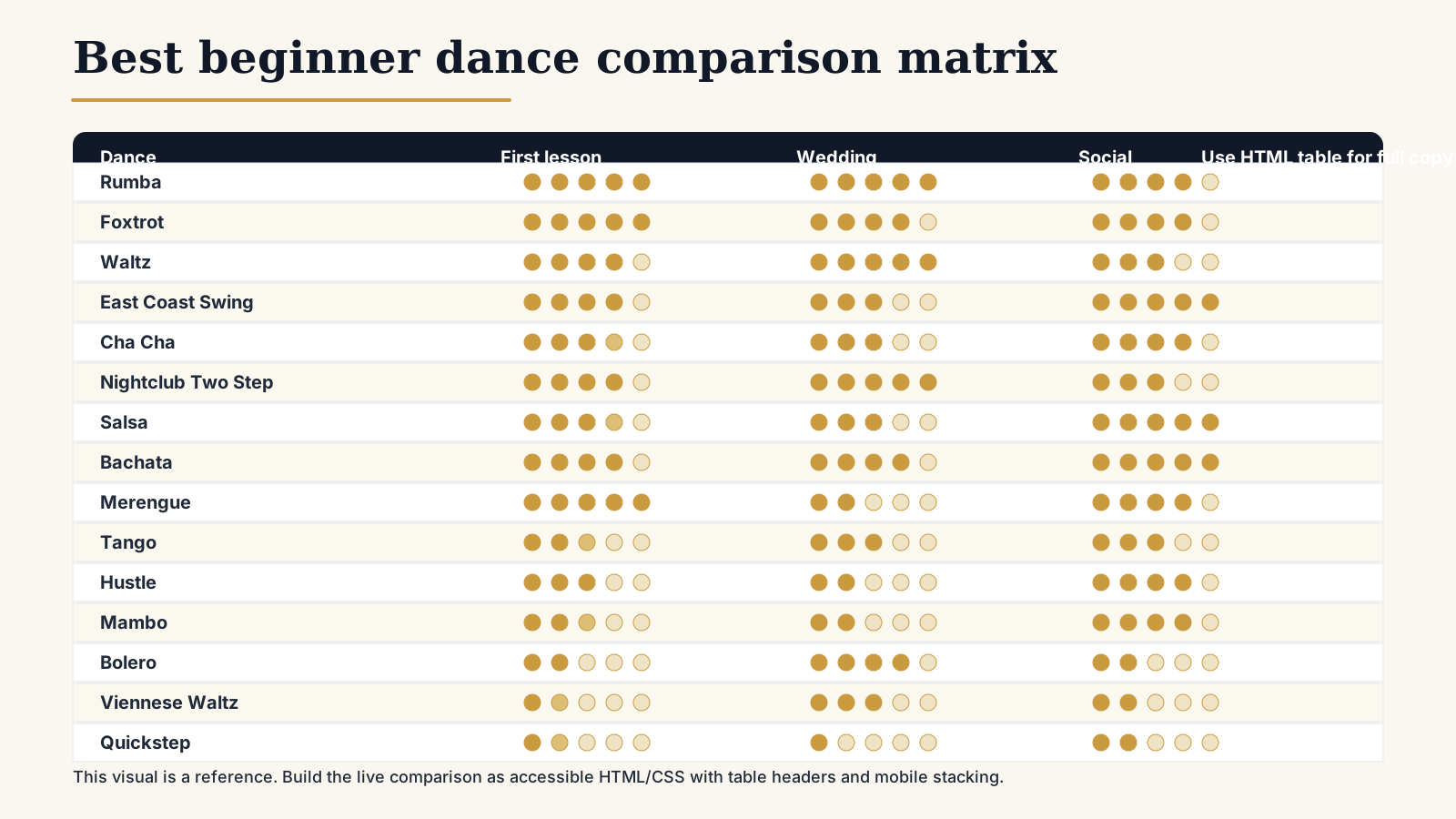
| Dance | Category | First-lesson fit | Rhythm/count feel | Wedding fit | Social fit | Best beginner use |
|---|---|---|---|---|---|---|
| Rumba | American Rhythm / Latin family | 5/5 | Slow and compact | 5/5 | 4/5 | Best overall first choice |
| Foxtrot | Smooth / Standard family | 5/5 | Walking with slows/quicks | 4/5 | 4/5 | Shy beginners and classic music |
| Waltz | Smooth / Standard family | 4/5 | Clear 1-2-3 | 5/5 | 3/5 | Classic ballroom foundation |
| East Coast Swing | American Rhythm / Social | 4/5 | Upbeat rock/triple feel | 3/5 | 5/5 | Group classes and fun |
| Cha Cha | Rhythm / Latin family | 3.5/5 | Syncopated cha-cha-cha | 3/5 | 4/5 | Rhythm practice |
| Nightclub Two Step | Social / wedding crossover | 4/5 | Slow-song flow | 5/5 | 3/5 | Slow pop ballads |
| Salsa | Social / Latin crossover | 3.5/5 | Repeating quicks and pauses | 3/5 | 5/5 | Social scene usefulness |
| Bachata | Social / Latin crossover | 4/5 | Compact side basic | 4/5 | 5/5 | Modern social dancing |
| Merengue | Social / Latin crossover | 5/5 | Marching rhythm | 2/5 | 4/5 | Confidence and rhythm |
| Tango | Smooth / Standard family | 2.5/5 | Sharp and dramatic | 3/5 | 3/5 | After basic partner comfort |
| Hustle | Social / club | 3/5 | Varies by style | 2/5 | 4/5 | Party dancing after basics |
| Mambo | American Rhythm / social Latin | 2.5/5 | Often breaks on count two | 2/5 | 4/5 | After Salsa/Cha Cha basics |
| Bolero | American Rhythm | 2/5 | Slow and expressive | 4/5 | 2/5 | After Rumba/Waltz basics |
| Viennese Waltz | Smooth / Standard family | 1.5/5 | Fast 1-2-3 rotation | 3/5 | 2/5 | Later, not first |
| Quickstep | Standard family | 1.5/5 | Fast slows/quicks | 1/5 | 2/5 | Later, after frame/floorcraft |
Ratings are Ballroom Pages’ practical beginner guidance, not an official syllabus ranking.
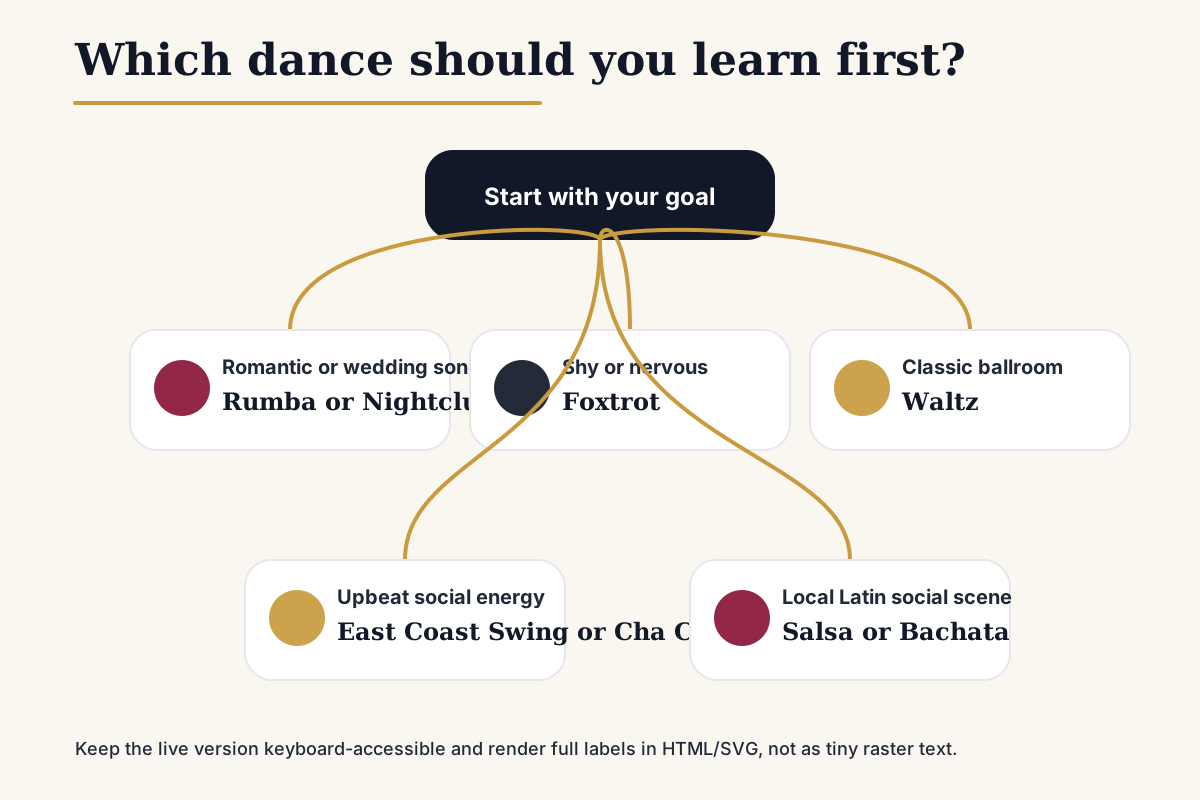
Which dance should you learn first?
- Choose Rumba if you want the best all-around beginner start, a romantic/wedding-friendly dance, or a compact style you can practice without a huge floor.
- Choose Foxtrot if you are shy, nervous, or want something that starts from walking and classic social music.
- Choose Waltz if you want the classic ballroom experience and like the clear 1-2-3 feeling.
- Choose East Coast Swing if you want fun quickly and like upbeat music.
- Choose Cha Cha if you want rhythm practice and are comfortable with a slightly bigger timing challenge.
- Choose Nightclub Two Step if your main goal is a first dance to a slow modern song.
- Choose Salsa or Bachata if your local social scene matters more than traditional ballroom structure.
Your first month
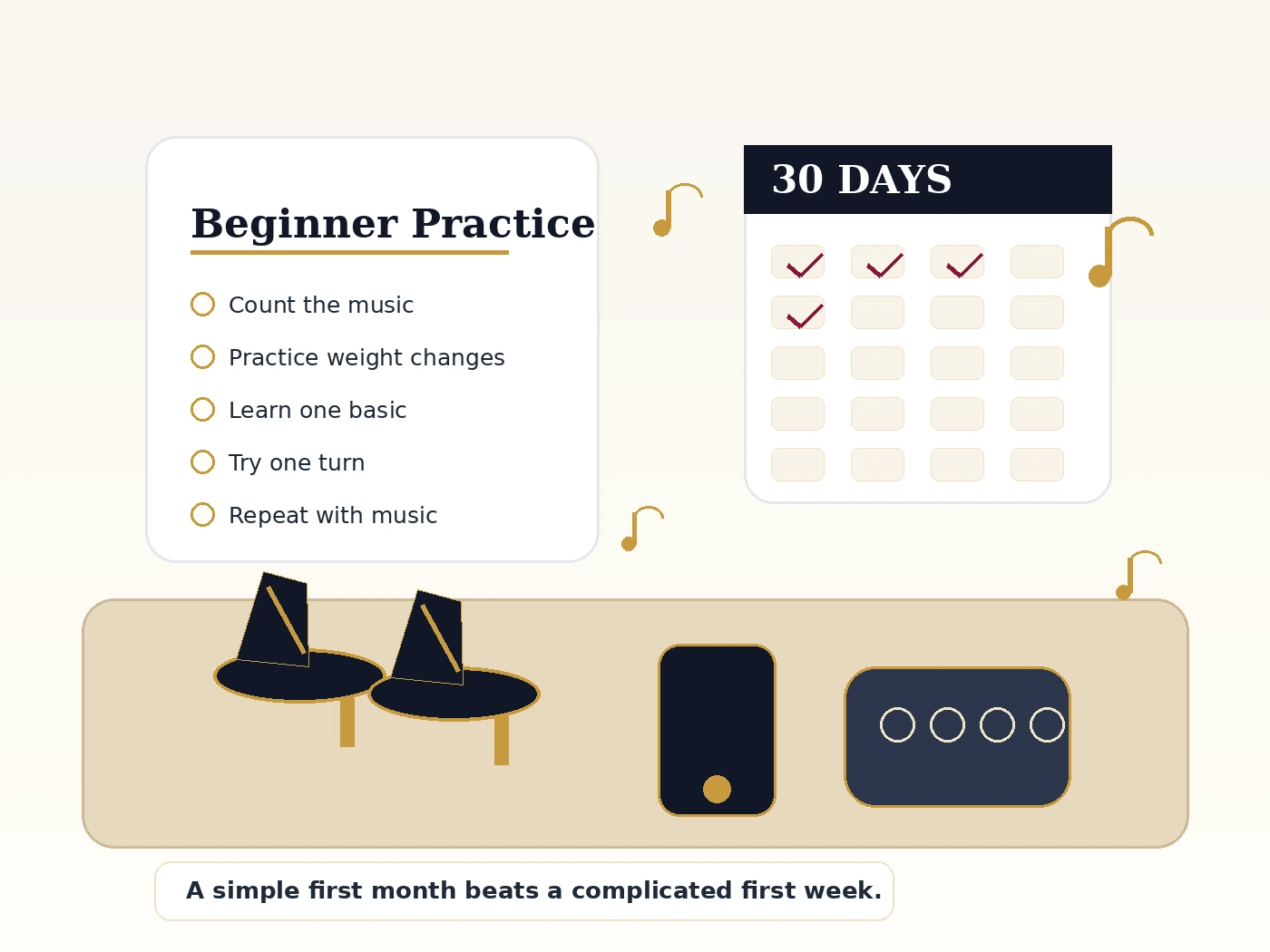
- Week 1: choose one dance and learn one basic pattern.
- Week 2: practice counting the music and changing weight cleanly.
- Week 3: add one turn or direction change.
- Week 4: try a group class, private lesson, or practice session with beginner-friendly music.
Beginner-friendly ballroom playlists
Music is one of the fastest ways to make ballroom feel less mysterious. Before you worry about perfect technique, practice hearing the character of each dance. Use the Ballroom Pages playlist hub to compare beginner-friendly music by style.
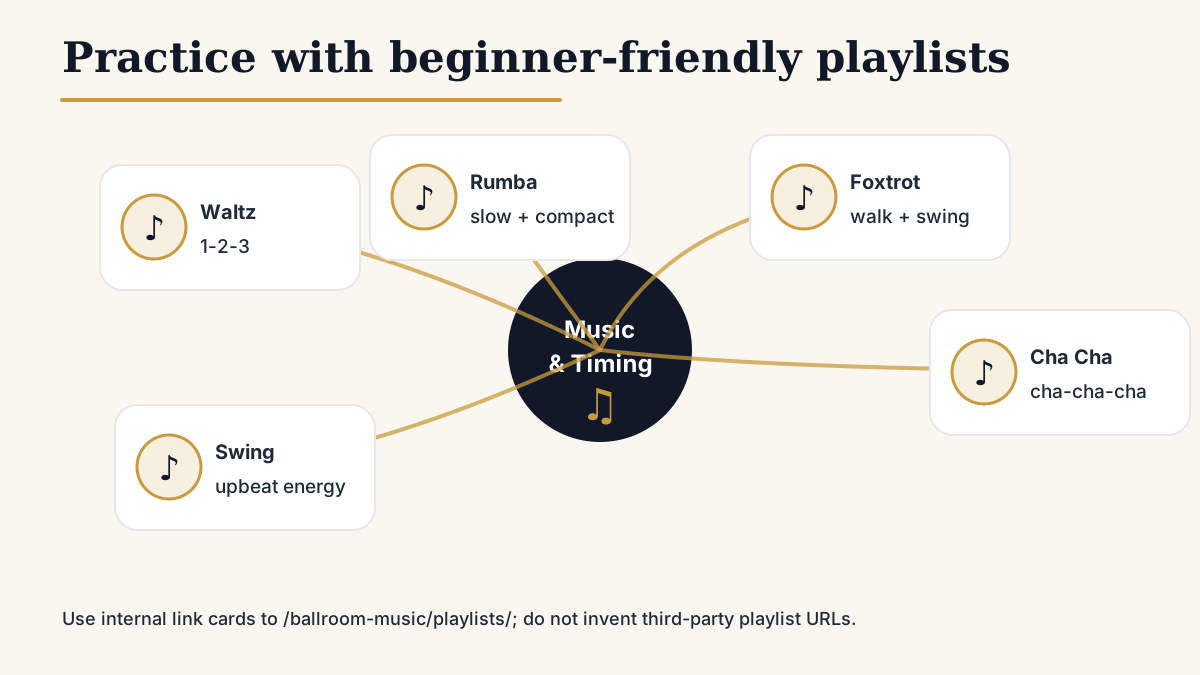
| Dance | Practice goal | Where to listen |
|---|---|---|
| Waltz | Hear 1-2-3 and slow rotation | Playlists hub |
| Rumba | Hear romantic slow-quick-quick feel | Playlists hub |
| Foxtrot | Hear walking swing/jazz phrasing | Playlists hub |
| Cha Cha | Hear the cha-cha-cha rhythm | Playlists hub |
| East Coast Swing | Hear upbeat swing energy | Playlists hub |
| Salsa / Bachata / Merengue | Hear social Latin rhythm | Playlists hub |
Ballroom Pages has a legacy music ecosystem across Spotify, Apple Music, YouTube/YouTube Music, and Telegram. In the rebuild, those playlists are being preserved, verified, and organized through the Music & Timing hub. Use playlists as practice support, not as a replacement for instruction.
What to practice after choosing your first dance
1. Count before you style
Clap or tap the rhythm before you worry about how you look. If you cannot hear the music yet, your steps will feel random.
2. Practice weight changes
Most beginner confusion comes from not knowing which foot has your weight. Practice slowly and say “left, right, left” or “slow, quick, quick” out loud if it helps.
3. Learn one basic pattern
One clean basic is better than five half-learned figures. Start with the Rumba basic, Foxtrot basic, Waltz box, East Coast Swing basic, or Cha Cha basic.
4. Keep partner connection comfortable
Use leader/follower language and keep the hold respectful, relaxed, and beginner-friendly. You do not need dramatic styling, dips, lifts, or complex choreography.
5. Add a second dance later
After a few lessons, add a contrast. Good pairs include:
- Rumba + Foxtrot
- Waltz + Rumba
- Foxtrot + East Coast Swing
- Rumba + Cha Cha
- Wedding Waltz + Nightclub Two Step
Related guides
Editorial notes
Official organizations (such as national and international dance-sport bodies) define dance families, syllabi, and competition categories. The beginner ranking on this page is Ballroom Pages’ practical recommendation for getting started—not an official syllabus rule, and not a claim about competition difficulty.
See something that needs correction? Contact Ballroom Pages. See our editorial policy for how we review and update content.