What is Salsa?
Salsa is a lively partner dance associated with Salsa music. It is usually danced socially, often with a leader and follower, and it combines rhythm, compact footwork, turns, partner connection, and musical play.
On Ballroom Pages, Salsa belongs on a canonical dance-style page because many beginners encounter it through ballroom studios, social dance events, wedding dance lessons, and Latin dance nights. It is not here to replace the pages for Mambo, Bachata, Cha Cha, or Rumba. Each of those dances has its own timing, music feel, and beginner path.
The simplest way to think about Salsa is this: Salsa is a rhythmic social partner dance where the basic step gives you a steady structure, and the music gives you energy, turns, and personality.
What Salsa feels like
Salsa feels lively without needing to be huge. Good beginner Salsa is usually compact: smaller steps, clear weight changes, and enough space for both partners to stay balanced.
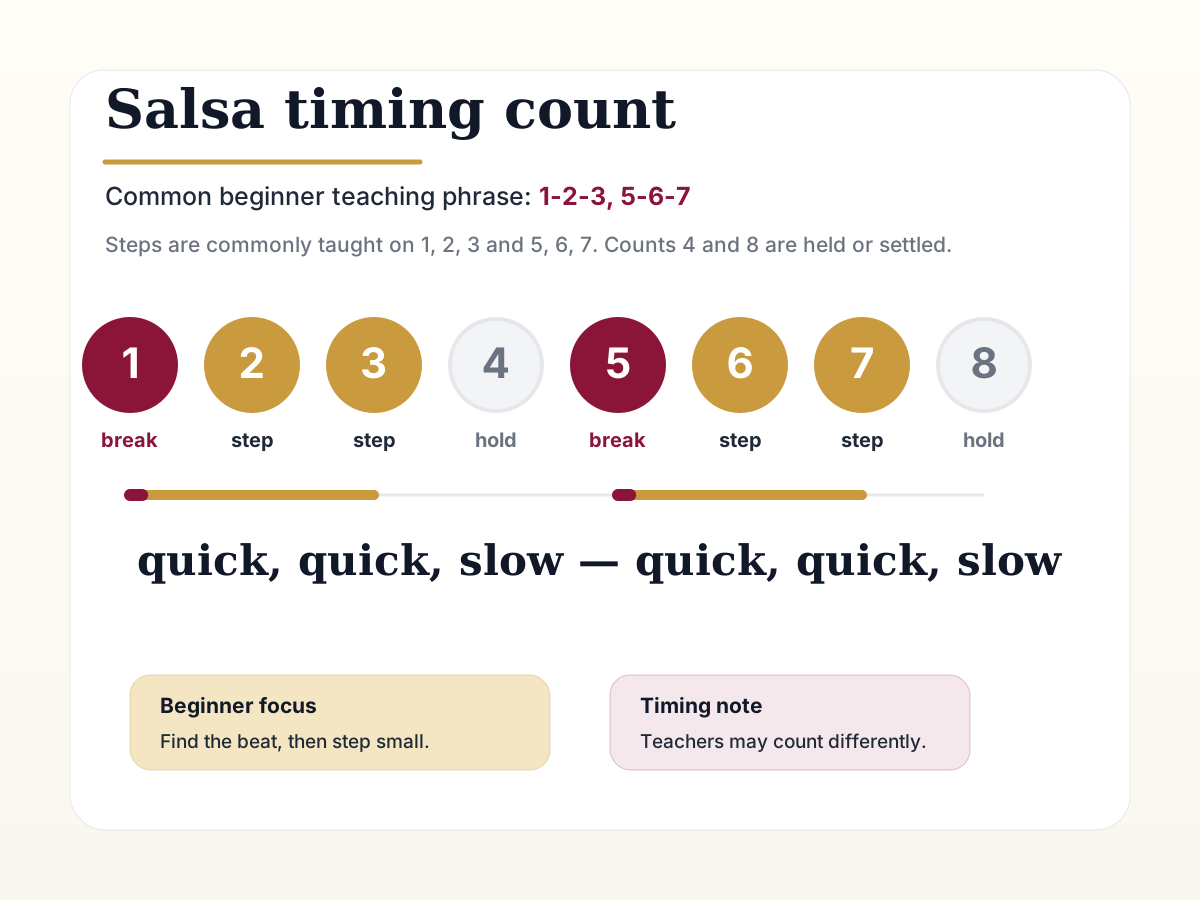
The rhythm often feels like a repeating wave: quick, quick, slow — quick, quick, slow.
That “slow” does not mean the dance becomes slow. It means one part of the step lasts longer, giving the body a moment to settle before moving again.
In partnerwork, Salsa uses connection rather than force. The leader suggests direction, timing, and turns. The follower responds with balance, timing, and their own movement quality. Both roles listen to the music.
A beginner does not need big arm styling or complicated turn patterns to enjoy Salsa. The first goal is to stay on time, keep the steps small, and make the partnership feel comfortable.
Salsa timing and how to count it
Most beginner Salsa classes introduce the dance using an 8-count phrase: 1-2-3, 5-6-7.
In this common beginner count, dancers step on 1, 2, 3, 5, 6, and 7. Counts 4 and 8 are usually held or used as the “slow” part of the rhythm.
| Count | What happens in many beginner On1 classes |
|---|---|
| 1 | Step / break |
| 2 | Replace weight |
| 3 | Step together or collect |
| 4 | Hold / settle |
| 5 | Step / break the other direction |
| 6 | Replace weight |
| 7 | Step together or collect |
| 8 | Hold / settle |
What does “On1” mean?
In Salsa On1, the break steps usually happen on counts 1 and 5. A common beginner leader pattern is to break forward on 1 and back on 5, while the follower mirrors the action.
On1 is often associated with linear or LA-style Salsa, but timing and style are not exactly the same thing. A dancer can prefer On1 timing without dancing a very theatrical LA-style look.
What does “On2” mean?
In Salsa On2, the break steps usually happen on counts 2 and 6. Many dancers associate On2 with New York-style Salsa or Mambo-influenced dancing.
The important beginner note: On2 is not just “the same thing but harder.” It changes where the direction change happens in the music, which changes the feel.
A note about timing conventions
Salsa communities and teachers do not always count the dance the same way. Some classes teach On1. Some teach On2. Cuban / Casino communities may talk about timing differently. Advanced dancers may also discuss clave, contratiempo, or other musical ideas.
For a beginner, start with the timing your teacher or local community uses. Then use how to count ballroom dance music to build your listening skills.
Basic Salsa steps for beginners
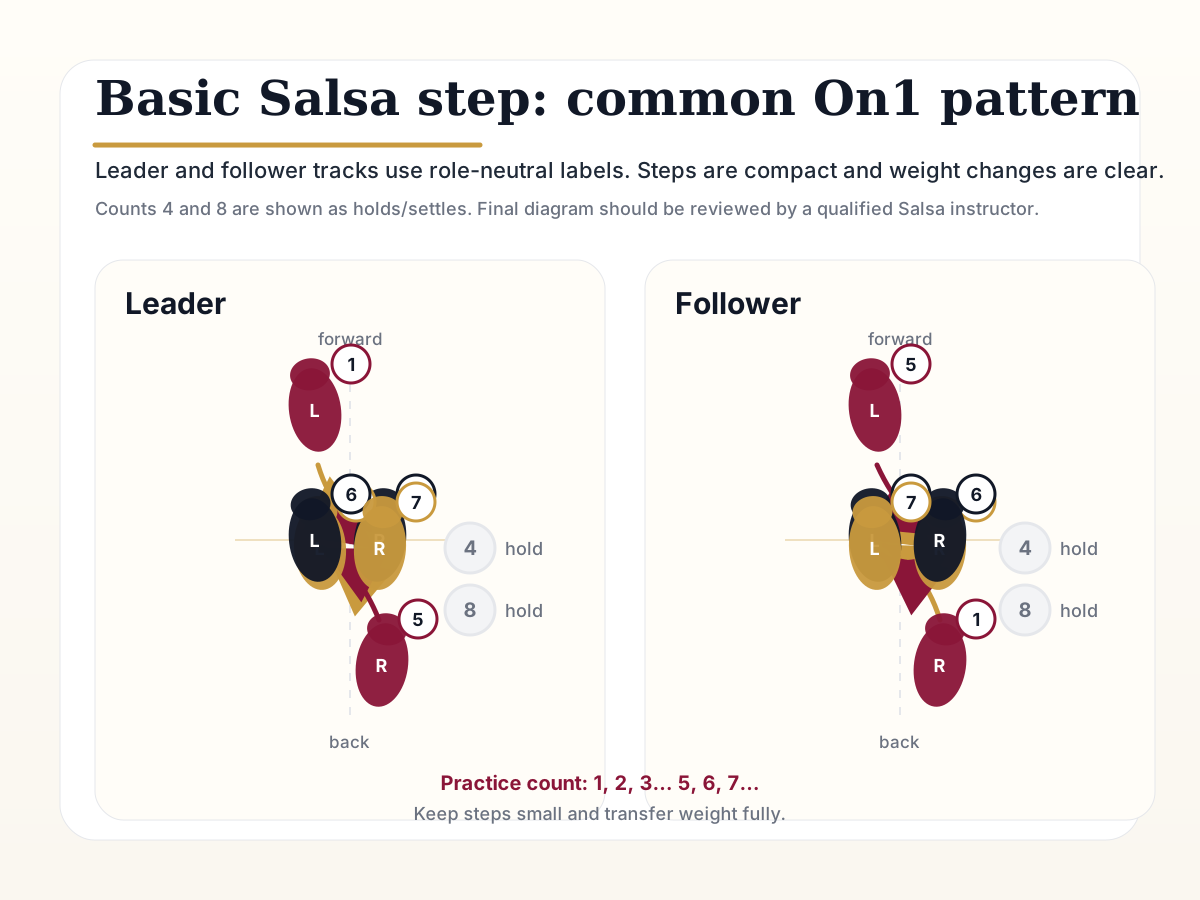
The Salsa basic is a repeating pattern of weight changes. Start small. You are not trying to travel across the floor.
| Count | Leader (common On1) | Follower (common On1) |
|---|---|---|
| 1 | Step forward with the left foot | Step back with the right foot |
| 2 | Replace weight back to the right foot | Replace weight forward to the left foot |
| 3 | Step the left foot back under you or close near the right | Step the right foot back under you or close near the left |
| 4 | Hold | Hold |
| 5 | Step back with the right foot | Step forward with the left foot |
| 6 | Replace weight forward to the left foot | Replace weight back to the right foot |
| 7 | Step the right foot back under you or close near the left | Step the left foot back under you or close near the right |
| 8 | Hold | Hold |
Practice notes
- Keep your steps underneath your body. Large steps make it harder to stay on time and harder to turn.
- Let your weight change be clear. If you only tap the floor without transferring weight, the next step becomes confusing.
- Practice the count out loud first: 1, 2, 3… 5, 6, 7… Then try clapping the counts before you move your feet.
For partner-connection fundamentals, see lead and follow basics, and browse the ballroom dance glossary for terms.
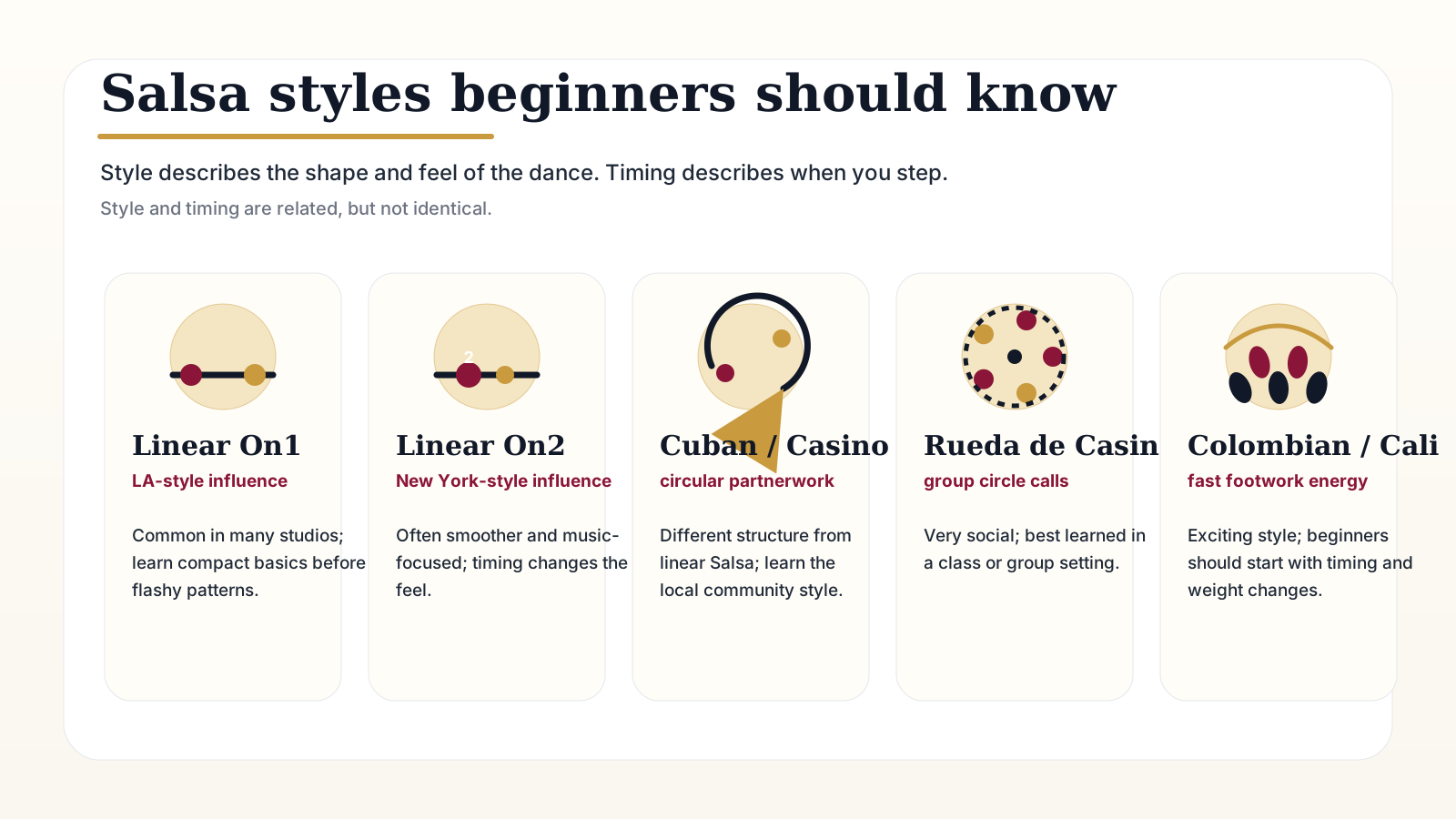
Salsa styles beginners should know
Salsa does not look exactly the same everywhere. Some communities dance in a slot or line. Some rotate more. Some emphasize fast footwork. Some focus on social partnerwork more than performance shapes.
The most helpful beginner distinction is this: timing tells you when you step. Style tells you how the dance is shaped and how it feels.
| Style or approach | Common setting | Movement feel | Beginner note |
|---|---|---|---|
| Linear Salsa On1 / LA-style influence | Studios, socials, performance teams, many beginner classes | Slotted, clear forward/back basic, dynamic turns, often sharp and showy at higher levels | Common starting point in many areas; learn compact basics before flashy patterns |
| Linear Salsa On2 / New York-style influence | Salsa socials, New York-style communities, Mambo-influenced scenes | Slotted, smooth, rhythmically layered, often closely tied to the music | Great for musicality, but beginners should not rush into On2 before understanding the beat |
| Cuban Salsa / Casino | Cuban dance communities, rueda groups, social settings | More circular, earthy, connected, rotating partner patterns | Different structure from linear Salsa; do not assume all Salsa is danced in a slot |
| Rueda de Casino | Group social dancing | Multiple couples dance calls in a circle, changing partners through patterns | Very social and fun; best learned in a class or group setting |
| Colombian / Cali-style Salsa | Colombian and Cali-style communities, performance / social scenes | Fast, intricate footwork, energetic lower-body action | Exciting to watch; beginners should start with timing and basic weight changes first |
Salsa music
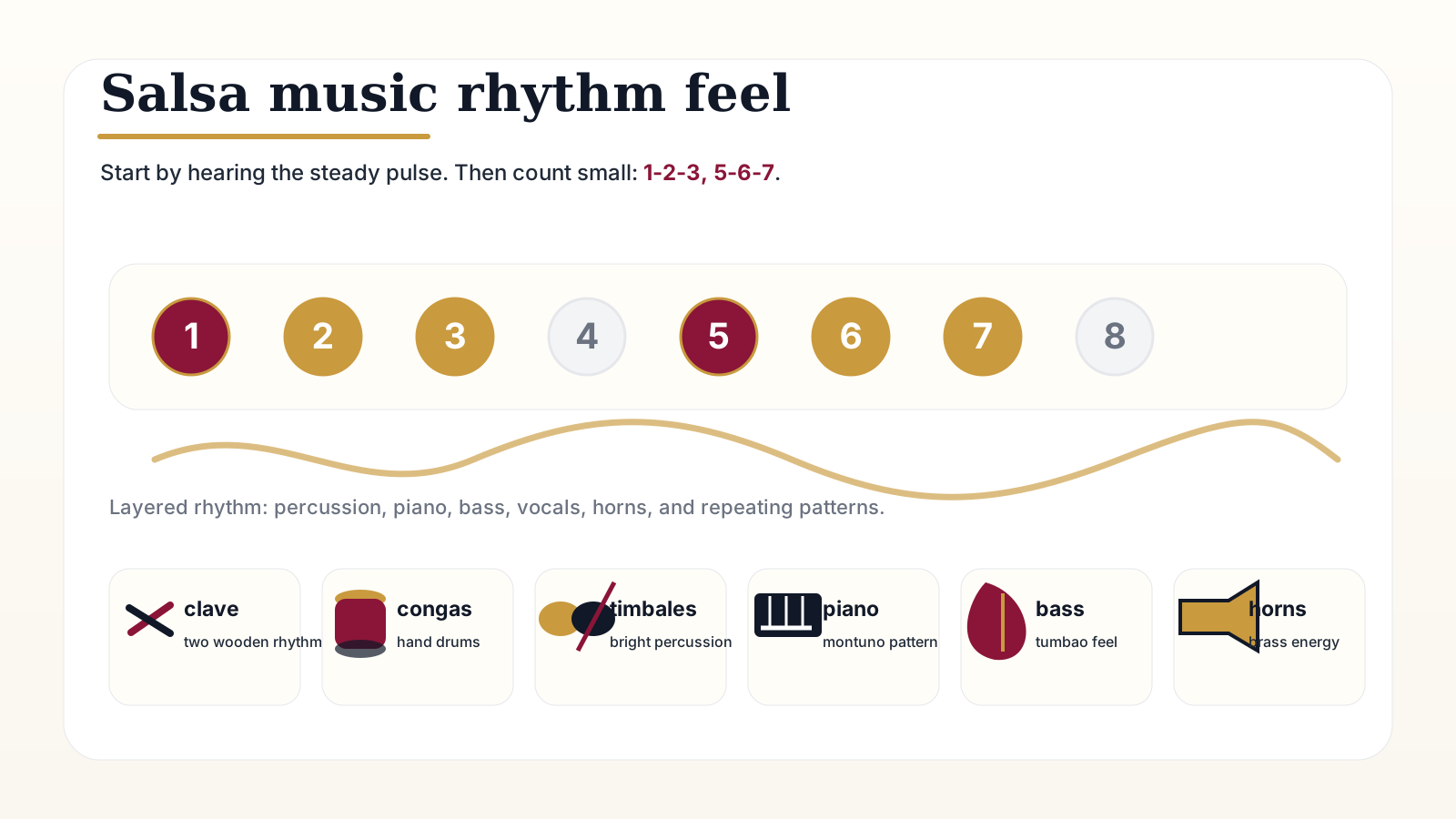
Salsa music feels layered, rhythmic, and alive. You may hear percussion, piano, bass, vocals, horns, and repeating rhythmic patterns that create momentum.
Beginners do not need to identify every instrument immediately. Start by listening for the steady pulse. Then listen for repeating patterns. Over time, you may begin to hear clave, congas, timbales, piano montuno, bass, horns, and vocal call-and-response more clearly.
Beginner listening approach:
- First, find the steady beat.
- Second, count 1-2-3, 5-6-7.
- Third, step small enough that you can stay with the music.
- Fourth, notice when the music changes energy. Salsa songs often build, break, and return. You do not have to do bigger patterns just because the music gets exciting.
A Ballroom Pages Salsa practice playlist is coming soon.
For more music help, visit the Music & Timing hub, the ballroom tempo chart, and how to count ballroom dance music.
Salsa vs Mambo, Bachata, Cha Cha, Rumba, and Merengue
| Dance | Practical timing difference | Feel | Social use | Beginner learning note |
|---|---|---|---|---|
| Salsa | Often taught 1-2-3, 5-6-7; On1 and On2 are both common | Energetic, turn-friendly, rhythmic | Very strong at Salsa socials and Latin nights | Start with basic timing and compact partnerwork |
| Mambo | Often associated with On2 / break-on-2 timing in ballroom and social contexts | Smooth, classic, rhythmically precise | More niche than Salsa, but important historically and in ballroom / rhythm contexts | Learn after basic Salsa timing if comparing the two |
| Bachata | Often taught with three steps and a tap over four counts | Grounded, close, side-to-side, intimate or playful depending on style | Very strong at Latin socials | Often approachable for beginners, but has its own body action and etiquette |
| Cha Cha | Adds syncopated “cha-cha-cha” action instead of Salsa’s held counts | Bright, compact, staccato, playful | Studio, ballroom, Latin socials | Do not confuse Cha Cha’s syncopation with Salsa timing |
| Rumba | Slower and more romantic; timing varies by American / International style | Smooth, expressive, controlled | Studio, wedding, ballroom contexts | Often better than Salsa for slow romantic wedding songs |
| Merengue | Often feels like stepping on each beat | Simple, upbeat, marching or gliding | Very beginner-friendly social Latin dance | A good confidence-builder before or alongside Salsa |
Want to go deeper? Read Salsa vs Mambo, learn Bachata next, compare Salsa with Cha Cha, try Rumba for slower Latin songs, or learn Merengue for an easier Latin social dance.
Common beginner mistakes
| Mistake | Why it happens | Fix |
|---|---|---|
| Counting without listening | Saying “1-2-3, 5-6-7” without hearing where the music actually is | Clap the beat first. Then count. Then step |
| Taking steps that are too large | Traveling too far forward and back | Keep each step small enough that your hips stay underneath you |
| Rushing turns | Trying to spin before the basic timing feels steady | Practice single turns slowly and return to the basic immediately after |
| Pulling with the arms | Using the hands to drag or steer the partner | Learn connection through posture, timing, and body direction. Start with lead and follow basics |
| Forgetting posture and balance | Looking down, collapsing the chest, or leaning on the partner | Stand tall, soften the knees, and keep your weight over your own feet |
| Chasing advanced patterns too early | Memorizing combinations before the basic feels natural | Practice the basic, cross-body lead, simple turns, and social etiquette before complicated moves |
| Confusing Salsa with nearby dances | Treating Salsa, Mambo, Bachata, Cha Cha, and Rumba as interchangeable | Compare the timing and music feel before deciding what to practice next |
Beginner practice tips
- Solo rhythm practice. Put on a Salsa track or metronome-friendly practice loop. Clap the beat. Count 1-2-3, 5-6-7. Then step the basic without worrying about arms.
- Weight-change drill. Stand in place and shift your weight fully from foot to foot. Salsa is not just foot placement; it is weight transfer.
- Partner practice. Practice the basic in open hold with light connection. The leader should indicate timing and direction without pulling. The follower should keep balance and respond without guessing ahead.
- Timing reset. When you get lost, stop moving your feet for one moment. Listen. Find the 1 again. Restart with a small basic.
- Social confidence tip. At your first Salsa social, you do not need to know many patterns. A clear basic, a simple turn, good floor awareness, and polite partner etiquette can take you far.
Is Salsa good for weddings?
Salsa can be excellent for weddings when the music is upbeat, Latin, lively, or personally meaningful to the couple. It can work as a first dance for confident couples, but it is especially strong as a reception dance when guests are ready for energy.
Salsa is not the right fit for every wedding song. If your song is slow, sweeping, romantic, or in 3/4, another dance may fit better. Try find what dance fits your wedding song before forcing Salsa onto a song that does not support it.
Good wedding uses for Salsa:
- A lively first dance with Latin music
- A surprise second half after a slow intro
- A reception dance
- A parent, family, or group dance moment if everyone is comfortable
Less ideal uses:
- Very slow ballads
- Songs with no clear Salsa rhythm
- Couples who want a very gentle, understated first dance
- Choreography with dips, lifts, or tricks that has not been professionally coached
Start with the wedding dance guide if you are planning a first dance.
Is Salsa useful for social dancing?
Yes. Salsa is one of the most useful social partner dances to learn if your area has Latin nights, Salsa socials, studio parties, or mixed social dance events.
Salsa also teaches skills that carry into other dances: timing, partner connection, turns, floor awareness, and confidence asking or accepting a dance.
Social Salsa etiquette matters. Keep your steps compact. Avoid yanking arms. Watch the space around you. Thank your partner. Do not teach on the social floor unless someone clearly asks for help.
For more, start with the social dancing guide and dance etiquette for social dancing.
Is Salsa a ballroom dance?
Salsa is best described as a social Latin partner dance that is often taught in ballroom and partner-dance studio settings. It belongs on Ballroom Pages because many readers encounter Salsa through studios, weddings, social dance events, and beginner partner-dance classes.
That said, Salsa should not be described as identical to International Latin or American Rhythm syllabus dances. Core International Latin dances include Cha Cha, Samba, Rumba, Paso Doble, and Jive. Core American Rhythm championship dances commonly include Cha Cha, Rumba, Swing, Bolero, and Mambo. Salsa has its own social, cultural, and competitive contexts, including Caribbean / Salsa competitions.
So the careful answer is: Salsa is ballroom-adjacent and studio-friendly, but it is primarily a social Latin dance rather than a core International Latin or American Rhythm syllabus dance.