Is ballroom dance beginner-friendly?
Yes—ballroom dance can be beginner-friendly when you start with the right expectations.
The first goal is not to look like a competition dancer. The first goal is to become comfortable moving to music with another person. That means you’ll spend time on simple things: standing tall, shifting weight, hearing the beat, learning a basic pattern, and understanding how leaders and followers communicate.
A beginner ballroom class or first private lesson should not expect you to arrive with dance knowledge.
Ballroom becomes much less intimidating when you treat it like any other adult skill. You are not trying to prove that you are “a dancer.” You are learning a new language with your body, your ears, and your partner.
What ballroom dance is, in plain English
Ballroom dance is partnered dancing that can be social, recreational, or competitive.
In practical beginner terms, ballroom dance usually means:
- You dance with a partner.
- One person leads and the other follows.
- The dance has a basic rhythm or count.
- The steps match the music.
- Different dances have different personalities: smooth, romantic, playful, sharp, energetic, or relaxed.
You do not need to understand every category on day one. For now, think of ballroom as a structured way to move with another person to music.
What beginners should learn first
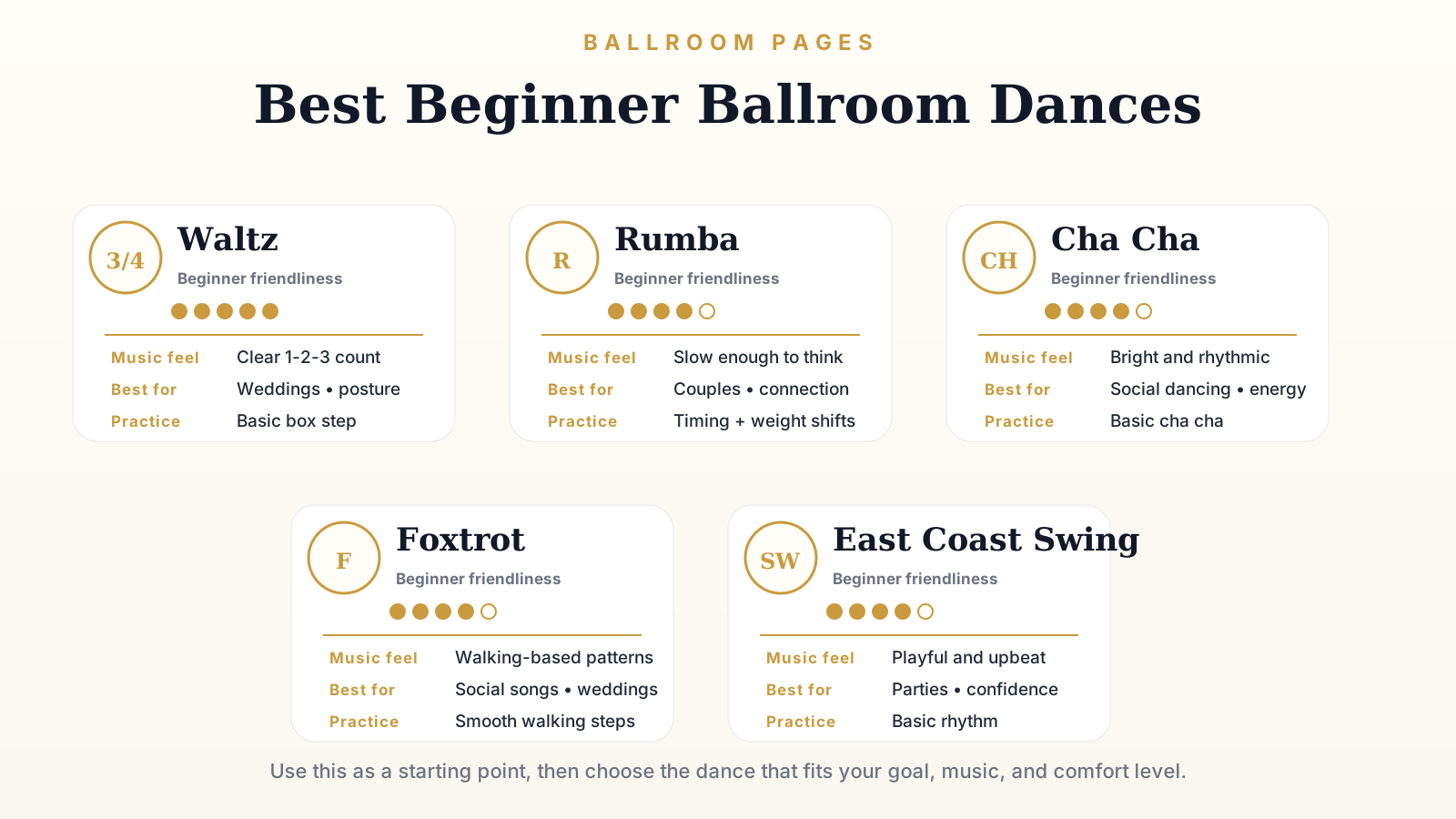
Beginners often want to learn “steps.” Steps matter, but they are not the whole beginning. The best first lessons usually focus on five basics:
1. Comfort
You need to feel safe enough to move. That means learning where to stand, how close partner hold feels, how to ask questions, and how to pause when something feels uncomfortable.
2. Posture and frame
Posture is your aligned body position. Frame is the shape and tone of your arms and upper body that helps you connect with a partner. You do not need a perfect frame on day one. You need a calm, stable starting shape.
3. Timing
Timing means matching your steps to the rhythm or beat of the music. Counting music can feel strange at first. That is normal.
4. One basic pattern
A basic step is the standard step pattern for a dance. You do not need many patterns. One pattern danced with rhythm is more valuable than many patterns danced in panic.
5. A small practice routine
Practice should be short enough that you’ll actually do it. Ten minutes of careful practice is more useful than an hour of frustrated repetition.
Best ballroom dances to start with
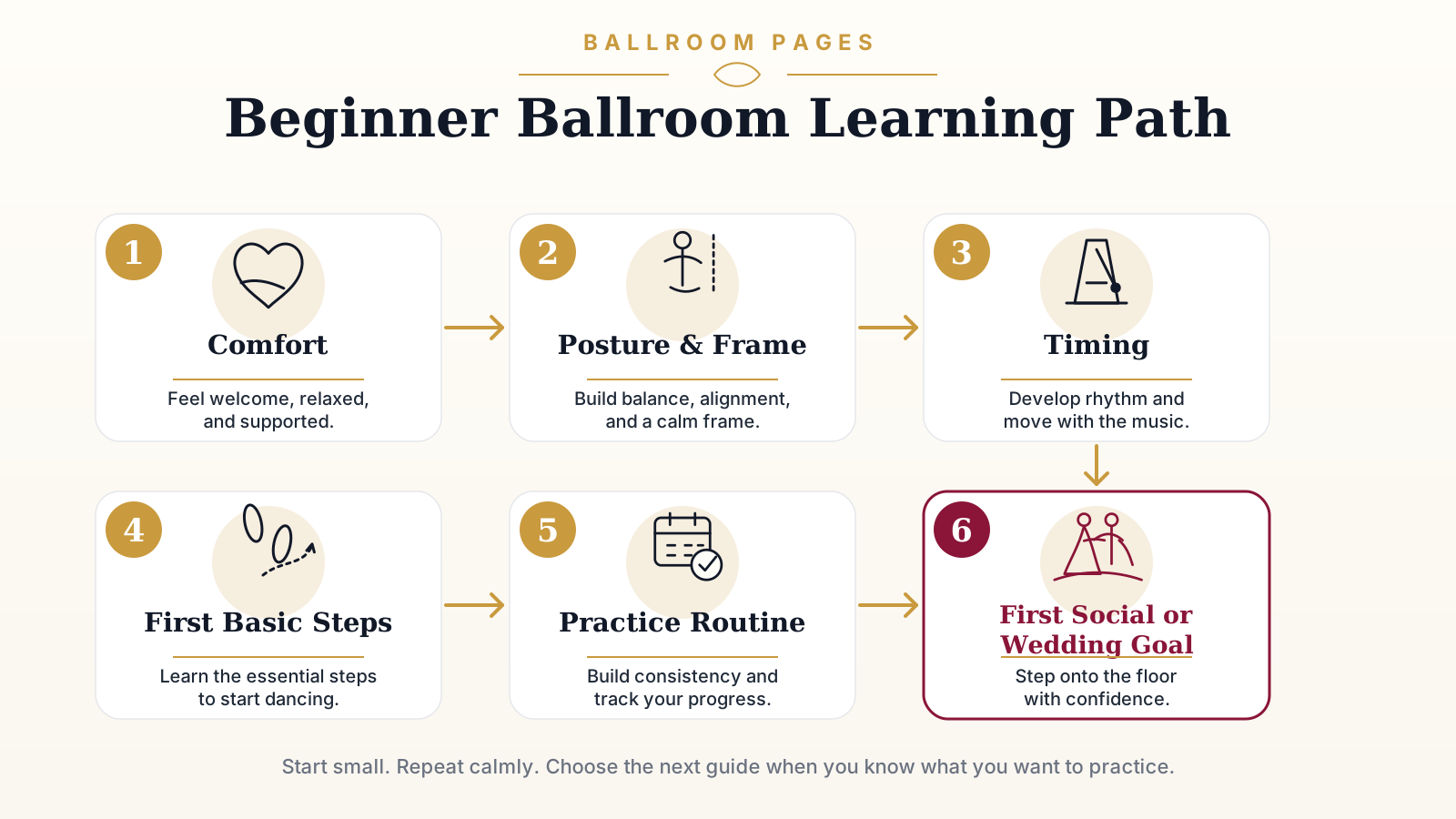
There is no single “correct” first ballroom dance for every beginner. The best choice depends on your music taste, your goal, your teacher, and whether you are learning for social dancing, a wedding, fitness, or competition curiosity. Still, these five dances are commonly beginner-friendly starting points.
| Dance | Why beginners like it | Music feel | Good for | Watch out for |
|---|---|---|---|---|
| Waltz | Clear 1-2-3 count and classic ballroom feel | Flowing, graceful, 3/4 time | Weddings, posture, smooth movement | Rise and fall can take time |
| Rumba | Slow enough to think through basics | Romantic, steady, Latin/Rhythm feel | Wedding couples, partner connection | Hip action and timing vary by style |
| Foxtrot | Walking-based patterns feel practical | Smooth, jazzy, social | Social dancing, wedding songs | Timing varies: slow-slow-quick-quick or slow-quick-quick |
| Cha Cha | Energetic and rhythmically fun | Bright, syncopated, Latin/Rhythm | Social dancing, rhythm practice | The count can feel busy at first |
| East Coast Swing | Playful, social, and energetic | Upbeat swing rhythm | Parties, social dancing, confidence | Faster music can rush beginners |
Best simple rule: choose the dance that matches your immediate goal.
- Wedding first dance? Start with Waltz, Rumba, Foxtrot, or Nightclub Two Step.
- Social confidence? Start with Foxtrot, Swing, Rumba, or Cha Cha.
- Classic ballroom feel? Start with Waltz.
- Rhythm and energy? Start with Cha Cha or East Coast Swing.
- Slow romantic music? Start with Rumba.
Best ballroom dances for beginners
Do you need a partner for ballroom dance?
Usually, no—you do not need to bring a partner to start ballroom dancing.
Many group classes rotate partners. Private lessons can often be taken solo, with the instructor dancing with you or teaching your role directly. Wedding couples often attend together, but a solo beginner can still learn ballroom fundamentals.
That said, policies vary. Some studios, college courses, or events may handle partner rotation differently. Ask before you sign up if partner rotation, physical contact, or solo learning is a concern.
Leader and follower are roles, not personality tests. The leader initiates movement; the follower responds.
You can learn either role. Some couples prefer traditional roles. Some social dancers switch roles. Some beginners start with the role they’ll use most often. The important thing is that both roles require attention, timing, and respect.
Group lessons vs private lessons vs learning at home
Each path can work. The best choice depends on your budget, comfort, and goal.
| Learning path | Best for | Pros | Tradeoffs |
|---|---|---|---|
| Group lesson | Social beginners, budget-conscious learners, people who want practice with different partners | Friendly, affordable, social, exposes you to partner rotation | Less individual correction |
| Private lesson | Wedding couples, anxious beginners, specific goals, faster feedback | Personalized, focused, can be taken solo or as a couple | More expensive |
| Learning at home | Curious beginners, shy starters, review between lessons | Low pressure, flexible, helps with timing and terms | Harder to correct posture, frame, and partner connection |
| Social dance / event class | People who want real-world comfort | Practical, community-building | Can feel overwhelming too early |
A good beginner path might combine all three: learn a little at home, take a beginner class, then use private lessons when you need correction or have a deadline.
What happens in your first ballroom dance lesson?
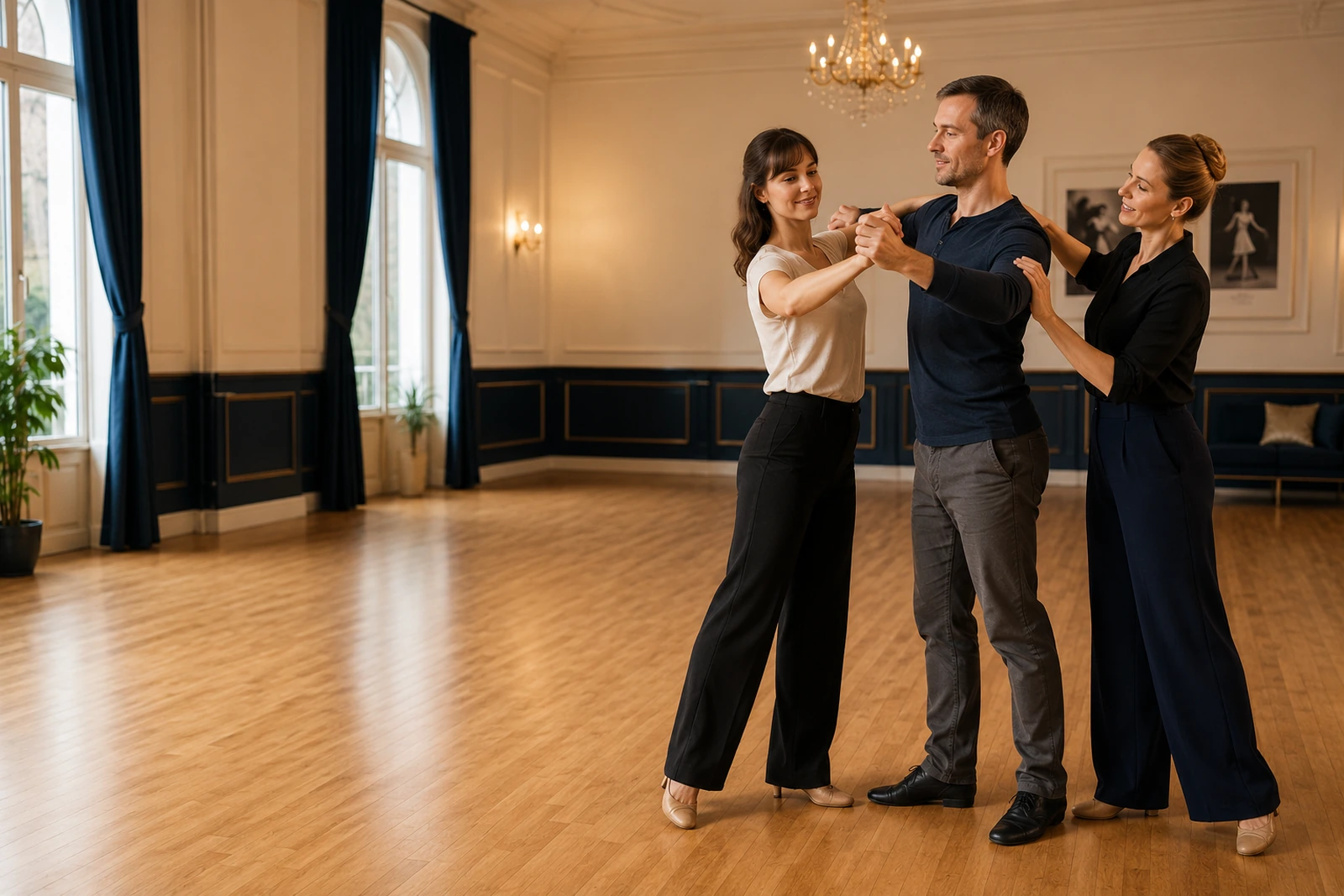
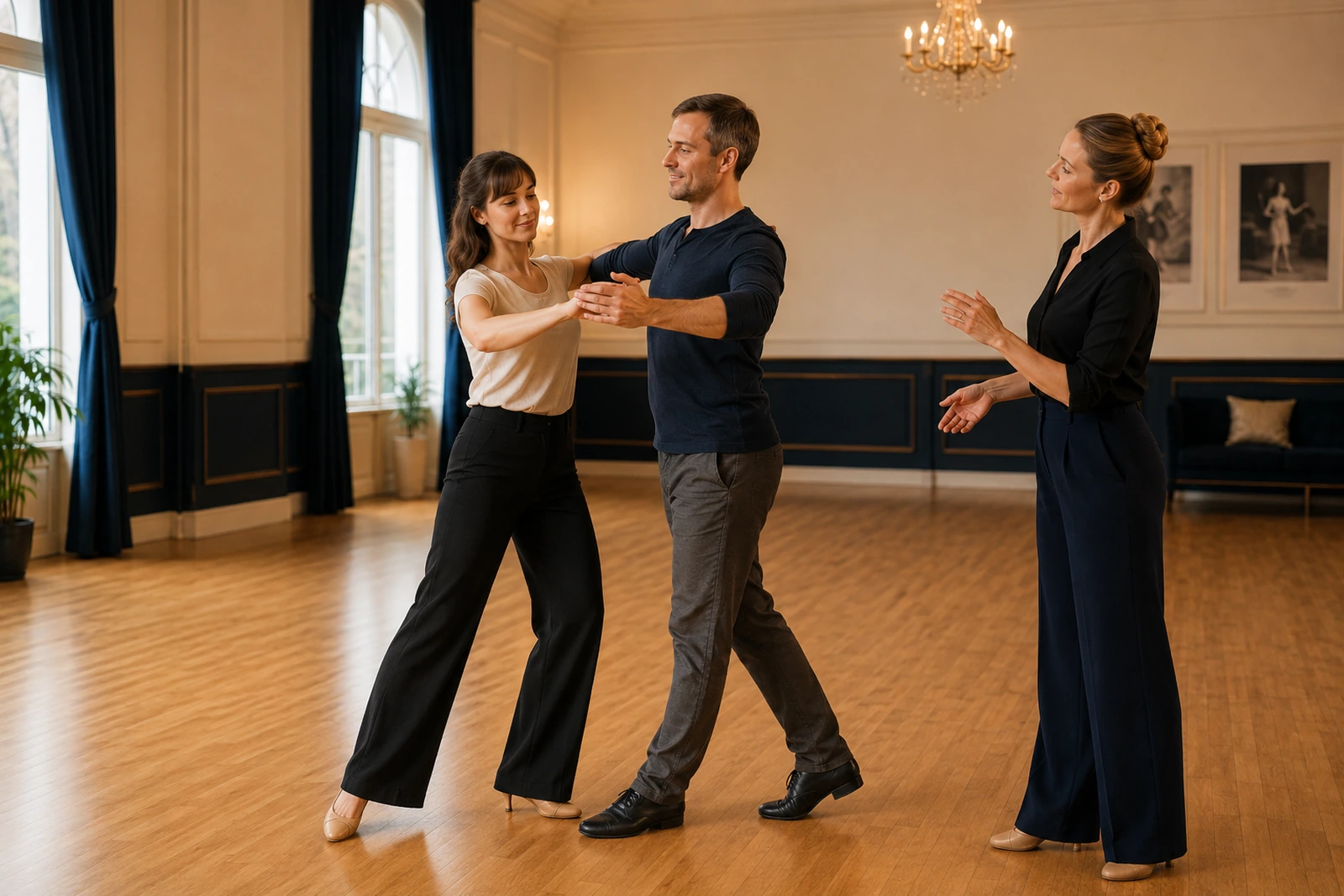
A first ballroom lesson should feel more like orientation than performance. A typical first lesson may include:
- A quick goal conversation.
- A short explanation of the dance or style.
- Basic posture and how to stand with a partner.
- A simple rhythm or count.
- One basic step pattern.
- Practice with coaching.
- A recap and suggested next step.
You may not dance to full-speed music immediately. You may start with walking, shifting weight, counting out loud, or moving through a basic pattern slowly. That is not a failure. That is how beginners build comfort.
You may also feel awkward. That is normal. A first lesson is not meant to prove that you are good at ballroom. It is meant to help you understand how learning ballroom will feel.
What to wear to your first lesson
Wear clothes that let you move comfortably and stay in place.
Good first-lesson choices:
- Comfortable top that does not need constant adjusting.
- Flexible pants, skirt, or dress that allows movement.
- Layers if the studio temperature changes.
- Hair secured if it falls into your face.
- Minimal fragrance.
- Water bottle.
Avoid:
- Clothing that is too tight to move in.
- Clothing so loose that it becomes a tripping hazard.
- Long hems that catch underfoot.
- Shoes that slide off.
- Flip-flops, sandals, boots, or very sticky rubber soles.
For wedding couples, bring your song and, when practical, shoes similar to what you plan to wear at the event. You do not need to wear formal wedding shoes on day one, but your instructor may need to understand your footwear situation.
Do beginners need ballroom dance shoes?
Not always for the first lesson.
For your very first class, ask the studio what they recommend. Some studios are comfortable with clean, secure shoes that are not too grippy. Others prefer dance-specific shoes or smooth-soled dress shoes from the start.
Dance shoes become more useful as you continue because they are designed for movement, turning, and floor feel. But beginners should not feel pressured to buy expensive shoes before understanding their dance goals.
Simple first-lesson rule:
- Secure on your feet.
- Comfortable enough to move.
- Not slippery in an unsafe way.
- Not sticky like heavy athletic soles.
- Approved by the studio.
Basic ballroom terms to know
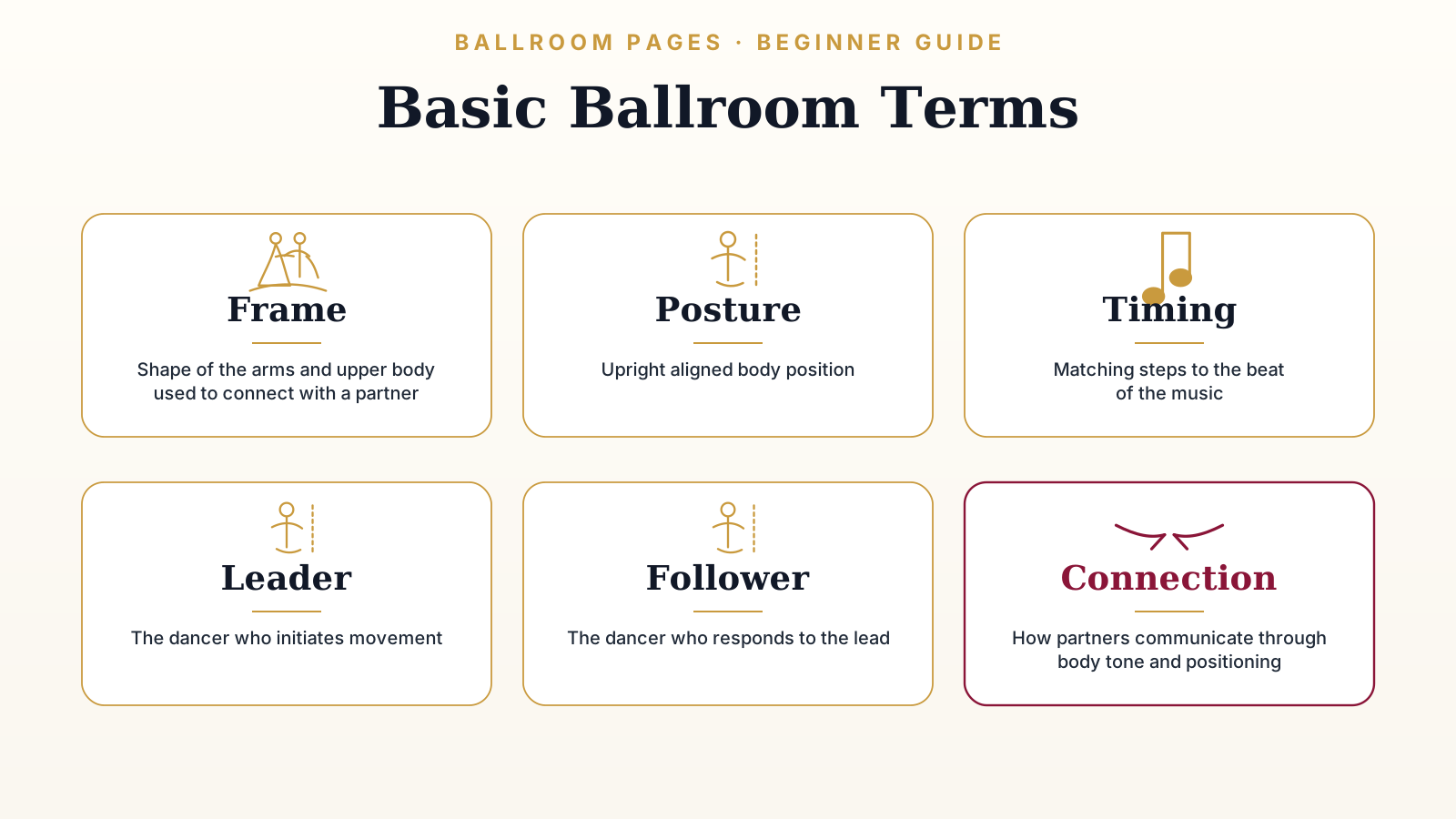
You do not need a ballroom dictionary before your first lesson. These terms are enough to start.
| Term | Plain-English meaning |
|---|---|
| Leader | The dancer who initiates direction, timing, and movement. |
| Follower | The dancer who responds to the lead and completes the movement. |
| Frame | The structured shape of the arms and upper body used to connect with a partner. |
| Posture | Upright, aligned body position for balance and control. |
| Timing | Matching steps to the rhythm or beat of music. |
| Beat | The steady pulse of the music. |
| Tempo | The speed of the music. |
| Count | The numbers assigned to beats, such as 1-2-3. |
| Slow | A step that takes two beats. |
| Quick | A step that takes one beat. |
| Connection | The communication between partners through frame, body position, and tone. |
| Basic step | The standard step pattern for a dance. |
| Line of dance | The counterclockwise flow of traffic around the dance floor. |
How to start hearing and counting the music
Many beginners worry more about music than steps.
That is understandable. Ballroom music can feel confusing because different dances use different counts, time signatures, and rhythms.
Start with this:
- Listen for the steady beat.
- Tap or clap the beat without moving your feet.
- Count out loud.
- Walk or shift weight to the beat.
- Add one simple pattern only after the beat feels steadier.
Do not start by asking, “What dance is this song?” Start by asking, “Can I feel the beat?”
Some dances count in simple numbers. Waltz is commonly counted 1-2-3. Other dances use slow/quick timing, such as Foxtrot or Rumba. Use tempo charts as guidance, not as a beginner’s first obsession.
Your first 30 days: beginner practice roadmap
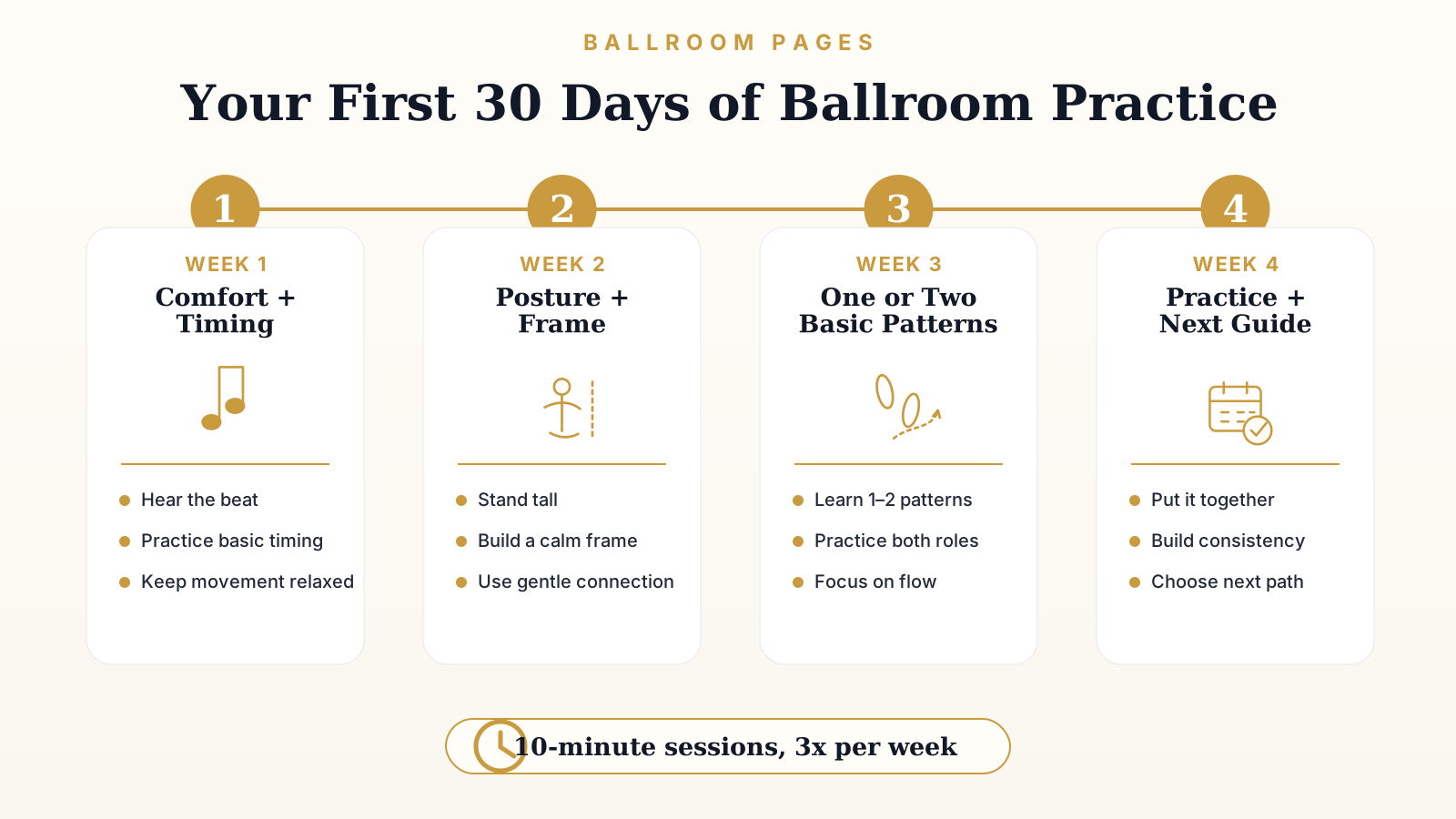
Your first month should build comfort, not perfection. Use this roadmap as a realistic starting point. Adjust it based on your schedule, teacher, body, and goals.
| Week | Focus | What to practice | Goal |
|---|---|---|---|
| Week 1 | Comfort and rhythm | Listen to 2–3 songs, clap the beat, learn one basic standing position, attend or schedule a first lesson | Feel less intimidated |
| Week 2 | Posture and frame | Practice standing tall, relaxed arms, simple weight shifts, and one basic pattern | Build a stable base |
| Week 3 | One or two dances | Choose one primary dance and one optional second dance; practice slowly with counts | Stop collecting too many steps |
| Week 4 | Repeat and choose next path | Review your first pattern, count music, ask what needs correction, choose social/wedding/technique path | Continue with direction |
A simple 10-minute practice session
Try this three times per week:
- 2 minutes: Listen and clap the beat.
- 2 minutes: Practice posture and relaxed frame.
- 3 minutes: Walk or shift weight to counts.
- 2 minutes: Repeat one basic step slowly.
- 1 minute: Write down what felt better and what confused you.
Practice should feel small enough to repeat. If you are frustrated, shorten the session. Consistency matters more than intensity. For a fuller weekly structure, see our beginner ballroom dance practice routine.
Common beginner mistakes
1. Trying to learn too many dances at once
Curiosity is good. But if you sample six dances in one week, nothing sticks. Choose one main dance and one optional second dance.
2. Looking down at your feet all the time
Everyone does it at first. But your balance, posture, and partner connection improve when your head and chest are not collapsed downward.
3. Gripping your partner
Connection is not the same as squeezing.
4. Treating timing as optional
A simple step on time usually feels better than a fancy step off time.
5. Expecting to feel graceful immediately
Grace comes later. At first, aim for steady, kind, repeatable practice.
6. Wearing shoes that fight the floor
Very sticky soles can make turning difficult. Loose shoes can be unsafe. Ask your studio what works on its floor.
7. Practicing only in your head
Watching videos helps, but your body needs repetition. Even five minutes of standing, shifting weight, and counting can help.
8. Comparing yourself to advanced dancers
Advanced dancers are not evidence that you are behind. They are evidence that ballroom is learned over time.
How to practice without feeling overwhelmed
Use the “one thing” rule. Each practice session should have one focus:
- Today I will count Waltz music.
- Today I will stand taller.
- Today I will practice one box step.
- Today I will keep my grip gentle.
- Today I will walk to the beat.
Do not try to fix posture, frame, timing, footwork, arms, head, styling, and musicality in the same session. That is too much.
A beginner’s best practice question is: “What is the next small thing I can repeat?” Not: “How do I become good as fast as possible?”
Progress depends on the lesson format, teacher feedback, practice consistency, prior movement experience, comfort with partner work, and your goal. A wedding couple with a deadline, a social dancer, and a competition-curious beginner may all need different pacing.