Quick answer: what to expect at your first ballroom lesson
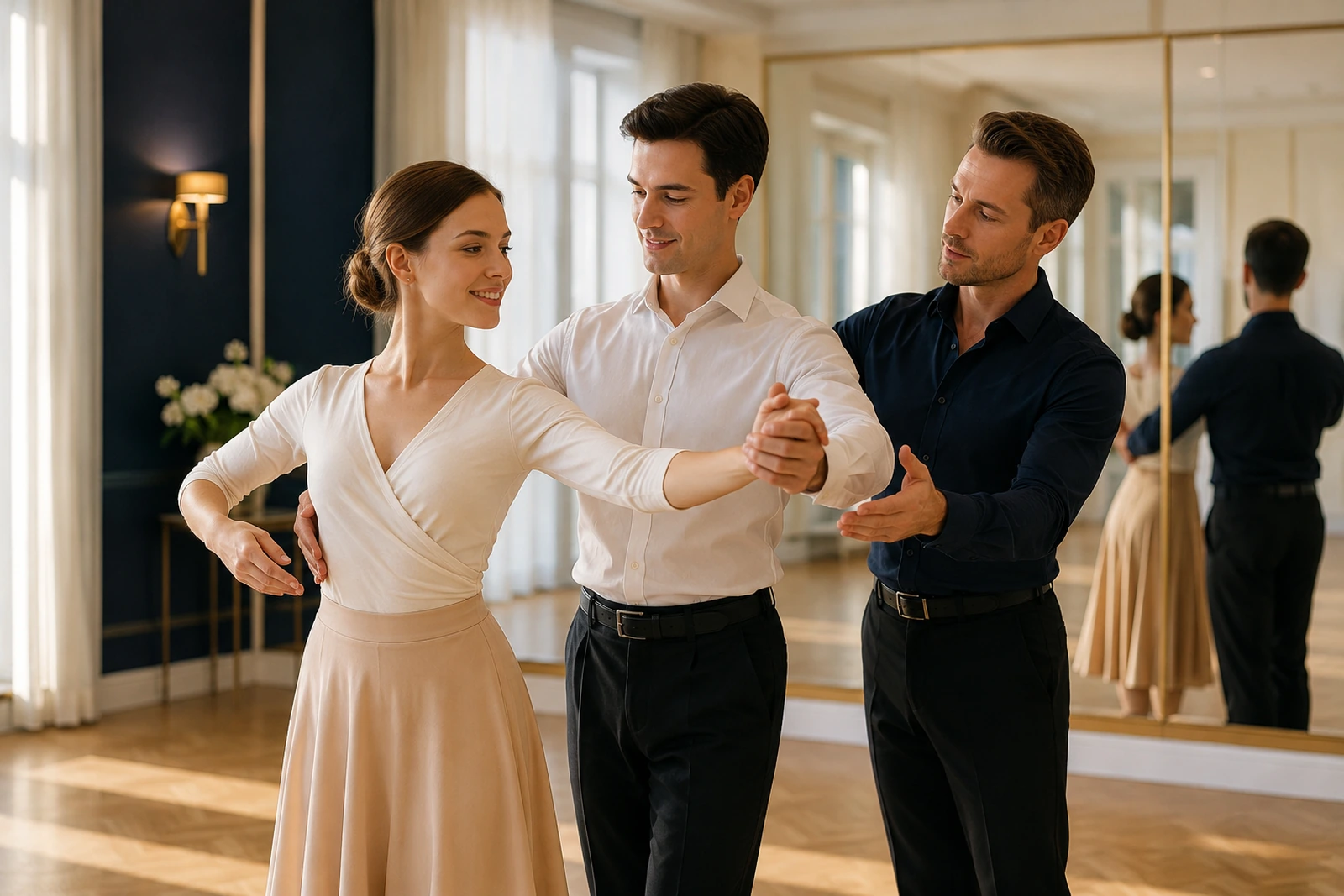
Your first ballroom dance lesson will likely last 30–60 minutes and start with a friendly welcome. You will learn basic posture and how to connect with a partner, then practice one simple dance—often Rumba, Foxtrot, Waltz, or East Coast Swing—at a slow, forgiving pace. You do not need experience, a partner, or special shoes. Wear comfortable clothes and smooth-soled shoes, arrive a few minutes early, and expect to make mistakes and laugh about them.
What happens in a first ballroom dance lesson
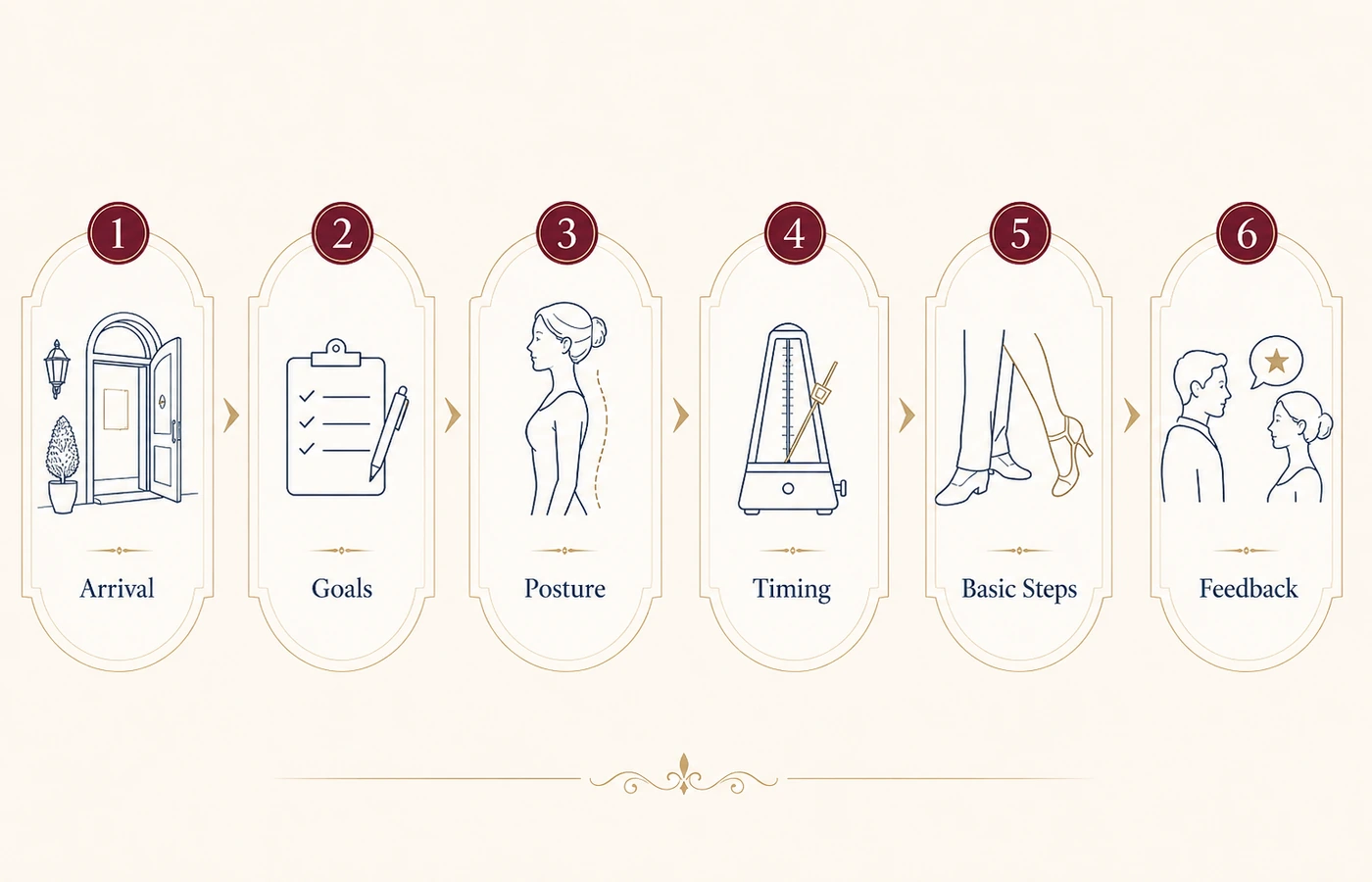
Every studio is a little different, but most beginner lessons follow a similar, comfortable rhythm. Knowing the flow ahead of time removes most of the fear of the unknown.
1. A welcome and a few questions
Your instructor will usually greet you, ask why you want to learn (social dancing, a wedding, fitness, a date night, fun), and find out whether you have any dance background. Be honest if you have none—it helps them teach you better.
2. Posture and frame
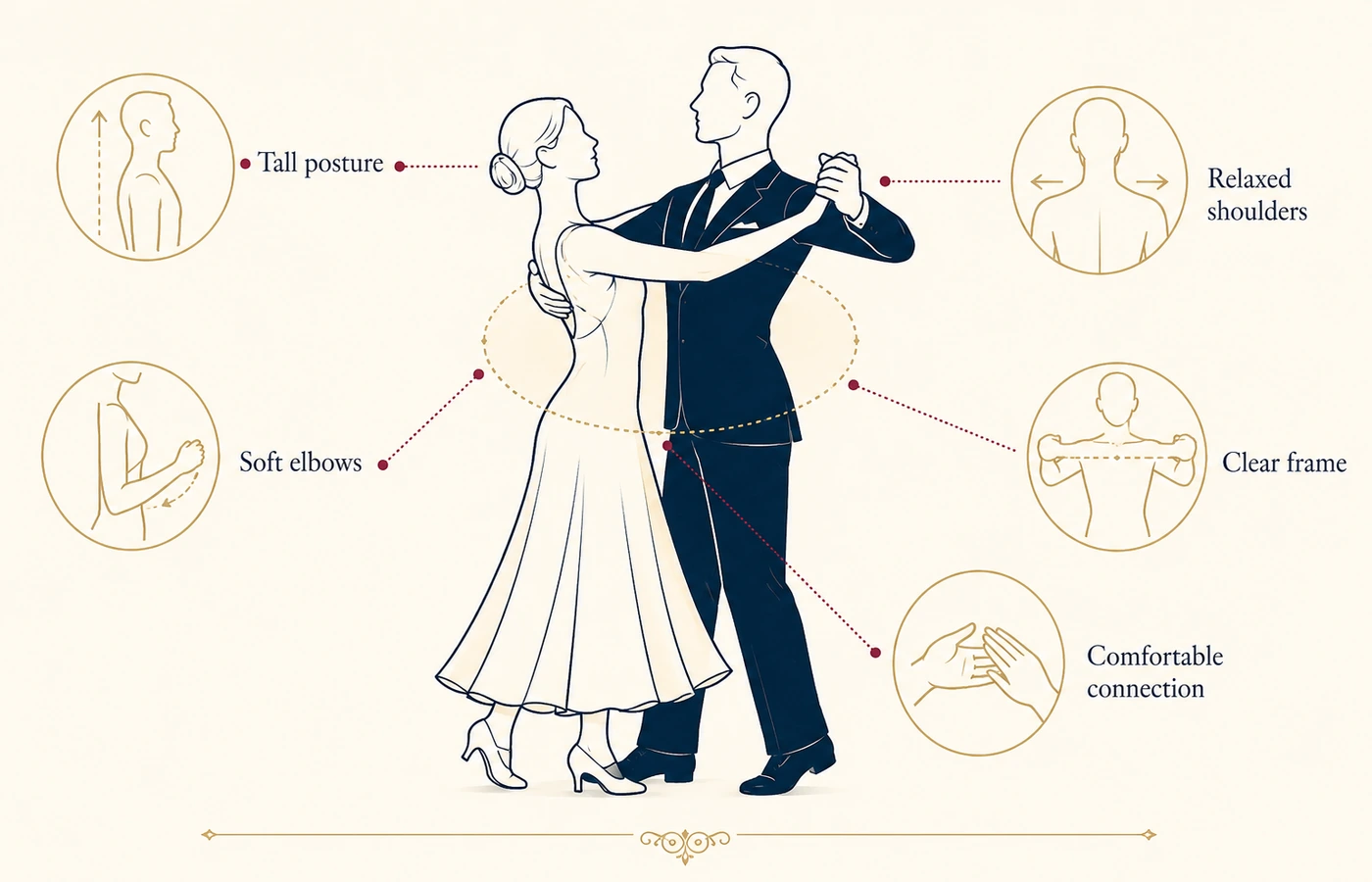
Before any steps, most instructors introduce simple posture: standing tall, relaxed shoulders, and a comfortable way of holding your arms. This is the “frame,” and it is how partners communicate. You will not be expected to get it perfect—just to understand the idea.
3. One basic dance
You will typically focus on a single dance rather than several. Common first dances include Rumba, Foxtrot, Waltz, and East Coast Swing because each one teaches useful beginner skills without overwhelming you.
4. Slow practice with counting
Expect to walk through a basic pattern slowly, often counting out loud (“slow, quick, quick” or “1-2-3”). Then you will try it with music at a gentle tempo.
5. A little partner practice
If you are with a partner, you will practice the basic together. In group classes, partners often rotate so everyone gets comfortable. Either way, the goal is connection and timing—not perfection.
The first things you'll actually learn
The earliest skills are smaller and simpler than most beginners expect. They are the building blocks every later figure relies on.
- Posture: standing tall and balanced so movement feels controlled.
- Frame: a comfortable, relaxed arm position that lets partners lead and follow.
- Weight changes: learning which foot you are standing on—the source of most beginner confusion.
- Timing: hearing the beat and matching your steps to it.
- One basic pattern: a single repeatable figure such as a box step or a forward-and-back basic.
What to wear to your first ballroom lesson
You do not need a costume, formalwear, or anything you would buy specially. Comfort and movement matter far more than looking the part.
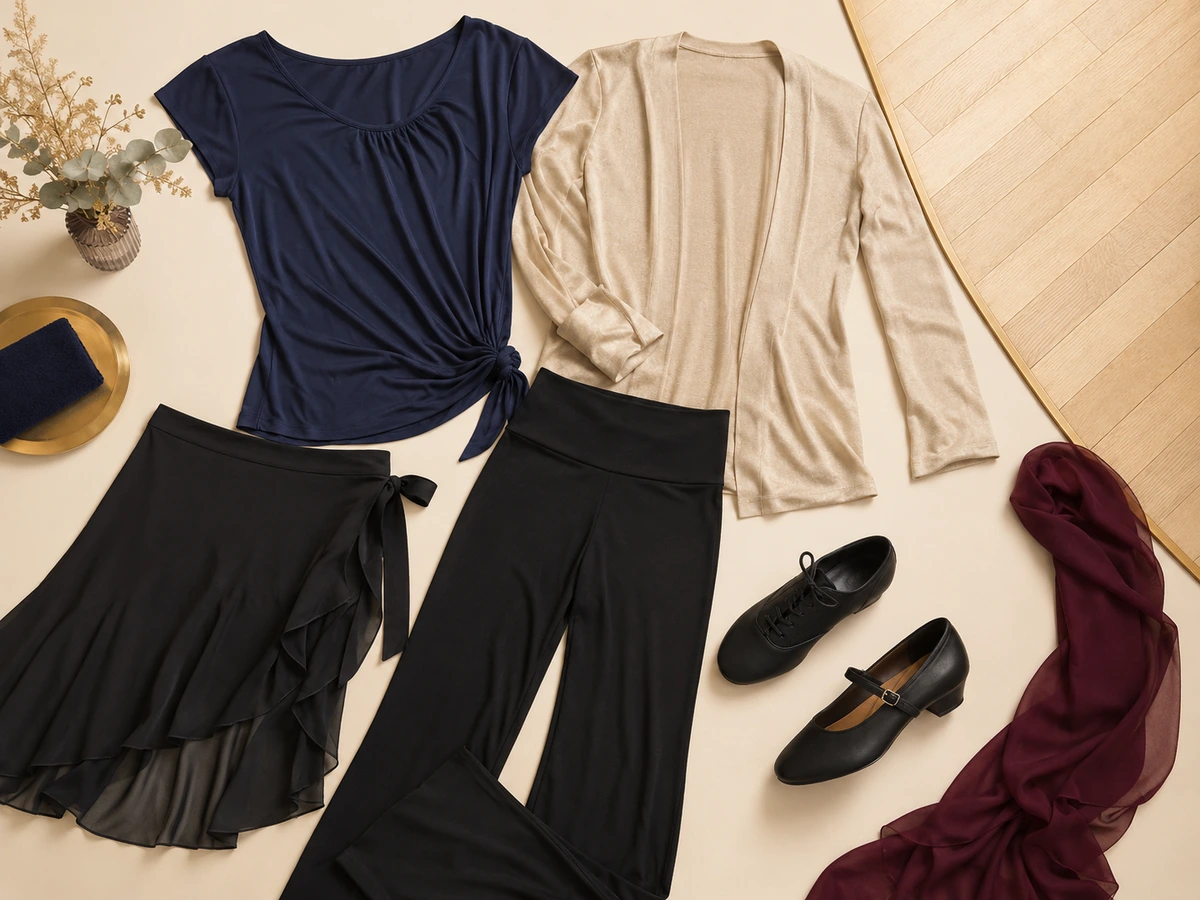
| Do | Avoid |
|---|---|
| Comfortable clothes you can move and stretch in | Stiff or restrictive outfits |
| Breathable layers (studios can get warm) | Heavy sweaters you can't remove |
| Smooth-soled shoes that stay on your feet | Flip-flops, heavy boots, or chunky sneakers that grip the floor |
| Light deodorant and mints (you'll be close to a partner) | Strong perfume or cologne |
| Hair tied back if it's long | Loose accessories that swing or snag |
When in doubt, dress like you would for a casual night out that still lets you move—think relaxed, breathable, and confident.
Do you need dance shoes for your first lesson?
No. You do not need to buy dance shoes for a first lesson. The most important quality is a smooth sole that lets you turn and slide without sticking. Many beginners start in dress shoes, flats, or low-profile sneakers with smoother soles.
Rubber-soled athletic shoes that grip the floor can actually make turning harder and put strain on your knees. If you decide to keep dancing, you can invest in proper dance shoes later—there is no rush.
How to prepare for your first lesson
A little preparation makes the lesson feel smoother, but none of it is required. Do as much or as little as you like.
- Hydrate and eat lightly beforehand—dancing is gentle exercise, but you will move more than you expect.
- Arrive 5–10 minutes early to find the studio, change shoes, and settle your nerves.
- Listen to a little dance music in advance so the rhythms feel familiar.
- Decide your goal in one sentence (“I want a first dance for my wedding” or “I just want to have fun”) so your instructor can tailor the lesson.
- Lower your expectations of perfection. The goal of lesson one is to enjoy it enough to want lesson two.
If you want to walk in already understanding the basics—counting, posture, and what to practice—our beginner roadmap covers your whole first month.
Should you bring a partner?
You can absolutely take your first lesson alone. Many people do. Private lessons work fine without a partner because your instructor can dance with you, and most group classes rotate partners so everyone practices with several people.
If you do have a partner, decide in advance to be patient with each other. First lessons go best when both people treat mistakes as funny rather than frustrating.
How to calm first-lesson nerves
Nervousness before a first dance lesson is completely normal—it usually fades within the first few minutes once you are moving. A few things help:
- Remember everyone started here. Even advanced dancers had an awkward first lesson.
- Expect mistakes. Stepping the wrong way is part of learning, not a failure.
- Focus on the count, not how you look. Listening to the music gives your mind a job.
- Breathe and smile. Relaxed shoulders make almost everything easier.
- Talk to your instructor. Telling them you are nervous lets them slow down and reassure you.
A little etiquette goes a long way
- Be kind and patient with partners, especially in group classes.
- Thank your partner after dancing together.
- Keep personal hygiene in mind—you will be close to others.
- Avoid teaching or correcting other beginners; let the instructor lead.
- Ask questions. Good instructors welcome them.
Practice music for your first dance
One of the easiest ways to prepare is simply to listen. Hearing the character and tempo of beginner-friendly dances makes the studio feel familiar before you even arrive. Ballroom Pages keeps practice playlists across major platforms.
-
Spotify
Beginner-friendly ballroom practice playlists, organized by dance style.
Browse playlists -
Apple Music
The same practice music ecosystem is being verified and organized for Apple Music.
Browse playlists -
YouTube
Listen and watch along with beginner-friendly ballroom tracks on YouTube.
Browse playlists -
Telegram
Follow along as the Ballroom Pages music community is preserved and organized.
Browse playlists
Ballroom Pages has a legacy music ecosystem across Spotify, Apple Music, YouTube/YouTube Music, and Telegram. In the rebuild, those playlists are being preserved, verified, and organized through the Music & Timing hub. Use playlists as practice support, not as a replacement for instruction.
What to do after your first lesson
If you enjoyed it, keep the momentum going while it is fresh:
- Practice the one basic you learned, even for a few minutes at home.
- Count music in everyday songs to train your ear.
- Book your next lesson soon—consistency beats long gaps.
- Pick a focus dance if you have not already, using our beginner dance comparison.
First lesson FAQ
Do I need a partner for my first ballroom lesson?
No. You can take a private lesson alone, and most group classes rotate partners so you practice with several people. You do not need to bring anyone.
What should I wear to a first ballroom dance lesson?
Comfortable clothes you can move in and smooth-soled shoes that stay on your feet. Avoid grippy rubber soles, flip-flops, strong fragrances, and anything restrictive.
Do I need dance shoes?
Not for your first lesson. Any clean shoe with a smooth sole works. You can buy proper dance shoes later if you decide to continue.
How long is a first ballroom lesson?
Most first lessons run 30 to 60 minutes, depending on whether it is a private or group class.
What if I have no rhythm or two left feet?
Rhythm is a learnable skill, not a fixed talent. Beginner lessons start slowly and break movement into small, countable steps. Most people improve quickly once they relax.
Which dance will I learn first?
It depends on the studio and your goals, but Rumba, Foxtrot, Waltz, and East Coast Swing are common first dances because each teaches useful beginner skills.
Is it normal to feel nervous?
Completely normal. Nerves usually fade within the first few minutes of moving. Telling your instructor you are nervous helps them slow the pace and reassure you.
Related guides
Editorial notes
Studio formats, class lengths, and first dances vary by instructor, region, and whether you book a private or group lesson. The guidance on this page is Ballroom Pages’ general beginner orientation, not a description of any specific studio’s policy.
See something that needs correction? Contact Ballroom Pages. See our editorial policy for how we review and update content.