What is Rumba?
Rumba is a ballroom dance in the Latin and Rhythm family, danced slowly to romantic music and known for its grounded steps, deliberate weight changes, and the hip action — Cuban motion — that those weight changes create. Often called the “dance of love,” it trades speed for control and expression, which makes it one of the most approachable Latin dances for a beginner to start with.
The word “rumba” also has a deeper cultural history. Cuban rumba is a distinct music and dance tradition with Afro-Cuban roots. Ballroom Rumba is related historically, but it is not the same thing as folkloric Cuban rumba.
For a beginner, the most useful way to think about ballroom Rumba is simple: Rumba is a slow Latin/Rhythm partner dance where each weight change matters.
That means the dance is not about rushing through steps. It is about hearing the beat, arriving fully on each foot, keeping a calm frame, and letting the movement feel smooth rather than forced.
Types of Rumba
When people say “Rumba,” they can mean a few different things. In ballroom dancing there are two main types, and there is also a separate folkloric tradition that shares the name but is not a ballroom dance at all.
| Type | Family | What it is |
|---|---|---|
| American Rhythm Rumba | Ballroom — American Rhythm | The American-style ballroom Rumba, usually introduced with a compact box-style pattern. Common in social dancing, studios, and weddings. |
| International Latin Rumba | Ballroom — International Latin | The international-style ballroom Rumba, with its own figures and a stronger emphasis on leg action and technique. Common in International Latin classes and competition. |
| Cuban rumba | Afro-Cuban folkloric tradition (not ballroom) | A distinct music and dance tradition with Afro-Cuban roots. Historically related to ballroom Rumba, but it is its own cultural form and is not a ballroom dance. |
For a beginner, the practical choice is between the two ballroom Rumbas — American Rhythm and International Latin — compared in detail under American Rumba vs International Rumba. Folkloric Cuban rumba is a separate subject: if you are learning Rumba in a studio, at a wedding, or for competition, you are learning ballroom Rumba, not Cuban rumba.
What Rumba feels like
Rumba should feel grounded, deliberate, and musical. It is often described as romantic, but that does not mean it needs to be dramatic or overly stylized—especially for beginners.
| Rumba should feel like | Rumba should not feel like |
|---|---|
| Smooth weight changes | Shuffling through foot placements |
| Calm upper body | Stiff shoulders or collapsed arms |
| A steady relationship to the music | Guessing where the beat is |
| Compact, useful movement | Oversized steps that pull the partnership off balance |
| Natural body action from weight transfer | Forced hip swaying |
The most important beginner skill is not looking “Latin.” It is changing weight clearly and staying connected to the music.
Rumba timing and count
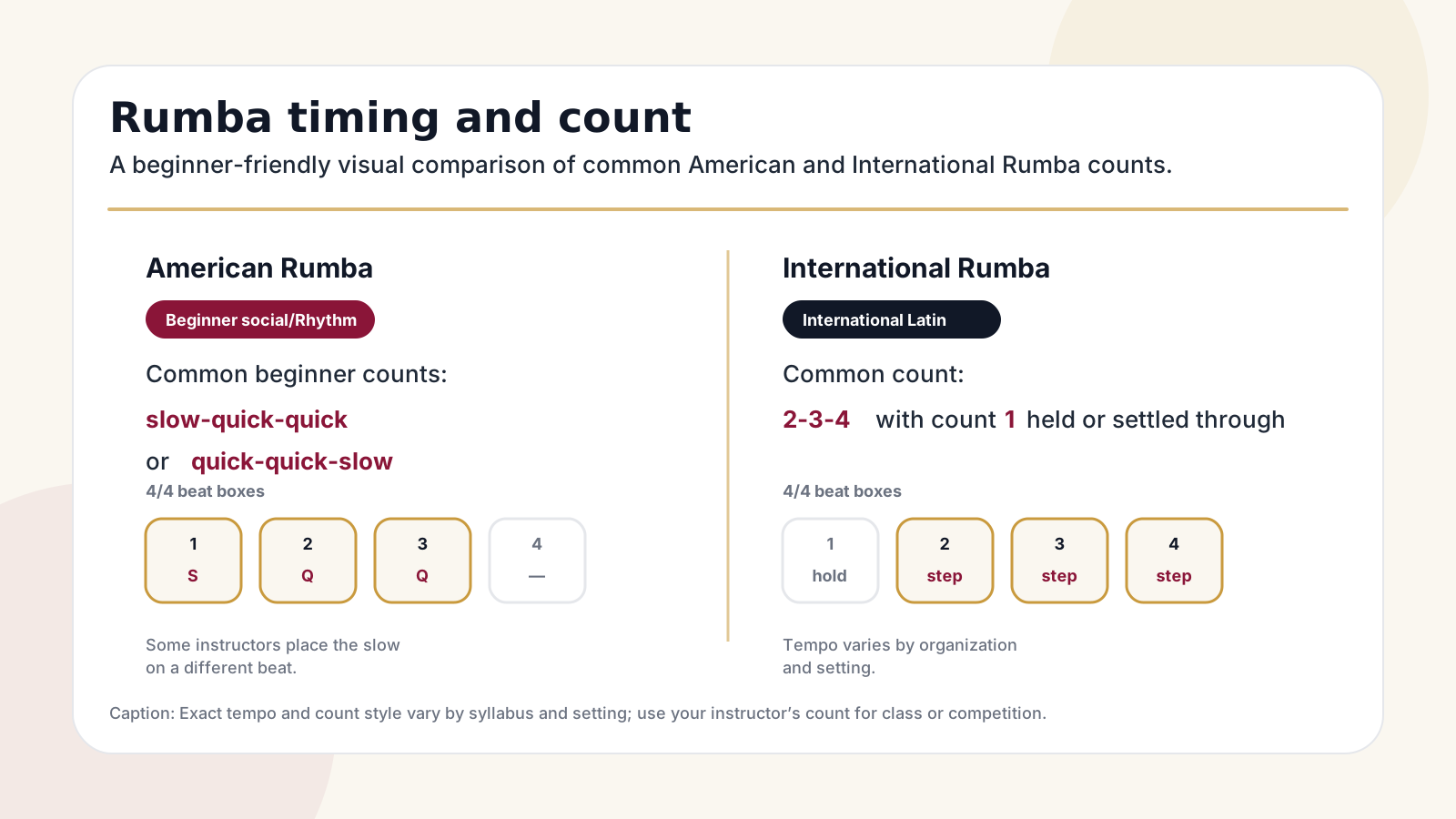
Rumba timing can feel confusing because American Rumba and International Rumba are often taught differently.
In American-style social or American Rhythm settings, many beginners learn Rumba as slow-quick-quick. Some syllabi and instructors also use quick-quick-slow.
In International Latin Rumba, dancers commonly step on counts 2, 3, and 4, then use count 1 as a held or settling count.
| Setting | Common count | Beginner explanation |
|---|---|---|
| American/social Rumba | Slow-quick-quick or quick-quick-slow | Often used with a box-style beginner pattern. |
| International Latin Rumba | 2-3-4, then hold/settle through 1 | Common in International Latin technique and competition contexts. |
| Wedding Rumba | Usually simplified around the song’s steady four-beat pulse | The goal is musical confidence, not syllabus complexity. |
Tempo ranges vary by organization and setting. The practical lesson is that competition organizations, studios, and social playlists may not use one identical tempo number.
Beginner tip: pick one count from your teacher or learning resource and stay with it while you practice. Switching between SQQ, QQS, and 2-3-4 too early can make the dance feel harder than it is. If the counts themselves feel unclear, start with how to count ballroom dance music.
American Rumba vs International Rumba
American and International Rumba share the same broad Rumba family, but they are not identical. The difference matters for timing, figures, technique, and competition context.
| Feature | American Rumba | International Rumba |
|---|---|---|
| Common ballroom family | American Rhythm | International Latin |
| Beginner learning pattern | Often introduced with a box step and SQQ or QQS timing. | Often introduced through basic movements, walks, Cucarachas, New Yorks, and other figures using 2-3-4 timing. |
| Feel | Often social, compact, and approachable for new dancers. | Often more technically precise, with strong emphasis on leg action, timing, and body rhythm. |
| Best beginner use | Social dancing, first lessons, weddings, studio basics. | Ballroom students studying International Latin technique or competition. |
This page keeps both versions together because a beginner searching “rumba dance” usually needs orientation before they know which version they are learning. To compare with other styles, browse the full list of ballroom dance styles.
Basic Rumba steps for beginners
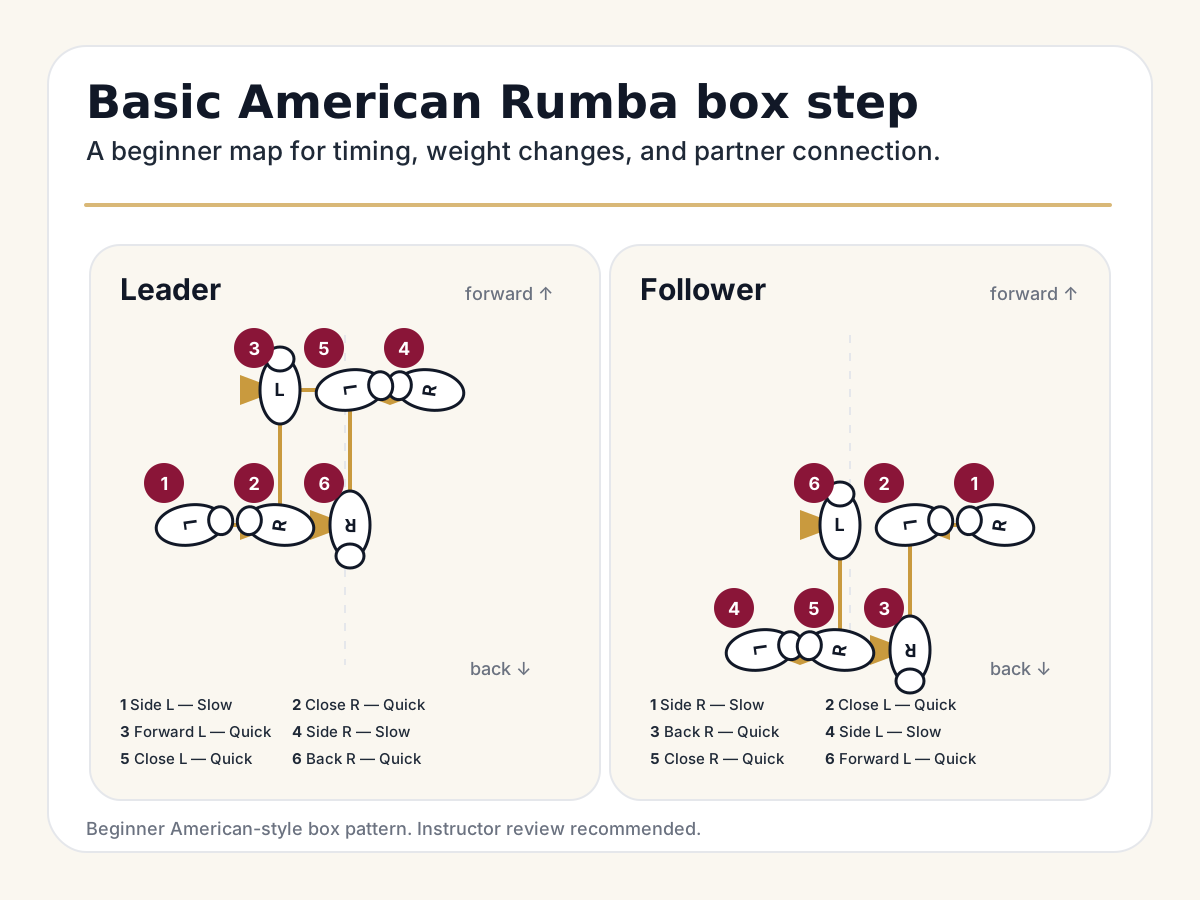
The basic Rumba step most beginners learn first is the American-style Rumba box: a compact square built from side, close, and forward or back steps, danced to a slow-quick-quick count. It fits in a small space and is the simplest way to feel Rumba’s timing and weight changes before adding figures or styling.
This is not the only Rumba basic, and it is not a full replacement for instruction. Treat it as a starter pattern.
A simple leader’s Rumba box pattern
Using a slow-quick-quick count:
- Step side with the left foot — slow.
- Close or collect the right foot toward the left — quick.
- Step forward with the left foot — quick.
- Step side with the right foot — slow.
- Close or collect the left foot toward the right — quick.
- Step back with the right foot — quick.
A simple follower’s Rumba box pattern
The follower mirrors the leader’s pattern:
- Step side with the right foot — slow.
- Close or collect the left foot toward the right — quick.
- Step back with the right foot — quick.
- Step side with the left foot — slow.
- Close or collect the right foot toward the left — quick.
- Step forward with the left foot — quick.
What to focus on first
Do not start by trying to make the movement look dramatic. Start with these three basics:
- Change weight fully on each step.
- Keep steps compact enough that you can stay balanced.
- Count out loud until the rhythm feels steady.
Once the pattern is comfortable, add music. Then add partner connection. Styling should come later. For more on partner connection, read lead and follow in ballroom dance and ballroom frame and posture.
Rumba music and song feel
Rumba music usually has a steady four-beat feel. It often feels smooth, romantic, Latin-influenced, or gently dramatic, but the most important beginner test is whether you can hear a clear pulse.
A song may work for Rumba if:
- It is in 4/4.
- The tempo feels slow to moderate.
- The beat is steady enough to count.
- The mood feels smooth, romantic, or expressive.
- The song does not feel like a Waltz, Swing, or Foxtrot instead.
A song may not be a good Rumba if:
- It is in 3/4. That usually points toward Waltz.
- It is too fast and bouncy. That may fit Cha Cha, Swing, or Salsa better.
- It has a strong swing feel. Foxtrot or Swing may be easier.
- It is extremely slow without a clear beat. Nightclub Two Step may fit better for weddings.
If you are unsure where the beat is, the Ballroom Music & Timing hub and our guide on how to count ballroom dance music will help. You can also check the Ballroom Dance Tempo Chart for reference tempos.
Rumba for weddings
Rumba can be a beautiful wedding first dance when the song has a slow, steady four-beat feel and the couple wants something romantic without needing big travel around the floor.
It works especially well when you want:
- A compact dance that fits a small reception floor.
- A romantic look without a full choreographed show routine.
- Simple turns, side steps, and a clear ending.
- A dance that can be practiced in regular shoes before dance shoes are chosen.
Rumba is not always the right first-dance choice. Choose Waltz if the song is clearly in 3/4. Consider Foxtrot if the song has a smooth, walking, swing-influenced feeling. Consider Nightclub Two Step if the song is very slow and sentimental but does not feel like Rumba.
Social dance relevance
Rumba appears often in ballroom studio classes, social dance parties, wedding dance lessons, and American Rhythm programs. Because the beginner version can be compact, it is practical for smaller floors and mixed-experience social settings.
For social dancing, prioritize:
- Clear timing.
- Comfortable frame.
- Respectful lead and follow.
- Simple patterns before advanced styling.
- Musicality over performance.
Rumba can be expressive, but social Rumba should still feel considerate and comfortable for both partners.
Competition relevance
In competition settings, Rumba appears in both International Latin and American Rhythm contexts. Competition rules, permitted figures, timing, and styling depend on the organization, level, and style.
Beginner note: if you are preparing for competition, do not rely on a general online guide alone. Use your teacher, current rulebook, and the syllabus for your organization and level.
Common beginner mistakes
1. Forcing the hips
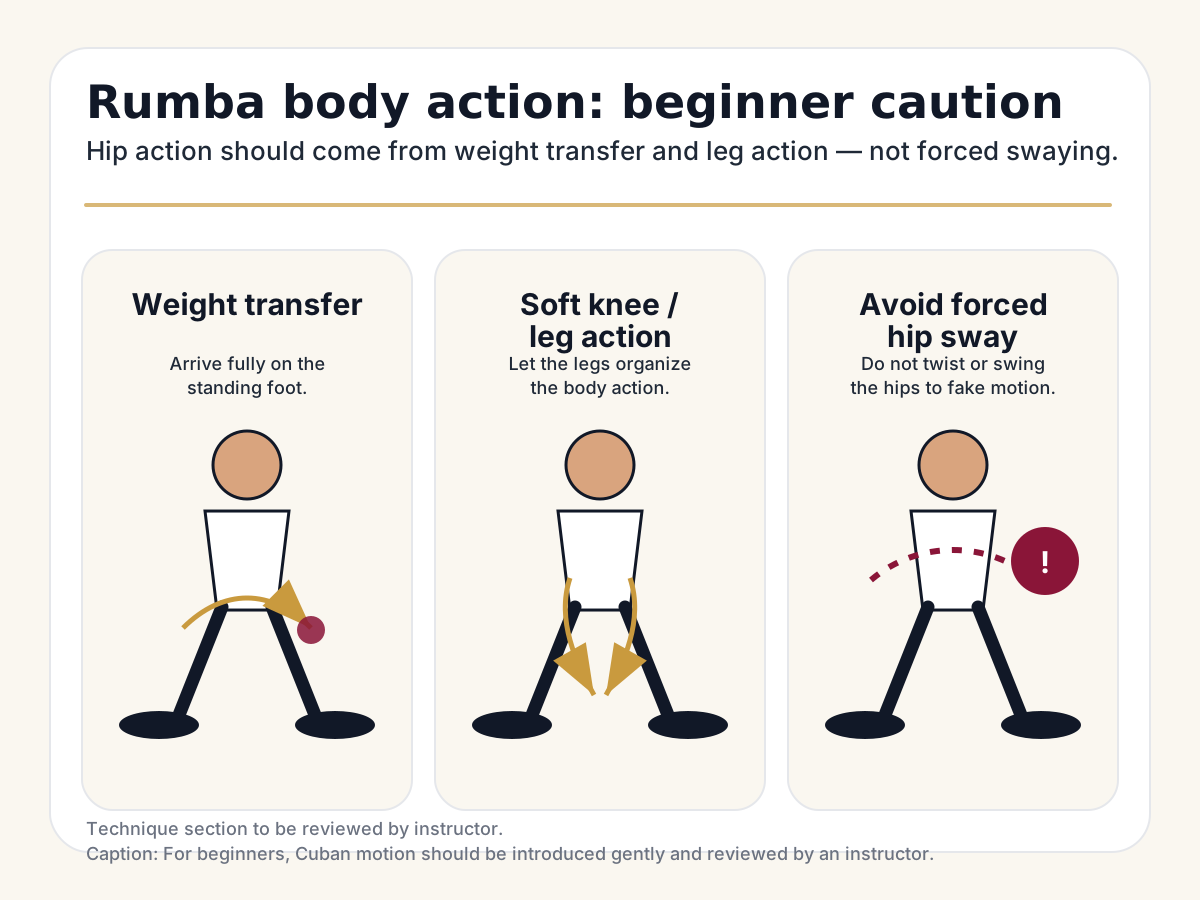
The most common beginner mistake is trying to “do the hips” by swaying or twisting. Rumba body action should come from weight transfer, leg action, foot pressure, and controlled body mechanics.
2. Taking steps that are too big
Large steps make it harder to change weight, stay on time, and remain connected. Keep Rumba compact until your balance and timing are reliable.
3. Rushing the quicks
The quick steps are quicker, not careless. Count slowly enough that each step still receives weight.
4. Holding the upper body too stiffly
A good frame is alive, not rigid. Keep the shoulders relaxed and the arms toned enough to communicate without pulling.
5. Looking down at the feet
It is normal to glance at your feet while learning, but try not to dance the entire pattern looking down. Use counts, not eyesight, to organize the steps.
6. Styling before timing
Arm styling, hip action, and dramatic shapes are not the foundation. Timing, weight transfer, and connection are the foundation.
Beginner practice tips
Use this 15-minute practice structure before trying to make Rumba look polished.
| Time | Practice focus |
|---|---|
| 3 minutes | Clap or tap the count without moving. |
| 4 minutes | Practice weight changes side to side. Say “slow-quick-quick” or your teacher’s count out loud. |
| 4 minutes | Practice the box step slowly without music. |
| 3 minutes | Add music and keep the steps smaller than you think you need. |
| 1 minute | Reset posture: tall spine, soft knees, relaxed shoulders, calm breath. |
Once this feels comfortable, practice with a partner. Keep the goal simple: stay balanced, stay on count, and finish each weight change.