What is Bachata?
Bachata is a Dominican social partner dance danced to Bachata music. In beginner classes, it is often introduced with a compact side basic: three steps and a tap, then the same idea in the other direction.
The dance can feel relaxed, musical, and social rather than formal. It is often danced at Latin nights, social dance parties, Bachata festivals, studio events, and informal gatherings.
On Ballroom Pages, Bachata belongs here as a canonical dance-style guide because many beginners, wedding couples, and social dancers compare it with Salsa, Merengue, Mambo, Cha Cha, and Rumba. This page focuses on Bachata itself: its timing, music feel, basic steps, social etiquette, and beginner learning path.
Where Bachata comes from
Bachata comes from the Dominican Republic and developed alongside Dominican Bachata music. Its history is connected to guitar-based music, bolero influence, Afro-Antillean rhythms, social dancing, and everyday community settings.
That history matters because Bachata is not just a set of classroom steps. It is a living social dance with Dominican roots, international communities, and several modern approaches. Some dancers focus on traditional or Dominican-rooted movement and footwork. Others learn modern, sensual, urban, or fusion approaches shaped by studios, festivals, performances, and global social dance scenes.
For beginners, the respectful takeaway is simple: learn the basic clearly, listen to the music, and avoid assuming that one studio style represents all Bachata.
What Bachata feels like
Bachata usually feels compact and rhythmic. Instead of traveling far across the floor, beginners often learn to keep the steps small and close to the body.
The music often gives dancers a steady pulse, guitar lines, and a clear rhythmic feel. The basic step gives you a simple way to mark the beat: step, step, step, tap.
Partner connection can vary. Some Bachata is danced in open position with a comfortable hand connection. Some is danced closer. Some styles use more body movement or upper-body isolations. None of that should be forced, especially with a beginner or someone you do not know well.
A good beginner goal is not to look dramatic. It is to stay on time, move comfortably, listen to your partner, and enjoy the music.
Bachata timing and how to count it
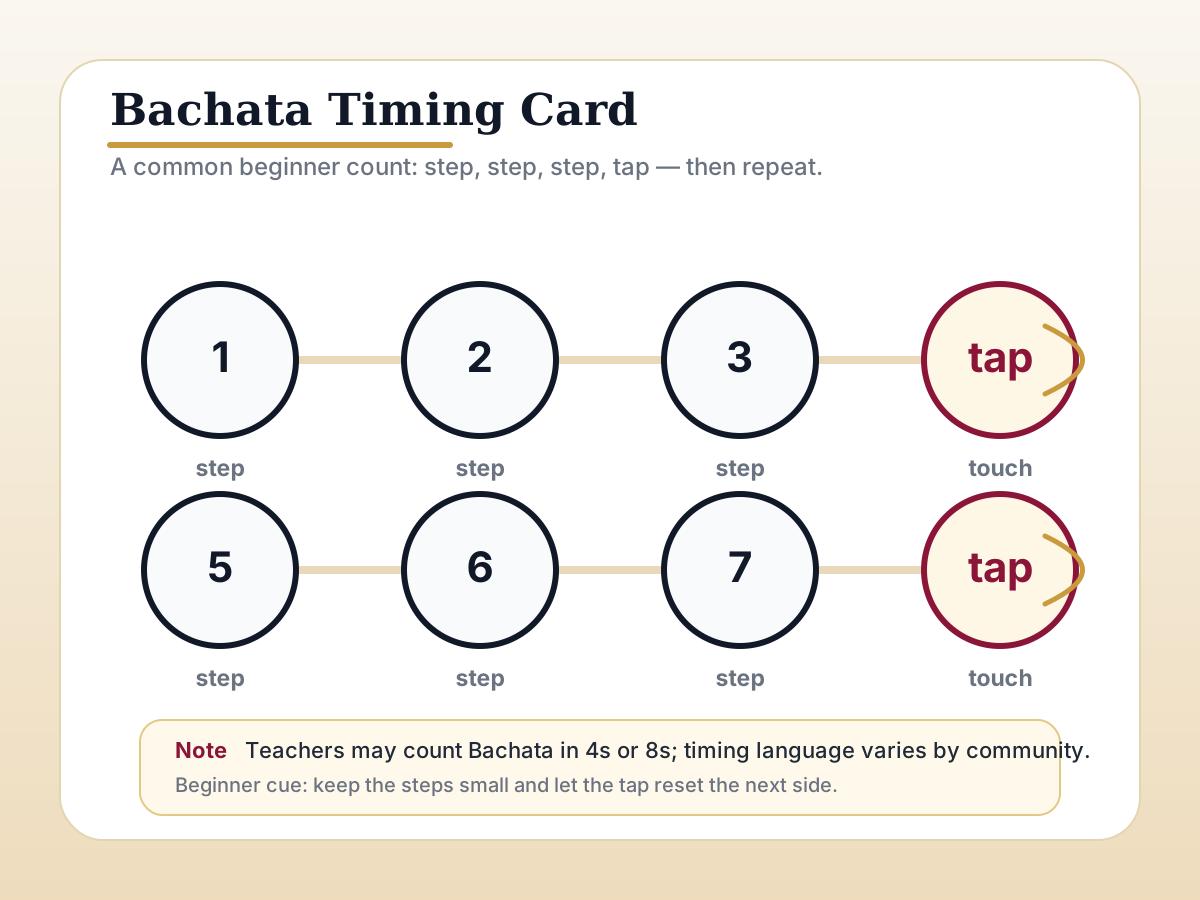
Bachata is commonly taught in 4/4. A beginner-friendly way to count the basic is: 1-2-3-tap, 5-6-7-tap.
The tap usually happens on counts 4 and 8. In many beginner classes, the tap is a touch without a full weight change. Some teachers say “touch,” “tap,” “hip,” or “hold” depending on the style and teaching method.
Teachers and communities may use slightly different timing language. Many beginner classes teach Bachata “on 1,” but Dominican social dancing and experienced communities may use more flexible timing practices. Start with the common classroom count first, then make room for variation.
| Count | What usually happens | Beginner note |
|---|---|---|
| 1 | Step | Start small and grounded |
| 2 | Step | Keep your weight clear |
| 3 | Step | Stay relaxed |
| 4 | Tap or touch | Usually no full weight change |
| 5 | Step opposite direction | Let the next side begin |
| 6 | Step | Keep the same rhythm |
| 7 | Step | Do not rush |
| 8 | Tap or touch | Reset for the next phrase |
Practice note: clap or tap the rhythm before dancing it. Say “step, step, step, tap” until the pattern feels natural.
Basic Bachata steps for beginners
Bachata uses leader and follower roles. These roles are not gendered. Anyone can learn either role.
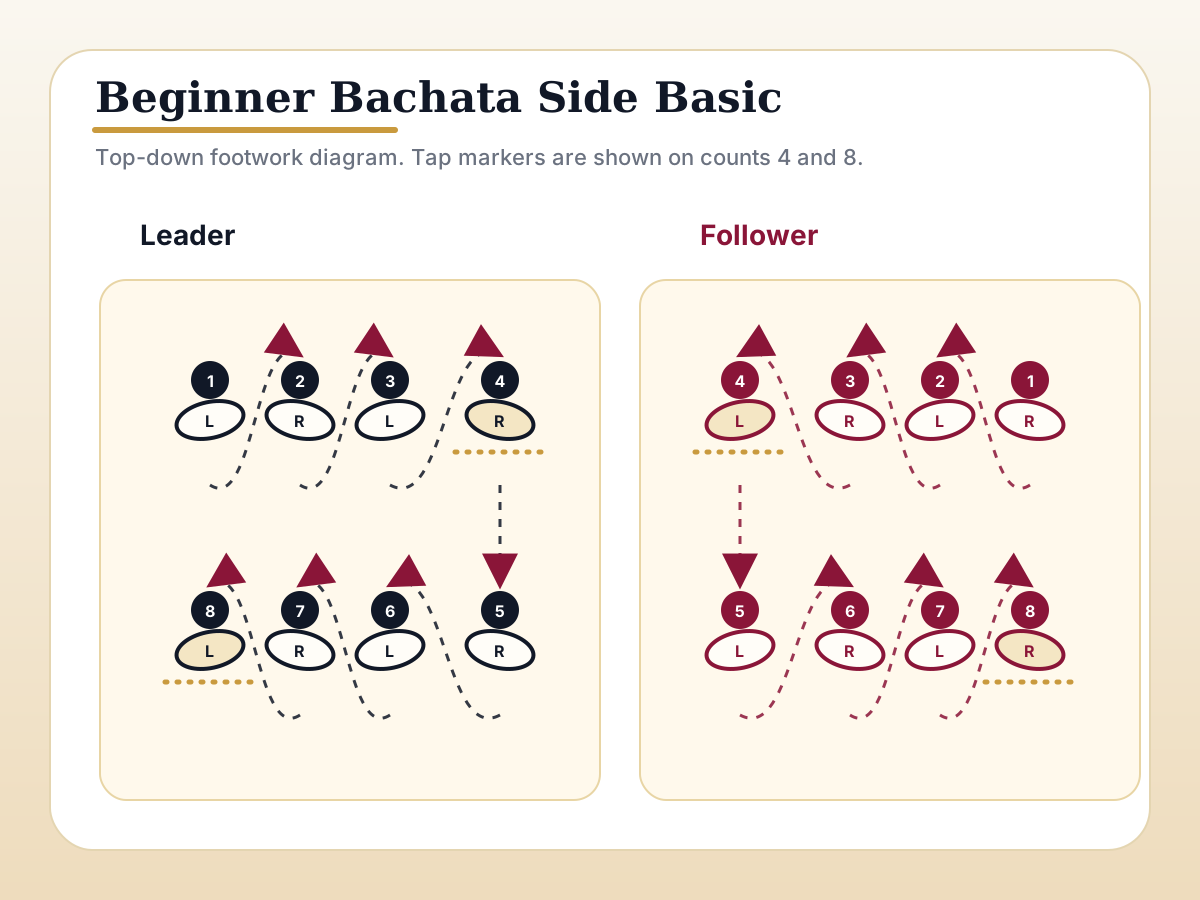
A common beginner version is the side basic. It is useful because it teaches timing, weight changes, and the tap without needing turns or complicated footwork.
| Count | Leader | Follower (mirrors) |
|---|---|---|
| 1 | Step left with the left foot | Step right with the right foot |
| 2 | Bring the right foot toward the left | Bring the left foot toward the right |
| 3 | Step left again with the left foot | Step right again with the right foot |
| 4 | Tap the right foot without fully changing weight | Tap the left foot without fully changing weight |
| 5 | Step right with the right foot | Step left with the left foot |
| 6 | Bring the left foot toward the right | Bring the right foot toward the left |
| 7 | Step right again with the right foot | Step left again with the left foot |
| 8 | Tap the left foot without fully changing weight | Tap the right foot without fully changing weight |
Practice notes
- Keep the steps smaller than you think. Large steps make it harder to stay on time and harder for a partner to follow.
- Do not force hip movement. Natural movement often appears when weight changes are clear and the knees stay relaxed.
- Practice solo first, then with a partner. With a partner, use a light, comfortable connection. The basic should feel easy to follow, not pushed or pulled.
Some teachers also teach box, forward-and-back, diagonal, or in-place basics. Those variations can be useful, but the side basic is the safest first diagram for this page.
For partner-connection fundamentals, see lead and follow in partner dance, and browse the ballroom dance glossary for terms.
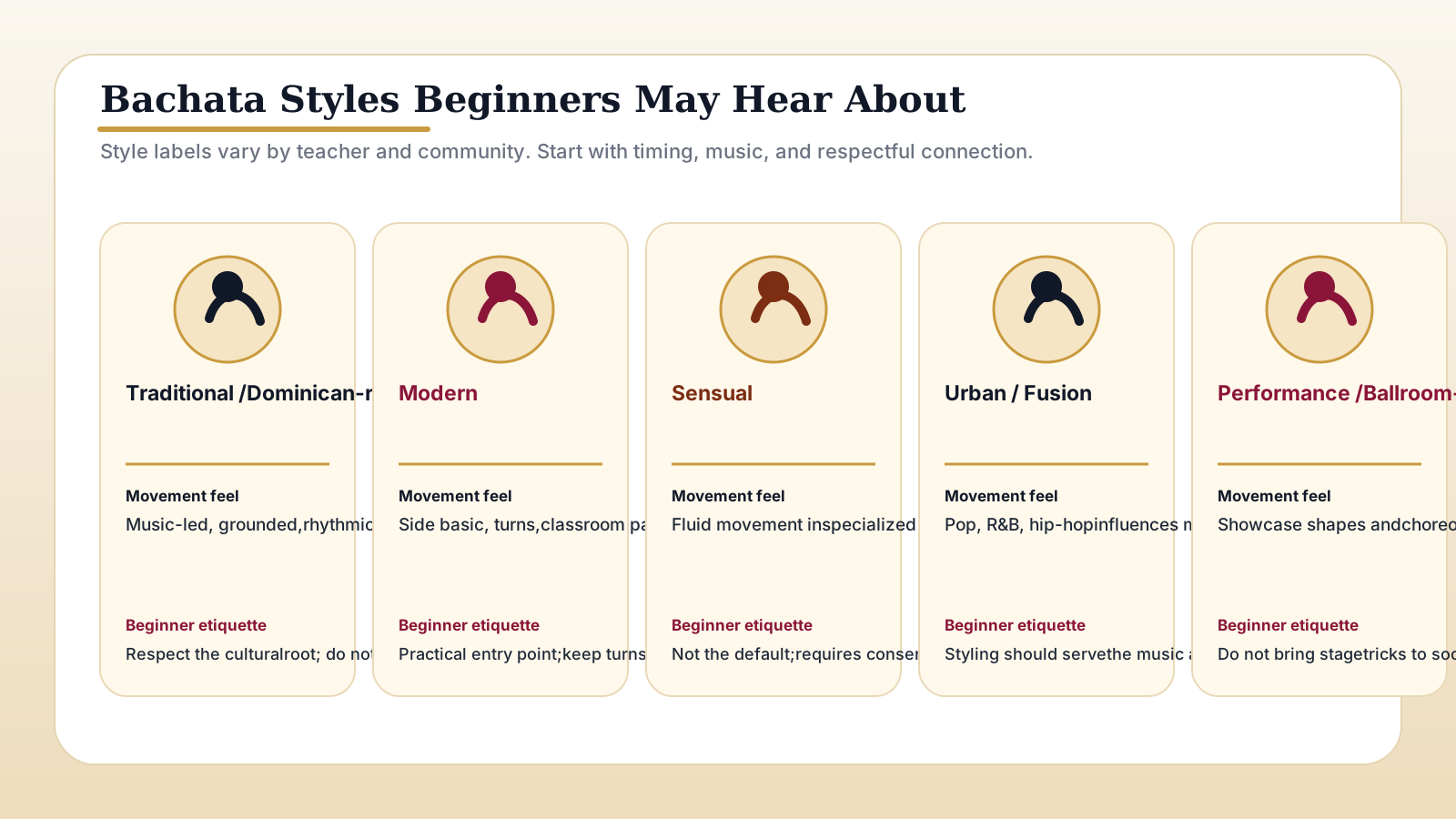
Bachata styles beginners should know
Bachata is not one single look everywhere. Different communities use different style labels, and those labels are not always standardized. For beginners, the goal is not to master every style at once. It is to understand what you may see at classes, socials, festivals, and online.
| Style or approach | Common setting | Movement feel | Beginner note | Etiquette note |
|---|---|---|---|---|
| Traditional / Dominican-rooted | Social dancing, Dominican-rooted classes, cultural workshops | Rhythmic, grounded, often footwork-rich, music-led | Learn to hear the music and keep your basic clear | Do not reduce it to “fast footwork”; respect the cultural root |
| Modern Bachata | Studio classes, social dance nights, mixed Salsa / Bachata events | Side basic, turns, patterns, sometimes Salsa-influenced structure | Often the easiest classroom entry point | Keep turns clear and comfortable |
| Sensual Bachata | Festivals, specialized classes, performance-influenced socials | Fluid body movement, isolations, close connection in some settings | Not the default beginner experience; learn foundations first | Never lead body rolls, head movement, dips, or close hold without consent and instruction |
| Urban / fusion Bachata | Socials, remixes, performance videos, festival communities | May include hip-hop, R&B, pop, or other dance influences | Useful to recognize, but do not let styling replace timing | Make sure the music and partner both support the style |
| Performance / ballroom-influenced | Showcases, studio routines, teams, stage work | More shaped, choreographed, sometimes dramatic | Not the same as casual social Bachata | Do not bring lifts, tricks, or show moves to a crowded social floor |
Bachata music
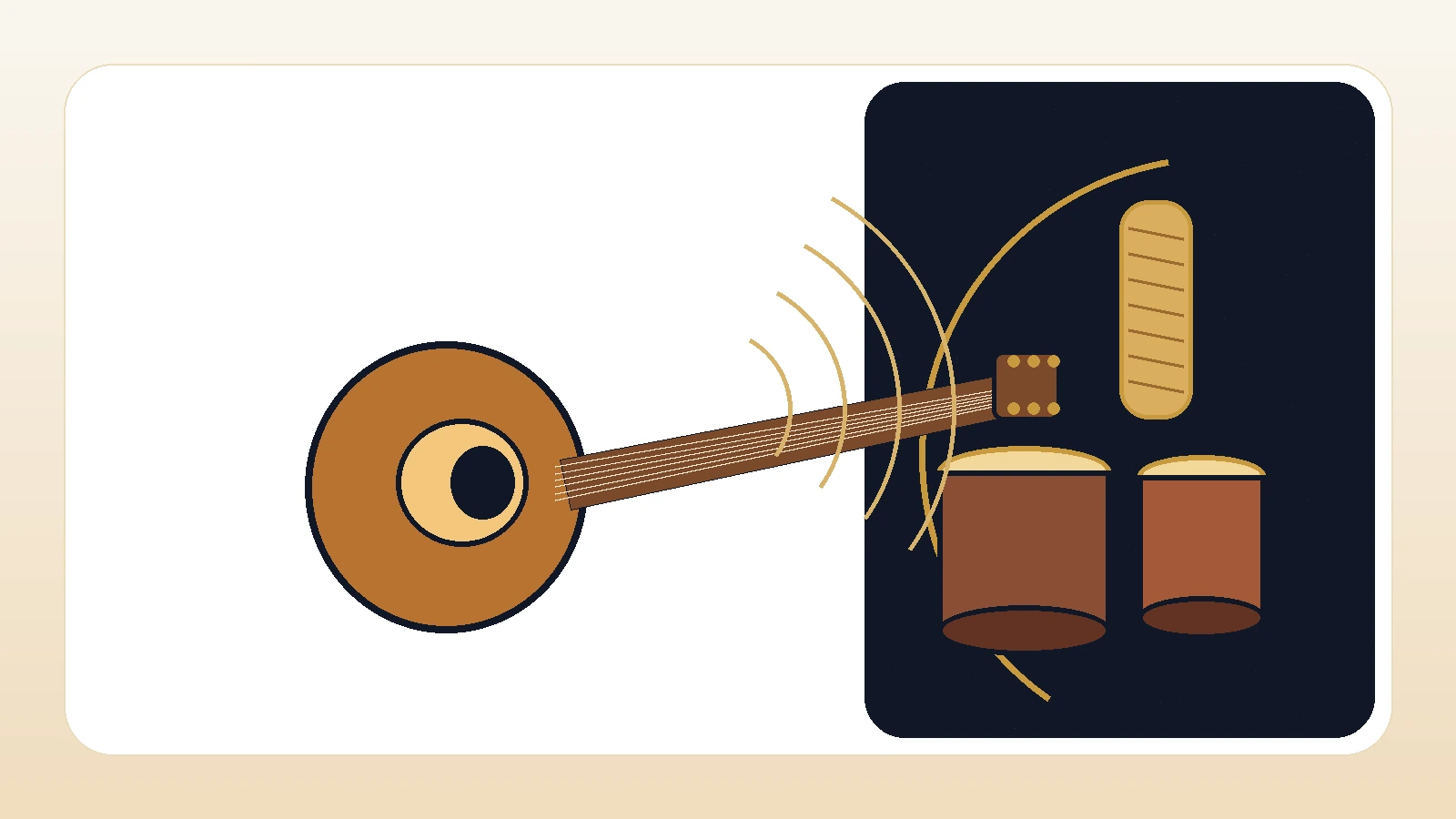
Bachata music often has a clear rhythmic pulse, expressive vocals, guitar lines, and percussion that help dancers feel the count. Commonly discussed Bachata instruments include lead guitar, rhythm guitar, bass, bongos, and güira, though instrumentation varies by era and artist.
For beginners, the most useful listening goal is to find the beat and hear where the tap feels natural. Do not start by worrying about advanced styling. Start with the pulse.
A Ballroom Pages Bachata practice playlist is coming soon.
Helpful next links: how to count ballroom dance music, the Music & Timing hub, and the ballroom dance tempo chart.
Bachata social context and etiquette
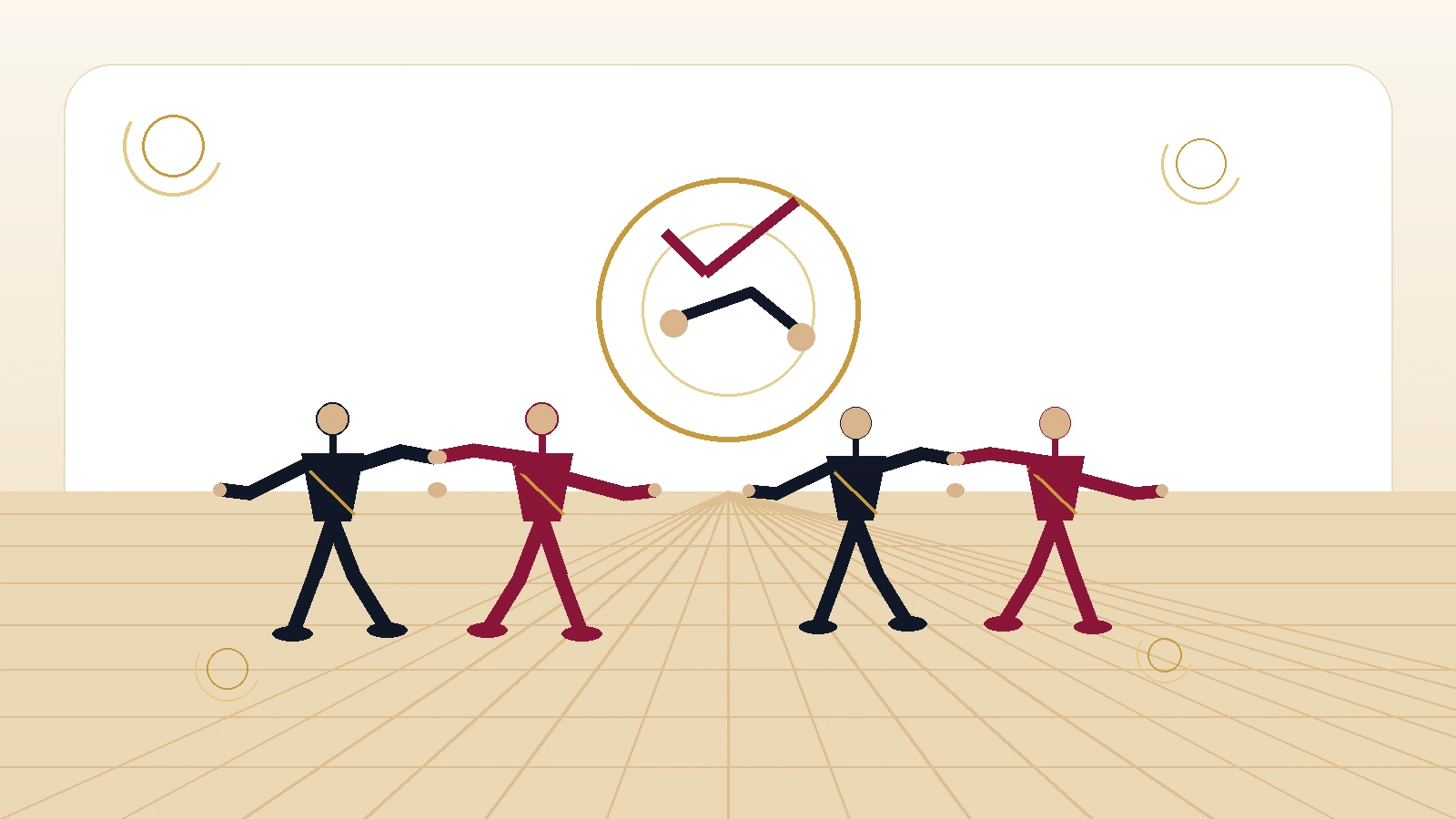
Bachata is often danced socially, which means etiquette matters as much as steps.
A comfortable Bachata dance starts before the first count. Ask politely. Accept “no” gracefully. Choose a connection that fits the setting, the style, and your partner’s comfort.
Beginner etiquette
- Ask before dancing.
- Respect personal space.
- Do not force close hold.
- Do not assume sensual styling is welcome.
- Keep movements comfortable, small, and leadable.
- Do not lead dips, head movement, body rolls, or close-body movement without consent, instruction, and trust.
- Use a clear, gentle partner connection.
- Pay attention to floor space and avoid collisions.
- Thank your partner after the dance.
Good Bachata is not about making a partner do more. It is about sharing the rhythm clearly and comfortably.
Bachata vs Salsa, Merengue, Mambo, Cha Cha, and Rumba
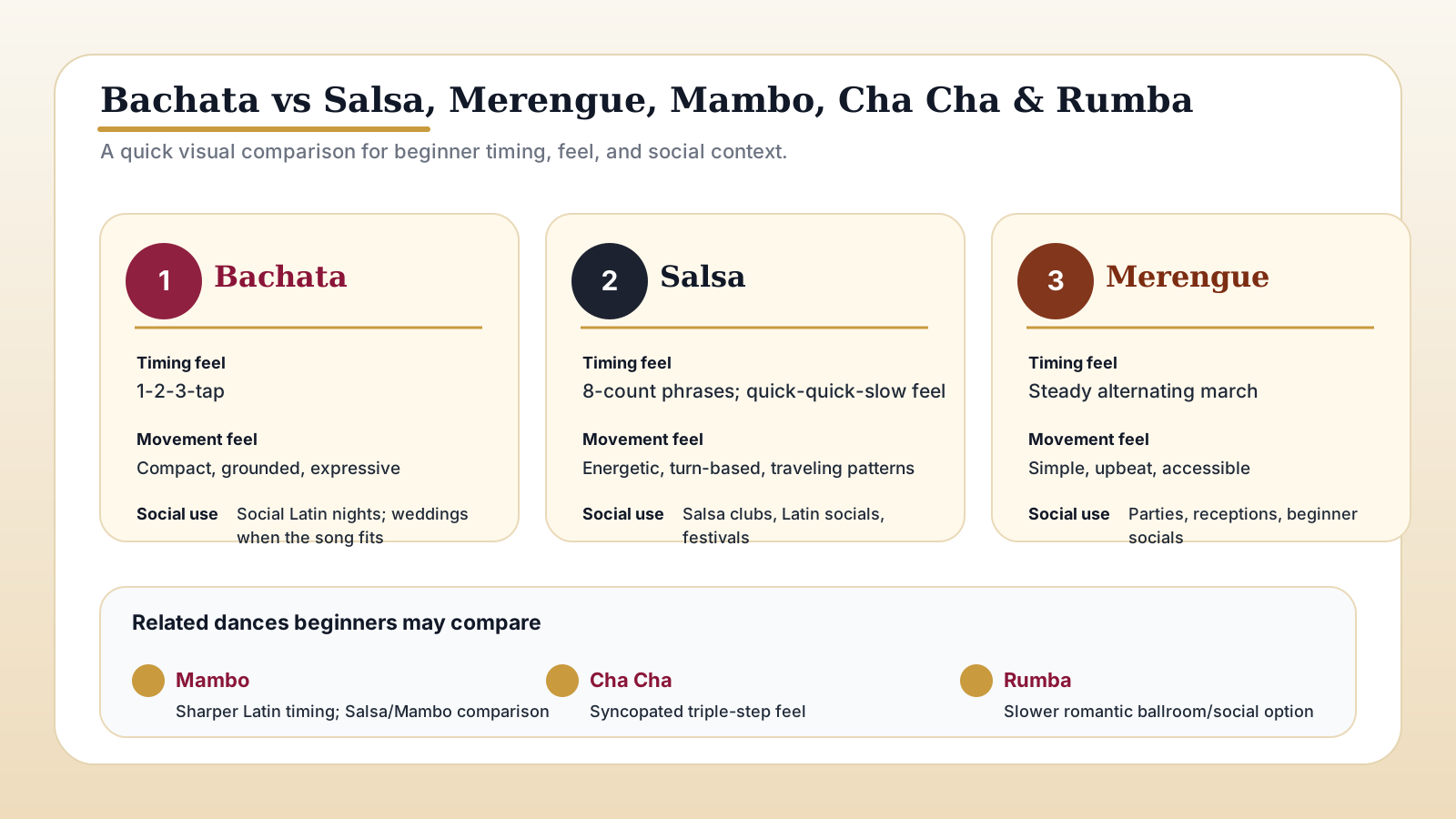
Bachata is often grouped with Salsa and Merengue at Latin social events, but it is not the same dance. Here is the beginner version of the difference.
| Dance | Beginner timing feel | Movement feel | Social use | Beginner learning path |
|---|---|---|---|---|
| Bachata | Often 1-2-3-tap, 5-6-7-tap | Compact, grounded, rhythmic, expressive | Latin socials, Bachata nights, mixed Salsa / Bachata events, weddings when music fits | Start with timing, side basic, tap, and comfortable partner connection |
| Salsa | Often quick-quick-slow phrasing across an 8-count feel | More energetic, turn-based, traveling patterns in many styles | Salsa clubs, Latin nights, socials, festivals | Start with basic timing, forward/back or side basic depending on style, and simple turns |
| Merengue | Steady alternating step feel | Marching, simple, upbeat, accessible | Latin parties, beginner socials, wedding receptions | Often one of the easiest social dances to start |
| Mambo | Related to Salsa but often sharper and more timing-specific | Rhythmic, precise, classic Latin social / ballroom feel | Social and ballroom / rhythm contexts | Learn after basic timing confidence, especially if comparing Salsa and Mambo |
| Cha Cha | Syncopated triple-step feel | Crisp, playful, rhythmically sharp | Ballroom / Rhythm / Latin classes, socials, some wedding songs | Good after you are ready for clearer syncopation |
| Rumba | Slower romantic timing, often box or Latin basic patterns depending on style | Smooth, expressive, controlled | Ballroom classes, weddings, romantic songs | Often useful for slow songs where Bachata rhythm does not fit |
Simple takeaway: choose Bachata when the music has a Bachata feel and you want a compact, rhythmic social dance. Choose Salsa for higher-energy turn patterns, Merengue for a very accessible party dance, Cha Cha for syncopation, Rumba for many slow romantic songs, and Mambo when you want sharper Latin timing.
Common beginner mistakes
| Mistake | Fix |
|---|---|
| Taking steps too large | Keep the steps under your body. Small steps help timing, balance, and partner comfort |
| Forgetting the tap | Say “step, step, step, tap” out loud. The tap is part of the rhythm, not an afterthought |
| Changing weight on the tap by accident | Practice tapping lightly without committing your full weight. This makes the next step easier |
| Rushing the music | Listen before you move. Clap the beat, then step |
| Forcing close hold or body movement | Start with open or comfortable relaxed connection. Close hold and body movement require mutual comfort |
| Pulling with the arms | Lead or follow through clear timing, body direction, and a comfortable hand connection. Avoid yanking |
| Confusing Bachata timing with Salsa or Merengue | Practice each dance to its own music. Bachata’s common beginner basic is three steps and a tap, not a Salsa basic or a Merengue march |
Beginner practice tips
- Practice solo rhythm first. Play Bachata music and step in place: step, step, step, tap. Repeat until you can do it without looking down.
- Practice the side basic slowly. Use small steps. Focus on clean weight changes and a light tap.
- Add a partner only after the rhythm feels steady. When practicing with a partner, start in open position. Keep the connection light and clear.
- Practice etiquette as a skill. Ask before dancing. Ask before trying close hold. Ask before anything that changes comfort level. This is part of being a good social dancer.
- Use music resources. When timing feels confusing, go to the Music & Timing hub and the counting guide. Learning to hear the beat makes every dance easier.
Is Bachata good for weddings?
Bachata can be great for weddings when the song has the right rhythm and the couple wants a warm Latin / social feel. It can work for:
- A first dance with a clear Bachata rhythm.
- A reception dance after the formal first dance.
- Couples who already enjoy Latin music.
- A simple choreographed routine with small steps and one or two comfortable turns.
It is not the best choice for every slow romantic song. Many slow wedding songs fit Rumba, Foxtrot, Waltz, or Nightclub Two Step better than Bachata.
For couples, the best next step is to use the wedding song / style matcher before choosing the dance, or start with the wedding dance guide.
Is Bachata useful for social dancing?
Yes. Bachata is very useful for social dancers because it appears at many Latin dance events, especially mixed Salsa / Bachata socials.
Beginners can use Bachata to build confidence with:
- Hearing 4/4 music.
- Maintaining a steady partner rhythm.
- Dancing in a small space.
- Asking someone to dance.
- Practicing respectful connection.
- Learning how social dance styles vary by room and community.
On a social floor, keep it simple. A clean basic danced comfortably is better than advanced styling that your partner did not ask for. For more, see the social dancing guide.
Is Bachata a ballroom dance?
Bachata is primarily a Dominican-rooted social Latin / Caribbean partner dance. It belongs on Ballroom Pages because the site covers ballroom, social partner dance, wedding dance, music, timing, technique, and beginner learning paths.
That does not mean Bachata should be described as the same thing as core International Latin or American Rhythm syllabus dances. Some competition systems include Bachata in Caribbean dance contexts, and some ballroom studios teach it socially, but the safest beginner wording is: Bachata is a social Latin partner dance that is ballroom-adjacent, wedding-relevant, and useful for social dancers.