What is Nightclub Two Step?
Nightclub Two Step is a partner dance often used for slow or moderate ballads. It gives dancers a repeatable rhythm and a comfortable partner shape, so a slow song can feel more polished than simple swaying without becoming a formal competition routine.
For beginners, the appeal is practical. You do not need a huge dance floor, dramatic choreography, or a long list of figures to begin. You can start with a basic side movement, a small rock step, a relaxed hold, and a few simple turns.
On Ballroom Pages, Nightclub Two Step belongs as a wedding and social dance style page. It is not a duplicate of Rumba, Foxtrot, Waltz, Hustle, West Coast Swing, or the full wedding dance guide. It is one specific dance choice for songs that have the right slow-song feel.
Nightclub Two Step, Nightclub Two-Step, Nightclub 2-Step, and NC2S
You may see the dance written several ways:
- Nightclub Two Step
- Nightclub Two-Step
- Night Club Two Step
- Nightclub 2-Step
- NC2S
- Club Two-Step
This page uses Nightclub Two Step because that is the Ballroom Pages style taxonomy name and the canonical page title.
The spelling matters for SEO and consistency, but the dance community is not always consistent in everyday use. If you are searching videos or asking an instructor, the terms “Nightclub Two-Step” and “NC2S” may also help you find relevant instruction.
Where Nightclub Two Step comes from
Nightclub Two Step is commonly credited to Buddy Schwimmer and is often described as developing from the need for a better way to dance to slow popular ballads.
The exact origin date varies across sources. Some teaching sources describe the dance as developing in the mid-1960s or 1965. Other social-dance teaching materials place its development or popularization later, in the 1970s. Because of that disagreement, this guide uses careful wording: commonly credited to Buddy Schwimmer and developed or popularized for slow-ballad social dancing in the 1960s–1970s.
That history matters because it explains the dance’s purpose. Nightclub Two Step was not created to make beginners look like stage performers. Its practical job is to make slow songs danceable.
Why Nightclub Two Step works for slow songs
Many slow songs are in a steady 4/4 feel. They are too slow for some social dances, not in 3/4 like a Waltz, and not always rhythmically clear enough for a Rumba or Foxtrot. Nightclub Two Step can give those songs a gentle structure.
The basic idea is simple:
- You hear a steady pulse.
- You move side to side with small, controlled steps.
- You use a rock-and-replace action to keep the dance connected to the music.
- You add gentle turns only after the basic feels comfortable.
That does not mean it works for every slow song. Some ballads are too free, too rubato, too fast, too slow, or too irregular. Before choosing it for a wedding first dance, use the song matcher: match your wedding song to a dance style.
For more help with pulse, tempo, and counting, see how to count ballroom dance music and the ballroom dance tempo chart.
What Nightclub Two Step feels like
Nightclub Two Step should feel smooth, relaxed, and connected.
It is usually more structured than generic slow dancing, but less formal than a competition ballroom routine. The feeling is romantic and practical: a couple can move together, turn gently, and stay close to the music without needing a dip, lift, lean, or complicated show move.
A good beginner version feels:
- small enough for a crowded floor,
- clear enough for both partners to know where their weight is,
- soft enough for a romantic song,
- steady enough to stay on the beat,
- and simple enough to enjoy while still looking polished.
Think of it as a slow-song partner dance with a real basic—not a performance requirement.
Nightclub Two Step timing and how to count it
Nightclub Two Step has more than one common teaching convention. This is important.
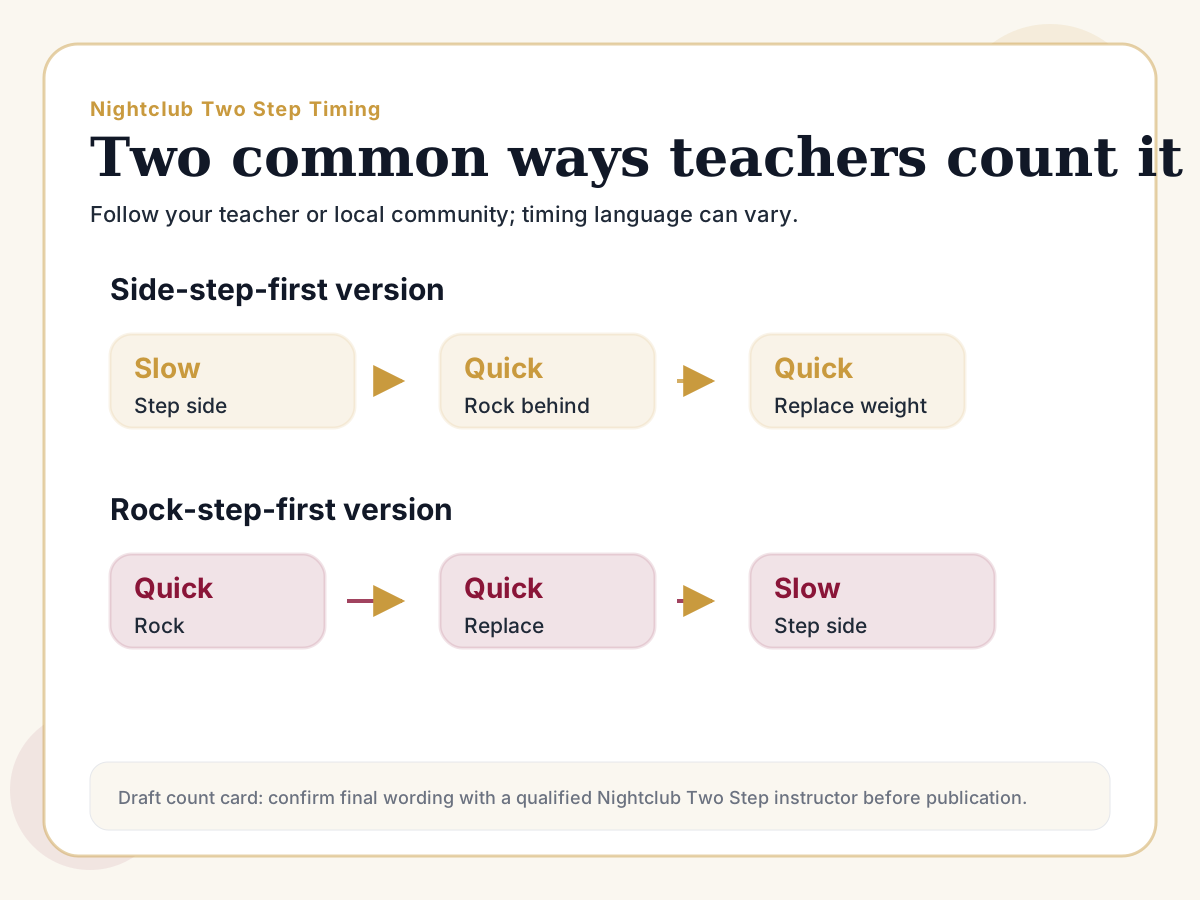
Some teachers start with a side step and count it as slow-quick-quick. Others start with the rock step and count it as quick-quick-slow or 1&2, 3&4. Both appear in reputable teaching materials, and different communities may prefer different versions.
For this beginner guide, we use the side-step-first version as the main explanation because it maps cleanly to the slow, flowing first-dance feel.
| Teaching convention | Plain-English count | Beginner idea | Note |
|---|---|---|---|
| Side-step-first version | Slow, quick-quick; slow, quick-quick | Step side, rock behind, replace; repeat other side | Good for explaining the flowing slow step first |
| Rock-step-first version | Quick-quick-slow; quick-quick-slow or 1&2, 3&4 | Rock, replace, step side; repeat other side | Common in some teaching lines and communities |
| Local / community variation | Ask your teacher | Match the local convention | Do not assume one version is universal |
The exact words matter less than the weight changes. You are learning when to step, when to replace weight, and how to keep the movement calm and connected.
Basic Nightclub Two Step steps for beginners
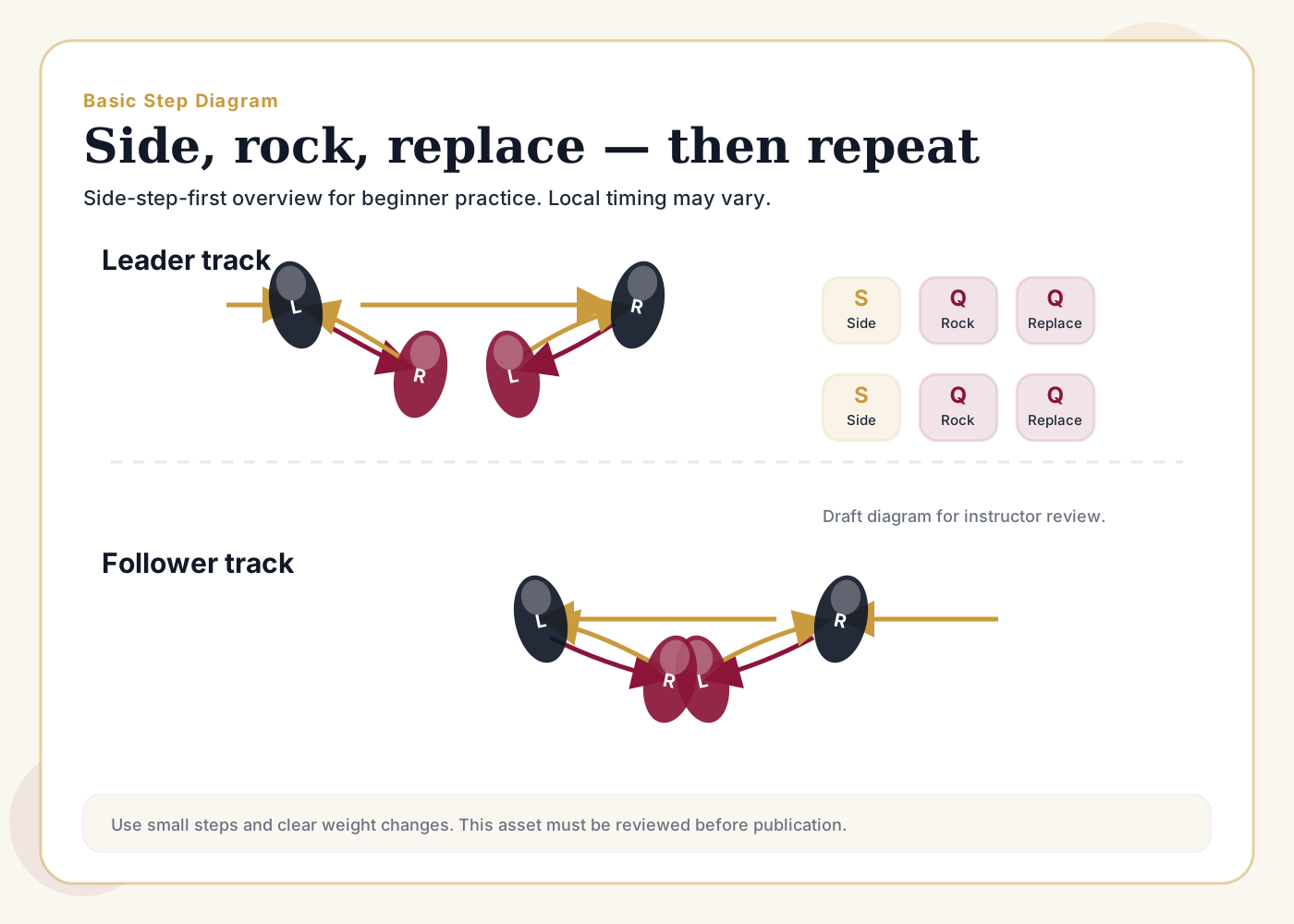
The following is a beginner-safe overview, not a substitute for instruction. Use it to understand the shape of the basic before practicing with a teacher or video. This explanation uses the side-step-first slow-quick-quick version. Leader and follower are dance roles, not gender rules — either role can be danced by anyone.
| Count | Leader | Follower (mirrors) |
|---|---|---|
| Slow | Step side left | Step side right |
| Quick | Rock the right foot gently behind | Rock the left foot gently behind |
| Quick | Replace weight forward to the left foot | Replace weight forward to the right foot |
| Slow | Step side right | Step side left |
| Quick | Rock the left foot gently behind | Rock the right foot gently behind |
| Quick | Replace weight forward to the right foot | Replace weight forward to the left foot |
Keep the steps small. The rock step should feel like a controlled weight change, not a lunge. Stay balanced over your own feet — do not hang on your partner or guess ahead.
Practice notes
Practice the rhythm alone first: side, rock, replace; side, rock, replace. Then practice with a partner using a gentle connection. The leader should not pull with the arms. The follower should not collapse into the hold. Both partners should keep the steps small enough to control.
For partner-connection fundamentals, see lead and follow in ballroom dance and frame and posture basics, and browse the ballroom dance glossary for terms.
Nightclub Two Step for weddings
Nightclub Two Step can be a strong wedding first-dance option when the song is slow, romantic, steady, and in a comfortable 4/4 feel.
It is especially useful when couples want something more polished than swaying but do not want a dramatic routine. The basic gives you a repeatable pattern. Simple turns give the dance shape. A clear beginning and ending can make it feel planned without making it stressful.
It may not be the best choice when:
- the song is clearly in 3/4, where Waltz may fit better,
- the song has a stronger Latin/Rumba feel, where Rumba may fit better,
- the song has a smooth walking swing feel, where Foxtrot may fit better,
- the song is irregular, very slow, or difficult to count, where simple slow dancing may be safer.
For the full wedding pathway, see the wedding dance guide, match your wedding song to a dance style, first dance songs by dance style, and the first dance practice plan.
Nightclub Two Step music and slow song fit
Nightclub Two Step often fits smooth ballads, slow pop songs, country ballads, soft rock, easy-listening, or R&B-style songs when the pulse is steady enough to dance.
Do not choose it by genre alone. A country song may work, but not every country ballad will. A pop ballad may work, but not every pop ballad will. The feel matters more than the label.
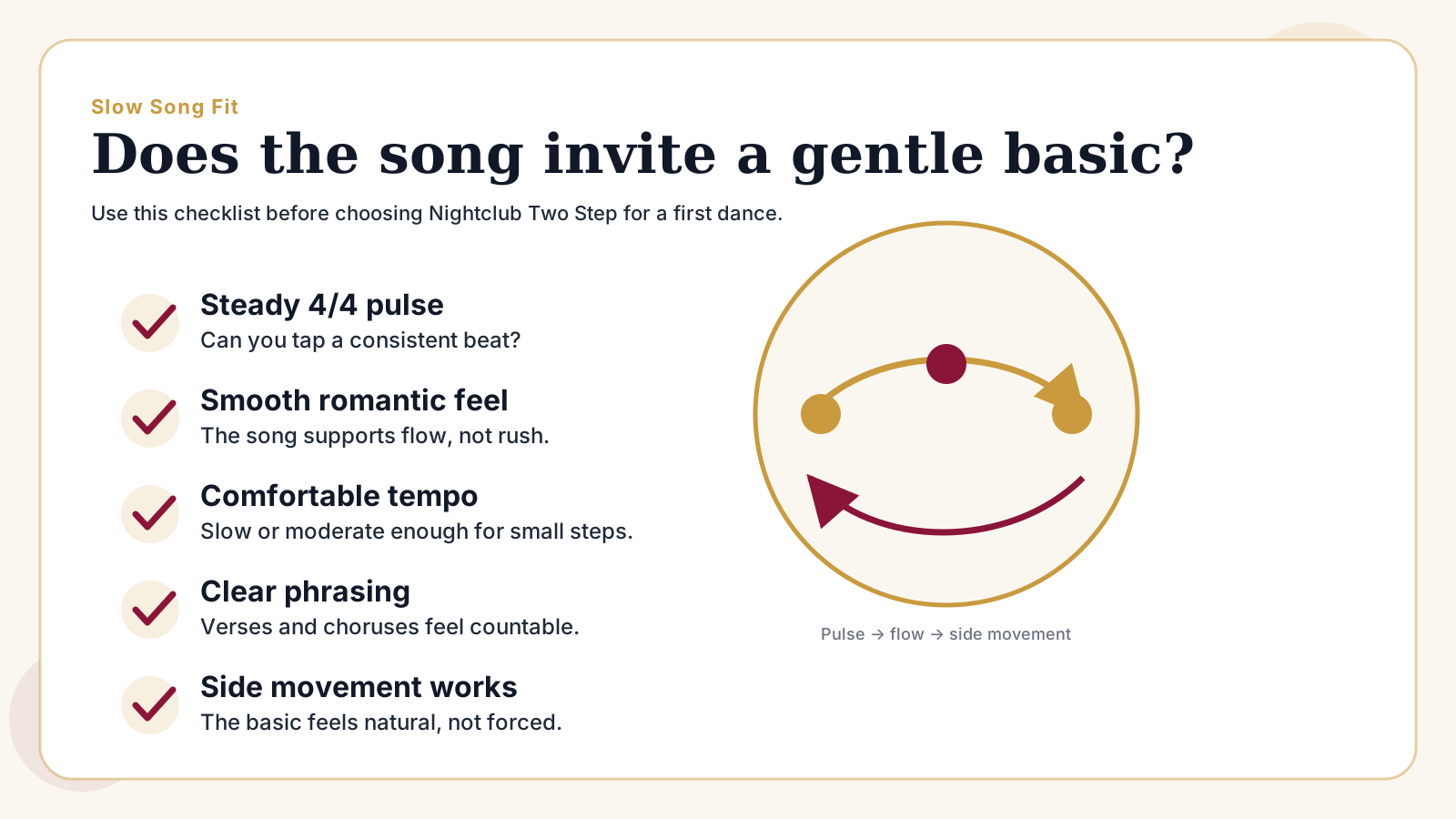
Does your song fit? Checklist
- Is the song in a steady 4/4 feel?
- Is it slow or moderate enough for comfortable steps?
- Does it have a smooth romantic feel?
- Can you hear a consistent pulse?
- Does it support side movement and gentle turns?
- Can you count it without fighting the music?
- Does it feel comfortable for both partners?
If the answer is mostly yes, Nightclub Two Step may be worth trying. If you are not sure, compare it with Rumba, Foxtrot, Waltz, and the wedding song matcher.
A Ballroom Pages Nightclub Two Step playlist is coming soon.
Nightclub Two Step for social dancing
Nightclub Two Step is useful outside weddings because slow songs appear at studio socials, country dance events, mixed social dances, wedding receptions, and partner-dance parties.
The goal is not to take over the floor. The goal is to dance comfortably with your partner and the room around you.
Beginner etiquette
- Ask before dancing.
- Respect a no.
- Keep your steps compact, especially on crowded floors.
- Use clear, gentle connection instead of pulling.
- Do not force turns, dips, leans, or dramatic moves.
- Stay aware of other couples, tables, photographers, and guests.
- Adapt to the song and the crowd.
- Thank your partner when the dance ends.
For more, read social dance etiquette, the broader social dancing guide, and lead and follow in ballroom dance.
Nightclub Two Step vs Rumba, Foxtrot, Waltz, Hustle, West Coast Swing, and generic slow dancing
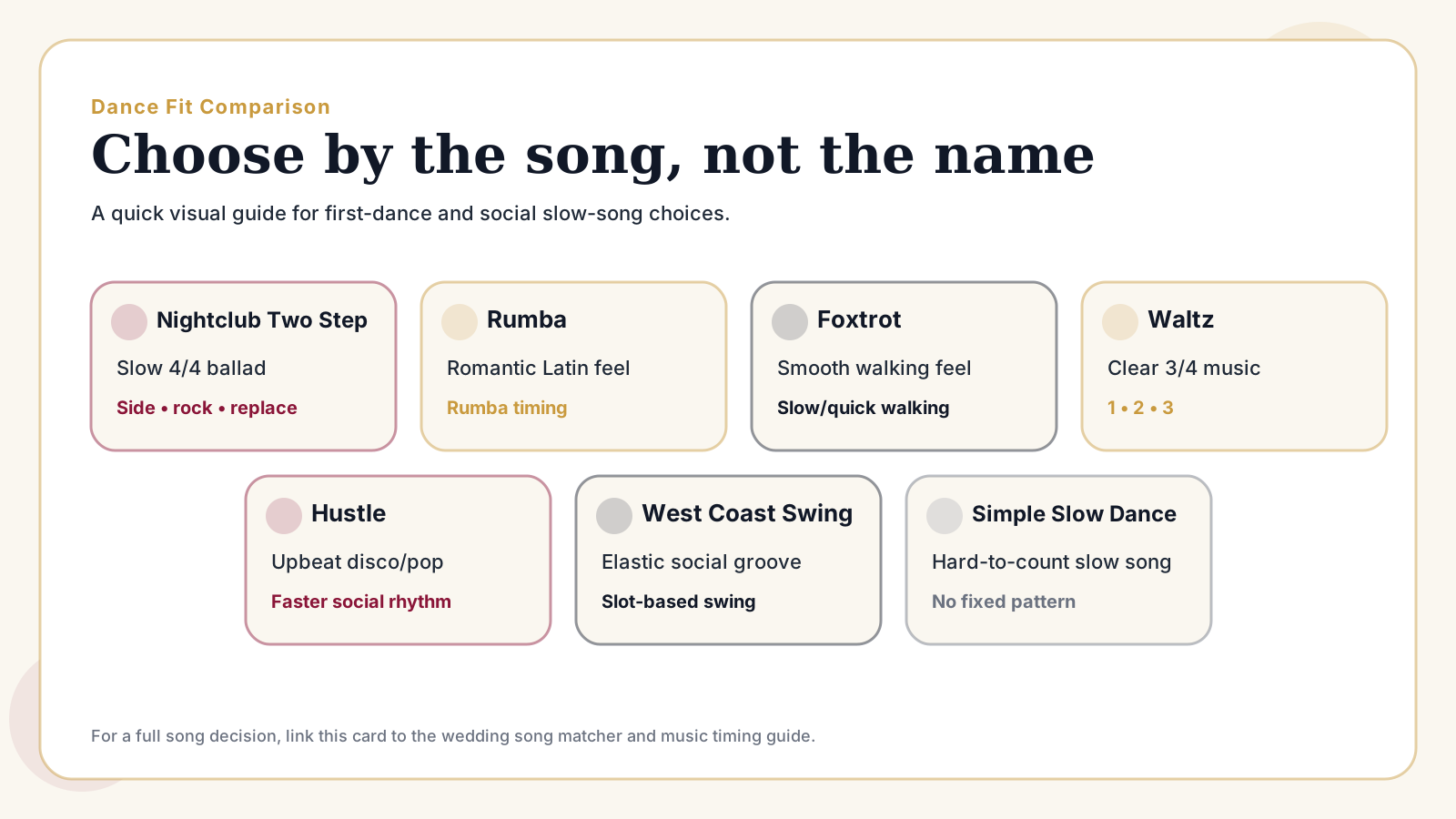
| Dance | Best song feel | Timing feel | Wedding use | Social use | Beginner choice |
|---|---|---|---|---|---|
| Nightclub Two Step | Slow or moderate 4/4 ballads with a smooth romantic pulse | SQQ or QQS depending on teaching convention | Strong option for many slow first-dance songs | Useful for slow songs at socials and receptions | Good when you want structure without a formal routine |
| Rumba | Romantic songs with clearer Latin/Rumba rhythm | Rumba timing depends on style and teacher | Strong option for romantic first dances | Common ballroom/studio dance | Good when the song has a Rumba feel |
| Foxtrot | Smooth walking rhythm, swing, jazz, big-band, or some classic pop | Slow/quick walking feel | Strong for elegant, traveling first dances | Common ballroom/social dance | Good when the song wants walking movement |
| Waltz | Clear 3/4 music | 1-2-3 | Best when the song is truly in 3/4 | Classic ballroom/social dance | Good only when the song has a waltz meter |
| Hustle | More upbeat disco/pop dance energy | Faster social rhythm | Better for reception dance moments than slow first dances | Strong social dance | Good when the song is too energetic for Nightclub Two Step |
| West Coast Swing | Blues, pop, R&B, or swing-influenced songs with elastic phrasing | Slot-based swing structure | Possible, but often more advanced for first dances | Strong social dance | Good when dancers want a swing-based social style |
| Generic slow dancing | Any slow song where steps are not the focus | No fixed count required | Safe and simple | Informal | Best when the couple wants zero structure or the song is hard to count |
For wedding couples, the practical question is simple: does your song invite a repeatable side-and-rock slow dance, a Latin/Rumba feel, a Foxtrot walking feel, a Waltz 1-2-3 feel, or just a simple sway? You can also try Hustle for faster social songs, West Coast Swing for slow-to-midtempo social songs, or East Coast Swing for reception dancing.
Common beginner mistakes
| Mistake | Fix |
|---|---|
| Choosing it for a song that does not fit | Test the pulse first. If you cannot hear a steady beat, try simple slow dancing or ask a teacher to help match the song |
| Rushing the slow step | Let the slow count breathe. The dance should feel calm, not frantic |
| Taking steps too large | Keep the basic compact. Small steps are easier to balance and better for weddings and social floors |
| Pulling with the arms | Use relaxed posture and body direction. Connection should guide, not yank |
| Over-choreographing before the basic feels natural | Build the dance around a comfortable basic, one or two turns, and a clean ending |
| Adding dips before learning balance and comfort | Skip dips at first. If you add one later, learn it from a qualified instructor and practice safely in the shoes and clothing you will actually wear |
| Confusing it with Rumba, Foxtrot, or generic slow dancing | Compare the song feel. Nightclub Two Step is its own slow-song partner dance with a repeatable count and basic |
| Forgetting floor awareness at weddings | Watch the space. Reception floors are full of guests, photographers, dresses, tables, drinks, and unpredictable traffic |
Beginner practice tips
- Practice rhythm alone. Clap or tap the rhythm before stepping. Try “slow, quick-quick” or “quick-quick-slow,” depending on the version you are learning.
- Practice weight changes. Move your full weight from foot to foot. Avoid tapping without transferring weight.
- Keep steps small. Small steps are easier to control and more elegant on a crowded floor.
- Practice with a partner slowly. Start without turns. Focus on posture, balance, and comfortable connection.
- Add one simple turn. After the basic feels easy, add one gentle underarm turn or simple change of direction. Do not add multiple turns until both partners feel steady.
- Test your song. Play your chosen song and try the basic for one full verse or chorus. If the rhythm feels forced, revisit the song matcher.
- Practice the entrance and ending. For weddings, the first 10 seconds and last 10 seconds matter. You do not need a complicated middle if the start and finish feel confident.
Is Nightclub Two Step good for a wedding first dance?
Yes, it can be a very good wedding first-dance choice when the song has the right slow 4/4 pulse and romantic feel.
It works best for couples who want:
- more structure than swaying,
- less formality than a full ballroom routine,
- a slow-song dance that can fit a small reception floor,
- simple turns without showy choreography,
- and a dance that feels relaxed and connected.
Another dance may fit better if the song is clearly a Waltz, has a stronger Rumba rhythm, wants Foxtrot-style walking movement, or is too irregular to count. Use match your wedding song to a dance style to decide.
Is Nightclub Two Step useful for social dancing?
Yes. It is useful anywhere slow songs appear in a partner-dance setting.
That may include studio socials, wedding receptions, country dance events, mixed ballroom parties, and moments at a social dance where the music slows down.
For social dancing, keep it compact and considerate. Use a comfortable hold, avoid forcing moves, adapt to your partner’s level, and stay aware of other people on the floor. New to partner dancing? Start with ballroom dance for beginners and frame and posture basics.
Is Nightclub Two Step a ballroom dance?
It depends on how strictly someone is using the word “ballroom.”
Nightclub Two Step is primarily a social and wedding partner dance. It is often taught in ballroom and social dance studios, and it appears in some country-western competition contexts. That makes it very relevant for Ballroom Pages.
But it should not be presented as identical to the core International Standard, International Latin, American Smooth, or American Rhythm syllabus dances. On this site, it belongs as a Wedding / Social dance style.