
What is West Coast Swing?
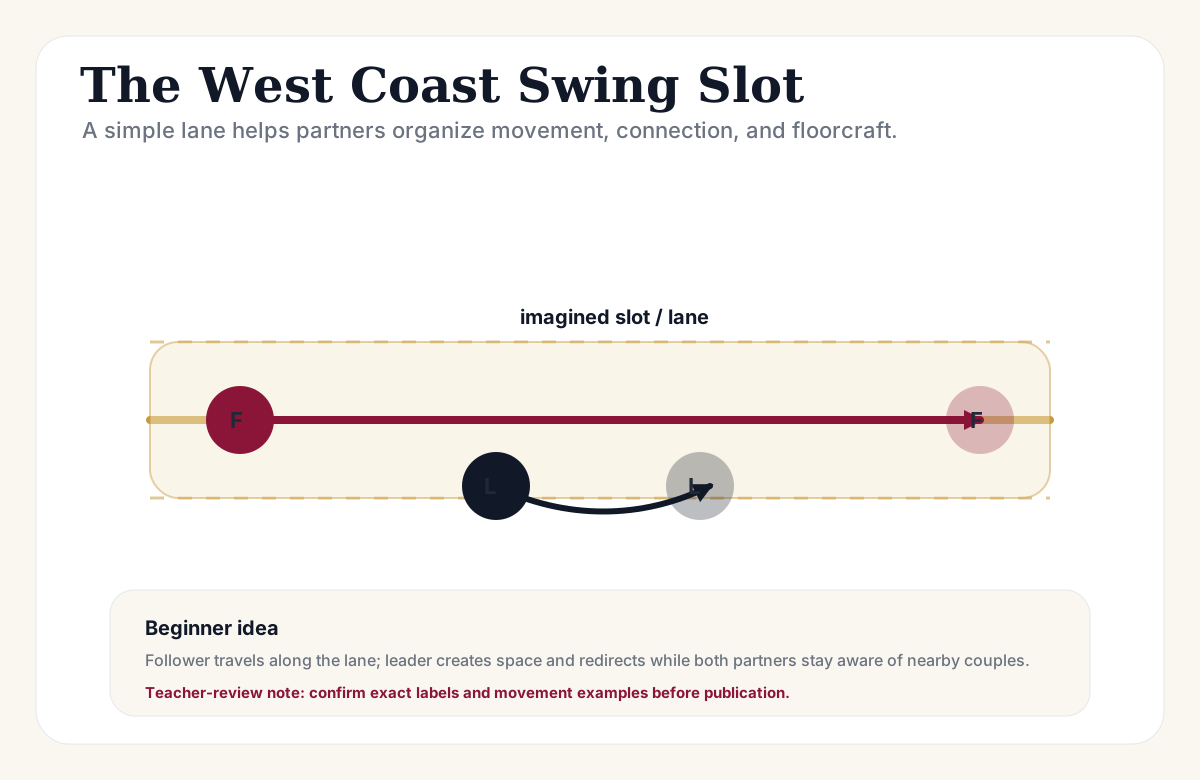
West Coast Swing, often shortened to WCS, is a social partner swing dance built around a slot: an imaginary line where partners trade places, pass each other, and return to connection.
In plain English, WCS feels like a conversation. One partner leads an idea, the other responds, and both dancers stay connected to the music. It is smooth rather than bouncy, flexible rather than rigid, and social rather than performance-only.
On Ballroom Pages, West Coast Swing belongs in the Dance Styles / Social section. It is included because it is an important social partner dance, not because it is identical to East Coast Swing, Lindy Hop, Jive, Hustle, Country Swing, or Salsa.
A beginner does not need to know every pattern to understand the dance. Start with four ideas:
- The dance uses a slot.
- Many basics use 6-count timing.
- The anchor step helps finish patterns.
- Connection should feel comfortable, not forceful.
Where West Coast Swing comes from
West Coast Swing has roots in earlier swing dances, especially Lindy Hop, and developed strongly in California. WSDC connects WCS to Savoy Style Lindy, notes Dean Collins’ important influence, and cautions against treating one person as the sole inventor of the dance.
The California State Capitol Museum describes WCS as a California story rooted in Lindy Hop and later Jitterbug. It also notes that the straight-line quality of the dance suited Hollywood filming better than circular jitterbug movement, and that West Coast Swing became California’s official State Dance in 1988.
For this page, the practical takeaway is simple: WCS comes from the swing family, but modern WCS has its own slot, anchor, timing habits, music culture, and social community.
What makes West Coast Swing different?
The biggest difference is the slot.
In many social dances, couples rotate in place, travel around the room, or use circular movement. In WCS, the partnership is usually organized along a long, narrow line. The follower often travels along the slot while the leader clears the path, redirects the movement, or changes sides.
That slotted structure helps WCS feel smooth and elastic. It also makes the dance practical on crowded social floors because nearby couples can line up their slots and avoid crashing into each other.
Another difference is musical flexibility. WCS dancers often use swing, blues, R&B, pop, contemporary, country, funk, and other clear-groove music. That does not mean every song works equally well. It means WCS is built to adapt more than many beginner ballroom dances.
Finally, WCS uses an anchor at the end of many patterns. The anchor is not just “extra steps.” It helps both partners settle, feel the connection, and prepare for whatever comes next.
What West Coast Swing feels like
West Coast Swing often feels smooth, elastic, and relaxed from the outside. Inside the partnership, it should feel clear and responsive.
Beginners often hear words like stretch, compression, extension, and connection. These can sound technical, but the basic idea is simple:
- You should feel your partner through the connection.
- The connection should help movement, not force it.
- Both partners should keep their own balance.
- Nothing should feel like yanking, dragging, collapsing, or guessing.
WCS can also feel playful. Because the dance is social and musical, dancers often respond to accents in the song, change styling, or let the partnership breathe. Beginners should not rush into that. Learn the slot, timing, and comfortable connection first.
West Coast Swing timing and how to count it
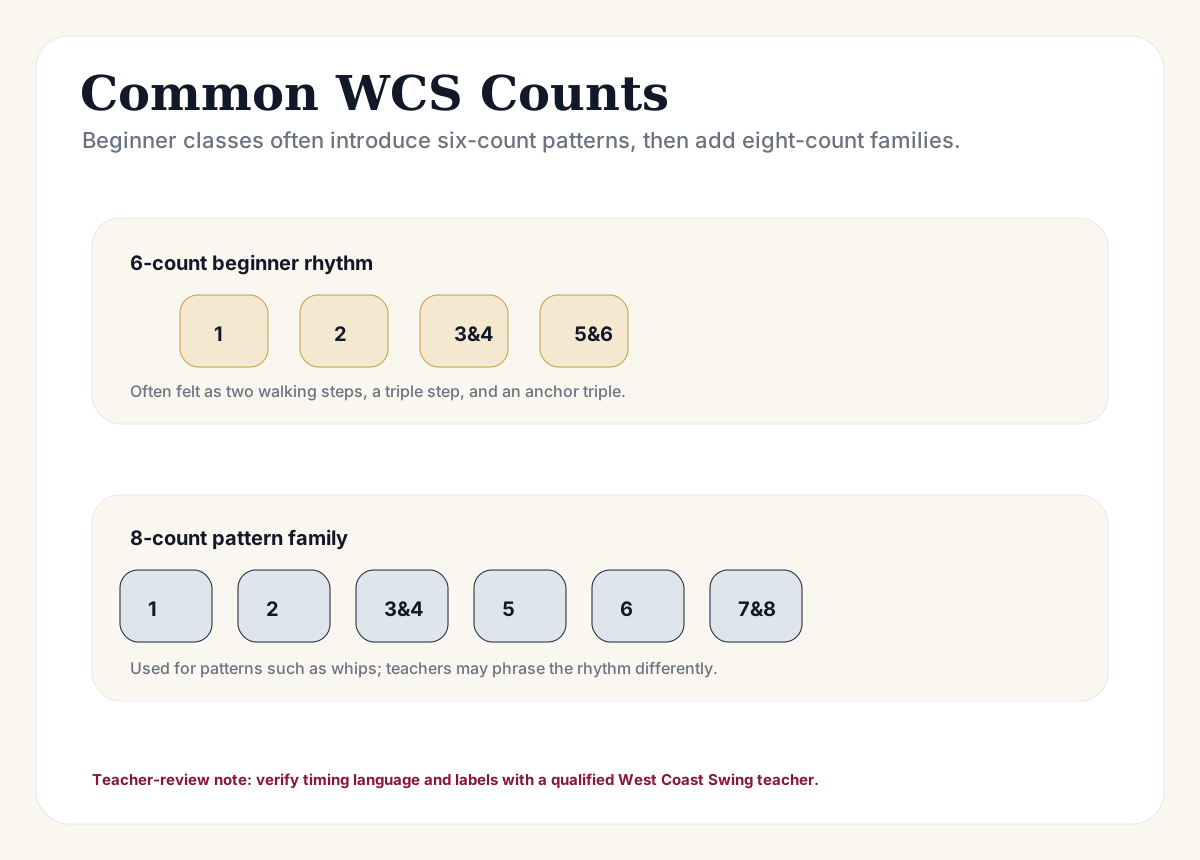
Many beginner WCS patterns are counted in six beats: 1 2, 3&4, 5&6.
A common way to feel that is:
- 1 2: two walking steps
- 3&4: a triple step
- 5&6: another triple step, often used as the anchor in beginner patterns
WCS also uses 8-count patterns. The best-known beginner 8-count concept is the whip family, often counted: 1 2, 3&4, 5 6, 7&8.
Different teachers may use slightly different language for timing, rhythm, footwork, and musical phrasing. That is normal. For beginners, the goal is not to memorize every theory. The goal is to stay on time, keep the slot organized, and finish patterns with control.
| Pattern type | Common beginner count | What to know |
|---|---|---|
| Sugar push / push break | 1 2, 3&4, 5&6 | A common 6-count beginner pattern that introduces toward-and-away connection. |
| Side pass | 1 2, 3&4, 5&6 | A passing pattern where the follower travels along the slot. |
| Tuck variation | 1 2, 3&4, 5&6 | Often taught after simpler passes; terminology and timing can vary. |
| Whip | 1 2, 3&4, 5 6, 7&8 | A common 8-count family; usually not the first thing to master. |
For more help, read how to count ballroom dance music and use the ballroom dance tempo chart.
The West Coast Swing slot
The slot is the easiest way to understand the look of WCS.
Imagine a long rug on the floor. The follower usually travels along that rug. The leader often moves out of the way, redirects the movement, or changes sides, but the partnership keeps returning to that same narrow lane.
The slot matters because it helps with:
- clarity: both partners know where the dance is organized,
- floorcraft: nearby couples can dance without colliding,
- connection: the lead and follow have a consistent direction,
- musicality: dancers can stretch, redirect, and play without losing the partnership.
On a social floor, your slot should shrink or expand based on space. If the floor is crowded, keep movements small. If the floor is open, you may have more room, but you still need awareness.
West Coast Swing basics for beginners
West Coast Swing uses leader and follower roles. These are dance roles, not gender rules. Either role can be danced by anyone. A beginner does not need dozens of patterns. Start with the building blocks.
Ready position
Many classes begin with partners facing each other in a comfortable open hold. Your posture should be upright but relaxed. Your arms should not be stiff, and your shoulders should not lift. Think: “available connection,” not “gripping.”
Side pass
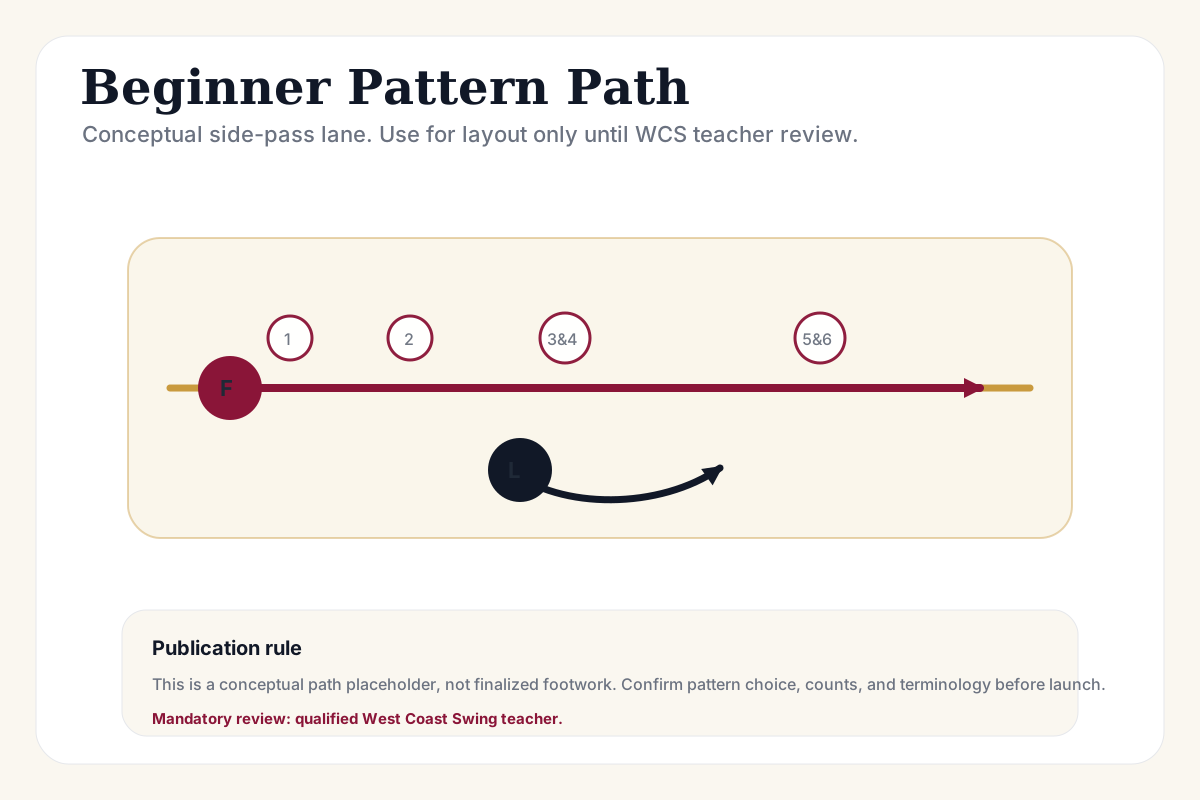
A side pass teaches the basic slot idea. The follower travels forward along the slot while the leader clears a path and redirects the movement. The exact footwork and terminology may vary by teacher, but the beginner concept is simple: one partner passes, the other creates space.
Sugar push / push break
A sugar push, often also called a push break, is a common 6-count beginner pattern. It introduces the feeling of moving toward your partner and then away again while keeping a comfortable connection. Do not shove. Do not pull. The action should feel responsive and controlled.
Anchor step
The anchor usually comes at the end of many WCS patterns. It helps both partners finish the pattern, settle their weight, and prepare for the next lead. A simple beginner way to think about it: the anchor is where the pattern lands. It should not feel like stopping dead. It should feel like finishing with balance, connection, and readiness.
Connection basics
Good beginner connection is comfortable, clear, and adjustable. Both partners should keep their own balance. A leader should not drag the follower through the pattern. A follower should not guess or run ahead of the lead.
Practice note: work slowly. Count out loud. Keep the slot narrow. Make the anchor calm. Then add music.
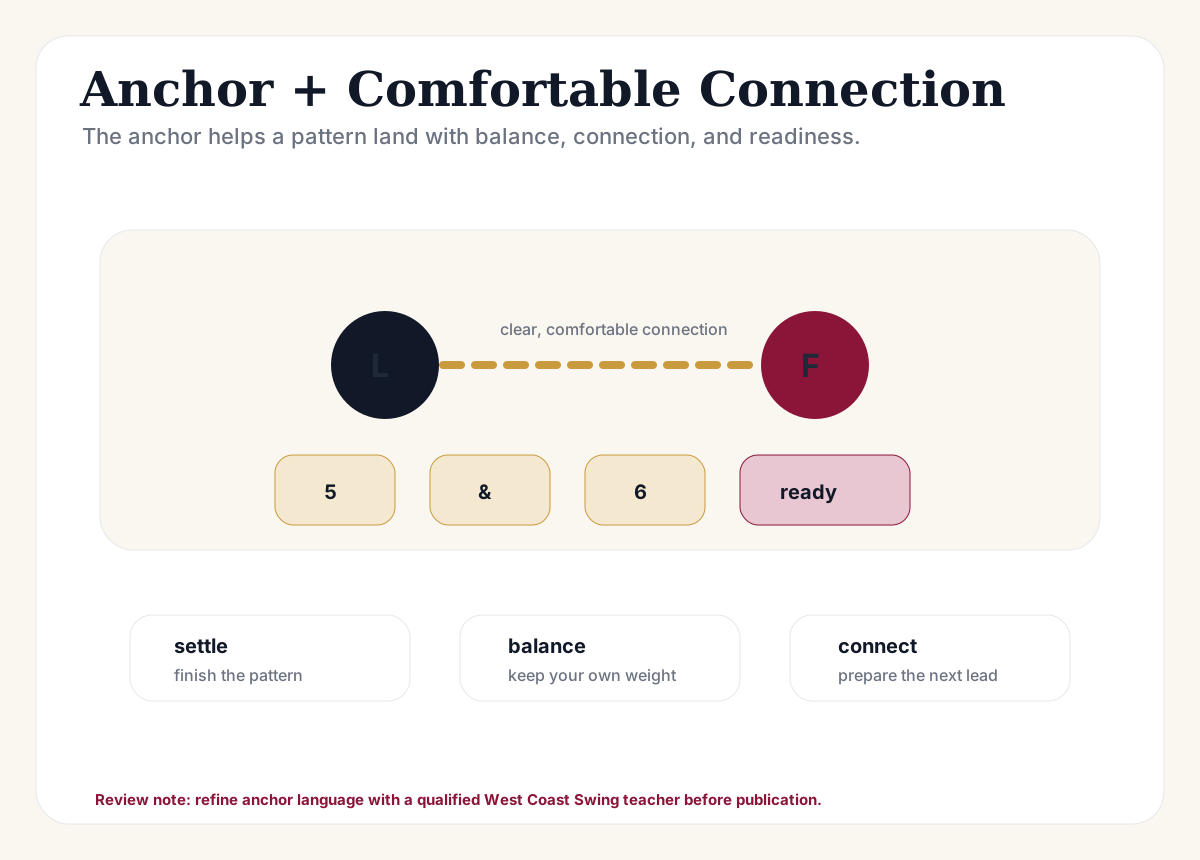
For partner-connection fundamentals, see lead and follow and frame and posture, and browse the ballroom dance glossary for terms.
West Coast Swing music
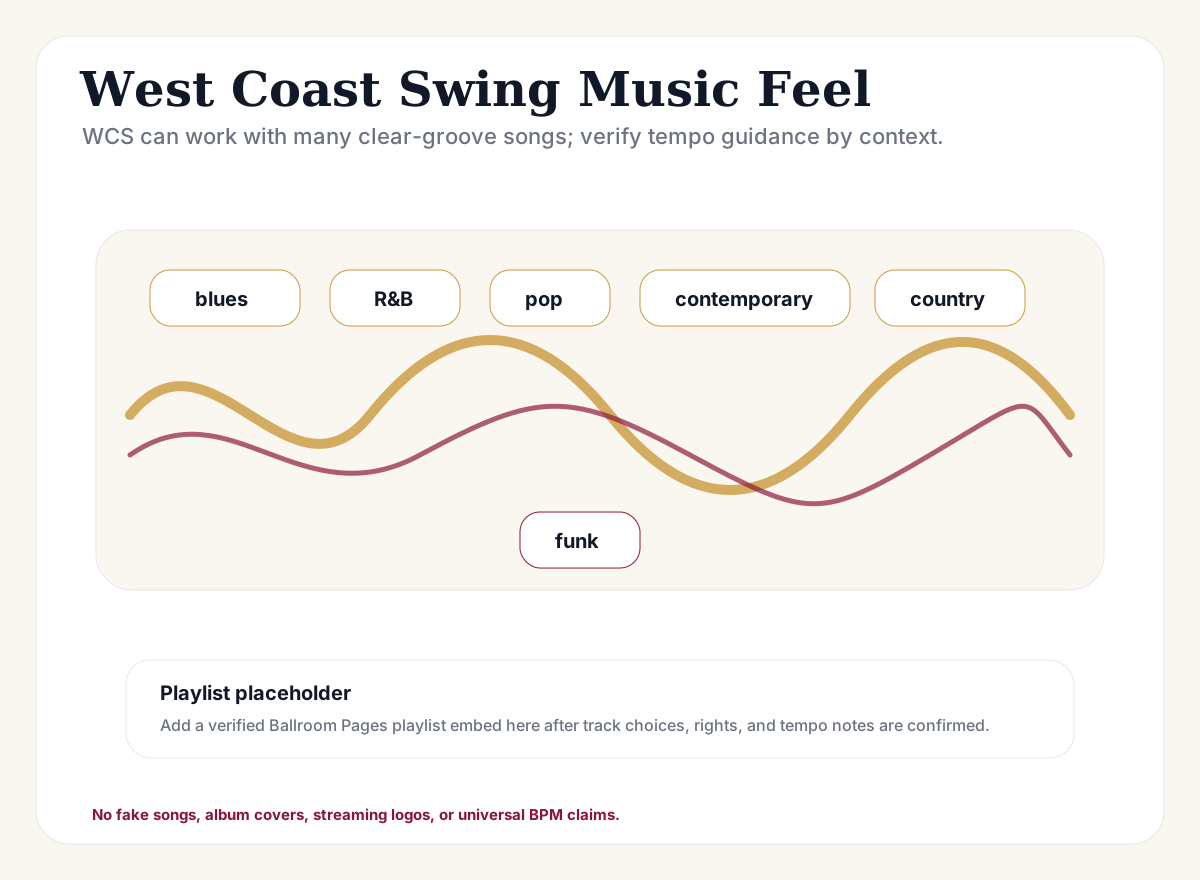
One reason WCS is popular is that it can work with many music styles. You may hear blues, R&B, pop, contemporary, country, funk, acoustic covers, and other clear-groove music at WCS events.
The important beginner question is not “Does this song have the perfect label?” It is: can I hear a steady beat and move my basic rhythm comfortably?
Tempo ranges vary by source and context. Some social WCS teachers describe a wide 90–120 BPM range; UCWDC competition rules use a narrower 92–100 BPM range for a specific competitive category; and a Music4Dance post reports a WCS DJ’s average social range of 90–110 BPM. This page therefore avoids one universal tempo rule.
A Ballroom Pages West Coast Swing practice playlist is coming soon.
For more music help, visit the Music & Timing hub, the ballroom dance tempo chart, and how to count ballroom dance music.
West Coast Swing for social dancing
West Coast Swing is especially useful for social dancing because it is compact, adaptable, and musical. You can dance it at WCS socials, swing weekends, mixed studio parties, country/western events, and some wedding receptions.
Beginner etiquette matters as much as beginner footwork.
WCS social etiquette basics
- Ask before dancing.
- Accept “no” politely.
- Respect role preferences.
- Keep the connection comfortable.
- Do not yank through stretch, turns, or redirects.
- Keep your slot clear.
- Watch nearby couples.
- Avoid big tricks, drops, or dramatic dips on a social floor.
- Do not teach or correct your partner during a social dance.
- Thank your partner at the end.
For more, read dance etiquette for social dancing, the broader social dancing guide, and lead and follow.
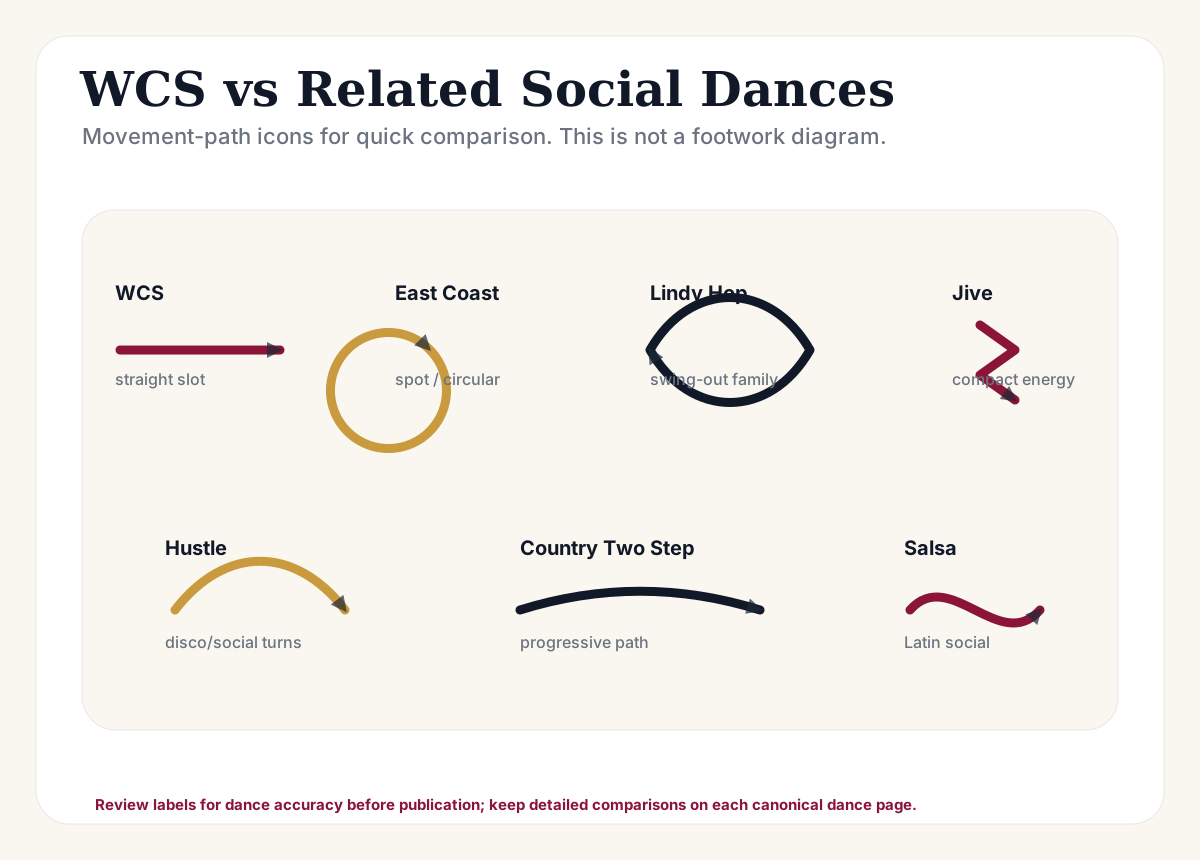
West Coast Swing vs East Coast Swing, Lindy Hop, Jive, Hustle, Country Swing, and Salsa
| Dance | Slot / travel pattern | Timing feel | Music feel | Social use | Beginner learning path |
|---|---|---|---|---|---|
| West Coast Swing | Slotted; organized along a line | Common 6-count and 8-count patterns | Blues, R&B, pop, contemporary, country, funk, and clear-groove music | Strong WCS social and competition community | Learn slot, timing, side pass, sugar push / push break, anchor, connection |
| East Coast Swing | Spot / circular; more rotary | Often 6-count; single / double / triple rhythm versions | Upbeat swing, rock-and-roll, big-band, jump-blues contexts | Common at social studios and mixed dance parties | Learn rock step, triple steps, bounce / lilt, turns |
| Lindy Hop | More rotational and traveling than WCS; swing-out central | 6- and 8-count material | Jazz / swing-era music and related swing styles | Strong vintage swing social scene | Learn bounce, pulse, swing-out, Charleston, jazz feel |
| Jive | Spot dance; competition / studio framing | Fast, bouncy, often competition-oriented | 4/4; fast swing / rock-and-roll feel | Ballroom / International Latin context | Learn chasse action, kicks / flicks, high energy |
| Hustle | Social partner dance; often slot-like or rotational depending on style | Syncopated disco / social rhythm | Disco, club, pop, Latin-disco roots | Social dance and studio parties | Learn rhythm, hand changes, turns, nightclub / disco styling |
| Country Swing / Country Two Step | Country Swing varies regionally; Country Two Step progresses around the floor | Varies; Two Step often quick-quick-slow-slow | Country and country-adjacent music | Country bars, dance halls, weddings | Learn progressive movement, wraps, turns, floorcraft |
| Salsa | Latin social dance; not a swing dance | Salsa timing systems vary by community | Salsa and Latin music | Latin social dance scene | Learn basic step, timing, turns, Latin body rhythm |
Practical rule: learn WCS for the slot, anchor, and elastic connection. Learn East Coast Swing for upbeat spot swing. Learn Lindy Hop for vintage swing roots. Learn Hustle for disco/club partner dancing. Learn Country Two Step for country dance floors. Learn Salsa for Latin social music.
Common beginner mistakes
| Mistake | Why it happens | Fix |
|---|---|---|
| Losing the slot | Drifting sideways or turning every pattern into a circle | Imagine a narrow rug. Keep the movement organized along it |
| Taking steps too large | Making the slot too long, especially on crowded floors | Keep steps small enough that you can stop, redirect, and protect nearby dancers |
| Rushing the anchor | Treating the anchor as throwaway steps | Let the anchor finish the pattern and prepare the next connection |
| Pulling with the arms | Using the arms to drag, shove, or yank | Keep connection comfortable and let body movement create clarity |
| Styling before the basics feel natural | Copying advanced dancers before you can stay on time | Master clean rhythm, slot, and anchor first |
| Ignoring the music | Doing patterns without hearing the beat | Clap, walk, or count the rhythm before adding partnerwork |
| Confusing WCS with another swing dance | Dancing East Coast bounce, Lindy swing-outs, or Jive styling and calling it WCS | Respect each dance’s identity. WCS has its own slot, timing, connection, and music culture |
Beginner practice tips
- Practice the rhythm alone. Clap or step 1 2, 3&4, 5&6 until it feels steady before adding turns.
- Practice your anchor. Count the last triple slowly. Let it feel settled and balanced instead of rushed.
- Practice slot awareness. Place tape on the floor or imagine a narrow lane. Keep your movement inside it.
- Practice with a partner slowly. Use one simple pattern. Trade feedback only if both partners have agreed to practice, not during a social dance.
- Practice listening. Try walking to different songs with a clear beat. Notice which songs make the rhythm easier or harder.
- Practice etiquette. Ask politely. Respect no. Thank your partner. Keep your movements leadable and comfortable.
Is West Coast Swing good for weddings or receptions?
West Coast Swing can be excellent for wedding receptions when the song has a clear groove and the couple wants a playful, social feel. It can work especially well for upbeat or mid-tempo songs where a couple wants something more connected than freestyle dancing.
It is usually not the default choice for every slow romantic first dance. A Waltz, Rumba, Foxtrot, Nightclub Two Step, or simple custom slow-dance structure may fit better depending on the song and the couple’s goals.
For wedding planning, use the wedding dance guide. For this WCS page, the important point is simple: WCS is a useful reception dance when the music fits.
Is West Coast Swing useful for social dancing?
Yes. West Coast Swing is one of the most socially useful partner dances for people who enjoy music variety. It gives you a way to dance with a partner to many songs that might not fit traditional ballroom, Latin, or vintage swing categories.
It also teaches valuable social dance skills:
- staying on time,
- using comfortable connection,
- respecting partner roles,
- adjusting to floor space,
- listening to music,
- dancing with different partners.
A beginner can become socially comfortable before becoming technically advanced. The first goal is not to impress people. The first goal is to be safe, musical, kind, and clear.
Is West Coast Swing a ballroom dance?
West Coast Swing is best described as a social swing dance and social partner dance. It is often taught in ballroom and social dance studios, and it appears in some country/western and swing competition contexts.
But it should not be described as the same thing as American Smooth, American Rhythm, International Standard, or International Latin syllabus dances. It belongs on Ballroom Pages because Ballroom Pages covers ballroom and partner dance learning broadly, including social dances that help people dance in real life.