What is East Coast Swing?
East Coast Swing is an upbeat partner dance in the Swing family. It is commonly taught in ballroom studios, beginner social-dance classes, wedding dance lessons, and American Rhythm programs.
The simplest way to understand it: East Coast Swing is a friendly, beginner-accessible Swing dance built around a rock step and triple steps.
It is related to the Swing and Lindy Hop tradition, but it is not the same thing as every Swing dance. “Swing” can refer to a large family of dances: Lindy Hop, East Coast Swing, West Coast Swing, Balboa, Shag, Jive, and other regional or competition forms. East Coast Swing is one specific branch of that family.
For new dancers, East Coast Swing is popular because it gives you a clear rhythm, repeatable basic step, and social dance vocabulary without asking you to master the full history and complexity of Lindy Hop or the slotted connection of West Coast Swing right away.
Why East Coast Swing is both social and ballroom
East Coast Swing lives in two overlapping worlds. In a ballroom studio, it may be taught as part of American Rhythm or American Style Swing, with syllabus figures, competition timing, and a more codified look. On a social dance floor, it can be more relaxed — compact basics, easy turns, and simple rhythms that fit the space, music, and partner.
That is why the same dance can feel slightly different in a private ballroom lesson, a wedding routine, a studio social, or a casual party.
Short history: Swing roots and ballroom codification
East Coast Swing grew from the larger Swing dance world, especially the Lindy Hop lineage. Over time, studios and ballroom systems simplified and organized Swing vocabulary into teachable patterns that beginners could learn more quickly.
That history matters because it explains why East Coast Swing is related to Lindy Hop but not identical to it. Lindy Hop has a deeper jazz-era social dance tradition, a broader vocabulary, and a strong improvisational culture. East Coast Swing is usually taught as a simpler, more codified six-count Swing option.
East Coast Swing in American Rhythm, social dancing, and weddings
East Coast Swing is especially useful because it works across several beginner situations.
In American Rhythm, it gives dancers a competition-friendly Swing option with recognizable timing, turns, and partner patterns. In social dancing, it gives beginners a way to dance to upbeat music without needing a long choreographed routine. At weddings, it can create a playful, lively moment when the song has a clear beat and a Swing or rock-and-roll feel.
The key is context. A couple preparing a surprise reception dance may want a bigger, performance-style East Coast Swing routine. A beginner at a studio social may need only a compact basic and a few turns. A competition student will need cleaner timing, posture, and syllabus awareness. All three are valid uses, but they should not be taught as if they are the same goal.
What East Coast Swing feels like
East Coast Swing feels upbeat, relaxed, and rhythmic. It should feel lighter than a march, more playful than Foxtrot, and less intense than International Latin Jive. Good East Coast Swing has energy, but it does not need to look frantic. The best beginner version is compact, musical, and comfortable for both partners.
A beginner-friendly image: think “small bounce, clear rhythm, happy feet” rather than “giant kicks and wild turns.”
The dance often has:
- a springy pulse;
- compact triple steps;
- a rock step that creates a gentle elastic feeling;
- simple underarm turns;
- a circular or rotational feel rather than a strict slot;
- a cheerful social-dance quality.
East Coast Swing can look flashy when performed, but the foundation is simple. Hear the beat, transfer weight clearly, and keep the movement small enough that your partner feels comfortable.
East Coast Swing timing, rhythm, and count
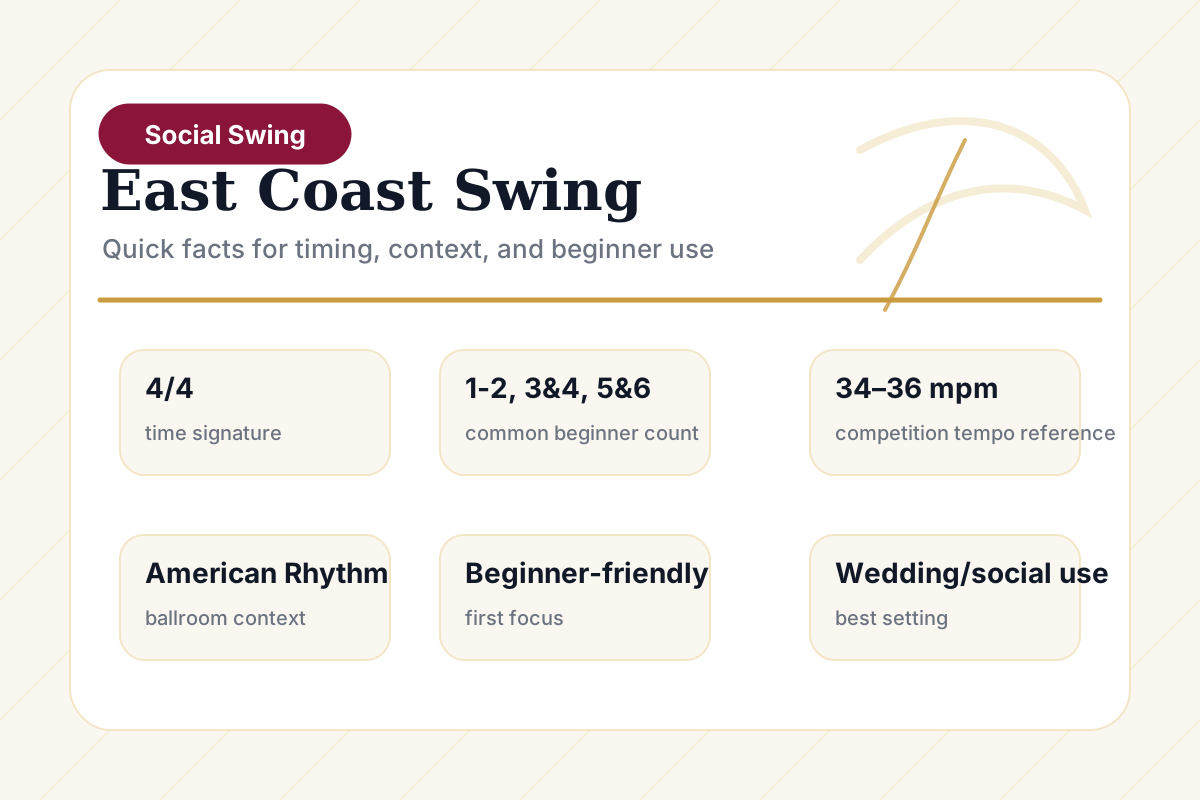
East Coast Swing is danced in 4/4 time. That means the music is organized in groups of four beats, even though the most common beginner pattern is a six-count dance pattern.
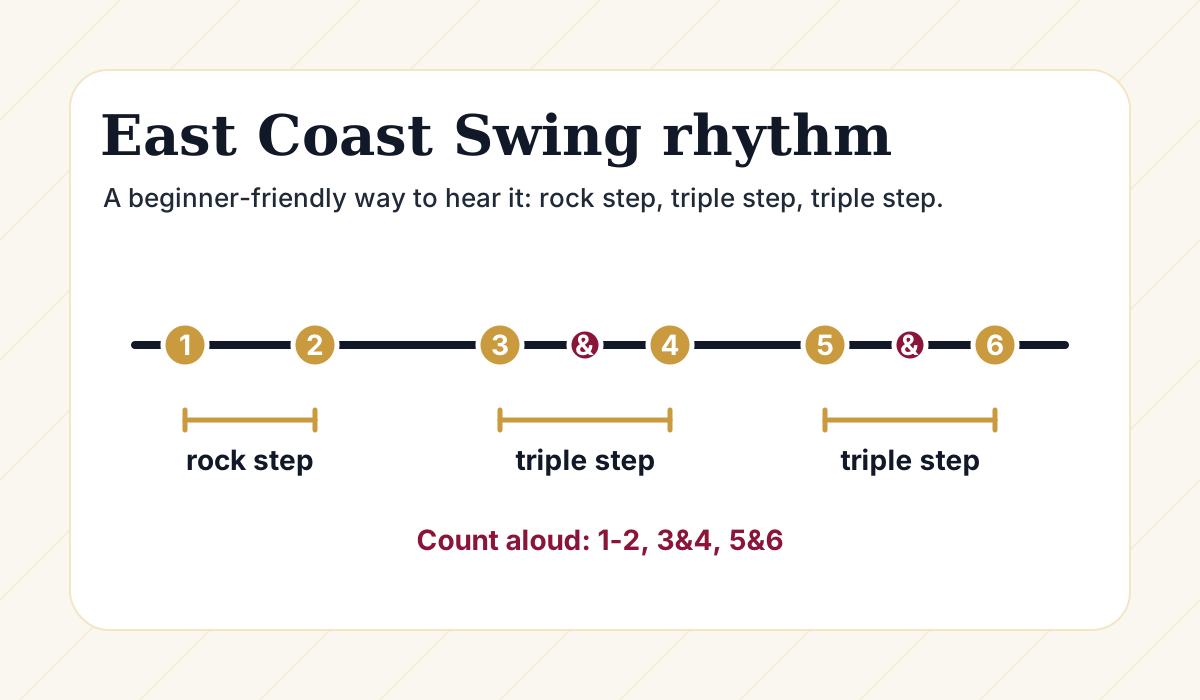
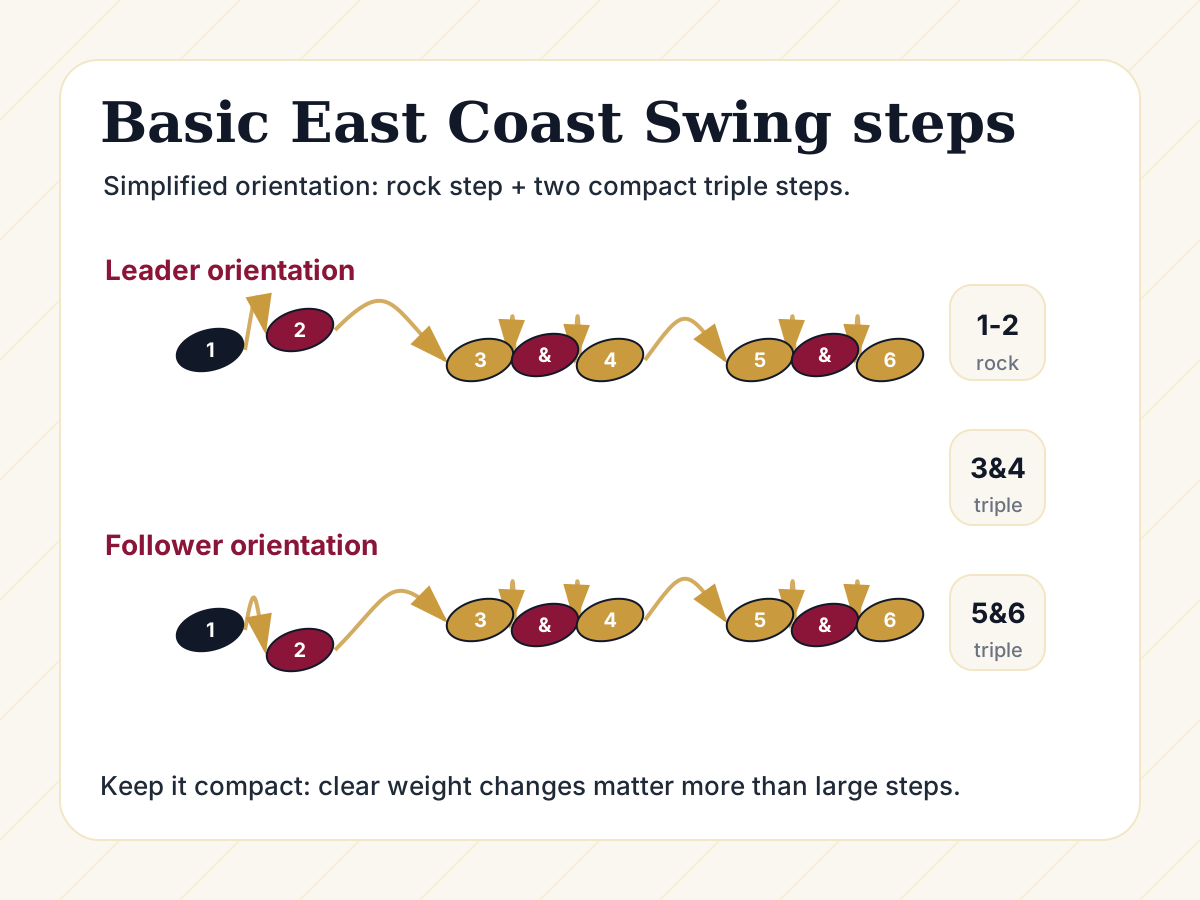
The common count: 1-2, 3&4, 5&6
A common beginner count is 1-2, 3&4, 5&6. You may also see it written as 1-2, 3a4, 5a6, or in rhythm shorthand as QQ, Q&Q, Q&Q. In plain language:
- 1-2 = rock step
- 3&4 = triple step
- 5&6 = triple step
A simple spoken version is: “Rock step, tri-ple-step, tri-ple-step.”
Time signature and tempo
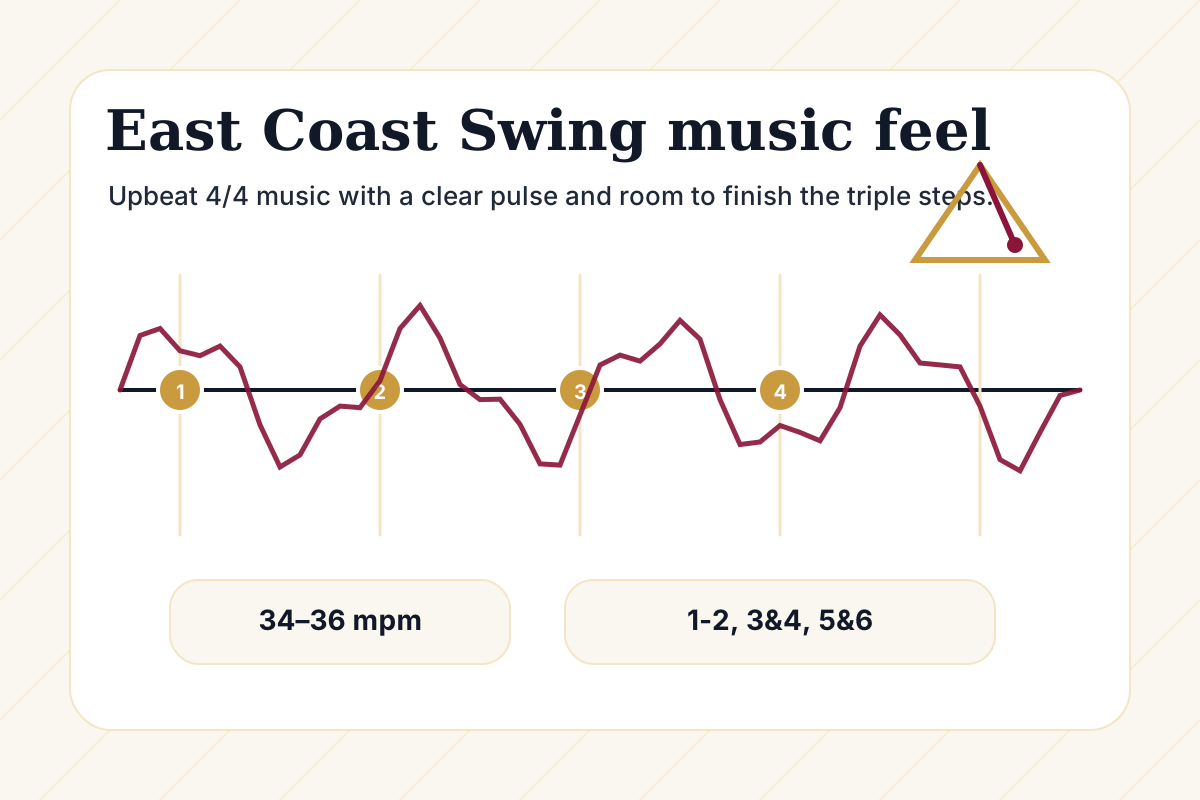
Competition references often place American East Coast Swing around 34–36 measures per minute. Since the music is in 4/4, that works out to about 136–144 beats per minute. For practice, beginners can start slower. The goal is not to dance fast immediately; it is to keep the weight changes clear and the rhythm relaxed.
Rock-step-first vs triple-step-first teaching
Do not be surprised if one teacher counts 1-2, 3&4, 5&6 and another starts with 1&2, 3&4, 5-6. Both approaches can appear in East Coast Swing teaching. The rhythm still contains two triple steps and a rock step. The order depends on teaching method, syllabus, and whether the instructor wants you to feel the rock step first or the triple steps first.
For this beginner guide, we use rock-step-first because it is easy to understand: rock step, triple step, triple step.
Single-time and triple-time Swing
East Coast Swing can be taught in different rhythmic forms.
Triple-time Swing uses triple steps: rock step, triple step, triple step. Single-time Swing simplifies the footwork: rock step, step, step.
Single-time can be useful for very fast music or very new beginners. Triple-time is the more common ballroom/studio foundation and gives the dance its familiar bounce and swing feeling.
Beginner rhythm drill
Try this without music first:
- Say: “rock step, triple step, triple step.”
- Clap: 1-2, 3&4, 5&6.
- Step lightly in place on 1-2.
- Add a small triple step to one side on 3&4.
- Add a small triple step to the other side on 5&6.
- Keep the steps small enough that you can repeat the pattern without hopping.
If your feet get ahead of the count, shrink the steps.
Basic East Coast Swing steps for beginners
Beginners should start with the rhythm before trying spins, dips, kicks, or performance styling. The most useful first pattern is: rock step + triple step + triple step.
Basic rhythm structure
| Count | Leader (orientation) | Follower (orientation) |
|---|---|---|
| 1-2 (rock step) | Rock back on the left foot, replace to the right | Rock back on the right foot, replace to the left |
| 3&4 (triple step) | Triple step to the left: left-right-left | Triple step to the right: right-left-right |
| 5&6 (triple step) | Triple step to the right: right-left-right | Triple step to the left: left-right-left |
Keep the steps small. East Coast Swing should feel lively, but beginners often make it harder by traveling too far. The dance gets energy from rhythm and weight changes, not from taking giant steps.
Basic with turn and throwout as next ideas
Once the basic rhythm feels steady, the next common idea is a basic with a turn. This keeps the same rhythm but adds rotation. The goal is not to spin fast — it is to stay on time while turning comfortably.
Another common beginner idea is a throwout / send-out: moving from a more closed partner position into a more open position. Different studios use different names and styling, but the teaching goal is the same: keep the timing steady while the partnership opens and reconnects.
Glossary support: Rock Step, Triple Step, Frame, Connection.
East Coast Swing connection, frame, and partner comfort
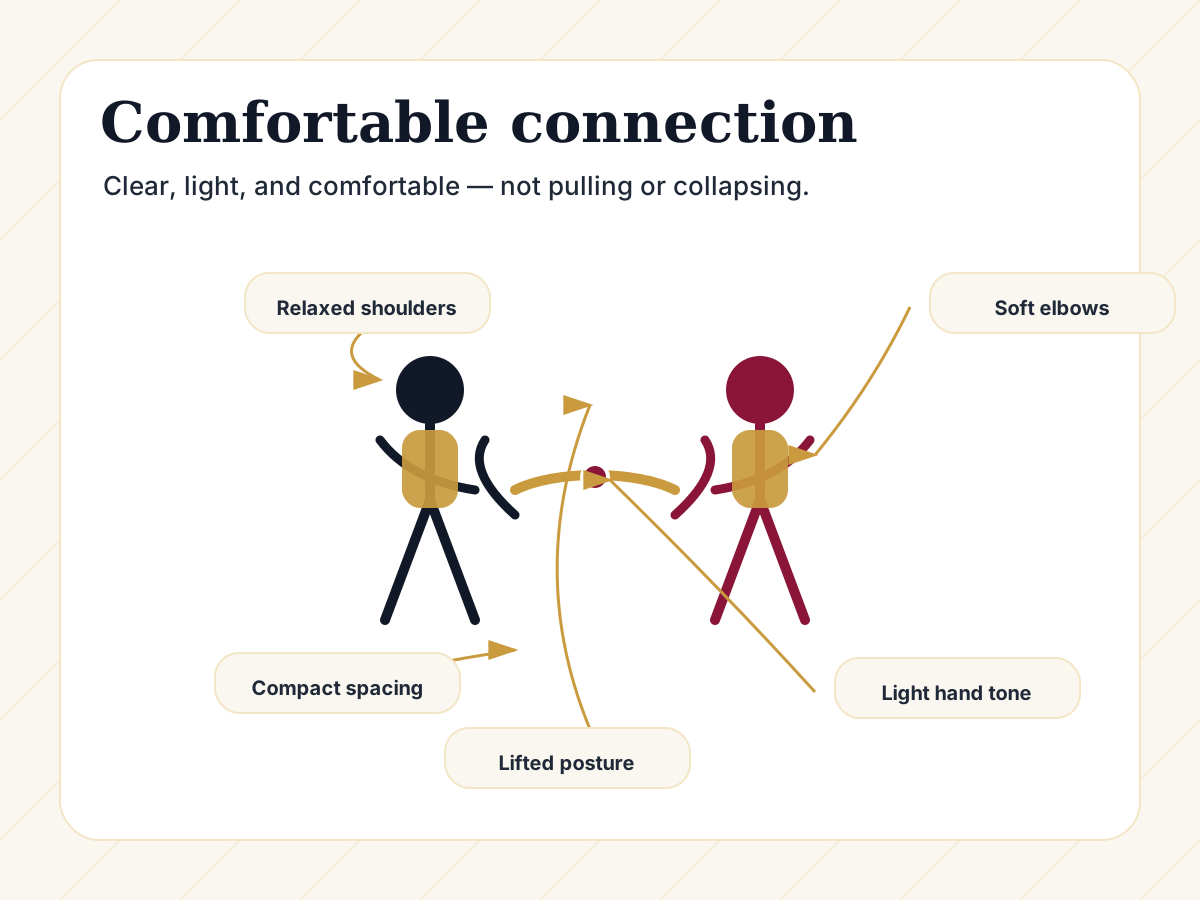
East Coast Swing should feel comfortable. That does not mean floppy. It means the partners have enough tone to communicate, but not so much tension that the dance becomes pulling and pushing.
Good beginner connection starts with:
- relaxed shoulders;
- lifted posture;
- soft elbows;
- clear but gentle hand connection;
- small steps;
- no yanking;
- no surprise dips;
- enough space for both partners to move safely.
Leaders should focus on timing, direction, and clarity. Followers should focus on balance, timing, and responsive movement. Both roles are active. Both roles listen.
Partner comfort matters even more in social and wedding settings. On a crowded floor, compact basics are more useful than large traveling patterns. At a wedding, simple comfortable movement usually looks better than complicated choreography that feels stressful.
Want a deeper guide to partner communication? Lead and Follow
East Coast Swing music and song feel
East Coast Swing music should feel upbeat, rhythmic, and easy to count. Good practice music usually has:
- a steady 4/4 beat;
- a clear pulse;
- enough energy to swing;
- a tempo that lets beginners finish each weight change;
- a playful or driving feel.
East Coast Swing can work with classic Swing, big band, jump blues, rock and roll, rockabilly, some country swing, and some pop songs with a strong swing or shuffle feel. Not every fast song works, and not every “oldies” song needs Swing. Listen for the beat first.
What to listen for
Before stepping, try clapping 1-2, 3&4, 5&6. Then say: “Rock step, tri-ple-step, tri-ple-step.” If you cannot clap the rhythm, choose a slower or clearer song.
How to choose practice music
For a beginner, the best practice song is not the fastest song. It is the clearest song. Choose music where:
- you can hear the beat without guessing;
- the energy feels happy, not frantic;
- your steps stay small;
- you can talk or count while moving;
- both partners feel relaxed.
Want help hearing the beat? Read the Ballroom Pages guide to counting ballroom music and use the tempo chart to compare East Coast Swing with Jive, Foxtrot, Cha Cha, and Hustle.
East Coast Swing for social dancing
East Coast Swing is one of the most useful beginner social dances because the basic idea is simple, compact, and adaptable. It works well at ballroom studio socials, beginner dance parties, casual partner-dance events, some wedding receptions, and lessons where students want an upbeat dance quickly.
On a crowded floor, keep the dance small. Avoid large arm movements, surprise drops, big kicks, or fast turns that your partner has not agreed to.
East Coast Swing for weddings
East Coast Swing can be a great wedding dance when the couple wants something lively, playful, and upbeat. It works best when:
- the song has a clear rhythmic beat;
- the couple wants a fun mood rather than a slow romantic mood;
- the dress and shoes allow movement;
- the routine stays compact;
- the couple has enough time to practice;
- the choreography is built around simple basics and a few clean turns.
East Coast Swing is often a better wedding choice than Jive for beginners because it can feel more relaxed and less athletic. It can also be easier to adapt for a short choreographed section.
But East Coast Swing is usually not the best fit for a very slow ballad. For slower romantic songs, couples may prefer Rumba, Foxtrot, Waltz, or Nightclub Two Step.
Best wedding uses: upbeat first dance, surprise section after a slow intro, reception entrance, second dance, parent dance with a playful song, or a short choreographed party moment.
Not sure what dance fits your song? Use the wedding song-to-dance guide
East Coast Swing in competition
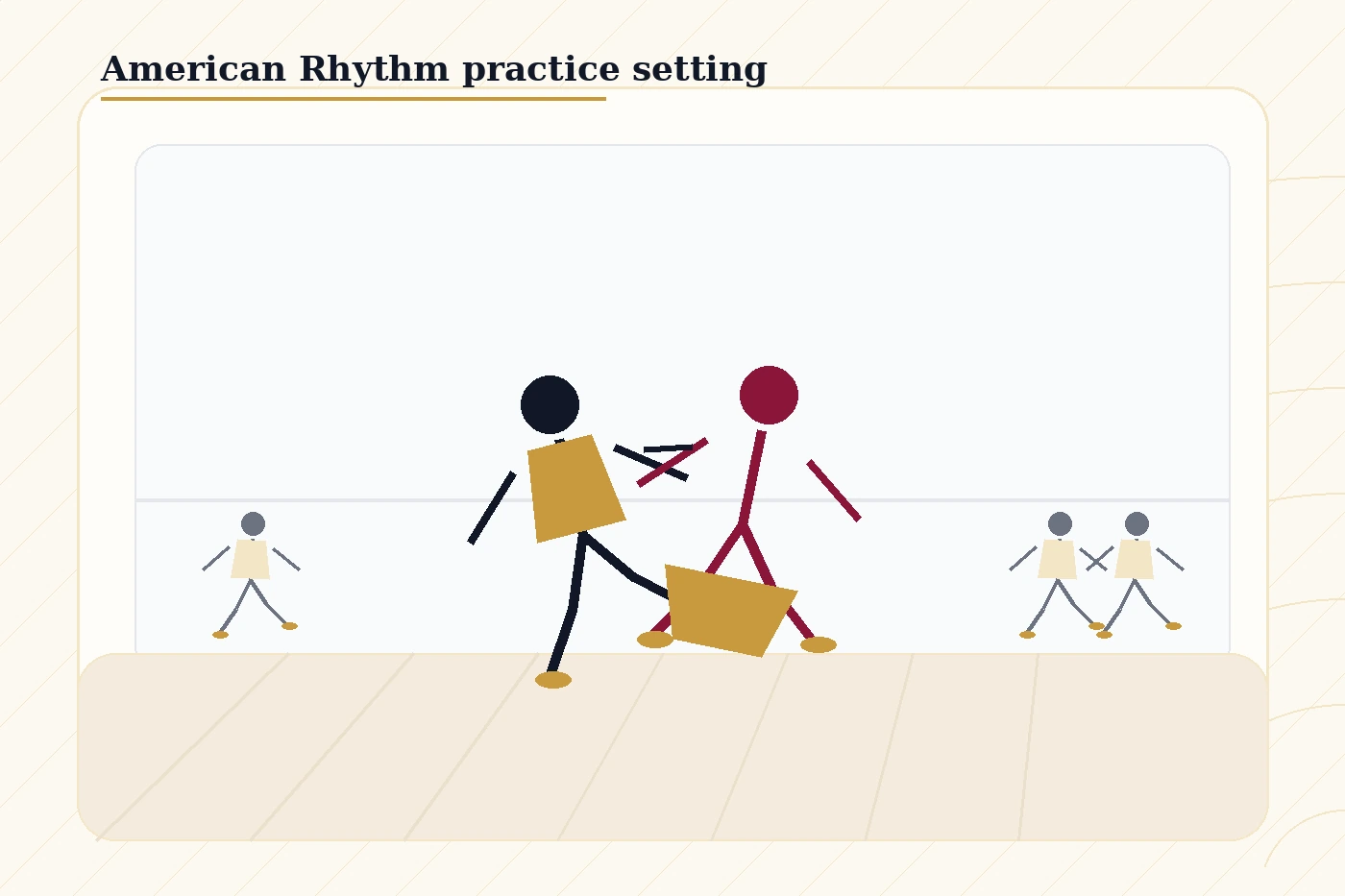
In ballroom competition, East Coast Swing appears in American Style / American Rhythm contexts. Competition Swing is more organized than casual social Swing. Dancers focus on timing, rhythm, posture, partnership, clear footwork, and recognizable figures.
A beginner competition student may work on basic timing, rock-step clarity, compact triple steps, underarm turns, throwouts, open and closed partner positions, rhythm and body action, musicality, and performance quality.
East Coast Swing vs Jive, West Coast Swing, and Lindy Hop
East Coast Swing is part of the larger Swing conversation, but it is not the same as every Swing dance.
| Comparison point | East Coast Swing | Jive | West Coast Swing | Lindy Hop |
|---|---|---|---|---|
| Best context | Beginner Swing, ballroom studios, American Rhythm, social dancing, upbeat weddings | International Latin, DanceSport, high-energy showcases | Contemporary social dance, WCS events, slotted partner dancing | Swing dance communities, jazz music, historical Swing tradition |
| Typical feel | Upbeat, bouncy, relaxed, circular or rotational | Faster, sharper, more athletic, more compact | Smooth, elastic, conversational | Grounded, swinging, improvisational, rhythmically rich |
| Basic rhythm / movement | Rock step + two triple steps, often 1-2, 3&4, 5&6 | Related rock-step / triple action with a brighter Latin competition character | Danced in a slot with stretch and compression | Six-count, eight-count, Charleston, and social improvisation |
| Beginner focus | Timing, compact triples, comfortable partner connection | Rhythm and control before kicks / flicks | Slot discipline, connection, timing choices | Pulse, rhythm, partner connection, community style |
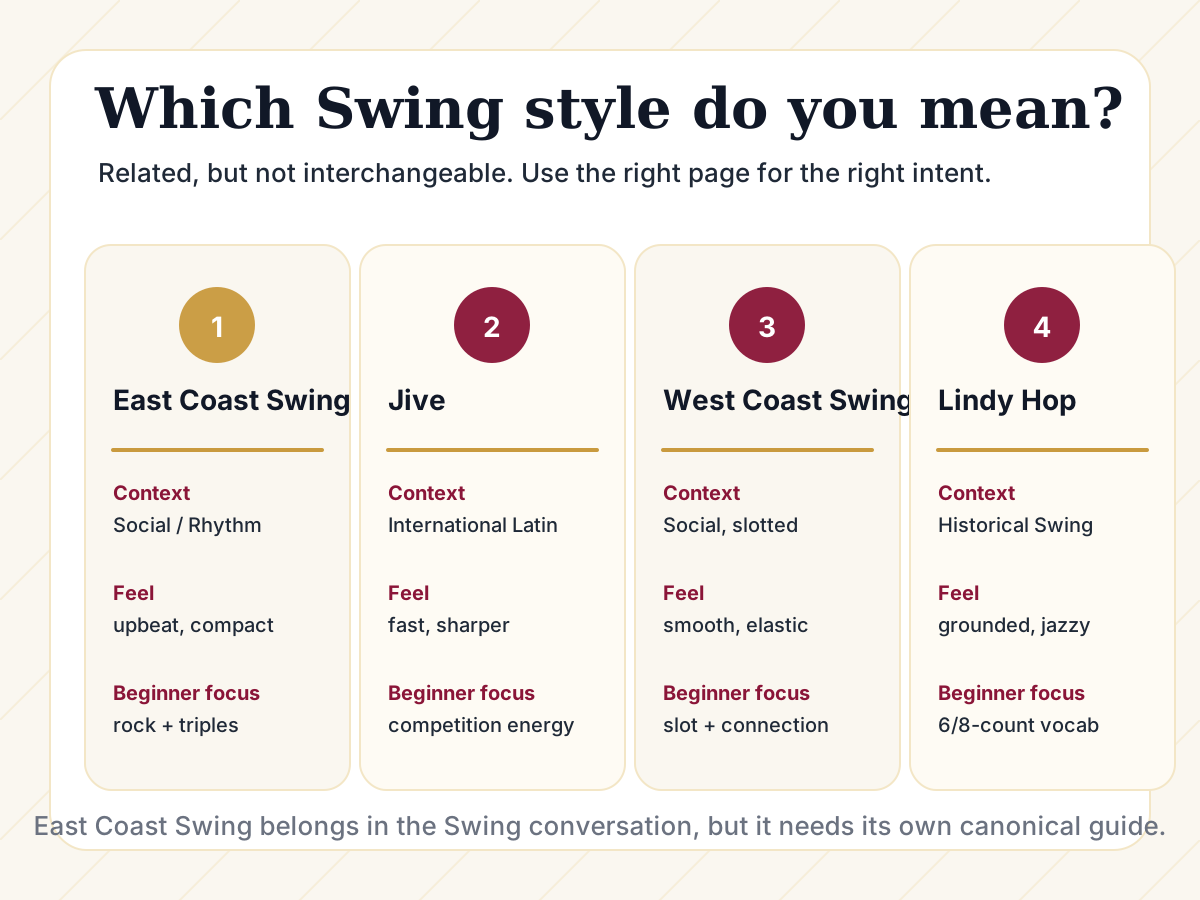
Which Swing style should you learn first?
Learn East Coast Swing if you want a friendly beginner dance for ballroom studios, social events, or weddings. Compare Jive if you are studying International Latin or want a fast, high-energy ballroom competition dance. Learn West Coast Swing if you want a smoother contemporary social dance with a slot and elastic connection. Explore Lindy Hop if you want the historical Swing dance tradition, jazz music, and a deeper social Swing community path.
Common beginner mistakes
| Mistake | Why it happens | Better approach |
|---|---|---|
| Taking steps that are too big | Dancers chase energy with travel | Keep the steps compact so the rhythm stays on time |
| Rushing the rock step | The 1-2 feels like a throwaway | Give the rock step its elastic time so the triples stay calm |
| Pulling with the arms | Leaders try to steer with force | Use connection to communicate timing and direction, not to drag |
| Flattening the triple steps | The split count feels unfamiliar | Keep 3&4 and 5&6 quick and clear; do not turn them into one heavy step |
| Bouncing too much | Dancers confuse pulse with hopping | Use a small pulse; heavy bouncing is tiring and unstable |
| Turning before the basic is steady | Turns look fun in videos | Build a reliable rhythm first; turns get much easier |
| Confusing every Swing style | The names overlap socially | Remember ECS, WCS, Lindy Hop, and Jive use different technique and contexts |
| Forgetting partner comfort | Focus drifts to moves | A move is not successful if it surprises, pulls, crowds, or intimidates your partner |
Beginner practice plan
Use this as a simple first-week plan. Keep sessions short and repeatable.
| Day | Focus | What to do |
|---|---|---|
| Day 1 | Count and clap | Clap 1-2, 3&4, 5&6; say “rock step, tri-ple-step, tri-ple-step”; practice without music first |
| Day 2 | Step the basic rhythm | Step the rock step in place; add two tiny triple steps; keep the knees soft and the steps small |
| Day 3 | Add slow music | Choose a clear, moderate-tempo song; count out loud; stop if the feet start guessing |
| Day 4 | Leader / follower orientation | Leader: rock left back, replace right, triple left, triple right. Follower: rock right back, replace left, triple right, triple left. Treat as orientation, not final technical review |
| Day 5 | Add partner connection | Use a light hand connection; keep elbows soft; practice without pulling |
| Day 6 | Add one simple turn | Keep the same rhythm; make the turn smaller than you think; do not sacrifice timing for speed |
| Day 7 | Review and record | Record a short clip if comfortable; check that steps are small, the count is steady, and both partners are relaxed; repeat the week before adding more moves |