
Glossary / Technique
Connection
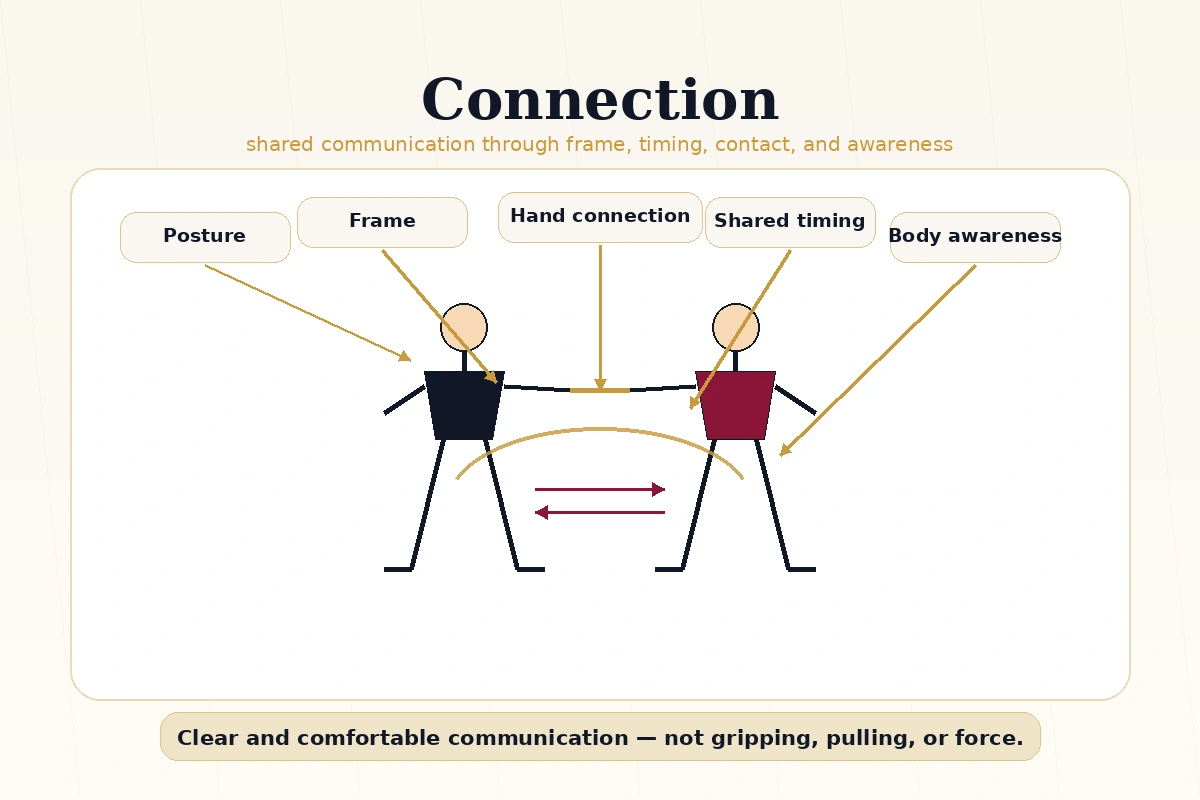
Connection in ballroom dance is the shared communication between partners through frame, posture, tone, contact, timing, and awareness. Good connection helps leaders and followers move together clearly and comfortably—without gripping, guessing, pulling, or forcing.
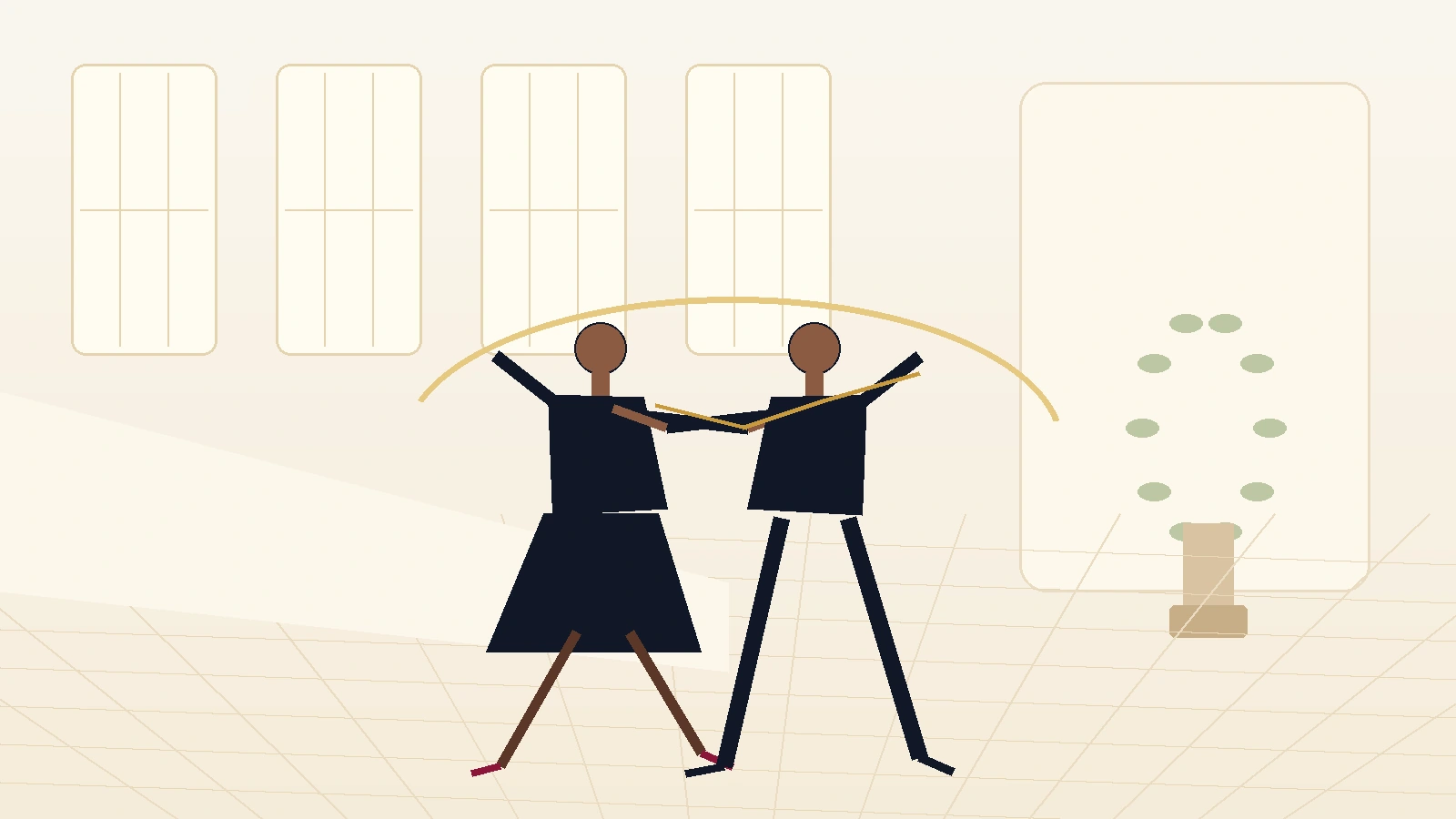
Quick definition of connection
Connection
- Term
- Connection
- Also called
- Partner connection, frame connection, dance connection
- Used in
- Waltz, Foxtrot, Tango, Rumba, Cha Cha, Swing, Bolero, Salsa, and most partner dances
- Beginner takeaway
- Connection should feel clear and comfortable, not stiff or forceful.
- Common mistake
- Trying to create connection by squeezing the hands, pulling with the arms, or leaning on a partner.
- Related terms
- Frame, posture, lead and follow, timing, weight transfer, balance, musicality
Connection is the way two dancers communicate while dancing together. In ballroom dance, that communication can happen through the frame, hands, arms, body position, timing, weight changes, visual awareness, and musical feel. The simplest beginner rule is: connection is communication, not control.
Key takeaways
- Connection helps partners understand each other without needing to talk through every step.
- Good connection uses frame, posture, tone, timing, contact, and awareness—not just the hands.
- Connection should be clear and adjustable, not stiff, painful, or forceful.
- Leaders and followers both create connection; it is not only the leader’s job.
- Connection changes by dance style, hold, social setting, and partner comfort.
What connection means in ballroom dance
In ballroom dance, connection is the shared “line of communication” between two partners. It is how a leader can suggest direction, timing, or energy, and how a follower can receive, respond, and stay actively involved in the partnership.
Connection can be physical, such as a closed ballroom frame, a light hand connection in Rumba, or an elastic handhold in Swing. It can also be visual and musical, such as watching a partner’s body direction, matching timing, or adjusting to how the music feels.
That is why teachers often say “maintain your connection.” They are usually not asking you to grip harder. They are asking you to keep a clear, responsive relationship between your body, your partner, and the music.
Good connection feels organized. Each dancer stands on their own feet, keeps a comfortable tone through the body, and avoids collapsing into the other person. The result is a partnership that feels easier, safer, and more musical.
Connection vs frame vs lead and follow
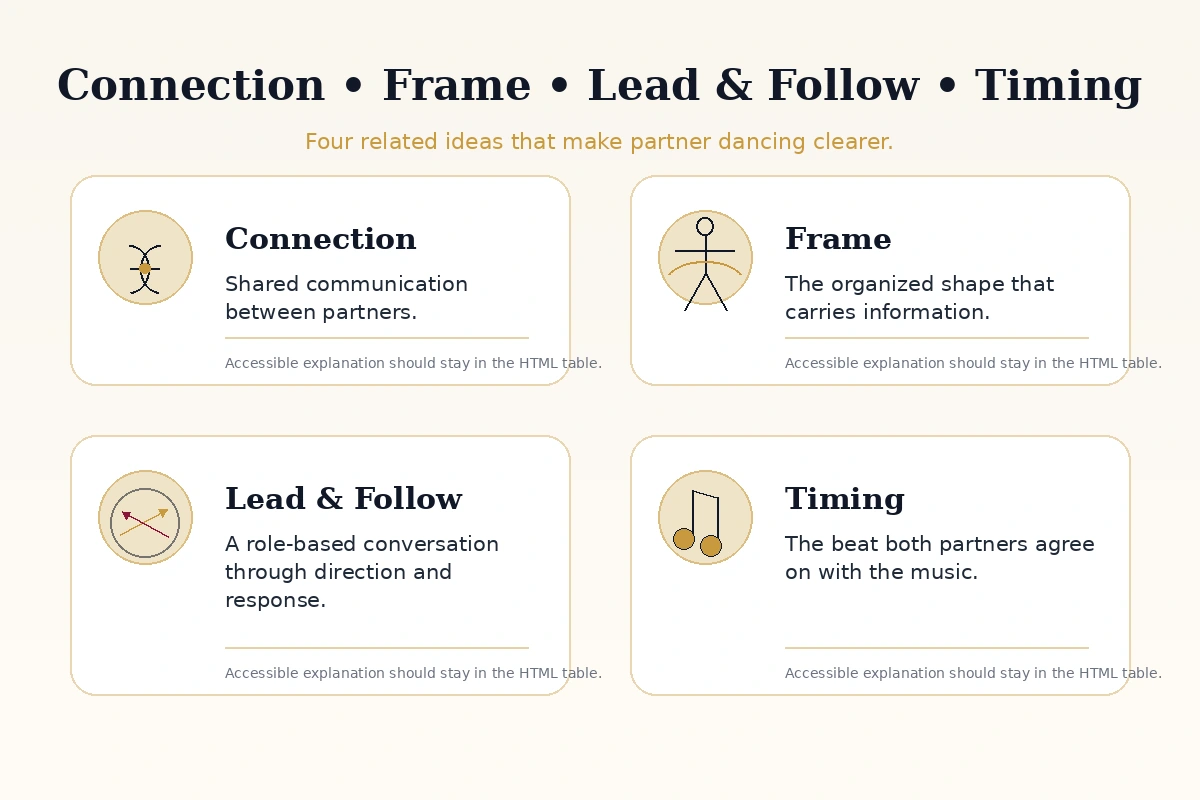
Beginners often blur these terms together. They are related, but they are not the same thing. Frame and posture build the structure; lead and follow is the role system; connection is the communication that travels between partners.
| Term | What it is | Example | Learn more |
|---|---|---|---|
| Connection | The shared communication between partners through frame, contact, timing, and awareness. | You can feel when your partner is ready to move without squeezing their hand. | This page |
| Frame | The organized shape of the arms and upper body that helps partners communicate. | Your elbows and arms stay supported instead of drooping or locking. | Frame and posture |
| Posture | Upright, balanced body alignment that lets you move without leaning on your partner. | You can stand and step clearly even if your partner lets go. | Frame and posture |
| Lead and follow | The role-based communication system where one partner initiates and the other responds. | The leader suggests a turn; the follower waits for the signal and turns in balance. | Lead and follow |
| Timing | Matching steps and movement to the beat, rhythm, and count of the music. | Both partners step on the same count instead of one person rushing ahead. | How to count music |
How connection works
1. Posture and balance come first
Connection works best when each dancer can stand on their own balance. If one partner leans, hangs, or uses the other person to stay upright, the connection becomes heavy and unclear.
2. Frame creates the structure
Frame is the organized shape of the arms, shoulders, back, and upper body. It does not need to be rigid, but it should be supported enough that information can travel through it. In closed hold, frame helps partners feel direction, rotation, travel, and timing. In open hold, frame helps hand connection stay clear without turning into loose arms or hard pulling. Think of frame as a quiet structure, not a pose you freeze.
3. Tone is different from stiffness
Connection needs some tone, but tone is not the same as tension. Tone means the body is awake, organized, and ready. Stiffness means the body is locked, braced, or hard to move. A good connection usually feels alive and responsive. It can become stronger or lighter depending on the dance, the figure, the music, and the partner.
4. Hand and arm connection should be clear, not gripping
In many dances—especially Rhythm, Latin, Swing, Salsa, and open Smooth figures—partners communicate through one or both hands. The hands should not clamp. The arms should not yank. A comfortable hand connection lets both partners feel direction and timing while keeping the shoulders relaxed and the body involved.
5. Body or contact connection depends on style and comfort
Some ballroom contexts use body or contact connection, especially in closed Standard or Smooth work. Other dances use more open hold, hand connection, visual awareness, or a looser social frame. Body contact should never be treated as an excuse to ignore comfort or boundaries. The amount of closeness should match the dance style, teaching context, social setting, and mutual comfort.
6. Timing and weight changes make connection musical
Connection becomes much clearer when both partners understand the rhythm. A leader’s weight change, preparation, or direction is easier to follow when it happens with the count. A follower’s response is easier to lead when their timing is organized. If the timing is unclear, the connection usually feels unclear too.
7. Leaders and followers both participate
The leader does not “move” the follower like an object. The leader communicates intention. The follower does not simply guess or copy. The follower listens, stays balanced, and responds. Connection is a two-way conversation. Everyone dances; no one gets dragged.
Types of connection
Closed hold connection
Uses a shared frame and closer partner position. Common in Waltz, Foxtrot, Tango, and many Smooth or Standard contexts. Beginners should notice posture, balance, and steady tone rather than trying to squeeze the arms.
Open hold connection
Uses more space between partners. It may happen in Smooth figures, Rhythm dances, social dances, and practice settings. The connection usually travels through the arms and hands, supported by the body.
Hand-to-hand connection
Common in Rumba, Cha Cha, Swing, Salsa, and many open figures. It should feel responsive and comfortable, not clamped or limp.
Body / contact awareness
Some styles use body or torso awareness to help partners coordinate movement. This should be taught carefully, respectfully, and in context. It is not required in every dance or social setting.
Visual connection
Partners may use visual cues, especially in open positions or side-by-side moments. Visual connection does not replace technique, but it helps dancers stay aware of each other.
Musical / timing connection
Two dancers can have a beautiful frame and still feel disconnected if they are not hearing the music together. Shared timing helps the partnership feel calm and coordinated.
Social floor awareness
Connection also includes awareness of the room. Partners adjust step size, direction, and energy to avoid other dancers and keep the floor comfortable. See floorcraft and social dancing.
What connection is NOT
Connection is easy to misunderstand. Here is what it is not:
- It is not gripping.
- It is not pulling.
- It is not pushing.
- It is not leaning on your partner.
- It is not being stiff.
- It is not just “chemistry.”
- It is not only the leader’s job.
- It is not an excuse to ignore comfort or boundaries.
Connection in different dance styles
Connection adapts to each dance. The core idea—clear, comfortable communication—stays the same, but the hold, energy, and timing change.
| Dance | How connection feels | Beginner focus | Guide |
|---|---|---|---|
| Waltz | Smooth, continuous, and supported through closed hold or Smooth-style frame. | Keep your own posture and feel the shared timing of 1-2-3. | Waltz |
| Foxtrot | Easy, gliding, and connected through smooth travel and slow/quick timing. | Avoid dragging steps; let the frame and timing stay calm. | Foxtrot |
| Tango | More compact, directional, and grounded than Waltz or Foxtrot. | Clear tone matters, but squeezing or forcing makes Tango harder. | Tango |
| Rumba | Smaller and more grounded, often with hand connection and clear weight changes. | Finish your weight transfer before guessing the next action. | Rumba |
| Cha Cha | Compact and rhythmic, with quick timing and active hand connection. | Keep steps small so the connection does not become rushed. | Cha Cha |
| East Coast Swing | Elastic and responsive, often through one or two hands. | Match energy without yanking or collapsing the arms. | East Coast Swing |
| Bolero | Sustained and controlled, with a softer Rhythm quality. | Let the timing breathe; do not over-hold or over-push. | Bolero |
| Salsa & social dances | Often open, hand-based, visual, and style-dependent. | Stay musical, respectful, and adaptable to the partner and setting. | Salsa |
Connected hip and body action across Latin and Rhythm dances builds on Cuban motion.
Beginner connection drills
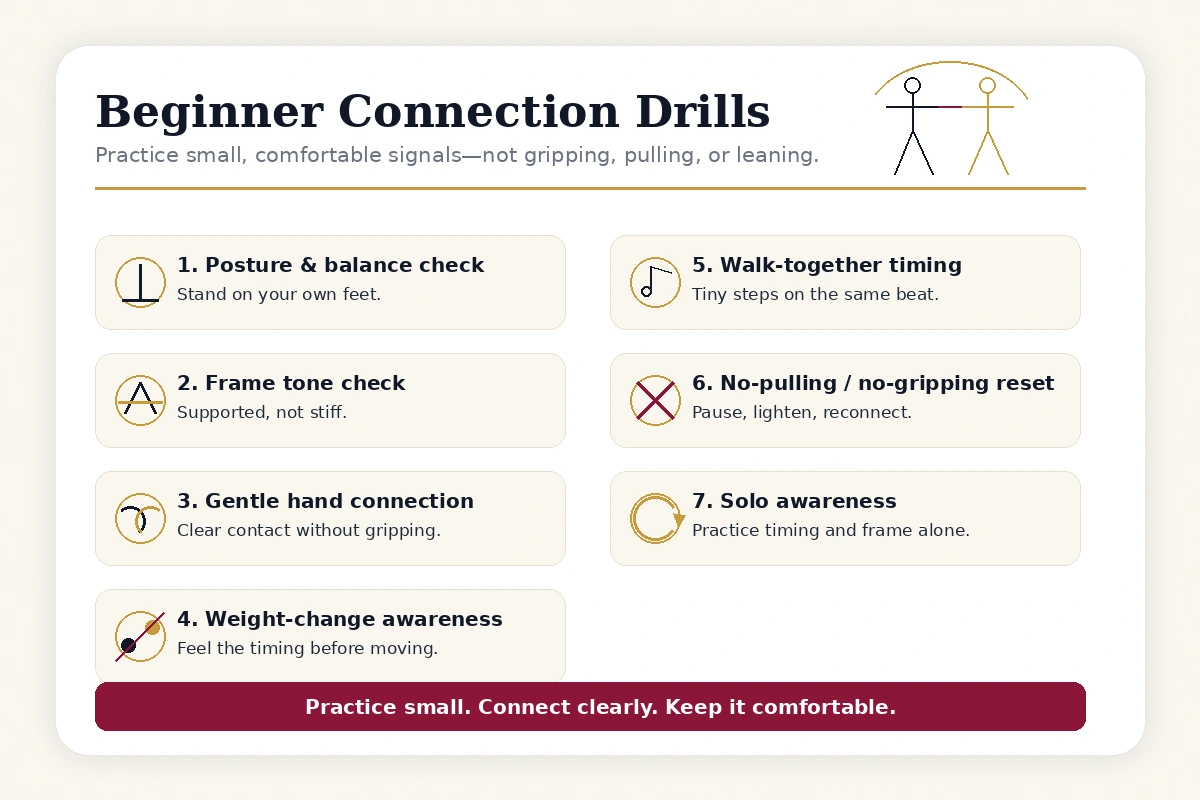
Safety and comfort note: Keep every drill small and comfortable. Do not pull, twist, squeeze, shove, or lean on a partner. If something feels painful, unsafe, or too close, stop and adjust. A qualified dance teacher can help correct mechanics in person, and every partner has the right to set boundaries.
-
Posture and balance check
Stand tall with your feet under you. Shift weight from one foot to the other without touching a partner. Notice whether you can move without tipping forward, backward, or sideways.
Goal: Build the balance connection depends on.
-
Frame tone check
Lift your arms into a comfortable practice frame. Keep your shoulders relaxed. Ask yourself: are your arms drooping, locked, or supported? Adjust until they feel awake but not tense.
Goal: Find tone without stiffness.
-
Gentle hand connection drill
With a partner, hold one or both hands lightly. Each person keeps their own balance. Practice a very small increase and decrease in tone, like a quiet conversation through the hands. Avoid squeezing.
Goal: Feel connection without gripping.
-
Weight-change awareness drill
Stand facing a partner in a comfortable practice hold. Shift weight slowly from foot to foot. The leader initiates a small weight change; the follower waits, senses, and responds. Then switch roles if appropriate.
Goal: Connect timing and weight transfer.
-
Walk-together timing drill
Choose slow music. Walk forward and backward with tiny steps, staying on the same beat. The goal is not big movement; it is shared timing and a calm frame.
Goal: Practice moving together without rushing.
-
No-pulling / no-gripping partner drill
Dance a simple basic step. Each time you notice a grip, pull, or push, pause and reset with lighter hands and stronger posture.
Goal: Replace force with clearer body communication.
-
Solo awareness drill
No partner? Practice listening to music, counting out loud, and stepping with clean weight changes. Then practice holding your frame shape without locking the arms.
Goal: Prepare your body to connect before adding a partner.
Practice connection with music
Connection is easier when both dancers hear the same beat. You do not need to study music theory to practice connection, but you do need enough timing awareness to move together.
Use slow, clear music first. Practice Waltz or Foxtrot for smooth closed-hold awareness. Use Rumba for patient weight changes. Use Cha Cha or Swing when you are ready for quicker timing and a more responsive hand connection.
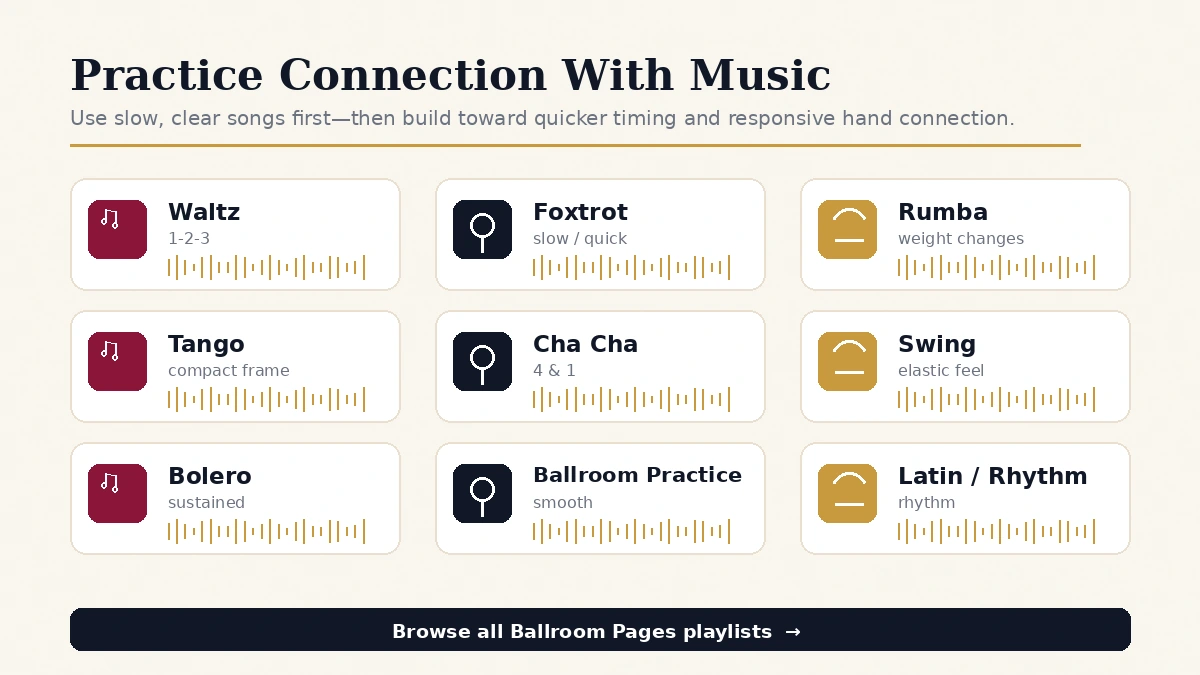
Practice playlists
Ballroom Pages practice playlists
Lightweight cards open each playlist in your music app—no heavy embeds. Verified Spotify links are live; general and Apple/YouTube links are marked as placeholders until confirmed.
-
Waltz practice playlist
Best for smooth timing, closed hold, posture, and calm traveling connection.
-
Foxtrot practice playlist
Best for smooth walking, slow/quick timing, and steady partnership.
-
Rumba practice playlist
Best for clear weight changes and patient hand connection.
-
Tango practice playlist
Best for compact frame, directional clarity, and grounded timing.
-
Cha Cha practice playlist
Best for compact hand connection and quick rhythm.
-
Swing practice playlist
Best for elastic one-hand or two-hand connection.
-
Bolero practice playlist
Best for sustained Rhythm connection and controlled timing.
-
General Ballroom practice music
A broad mix for mixed-style practice sessions.
Spotify URL to verify before publishing Apple Music URL to verify YouTube URL to verify
-
General Latin / Rhythm practice music
A broad mix for Rumba, Cha Cha, Swing, Bolero, and Salsa practice.
Spotify URL to verify before publishing Apple Music URL to verify YouTube URL to verify
-
Ballroom Pages Music channel
Follow along with new practice playlists and timing tips on Telegram.
Explore more in Music & Timing and the full ballroom playlists collection.
Common mistakes and fixes
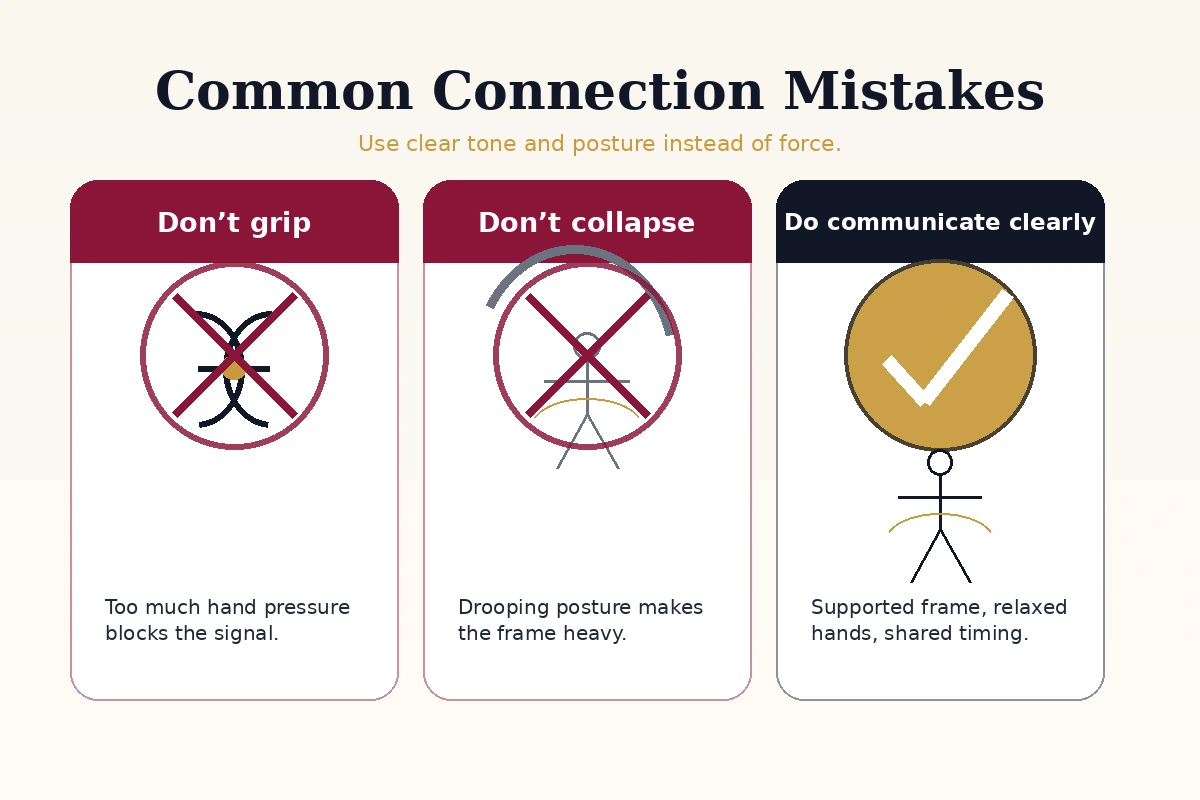
| Mistake | How it feels | Fix |
|---|---|---|
| Gripping the hands | The handhold feels tight, tense, or uncomfortable. | Keep fingers relaxed and use supported tone through the body. |
| Pulling with the arms | One partner feels dragged or yanked off balance. | Start movement from the body and timing, not the hands alone. |
| Pushing or forcing | The partner feels shoved into steps or turns. | Make the signal smaller and clearer. Use direction, not force. |
| Leaning on the partner | One dancer becomes heavy or hard to move. | Rebuild your own balance before reconnecting. |
| Stiff frame | Arms feel locked and movement feels blocked. | Use tone without rigidity; keep shoulders relaxed. |
| Collapsed frame | Arms droop or disconnect from the body. | Support the arms with the back and posture, not by tensing the shoulders. |
| Guessing the next step | The follower moves before the lead arrives. | Wait for the actual signal and stay ready in balance. |
| Ignoring timing | Partners step at different moments. | Count out loud and practice with slower music. |
| Treating connection as chemistry only | The dance may feel nice but becomes unreliable. | Build skill: frame, posture, tone, timing, and awareness. |
| Ignoring comfort or boundaries | A partner feels too close, trapped, or unsafe. | Adjust distance, pressure, and hold; communicate respectfully. |
FAQ
Connection FAQ
What does connection mean in ballroom dance?
Connection in ballroom dance means the shared communication between partners. It can happen through frame, posture, hand contact, body position, timing, weight changes, visual awareness, and musical feel.
Is connection the same as frame?
No. Frame is the organized shape of the arms and upper body. Connection is the communication that travels through the frame, timing, contact, and awareness. Frame helps create connection, but it is not the whole connection.
How do you improve connection in partner dancing?
Start with posture, balance, and timing. Then practice a comfortable frame, relaxed hand contact, clear weight changes, and simple movement with a partner. Avoid gripping, pulling, pushing, or guessing.
Should connection feel strong or light?
It depends on the dance, figure, partner, and setting. Good connection may feel light, elastic, grounded, or more toned, but it should not feel painful, forced, or rigid.
Do leaders and followers both create connection?
Yes. Leaders and followers both maintain balance, timing, tone, awareness, and respect. The leader communicates intention; the follower listens and responds. Both partners shape the quality of the dance.
Is body contact required for connection?
Not always. Some ballroom styles and teaching contexts use body or contact connection, especially in closed hold. Other dances use hand connection, open hold, visual awareness, or musical timing. Comfort and context matter.
Why does my partner connection feel stiff?
Connection often feels stiff when dancers lock the arms, tense the shoulders, grip the hands, or try too hard to “hold frame.” Try softening the shoulders, standing on your own balance, and using supported tone instead of rigidity.
Can I practice connection without a partner?
Yes. You can practice posture, balance, timing, frame shape, and weight changes alone. Partner connection still needs a partner to fully develop, but solo work makes partner practice clearer.
Editorial
Source and editorial note
This glossary entry is written for beginner clarity and should be reviewed periodically by experienced ballroom dancers or teachers. Connection is a physical partner skill, so in-person feedback from a qualified teacher is recommended before treating any written description as formal technique instruction.
Suggested references
- University of Georgia — Ballroom Dance Terminology.
- University of Georgia — Course Fundamentals.
- Stanford Social Dance — Connection.
- NDCA — Vocabulary of Dance Positions, Holds and Proximities.
- WDSF — DanceSport Disciplines.
- Arthur Murray — What Is Leading and Following in Ballroom Dancing.
- Arthur Murray Dance Now — Dance Studio Etiquette.
This is dance terminology, not medical advice. Ballroom Pages follows an editorial policy of education-first guidance. Questions? Contact us. Updated May 21, 2026.