What is Ballroom Tango?
Ballroom Tango is the Tango used in ballroom dance settings, especially American Smooth and International Standard. It is a partner dance built around strong posture, grounded walking actions, compact movement, clear rhythm, and sharp changes of energy.
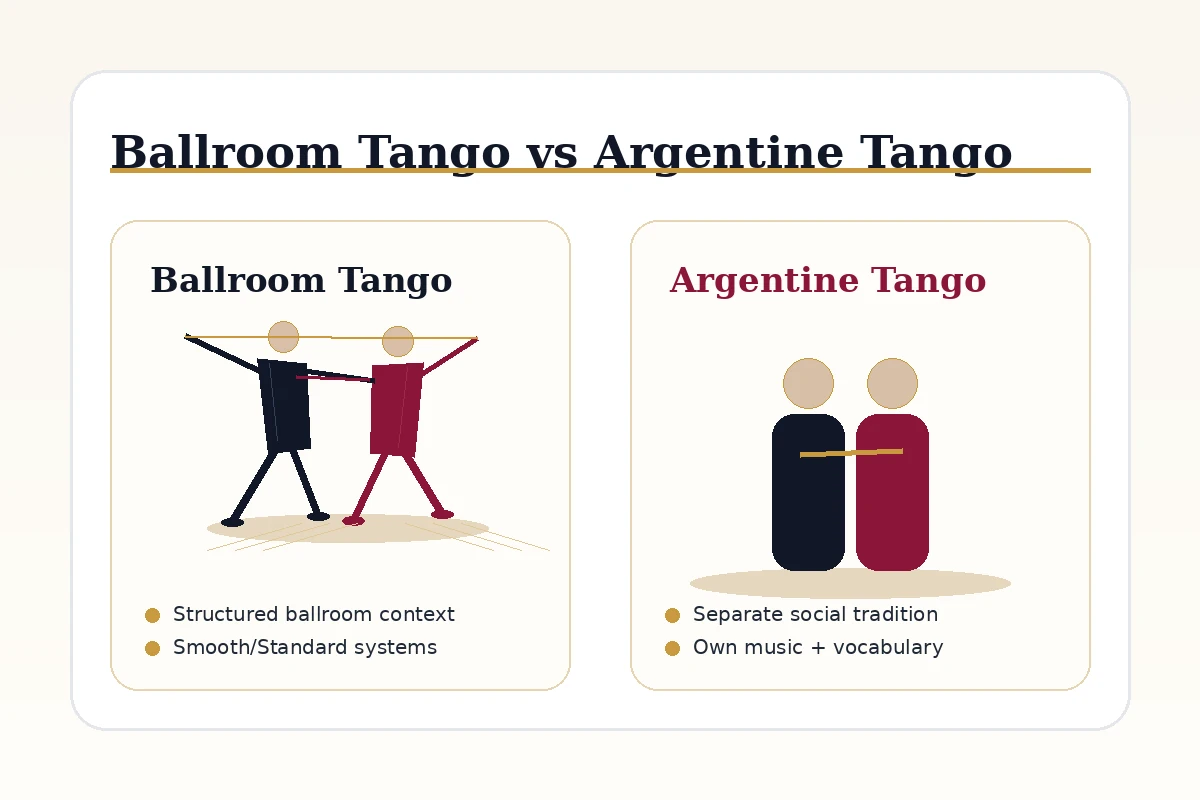
This page is about Ballroom Tango, not Argentine Tango. The two are historically related, and both are called Tango, but they are taught, danced, socialized, and competed in different ways.
In ballroom settings, Tango is often more structured. Dancers learn specific figures, positions, timing patterns, and floorcraft expectations. In Argentine Tango, dancers usually focus on a different social dance culture, embrace, improvisation style, and vocabulary.
A beginner does not need to master the full history to begin. The practical first step is to understand that ballroom Tango is crisp rather than flowing, grounded rather than floating, and controlled rather than loose.
What Ballroom Tango feels like
Ballroom Tango has a focused, staccato quality. Movements often feel direct and compact, with clear stops, quick changes, and strong body tone.
Unlike Waltz, Tango does not feel like a soft rise-and-fall dance. It is more grounded. The knees often stay flexed, the movement feels close to the floor, and the couple moves with intention rather than float.
The leader’s role is to create clear direction, timing, and shape. The follower’s role is to stay responsive, balanced, and connected without guessing ahead. Both dancers need posture, tone, and patience.
The best beginner Tango does not need theatrical exaggeration. It should feel calm, precise, and alert.
Tango timing and count
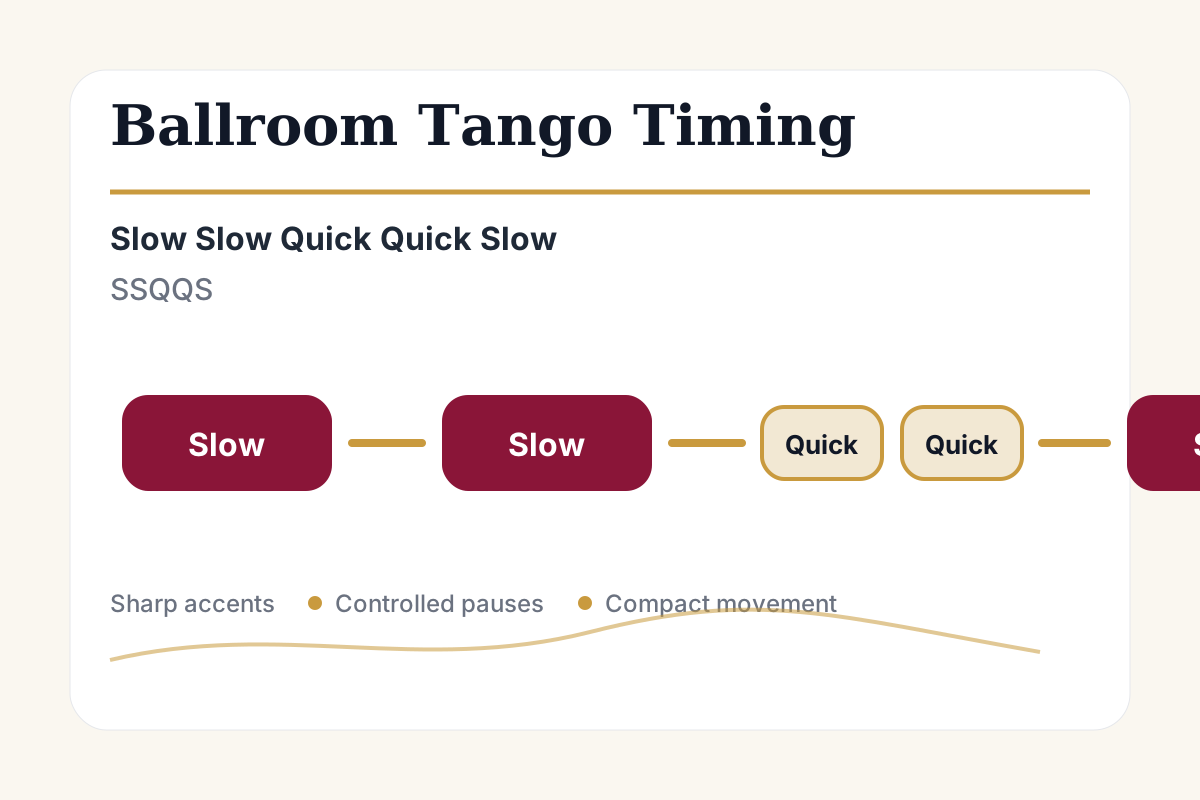
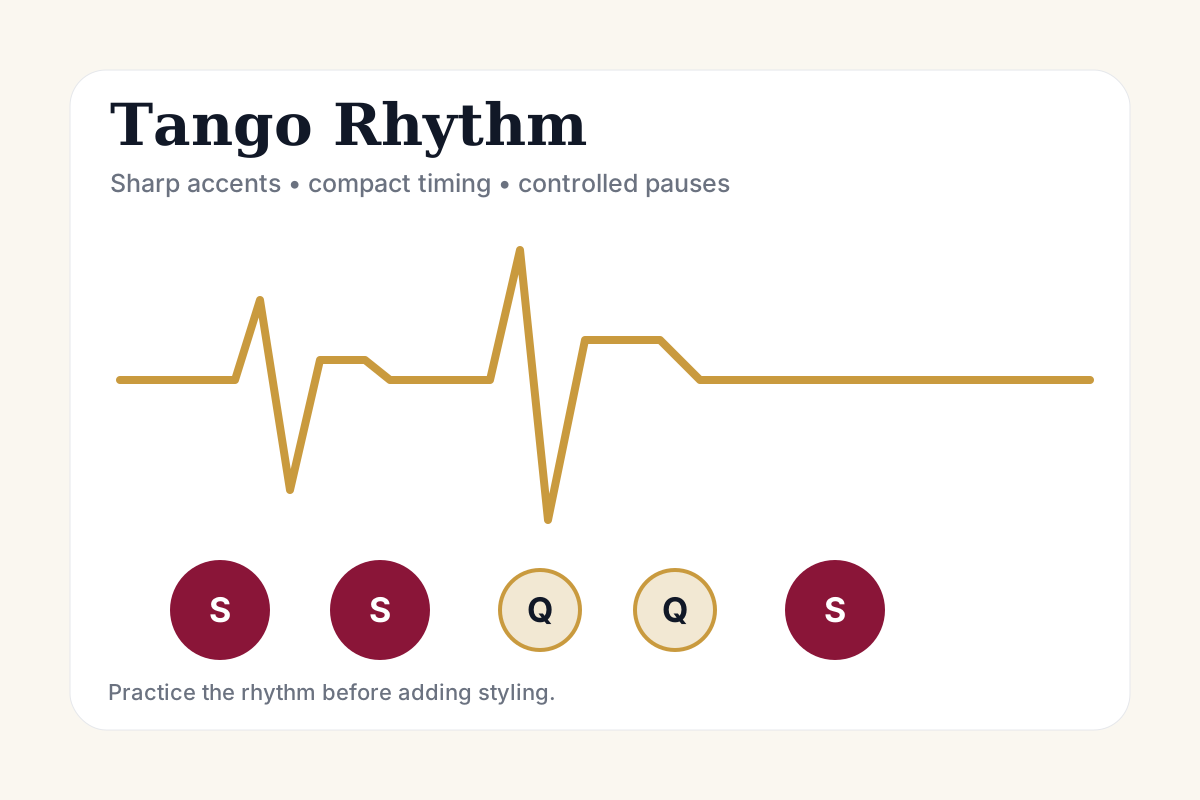
A common beginner ballroom Tango count is Slow, Slow, Quick Quick Slow. You may also see it written as SSQQS.
In beginner language, a “slow” takes more time than a “quick.” The exact way this is counted can vary by style system and teaching context, so beginners should focus first on the rhythm pattern rather than arguing over notation.
| Timing idea | Beginner explanation |
|---|---|
| Common beginner count | Slow, Slow, Quick Quick Slow |
| Shorthand | SSQQS |
| American Smooth reference | Often organized in 4/4 timing |
| International Standard reference | Often taught with 2/4 or two-beat phrasing in technical references |
| Rhythm feel | Sharp, grounded, accented, compact |
| Beginner vocal cue | “Slow, slow, quick quick slow” |
| Common mistake | Making every step the same length |
| Practice fix | Say the count out loud before dancing the feet |
The “quick quick” should not feel frantic. It should feel precise. Many beginners rush the quicks and then arrive late for the final slow.
A useful drill is to clap or tap the rhythm before stepping. Say slow, slow, quick quick slow and notice where the energy changes.
How to count ballroom dance music
Basic Ballroom Tango steps
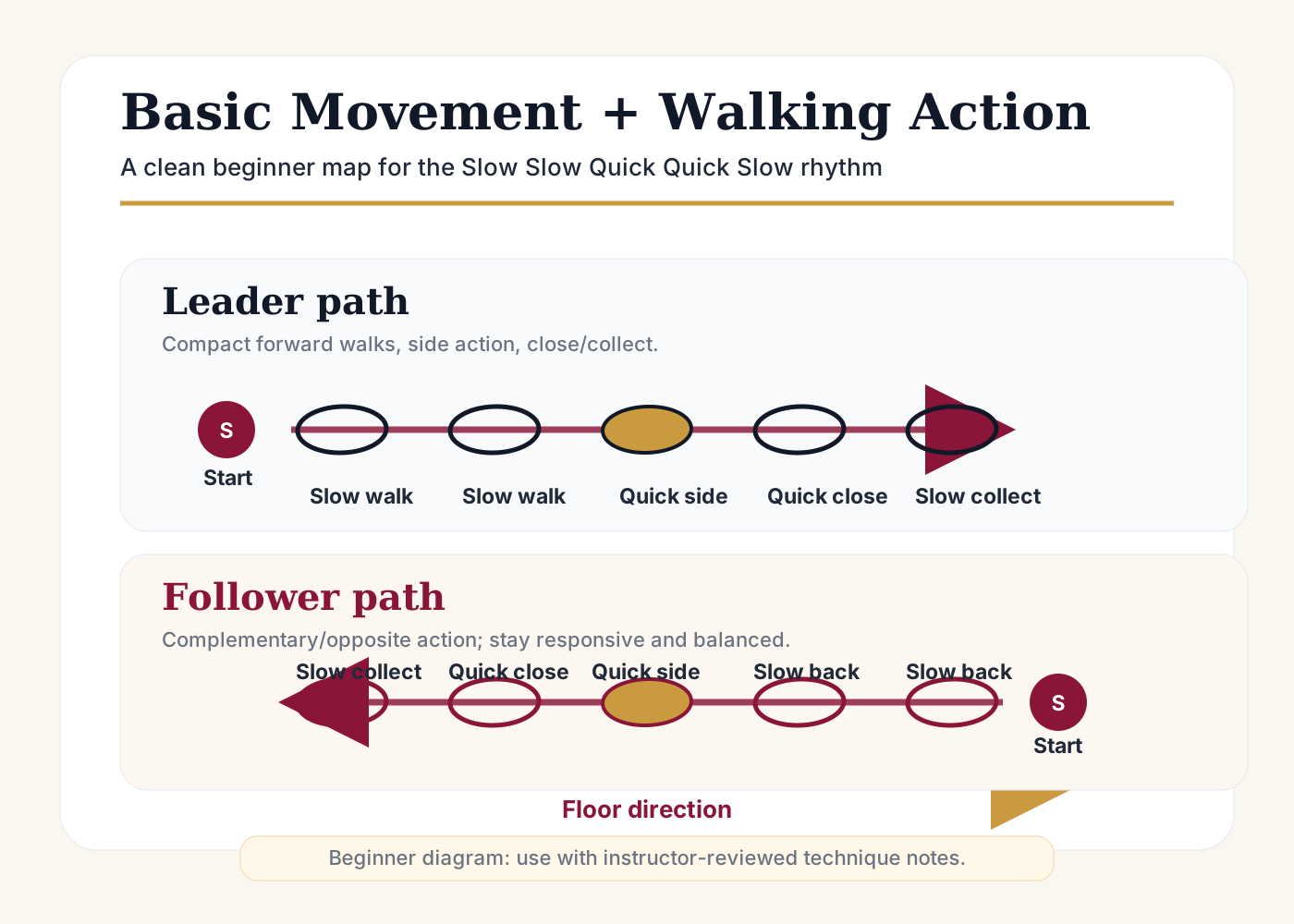
The basic Ballroom Tango step is a walking pattern counted slow, slow, quick quick slow (SSQQS): two grounded walks, then a quick walk and a quick step to the side, finished with a slow close. From there, beginner ballroom Tango adds simple entries into and out of promenade position. These ideas teach timing, direction, posture, and partner coordination.
The walking action is important because Tango does not move like Waltz or Foxtrot. It should feel grounded and deliberate, with a clear placement of the foot and a controlled body position.
| Beginner concept | What it teaches |
|---|---|
| Tango walks | Grounded movement, timing, and direction |
| Basic movement | How slow and quick counts fit together |
| Tango close | A clean ending shape for beginner patterns |
| Promenade position | How the couple shapes in a shared direction |
| Progressive link | How dancers move toward promenade in Standard-style vocabulary |
| Closed position | Partner frame, posture, and body relationship |
Do not try to learn every Tango figure at once. Start with clean walking, the count, and a comfortable frame.
Closed Position · Promenade Position
How to dance Ballroom Tango step by step
The basic Ballroom Tango step is counted slow, slow, quick quick slow. Build it in the order below, and keep every step grounded and compact rather than floating.
| Step | What you do |
|---|---|
| 1. Find the pulse | Play a Ballroom Tango and feel the sharp, driving accent. It marches; it does not float. |
| 2. Say the rhythm | Speak “slow, slow, quick quick slow” out loud before you move a foot. |
| 3. Walk the two slows | Two grounded forward walks, knees softly flexed, weight settling into the floor. |
| 4. Add the quick quick | A quick forward walk, then a quick step to the side. |
| 5. Close on the final slow | Draw your feet together to finish the pattern. This closing action is what gives Tango its clean, deliberate ending. |
| 6. Keep it compact | Stay level and grounded, with no rise and fall. In Tango, precision beats drama. |
The leader walks forward; the follower dances the natural opposite, walking back. Do not rush the quicks — most beginners hurry them and then arrive late for the final slow. For the full pattern with foot-by-foot detail, see the Tango basic movement guide.
Tango promenade and basic movement overview
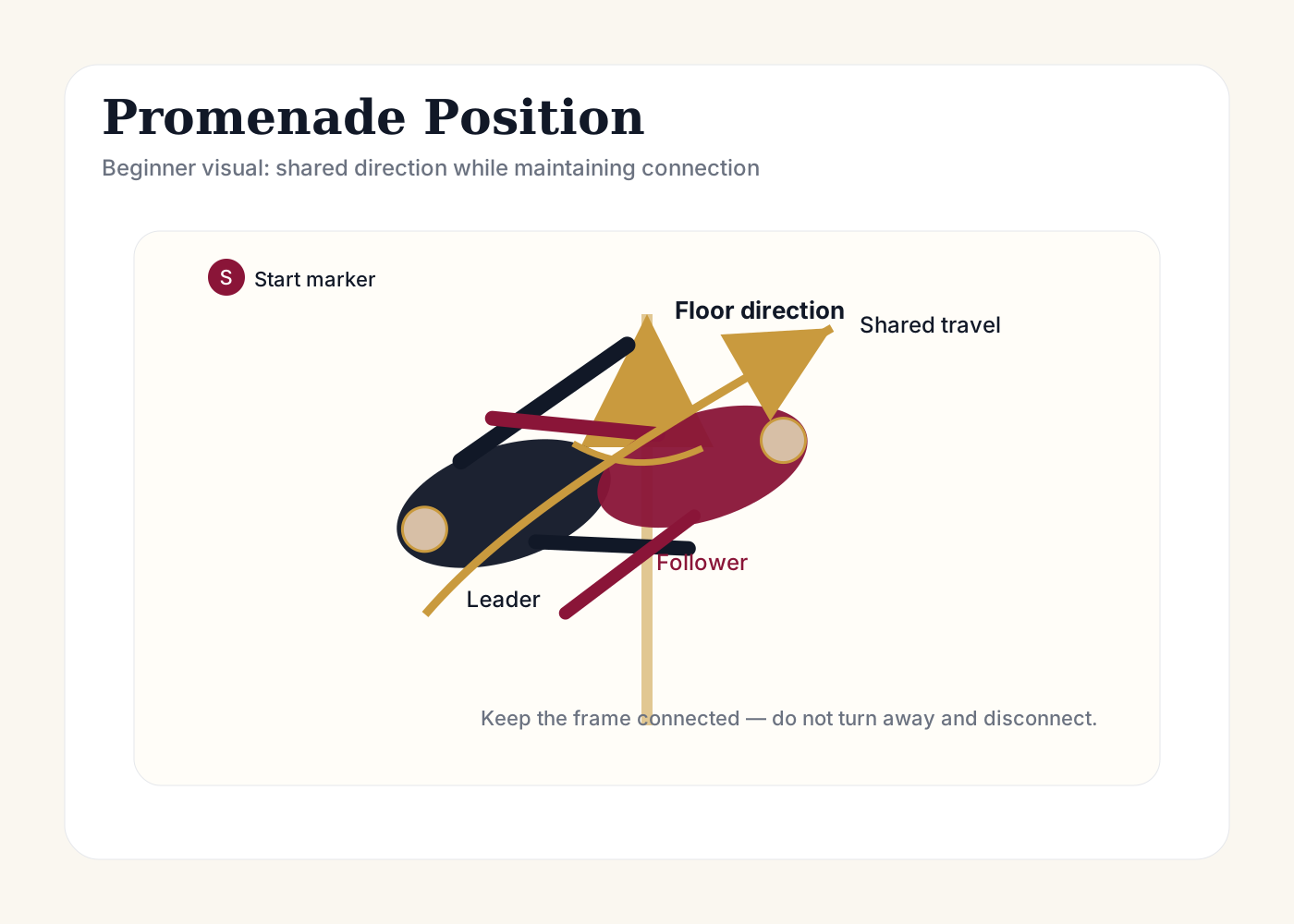
Promenade position is one of the most useful ideas in beginner ballroom Tango. In simple terms, the couple shapes so both partners can move in a shared direction while still maintaining a ballroom connection.
For beginners, promenade should not mean “turn away from your partner and disconnect.” It should feel like the couple is still connected, but oriented to travel together.
A beginner Tango basic movement may combine walking actions, a transition, and a close. In American Tango, many beginners learn a basic counted Slow, Slow, Quick Quick Slow. In International-style language, beginners often hear about walks, progressive side step, progressive link, and closed promenade.
The details vary by syllabus and teacher. The goal on this page is not to replace instruction, but to give you the map: walks, rhythm, frame, promenade, and a clean ending.
Learn the beginner Tango basic movement
Tango music
Ballroom Tango music feels more accented and direct than many smooth ballroom dances. It often has a march-like or driving pulse, with sharp accents and moments of suspension.
This does not mean Tango music must sound aggressive. A good Tango can be controlled, elegant, and focused. The key is that the rhythm supports a grounded, staccato movement quality.
| Music question | Beginner answer |
|---|---|
| What should I listen for? | A strong pulse, accents, and a clear slow/quick feeling |
| Is Tango music the same as Argentine Tango music? | Not always; ballroom Tango and Argentine Tango often use different arrangements and dance conventions |
| Can a modern song work? | Sometimes, if the rhythm and character fit |
| Is Tango good for soft romantic songs? | Usually not; Rumba, Foxtrot, or Nightclub Two Step may fit better |
| What should beginners practice? | Count SSQQS before stepping |
American Tango vs International Tango
American Smooth Tango and International Standard Tango are both ballroom Tango, but they are not identical.
| Feature | American Smooth Tango | International Standard Tango |
|---|---|---|
| Ballroom family | American Smooth | International Standard |
| General use | Social ballroom, showcases, studio dancing, American-style competition | Standard ballroom training and competition |
| Hold and shape | May allow more open or varied positions depending on level/context | Generally more closed-position and formal in Standard contexts |
| Beginner count | Often taught with SSQQS patterns | Often taught through technical Standard figures and phrasing |
| Beginner concepts | Tango walks, basic, promenade, fans, rocks, closed/open shaping depending on level | Walk, progressive side step, progressive link, closed promenade, rock turn |
| Best beginner focus | Count, grounded walks, frame, clean close | Count, posture, closed hold, promenade control |
| What not to assume | That “open” means uncontrolled | That beginners must dance full competition technique immediately |
If you are learning socially, your teacher may use practical American-style patterns. If you are training for competition, follow the syllabus and rules for your category.
Ballroom Tango vs Argentine Tango
Ballroom Tango and Argentine Tango are related through Tango’s broader history, but they are separate dance experiences. Searchers often mix them up because both use the word “Tango.”
| Feature | Ballroom Tango | Argentine Tango |
|---|---|---|
| Main context | Ballroom studios, social ballroom events, showcases, competitions | Milongas, Argentine Tango classes, social Tango communities |
| Page focus | /dance-styles/tango/ | /dance-styles/argentine-tango/ |
| Style systems | American Smooth and International Standard | Argentine Tango social and performance traditions |
| Movement feel | Structured, sharp, grounded, compact | Improvisational, embrace-based, often more internally led |
| Music culture | Ballroom Tango arrangements and competition/social ballroom music | Argentine Tango orchestras, tandas, milonga culture |
| Beginner vocabulary | Walks, basic movement, promenade, closed position | Embrace, walk, ochos, cruzada, molinete, milonga etiquette |
| Best learning path | Ballroom teacher or ballroom curriculum | Argentine Tango teacher or milonga-focused curriculum |
This page should not be used as a complete Argentine Tango guide. If your goal is to learn Argentine Tango for milongas or Argentine social dance, use a dedicated Argentine Tango resource.
Tango for weddings
Tango can work as a wedding first dance, but it is not the easiest or most universal wedding choice. It fits couples who want a bold, focused, stylized first dance rather than a soft romantic sway.
Is Tango right for your wedding?
Tango may be right if…
- Your song has a strong, accented rhythm.
- You want a confident, dramatic, controlled mood.
- You are comfortable practicing posture and timing.
- Your outfits allow walking, shaping, and direction changes.
- You want a dance that feels distinctive rather than casual.
Consider another dance
Tango may not be right if…
- Your song is soft, floating, or sentimental.
- You want a very simple first dance.
- You feel uncomfortable with stylized movement.
- You have limited practice time.
- Your floor is tiny or crowded.
A wedding Tango should still feel like the couple. It does not need extreme dips, acrobatics, or theatrical clichés.
Tango in social dancing
Ballroom Tango appears at ballroom socials, studio parties, showcases, and formal dance events. It is useful for dancers who attend mixed ballroom events where Standard and Smooth dances are played.
Social ballroom Tango is not the same as Argentine Tango social dancing. Argentine Tango has its own social culture, music sets, etiquette, and dance vocabulary.
In ballroom social dancing, simple Tango can be enjoyable when dancers use good floorcraft. Keep steps compact, avoid oversized shapes, and do not turn sharply without awareness of the room.
The goal is not to look severe. The goal is to move with timing, control, and respect for the partner and the floor.
Tango in competition
In competition, Tango appears in American Smooth and International Standard contexts. Each system has its own expectations for hold, figures, styling, and level restrictions.
This guide is not a syllabus replacement. It gives beginners a clear overview before they move into formal instruction.
For competitive Tango, work with a qualified instructor and follow the relevant syllabus, event rules, and category expectations. Footwork, body position, head action, promenade shape, and timing can become much more detailed than this beginner guide can cover.
Common beginner Tango mistakes
| Mistake | Why it happens | Better fix |
|---|---|---|
| Treating Tango like Waltz | Beginners expect all ballroom dances to flow | Keep Tango grounded, compact, and sharp |
| Making every step the same length | The slow/quick rhythm is not yet clear | Say SSQQS out loud before dancing |
| Rushing the quick quick | The quicks feel exciting | Keep the quicks precise, not frantic |
| Overacting the drama | Tango stereotypes encourage exaggeration | Aim for controlled focus instead |
| Collapsing posture | The grounded feeling becomes heavy | Stay lifted through the body while keeping the knees soft |
| Pulling with the arms | The leader tries to force sharpness | Use body direction, timing, and frame |
| Guessing as the follower | The follower anticipates the next shape | Wait for direction and stay balanced |
| Taking oversized steps | The dancer tries to look dramatic | Keep steps compact and deliberate |
| Confusing Argentine imagery with ballroom Tango | Search results and videos mix Tango styles | Learn which Tango style your class or page is teaching |
Beginner Ballroom Tango practice plan
| Practice session | Focus | What to do |
|---|---|---|
| Session 1 | Hear the rhythm | Say slow, slow, quick quick slow while listening to Tango music |
| Session 2 | Solo walking | Practice grounded forward and backward walks without rushing |
| Session 3 | Weight changes | Step slowly and confirm each weight change is complete |
| Session 4 | Basic count | Practice a simple SSQQS pattern without styling |
| Session 5 | Frame and posture | Hold a comfortable ballroom frame without stiffness |
| Session 6 | Promenade idea | Practice shaping toward promenade with a teacher or partner |
| Session 7 | Partner timing | Dance slowly with leader/follower roles |
| Session 8 | Compact movement | Reduce step size and keep the action controlled |
| Session 9 | Music variation | Try two Tango tracks and compare the accents |
| Session 10 | Review | Record a short clip and check timing, posture, and overacting |
Practice Tango in short, focused sessions. Ten minutes of clear rhythm and compact walking is more valuable than repeating a dramatic pose that does not stay on time.