
International Standard
International Standard is strongly associated with continuous closed-position dancing. Waltz, Tango, Viennese Waltz, Foxtrot, and Quickstep generally keep a more sustained frame and partner relationship.
Ballroom Glossary · Positions
Closed position is one of the first partner positions many ballroom dancers learn. It is used in dances like Waltz, Foxtrot, Tango, and Rumba, but the exact shape changes by dance style, teacher, level, body type, and social or competitive context.
This guide gives you a clear definition, shows how closed position usually looks and feels, explains how it differs from open position and promenade position, and points you to the technique and dance-style guides to read next.
Closed Position CP
Closed position is a ballroom and partner-dance position where the leader and follower face each other in a connected hold or frame. In many ballroom contexts, the leader’s right arm connects to the follower’s left side or back area, the follower’s left arm connects to the leader’s upper arm or shoulder area, and the partners maintain a shared frame through the arms, hands, and upper body. The exact placement varies by style and teaching context.
In plain English: closed position means you and your partner are facing each other, connected enough to dance together, and organized through a frame rather than clinging, pulling, or squeezing.
Closed position is one of the basic ways two partners relate to each other while dancing. Instead of standing apart with only one or two hand connections, the partners face each other and use a more structured hold or frame.
This position helps dancers share direction, timing, weight changes, and movement quality. In traveling dances such as Waltz and Foxtrot, it helps the couple move together around the floor. In Tango, it supports a sharper, more compact feeling. In some Rhythm and social dances, the partners may use a lighter or more separated version of closed position.
Closed position is not about holding your partner in place. Each dancer is still responsible for their own balance, posture, and movement.
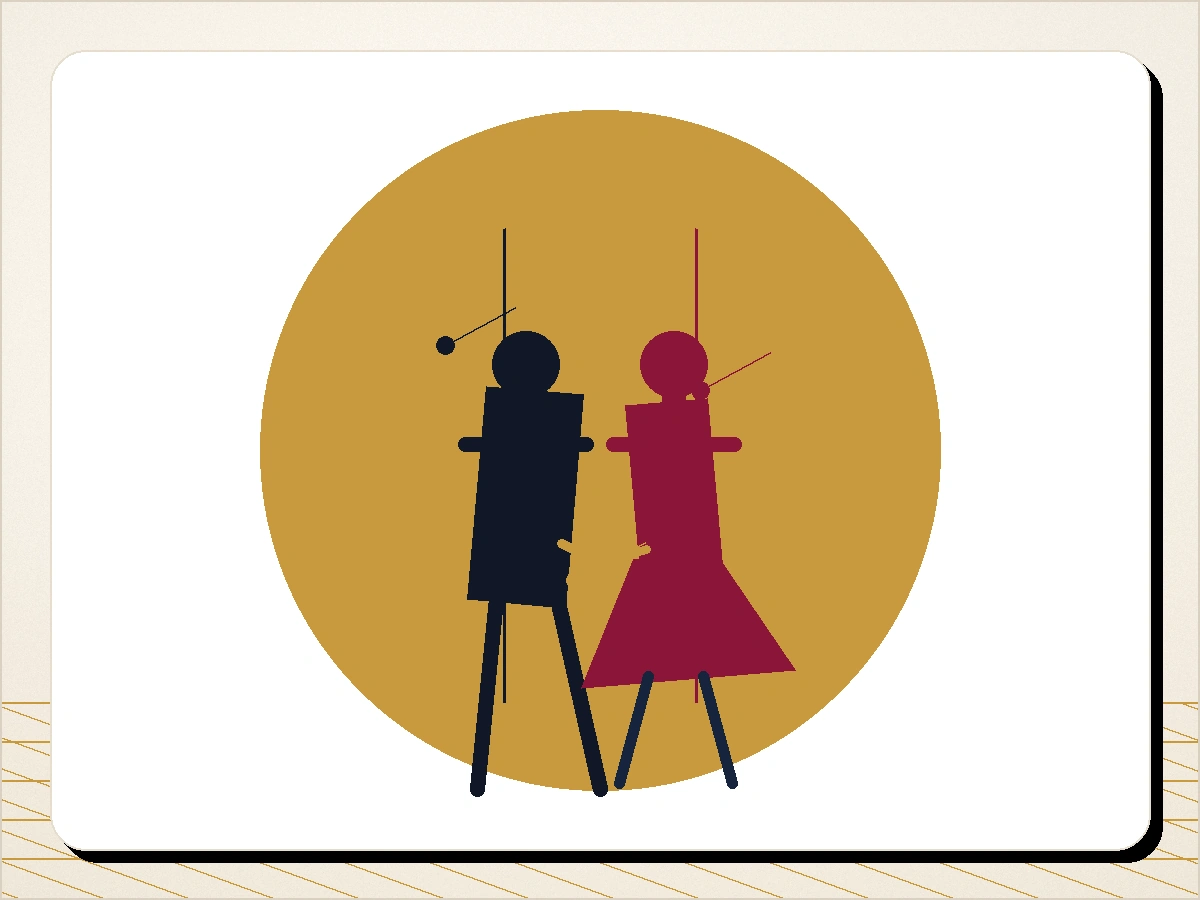
In a typical ballroom closed position:
Use “usually” here for a reason. A social Rumba closed position, an International Standard Waltz hold, an American Smooth Foxtrot hold, and a Ballroom Tango hold may all look different.
Closed position should feel clear, balanced, and comfortable enough for both partners to move. A good closed position usually feels:
It should not feel like squeezing, gripping, leaning, pulling, hanging, or locking the elbows.
If a position causes pain, numbness, dizziness, or persistent discomfort, stop and check with a qualified instructor. For ongoing physical symptoms, consult a healthcare professional as appropriate.
| Term | What it describes | Example | Read more |
|---|---|---|---|
| Closed position | The partners’ body relationship: usually facing each other in a connected partner position | Waltz partners facing each other in ballroom hold | This page |
| Closed hold | The contact points or arm/hand arrangement used in a closed position | A traditional ballroom hold | Hold |
| Frame | The organized shape and tone of the arms, upper body, and posture | Keeping the arms supported without stiffness | Frame and Posture |
| Connection | The communication between partners through timing, tone, weight, and direction | Feeling a weight change without being pulled | Lead and Follow |
Closed position is the “where are we in relation to each other?” idea. Hold is “where are the contact points?” Frame is “how is the body organized?” Connection is “how do we communicate through that organization?”
| Position | Partner relationship | What you notice | Common dances |
|---|---|---|---|
| Closed position | Partners face each other in a connected hold or frame | You are connected through more than just a distant handhold | Waltz, Foxtrot, Tango, Rumba |
| Open position | Partners are separated and usually connected by one or both hands | More space between partners; common before turns | Rumba, Cha Cha, Swing, Salsa |
| Promenade position | Partners create a V shape and move or intend to move in the same general direction | One side opens; both partners look or travel toward the open side | Waltz twinkles, Foxtrot promenade actions, Tango promenade actions |
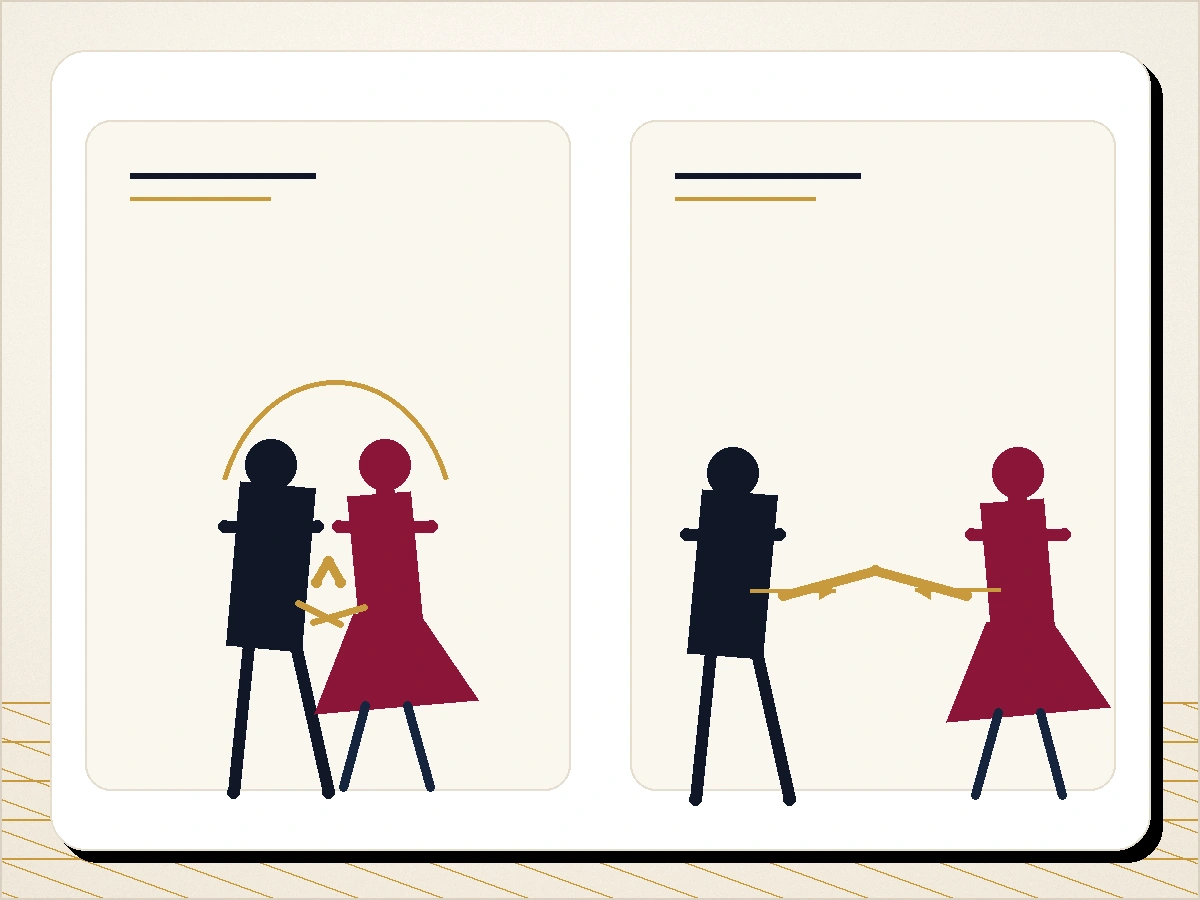
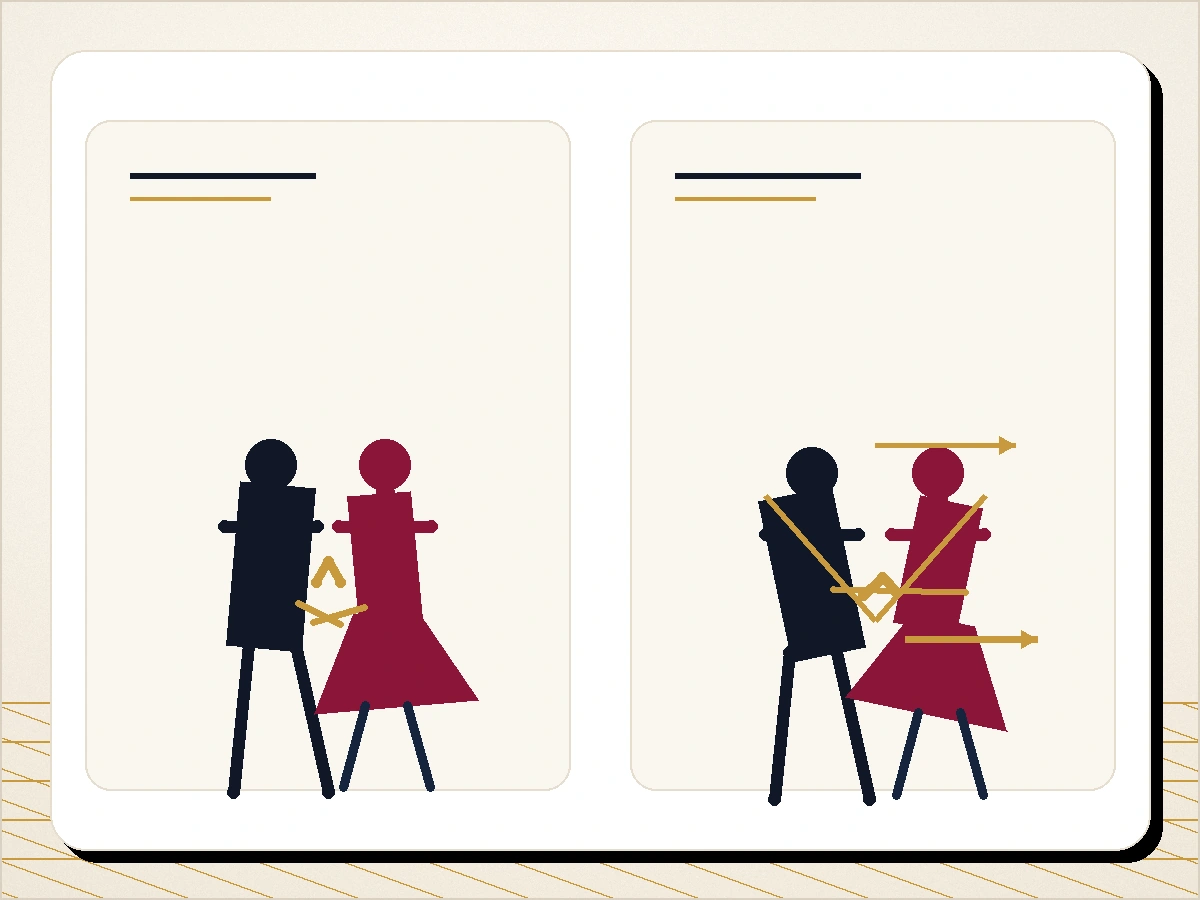
Closed position is not “better” than open position or promenade position. Each position gives the couple a different way to move, connect, and shape the dance.
Closed position appears across many ballroom and partner dances:
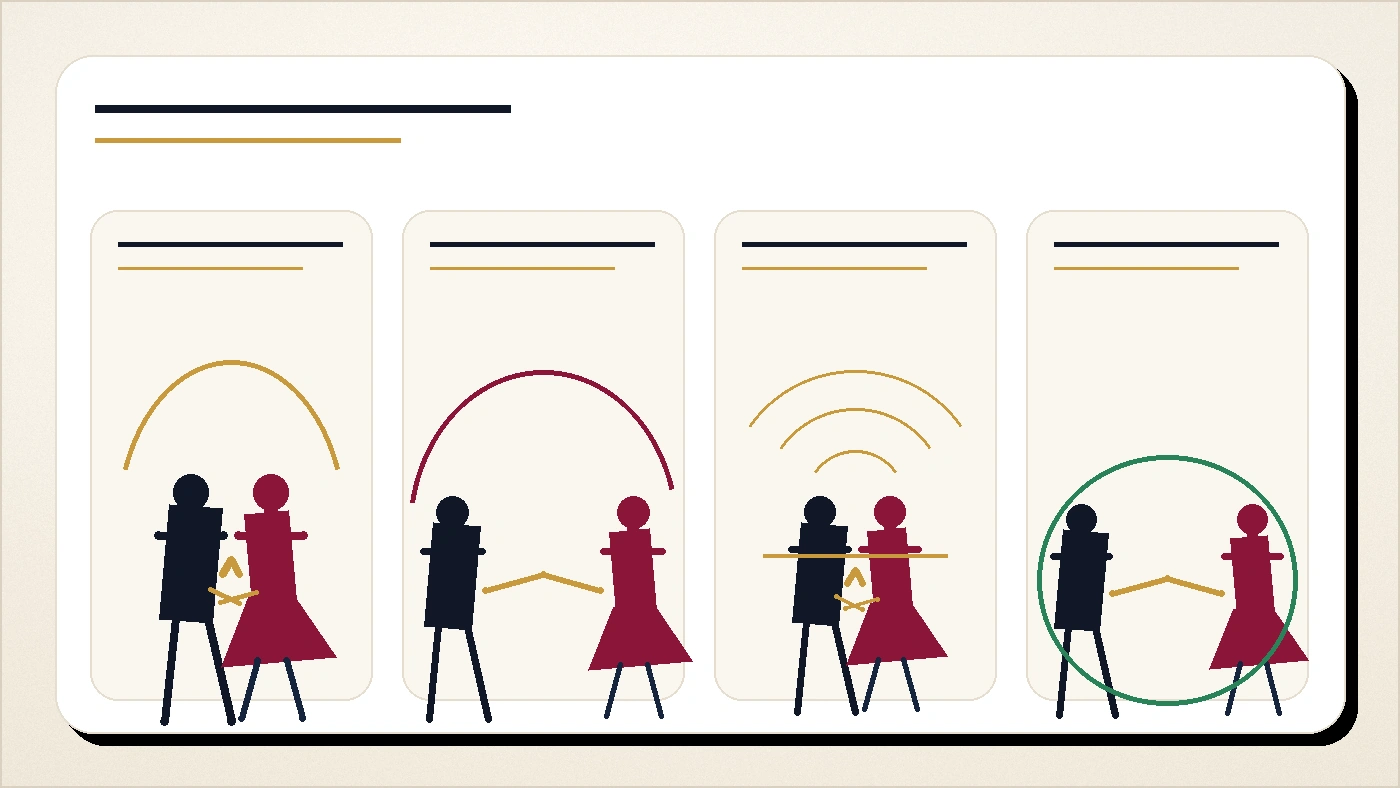
International Standard is strongly associated with continuous closed-position dancing. Waltz, Tango, Viennese Waltz, Foxtrot, and Quickstep generally keep a more sustained frame and partner relationship.
American Smooth uses closed position, but it also allows more open work and separated shapes than International Standard. A Smooth dancer may move in and out of closed position more often.
Rhythm and Latin dances may use closed position, but the partners are often less continuously connected than in Standard. Rumba, Cha Cha, Bolero, Mambo, and others may shift between closed, open, and handhold positions.
In social dancing, closed position should respect comfort, consent, floorcraft, and the style being danced. The goal is clear, comfortable connection, not forcing a competition-style hold.
Closed position is not a handle for steering. Keep your own balance, organize your frame, and communicate direction through your body and timing instead of pulling with the hands.
Closed position is not passive. Keep your own posture and balance, maintain the shape of your side of the frame, and respond through timing and weight changes rather than guessing or collapsing into the leader.
A useful closed position gives both people space to stand, breathe, move, and listen. It should make dancing easier, not heavier. Learn more in Lead and Follow.
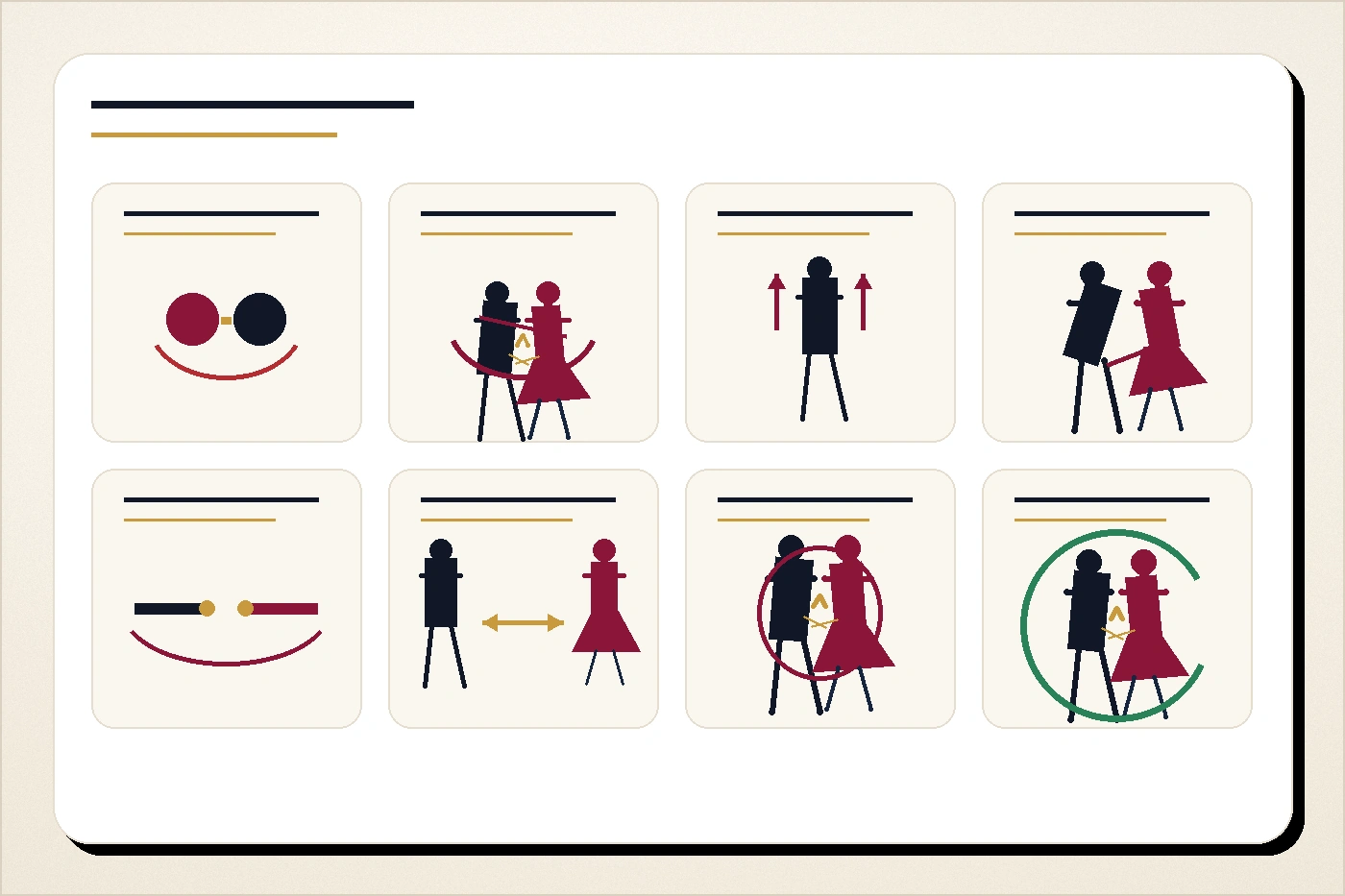
| Mistake | Try this instead |
|---|---|
| Gripping the partner’s hand | Hold with clarity, not pressure; the hands connect without squeezing. |
| Collapsing the frame | Reset posture and keep a living, supported shape in the arms. |
| Raising the shoulders | Let the shoulders settle down while the upper body stays lifted. |
| Leaning on the partner | Keep your own balance over your own feet. |
| Locking the elbows | Keep a soft, rounded shape with life in the arms. |
| Standing too square / toe-to-toe | Allow a small offset so both partners have room to move. |
| Copying one style everywhere | Remember the hold changes by dance, level, and context. |
Try these gently and slowly:
Find your own posture before taking the hold.
If you cannot breathe comfortably, the hold is probably too tense.
Shift weight slowly without pulling your partner.
Try forward and backward walking in a comfortable frame.
If the shape gets heavy, stop and rebuild it instead of forcing through.
This is not a medical or rehabilitation routine. It is a simple dance-awareness practice. If anything feels painful or persistently uncomfortable, stop and get help from a qualified instructor.
Closed position is easier to understand when you practice with slow, clear music. Choose a Waltz, Foxtrot, Tango, or Rumba playlist and practice simple standing, weight changes, and walking before trying complex figures.
Use the Ballroom Pages playlists as practice support, not as a substitute for instruction. Start with music that feels steady and easy to count.
Tempo, counting, and the full playlist library.
Practice playlists organized by dance.
Find the beat before you take the hold.
Slow 3/4 for clear frame and posture practice.
Waltz guidePlaylist URL to verify
Smooth walking and slow/quick timing.
Foxtrot guidePlaylist URL to verify
Compact, grounded closed-position feel.
Tango guidePlaylist URL to verify
Slower weight changes and lighter connection.
Rumba guidePlaylist URL to verify
The Telegram music channel for ongoing discovery.
FAQ
Closed position is a partner-dance position where the leader and follower face each other in a connected hold or frame. The exact shape varies by dance style, teacher, level, and context.
Not exactly. Closed position describes the partners’ relationship to each other. Closed hold describes contact points or the way the partners hold each other. In casual lessons, people may use the terms loosely.
No. Waltz is a common example, but closed position also appears in Foxtrot, Tango, Viennese Waltz, Quickstep, Rumba, Bolero, and many social dance contexts.
In closed position, partners face each other with a connected frame or hold. In open position, partners are separated and usually connected by one or both hands.
In promenade position, the partners form more of a V shape and move or intend to move in the same general direction. In closed position, the partners usually face each other more directly.
No. It should feel organized and connected, but not squeezed, rigid, or heavy. Both dancers should keep their own balance.
No. Ballroom Pages uses leader and follower language. Any dancer can learn either role.
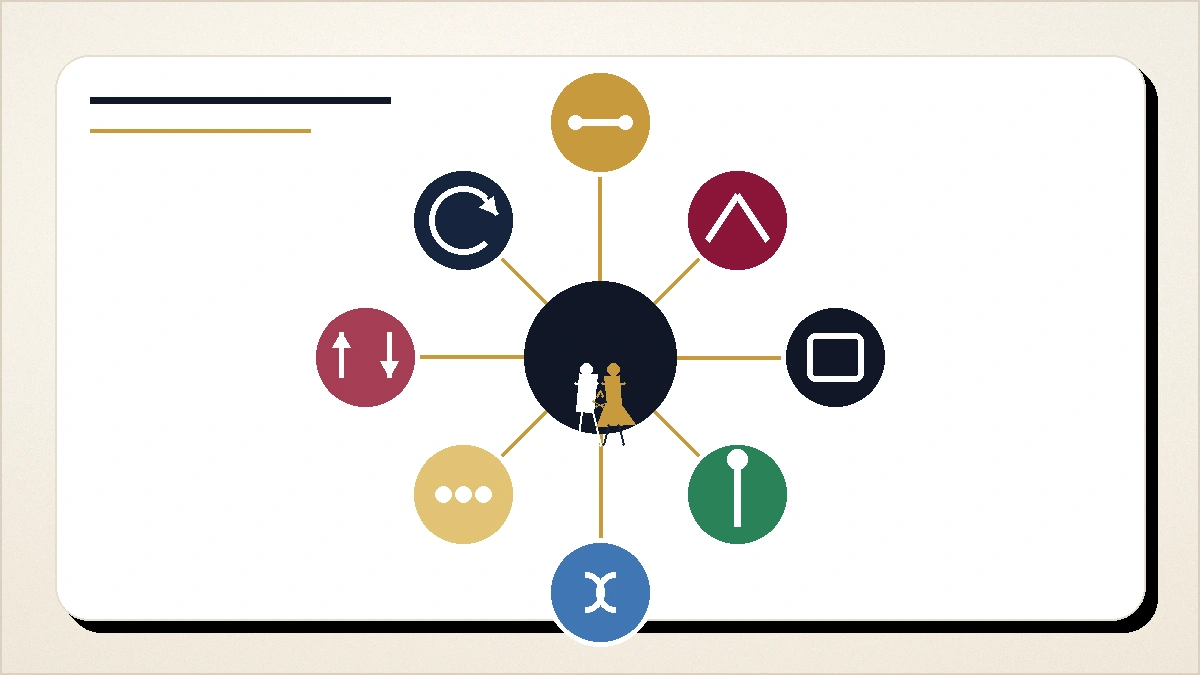
Start with Frame and Posture if your hold feels collapsed or tense. Read Lead and Follow if the position feels unclear or disconnected. Then explore Waltz, Foxtrot, Tango, or Rumba to see how closed position appears in real dances.
Editorial
This glossary entry synthesizes ballroom terminology references, dance-position definitions, and practical studio education. Closed position varies by dance style, teacher, level, body type, and social or competitive context. Final technical diagrams should be reviewed by a qualified ballroom instructor, experienced competitor, adjudicator, or equivalent professional before publishing.
This is dance terminology, not medical advice. Ballroom Pages follows an editorial policy of education-first guidance. Questions? Contact us. Updated May 22, 2026.