
Glossary
Outside Partner in Ballroom Dance
In most closed-hold figures your feet track between your partner’s. Then a Foxtrot feather step arrives and your teacher says “step outside partner”—and suddenly you’re placing a foot to the side of them without letting go or crashing knees. Outside partner (OP) is that offset step, and it’s a rite of passage in the Standard dances. Here is exactly what it means, why it depends on CBM, and how to do it without breaking the frame.
Definition of outside partner
Outside Partner
- Skill category
- Technique & position (Standard)
- Also called
- OP; outside partner position
- Companion term
- CBM (what makes it possible)
- Related terms
- CBM, CBMP, closed position, promenade position, feather step
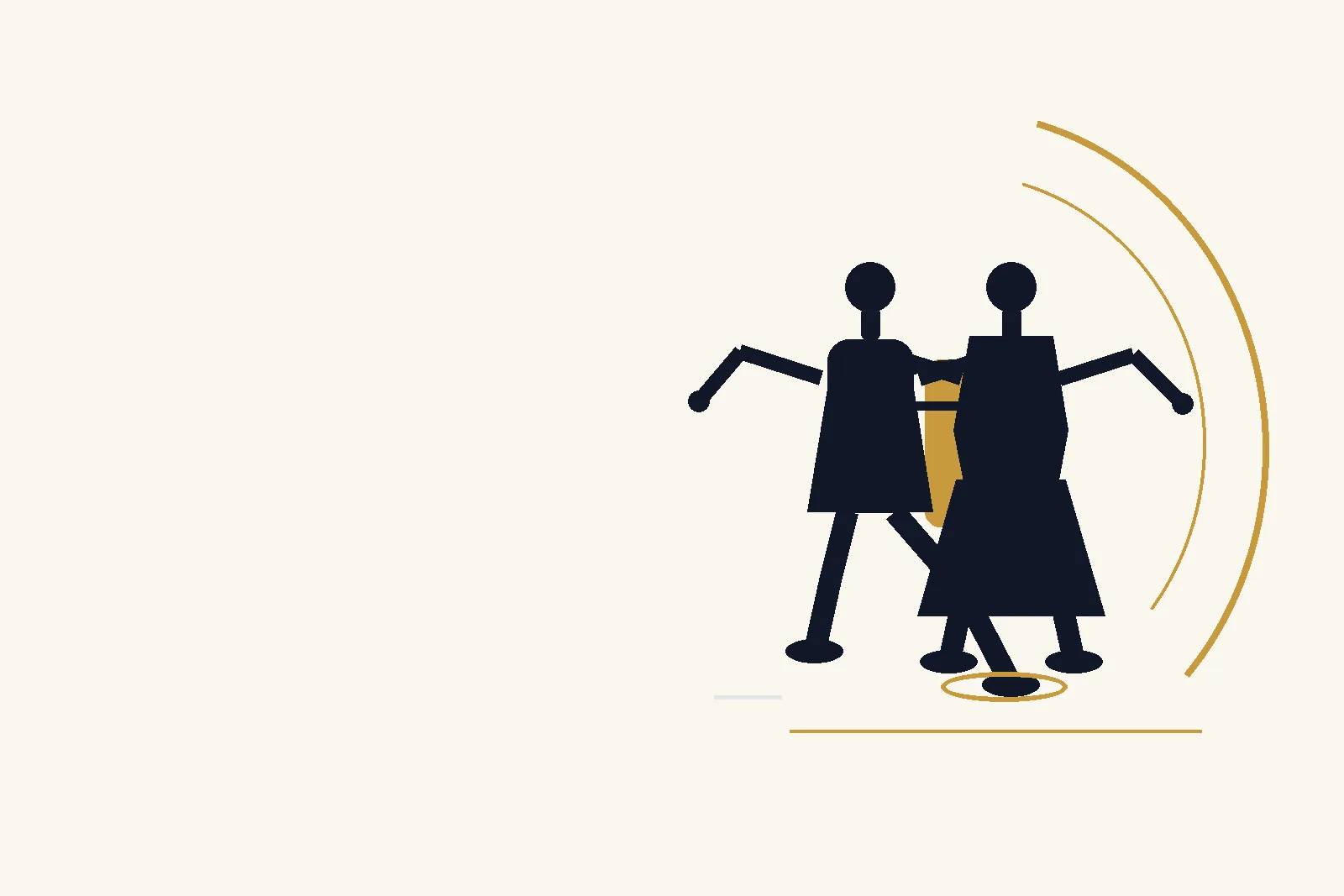
Outside partner is stepping so your moving foot passes outside your partner’s feet—usually forward on your right side—instead of between them, while keeping body contact. The body turns toward the partner so the frame stays whole and the couple’s tracks offset instead of colliding.
Two dancers, two lanes. Outside partner shifts your foot into the next lane without leaving the road.
What outside partner means in ballroom
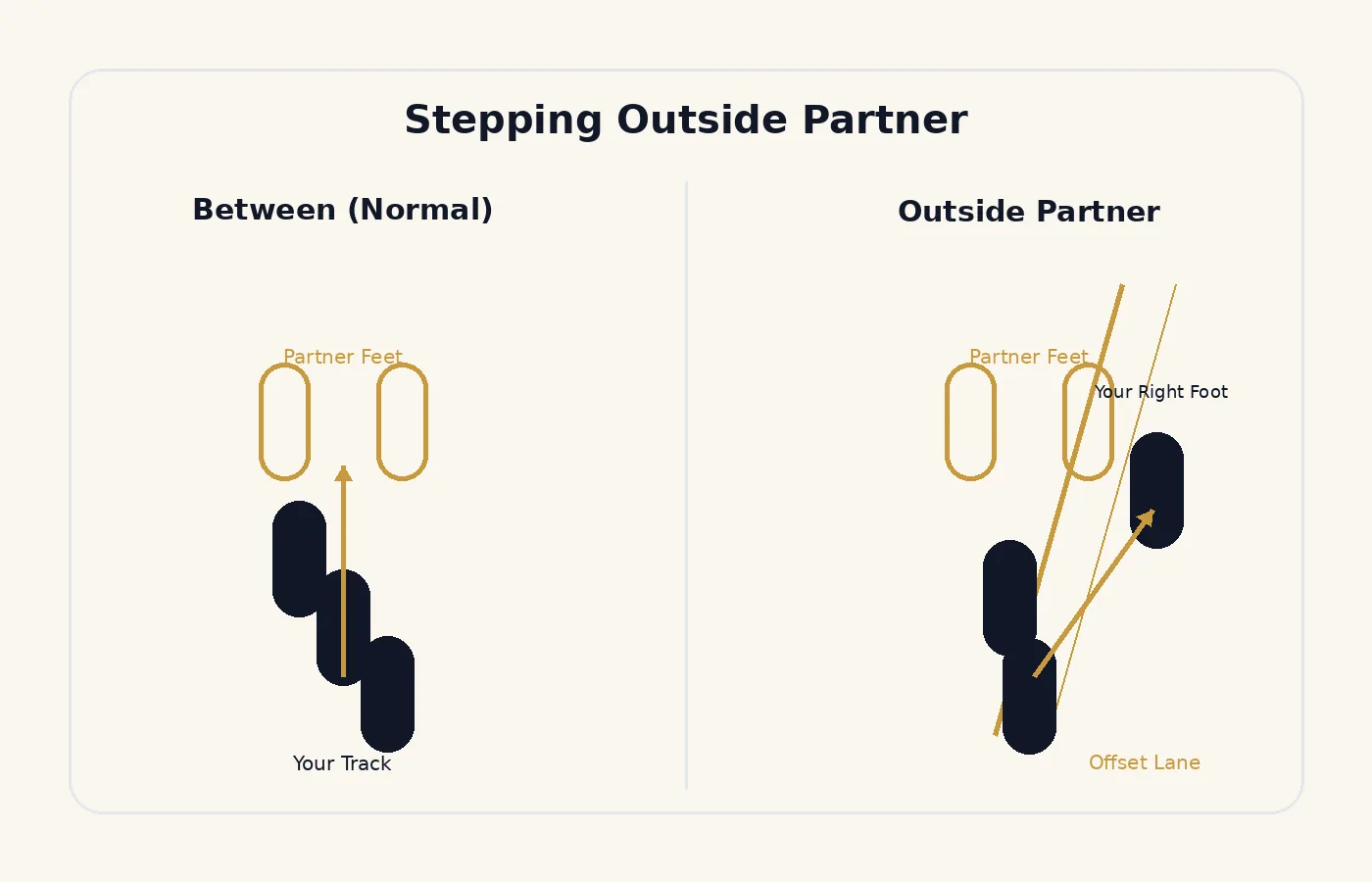
In a normal closed-hold step, your moving foot travels down the “track” between your partner’s feet—you move toward each other along one shared line. Outside partner breaks that pattern on purpose: your foot lands to the side of your partner’s feet, on your right side, so the two of you offset onto slightly different tracks while your bodies stay in contact. It is the ballroom equivalent of two people walking side by side rather than nose to nose.
You meet it early in the Standard syllabus—the Foxtrot feather step is the classic first taste—and it can feel awkward at first because the instinct is to either lose contact or twist away. Done correctly, the couple stays connected in the frame, the right sides of the bodies stay close, and only the feet change lanes. That offset is what lets figures flow forward and back without anyone treading on toes.
Outside partner vs partner outside
Same offset, two directions—and the names flip depending on who does the stepping:
| Outside partner (OP) | Partner outside (PO) |
|---|---|
| You step outside your partner’s feet | Your partner steps outside your feet |
| Usually a forward step on your right side | Usually you step back and receive them |
| You supply the CBM to make room | Your partner supplies the CBM |
| Body contact and frame stay intact | Body contact and frame stay intact |
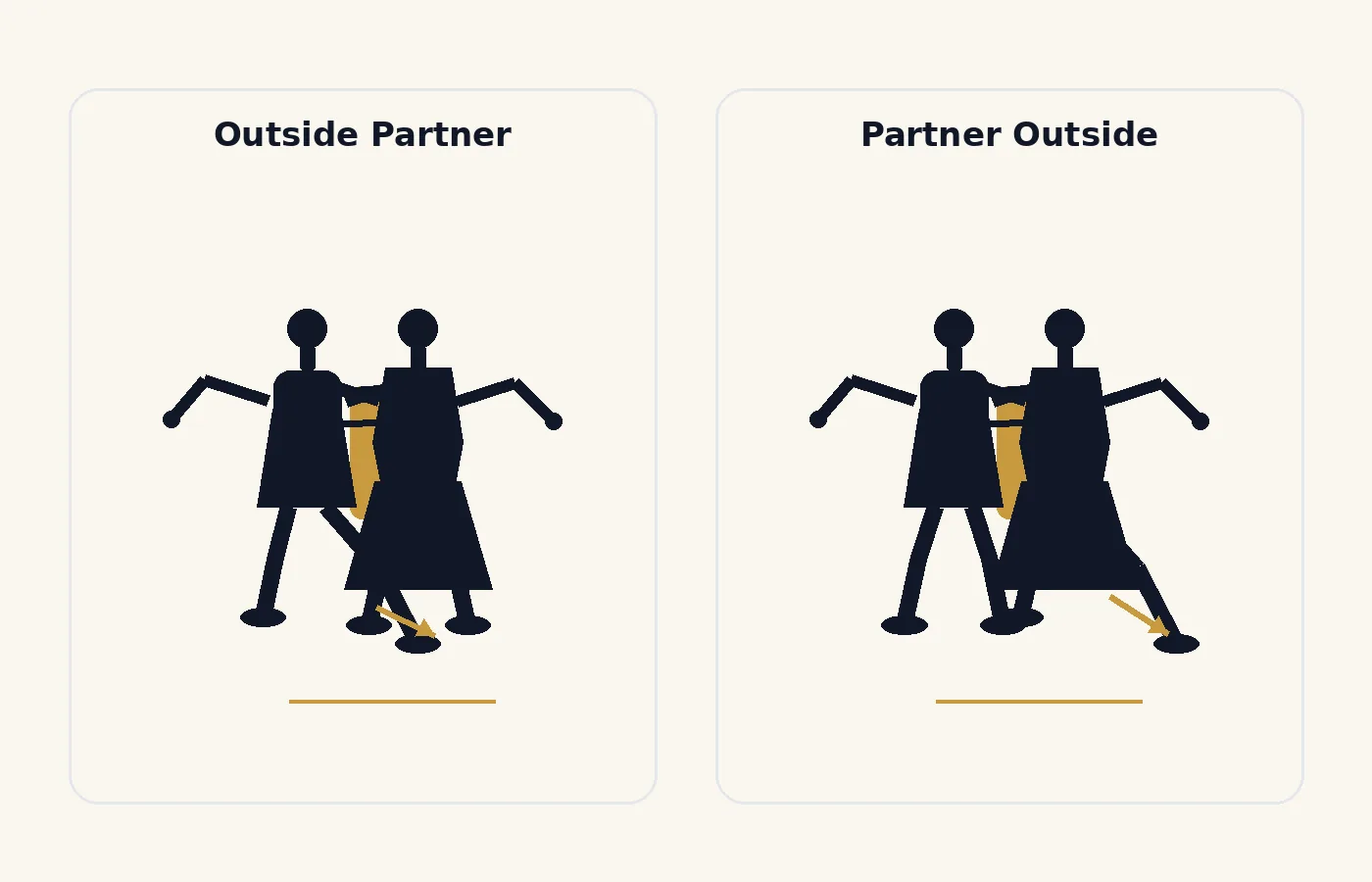
Whether it is called “outside partner” or “partner outside” depends on who is stepping to the outside. The offset—and the job of keeping contact through it—is the same for both dancers.
How outside partner actually works
Three things happen together in one step:
What makes an outside-partner step
- The foot changes lanes. Instead of tracking between your partner’s feet, the moving foot places to the outside—normally forward on your right side.
- The body rotates to fit. The stepping side turns toward the partner (CBM), opening the room the foot needs and keeping the two of you square.
- Contact is kept. The right sides of the bodies stay in gentle contact through the frame and connection—you offset the feet, not the partnership.
That combination has a formal name: when the body is rotated to place a foot outside (or the partner outside), you are in contra body movement position (CBMP). CBM is the action; CBMP is the position it puts you in—and it is what stops an outside-partner step from becoming a twist or a collision.
Outside partner by dance style
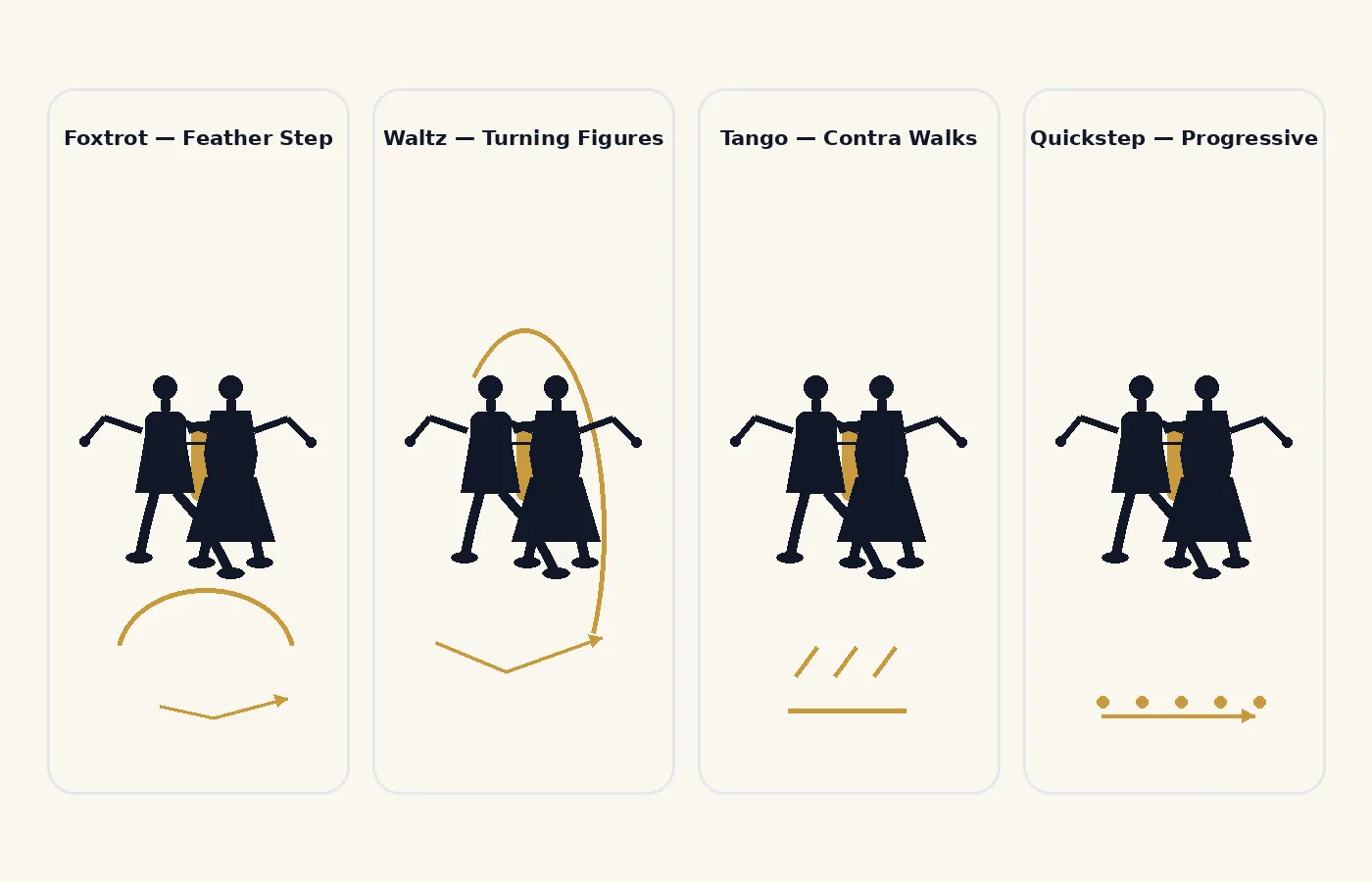
It is a Standard/Smooth idea—body contact makes it possible, so it belongs to the swinging and gliding dances rather than the Latin ones:
| Dance | Outside partner in action |
|---|---|
| Foxtrot | The feather step—the classic first outside-partner figure |
| Waltz | Turning and progressive figures that end outside partner |
| Tango | Walks and links taken in an offset, contra position |
| Quickstep | Quick progressive figures that shift outside and back |
Why outside partner needs CBM
Here is the part beginners miss: outside partner is not really a foot problem—it is a body solution. If you simply reach the foot sideways without turning, you either lose contact or block your own partner. Contra body movement—rotating the side of the body with the moving leg toward your partner—quietly clears the room the foot needs and keeps your chests square and connected. Master CBM and outside partner stops being a scary offset and becomes the natural result of a well-turned body. That is why teachers drill CBM long before they expect clean outside-partner figures.
Common outside-partner mistakes
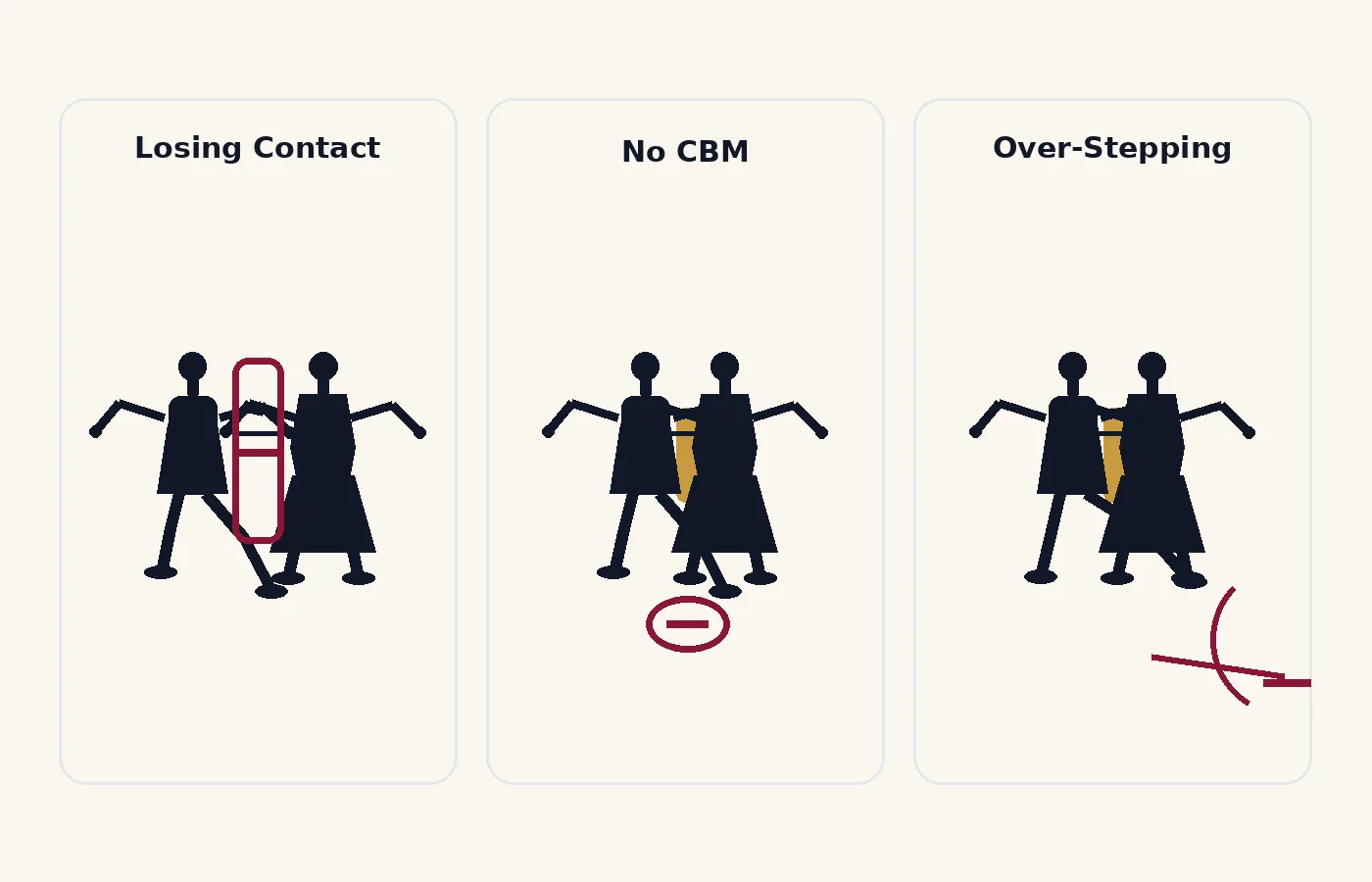
Losing body contact
Fix: Outside partner offsets the feet, not the bodies. Keep the right sides gently connected through the frame—if you separate, it is no longer outside partner.
Skipping the CBM
Fix: Turn the stepping side of the body toward your partner first. Without CBM you crowd their feet and the step jams.
Over-stepping to the side
Fix: The offset is small—a foot’s width, not a lunge sideways. Aim just outside their feet, staying in your own lane.
Twisting the topline
Fix: The rotation is a whole-body CBM, not a wrench of the shoulders. Keep posture tall so the frame doesn’t distort.
Practice outside partner safely
Build the body action first, then add the partner:
- Solo CBM walks. Walk forward and, on a chosen step, rotate the moving-leg side of the body toward an imaginary partner. Feel the turn open the space before you step.
- Track lines on the floor. Lay two parallel lines a few inches apart. Practise placing your right foot on the outer line (outside) instead of the shared inner line (between).
- Slow feather step. With a partner and a patient tempo, walk a Foxtrot feather, keeping right-side contact as your foot steps outside—stop and check the frame each step.
-
Waltz (turning figures)
Slow 3/4 swing—room to feel the offset and the CBM into it.
-
Quickstep (progressive figures)
Faster Standard—outside-partner shifts that come and go quickly.
-
CBM & frame guide
The body action outside partner is built on—learn it first.
-
BallroomPages Music (Telegram)
Mixed-style practice tracks. Standard-figure drills coming soon.
FAQ
Outside Partner FAQ
What does outside partner mean in ballroom dance?
Outside partner (OP) means stepping so your moving foot passes to the outside of your partner’s feet—usually forward on your right side—instead of between them, while keeping body contact. The body rotates toward the partner so the frame stays intact and the couple’s tracks offset rather than collide.
What is the difference between outside partner and partner outside?
It depends on who steps to the outside. “Outside partner” is when you step outside your partner’s feet; “partner outside” is when your partner steps outside yours. The offset and the need to keep contact are the same in both.
Why does outside partner need CBM?
Contra body movement rotates the stepping side of the body toward your partner, opening the space the foot needs and keeping your bodies square and connected. Without CBM you crowd your partner’s feet and the step jams or the contact breaks. The rotated position is called contra body movement position (CBMP).
Which dances use outside partner?
The Standard/Smooth dances, because they are danced in body contact: Foxtrot (the feather step is the classic example), Waltz, Tango, and Quickstep. The Latin and rhythm dances, danced apart or in a looser hold, do not use it the same way.
Is outside partner hard for beginners?
It feels awkward at first because the instinct is to lose contact or twist away. It gets much easier once your CBM is reliable—so most teachers build clean contra body movement first, then outside partner becomes the natural result of a well-turned body.
Editorial
Sources and review notes
This glossary entry should be reviewed by a qualified ballroom instructor before launch. Outside partner is a technique-heavy Standard topic—the descriptions follow widely used syllabus conventions, but the mechanics (especially the CBM/CBMP relationship and the per-figure examples) deserve expert verification before being treated as teaching material.
This is beginner orientation, not a substitute for instruction. Ballroom Pages follows an editorial policy of education-first guidance. Questions? Contact us. Updated July 9, 2026.