
Glossary
Frame in Ballroom Dance
Frame is one of the first ballroom terms beginners hear—and one of the easiest to misunderstand. Here is the plain-English meaning, how frame differs from posture and hold, and what to practice next.
Definition of frame
Frame
- Pronunciation
- frame, rhymes with “name”
- Skill category
- Technique / Partner connection
- Related terms
- posture, hold, connection, lead and follow, closed position
- Full guide
- Frame and Posture Guide
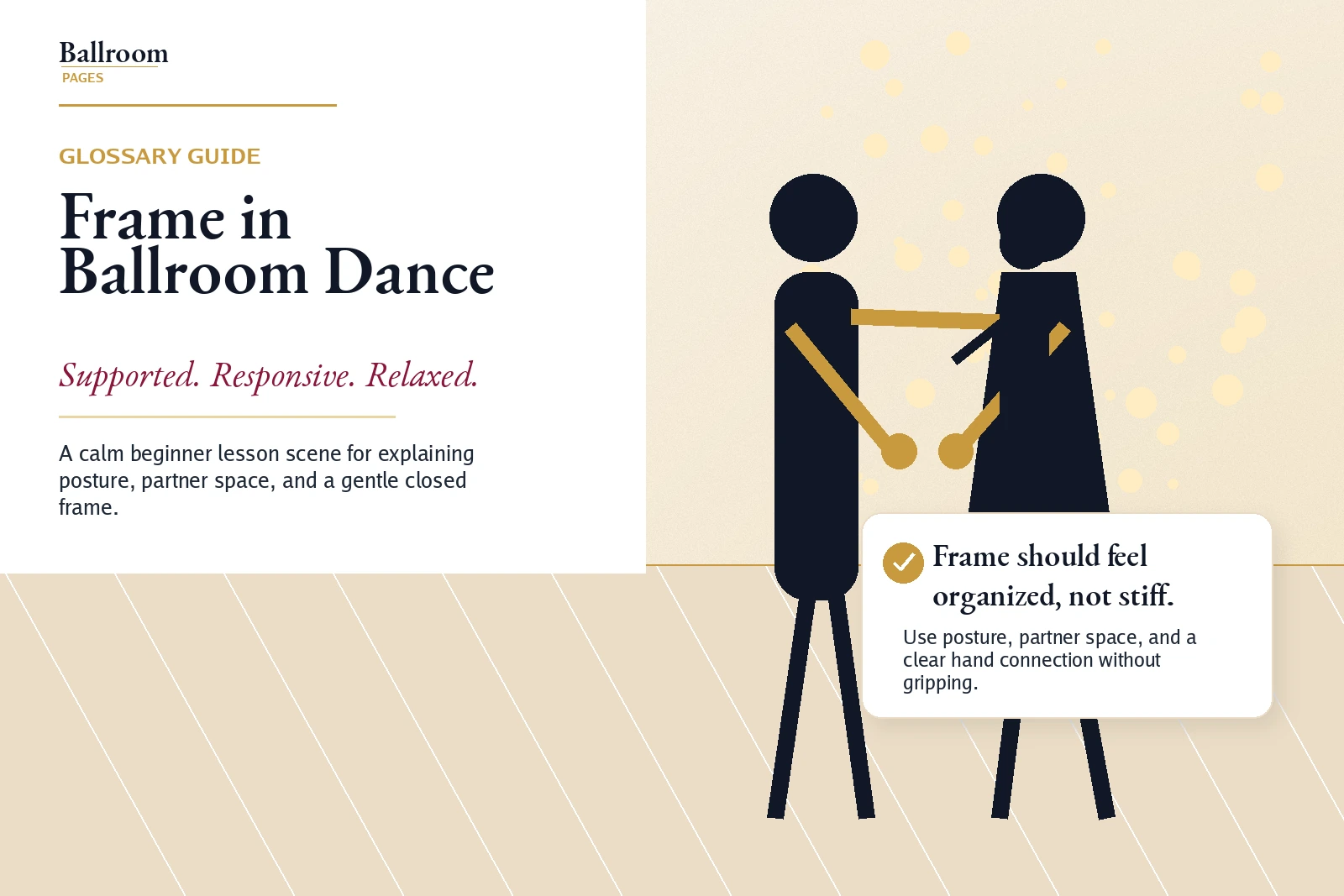
In ballroom dance, frame is the organized shape and tone of your upper body, arms, and hands that helps you keep posture, create space, and communicate movement with a partner. A good frame feels supported and responsive—not stiff, forced, or locked.
Think of frame as the shape that lets two dancers move together without guessing or gripping.
What frame means in ballroom dance
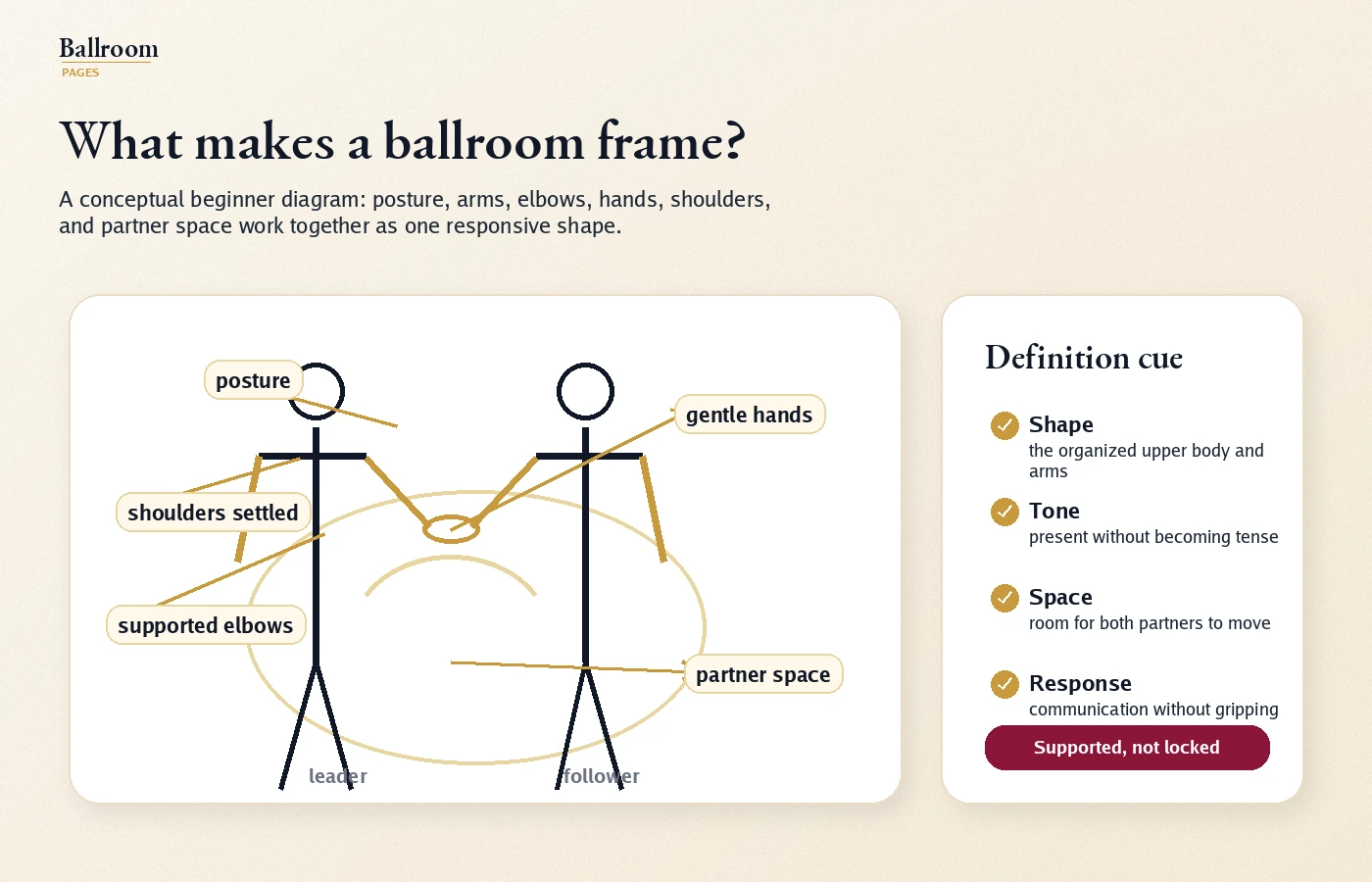
Frame is more than where your arms go. It includes your upper-body organization, posture, arm shape, hand connection, and the space you maintain with your partner.
A useful beginner frame has enough tone to stay present, but not so much tension that it becomes rigid. Your arms should not collapse, but they also should not push, pull, or lock. The movement should come from your body and weight, with your arms and hands helping communicate that movement.
A simple way to think about it: frame is the shape you keep so your partner can feel where you are, where the space is, and when movement begins.
Frame vs posture vs hold vs connection
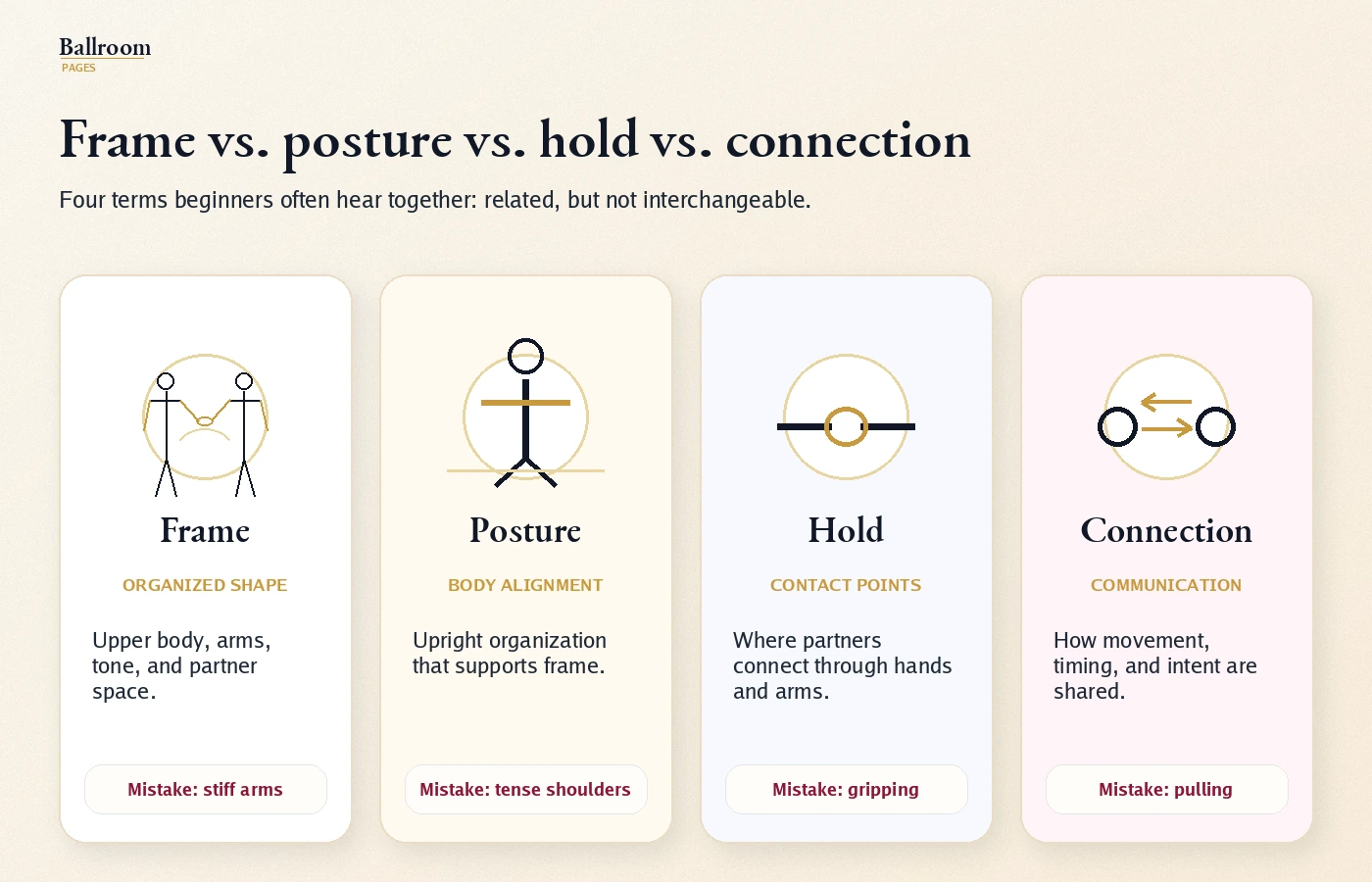
| Term | Plain-English meaning | How it relates to frame | Common beginner mistake |
|---|---|---|---|
| Frame | The organized upper-body and arm shape used in partner dancing | Frame uses posture, arm shape, tone, and partner space | Making the arms stiff or locked |
| Posture | Your upright, aligned body position | Posture supports frame from the body instead of only the arms | Lifting the chest by squeezing the shoulders |
| Hold | The contact or hand/arm placement between partners | Hold is where partners connect; frame is how the body supports that connection | Gripping the partner’s hand |
| Connection | The communication between partners through body, frame, timing, and contact | A consistent frame makes connection easier to feel | Pulling or pushing instead of moving from the body |
| Topline | The visible upper-body shape, especially in Standard/Smooth contexts | Topline is related to the look and shape of the frame | Trying to copy a large competition shape too early |
Why frame matters
Frame helps a partnership feel organized. In closed partner work, it helps maintain space, reduce guessing, and make direction changes easier to understand. In lead and follow, it gives both dancers a clearer way to feel timing, direction, and movement intention.
Frame also helps with:
- Balance and personal organization.
- Partner spacing.
- Turns and direction changes.
- Closed-position clarity.
- Musical timing and shared movement.
- Recovering when a step does not go exactly as planned.
Frame does not mean forcing your partner into position. It should make dancing easier to read, not harder to tolerate. If counting the beat is part of the puzzle, see how to count ballroom dance music.
What a good beginner frame feels like
- Lifted but relaxed. You are not drooping, but your neck and shoulders stay free.
- Present but not tense. Your partner can feel your shape, but not a wall of resistance.
- Supported but not locked. Elbows have life and shape without being rigid.
- Settled in the shoulders. The shoulders do not climb toward the ears.
- Connected without gripping. Hands meet or rest clearly, but do not squeeze.
- Organized through the body. The frame is supported by posture and center, not just arm muscles.
- Responsive. You can move, breathe, turn, and change direction without losing the shape completely.
Common frame mistakes
Stiff arms
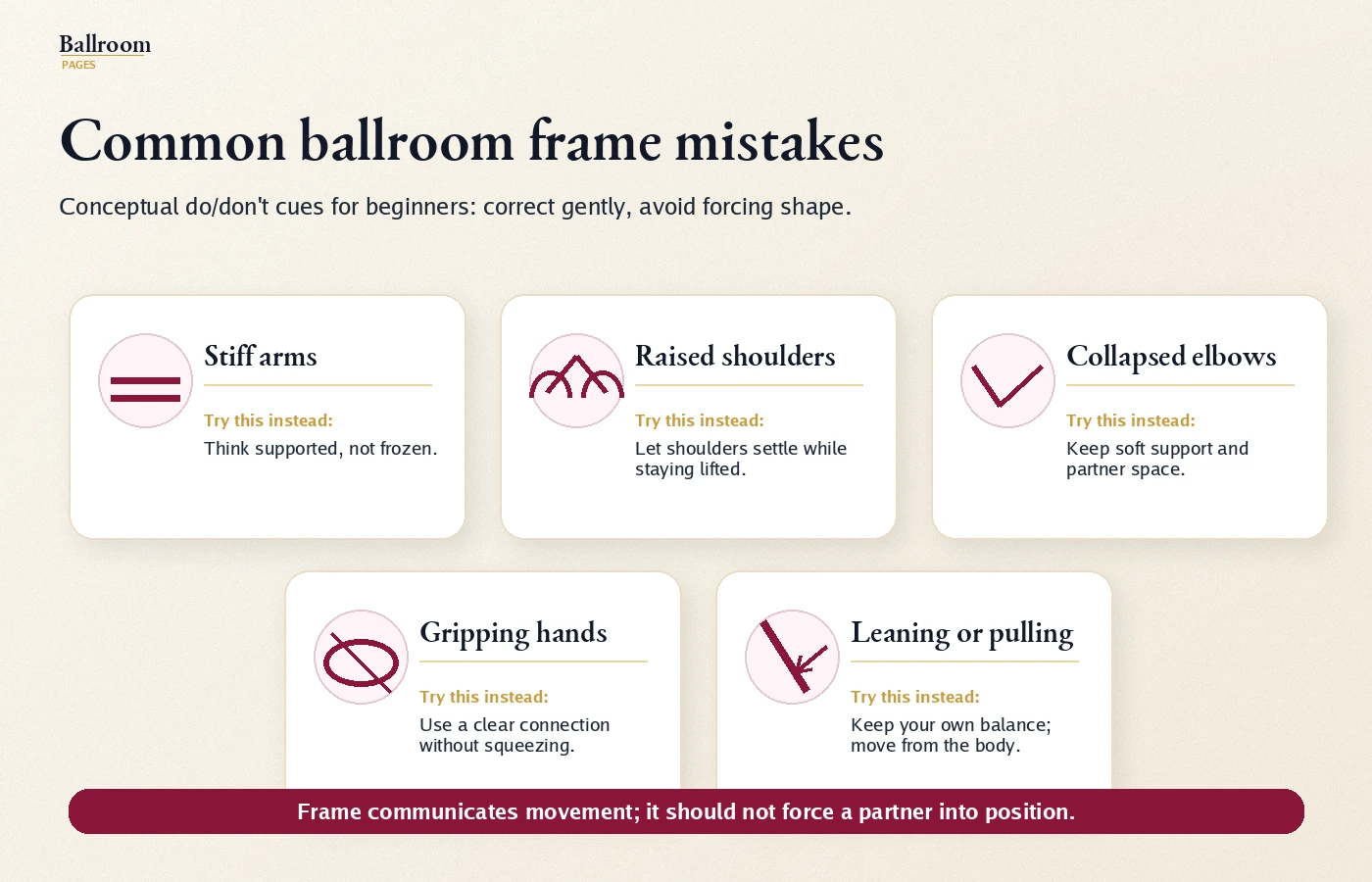
Fix: Think “supported,” not “frozen.” Your frame should keep its shape while still allowing movement.
Collapsed elbows
Fix: Keep the elbows gently supported so the space between partners does not disappear.
Raised shoulders
Fix: Let the shoulders settle down while the upper body stays lifted.
Gripping the partner’s hand
Fix: Use a clear hand connection without squeezing.
Pulling or pushing
Fix: Move from your body and weight, not from yanking the arms.
Leaning on the partner
Fix: Keep your own balance. Frame should communicate, not hold you up.
Copying a competition shape too early
Fix: Start with a small, comfortable, readable frame before worrying about dramatic shape.
Losing frame when turning
Fix: Practice keeping the same soft shape while shifting weight slowly.
How frame changes by dance style
Frame is not identical in every dance.
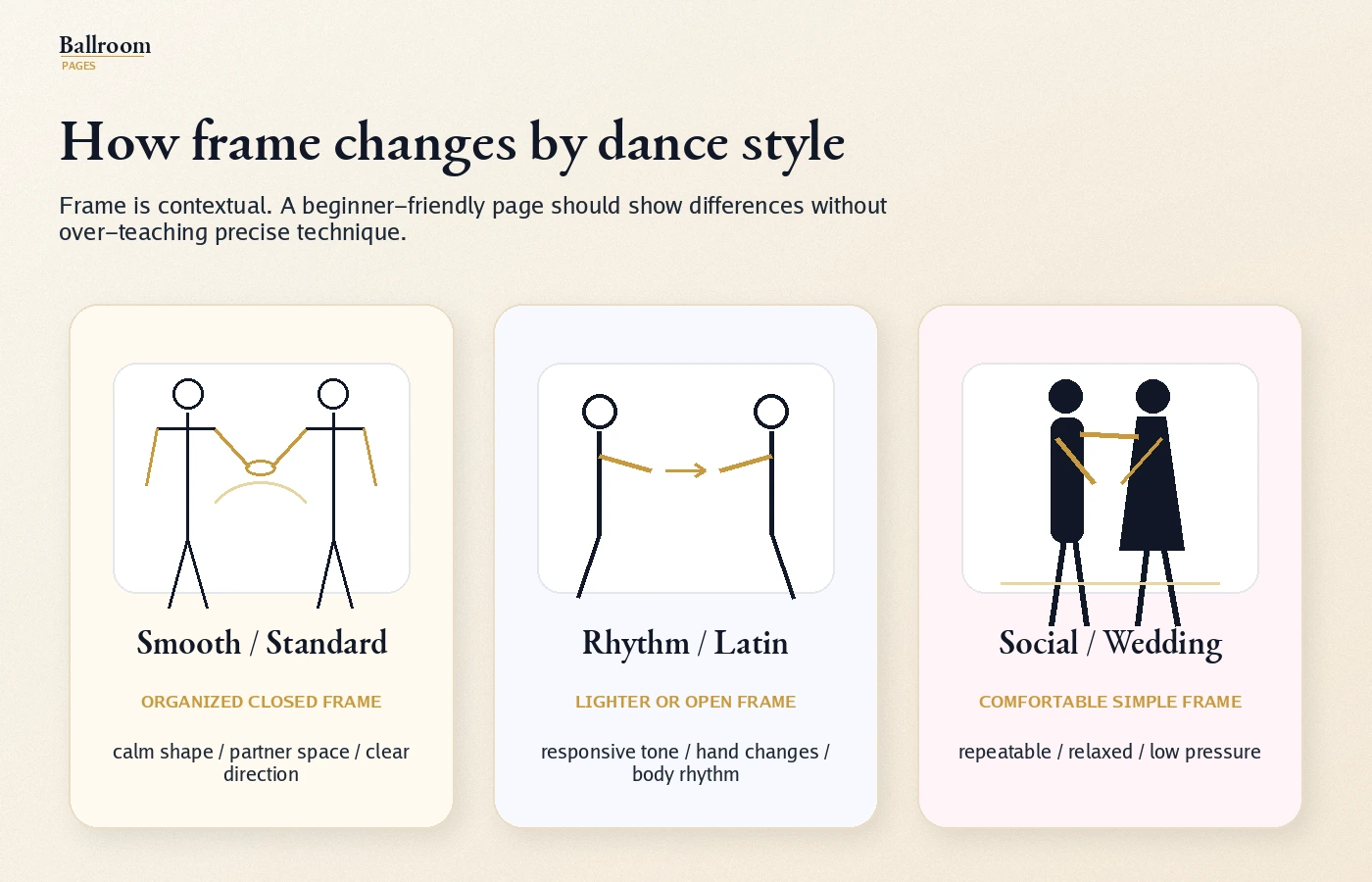
Waltz, Foxtrot, Tango, Smooth, and Standard
These dances often use a more organized closed frame. Standard is generally danced in a maintained closed hold, while Smooth may include closed hold, open work, releases, and solo actions. See the Waltz, Foxtrot, and Tango guides.
Rumba, Cha Cha, Rhythm, Latin, and social dances
The frame may feel lighter, more open, and more changeable. There is still structure, but it may not look like a full closed ballroom frame. See the Rumba and Cha Cha guides.
Wedding first dance
Most wedding couples need a comfortable, simple frame that supports balance, timing, and a relaxed first-dance look. The goal is not a competition shape; it is calm communication. See the Wedding Dance Guide.
Style details vary by instructor, syllabus, dance family, and social context. When in doubt, choose a frame that feels clear, comfortable, and easy to repeat.
Beginner frame practice: 3 simple checks
These are not a full technique program. Use them as quick reminders before you practice.
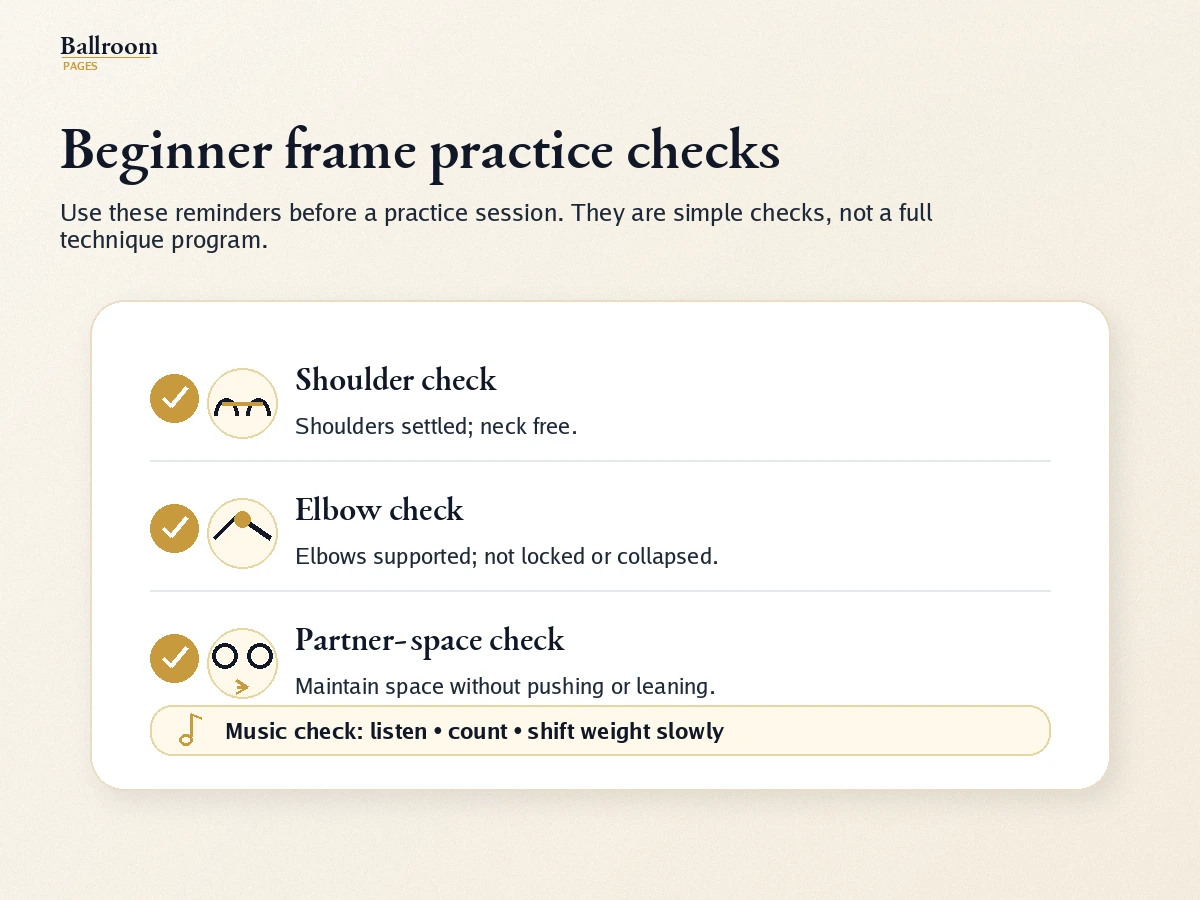
1. Shoulder check
Let your shoulders settle. Your neck should feel free, not squeezed.
2. Elbow check
Keep the elbows supported but not locked. Avoid both drooping and bracing.
3. Partner-space check
Maintain space without pushing, pulling, or leaning. You should be able to breathe and move.
Try holding the same shape while shifting weight slowly to music. If the frame disappears as soon as you move, simplify.
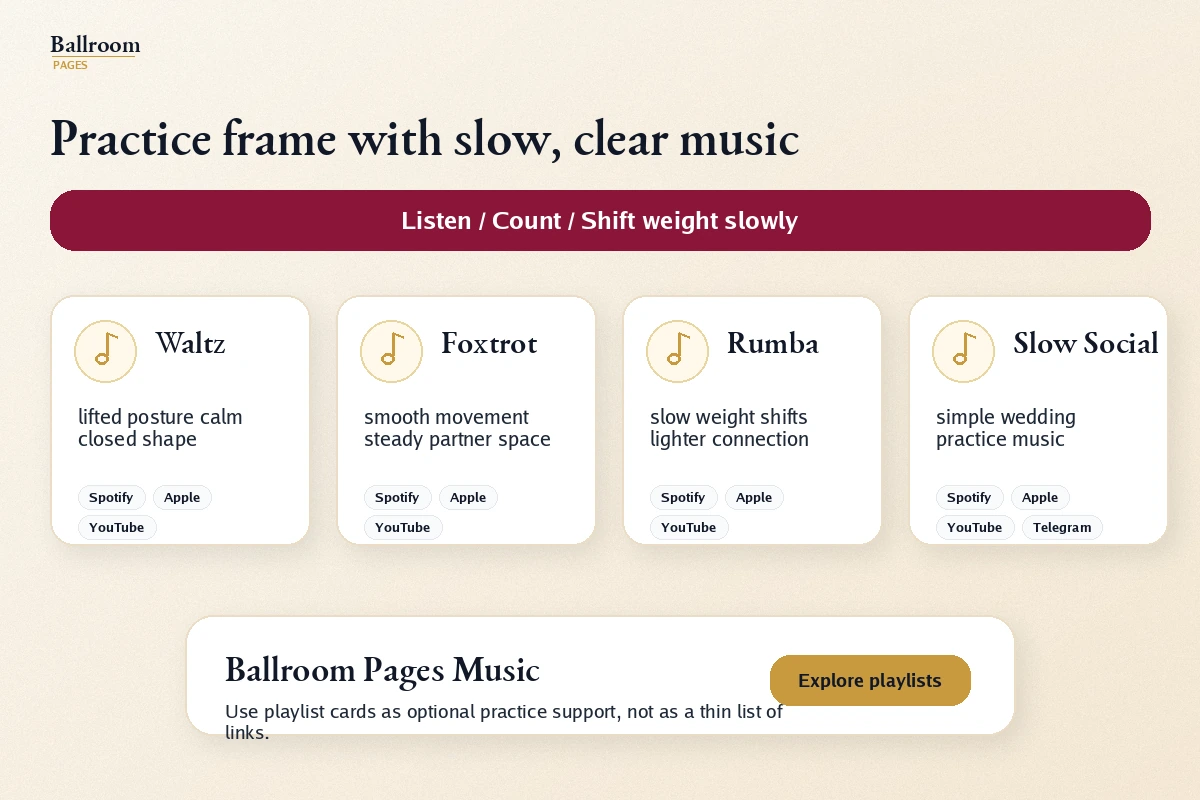
Practice frame with slow, clear music
Frame is easier to feel when the music is steady and not too fast. Start with slower Waltz, Foxtrot, Rumba, or calm social dance music. Listen first, count the beat, then practice holding your shape while shifting weight. Explore the Ballroom Music & Timing hub and How to Count Ballroom Dance Music.
-
Waltz
Best for lifted posture, calm closed-frame shape, and slow partner spacing.
-
Foxtrot
Best for smooth movement and steady partner space.
-
Rumba
Best for slower weight shifts and lighter connection.
-
BallroomPages Music (Telegram)
Best for ongoing music discovery. More styles like Nightclub Two Step, Salsa, and Bachata are on the way.
FAQ
Frame FAQ
What does frame mean in ballroom dance?
Frame is the organized shape and tone of your upper body, arms, and hands that helps you keep posture, maintain space, and communicate movement with a partner.
Is frame the same as posture?
No. Posture is your body alignment. Frame includes posture, but also includes arm shape, hand connection, partner space, and tone.
Is ballroom frame supposed to feel stiff?
No. A good beginner frame should feel supported and responsive, not stiff, locked, or forced.
How do beginners improve their dance frame?
Start with posture, relaxed shoulders, supported elbows, and a clear hand connection. Practice slowly before trying to hold a large or dramatic shape.
What is the difference between frame and connection?
Frame is the organized shape. Connection is the communication that happens through the frame, body movement, timing, and points of contact.
Does frame change between Waltz, Tango, Rumba, and Cha Cha?
Yes. Waltz, Foxtrot, Tango, Smooth, and Standard often use a more organized closed frame. Rumba, Cha Cha, Rhythm, Latin, and social dances may use lighter or more open frame contexts.
Do wedding couples need to learn frame?
Yes, but they usually only need a simple, comfortable frame. It helps the first dance feel calmer, clearer, and less awkward.
Can I practice frame without a partner?
Yes. You can practice posture, shoulder settling, elbow support, and slow weight shifts alone. Partner practice is still important for connection.
Editorial
Sources and review notes
This glossary entry should be reviewed by a qualified ballroom instructor before launch. Sources used for terminology and editorial review include University of Georgia Ballroom Dance terminology, the NDCA Vocabulary of Dance Positions, Holds and Proximities, WDSF DanceSport disciplines, the Dance Vision lead/follow explanation, the Dance Central frame/topline resource, the Arthur Murray leading/following explanation, Google Search Central structured-data and image guidance, and Schema.org DefinedTerm documentation.
This is dance terminology, not medical advice. Ballroom Pages follows an editorial policy of education-first guidance. Questions? Contact us. Updated May 22, 2026.