
Glossary
Open Position in Ballroom Dance
Open position is a partner-dance position where dancers are not in a full closed ballroom hold. Learn what it means, how it differs from open hold, closed position, and promenade position, and how beginners can use it without losing connection.
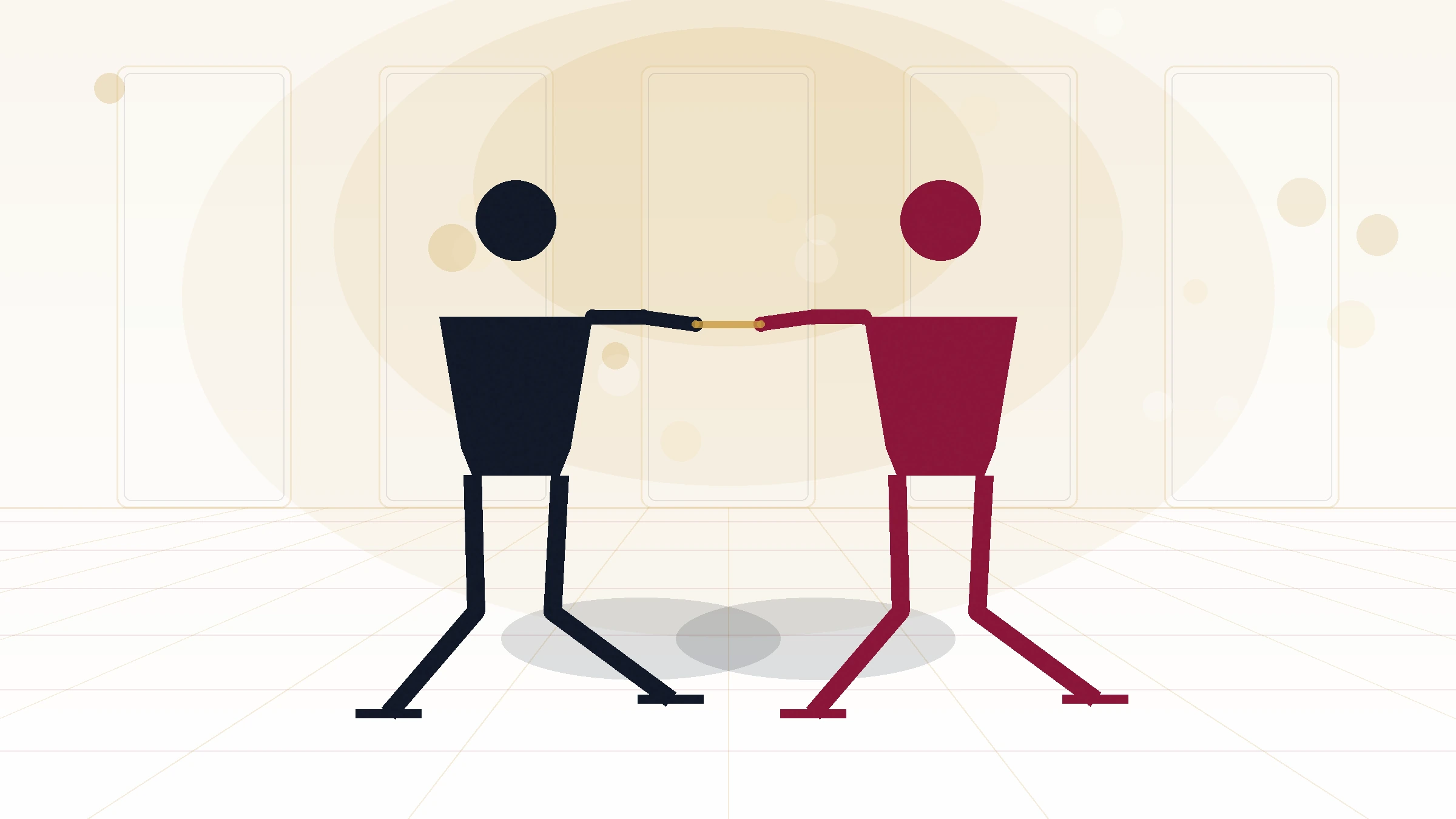
Definition of open position
Open Position
- Skill category
- Position / Partner connection
- Related terms
- closed position, open hold, closed hold, promenade position, frame, posture, connection, lead and follow
- Go deeper
- Lead and Follow · Frame and Posture
In ballroom and partner dance, open position means the partners are not in a full closed ballroom hold. They usually have more space between their bodies and may connect with one hand, two hands, or a lighter open hold so they can turn, change direction, or dance open figures while still staying aware of each other.
Quick version: open position is more open than closed position, but it does not mean “no connection.”
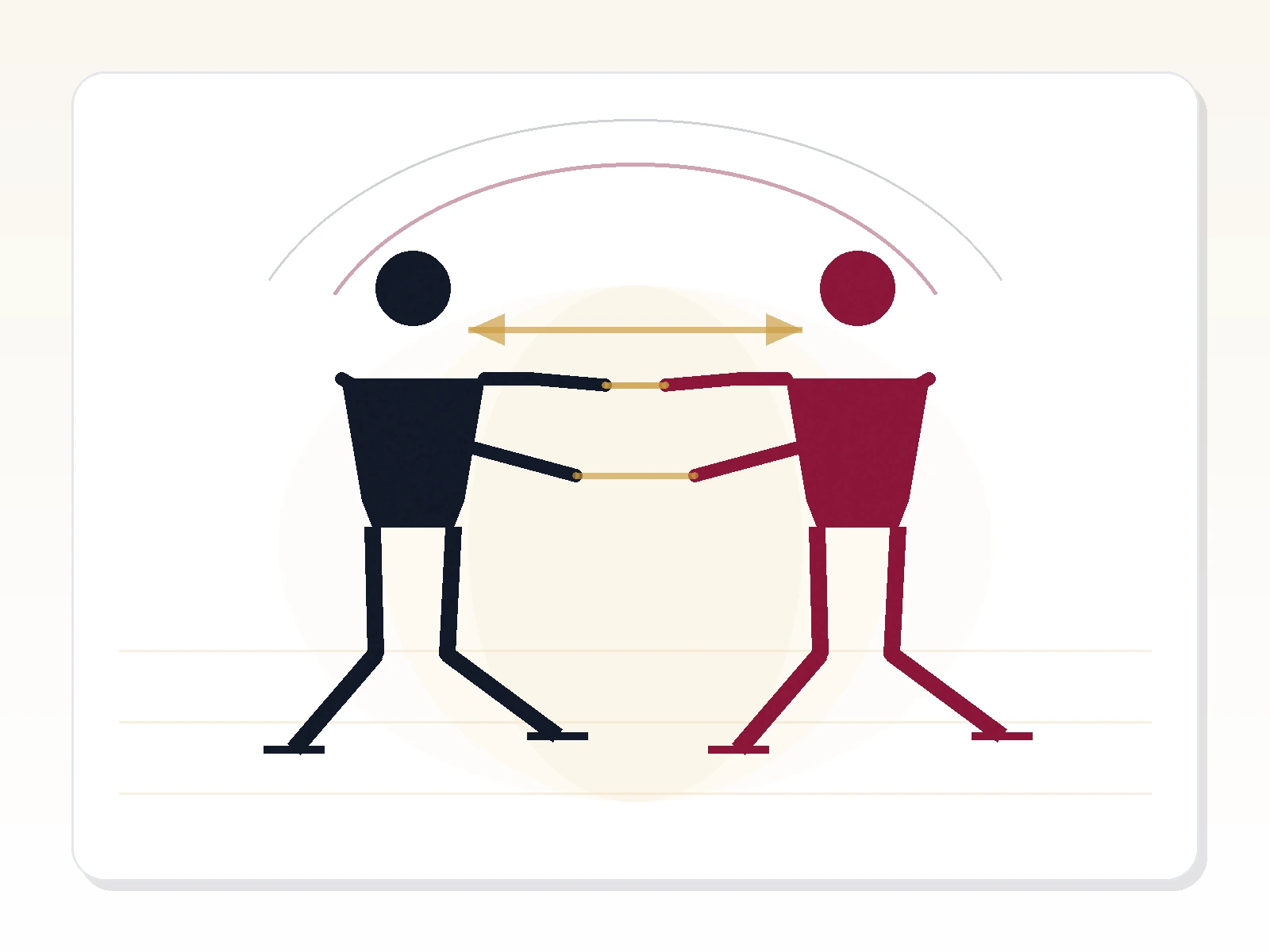
What open position means in ballroom dance
In a ballroom lesson, your teacher may say “go to open position,” “start in open hold,” or “open away from your partner.” These phrases are related, but they are not always identical.
At the beginner level, open position usually means you and your partner are no longer in a full closed ballroom hold. There is more space between you, and you may be connected by one hand, two hands, or a light open hold. Open position can make room for:
- underarm turns,
- open figures,
- side changes,
- rhythm and Latin patterns,
- social dance variations,
- wedding-dance turns,
- and moving from closed position into a more relaxed shape.
The important point is that open position is still partnered dancing. Your frame may be smaller, your hold may be lighter, and your bodies may be farther apart, but you still need timing, posture, partner awareness, and a clear connection.
Editorial note: Exact details vary by dance style, syllabus, teacher, level, and social or competitive context. Use this page as a beginner-friendly definition, then refine the details with your instructor.
Open position vs closed position vs open hold vs promenade
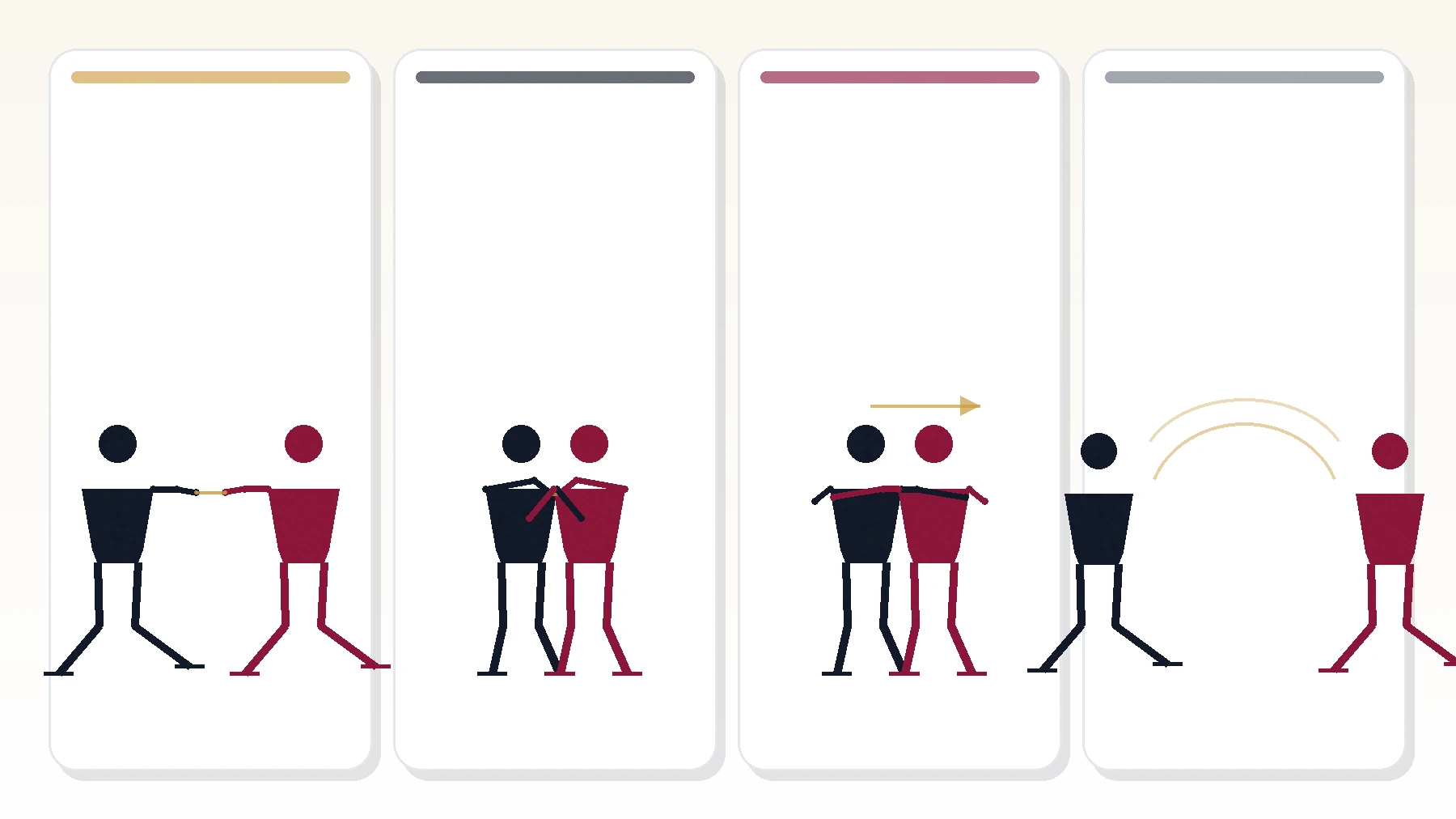
| Term | Plain-English meaning | How it relates to open position | Beginner mistake |
|---|---|---|---|
| Open position | Partners are not in a full closed ballroom hold and usually have more space between them. | This is the main term. It describes the partner relationship or position. | Thinking open position means “no connection.” |
| Open hold | A hand or arm connection used while partners are more separated. It may be one-hand or two-hand. | Open hold is often used inside open position, but the hold and the position are not the same thing. | Pulling, gripping, or letting the arms go limp. |
| Closed position | Partners face each other closely in a traditional ballroom hold. | Open position contrasts with closed position. | Thinking closed position is “real ballroom” and open position is unimportant. |
| Promenade position | Partners create a V-like shape and move in the same direction while maintaining a specific body relationship. | Promenade may look “open” on one side, but it is a distinct position. | Calling every open-looking shape promenade. |
| Dancing apart / no-hand connection | Partners are not physically holding hands or in body contact. | Some open work may briefly include no-hand connection, but not every open position is no-hand dancing. | Forgetting partner awareness and timing. |
| Shadow or side-by-side position | Partners face the same direction or align side-by-side/tandem. | Related to open work, but not the same as a basic open facing position. | Treating every non-closed shape as the same position. |
Why open position matters
Open position matters because many dances do not stay in closed hold the whole time. It helps dancers:
Create space for turns
Underarm turns and open figures often need room.
Move in and out of closed position
Dancers may open, turn, reconnect, and return to a clearer position.
Keep lead/follow communication outside full closed hold
Partner connection should remain readable even when the bodies are farther apart.
Use rhythm, Latin, social, and wedding-dance patterns
Rumba, Cha Cha, Swing, Salsa, Bachata, and many wedding-dance figures often use more open hand connections.
Understand why spacing changes
Beginners often feel lost when a dance suddenly opens. Naming the position helps them know what changed.
Open position is not about yanking, pulling, or making dramatic arm shapes. It is about giving the partnership more space while keeping enough connection to stay coordinated. The communication side is covered in Lead and Follow.
What a good beginner open position feels like
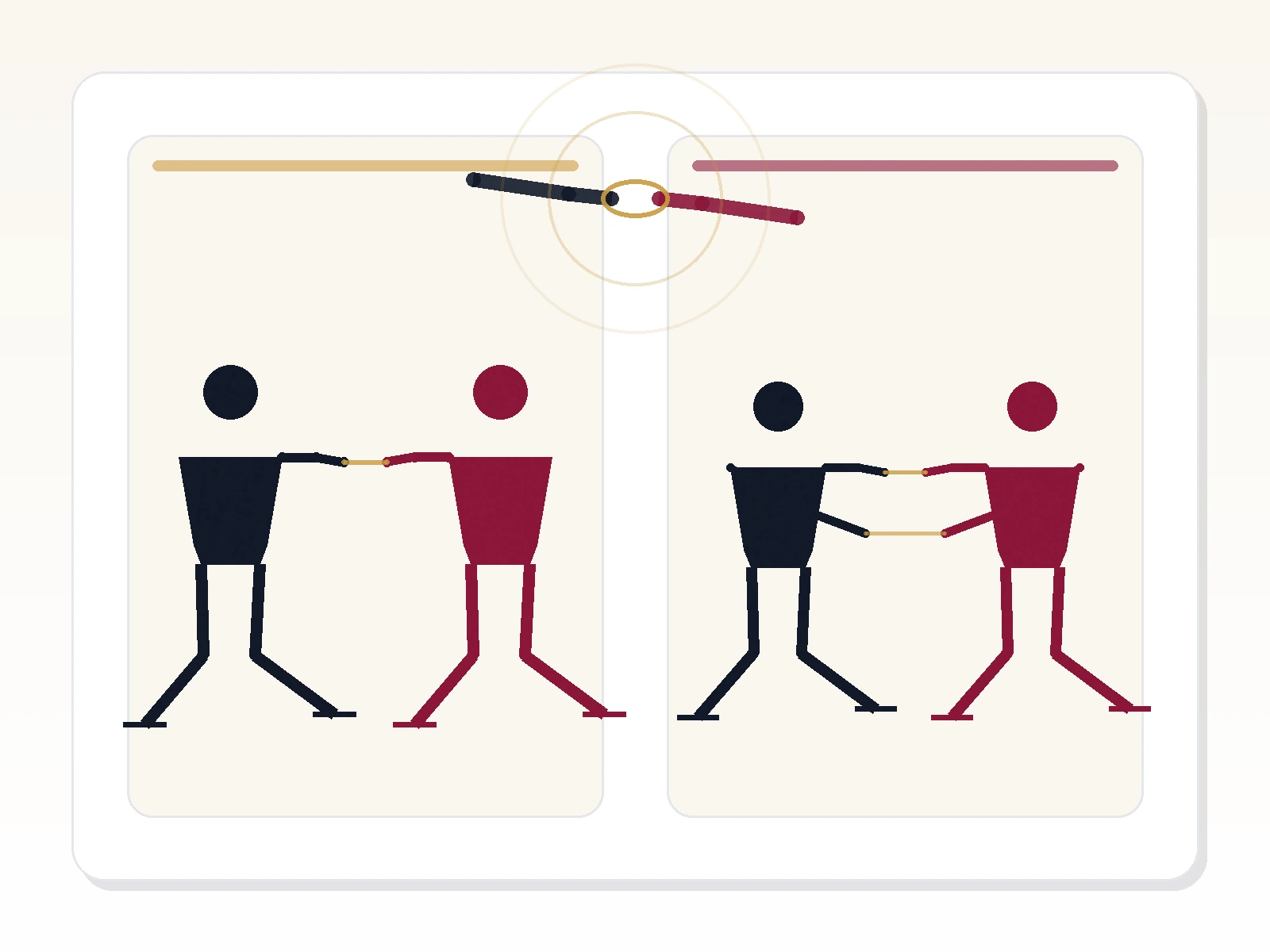
A good beginner open position should feel clear, balanced, and easy to reset.
It should feel like
- there is enough space to move without crowding,
- your arms are present but not stiff,
- your hands are connected without gripping,
- your shoulders can stay relaxed,
- your frame and posture are still organized,
- your partner awareness comes through the whole body, not just the hand,
- and your timing stays shared with the music.
It should not feel like
- pulling your partner toward you,
- hanging away from your partner,
- dragging someone through a turn,
- squeezing the hand,
- letting the arm collapse,
- standing so far away that the connection becomes unclear,
- or styling your arms before you can keep time.
Common open-position mistakes
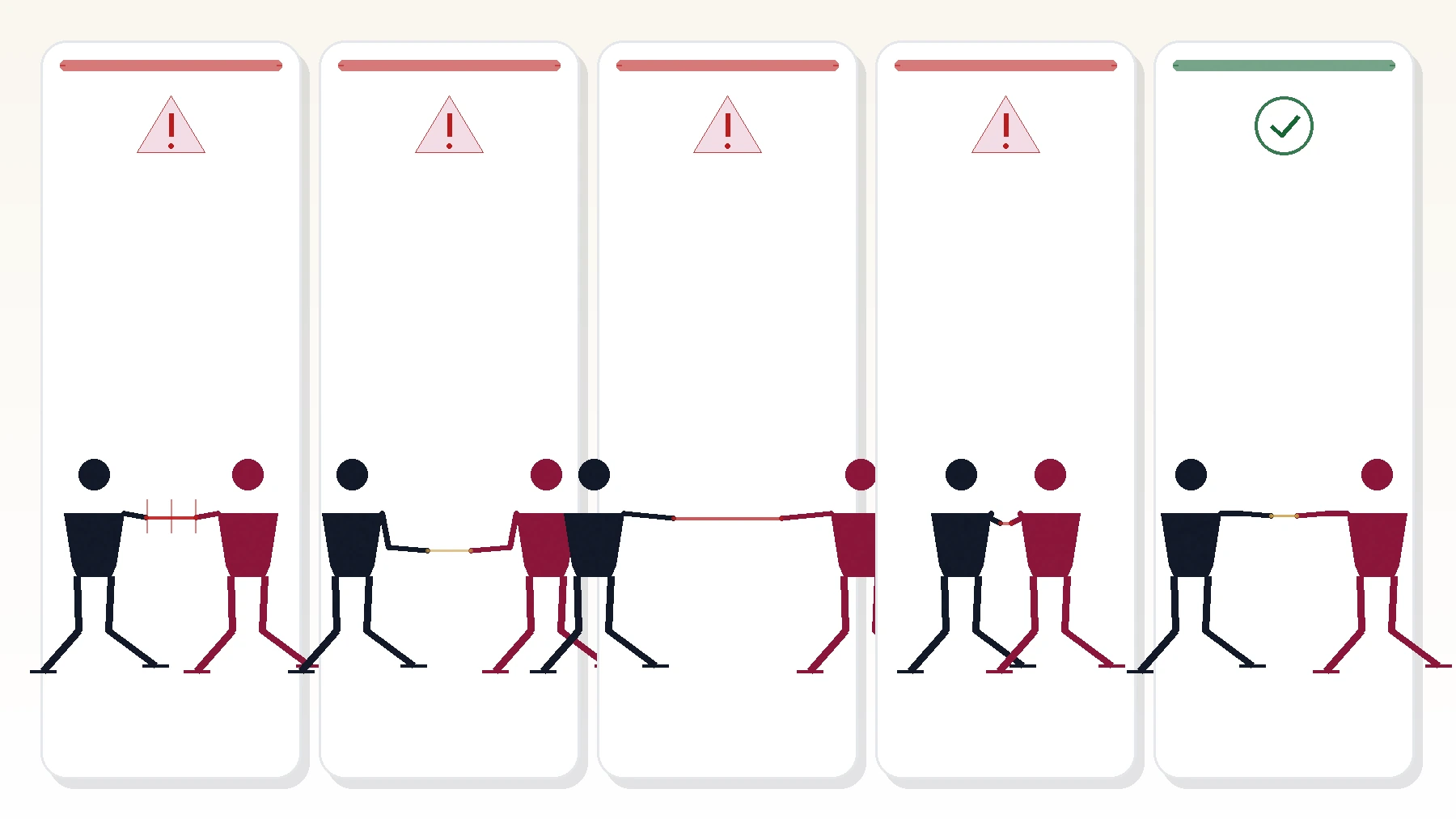
| Mistake | What happens | Try this instead |
|---|---|---|
| Treating open position as “no connection” | The partnership feels disconnected and turns become guesswork. | Keep awareness through the hand, frame, body direction, and timing. |
| Pulling with the hands | The partner may feel dragged or rushed. | Let movement come from body timing and clear direction, not force. |
| Gripping the partner’s hand | The connection becomes uncomfortable and hard to adjust. | Hold clearly but gently. |
| Letting the arms collapse | The lead/follow signal becomes unclear. | Keep a soft, supported shape in the arms. |
| Standing too far away | The connection becomes stretched and unstable. | Step closer until both dancers can move without pulling. |
| Standing too close | Turns and open figures feel crowded. | Leave enough room for the pattern you are dancing. |
| Losing timing during turns | The figure may finish late or feel rushed. | Count the music and reconnect on time. |
| Over-styling too early | Shape becomes more important than connection. | Learn spacing and timing first; add style later. |
| Confusing open position with promenade | The wrong body direction may be used. | Remember: promenade is a specific V-shaped position, not just “open.” |
| Confusing open position with “Open” competition level | The word “open” can mean different things in dance. | Open position is a position term; “Open” level/category is a separate competition/context term. |
| Forgetting the return | The figure ends messy because no one knows where to reconnect. | Know whether you are returning to open hold, closed position, or another position. |
How open position changes by dance style
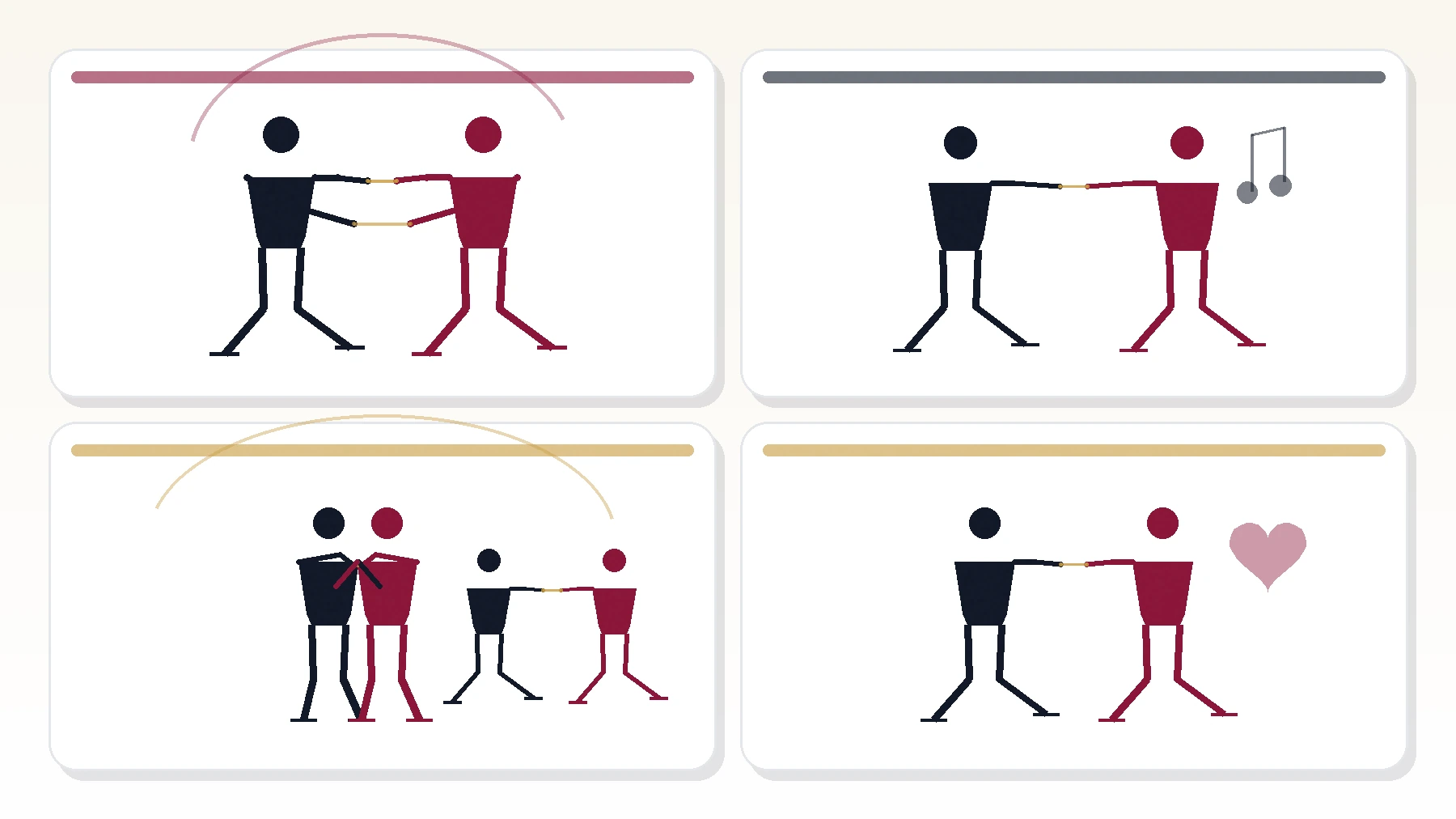
| Context | How open position may show up | Beginner note |
|---|---|---|
| American Smooth | Smooth dances may include closed hold, open figures, separations, and re-connections. | Keep the position elegant but do not lose partner timing. |
| International Standard | Standard is more closed-hold centered. | Open position is not usually the main beginner focus in Standard technique. |
| American Rhythm | Rumba, Cha Cha, Swing, Bolero, and Mambo often use open or changing hand connections. | Keep the arms toned but not stiff. |
| International Latin | Latin dances often use open shapes, hand changes, and partner-facing or away positions. | Open position may be more compact or more extended depending on the figure. |
| Social dance | Salsa, Bachata, Swing, Hustle, and other social dances often use one-hand or two-hand open connections. | The connection should be practical and comfortable for the room. |
| Wedding first dance | Open position can make simple turns, side-by-side moments, and relaxed choreography easier to understand. | Use simple open figures before trying complicated dips or lifts. |
Style details vary by instructor, syllabus, and context. When in doubt, ask: where are we facing, how are we connected, and where do we return after the figure? Compare full guides on the Dance Styles hub, including Rumba, Cha Cha, East Coast Swing, Salsa, and Bachata.
Beginner open-position practice: 4 simple checks
This is not a full technique drill page. Use these as quick beginner checks before or during practice.
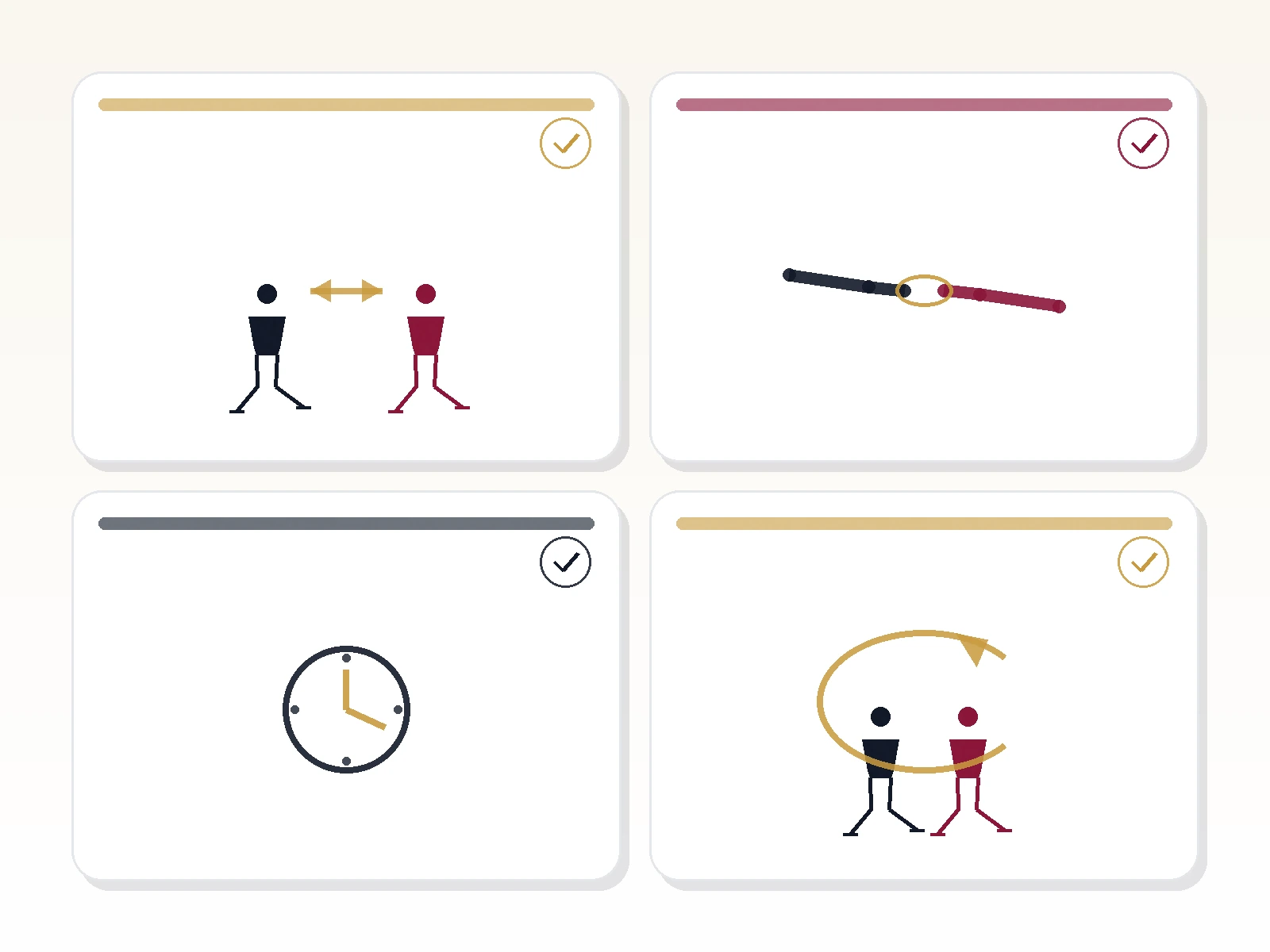
- 1. Space check. Can both partners move without crowding or pulling away? If the connection feels stretched, step slightly closer. If turns feel cramped, create a little more room.
- 2. Hand check. Can you connect without squeezing, tugging, or dropping the hand? Your hand should feel clear, not controlling.
- 3. Timing check. Can you keep the rhythm while opening, turning, and reconnecting? If the timing disappears, simplify the figure and count out loud.
- 4. Return check. Do you know where the figure ends? Many open-position mistakes happen because dancers open clearly but do not know whether they are returning to open hold, closed position, or another shape.
Practice open position with clear, steady music
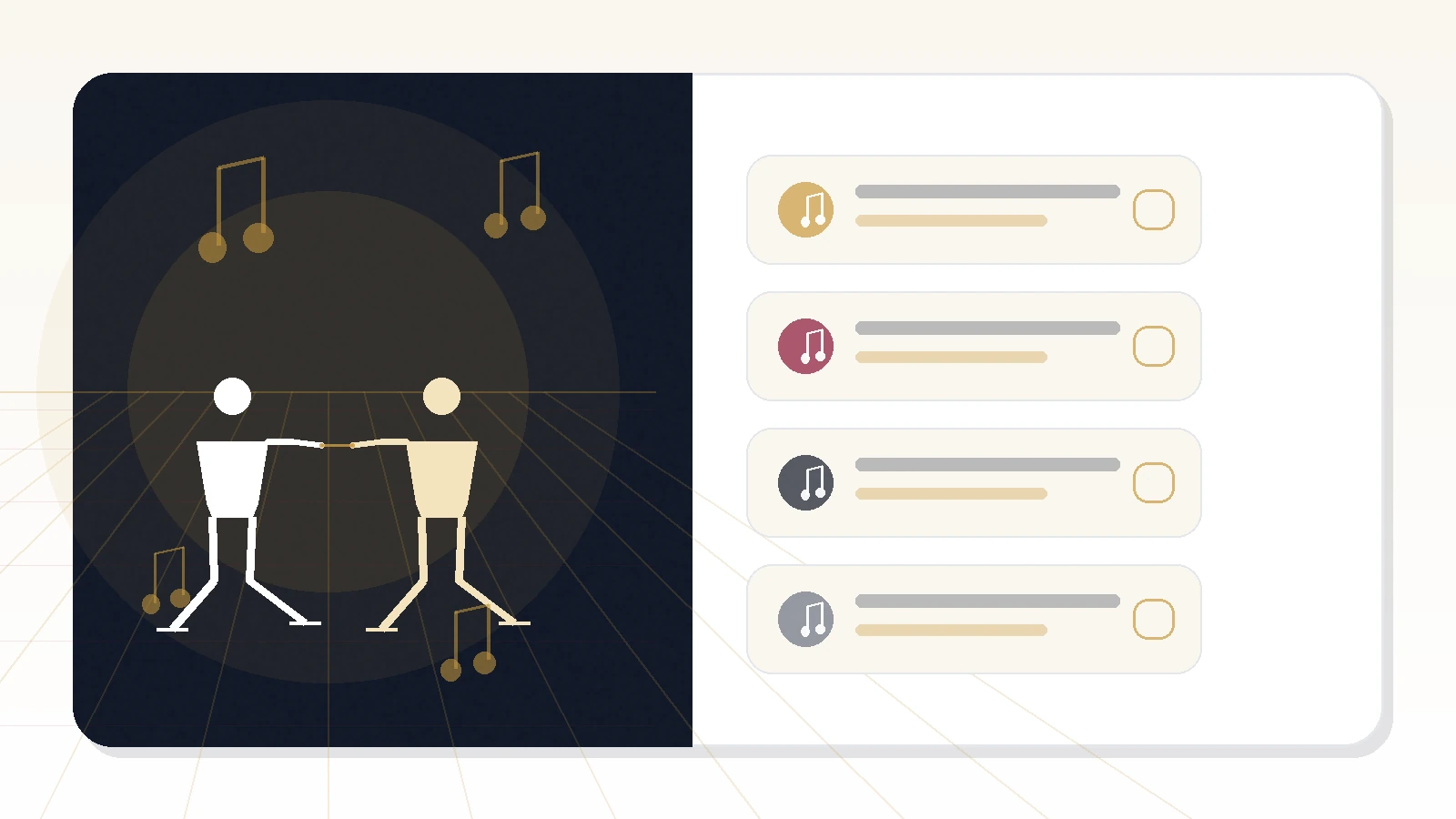
Open position becomes easier when you practice it with music that is clear and steady. Start with simple timing, relaxed hand connection, and small figures before trying full choreography. Good practice contexts include:
- Rumba: slow open-hold connection and simple turns.
- Cha Cha: responsive one-hand or two-hand connection.
- East Coast Swing: open hand connection and return timing.
- Salsa or Bachata: social open-position awareness.
- Wedding dance practice: simple open turns and re-connections.
Use Ballroom Pages playlists as a support, not a distraction. If you need help finding the beat first, read How to Count Ballroom Dance Music.
Rumba
Slow open-hold connection and simple turns.
Cha Cha
Responsive one-hand or two-hand connection.
Swing
Open hand connection and return timing.
Music & Timing
Tempo, counting, and the full playlist library.
Wedding-friendly practice
Simple open turns and re-connections for a first dance.
Wedding DancePlaylist URL coming soon
FAQ
Open position FAQ
What does open position mean in ballroom dance?
Open position means the partners are not in a full closed ballroom hold. They usually have more space between them and may connect with one hand, two hands, or a lighter open hold while still staying aware of each other.
Is open position the same as open hold?
No. Open position describes the partner relationship or body position. Open hold describes the hand or arm connection used in that position.
What is the difference between open position and closed position?
In closed position, partners face each other closely in a traditional ballroom hold. In open position, partners are more separated and usually use a lighter hand connection or open hold.
Is open position the same as promenade position?
No. Promenade position is a specific V-shaped position where partners move in the same direction. Open position is a broader term for positions outside full closed hold.
Do you still need frame in open position?
Yes, but the frame may be smaller or more elastic than in closed hold. You still need organized posture, responsive arms, clear timing, and partner awareness.
Which dances use open position?
Open position is common in many Rhythm, Latin, and social dances, including Rumba, Cha Cha, Swing, Salsa, and Bachata. American Smooth and wedding-dance choreography may also use open figures.
Can wedding couples use open position in a first dance?
Yes. Simple open-position figures can make a first dance feel more relaxed and varied, especially for turns, side-by-side moments, and reconnecting after a figure.
Can I practice open position without a partner?
You can practice timing, posture, arm tone, and where your hand connection would be, but open position is ultimately a partner concept. Practice with a partner or instructor when you can.
Editorial
Sources and editorial note
This glossary guide should be reviewed periodically by a qualified ballroom instructor, experienced competitor, adjudicator, or equivalent ballroom professional. For technical diagrams, use instructor-reviewed assets before final publication.
Suggested sources
- University of Georgia ballroom terminology reference
- NDCA Vocabulary of Dance Positions, Holds and Proximities
- WDSF DanceSport discipline descriptions
- Dance Central Latin position and partnering reference
- Ballroom Pages legacy playlist pages for music-practice links
This is dance terminology, not medical advice. Ballroom Pages follows an editorial policy of education-first guidance. Questions? Contact us. Updated May 22, 2026.