What is the Foxtrot?
The Foxtrot is a smooth ballroom dance in 4/4 time, built on long, gliding walking steps and a slow-quick rhythm. It is danced to jazz, swing, big-band, and easy-listening music, and its relaxed, elegant travel around the floor makes it one of the most useful social and wedding dances a beginner can learn.
Historically, the fox-trot became popular in Europe and America around 1914 and is often associated with Harry Fox. Britannica describes its ballroom version as using less strenuous walking steps, with music influenced by ragtime and in 4/4 time.
For today’s beginner, Foxtrot is most useful as a social and wedding-friendly ballroom dance. It teaches timing, posture, partner movement, floorcraft, and musical walking.
Foxtrot can appear in several contexts. Social Foxtrot is practical and beginner-friendly. Wedding Foxtrot is adapted to a couple and a song. American Smooth Foxtrot may range from bronze social basics to more continuous, expressive movement. International Slow Foxtrot is a technically demanding Standard dance with its own syllabus and competitive expectations.
What the Foxtrot feels like
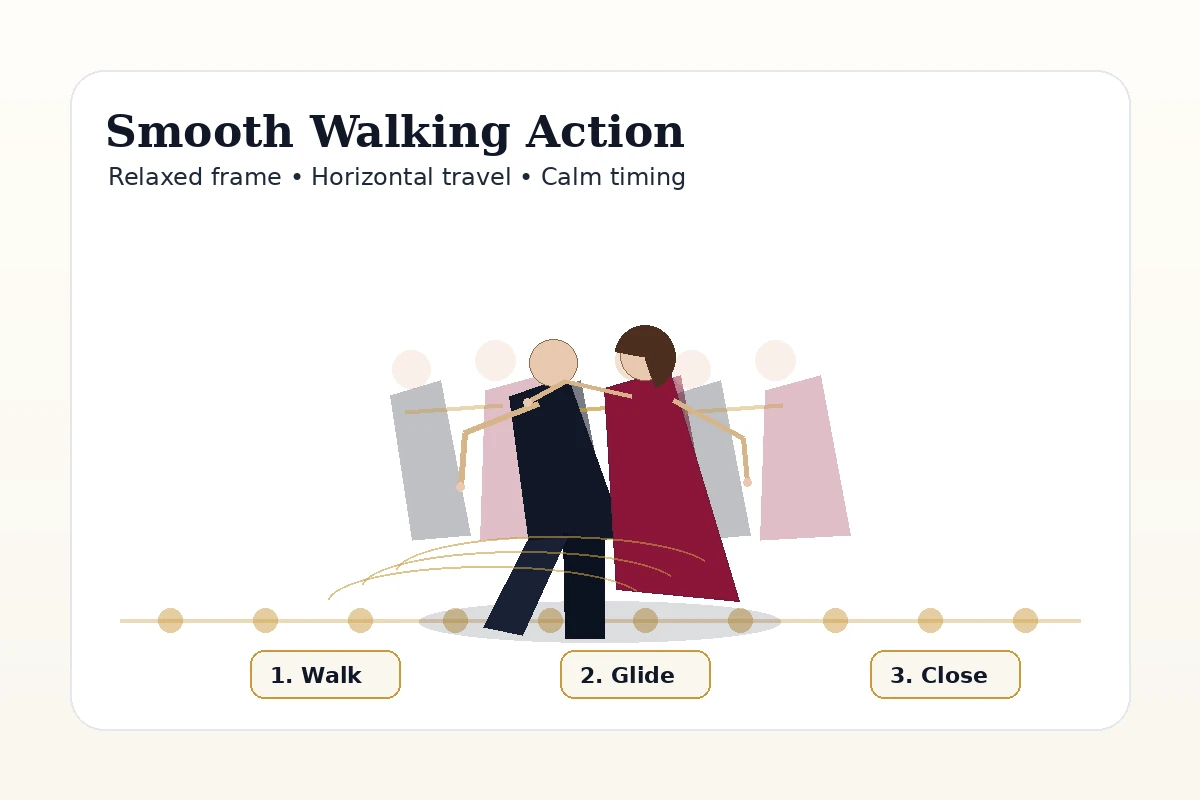
Foxtrot should feel smooth, easygoing, and musical. It is not as floaty as Waltz, not as sharp as Tango, and not as fast or bouncy as Quickstep.
A beginner Foxtrot should feel like organized walking with rhythm. The leader gives direction and timing. The follower stays balanced, responsive, and connected without guessing ahead.
The dance works best when the couple keeps a comfortable frame and allows the steps to travel naturally. Foxtrot should not feel stiff, hurried, or overly posed.
Foxtrot timing and count
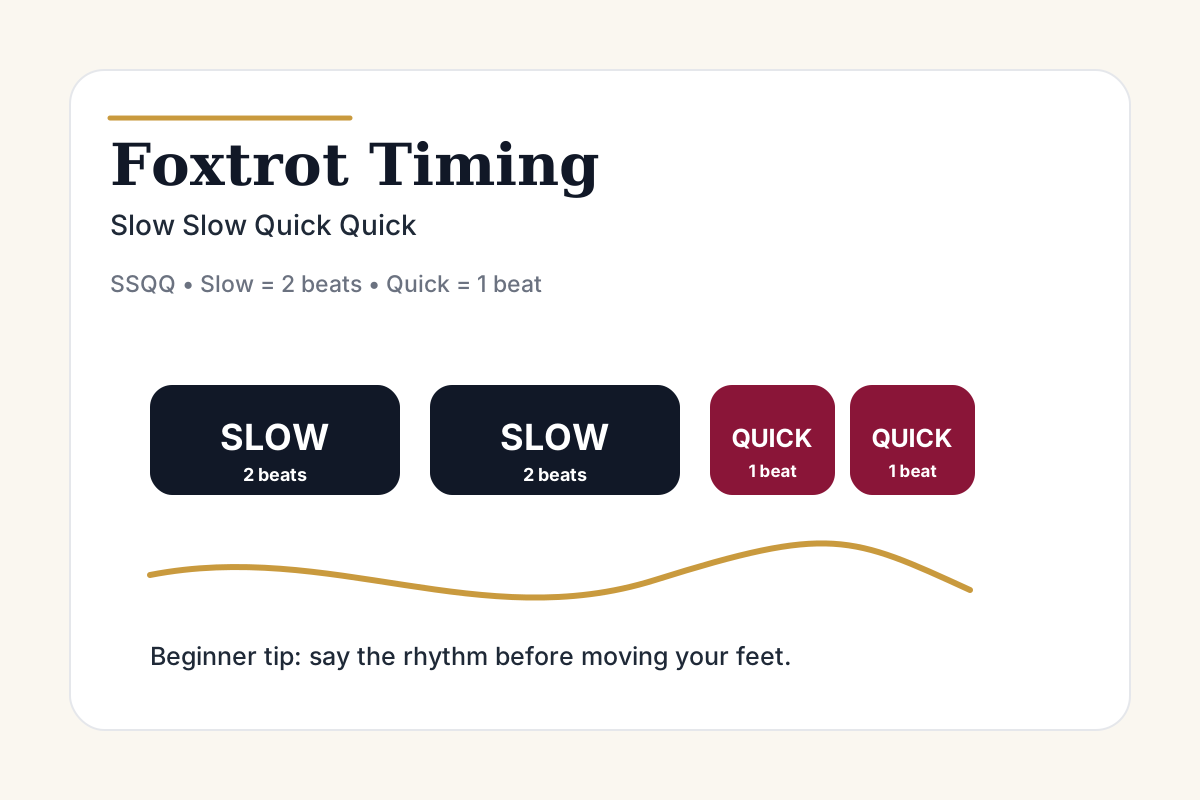
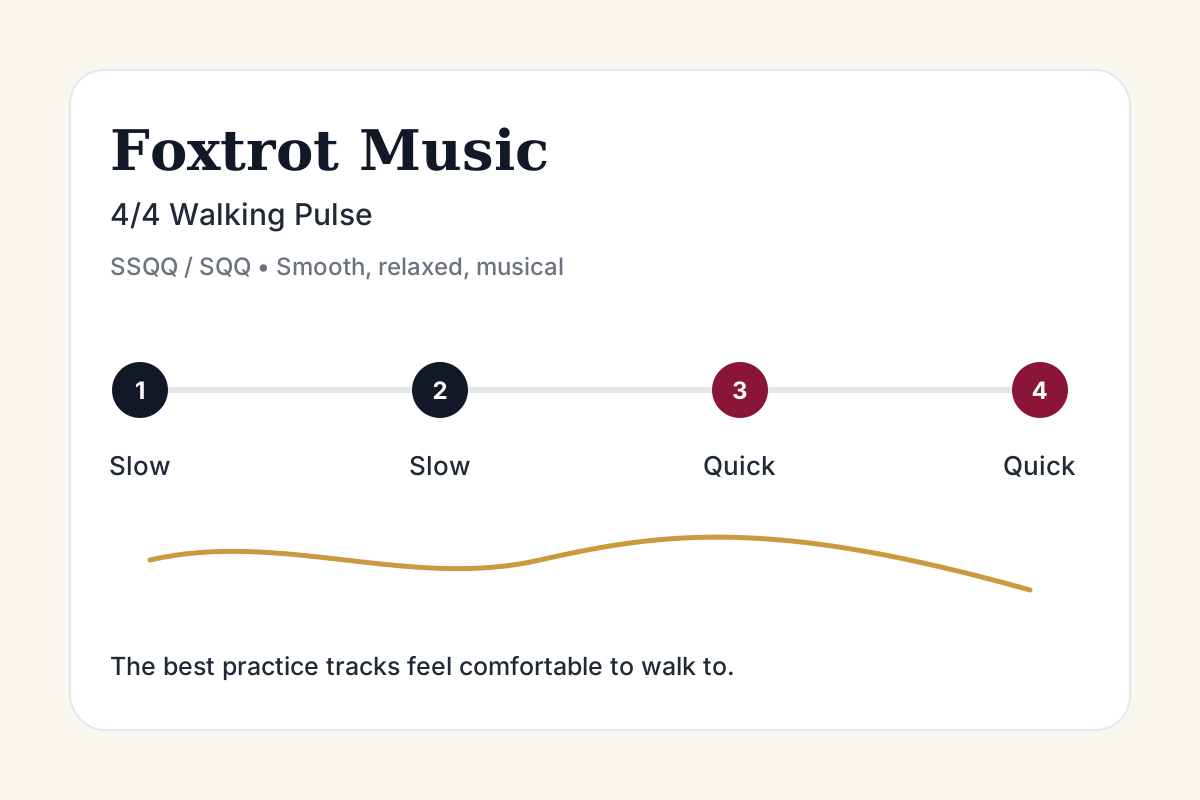
Foxtrot timing can feel confusing because different Foxtrot contexts use different rhythm patterns. Many beginner American Foxtrot basics use Slow, Slow, Quick Quick, while International Slow Foxtrot commonly uses Slow, Quick, Quick.
In beginner language, a “slow” takes two beats and a “quick” takes one beat. That means Foxtrot teaches dancers to stretch some steps and move more lightly through others.
| Timing idea | Beginner explanation |
|---|---|
| Common meter | 4/4 |
| Beginner American count | Slow, Slow, Quick Quick |
| Shorthand | SSQQ |
| Slow Foxtrot count | Slow, Quick, Quick |
| Shorthand | SQQ |
| What “slow” means | Usually two beats |
| What “quick” means | Usually one beat |
| Common mistake | Making every step the same length |
| Practice fix | Say the rhythm out loud before dancing the feet |
A simple beginner drill is to clap the rhythm first. Say slow, slow, quick quick without stepping. Then walk the same rhythm in a straight line.
How to count ballroom dance music
Basic Foxtrot steps
The basic Foxtrot step is a walking pattern in slow-slow-quick-quick timing: two long forward walks, then a quick step to the side and a close. From there, beginner Foxtrot builds out into backward basics, side-close actions, promenade shapes, and simple turns. The exact figures vary by teacher and syllabus, but the first goal is always the same: move smoothly, stay on time, and keep the partnership comfortable.
| Beginner concept | What it teaches |
|---|---|
| Forward basic | How to travel with SSQQ timing |
| Backward basic | How the follower or backing partner keeps rhythm and spacing |
| Side-close / chassé | How “quick quick” creates a compact closing action |
| Promenade basic | How the couple moves in a shared direction |
| Rock turn | How to change direction safely |
| Box / twinkle-style actions | How Foxtrot relates to other smooth ballroom patterns |
| Closed position | How the frame and body relationship support movement |
Do not try to learn every Foxtrot figure at once. Start with walking, count, posture, and a simple basic step.
How to dance the Foxtrot step by step
To dance a basic Foxtrot, you walk in a slow-slow-quick-quick rhythm: two long walking steps, then a quick side step and a close. Build it in the order below, and keep the slows genuinely longer than the quicks.
| Step | What you do |
|---|---|
| 1. Hear the 4/4 pulse | Play a Foxtrot and find the steady walking beat before you move at all. |
| 2. Say the rhythm | Speak “slow, slow, quick quick” out loud. A slow takes two beats; a quick takes one. |
| 3. Walk the two slows | Step forward on the first slow, then forward again on the second slow. |
| 4. Add the quick quick | Step to the side on the first quick, then close your feet on the second. |
| 5. Keep the contrast | Make the slow steps long and the quick steps short. Even, equal steps kill the Foxtrot feel. |
| 6. Travel and smooth it out | Once the rhythm is steady, let the walks travel along the line of dance, staying level with no bounce. |
The leader walks forward; the follower dances the natural opposite, walking back on the two slows. This is the beginner American Foxtrot basic — International Slow Foxtrot commonly uses slow, quick, quick instead. For the full pattern with foot-by-foot detail, see the Foxtrot basic step guide.
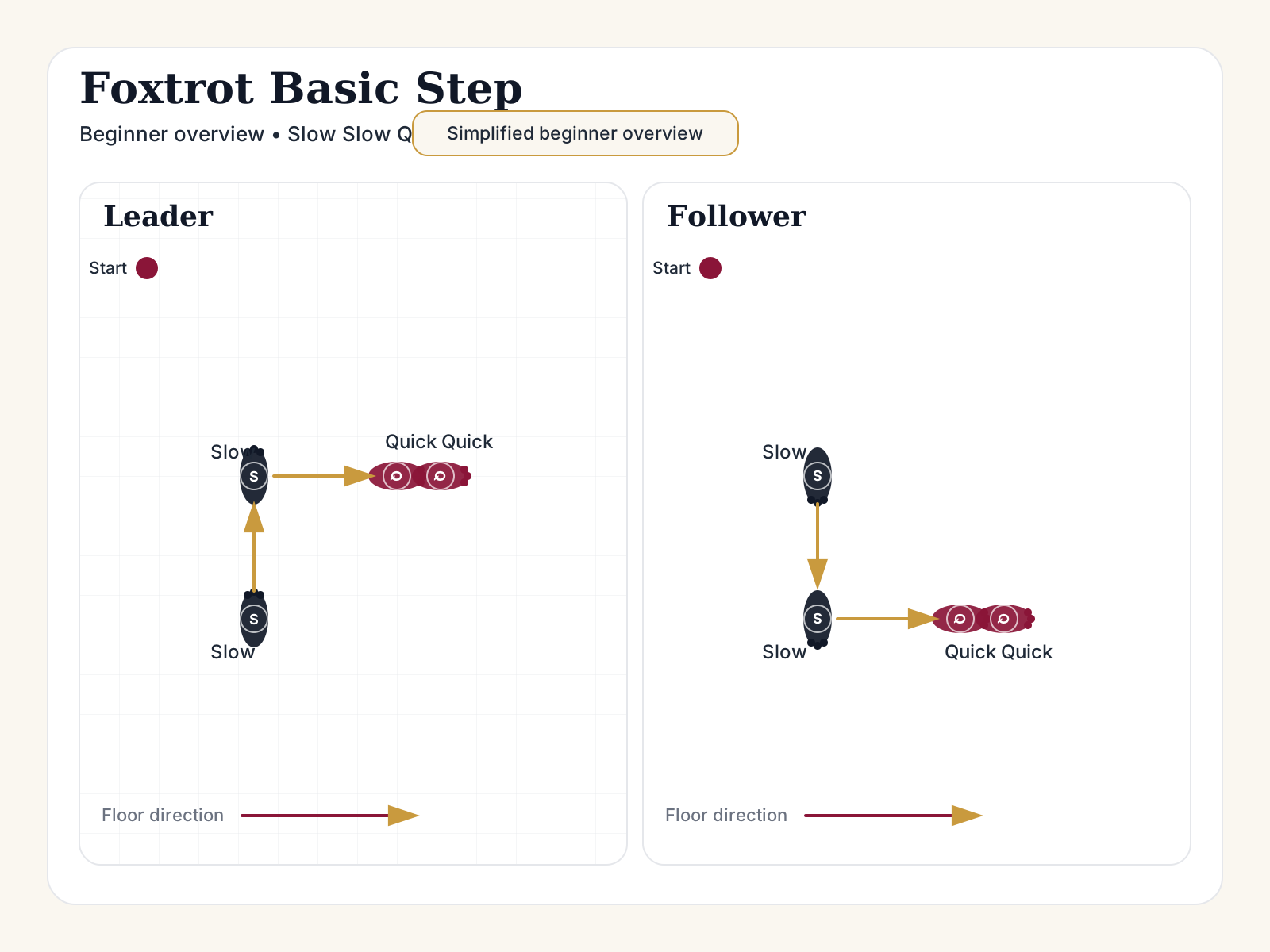
Foxtrot basic step overview
A beginner Foxtrot basic often uses Slow, Slow, Quick Quick. At the simplest level, think of it as two walking steps followed by a side-close action.
Leader’s simplified forward basic
| Count | Leader action |
|---|---|
| Slow | Step forward |
| Slow | Step forward |
| Quick | Step side |
| Quick | Close feet |
Follower’s natural opposite
| Count | Follower action |
|---|---|
| Slow | Step back |
| Slow | Step back |
| Quick | Step side |
| Quick | Close feet |
This is only a beginner overview, not a full syllabus replacement. Your teacher may add direction, turn, promenade, outside partner actions, or different styling depending on the system being taught.
The key is to make the slow steps truly longer than the quick steps. If every step is the same length and timing, Foxtrot loses its musical character.
Learn the beginner Foxtrot basic step
Foxtrot music
Foxtrot music usually has a 4/4 feel and often works with jazz, swing, big-band, crooner, or easy-listening styles. The music should feel like something you can walk smoothly to.
Not every 4/4 song is a good Foxtrot. A good practice song should have a steady tempo, a clear beat, and enough space for smooth walking.
| Music question | Beginner answer |
|---|---|
| What meter does Foxtrot usually use? | 4/4 |
| What should I listen for? | A relaxed walking pulse |
| Common beginner rhythm | Slow, Slow, Quick Quick |
| Does Foxtrot use swing or jazz music? | Often, especially in social and American contexts |
| Is every romantic song a Foxtrot? | No. Some songs fit Rumba, Nightclub Two Step, or simple slow dance better |
| What should wedding couples check? | Whether the song’s tempo and feel support smooth walking |
Foxtrot can be especially useful for wedding couples because many songs that do not fit Waltz still have a comfortable 4/4 feel. If the song has an easy walking rhythm, Foxtrot may be a strong option.
Foxtrot Music Guide · Ballroom Dance Tempo Chart
American Foxtrot vs International Slow Foxtrot
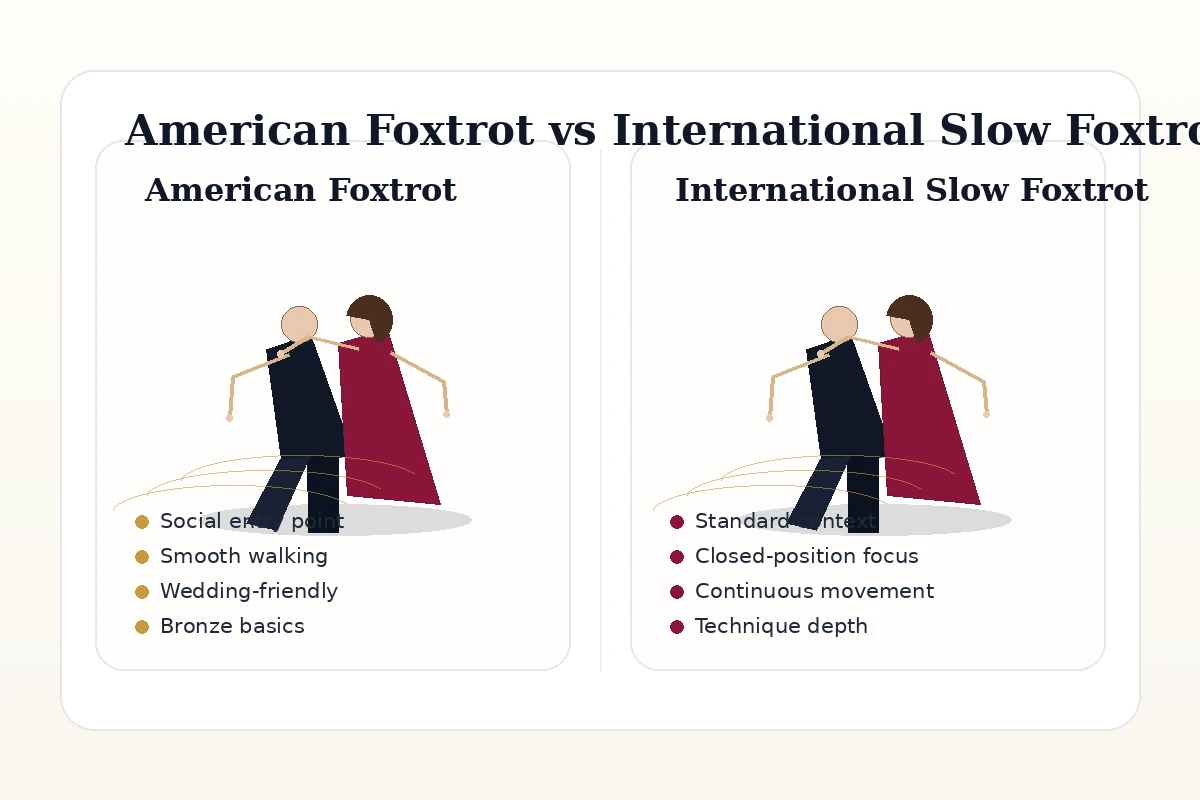
American Foxtrot and International Slow Foxtrot are related, but they are not the same learning experience.
| Feature | American Foxtrot | International Slow Foxtrot |
|---|---|---|
| Ballroom family | American Smooth | International Standard |
| Beginner use | Social dancing, weddings, studio lessons, bronze basics | Standard training and competition |
| Common rhythm | SSQQ or SQQ depending on figure/context | SQQ in many basic figures |
| Movement style | Social basics, later continuity and open Smooth styling | Smooth, continuous, closed-position Standard styling |
| Beginner figures | Forward basic, backward basic, promenade basic, rock turn, box/twinkle actions | Feather step, three step, natural turn, reverse turn, feather finish |
| Difficulty | More accessible at the beginner social level | More technically demanding |
| Best first focus | Smooth walking, timing contrast, frame, simple travel | Posture, closed hold, timing, swing, continuity, footwork |
| Page strategy | Canonical section inside /dance-styles/foxtrot/ | Do not create /dance-styles/slow-foxtrot/ yet |
If you are a beginner or wedding couple, American-style beginner Foxtrot is usually the more practical starting point. If you are training for International Standard, Slow Foxtrot becomes a deeper technical subject.
Do not create a duplicate Slow Foxtrot page yet. Keep Slow Foxtrot inside this canonical guide until search data and content strategy justify a separate page.
Foxtrot vs Waltz
Foxtrot and Waltz can both feel elegant and smooth, but they are not counted the same way.
| Feature | Foxtrot | Waltz |
|---|---|---|
| Common meter | 4/4 | 3/4 |
| Beginner count | Slow, Slow, Quick Quick | 1-2-3 |
| Movement feel | Walking-based, smooth, relaxed | Flowing, rising/falling, sweeping |
| Wedding use | Good for many relaxed 4/4 songs | Good for songs that naturally count in 3 |
| Beginner challenge | Hearing slow vs quick | Hearing groups of three |
If your song counts 1-2-3, Waltz may fit. If it counts 1-2-3-4 and has a smooth walking feel, Foxtrot may be a better choice.
Foxtrot vs Quickstep
Foxtrot and Quickstep are related, but Quickstep is its own dance and should not be treated as “just faster Foxtrot” on this page.
| Feature | Foxtrot | Quickstep |
|---|---|---|
| Basic feel | Smooth, relaxed, walking-based | Fast, lively, light, energetic |
| Beginner use | Social and wedding-friendly | More demanding because of speed |
| Competition family | American Smooth / International Standard context | International Standard |
| Best first focus | Smooth walking and timing contrast | Quick timing, lightness, speed control |
| Page strategy | Canonical: /dance-styles/foxtrot/ | Separate guide: /dance-styles/quickstep/ |
A beginner who wants a calm, social ballroom dance should usually start with Foxtrot before Quickstep.
Foxtrot for weddings
Foxtrot can be an excellent wedding first dance when the song has a relaxed 4/4 feel. It gives couples more structure than a simple sway without requiring the dramatic character of Tango or the 3/4 timing of Waltz.
Is Foxtrot right for your wedding first dance?
Foxtrot may be right if…
- Your song has a steady 4/4 pulse.
- The music feels relaxed, jazzy, swingy, or easy to walk to.
- You want something elegant but not overly formal.
- You want a few simple traveling steps and turns.
- You have a moderate amount of floor space.
Consider another dance
Foxtrot may not be right if…
- Your song clearly counts in 3.
- Your song is extremely slow and romantic.
- You want a highly dramatic first dance.
- You have very little space.
- You want the easiest possible sway with no travel.
Foxtrot does not need to look like a competition routine at a wedding. A simple entrance, basic step, gentle turn, and clean ending can feel polished and personal.
What dance fits your wedding song? · Wedding Dance Guide
Foxtrot in social dancing
Foxtrot is one of the most practical ballroom dances for social settings. It works well at studio socials, formal events, mixed ballroom parties, and wedding receptions when the music has the right walking pulse.
Social Foxtrot should feel comfortable. You do not need advanced continuity styling or International Slow Foxtrot technique to enjoy it.
Floorcraft matters. Keep your steps moderate, avoid cutting across other couples, and use simple turns or promenade actions when the floor gets crowded.
The best social Foxtrot is smooth, considerate, and musical.
Foxtrot in competition
Foxtrot appears in American Smooth and International Standard contexts. American Smooth Foxtrot and International Slow Foxtrot have different syllabus expectations, movement vocabulary, and styling rules.
This guide is not a syllabus replacement. It is a beginner-friendly overview designed to orient readers before formal lessons or technical study.
If you are preparing for competition, work with a qualified instructor and follow the appropriate syllabus, event rules, and level restrictions.
Common beginner Foxtrot mistakes
| Mistake | Why it happens | Better fix |
|---|---|---|
| Making every step the same timing | The slow/quick contrast is new | Say SSQQ out loud before stepping |
| Rushing the quick quick | The quicks feel small and easy to hurry | Keep quicks compact but calm |
| Taking steps too large | Beginners try to glide before balance is ready | Start with smaller walking steps |
| Looking down | Fear of stepping on the partner | Keep posture lifted and use peripheral awareness |
| Collapsing the frame | Smooth movement becomes loose movement | Maintain tone without stiffness |
| Confusing Foxtrot with Waltz | Both can look elegant | Remember Foxtrot is usually 4/4; Waltz is 3/4 |
| Confusing Foxtrot with Quickstep | Both are Standard/Smooth relatives | Foxtrot is smoother and more relaxed; Quickstep is faster |
| Forcing Foxtrot onto the wrong song | Wedding songs vary widely | Count the music first |
| Trying Slow Foxtrot technique too early | Search results mix beginner and advanced material | Start with social basics, then add technique later |
Beginner Foxtrot practice plan
| Practice session | Focus | What to do |
|---|---|---|
| Session 1 | Hear the rhythm | Say slow, slow, quick quick while listening to Foxtrot music |
| Session 2 | Walk smoothly | Practice relaxed forward walking without bouncing |
| Session 3 | Add quick quick | Step two slows, then side-close on quick quick |
| Session 4 | Partner timing | Practice leader/follower basics slowly |
| Session 5 | Frame and posture | Keep a comfortable frame while walking |
| Session 6 | Floor direction | Practice moving gently around the room |
| Session 7 | Promenade idea | Try a simple promenade shape with a teacher or partner |
| Session 8 | Music variation | Compare two Foxtrot songs and notice tempo/feel |
| Session 9 | Wedding/social test | Practice 30–45 seconds with an entrance and ending |
| Session 10 | Review | Record a short clip and check timing, posture, and smoothness |
Ten focused minutes can be enough to improve. Prioritize rhythm, walking quality, and partner comfort before adding more figures.