What does Foxtrot music sound like?
Foxtrot music should feel like you can walk smoothly through it. The beat should be clear enough that a beginner can step without guessing, but the song should still feel elegant rather than march-like. Traditional Foxtrot is often associated with big-band, swing, jazz standards, and vocal standards, but some country, pop, and wedding songs can work when the pulse is steady and the tempo is comfortable.
Foxtrot timing and count
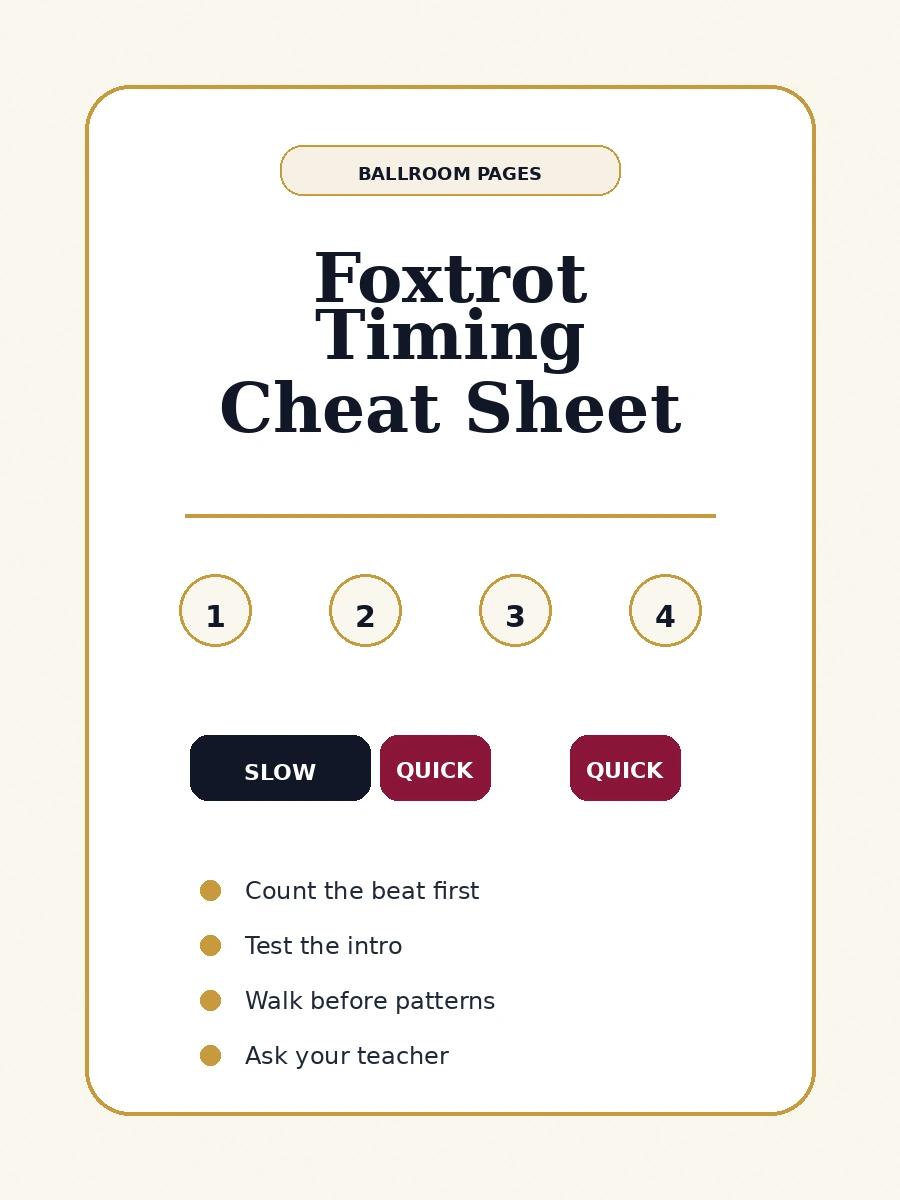
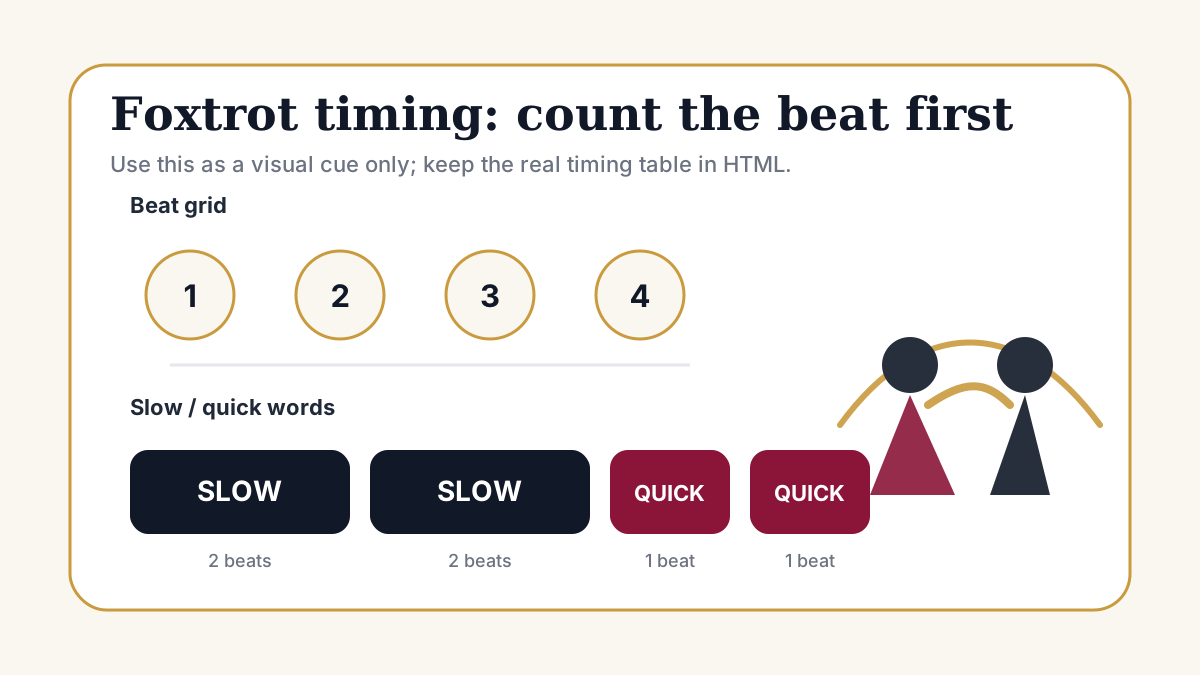
Foxtrot counting is easiest when you separate the beat from the step words. A beat is the pulse you tap. A count is how dancers organize that pulse. A slow usually takes two beats. A quick usually takes one beat. That is why Foxtrot teachers often say “slow, slow, quick, quick” or “slow, quick, quick” instead of only “1, 2, 3, 4.”
- SSlow · 2
- SSlow · 2
- QQuick · 1
- QQuick · 1
| Pattern | Beat value | Where it is used | Note |
|---|---|---|---|
| Slow-slow-quick-quick | 2 + 2 + 1 + 1 beats | American/social rhythm timing, many beginner forward basics | Count the beat first, then say the slow/quick words. |
| Slow-quick-quick | 2 + 1 + 1 beats | Box timing and some beginner patterns | Fits neatly into one 4-beat measure. |
| 1-2-3-4 | Four individual beats | Listening practice, intro counting, song testing | Use this before trying to dance the pattern. |
| 1-2, 3-4, 5, 6 | Beat mapping for SSQQ | Explaining why SSQQ spans six beats | Useful but can confuse beginners if introduced too early. |
For the broader topic across every dance, read how to count ballroom dance music.
Foxtrot tempo: how fast should the music be?
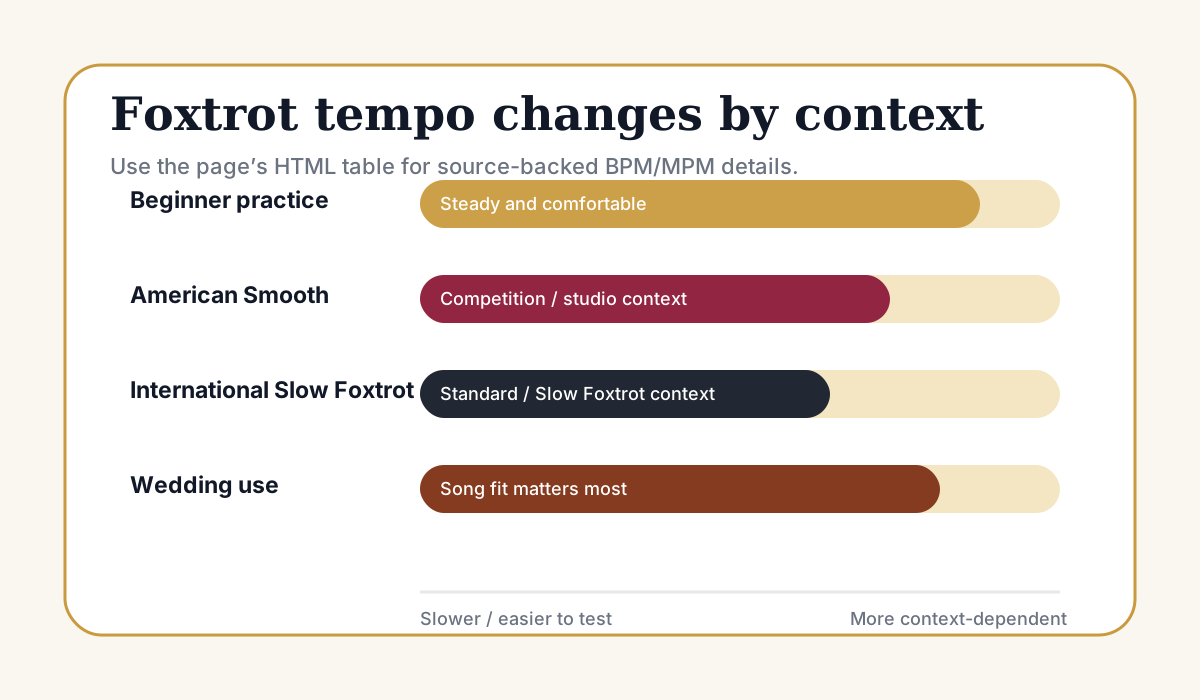
Foxtrot tempo can be described in BPM or MPM. BPM means beats per minute. MPM means measures per minute. Because Foxtrot is usually in 4/4, one measure has four beats, so 30 MPM equals 120 BPM.
| Context | Guidance | Note |
|---|---|---|
| Beginner/social practice | Start with a steady song that feels comfortable to walk. Use your teacher’s practice track first when available. | Practical advice; not an official range. |
| American Smooth Foxtrot | NDCA approved competition tempo: 30 MPM / 120 BPM. | Official competition rulebook reference. |
| Broader American Foxtrot references | Many educational/reference pages cite 120–136 BPM for American Style Foxtrot. | Useful range, not universal. |
| International Slow Foxtrot | NDCA approved competition tempo: 28 MPM / 112 BPM; many references cite 112–120 BPM or 28–30 MPM. | Use as competition/reference guidance. |
| Wedding Foxtrot | Choose steady 4/4, a clear intro, and a comfortable walking pulse. | Song fit depends on arrangement and choreography. |
Compare across dances on the ballroom dance tempo chart.
American Foxtrot vs International Slow Foxtrot music
Searchers often see both “Foxtrot” and “Slow Foxtrot” because the word is used in more than one ballroom context.
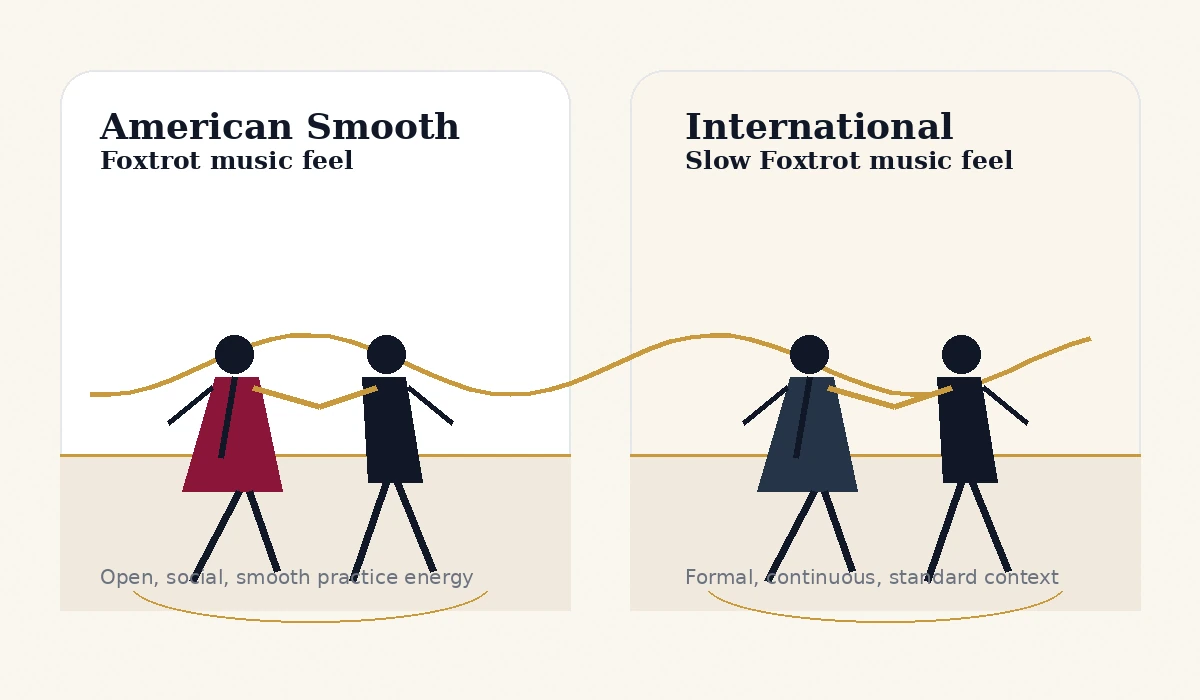
| Topic | American (Smooth/social) | International (Standard) Slow Foxtrot |
|---|---|---|
| Style family | American Smooth / social ballroom | International Standard |
| Music feel | Smooth, often jazzy, walking-based, frequently approachable for social dancing | More continuous, controlled, and competition-oriented in many contexts |
| Beginner counts | Often slow-slow-quick-quick or slow-quick-quick depending on pattern | Often taught with more advanced timing and phrasing later |
| Hold/context | American Smooth may allow more open work at higher levels | Standard dances are generally danced in closed position |
| Page role | This article explains music and timing differences | This article does not create a separate Slow Foxtrot page |
For the dance itself, see the Foxtrot dance guide; for the style families, see American Smooth vs International Standard and American vs International ballroom.
How to choose a Foxtrot song
A good Foxtrot song is not just a song with “Foxtrot” in a playlist title. Test the actual recording.
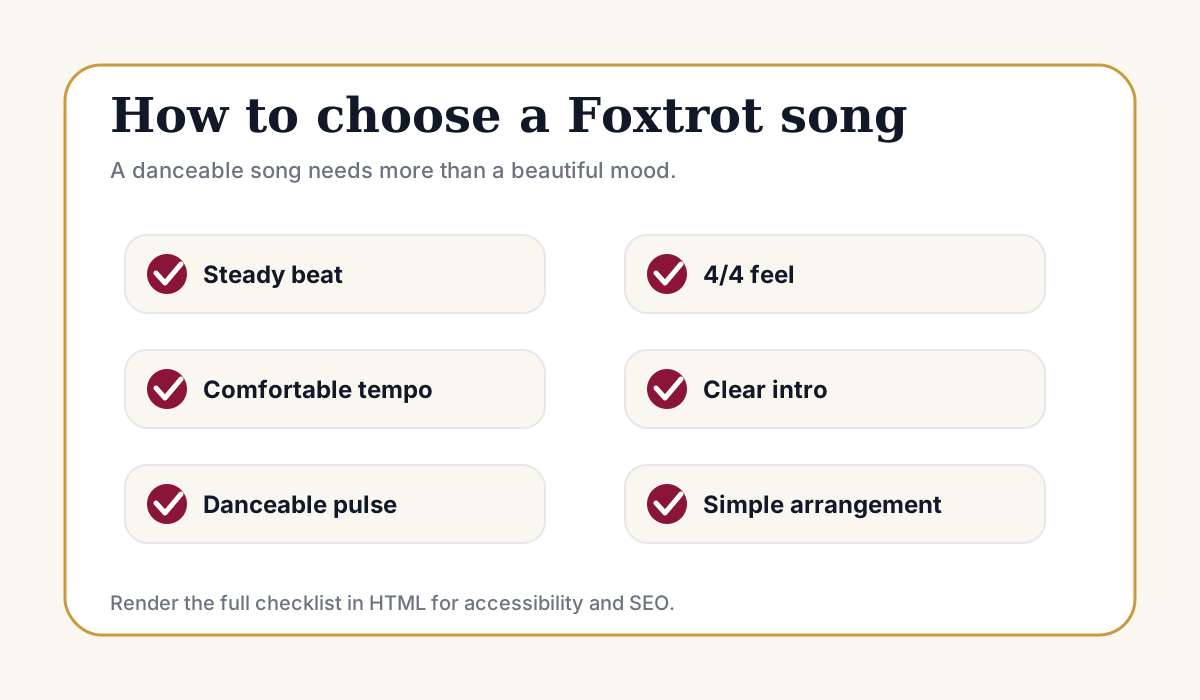
- It feels like 4/4.
- You can tap a steady beat without guessing.
- You can comfortably walk the pulse.
- The tempo is not too fast for your level.
- The song is not so slow that the movement feels stalled.
- The intro gives dancers enough time to start.
- The arrangement does not hide the beat with too much rubato or rhythmic complexity.
- The song fits your goal: lesson practice, social dancing, wedding first dance, showcase, or competition practice.
- Your teacher or choreographer can confirm it works for your intended pattern.
| Goal | Choose | Avoid |
|---|---|---|
| Beginner practice | Clear beat, simple arrangement, moderate energy | Complex jazz intros or very slow ballads |
| Social dancing | Recognizable, steady, comfortable tempo | Songs that change feel halfway through |
| Wedding first dance | Meaningful lyrics plus danceable 4/4 pulse | Beautiful songs with no steady beat |
| Showcase | Strong character and performance arc | Songs that only work after heavy editing |
| Competition practice | Teacher-approved or syllabus/competition-appropriate track | Random playlist picks without tempo checking |
Best Foxtrot songs and examples
Use this section as a curated starting point, not a giant list. Different recordings of the same song can have different tempos, intros, arrangements, and danceability. Before embedding or recommending any track, verify the exact recording.
| Song | Artist | Why it works | Best for | Note |
|---|---|---|---|---|
| Fly Me to the Moon | Frank Sinatra | Classic, recognizable, steady standards feel | Beginner/social/wedding | Verify exact version and intro. |
| The Way You Look Tonight | Frank Sinatra | Wedding-friendly standard with smooth character | Wedding/showcase | Some versions may feel faster than beginners expect. |
| L-O-V-E | Nat King Cole | Clear, upbeat, familiar swing/standard feel | Wedding/social | Test tempo before using for a first dance. |
| Cheek to Cheek | Ella Fitzgerald (or Louis Armstrong & Ella Fitzgerald) | Classic dance standard feel | Social/showcase | Arrangement matters. |
| Beyond the Sea | Bobby Darin (George Benson versions also appear in references) | Recognizable, energetic, smooth swing feel | Social/showcase | May feel quick for some beginners. |
| Unforgettable | Nat King Cole (orchestra versions also appear in references) | Romantic and smooth | Wedding | Check whether the chosen version is too slow. |
| The Best Is Yet to Come | Frank Sinatra | Classic Foxtrot-style standard | Wedding/social | Count before assuming. |
| Come Fly with Me | Frank Sinatra | Iconic, bright, traveling feel | Social/showcase | Can feel fast; beginner caution. |
Tempos and danceability vary by recording, remix, and country; this is a curated example list, not a claim that every version is danceable. Always count and test before relying on a track.
Practice Foxtrot timing with Ballroom Pages playlists
Use the playlists to hear the difference between smooth American Foxtrot practice music, International Slow Foxtrot, and wedding-friendly choices. Start by listening without moving. Count 1-2-3-4. Then try slow/quick words. Only after that should you dance the step.
- Listen first: tap the beat before moving.
- Count second: count 1-2-3-4, then try slow/quick words.
- Move third: walk or mark the rhythm before adding full patterns.
- Review last: ask whether the intro, tempo, or quicks caused problems.
Spotify
Smooth Foxtrot (American)
Smooth Foxtrot 2 (American)
Slow Foxtrot (International)
Slow Foxtrot 2 (International)
Apple Music
Smooth Foxtrot
Smooth Foxtrot (alt)
Slow Foxtrot
Slow Foxtrot 2
YouTube / YouTube Music
Smooth Foxtrot (YouTube)
Pending verified URL
Ballroom Foxtrot (YouTube)
Pending verified URL
More resources
All Ballroom Pages playlists
BallroomPages Music on Telegram
More: Ballroom Music & Timing, the tempo chart, and how to count ballroom dance music.
Foxtrot music for weddings
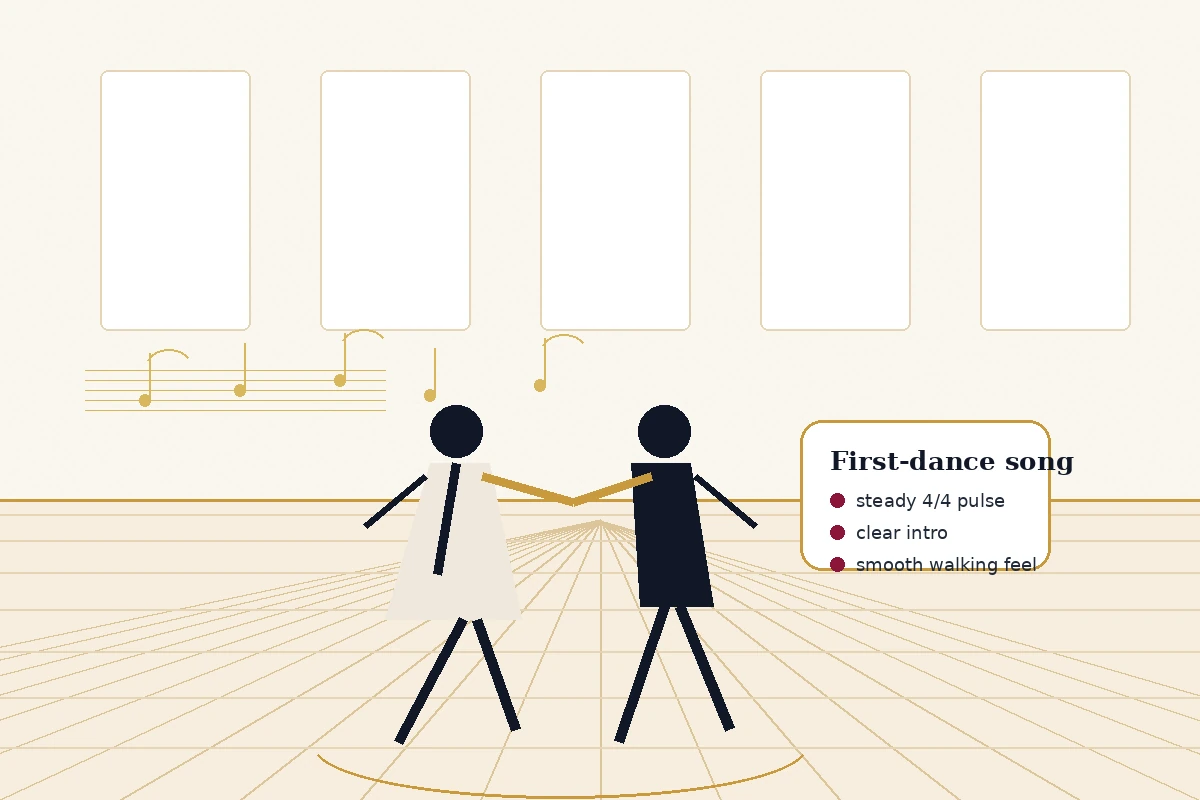
Foxtrot can be a strong wedding first dance choice when the song has a steady 4/4 pulse, a smooth walking feel, and lyrics or mood that fit the couple. It works especially well for classic standards, jazzy songs, vintage-inspired songs, and some smooth pop arrangements. It is less ideal when the song has a free-time intro, unclear beat, dramatic tempo changes, or a pulse that feels more like Waltz, Swing, Rumba, or Nightclub Two Step.
Plan your first dance with the wedding dance guide, the what dance fits your song matcher, first dance songs by dance style, and a first dance practice plan.
Beginner practice drills
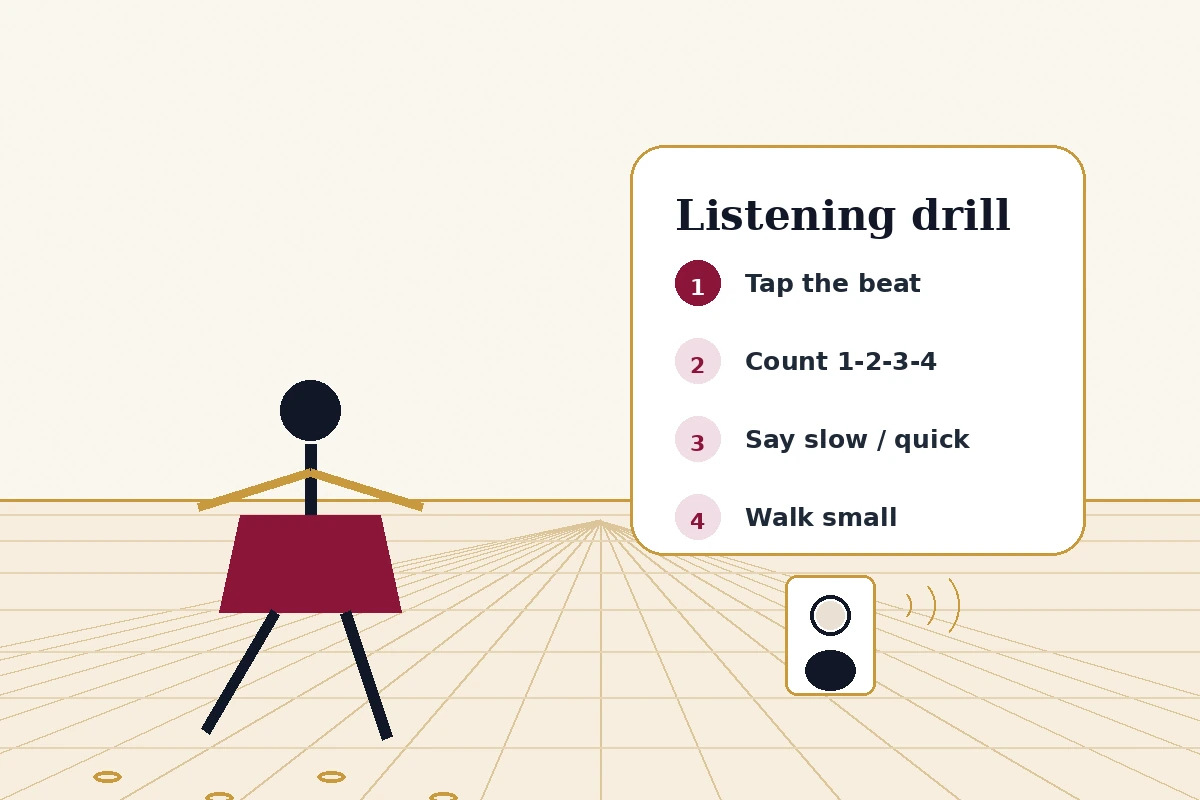
Clap slow/quick
Play a Foxtrot song. Count 1-2-3-4 first. Then clap slow-slow-quick-quick or slow-quick-quick.
Walk the rhythm
Without a partner, walk forward or in place. Keep the steps small. The goal is timing, not styling.
Count the intro
Start the music and count how many beats or measures pass before the singing or main groove begins.
Test three songs
Try the same basic rhythm to three different Foxtrot songs. Notice which one makes timing feel easiest.
Build the underlying skill with how to count ballroom dance music.
Common Foxtrot music mistakes
Choosing music that is too fast
Start with a teacher-approved practice track or a clearly countable playlist song.
Choosing music that is too slow
If the movement stalls, try a steadier track with a clearer walking pulse.
Confusing Foxtrot with Waltz
Waltz has a 3-count feel; Foxtrot is usually 4/4.
Confusing Foxtrot with Quickstep
Quickstep is faster and brighter; Foxtrot should feel smoother for beginners.
Confusing Foxtrot with Swing
Some music overlaps, but the dance feel and step choices differ.
Ignoring the intro
Count the intro so you know when to start.
Practicing only to one song
Try multiple songs so timing becomes flexible.
Using a wedding song with no steady beat
Pick meaning and danceability, not just lyrics.
Trusting a playlist title without testing
Count and walk the rhythm before using it in lessons or performance.