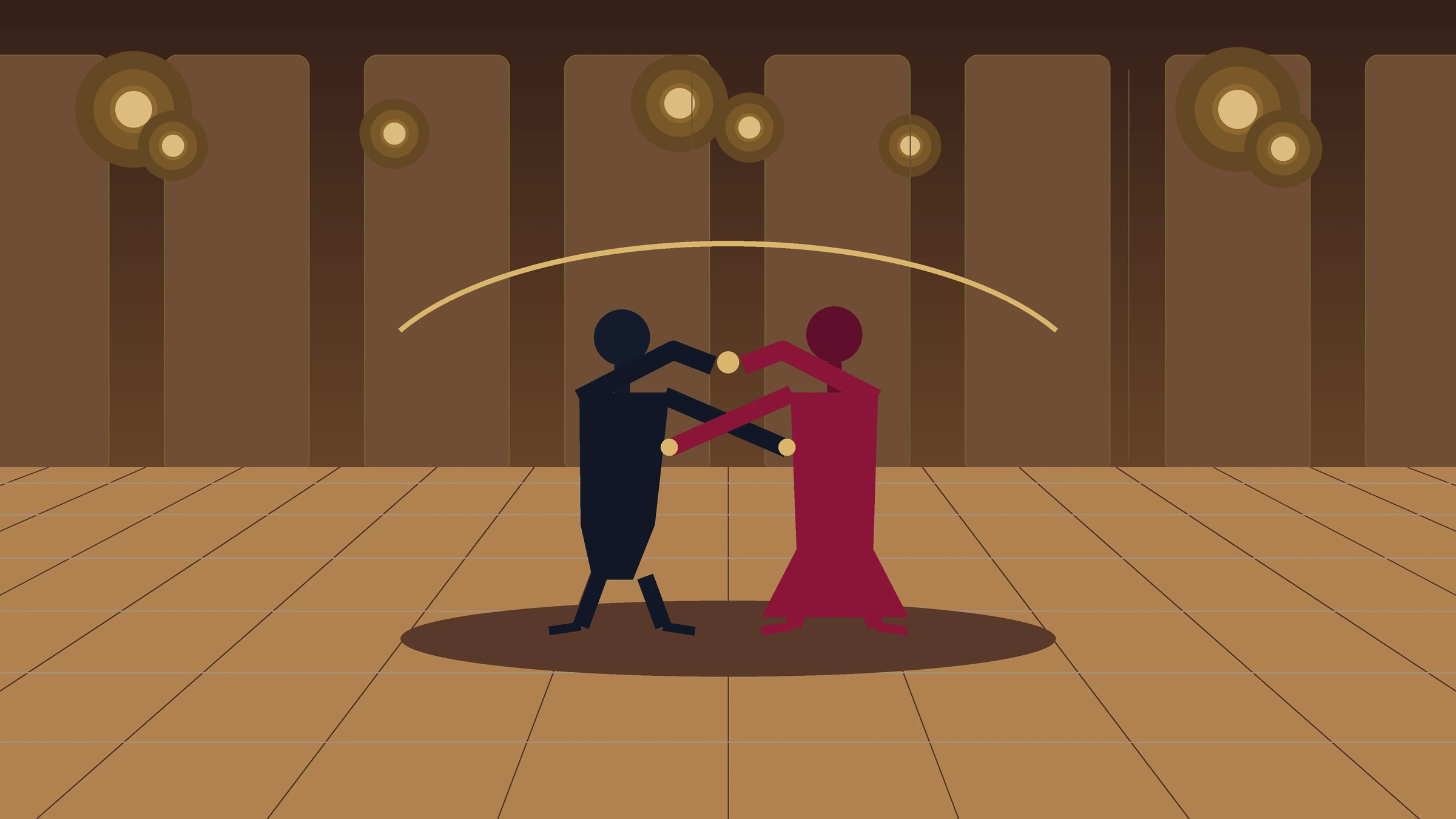
Frame and posture, in plain language
Ballroom teachers talk about frame and posture constantly, but beginners often hear those words as “hold your arms up” or “stand up straighter.” That is only part of the story.
A useful ballroom frame is not rigid arms. Good posture is not a frozen shape. Together, frame and posture help you stand balanced over your feet, move with clarity, give your partner a structure to connect with, and keep your dancing easier to lead, follow, and sustain.
This guide breaks the topic into plain language: what frame means, what posture means, how hold and connection fit in, what common mistakes feel like, and how to practice frame slowly before trying to keep it through a full dance. If you are brand new to ballroom overall, start with Ballroom Dance for Beginners, then come back here for the technique detail.
Editorial note: Frame varies by dance style, teacher, level, body type, and social or competitive context. Use this as a beginner-friendly technique guide, then refine it with your instructor.
What frame and posture mean in ballroom dance
In ballroom dance, posture is the way you organize your body so you can balance, move, and respond clearly. It includes your head, spine, ribs, shoulders, hips, knees, and weight over the feet.
Frame is the structure you create through your arms, shoulders, back, and torso so your partner has a clear place to connect. In a partnered dance, frame is not just “arm position.” It is the shape and tone that help both dancers sense direction, timing, and movement.
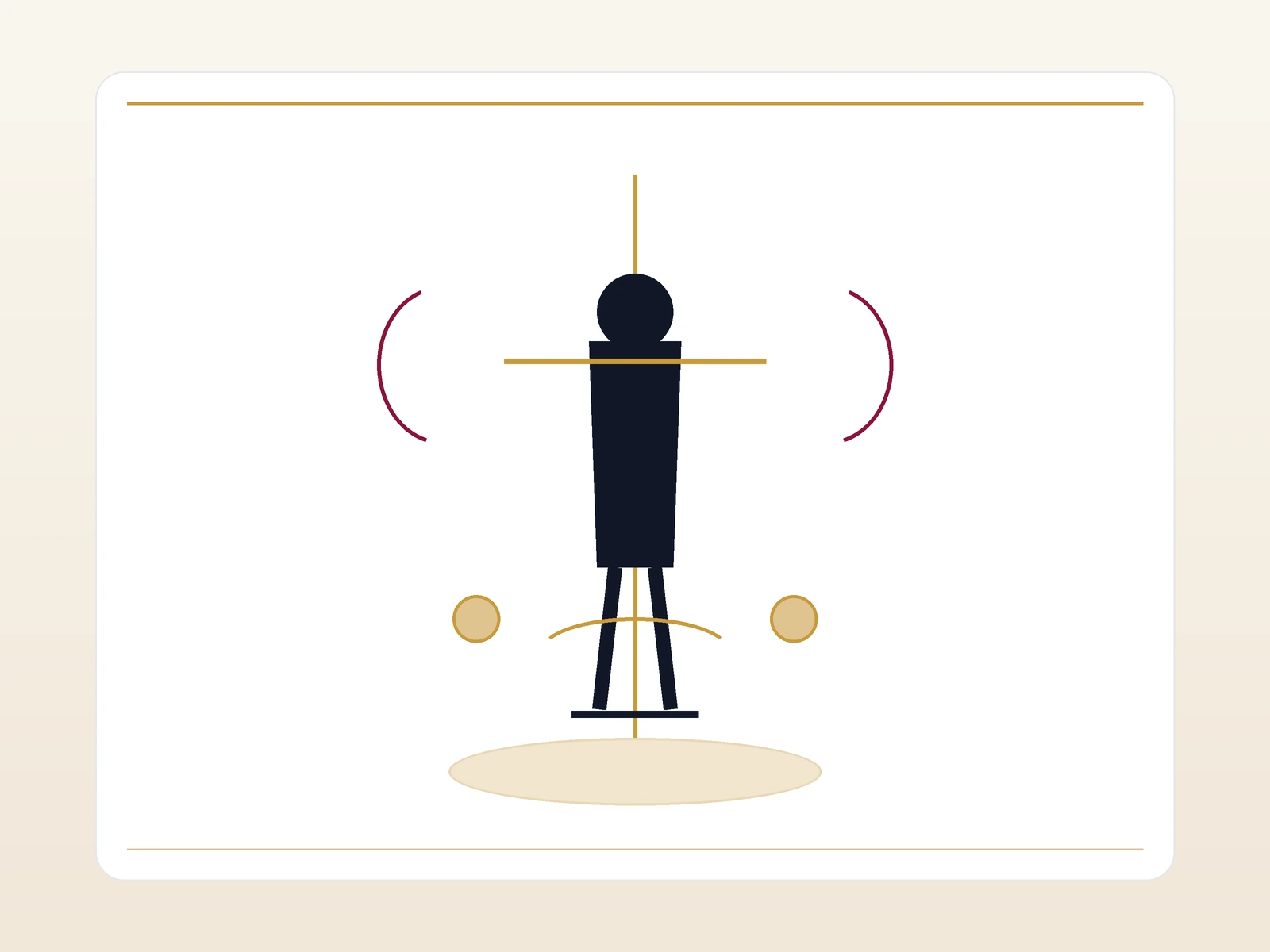
A useful beginner cue: posture supports your own balance. Frame supports your partnership.
Frame vs posture vs hold vs connection
| Term | Plain-English meaning | What it affects | Beginner cue |
|---|---|---|---|
| Posture | How your body is organized for balance and movement. | Balance, movement quality, comfort, clarity. | “Stand lifted, balanced, and able to breathe.” |
| Frame | The toned structure through your upper body and arms. | Partner communication, shape, direction, stability. | “Organized, not rigid.” |
| Hold | The specific position of the hands, arms, and body with a partner. | Closed hold, open hold, promenade, social handholds. | “A shape used for a dance.” |
| Connection | The communication between partners through frame, body, timing, and intention. | Lead/follow, response, shared movement. | “Clear contact without pushing or hanging.” |
Frame and posture are related, but they are not the same. You can stand tall and still have a collapsed frame. You can lift your arms and still have poor posture. You can also create a large-looking frame that feels tense and hard to follow.
The goal is not the biggest shape. The goal is a clear, balanced, usable shape.
Frame and posture build the structure, but what actually travels between partners is connection—the shared communication through frame, contact, timing, and awareness.
Why frame matters
Frame matters because ballroom is partnered movement. Your partner does not read your mind; they read your timing, body direction, tone, and shared structure.
Frame helps with:
- Balance — you are less likely to lean on your partner.
- Direction — turns, side steps, and changes of direction become easier to understand.
- Timing — both dancers can feel when movement starts and finishes.
- Style — Waltz, Tango, Foxtrot, Rumba, and Cha Cha all use different qualities of frame.
- Confidence — beginners feel less lost when they know where their arms and body belong.
Frame is not force. A leader should not use the frame to push a follower around, and a follower should not hang on the leader’s arms. Both partners are responsible for their own balance.
What good ballroom posture should feel like
Good ballroom posture should feel lifted, balanced, and moveable. Try these cues:
- Let your weight settle over the balls and centers of the feet, not back into the heels.
- Keep your spine comfortably lifted without arching or bracing.
- Let your shoulders release away from your ears.
- Keep the chest open without forcing the ribs forward.
- Allow the knees to stay available, not locked.
- Keep the head balanced rather than pushed forward or pulled back.
- Breathe normally.
A useful test: you should be able to take a small step forward, backward, or sideways without first “unlocking” your body.
Posture is not a beauty standard. It is a movement tool. Different bodies will look different, and different teachers may use different cues. The practical question is: can you balance, breathe, move, and connect clearly?
What good ballroom frame should feel like
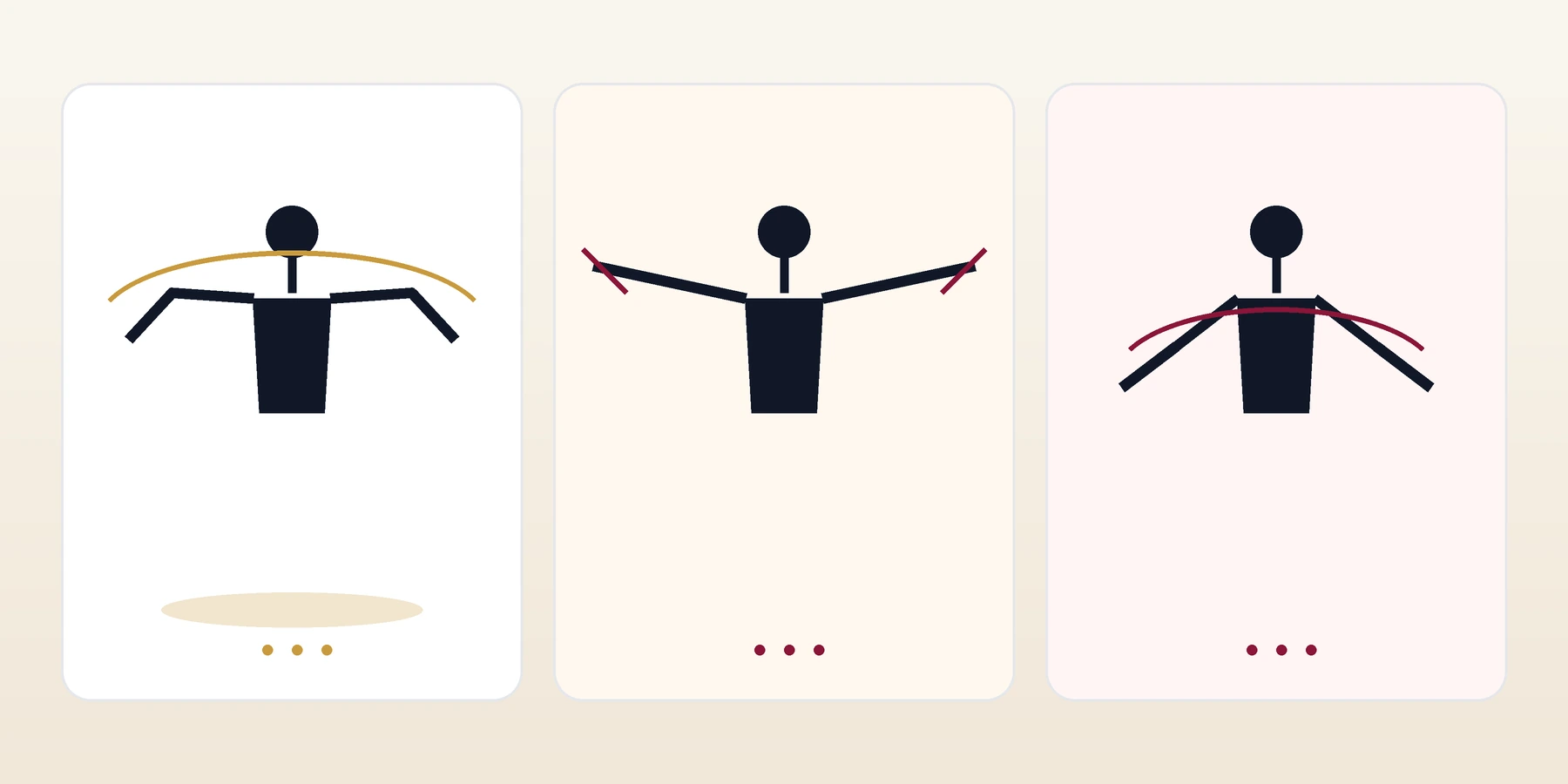
Good frame should feel toned but responsive.
It should not feel like
- locked elbows,
- raised shoulders,
- squeezed hands,
- stiff wrists,
- a frozen chest,
- arms held up by neck tension,
- or weight hanging on your partner.
It should feel like
- your arms are supported by your back and torso,
- your elbows have shape without being locked,
- your shoulders are down and wide,
- your hands are clear but not gripping,
- your partner can feel direction without force,
- and the frame can move with you instead of fighting you.
Beginner cue: keep the shape, soften the grip, and move from your body—not from your hands.
Leader and follower responsibilities
Leader responsibilities
- keep their own balance,
- offer a clear frame without pushing,
- initiate movement from the body and timing, not just the arms,
- keep hands calm and readable,
- avoid pulling the follower through turns,
- and adjust to the dance style and partner.
Follower responsibilities
- keep their own balance,
- maintain responsive tone,
- avoid collapsing into the leader’s arm or hand,
- avoid guessing before the lead is clear,
- keep the frame alive through turns and direction changes,
- and respond through the body, not only the hand.
Shared responsibilities
- breathe,
- avoid gripping,
- reset when the hold feels uncomfortable,
- ask questions respectfully,
- and use instructor feedback to refine style-specific details.
For the deeper communication side—how this structure becomes timing and response—read Lead and Follow in Ballroom Dance.
Closed hold basics
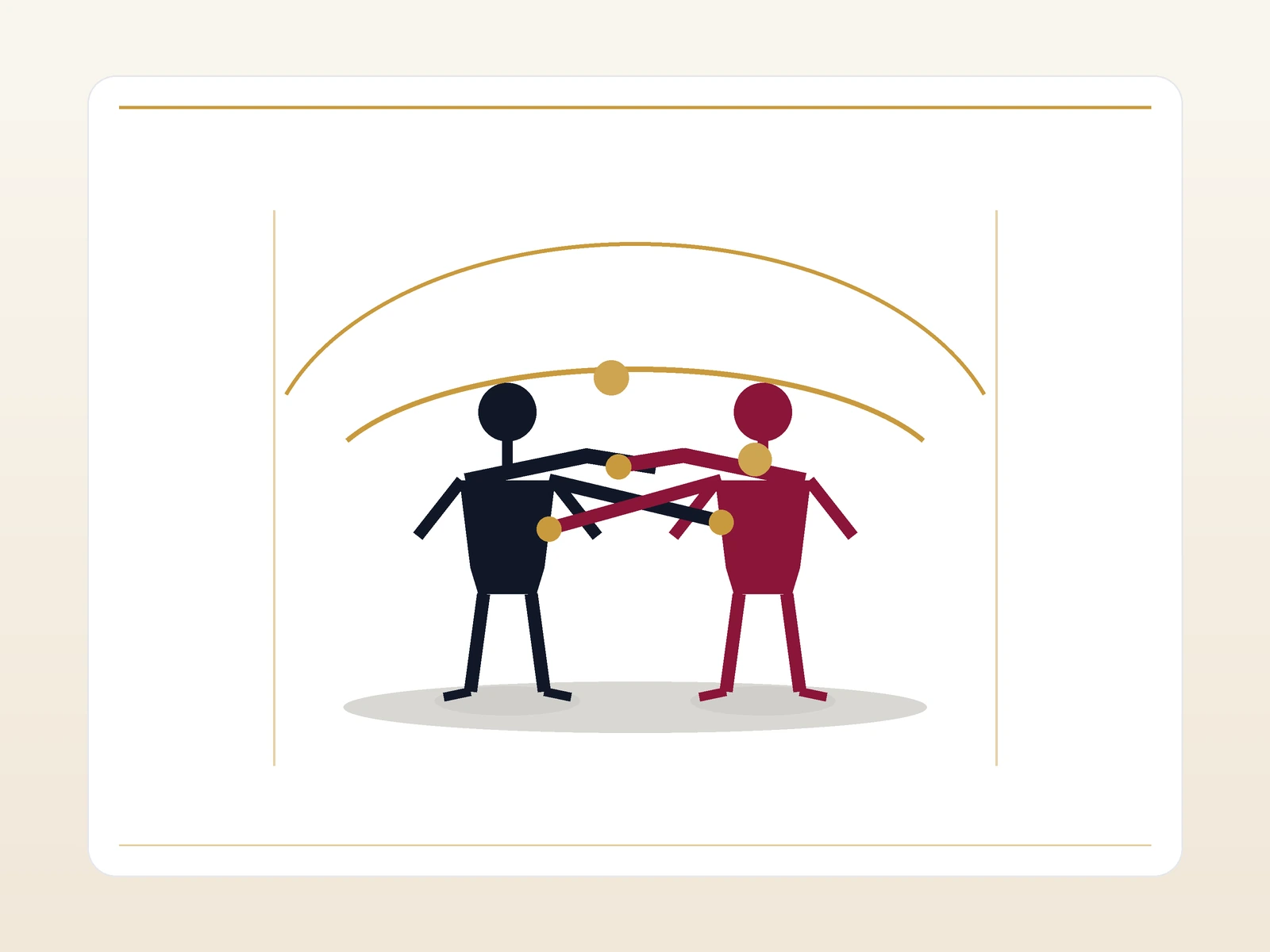
Closed hold is the classic ballroom partner position used in dances such as Waltz, Foxtrot, and many Tango contexts. Exact details vary by style and teacher, but a beginner version usually includes:
- Partners face one another with a small offset rather than standing toe-to-toe.
- The leader offers the left hand to the follower’s right hand.
- The leader’s right hand connects around the follower’s back or shoulder-blade area, depending on style and instruction.
- The follower’s left arm rests lightly around the leader’s upper arm or shoulder area, depending on the hold being taught.
- Both partners keep their own balance.
- Elbows create shape without locking.
- Hands connect without squeezing.
Open hold and social-dance frame basics
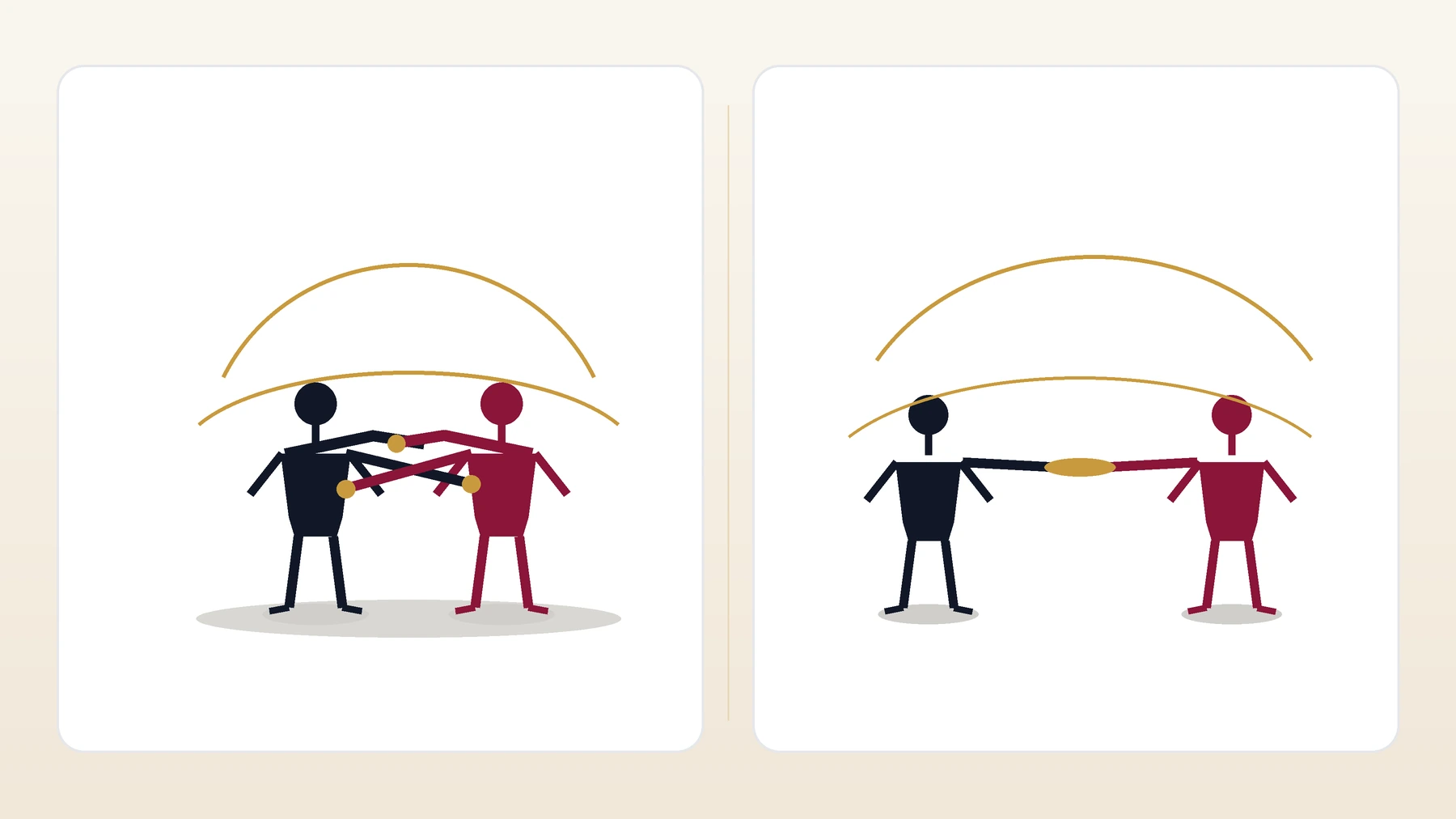
Not every ballroom or partner dance uses a large closed frame. In open hold, partners are separated and connected by one or both hands. Social dances may use smaller, more relaxed frames, especially in crowded rooms or beginner settings.
Open hold still needs frame. The difference is that the frame may be more compact and elastic. In open hold:
- Keep your elbows softly shaped.
- Avoid letting the arms become limp.
- Avoid pulling from the hands.
- Keep your body available to move.
- Let the connection change with the dance.
A Cha Cha or Rumba open hold will not feel like a Waltz closed hold. A social Salsa or Swing frame may feel more compact and casual. The shared principle is still the same: organized, responsive, balanced.
Standard/Smooth vs Latin/Rhythm posture and frame differences
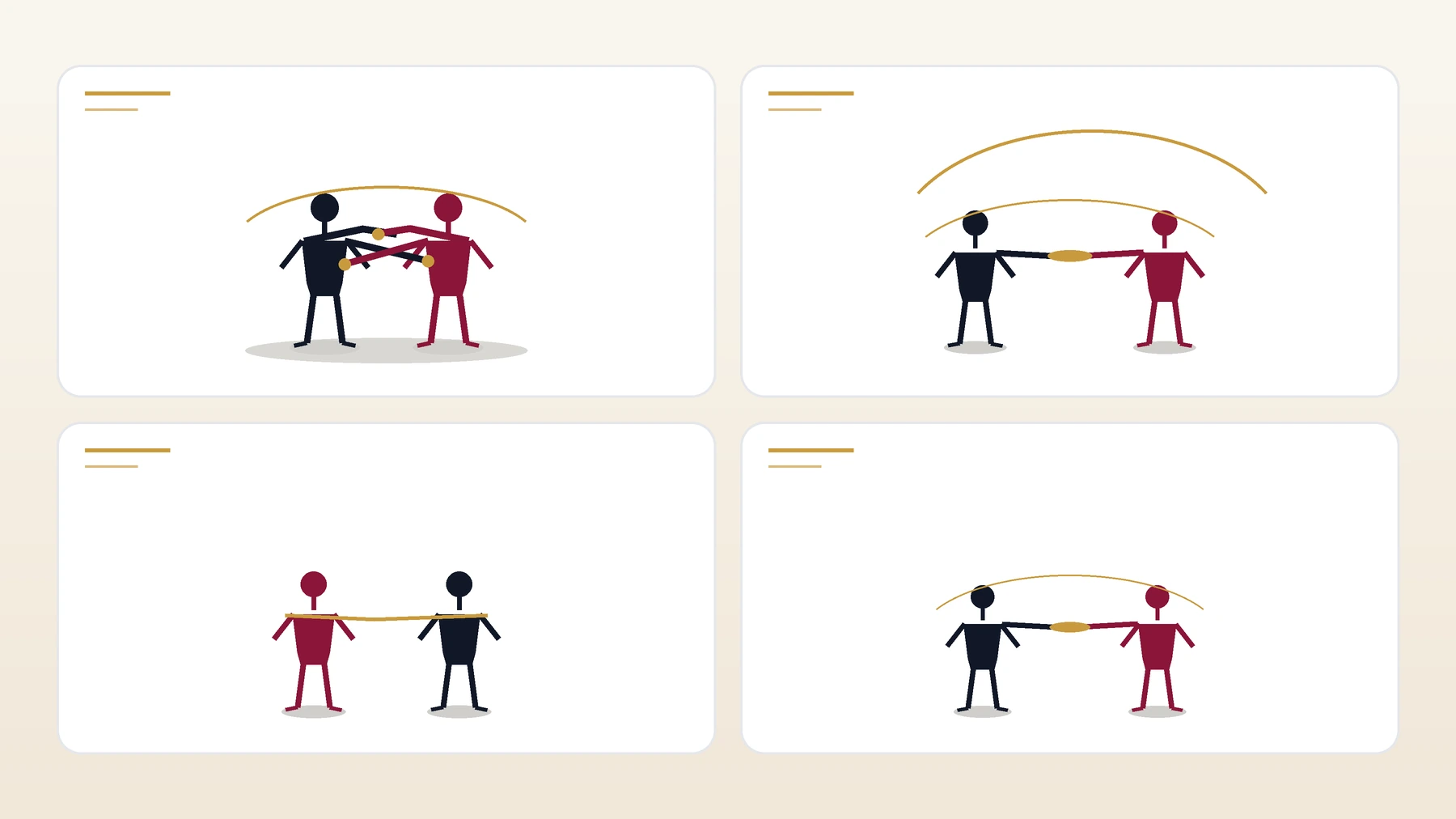
| Style family | Frame and posture tendency | Beginner note |
|---|---|---|
| International Standard | More continuous closed hold; polished frame and topline; hold maintained throughout the dance. | Focus on stable posture, clear closed hold, and moving from the body. |
| American Smooth | Uses closed hold but also open positions, separations, and more freedom through the arms. | Frame must be able to open and reconnect. |
| American Rhythm | More compact, rhythmical, and mobile; often uses open or changing handholds. | Keep tone without making the arms rigid. |
| International Latin | More individual body action and open shapes; connection often changes through hands, arms, and body timing. | Posture supports rhythm and body action, not a large ballroom frame. |
| Social dances | Usually practical, comfortable, and adaptable to the room. | Use a frame that is clear but not oversized. |
| Tango | Often more compact and grounded, with a different character from Waltz or Foxtrot. | Ask your instructor for style-specific hold details. |
Common frame mistakes and fixes
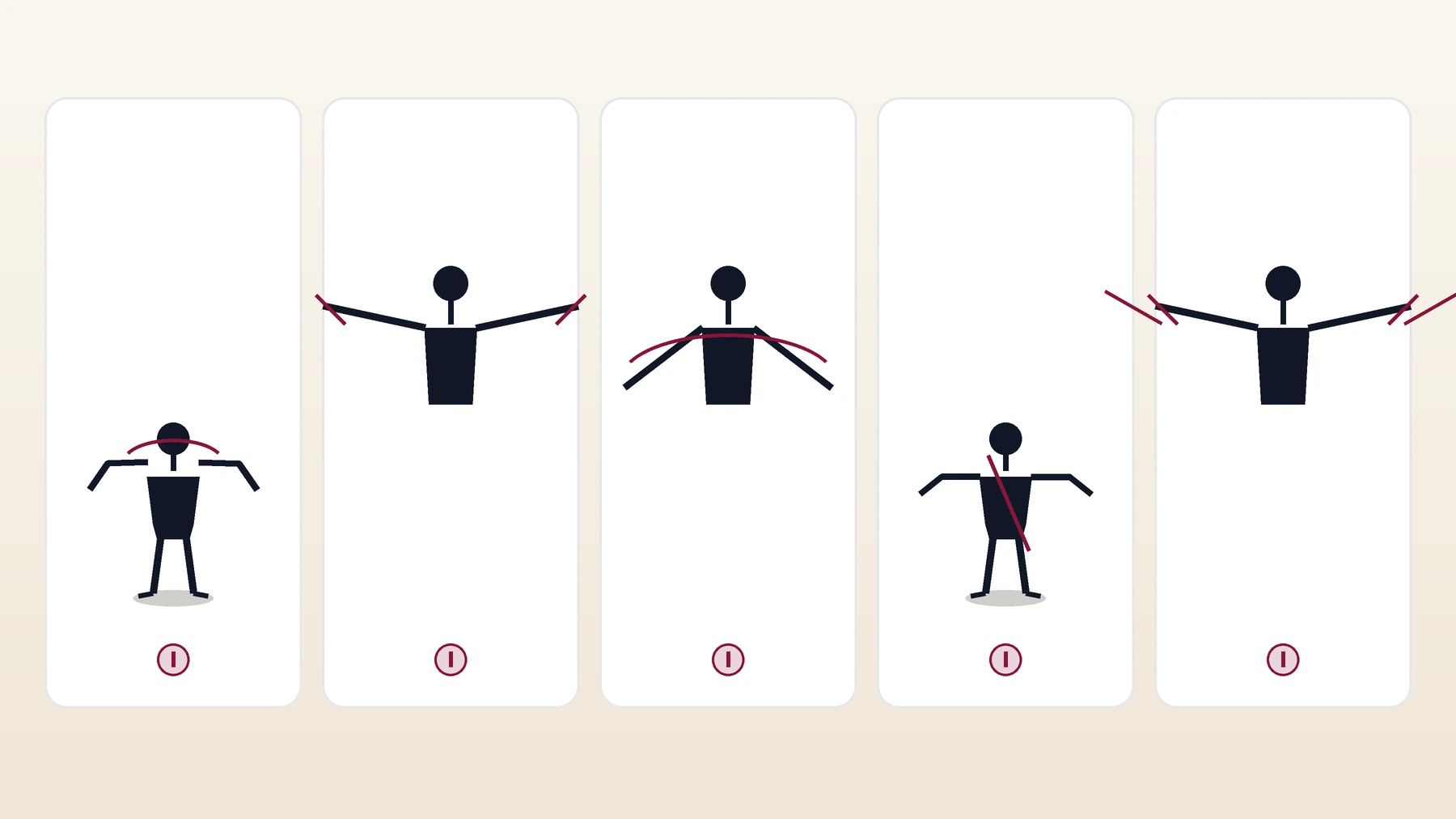
| Mistake | What it feels like | Try this instead |
|---|---|---|
| Stiff arms | Your partner feels blocked or pushed. | Keep tone in the frame but allow the elbows and shoulders to breathe. |
| Collapsed elbows | Your hands drop, and your partner cannot feel clear direction. | Imagine the elbows gently supported from underneath. |
| Raised shoulders | Neck and shoulders feel tense quickly. | Exhale and let the shoulders widen away from the ears. |
| Locked elbows | The frame becomes brittle and hard to adjust. | Keep a soft bend and a rounded shape. |
| Gripping hands | Connection becomes uncomfortable or controlling. | Hold with clarity, not pressure. |
| Hanging on partner | Balance depends on the other person. | Find your own standing balance before reconnecting. |
| Moving only the arms | Lead/follow feels disconnected from the body. | Let movement begin from body direction and timing. |
| Overlarge beginner frame | The shape looks dramatic but feels hard to manage. | Use a smaller, clearer frame first. |
Common posture mistakes and fixes
| Mistake | What it feels like | Try this instead |
|---|---|---|
| “Military” stiffness | You look upright but cannot move easily. | Choose lifted and moveable, not braced. |
| Collapsed chest | The frame drops and the partner connection feels heavy. | Let the sternum feel gently lifted without forcing the ribs forward. |
| Forward head | The upper body feels pulled off balance. | Balance the head over the spine as comfortably as you can. |
| Leaning back | The partner may feel dragged or disconnected. | Bring weight over your own feet. |
| Locked knees | Movement feels stuck. | Keep knees available and responsive. |
| Overarched back | The body feels forced or strained. | Stack ribs and pelvis comfortably without exaggeration. |
| Holding breath | Frame becomes tense quickly. | Breathe through the shape. |
| Looking down constantly | Balance and partner awareness suffer. | Use eyes softly forward when possible. |
Beginner frame and posture drills
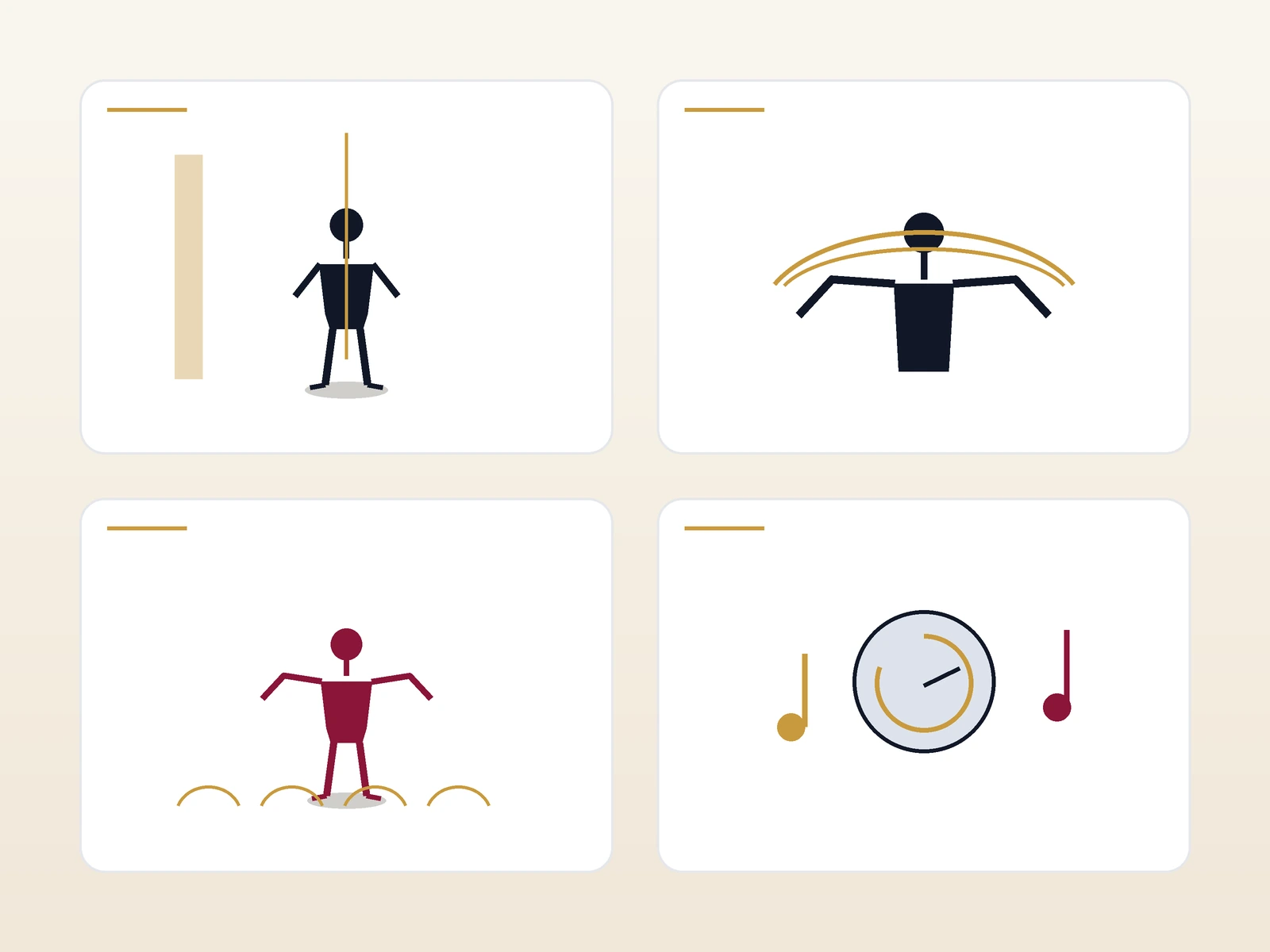
Wall posture reset
Goal: Find a lifted, balanced starting point.
- Stand near a wall with feet under you.
- Let the back of your head, upper back, or hips be near the wall only if comfortable.
- Notice whether your ribs are thrust forward or your shoulders are raised.
- Step away from the wall and keep the lifted feeling without forcing it.
- Take three slow steps forward and three slow steps back.
Do not force your body flat against the wall. This is a gentle awareness drill, not a medical posture correction.
Frame tone check
Goal: Feel the difference between tone and tension.
- Raise your arms into a beginner practice frame.
- Lock your elbows and shoulders for one second so you know what too much tension feels like.
- Let the arms collapse so you know what too little tone feels like.
- Find the middle: elbows shaped, shoulders relaxed, hands calm.
- Hold for 10 seconds while breathing normally.
The useful frame is usually between rigid and limp.
Walking with frame
Goal: Keep the frame while moving.
- Set your practice frame.
- Take four slow steps forward.
- Take four slow steps backward.
- Keep the shoulders relaxed and the elbows shaped.
- Stop and reset if your hands drift, elbows collapse, or shoulders rise.
Start smaller than you think. A tiny walk with a clear frame is better than a large walk with tension.
Doorway or mirror check
Goal: Notice symmetry without obsessing over appearance.
- Stand in front of a mirror or reflective surface.
- Set your frame.
- Check whether one shoulder is much higher than the other.
- Check whether your elbows have shape.
- Look away from the mirror and feel the shape without watching yourself.
Use the mirror briefly. The goal is to dance by feel, not stare at your body.
30 / 60 / 90-second frame endurance
Goal: Build awareness over time.
- Set a timer for 30 seconds.
- Hold a relaxed practice frame while breathing.
- Add slow weight changes side to side.
- Repeat for 60 seconds.
- Later, try 90 seconds with music.
Stop before the frame turns into tension. Resetting is part of practice.
Partner practice drills
Quiet closed hold
- Take closed hold.
- Both partners check their own balance.
- Stand for 10 seconds without dancing.
- Notice whether either person is pushing, gripping, leaning, or hanging.
- Release and reset.
Small weight changes
- Take a comfortable closed or open hold.
- Shift weight slowly from foot to foot.
- Keep the frame quiet.
- The leader should not push with the arms.
- The follower should not guess or collapse into the hands.
Start and stop
- Take a simple practice hold.
- Leader initiates a tiny start.
- Both partners stop together.
- Reset the frame after each stop.
- Switch roles if helpful.
This is a frame clarity drill, not a choreography drill.
Practice frame with music
Once you can hold a frame quietly, practice it with slow, clear music. Do not begin with full choreography. Begin with posture, weight changes, walking, and simple timing.
Use Ballroom Pages playlists as a practice support:
- Waltz: practice lifted posture and slow frame endurance.
- Foxtrot: practice walking while keeping the frame calm.
- Tango: practice compact tone without raising shoulders.
- Rumba: practice posture without forcing a large closed frame.
- Cha Cha: practice responsive open-hold tone.
Practice routine with music: (1) play one slow track; (2) stand in posture for 30 seconds; (3) set frame for 30 seconds; (4) shift weight side to side for 30 seconds; (5) walk slowly for 30 seconds; (6) reset before dancing full steps.
Your goal is not to survive a whole song with a frozen shape. Your goal is to notice when frame changes, then reset calmly.
Practice your frame with Ballroom Pages playlists
Direct streaming links are being verified before launch, so these cards link to the verified internal playlist pages for now. No placeholder embeds are shown.
Waltz
Lifted posture and slow frame endurance.
Tango
Compact tone without raising shoulders.
Foxtrot
Walking while keeping the frame calm.
Link under audit before launch
Rumba
Posture without forcing a large closed frame.
Cha Cha
Responsive open-hold tone.
All playlists
Browse every Ballroom Pages playlist and the YouTube hub.
Playlist note: external streaming embeds will be added once Ballroom Pages confirms final, owned playlist URLs. Until then, the cards link to verified internal playlist pages and the new Music & Timing hub. Build timing alongside frame with How to Count Ballroom Dance Music.
How to know if your frame is too stiff or too collapsed
Too stiff
- Your partner feels blocked.
- Your shoulders rise.
- Your elbows lock.
- Your hands squeeze.
- You cannot breathe comfortably.
- Small movements feel difficult.
Reset: Exhale, soften the elbows, release the hands, and rebuild the shape from the torso outward.
Too collapsed
- Your elbows drop.
- Your partner cannot feel direction.
- Your hands pull downward.
- You lean on the other person.
- Turns feel unclear.
- You lose the shape after the first step.
Reset: Find your own balance, gently widen the collarbone area, support the elbows, and keep the hands quiet.
When to ask your instructor
Ask your instructor when:
- your frame feels uncomfortable no matter how gently you practice,
- you are not sure where your arms or hands belong,
- your partner says the connection feels heavy, stiff, or unclear,
- your shoulders rise every time you dance,
- your frame works in one dance but fails in another,
- you are learning Tango, Standard, Smooth, Latin, or Rhythm style details,
- or you want feedback on whether your hold matches your level and dance context.
Safety: If you feel sharp pain, numbness, dizziness, or persistent discomfort, stop practicing that shape. Ask a qualified instructor for dance-specific feedback, and consult a healthcare professional if symptoms continue or feel medical.