First dance planning overview
The wedding first dance is one of those moments couples remember in detail. The good news: a beautiful first dance can be very simple. You do not need a competition routine to look graceful and feel comfortable on the floor. (New to ballroom dance entirely? Start with the topic page for the big picture.)
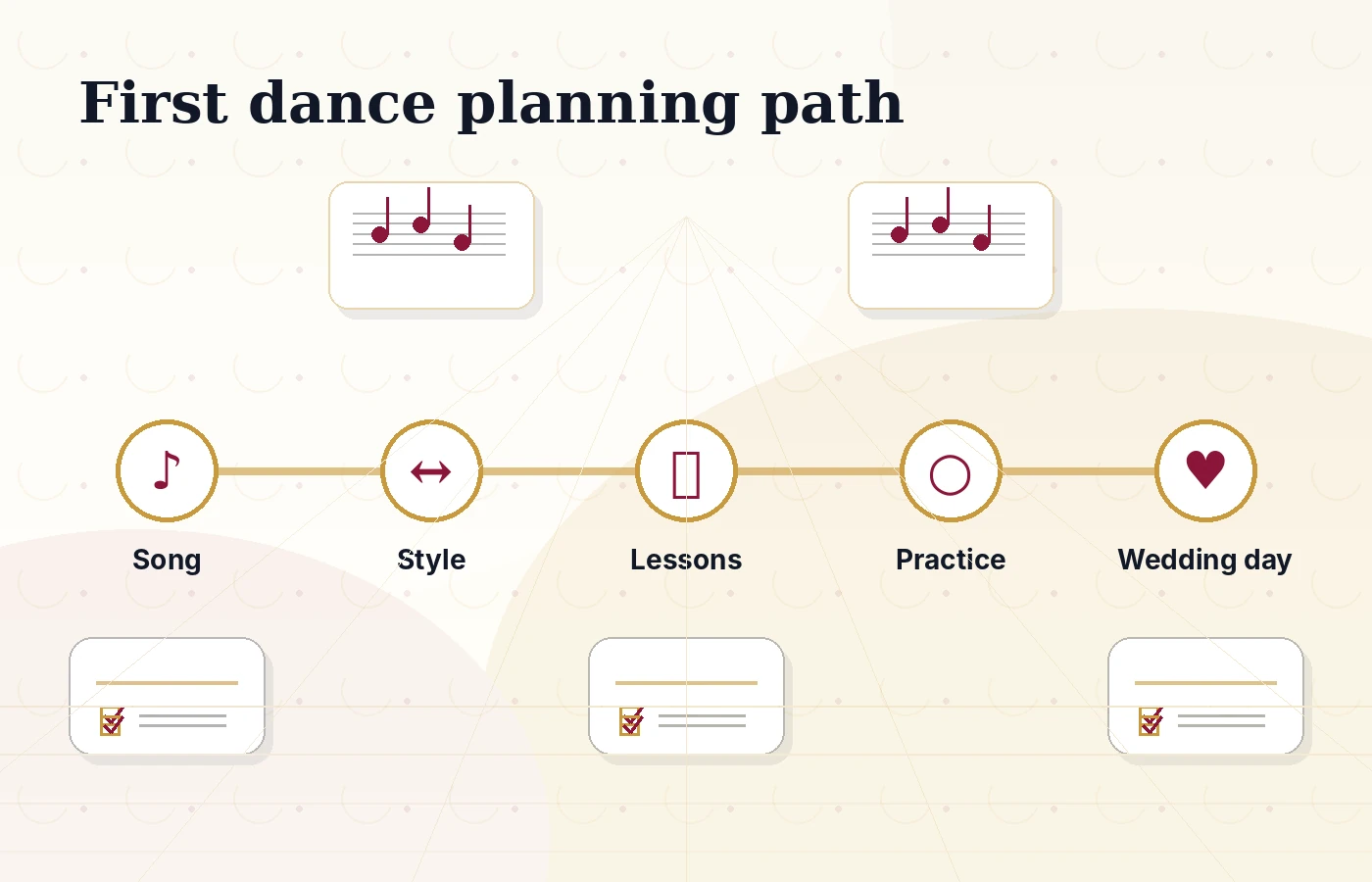
A useful first-dance plan answers six questions in order: What is the song? What feeling do we want? What dance style fits? How many lessons can we take? How much can we practice? How will the dance start and end?
Choose song first or dance first?

Most couples should start with the song. The meaning of the song matters more than the perfect dance fit, and almost every song can be matched to some appropriate dance style or simple structure.
A small group of couples should start with the dance — usually because they already love a specific style (a couple that loves Latin music might pick a Bachata-friendly song; classical music fans might pick a Waltz-friendly song).
Start with the song if…
- The song already has emotional meaning to you both.
- You are not married to a specific dance style.
- You want the dance to feel personal first, polished second.
Start with the dance if…
- You already love a specific style (e.g., Tango, Salsa).
- You want a competition-style routine.
- You are taking lessons primarily to learn ballroom long-term.
How to match your song to a dance style
Pick the dance by listening for three things: meter (is the song in 3/4 or 4/4?), tempo (how fast?), and feel (smooth, romantic, upbeat, rhythmic, dramatic?).
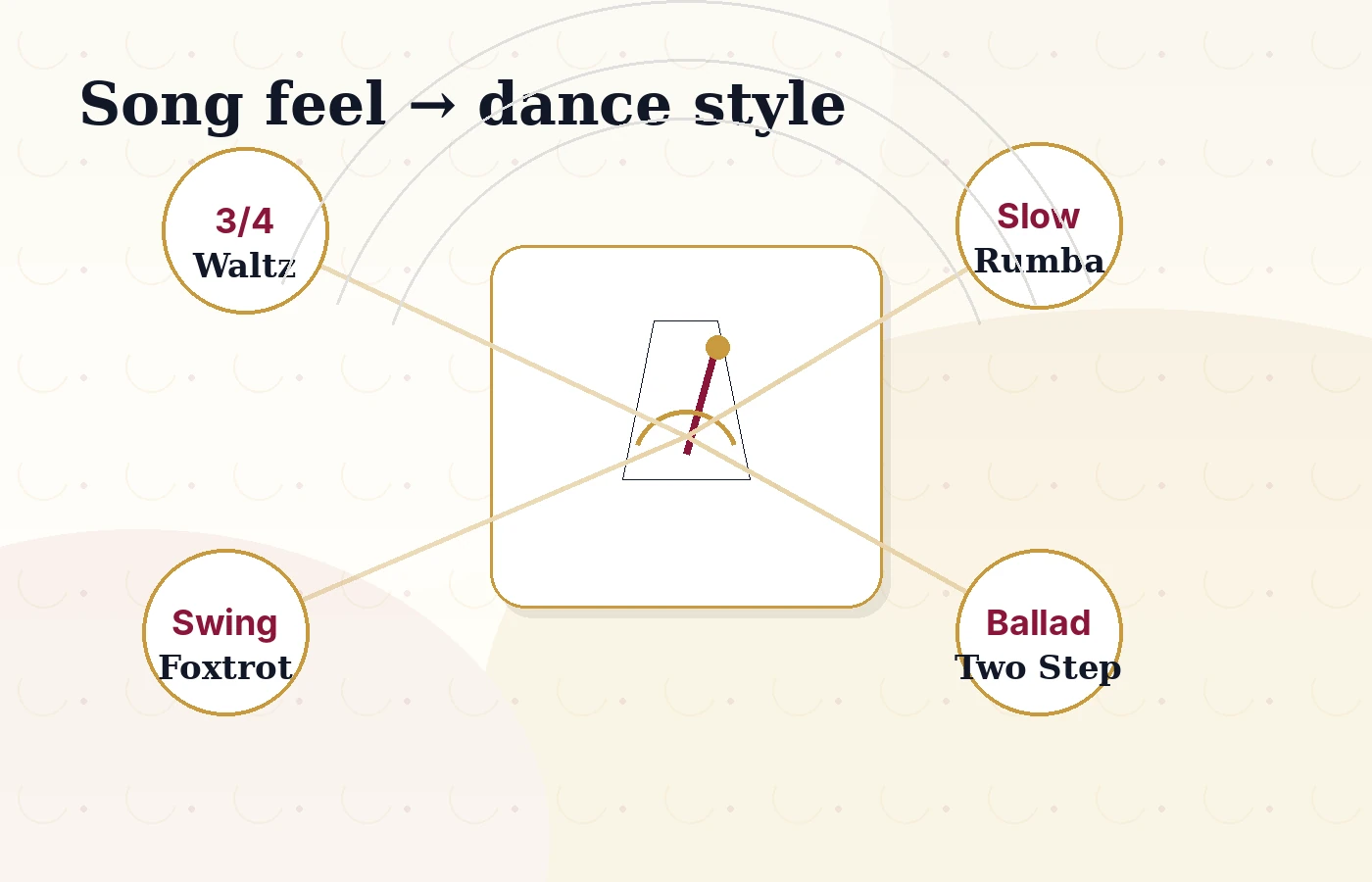
- 3/4 meter, flowing: Waltz.
- Slow 4/4, romantic, steady: Rumba, Bolero, or Nightclub Two Step.
- Smooth 4/4, classic, jazzy: Foxtrot.
- Upbeat, swung 4/4: East Coast Swing.
- Latin pop, syncopated: Cha Cha, Salsa, or Bachata.
- Disco / 70s-90s pop with strong beat: Hustle.
- Contemporary pop, smooth slot-style: West Coast Swing.
For a deeper walkthrough, our song-to-dance matcher goes by examples, and the tempo chart shows BPM ranges by style.
Best ballroom dances for wedding songs

Waltz
Elegant 3/4 with rise and fall. Perfect for classical or flowing songs.
Rumba
Slow, romantic, grounded. The most flexible style for slower love songs.
Foxtrot
Smooth, jazzy, classic. Works with standards, easy-listening, and many pop ballads.
Nightclub Two Step
Designed for slow contemporary love songs. Friendly and approachable.
East Coast Swing
Upbeat and joyful. Pairs with rock-and-roll, swing-era classics, and fun pop.
Salsa
Latin energy for couples who already love Latin music. Best with a few lessons.
Bachata
Simple, musical, romantic. A friendly Latin choice for many modern love songs.
Song and dance style decision table
Use this as a quick reference. If your song fits multiple rows, pick the dance whose feel matches your goal best.
| Song character | Likely meter | Tempo feel | Best dance style |
|---|---|---|---|
| Slow, romantic, classical | 3/4 | Flowing | Waltz |
| Slow, romantic, modern pop | 4/4 | Slow, steady | Nightclub Two Step or Rumba |
| Smooth jazz, standards | 4/4 | Medium swing feel | Foxtrot |
| Slow Latin ballad | 4/4 | Slow with hip motion | Rumba or Bachata |
| Upbeat rock-and-roll or 50s swing | 4/4 | Bouncy, swung | East Coast Swing |
| Disco / 70s–90s pop with strong beat | 4/4 | Driving | Hustle |
| Latin pop, syncopated | 4/4 | Rhythmic, quick | Salsa or Cha Cha |
| Contemporary pop, mellow groove | 4/4 | Smooth, slotted | West Coast Swing |
How many wedding dance lessons do you need?

Three numbers cover most couples:
- 1–3 lessons: A simple, calm first dance with a clear entrance, a basic step, one turn, and a coordinated ending.
- 4–6 lessons: A semi-structured dance with two or three variations and a small choreographed moment.
- 8+ lessons: A polished, fully choreographed routine. Plan extra weeks for practice between lessons.
The right number depends on your goal, song complexity, and how often you can practice between lessons. More lessons help only if you also practice between them — a single weekly lesson without practice repeats early lessons rather than building on them.
First dance practice timeline
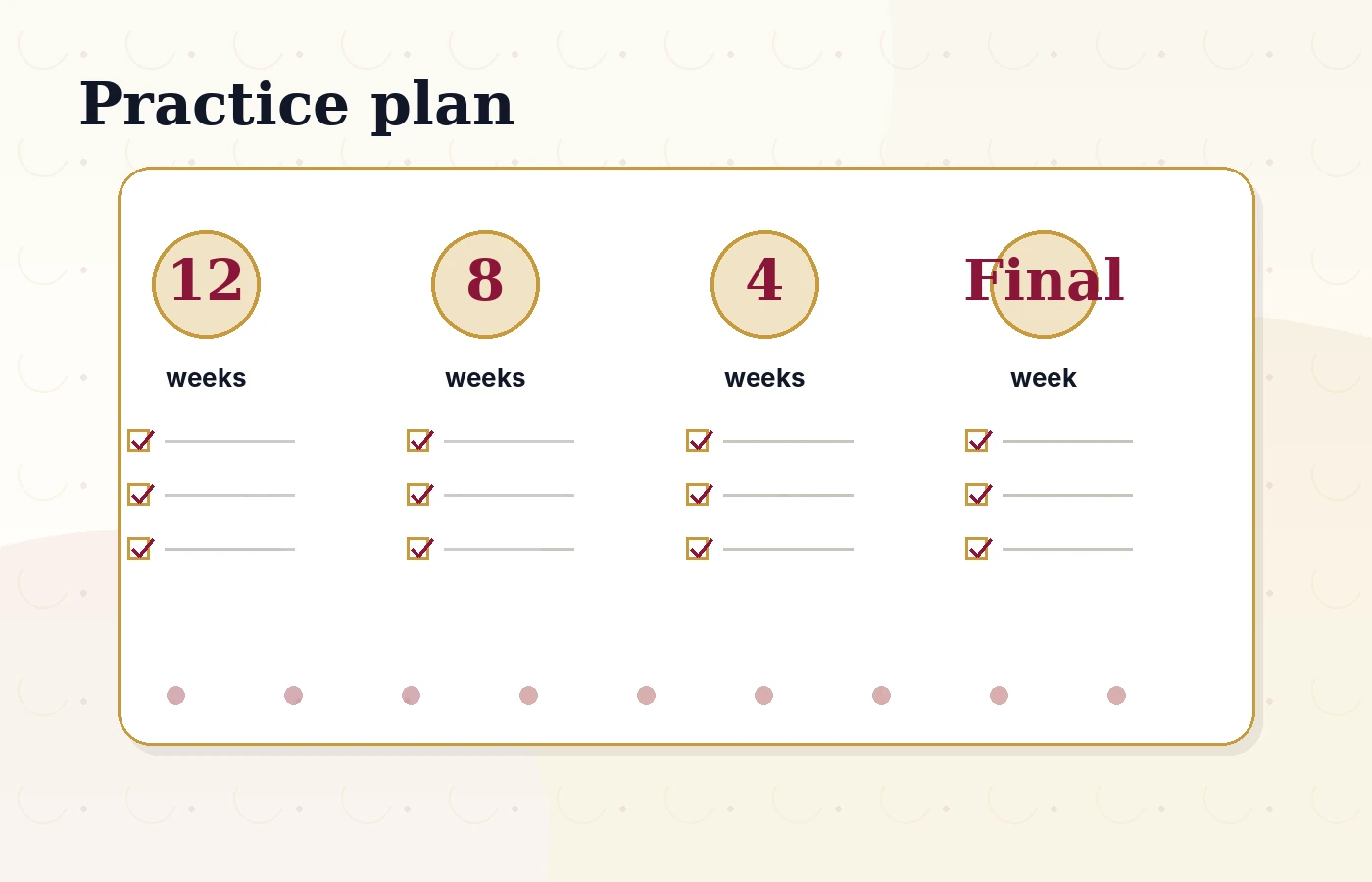
Most couples plan around the time they have left before the wedding. A simple cadence works at any timeline.
-
12 weeks out
Pick the song. Book your first lesson. Start short 5–10 minute practices to feel the beat.
-
8 weeks out
Confirm the dance style. Practice posture, frame, and the basic step. Decide whether the song needs an edit.
-
4 weeks out
Lock in the structure: entrance, two or three patterns, and an ending. Practice in shoes close to the wedding pair.
-
2 weeks out
Practice the full dance with the actual song two to three times per week. Coordinate fade or ending with the DJ.
-
Final week
Short, light rehearsals only. Confirm logistics. See the final-week tips below.
For a more detailed plan, see our first dance practice plan.
Simple first dance structure
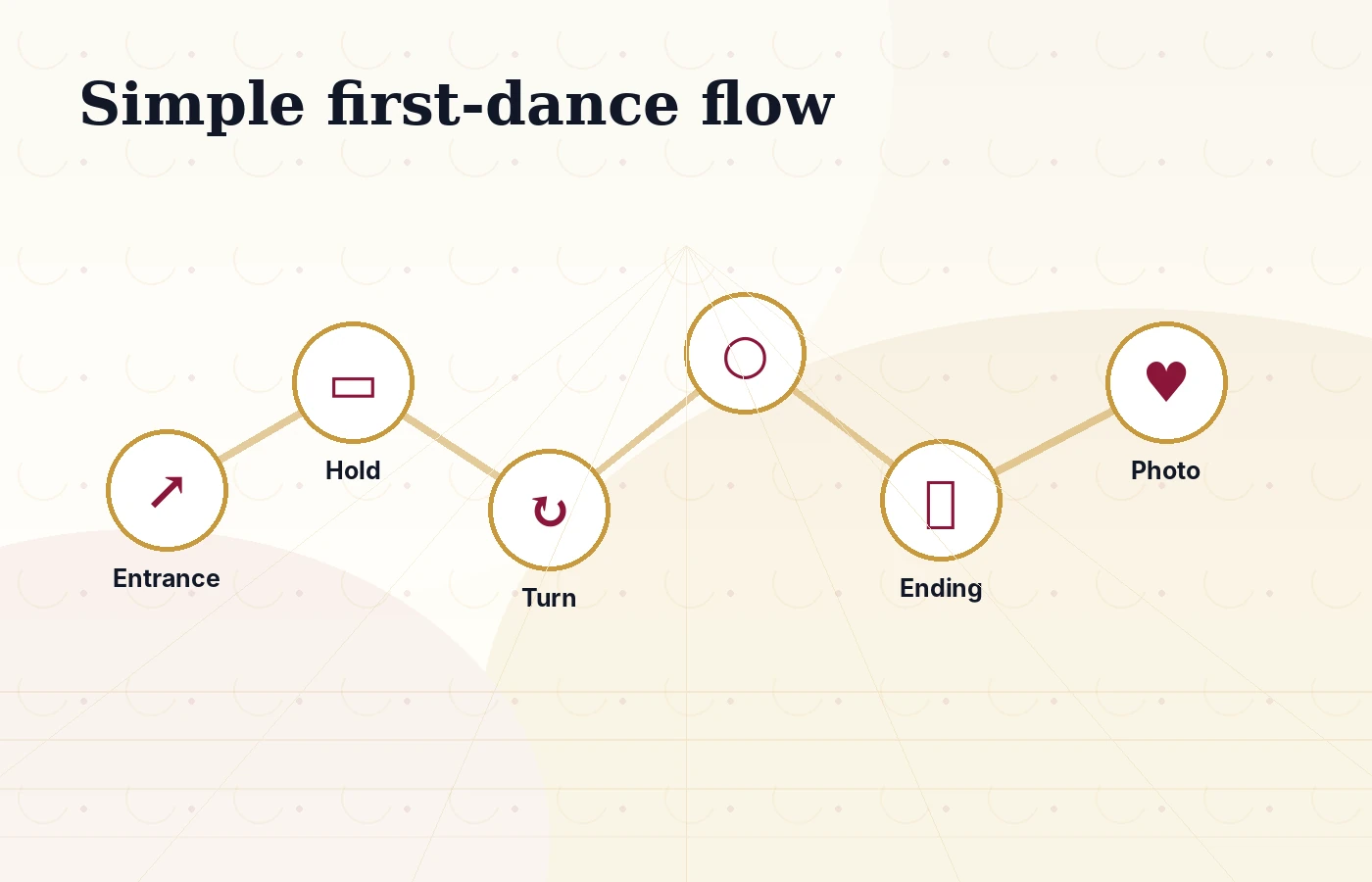
Almost every meaningful first dance fits into the same four-part frame. You do not need more.
-
Entrance
How you walk on and take the position. Practice this until it is automatic.
-
Basic step
Repeat the basic two to four times. Look at each other. Breathe.
-
Turn or moment
One simple turn, dip-less lean, or expressive pause. One is enough.
-
Ending
Decide how the dance ends in advance — a held position, a gentle kiss, or a step apart on a fade.
Wedding dance choreography: simple vs polished
Two different first dances. Both can be beautiful. Choose based on time, comfort, and what you actually want guests to remember.
Simple
Calm, personal, semi-structured
- 1–3 lessons total.
- Basic step + one moment + a planned ending.
- Edit the song to 2–3 minutes if needed.
- Low rehearsal load. Low stress.
Best if you want the moment to feel personal first.
Polished
Choreographed routine
- 8+ lessons, plus practice between.
- Several patterns, transitions, and a planned finish.
- Often the full song or a longer edit.
- More rehearsal. More satisfaction when it lands.
Best if you love dance and have time to learn.
Shoes, dress, and floor considerations
The things you wear and dance on can change how a first dance feels. Plan these as carefully as the steps.
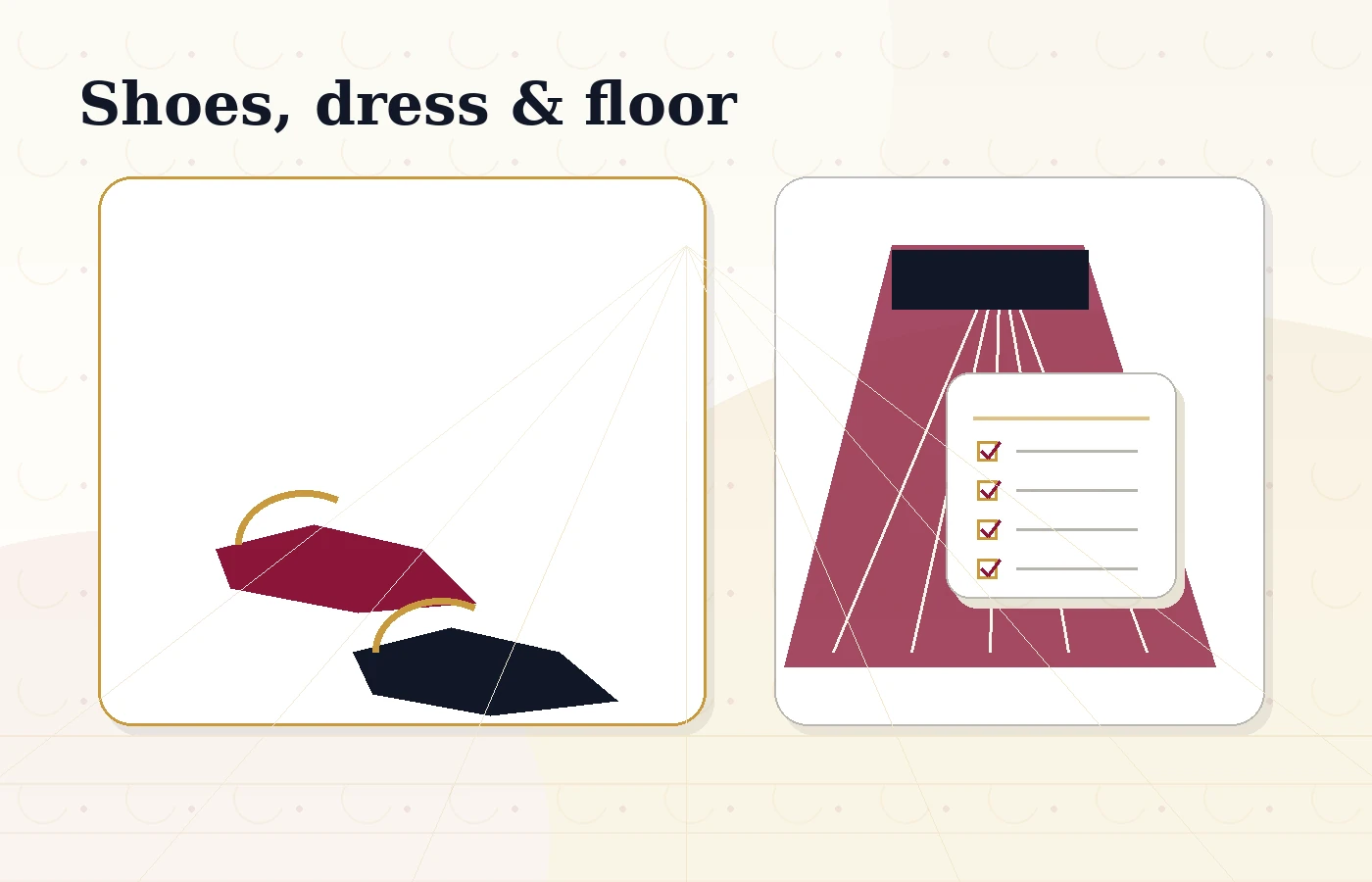
Shoes
- Practice in the actual wedding shoes a few times before the day.
- Avoid soles that grip the floor too aggressively or slip too easily.
- If the wedding shoes are uncomfortable for dancing, change shoes for the first dance.
Dress, skirt, and train
- Long skirts and trains move differently than practice clothes.
- Rehearse one or two sessions in something close to the wedding silhouette.
- Plan how you will hold or bustle the train during the dance.
Suit / outfit
- Make sure the jacket allows full arm motion for the frame.
- Test pocket items and ensure they will not shift or fall during turns.
Floor
- Ask the venue about floor type and size.
- Plan the dance to use the available space, not more.
- Coordinate with the photographer and DJ on lighting and angle.
See our wedding dance shoes guide and the beginner shoe guide for more on what to look for.
How to practice without making it stressful
The most useful first-dance practice habits are short and consistent, not long and rare.
- Keep sessions to 10–15 minutes most days.
- Practice with the actual song so the music becomes familiar.
- End each session on a successful repetition, not a frustrated one.
- Designate one partner as the lead and one as the follow for the dance. Switch outside the dance if you want.
- Do not learn new steps in the final week.
Common wedding dance mistakes
Picking a dance style before listening to the song.
Match the dance to the meter, tempo, and feel of the actual song.
Trying to dance the full 4–5 minute song.
Edit or fade the song. Two to three minutes is usually plenty.
Booking many lessons without practicing between them.
Three lessons plus practice beats six lessons without it.
Practicing only in athletic shoes.
Rehearse in shoes close to your wedding pair.
Looking down at the feet during the dance.
Look at each other. The dance is a moment between you.
Attempting a dip without practice.
A simple lean or hold is almost always more elegant — and far safer.
Not coordinating the ending with the DJ.
Decide the ending move and signal so the music supports it.
What to do if your song is hard to dance to
Some songs feel meaningful but resist a steady beat. They drift in tempo, have long instrumental sections, or feel ambiguous between dance styles. You have good options.
- Edit the song. Trim the intro, shorten the bridge, or fade earlier. A DJ or any audio editor can do this.
- Use a simple slow-dance frame. A held close position with gentle sway works for ambiguous songs.
- Layer one choreographed moment. Time a turn or pose to the chorus, then return to the simple frame.
- Choose a second song. Open with the meaningful song for 60–90 seconds, then transition into a danceable second song.
Do you need a choreographed first dance?
No. Many of the most-loved first dances are not choreographed. They use a simple structure, a comfortable hold, and an ending the couple has practiced.
Choreography is useful when you want a polished routine and have the time to learn it. If you do not, a simple structure can look just as elegant. The audience watches your faces and connection more than your feet.
First dance lesson checklist
Bring this short list to your first lesson. It saves time and helps your instructor plan with you.
- The chosen song (a copy you can play in the studio).
- The wedding date and number of weeks remaining.
- Your goal: simple, semi-structured, or polished.
- Practice shoes close to your wedding pair.
- Knowledge of any dress or suit constraints (skirt length, jacket fit).
- Photo or note of the floor size if known.
- Any prior dance experience either partner has.
Wedding dance emergency tips for the final week
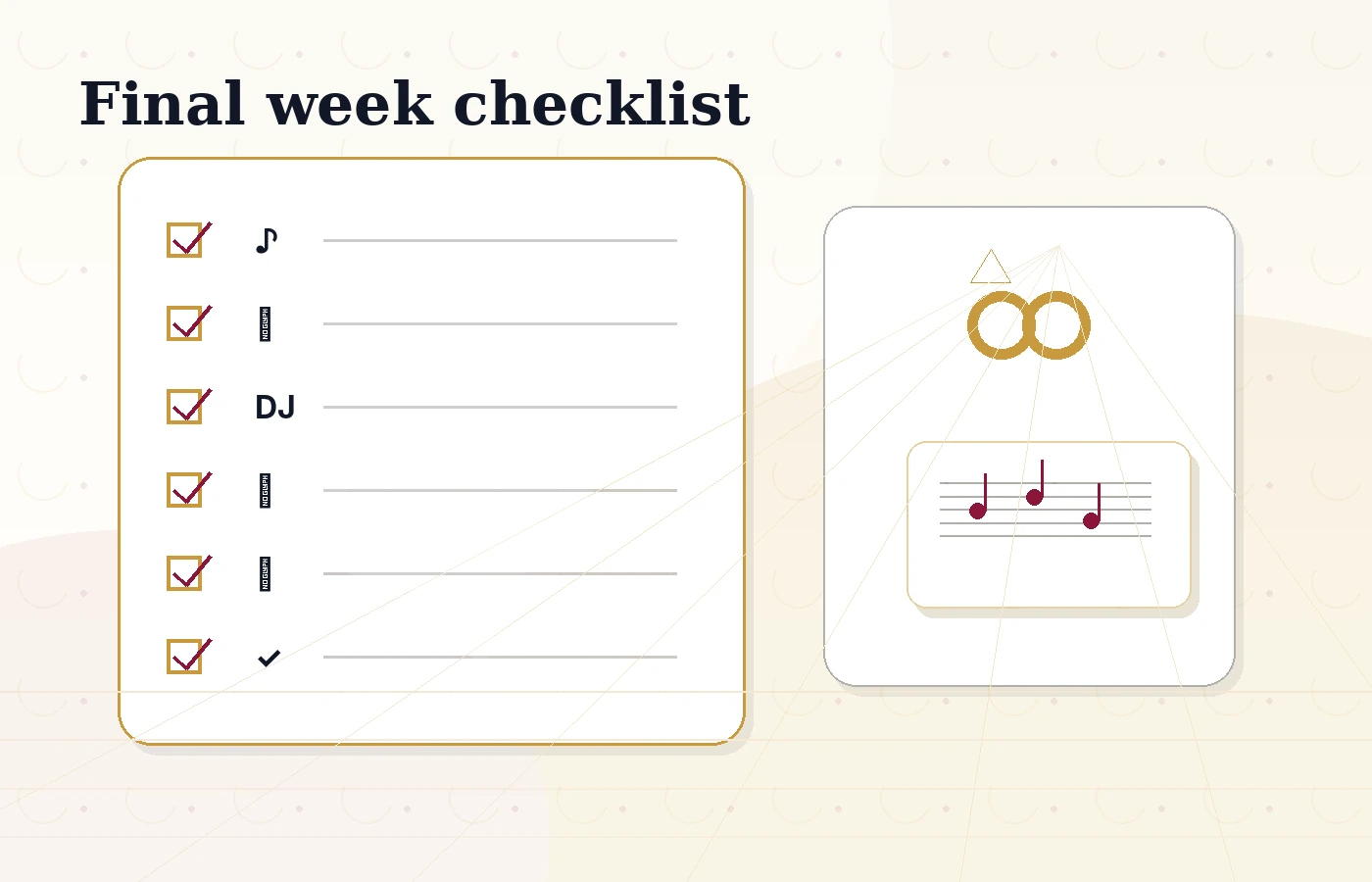
- Run the dance with the actual song two or three times only — no new steps.
- Confirm the song version, edit, and fade with the DJ in writing.
- Confirm the entrance cue (who introduces you and from where).
- Practice once in the wedding shoes.
- Decide on the ending move and a non-verbal cue for it.
- Confirm photographer and videographer positions so you can face them.
- Hydrate, sleep, and trust the practice you have already done.