
Do beginners need ballroom dance shoes?
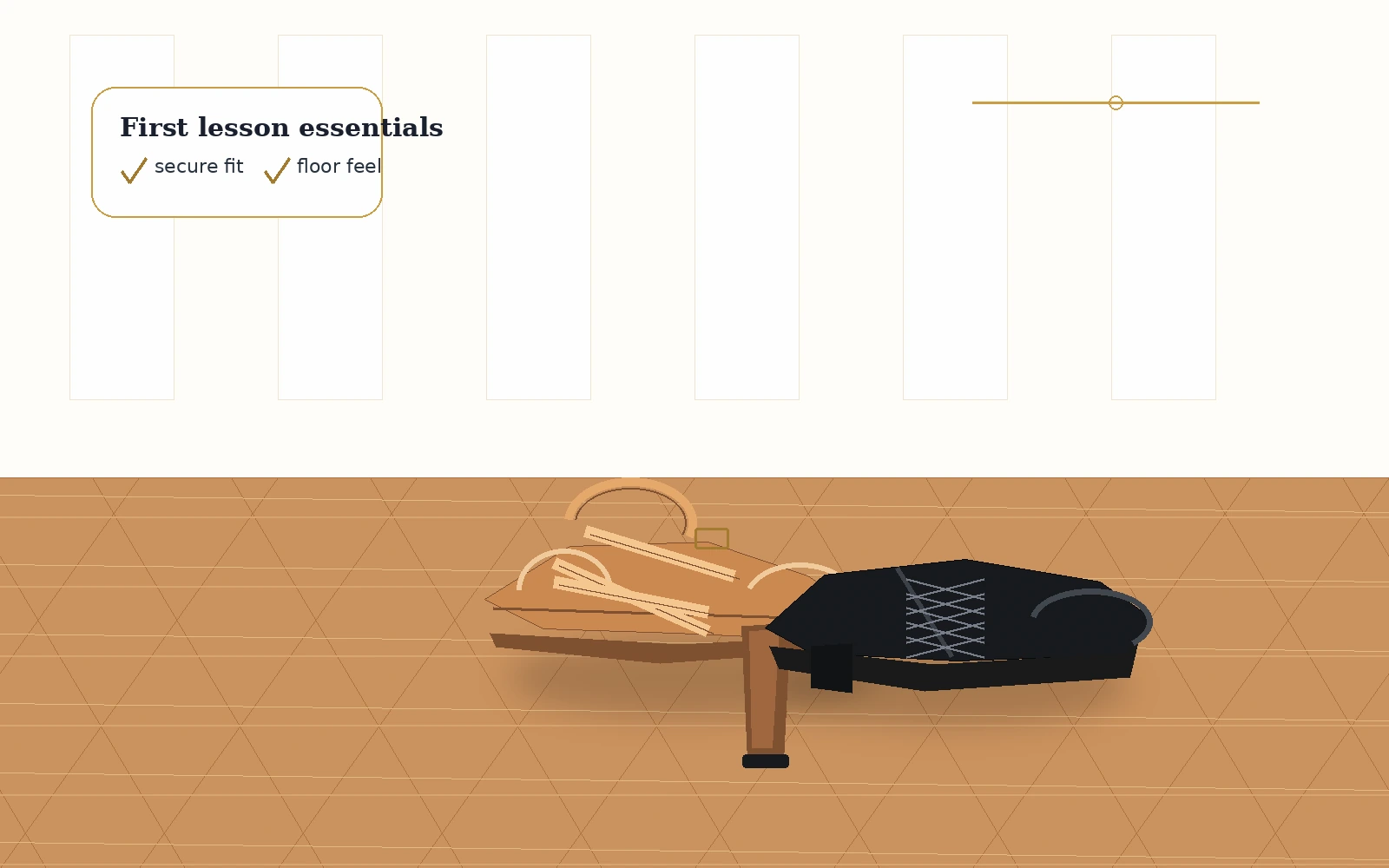
Not always. If you are going to one introductory lesson, a beginner social class, or a trial private lesson, you can usually start with safe street shoes. The key word is safe.
For a first lesson, your shoes should stay securely on your feet, allow you to shift weight comfortably, and avoid extreme slipperiness or extreme stickiness. Many beginners arrive in sneakers with heavy rubber soles, loose sandals, or high fashion heels that look nice but make turning, balance, or foot placement harder than necessary.
Ballroom shoes become worth buying when you are practicing regularly, learning turns, preparing choreography, or taking wedding dance lessons where your shoes need to feel predictable. They also help when your instructor starts asking you to work on foot articulation, weight changes, rise and fall, Cuban motion, or smoother turns.
For private lessons, ask your instructor before buying. They may recommend a flexible practice shoe, a Smooth/Standard shoe, or a Latin/Rhythm shoe depending on what you are learning.
For group classes, start with secure, comfortable shoes and upgrade once you know which dances you enjoy.
For wedding lessons, do not wait until the wedding week. If you plan to wear special shoes at the reception, practice in them before the event.
The goal is not to overbuy early. The goal is to avoid shoes that fight your movement.
Not sure what to buy yet?
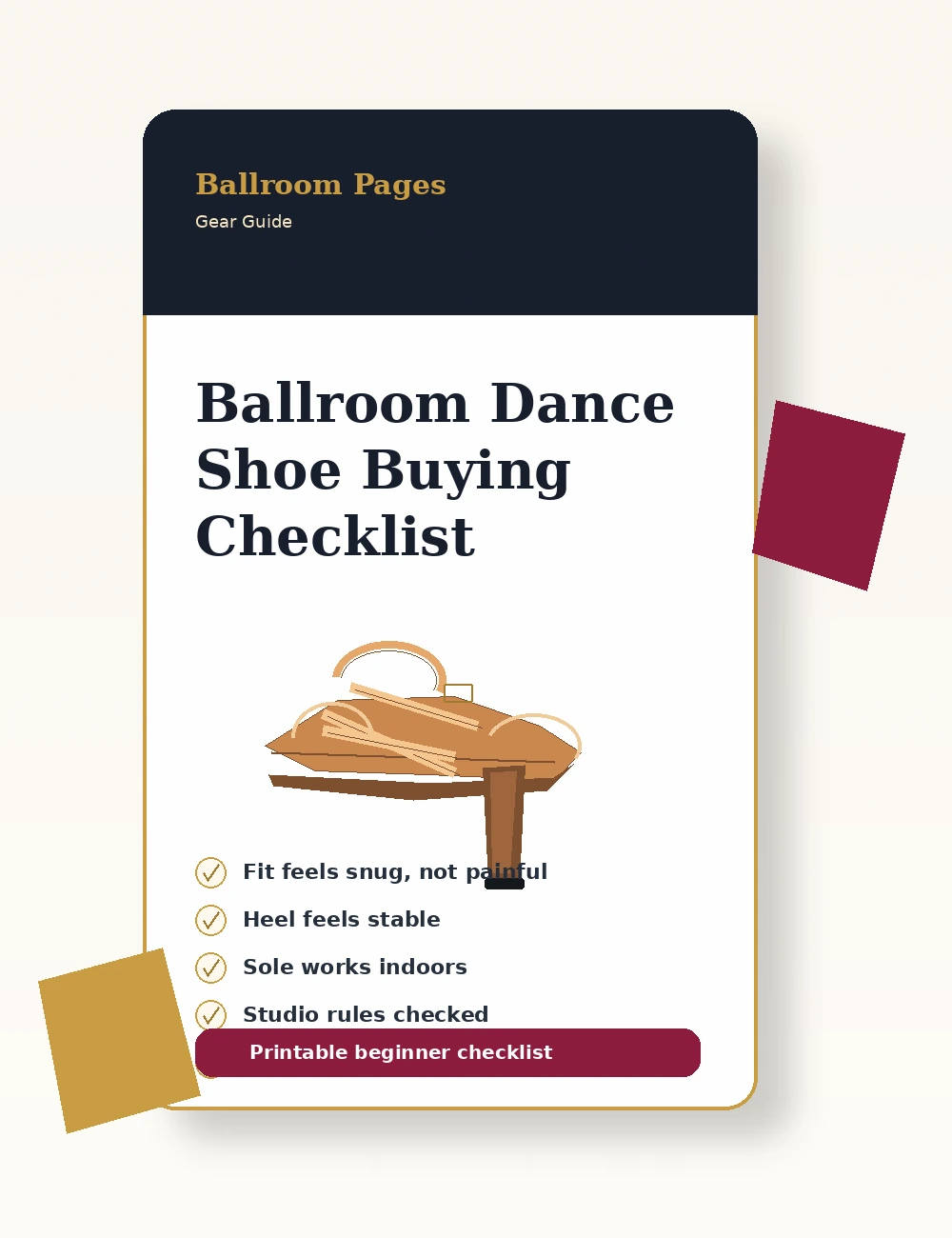
Download the Ballroom Dance Shoe Buying Checklist before you order your first pair. It covers fit, heel height, sole type, studio rules, return policies, and wedding-day testing.
Download the checklistWhat makes ballroom dance shoes different?
Ballroom dance shoes are built for controlled movement on indoor dance floors. They may look like dress shoes or heels from a distance, but they behave differently.
Suede soles
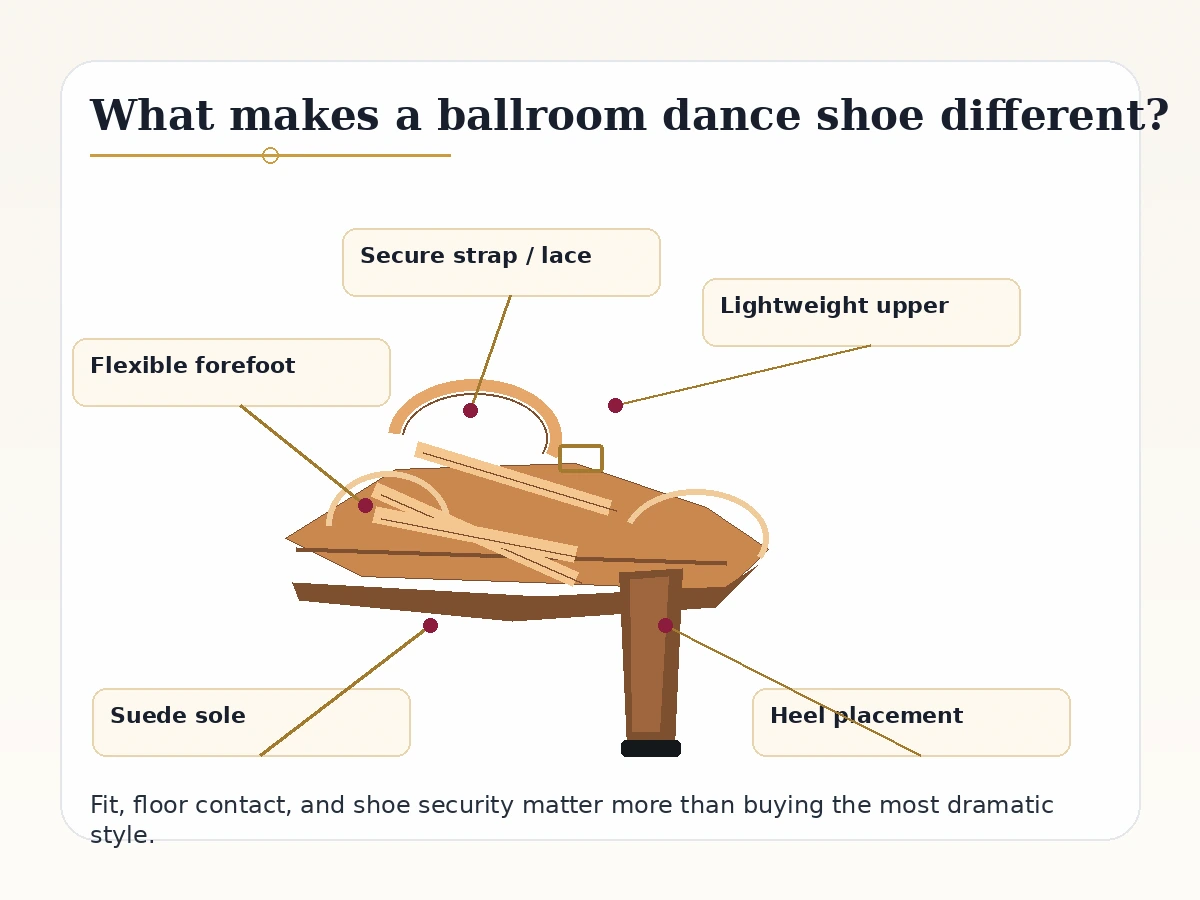
Many ballroom shoes have suede soles. A suede sole gives a balance of glide and grip: enough slide for turns, but enough texture to feel the floor. This is one reason dance shoes often feel easier for turns than sticky street shoes.
Suede soles are usually indoor-only. Wearing them outside can damage the sole, pick up dirt, and change how the shoe behaves on the dance floor.
Flexibility
Dance shoes often flex more through the forefoot than regular dress shoes. This helps with weight changes, toe leads, foot articulation, and feeling where your weight is.
Lighter construction
Ballroom shoes are usually lighter than many street shoes. Less bulk can make it easier to feel the floor and respond to your partner or instructor.
Closer fit
Dance shoes should feel secure. A loose shoe can cause slipping inside the shoe, rubbing, or unstable balance. Snug does not mean painful, but it does mean the shoe should not flop, gap, or slide around.
Straps, laces, and security
Many beginner-friendly shoes have ankle straps, T-straps, or laces. These help the shoe stay on the foot during turns, side steps, and backward steps.
Heel placement and floor feel
Dance heels are designed to support dance movement differently from fashion heels. Beginners should not choose a heel just because it looks elegant. Stability and comfort matter more.
The safest temporary shoes before you buy
Before buying ballroom dance shoes, choose temporary shoes that are secure, comfortable, and allowed by your studio.
Good temporary options
- Clean dress shoes with a secure fit
- Low stable heels
- Supportive flats that stay on the foot
- Shoes with a smooth enough sole to turn without sticking
- Non-marking soles if your studio requires them
Best to avoid
- Flip-flops
- Loose sandals
- Backless shoes that slide off
- Heavy boots
- Unstable high heels
- Very slippery soles
- Very sticky rubber soles
- Shoes that mark or damage studio floors
Studio note: Studio policies vary. Some studios are strict about soles, floor protection, or outdoor shoes. When in doubt, ask your instructor or studio before class.
Latin/Rhythm vs Smooth/Standard vs practice shoes
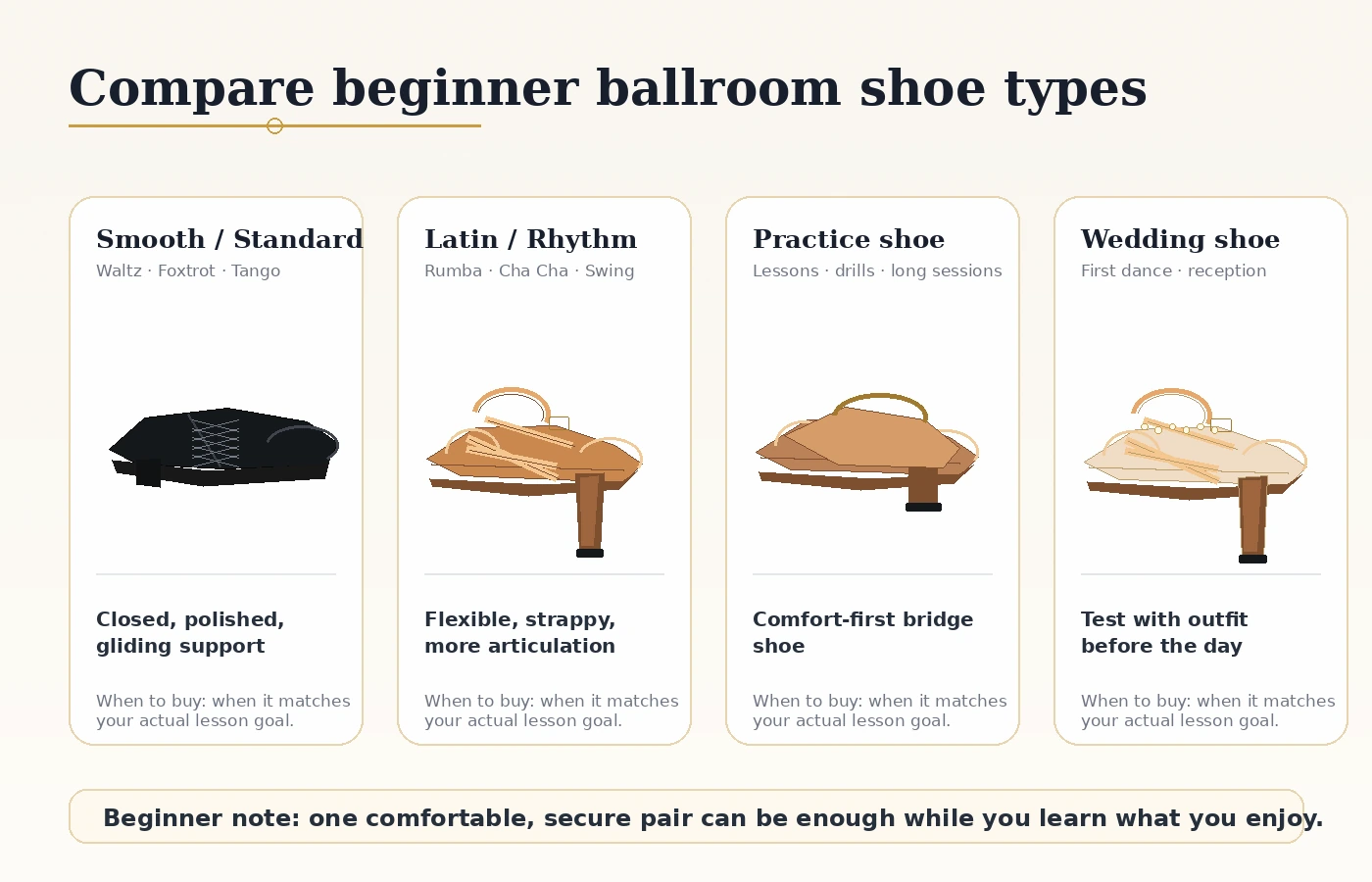
Different shoe families solve different problems. Use this comparison to match a shoe type to the dancing you are actually doing.
| Shoe type | Best for | Typical features | Beginner pros | Beginner cautions | When to buy |
|---|---|---|---|---|---|
| Smooth/Standard shoes | Waltz, Foxtrot, Tango, Viennese Waltz, many wedding first dances | Often closed-toe, suede sole, stable heel, elegant dress-shoe shape | Good glide, polished look, helpful for smooth dances | Less open/flexible than many Latin shoes | When your lessons focus on Waltz, Foxtrot, Tango, or a formal wedding dance |
| Latin/Rhythm shoes | Rumba, Cha Cha, Swing, Salsa-inspired social lessons, Rhythm/Latin training | Often more flexible; follower styles may be open-toe and strappy; leader styles may use a Cuban heel | Helps foot articulation and rhythm movement | Higher/slimmer heels can be challenging too early | When you are regularly learning Latin/Rhythm dances |
| Men’s/leader-style ballroom shoes | Leading roles, Smooth/Standard, Rhythm/Latin depending on style | Lace-up design, suede or dance sole, low heel, secure fit | Understated, stable, useful for lessons and social dancing | Formal street shoes may not behave the same as dance shoes | When regular street dress shoes start limiting movement |
| Practice shoes | Lessons, drills, longer practice sessions | Lower heel, closed or secure upper, flexible sole, comfort-focused design | Comfortable, stable, less intimidating | Not always as style-specific or formal-looking | When you practice often or want one comfortable training pair |
| Wedding dance shoes | First dances and reception dancing | Dance-friendly bridal/formal shoe or ballroom shoe tested with the outfit | More predictable than untested wedding shoes | Must be tested with dress length, suit/tux movement, and floor surface | Buy early enough to practice before the wedding |
| Character or teaching-style shoes | Some lessons, teaching, practice, or dancers wanting extra security | Lower block heel, straps or lace, stable base | Secure and beginner-friendly for some dancers | May not match every ballroom style or formal outfit | When your instructor recommends them or stability is the priority |
Use leader/follower language when choosing function. Use men’s/women’s labels only when shopping, because many retailers still organize products that way.
How to choose heel height
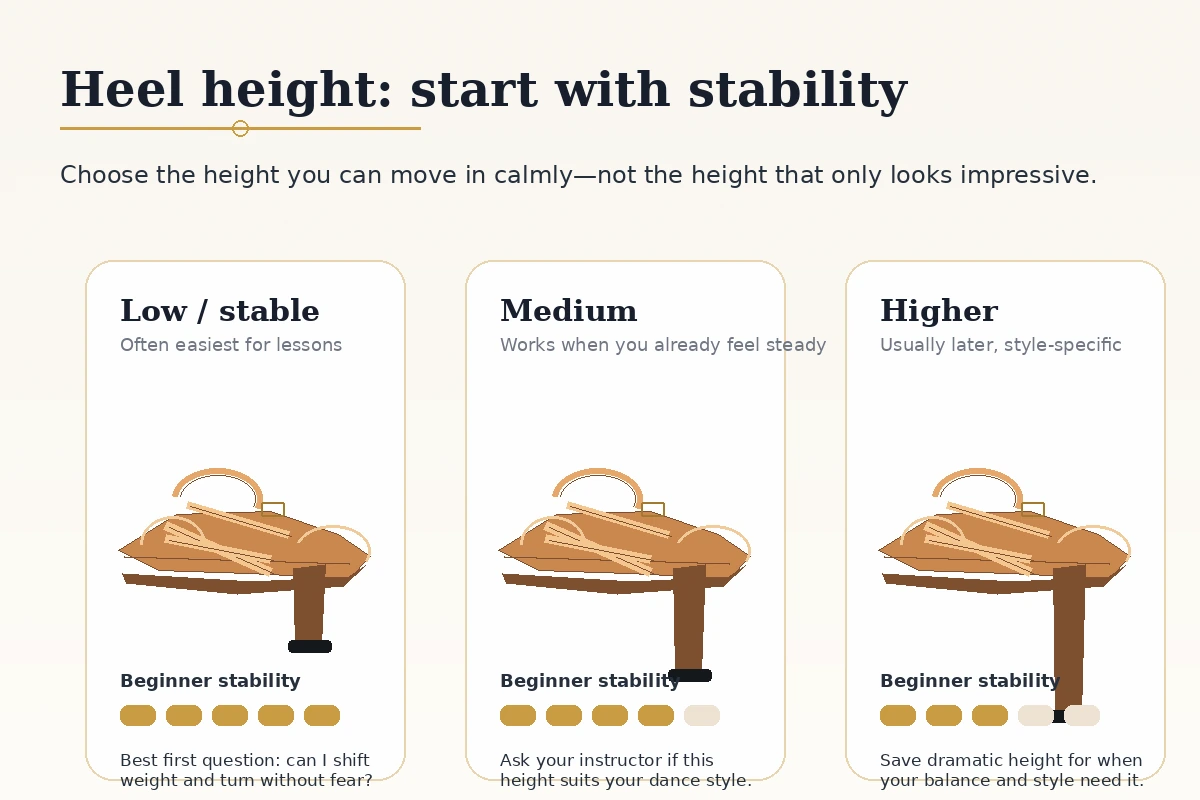
For many beginners, a lower heel is the best starting point. A lower, wider, or flared heel can feel more stable than a tall narrow heel, especially if you are not used to dancing in heels.
Choose heel height based on your current comfort walking and turning, your main dance style, your instructor’s advice, your balance and stability, whether you are buying for lessons, social dancing, competition, or a wedding, and how the shoe works with your outfit.
Higher heels can make sense later, especially for dancers training seriously in Latin/Rhythm styling. But a higher heel is not a beginner requirement. If a shoe makes you tense, wobbly, or afraid to shift weight, it is not the right first shoe.
For wedding couples, test heel height with the real dress length or similar hem length. A shoe that feels fine in the store can behave differently when stepping backward, turning, or moving under a long dress.
How ballroom dance shoes should fit
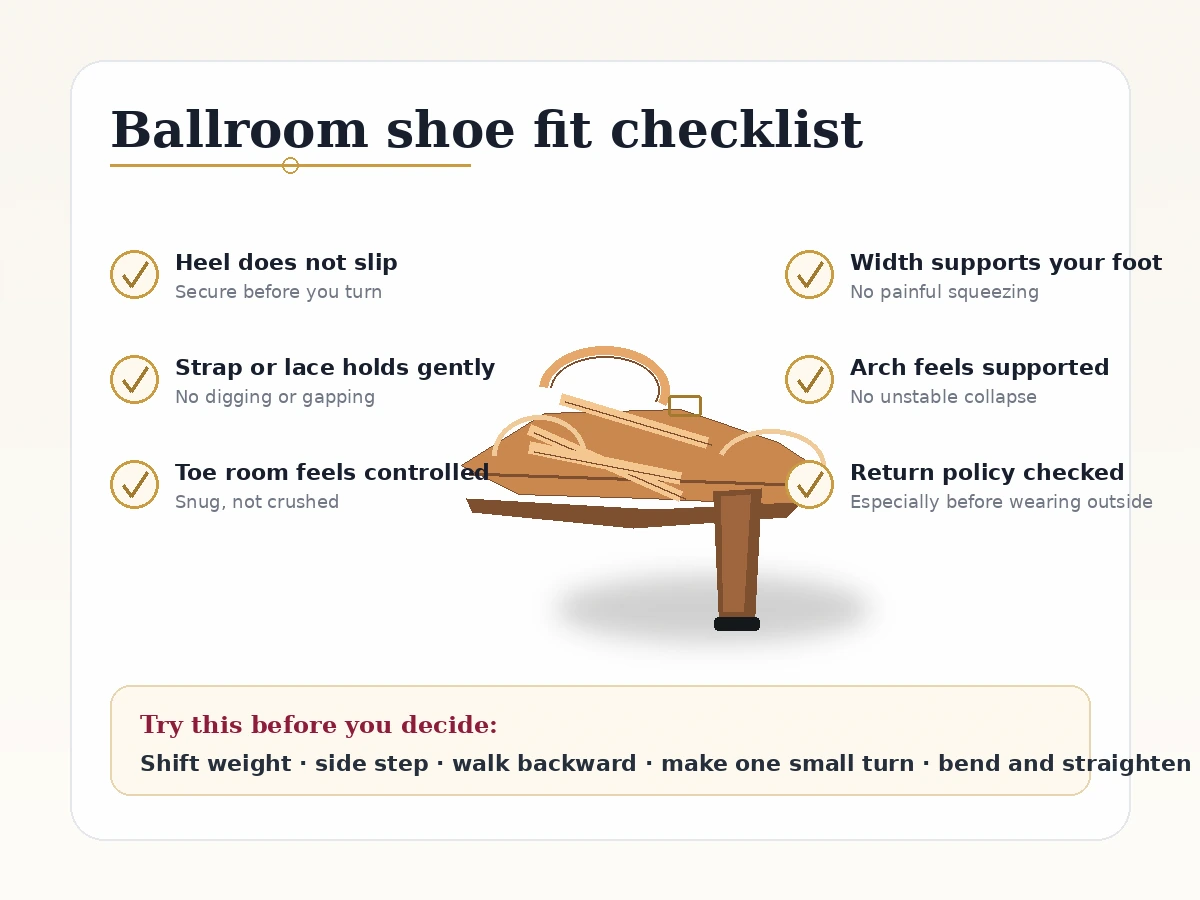
Ballroom dance shoes should feel snug, secure, and controlled. They should not feel painfully tight, but they also should not fit like roomy everyday shoes.
- Heel
- The heel of your foot should not lift out of the shoe when you walk, rock, or turn.
- Toes
- Open-toe shoes often place the toes closer to the front edge than street sandals. Your toes should not be painfully crushed or hanging over in a way that feels unstable.
- Straps or laces
- Straps should hold the shoe securely without digging into the skin. Laces should let you adjust the upper without creating pressure points.
- Arch and width
- Your foot should feel supported, not squeezed. Width varies by brand, so do not assume your street shoe size will be exact.
- Socks, tights, or bare feet
- Norms vary by shoe type, studio, and personal comfort. Try shoes the way you plan to wear them.
- Return policy
- Check return and exchange rules before buying. Many dance shoes are harder to return once worn outside or visibly scuffed.
Test the shoes before you commit
- Shift weight from foot to foot
- Take side steps
- Walk forward and backward
- Try a small turn
- Bend and straighten your knees
- Practice a simple box or rock step if you know one
If the shoe pinches immediately, slips off, or makes you afraid to move, keep looking.
Practice shoes: when they make sense
Practice shoes are a good bridge between street shoes and style-specific ballroom shoes. They are often chosen for comfort, longer lessons, drills, and repeated practice sessions.
They make sense when you practice more than once a week, want a lower heel, are not ready for a more formal Latin or Smooth shoe, want a comfortable pair for drills, or need a secure shoe that still feels like a dance shoe.
Practice shoes are not always necessary for absolute beginners. If you are still deciding whether ballroom is for you, start with safe temporary shoes and ask your instructor what would support your next step.
Wedding dance shoes
Wedding dance shoes deserve special attention because they affect both the lesson process and the event itself.
Do not wear a brand-new pair for the first time on the wedding day. Practice in them during lessons so you know how they feel when turning, stepping backward, walking onto the floor, and holding your partner.
- Break shoes in before the wedding.
- Test them with the dress length or suit/tux movement.
- Consider the reception floor surface.
- Avoid shoes that slide off, pinch, or catch on fabric.
- Prioritize stable movement over dramatic heel height.
- Bring backup shoes if you plan to change for the reception.
Keep planning with the Wedding Dance Guide, figure out your style with What Dance Fits Your Wedding Song?, or see our dedicated wedding dance shoes guide planned guide.
Common mistakes beginners make
Buying competition heels too early
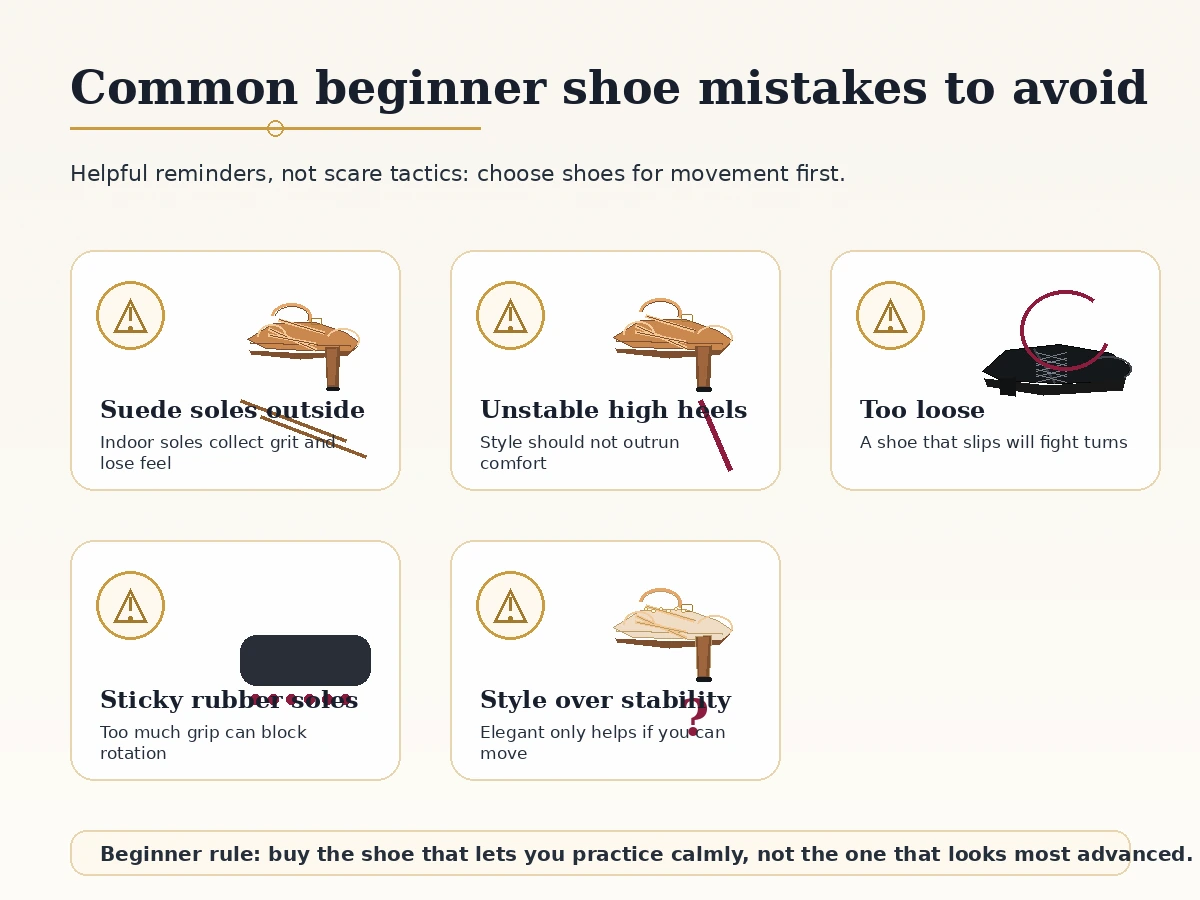
Competition-style shoes can be beautiful, but they are not always the best first pair. Start with what helps you learn, not what looks most advanced.
Choosing style over stability
If the shoe looks elegant but makes you nervous to move, it is the wrong beginner shoe.
Wearing suede soles outside
Suede soles are made for indoor dance floors. Outdoor use can damage them and change the grip.
Buying shoes too loose
Loose shoes may feel comfortable while standing still, but they can shift during turns and weight changes.
Choosing sticky rubber soles for turning
Very grippy soles can make turning harder. They may cause your foot to stick while your body rotates.
Ignoring studio floor rules
Some studios have specific rules about outdoor shoes, black soles, heel protectors, or floor-safe footwear.
Not testing shoes with basic steps
Always test shoes with simple dance movement, not just a mirror check.
Assuming one shoe works perfectly for every dance
A comfortable practice shoe can cover a lot, but Latin/Rhythm, Smooth/Standard, and wedding use cases can require different priorities.
How to care for ballroom dance shoes
Good shoe care keeps your shoes more predictable on the floor.
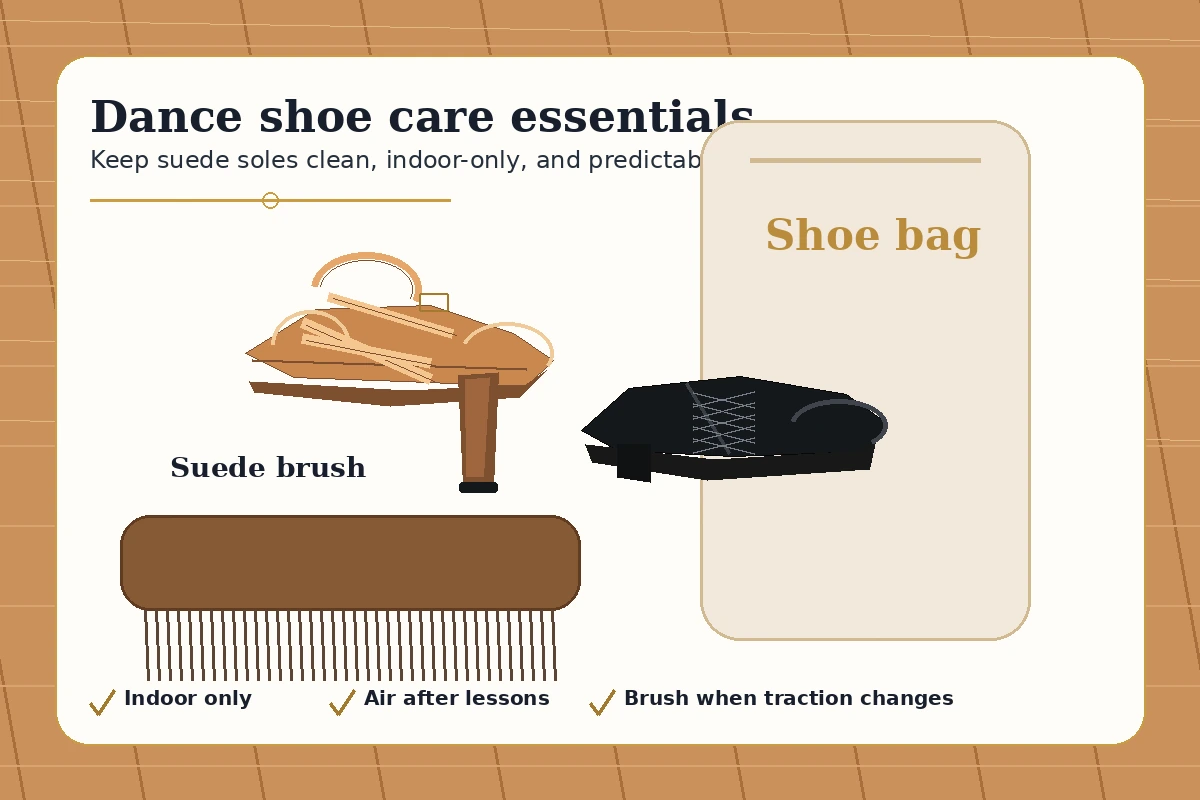
- Keep suede-soled dance shoes indoors.
- Use a shoe bag so the soles stay cleaner.
- Air shoes out after lessons.
- Use a suede brush when the sole becomes too smooth, dirty, or matted.
- Do not overbrush; brush when traction changes.
- Avoid street-cleaning products unless the manufacturer says they are safe.
- Replace heel tips, straps, or shoes when they become unstable.
If your shoes suddenly feel too slippery or too sticky, stop and check the soles. The issue may be dirt, wax, moisture, worn suede, or a floor surface mismatch.
Test your shoes with beginner practice music
Once you have safe shoes, practice simple weight changes with music. You do not need complicated choreography at first. Stand tall, shift weight from one foot to the other, listen for the beat, and try small steps before adding turns.
Use this section after the buying guidance—not before—so the page stays focused on shoes.
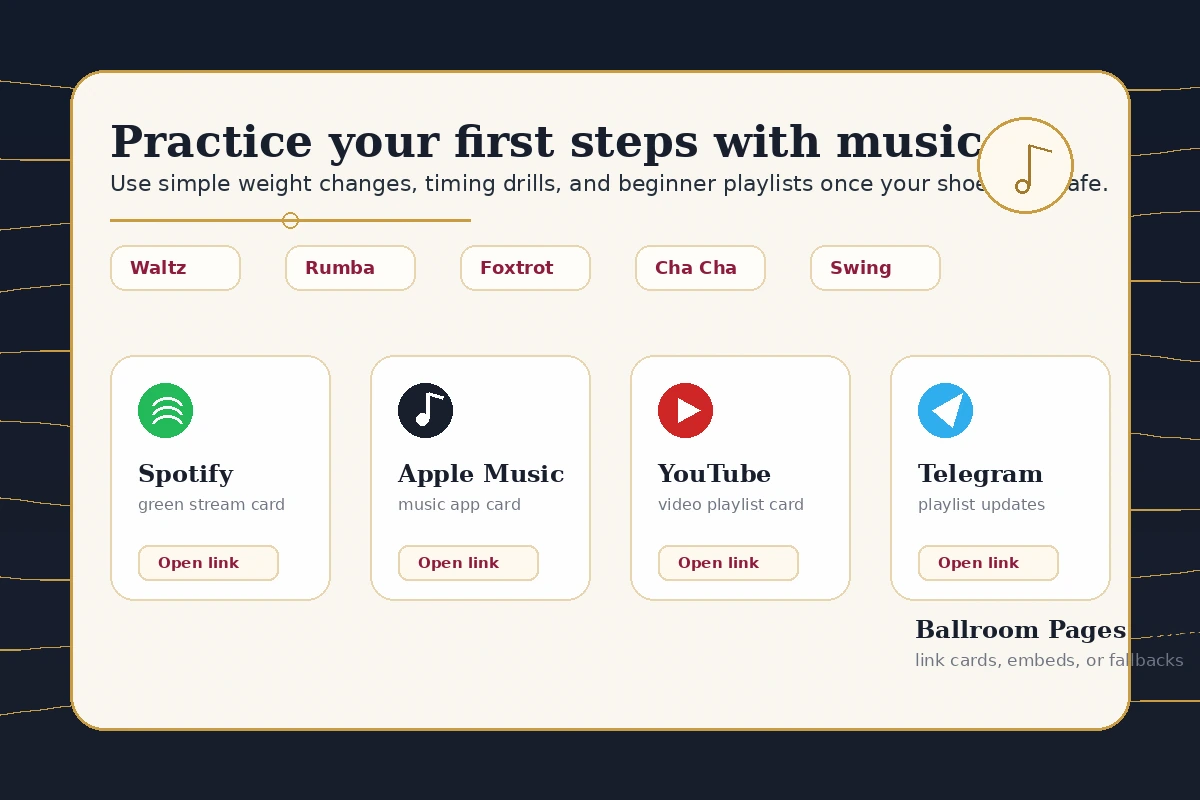
Beginner practice paths
- Waltz: Practice slow weight changes and a gentle 1-2-3 feel.
- Rumba: Practice side steps, weight changes, and patience.
- Foxtrot: Practice smooth walking rhythm.
- Cha Cha: Practice small, clear weight changes before speed.
- Swing: Practice relaxed bounce and rhythm without gripping the floor.
Go deeper with Ballroom Music & Timing or learn How to Count Ballroom Dance Music.
Ballroom Pages practice playlists
Verified Spotify playlists are linked below. Apple Music and YouTube per-dance links are being verified—until then, use the playlist hubs. Links open on external platforms, so no players load on this page.
-
Waltz
Slow weight changes and a gentle 1-2-3 feel.
-
Rumba
Side steps, weight changes, and patience.
Spotify Apple & YouTube coming soon
-
Foxtrot
Smooth walking rhythm.
Spotify Apple & YouTube coming soon
-
Cha Cha
Small, clear weight changes before speed.
Spotify Apple & YouTube coming soon
-
Swing
Relaxed bounce and rhythm without gripping the floor.
Spotify Apple & YouTube coming soon
-
All platforms & hubs
Browse every Ballroom Pages playlist across services.
Beginner shoe buying checklist
Run through this before you order. If everything checks out, you have found a safe, sensible first pair.
- The shoe stays on securely.
- The heel feels stable.
- The sole works for indoor dance floors.
- The fit is snug but not painful.
- You can shift weight comfortably.
- You can turn without sticking.
- The shoe matches your main lesson goal.
- Studio floor rules are respected.
- The return policy is clear.
- Wedding shoes have been tested before the event.