Beat vs count vs rhythm
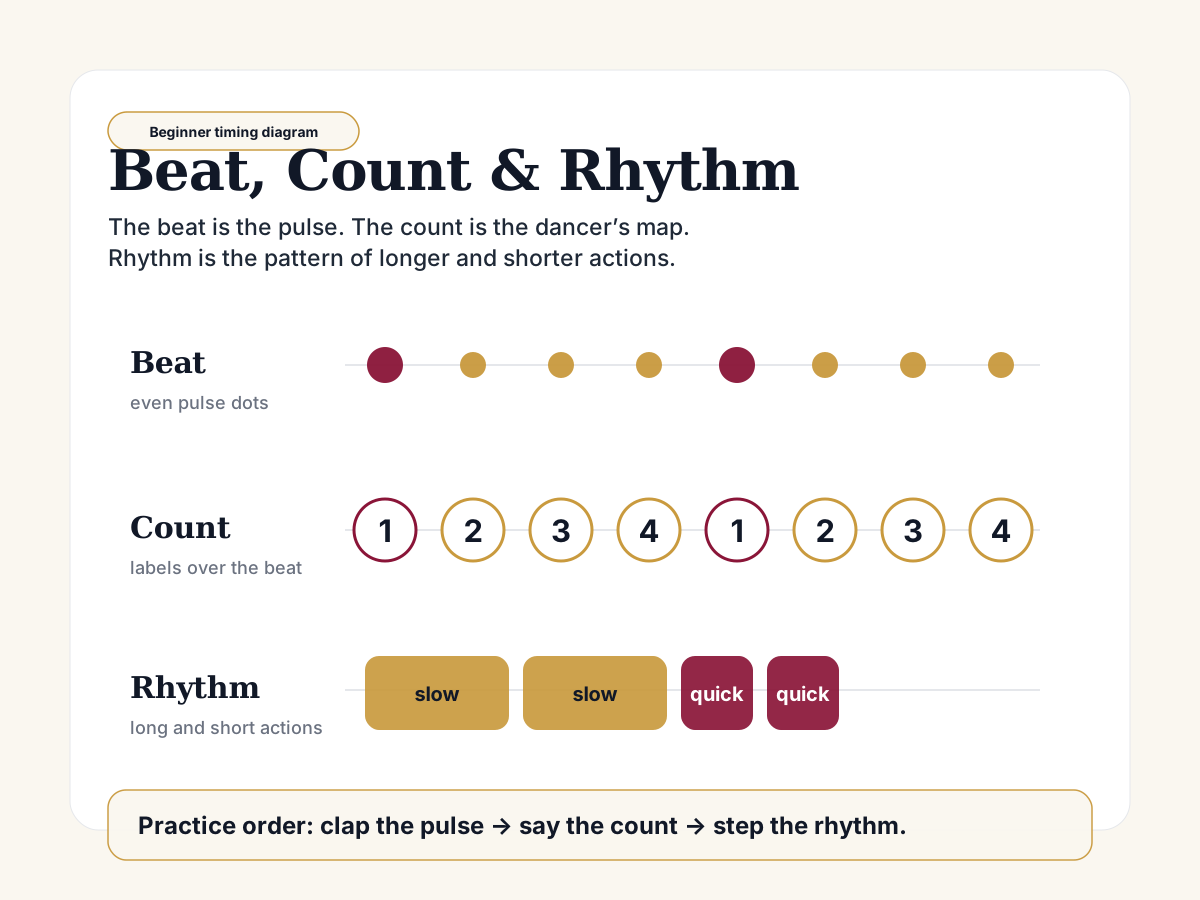
Before counting a dance, separate five ideas that beginners often mix together.
| Term | Plain-English meaning | Beginner test |
|---|---|---|
| Beat | The steady pulse in the music | Can you clap evenly without speeding up? |
| Count | The numbers or words dancers say over the beat | Can you say “1-2-3” or “slow quick quick” while staying steady? |
| Rhythm | The pattern of long and short actions | Can you tell which steps last longer? |
| Tempo | How fast the music is | Does the song feel slow, medium, or fast? |
| Meter / time signature | How beats are grouped into measures | Does it feel like groups of 3, or groups of 4? |
What is a beat?
A beat is the pulse you can tap with your hand or foot. It is not always the melody. It is not always the singer. It is the steady “timekeeper” underneath the song.
If you are new, your first job is not to know the dance. Your first job is to clap or step evenly.
What is a count?
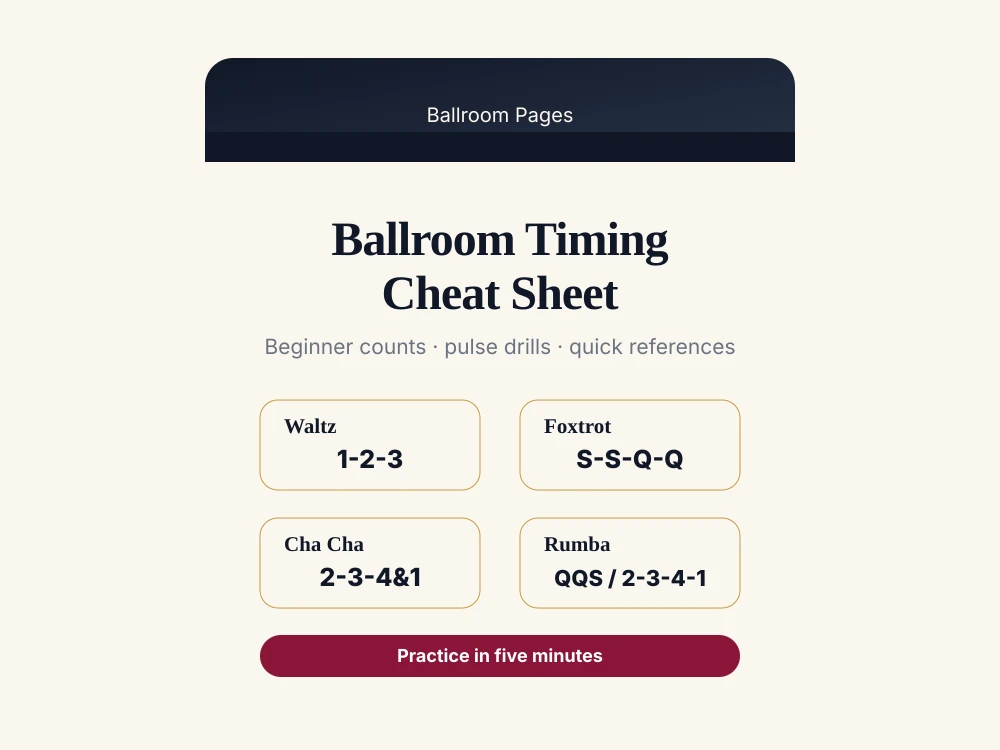
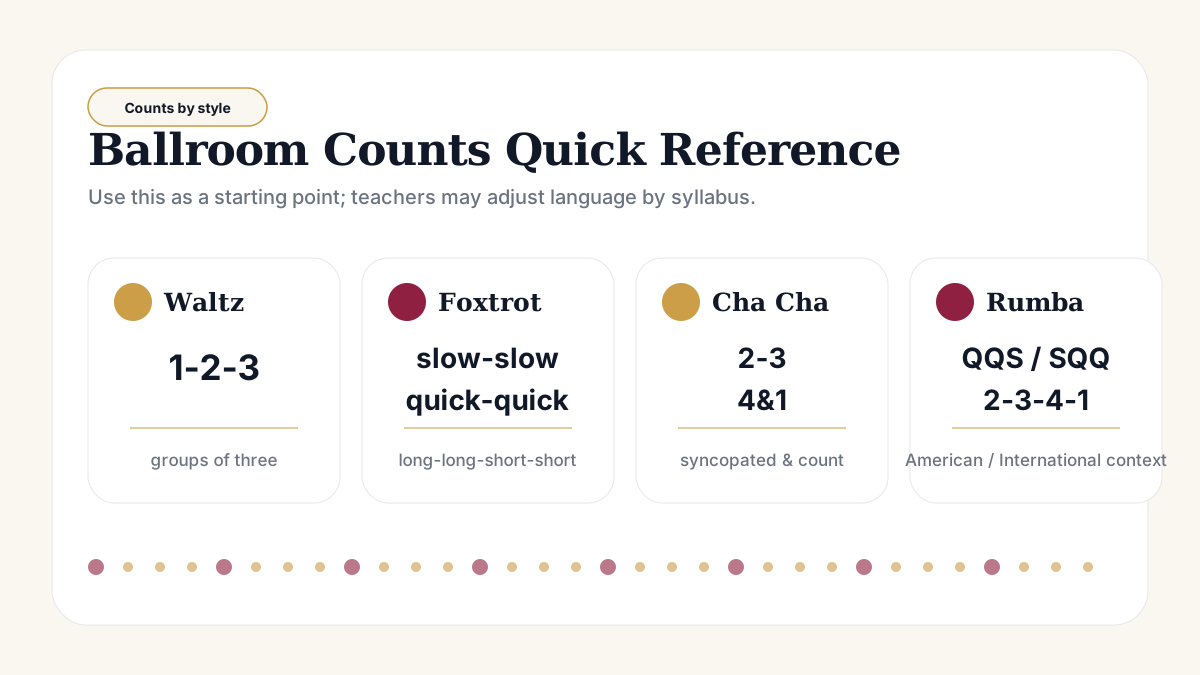
A count is the way dancers label the beat. Waltz dancers often say 1-2-3. Foxtrot dancers often say slow, slow, quick, quick. Cha Cha dancers often say 2-3-4&1.
The count is not the music itself. It is a training tool that helps you place your movement on the music.
What is rhythm?
Rhythm is the pattern of movement across the beats. In ballroom, a “slow” usually takes more time than a “quick.” A syncopation, like 4&1 in Cha Cha, divides the beat into smaller pieces.
This is why two dances can both use music in 4 beats per measure but feel completely different.
What is tempo?
Tempo is speed. Ballroom sources often describe tempo as BPM or MPM.
BPM means beats per minute.
MPM means measures per minute.
A song with more beats per minute is faster. A dance with more measures per minute may also feel faster, but the number depends on how many beats are in each measure.
What is meter?
Meter is how the music groups beats. Waltz usually feels like 1-2-3. Many other ballroom and Latin/Rhythm dances are organized in groups of 4 beats.
Why ballroom dances use different counts
Ballroom dances use different counts because they are built on different musical structures, movement traditions, and teaching systems.
Meter changes the grouping
Waltz is grouped in threes. That is why the beginner count is usually 1-2-3, 1-2-3.
Foxtrot, Cha Cha, and Rumba are usually discussed in 4-beat measures, but they do not use those beats the same way. Foxtrot stretches some actions across two beats. Cha Cha divides part of the beat with an & count. Rumba can be taught differently in American and International contexts.
Dance family changes the teaching language
International Standard, International Latin, American Smooth, and American Rhythm use different dance lists, styling expectations, syllabi, and teaching conventions. That matters because the same dance name can come with different timing vocabulary depending on the studio, syllabus, or competition context. Browse the full set of ballroom dance styles to see how families differ.
Syllabus, social, wedding, and competition contexts differ
Competition tempos are not the same thing as every song you can dance to. Social dancers and wedding couples may use music that is slower, faster, or arranged differently than strict competition music.
This page gives beginner-safe counts first. Tempo numbers are included as reference points, not as a guarantee that every real-world song will fit perfectly.
Counting Waltz
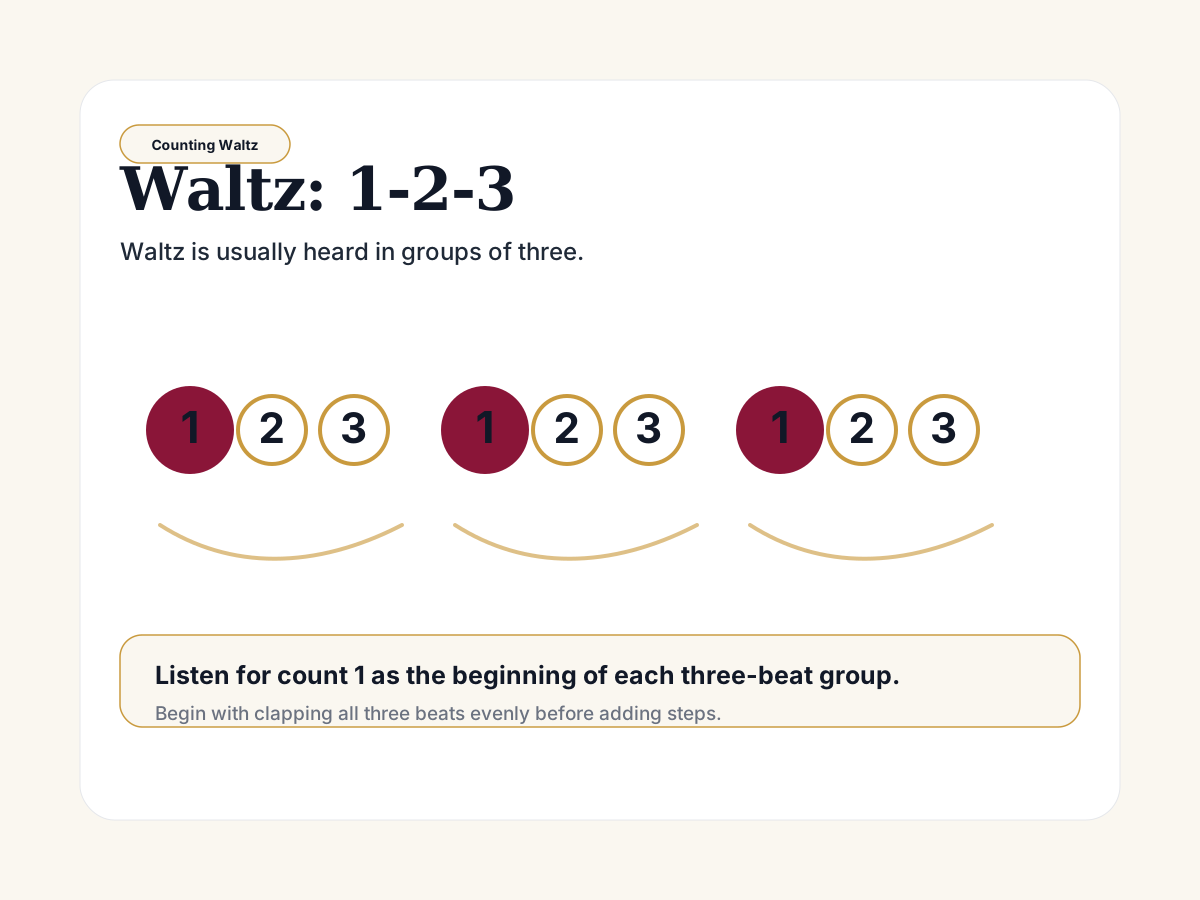
Waltz is the most straightforward place to start because the beginner count is usually clear:
1-2-3, 1-2-3
The “1” usually feels strongest. Counts “2” and “3” continue the measure. Many beginners find Waltz easier to hear once they stop counting to 4 and start listening in groups of 3.
| What to say | What to listen for | What to do first |
|---|---|---|
| 1-2-3, 1-2-3 | A repeating group of 3 beats | Clap all three beats, then slightly emphasize 1 |
| ONE-2-3 | The downbeat on 1 | Step or shift weight on each beat |
| 1…2…3… | Even spacing | Avoid rushing 2 and 3 |
Practice drill
- Play a clear Waltz track or teacher-approved practice track.
- Clap evenly: 1-2-3, 1-2-3.
- Make count 1 slightly stronger.
- Walk in place: step, step, step.
- Add a gentle side-together feeling only after the pulse is steady.
| Mistake | Fix |
|---|---|
| Counting 1-2-3-4 by habit | Listen for groups of 3 |
| Rushing count 3 | Clap slowly and keep all three beats even |
| Making count 1 too heavy | Emphasize it, but do not stomp |
| Trying rise and fall before hearing the beat | Count and walk first; technique comes later |
Counting Foxtrot
Foxtrot is confusing because beginners hear steady music, but the dance count uses long and short actions.
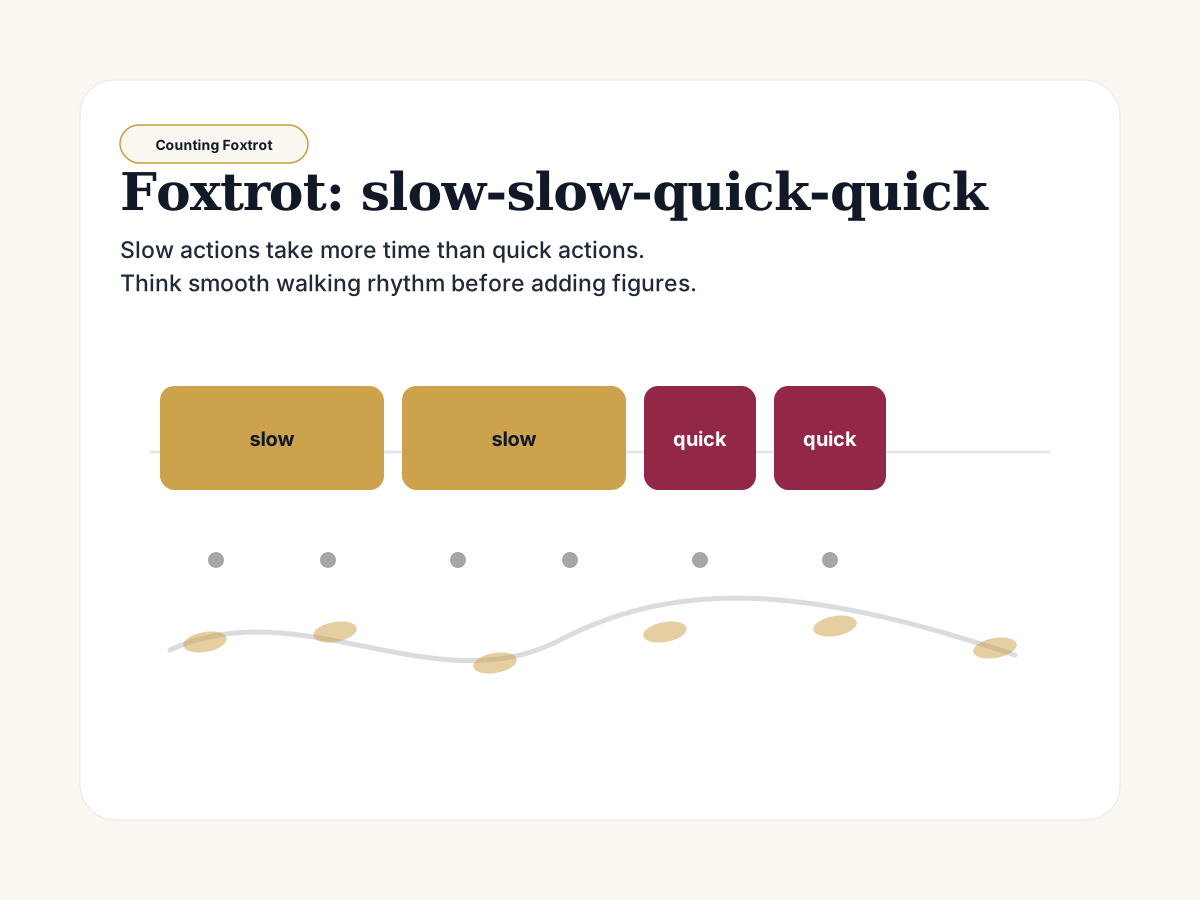
A common beginner Foxtrot count is:
slow, slow, quick, quick
In many beginner teaching contexts, a slow takes more time than a quick. In simple terms, think of a slow as stretching across two beats and a quick as one beat. That is a teaching simplification, but it helps beginners feel the pattern.
| What to say | Beginner feel | Practical note |
|---|---|---|
| Slow | Longer action | Do not rush |
| Slow | Longer action | Keep moving smoothly |
| Quick | Shorter action | Usually one beat |
| Quick | Shorter action | Stay light and controlled |
Why Foxtrot can feel hard
Foxtrot does not always fit neatly into one measure the way beginners expect. Some figures cross musical bars, and different syllabi or studios may introduce different basic patterns.
That is normal. Your first goal is not to analyze every measure. Your first goal is to feel the difference between long-long-short-short.
Practice drill
Say the words before you move:
slow — slow — quick — quick
Now clap it:
clap-hold, clap-hold, clap, clap
Then walk it:
step-hold, step-hold, step, step
If you rush the quicks, slow down and return to clapping.
| Mistake | Fix |
|---|---|
| Making all steps equal | Say “slow” longer than “quick” |
| Freezing during the slow | Keep moving through the slow |
| Turning Foxtrot into marching | Think smooth, not stiff |
| Starting with complicated figures | Practice walking rhythm first |
Counting Cha Cha
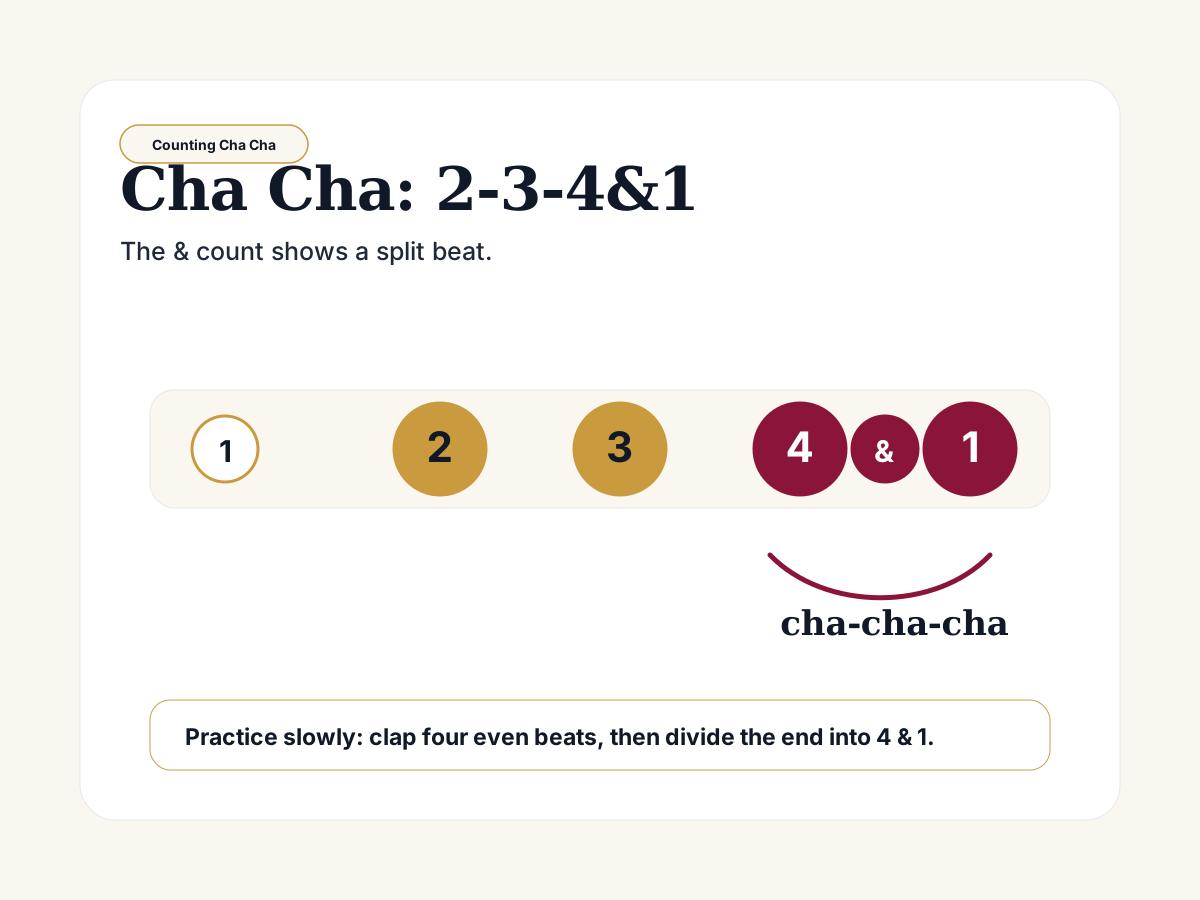
Cha Cha is counted differently because it uses a syncopated rhythm. A common technical count is:
2-3-4&1
That & matters. It means part of the rhythm happens between numbered beats.
| What to say | What it means | Beginner tip |
|---|---|---|
| 2 | First main step in the pattern | Do not panic that it starts on 2 |
| 3 | Replace or continue the action | Keep it grounded |
| 4&1 | Cha-cha-cha / chasse rhythm | Say “cha-cha-cha” if that helps |
| 2-3-4&1 | Full count | Count slowly before dancing fast |
Why some teachers say “1-2-cha-cha-cha”
Some teachers use “1-2-cha-cha-cha” as a beginner bridge because it is easier to say. That can be useful at first, but ask your teacher how it maps to 2-3-4&1 so you understand the musical count.
The goal is not to win an argument about numbers. The goal is to place the rhythm consistently.
Practice drill
- Clap four even beats: 1-2-3-4.
- Now divide the end: 1-2-3-4&1.
- Say only the rhythm: step-step-cha-cha-cha.
- Then return to the count: 2-3-4&1.
- Practice slowly enough that the & is not rushed.
| Mistake | Fix |
|---|---|
| Starting randomly because the count begins on 2 | Listen first, then enter with your teacher’s cue |
| Saying 4&1 too fast | Clap 4, then the &, then 1 slowly |
| Treating Cha Cha as five equal steps | Feel the syncopation |
| Forgetting the music while saying numbers | Count softly and listen more |
Counting Rumba
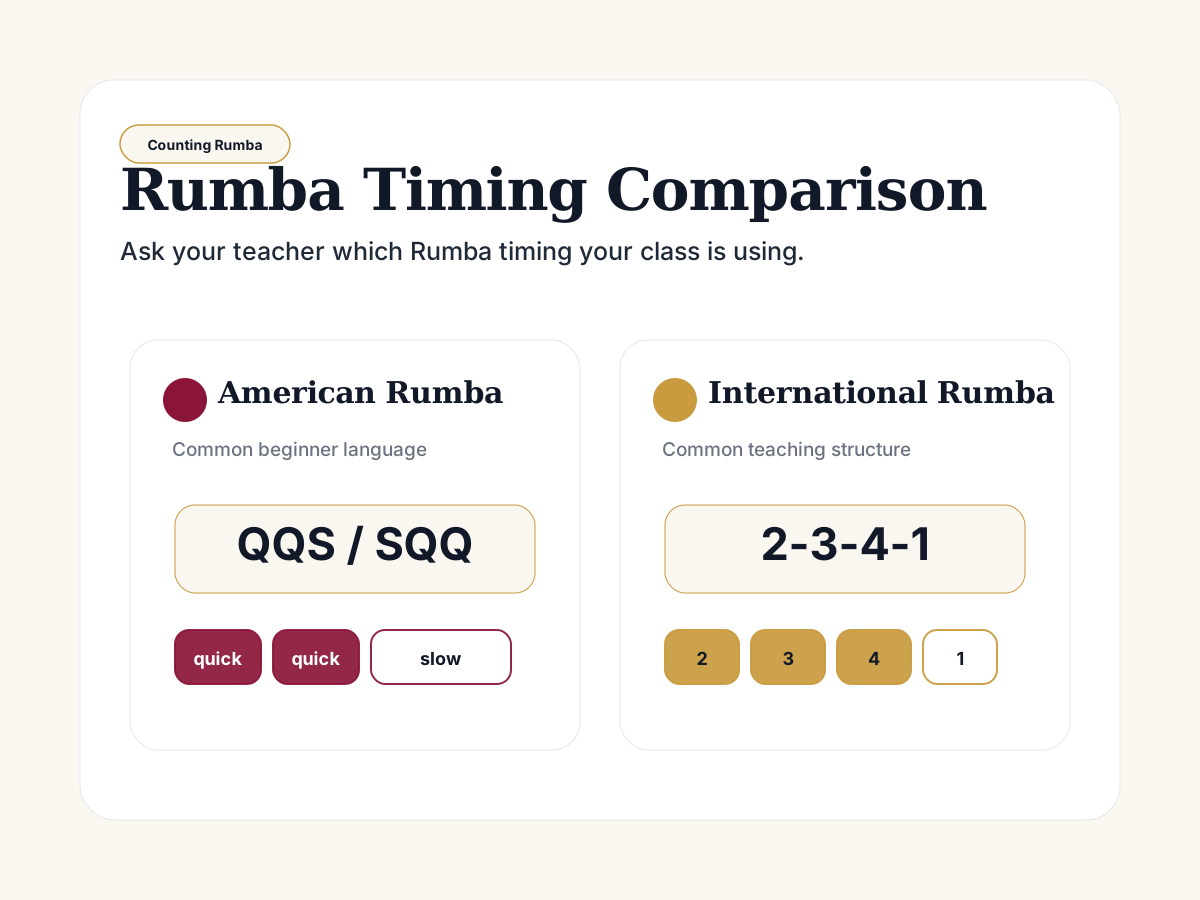
Rumba is one of the most important places to distinguish context. American Rumba and International Rumba are not always counted the same way.
| Rumba context | Common beginner count | Beginner explanation |
|---|---|---|
| American Rumba | Quick-quick-slow or slow-quick-quick | Often taught with box-style or Rhythm-style beginner patterns |
| International Rumba | 2-3-4-1 | Step actions are commonly taught on 2, 3, and 4, with count 1 used for settling or continuing action |
| Social / studio teaching | Varies | Ask which Rumba style your teacher is using |
Why Rumba feels slow even when the count is active
Rumba gives you time. The challenge is not moving as much as possible. The challenge is waiting, transferring weight clearly, and not rushing into the next step.
Beginners often hear the music and step too early. Counting helps you slow down enough to finish each weight change.
Practice drill
- Clap four even beats.
- Say quick, quick, slow without stepping.
- Step only after the count feels steady.
- If learning International timing, say 2-3-4-hold or 2-3-4-1 slowly.
- Ask your teacher whether your class is using American or International Rumba.
| Mistake | Fix |
|---|---|
| Not knowing which Rumba style you are learning | Ask: “Is this American or International timing?” |
| Rushing the slow | Let the slow breathe |
| Moving before weight is clear | Finish each transfer |
| Trying hip action before timing is steady | Count, step, transfer, then refine technique |
Tempo chart by style
Tempo charts are useful when you are choosing practice music, comparing dances, or checking whether a wedding song is realistic. But tempo does not replace listening.
| Dance / context | Beats per measure | Reference tempo | Beginner count |
|---|---|---|---|
| International Waltz | 3 | 29 MPM / 87 BPM | 1-2-3 |
| American Smooth Waltz | 3 | 30 MPM / 90 BPM | 1-2-3 |
| International Foxtrot | 4 | 28 MPM / 112 BPM | Slow / quick combinations |
| American Smooth Foxtrot | 4 | 30 MPM / 120 BPM | Slow-slow-quick-quick or slow-quick-quick |
| International Cha Cha | 4 | 31 MPM / 124 BPM | 2-3-4&1 |
| American Rhythm Cha Cha | 4 | 30 MPM / 120 BPM | 2-3-4&1 |
| International Rumba | 4 | 25 MPM / 100 BPM | Often 2-3-4-1 |
| American Rhythm Rumba | 4 | 31 MPM / 124 BPM | QQS or SQQ |
These are competition-reference numbers, not universal song-selection rules. Wedding songs, social songs, studio practice tracks, and teaching tracks may be outside these references.
How to practice hearing the beat
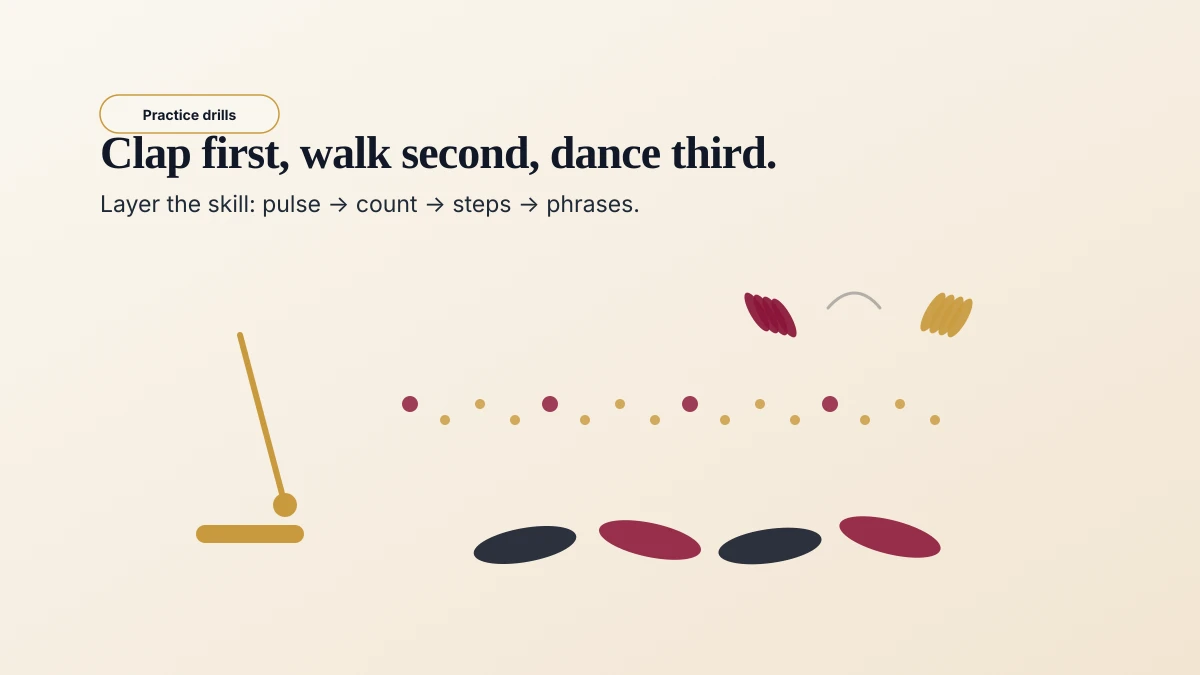
Counting improves fastest when you practice in layers. Do not start with full choreography. Start with listening.
Drill 1 — Clap the pulse
Play a clear practice track. Clap evenly. Do not count yet. Your goal is to keep the same speed for at least 30 seconds.
Drill 2 — Find the “1”
After you can clap the pulse, listen for the beat that feels like the beginning of a group. In Waltz, that group is usually three beats. In many other dances, it is four.
Say the count softly:
- Waltz: 1-2-3
- Foxtrot: slow-slow-quick-quick
- Cha Cha: 2-3-4&1
- Rumba: your teacher’s American or International count
Drill 3 — Walk before you dance
Walk in place to the beat. Then walk forward and backward. Do not add turns, styling, or arm shapes yet.
If you cannot walk the timing, the step pattern is too much for now.
Drill 4 — Say the count while stepping
Say the count out loud while stepping slowly. Then whisper it. Then only think it.
The goal is to move from external counting to internal timing.
Drill 5 — Switch from counting to phrasing
Once the count is steady, listen for phrases. Many songs organize musical ideas over multiple measures. You do not need advanced music theory to notice when a phrase begins or ends.
This is where dancing starts to feel musical instead of mechanical.
Troubleshooting common counting problems
| Problem | Likely cause | Try this |
|---|---|---|
| “I cannot hear the beat.” | You may be following the melody instead of the pulse | Clap with the bass, drum, or teacher’s count |
| “I start correctly, then lose it.” | You may stop listening once you move | Count softly for one full minute while walking |
| “Foxtrot feels impossible.” | Slow/quick timing feels uneven at first | Clap slow-hold, slow-hold, quick, quick |
| “Cha Cha is too fast.” | The & count is being rushed | Practice 4&1 slowly without full steps |
| “Rumba feels late.” | You may be stepping too early | Ask whether you are using American or International timing |
| “My wedding song does not fit.” | The song may not match the dance you chose | Use a song-to-style guide or ask a teacher to check meter and tempo |
Counting music for wedding dances
Wedding couples often ask, “What dance fits our song?” Counting is the first clue.
If the song clearly groups in 3, Waltz may be possible. If the song is slow and romantic in 4, Rumba, Nightclub Two Step, or a simple slow dance may fit better. If it has a smooth walking feel, Foxtrot may work. If it has a clear Latin pop rhythm, Cha Cha or Salsa might be considered, depending on tempo and feel.
Do not force a dance onto a song just because you like the dance. A simple first dance that fits the music usually looks better than a complicated routine fighting the beat.
Download the Ballroom Timing Cheat Sheet