
Ballroom Gear
Ballroom Gear Made Clear
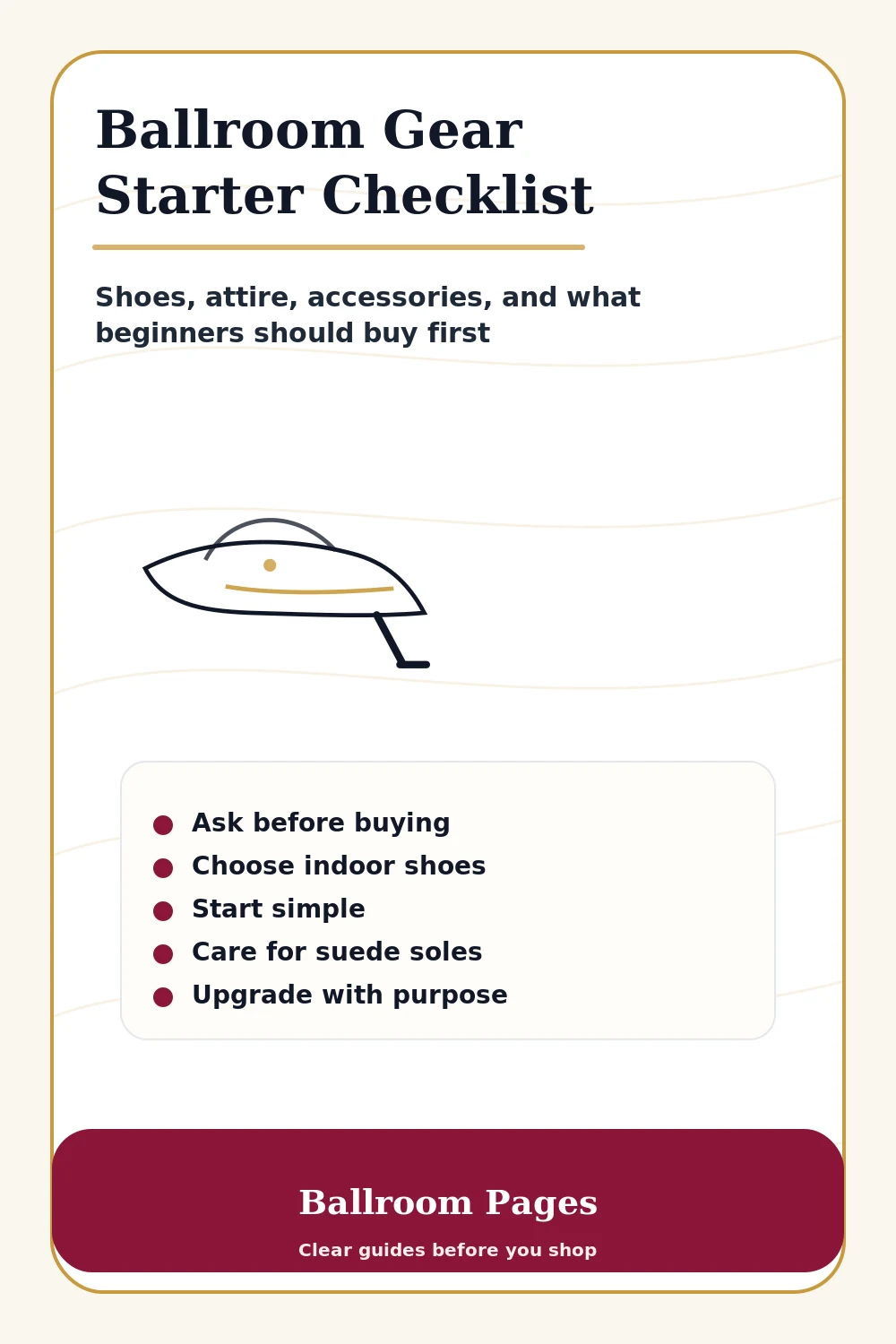
Shoes, attire, accessories, fit, care, and what beginners should buy first—explained before you shop.
Education-first. No fake prices, no fake ratings, no shop UI.
Start here
Start here if you’re new to ballroom gear
Pick the scenario closest to where you are right now. Each one points to the simplest useful next step.
-
Going to your first lesson?
Wear comfortable clothes that let you move and clean shoes that stay on your feet. Ask the studio whether street shoes are allowed.
-
Planning to keep dancing weekly?
Your first useful upgrade is usually a beginner-friendly pair of dance shoes.
-
Learning Latin/Rhythm or Smooth/Standard?
Shoe type matters more once you know which dances you practice most.
-
Preparing for a wedding dance?
Practice in shoes similar to the ones you will actually wear, but do not sacrifice comfort or balance for photos.
-
Thinking about competition?
Ask your teacher and verify the event rules before buying competition attire.
Decision tree
Beginner gear decision tree
Use this simple path before buying anything expensive.
-
Is this your first class?
Start with clean, secure shoes and comfortable clothing. Do not rush into expensive purchases.
-
Are you dancing every week?
Consider beginner ballroom shoes or practice shoes. The goal is controlled movement, not glamour.
-
Are you mostly doing Waltz, Foxtrot, Tango, or Smooth/Standard?
Look at closed-toe ballroom/Smooth/Standard shoes or practice shoes.
-
Are you mostly doing Rumba, Cha Cha, Salsa, Bachata, or Rhythm/Latin?
Look at Latin/Rhythm shoes or practice shoes, depending on your comfort with open toes and heels.
-
Are you buying for a wedding or competition?
Ask your teacher or organizer first. The right shoe or outfit may depend on the floor, dress length, event rules, and how long you need to dance.
Priorities
What to buy first — and what can wait
Most beginners can dance well without spending a lot. Use this table to plan in stages.
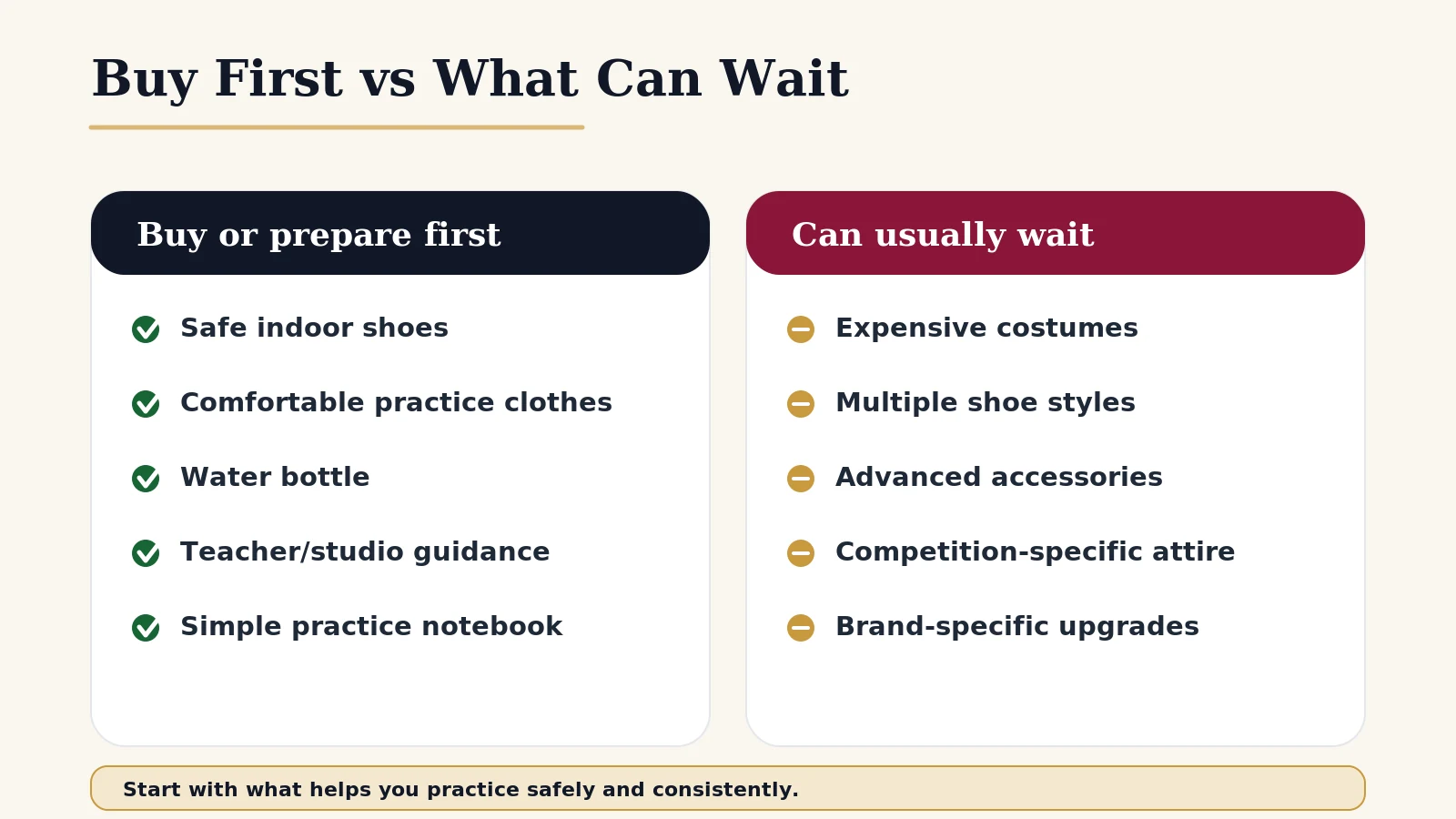
| Buy first | Why it helps | What can wait |
|---|---|---|
| Clean, secure shoes for your first class | Lets you start without overspending. | Expensive competition shoes. |
| Beginner dance shoes once you commit | Better dance-floor grip and slide than most street shoes. | Multiple pairs for every style. |
| Comfortable lesson clothing | Lets you move without distraction. | Specialty practice outfits. |
| Shoe brush if you use suede soles | Helps maintain the sole texture. | Full care kit. |
| Small dance bag | Keeps shoes off outdoor surfaces. | Large garment bag unless competing. |
| Wedding shoe rehearsal plan | Prevents surprises before the first dance. | Buying shoes only for photos. |
| Teacher-approved competition basics | Avoids rule/level mistakes. | Custom costume before rules are verified. |
Shoe types
Ballroom shoe types explained
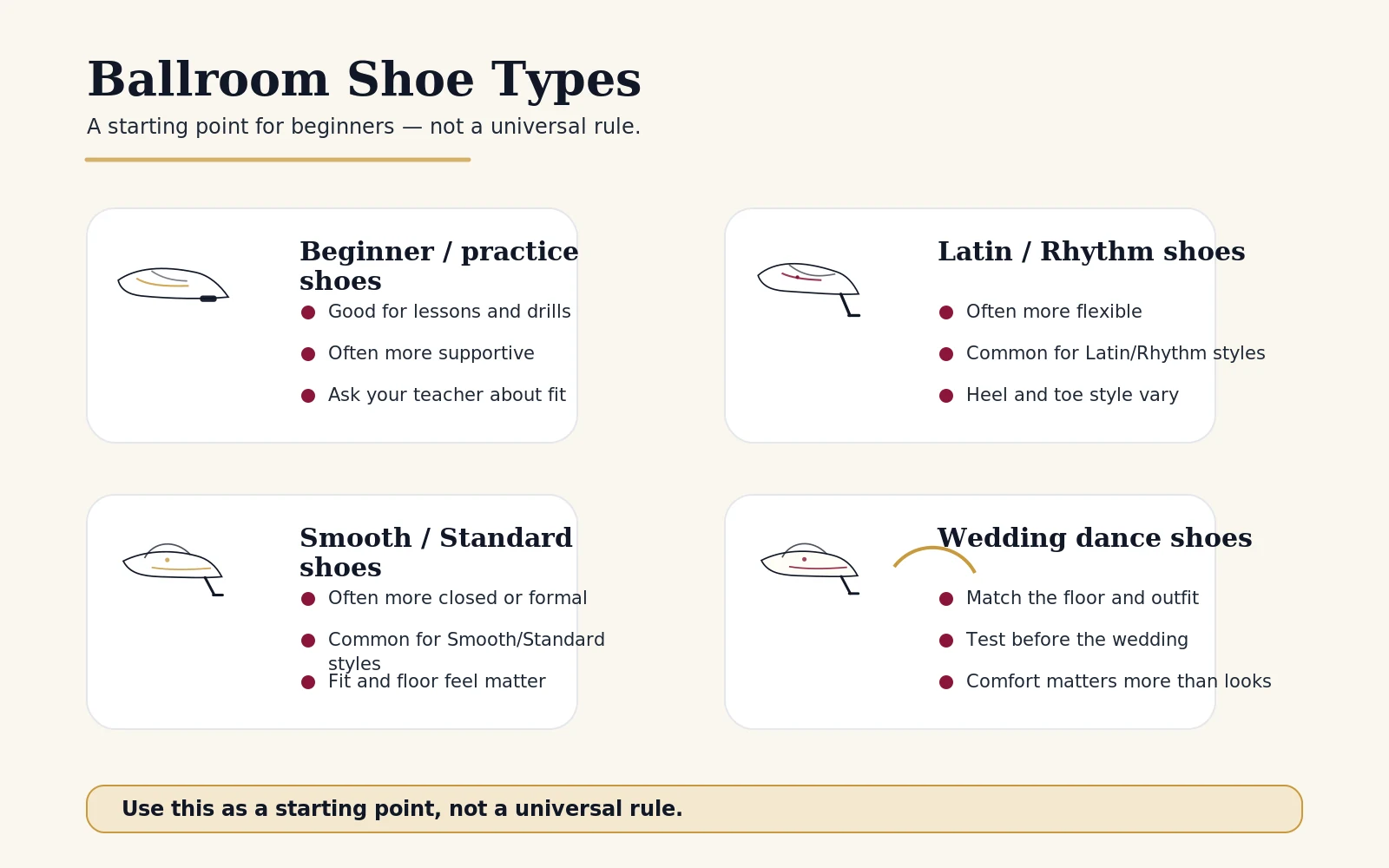
Each type is built around a different movement priority. Start with the one that matches the dances you practice most.
-
Beginner
Beginner ballroom shoes
Best for dancers who want one practical first pair. Look for secure fit, manageable heel height, and a sole appropriate for the dance floor.
-
Smooth/Standard
Smooth/Standard shoes
Often closed-toe and designed for traveling dances such as Waltz, Foxtrot, and Tango. They usually support gliding movement and a more formal line.
-
Latin/Rhythm
Latin/Rhythm shoes
Often open-toe or strappy and designed for dances such as Rumba, Cha Cha, Salsa, Bachata, and related Rhythm/Latin styles. They can feel more flexible and exposed than closed-toe shoes.
Planned guide — coming soon -
Practice
Practice shoes
A practical option for dancers who want comfort and support during lessons or long practice sessions. They can be especially helpful if heels are new to you.
Planned guide — coming soon -
Wedding
Wedding dance shoes
Should work with your outfit and the dance floor, but they also need rehearsal time. A beautiful shoe that you cannot move in is not a helpful first-dance shoe.
-
Competition
Competition shoes
Should be chosen with teacher guidance and event requirements in mind. Do not assume that every shoe or costume is allowed for every age, level, or organization.
Planned guide — coming soon -
Glitter
Glitter Sole Heels
Sparkly glitter dance shoes and glue-on glitter soles, explained.
Compare
Latin/Rhythm vs Smooth/Standard shoes
Both work for ballroom, but they prioritize different movement qualities and feel different on the foot.
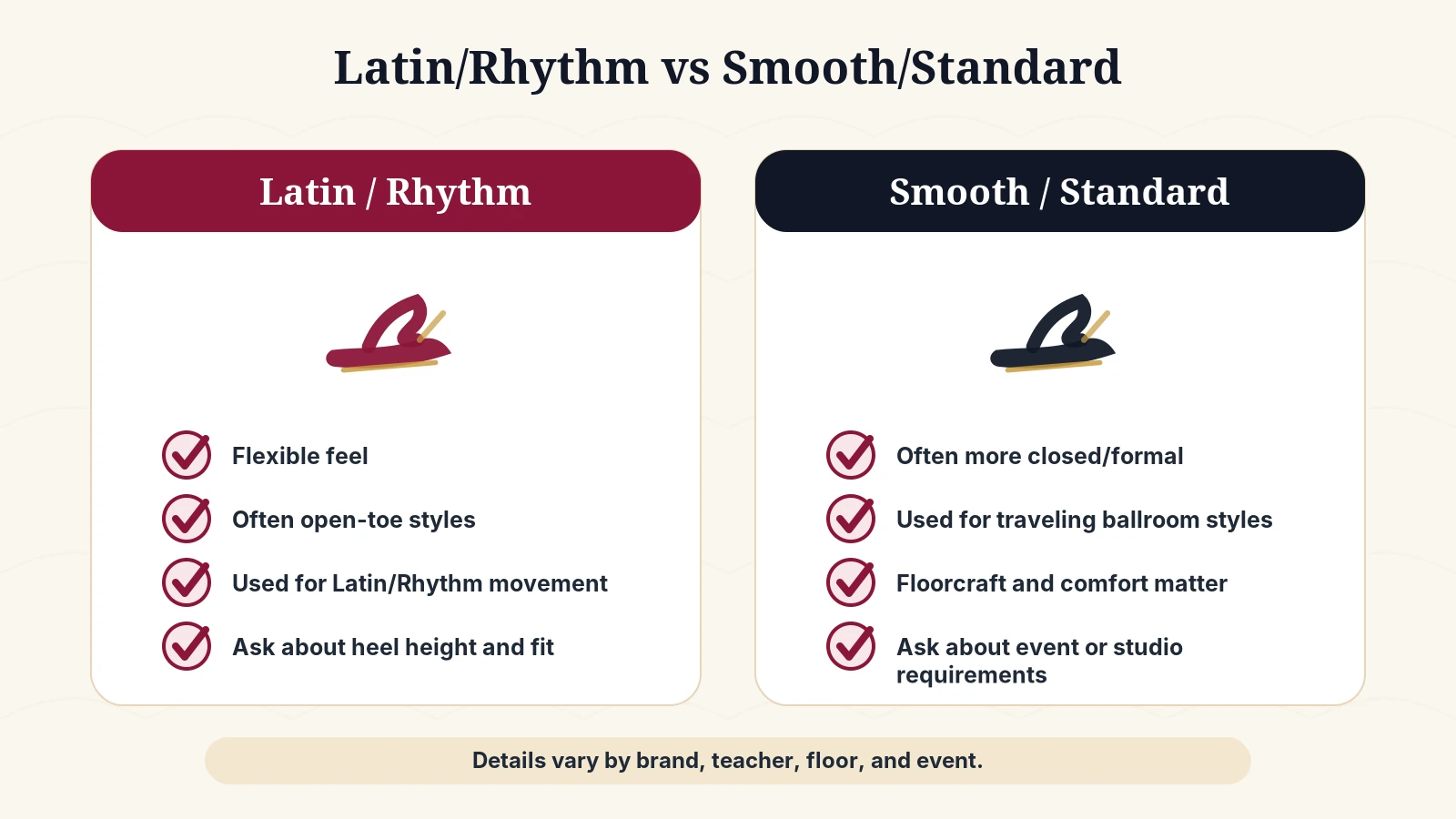
| Feature | Latin/Rhythm shoes | Smooth/Standard shoes |
|---|---|---|
| Common look | Open-toe or strappy. | Closed-toe or court-shoe style. |
| Common use | Rumba, Cha Cha, Latin/Rhythm, some social styles. | Waltz, Foxtrot, Tango, Standard/Smooth. |
| Movement priority | Flexibility, articulation, rhythm action. | Travel, glide, stability, formal frame. |
| Beginner note | May feel exposed if you are new to heels. | Often feels more secure for first pair. |
| What to ask | “Do I need Latin shoes yet?” | “Can one closed-toe pair work for now?” |
Practice shoes
Practice shoes: when they make sense
Practice shoes are not required for everyone, but they can be useful if you dance often, practice for long sessions, want more coverage than a sandal, or are not ready for higher heels. They should still fit securely and work with the dance floor. A practice shoe is not a shortcut around technique; it is simply a tool that may make practice more comfortable.
Planned guide — coming soon
Fit & sizing
Fit, sizing, and heel height
Dance shoes do not fit the way street shoes fit. A few simple checks make the first purchase much smoother.
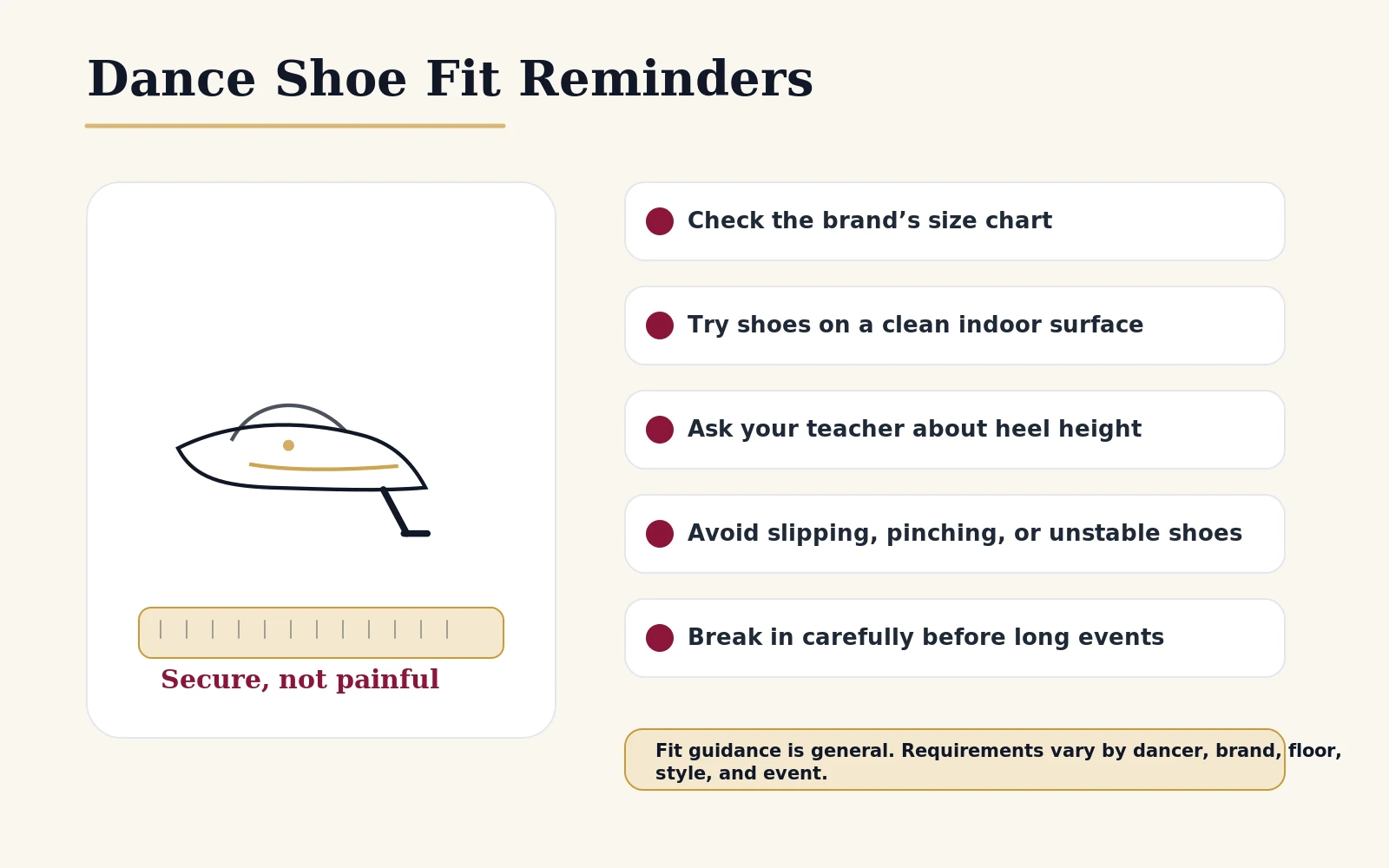
Fit should be secure, not painful
Dance shoes often fit more snugly than street shoes because extra space can make turning and weight transfer harder to control. Snug does not mean pinching, numbness, rubbing, or pain.
Sizing varies by brand
Do not assume your street-shoe size will transfer perfectly. Check the brand’s sizing chart, return policy, width options, and reviews from dancers with similar feet.
Break in carefully
Wear new shoes for short practice sessions before a long social, wedding, or competition. Do not make your first full night in a new pair the most important night.
Begin with a manageable heel
The best heel height is the one you can control while moving. Higher is not automatically better. Ask your teacher before changing heel height for technique or competition reasons.
Check the floor
Studios and venues may have rules about outdoor shoes, suede soles, heel protectors, or floor protection.
Planned guide — coming soon
What to wear
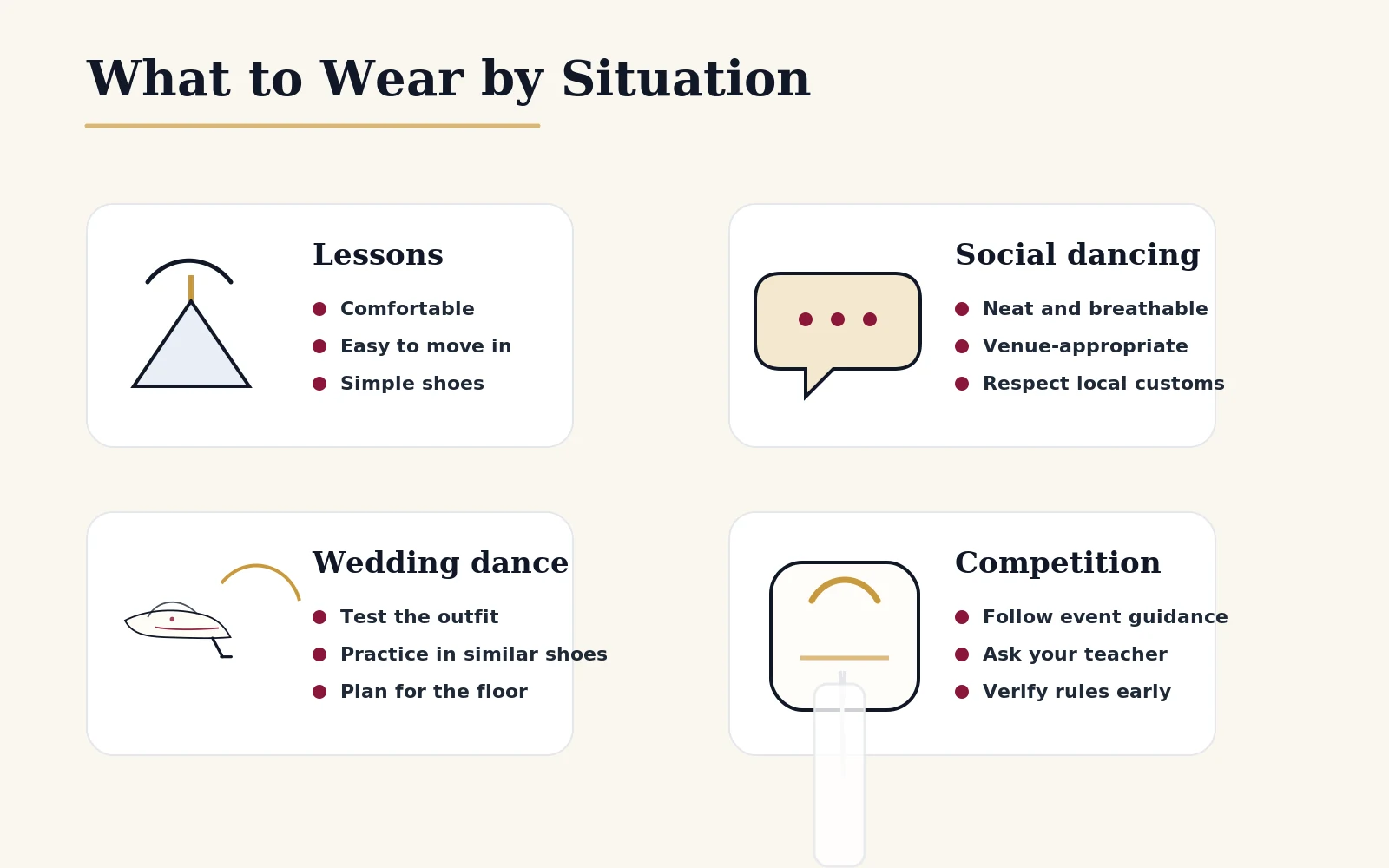
What to wear by situation
One outfit does not fit every setting. These five contexts cover most beginner decisions.
-
First ballroom lesson
Wear comfortable clothes that let you raise your arms, turn, step, and sit. Avoid clothing that is too tight, too slippery, or so loose that it catches your partner’s hand.
Planned guide — coming soon -
Group class or practice
Choose simple, breathable clothing and shoes that stay secure. You do not need a costume to practice timing, posture, and weight transfer.
Read Ballroom Dance for Beginners -
Social dancing
Aim for neat, comfortable, and fresh. Choose clothing that lets you move, shoes that match the venue floor, and fragrance that is light or neutral.
Open Social Dancing guide -
Wedding first dance
Practice in shoes and clothing that feel close to the wedding outfit. Check dress length, heel height, floor surface, and whether you can step backward, turn, and recover comfortably.
Plan wedding dance shoes -
Competition
Verify rules before buying. Attire requirements may depend on organization, event, age, level, category, and whether you are dancing syllabus or open material.
Open Ballroom Competitions guide
Accessories
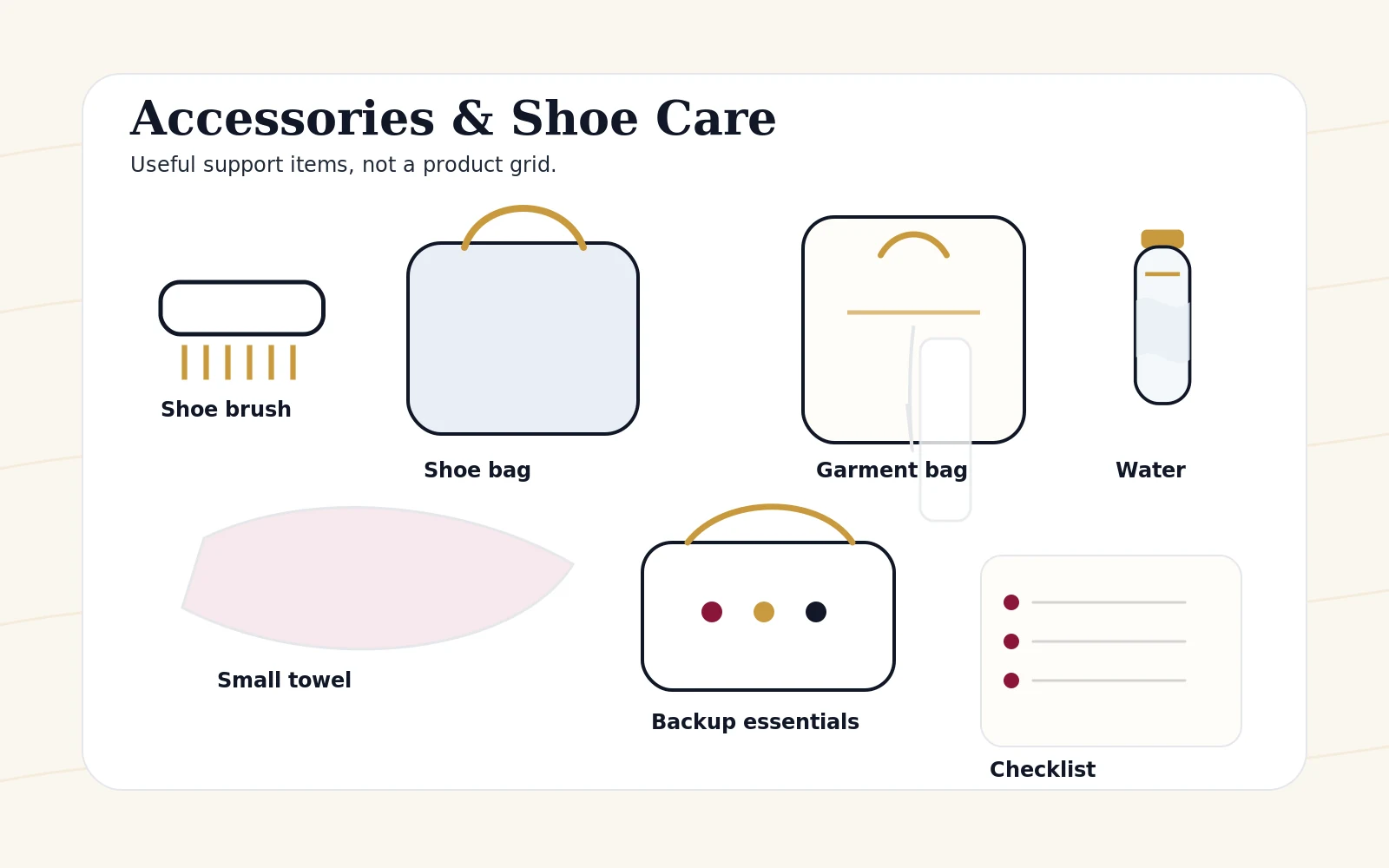
Accessories that are actually useful
These small items appear again and again in real dance bags. Most are inexpensive.
-
Shoe brush
Useful for suede soles when the texture gets matted down.
-
Dance shoe bag
Keeps indoor dance shoes separate from outdoor surfaces and the rest of your bag.
-
Small towel or spare top
Helpful for long lessons, socials, or competitions.
-
Mints and water
Simple, practical, and appreciated in partner dancing.
-
Heel protectors
Useful only when allowed and appropriate for the floor and shoe.
-
Garment bag
Worth considering for competition attire, formal events, or delicate dresses.
-
Backup essentials
Safety pins, hair pins, tape, stain remover, and a small sewing kit can save a long dance day.
Planned guide — coming soon
Care
Shoe care and floor-care basics
Suede-soled dance shoes should generally stay indoors on appropriate dance floors. Outdoor pavement, moisture, dirt, and gravel can damage the soles and change how the shoe grips or slides. If you use suede soles, brush them regularly with a dance shoe brush and store them in a shoe bag. Follow your shoe brand’s instructions and the venue’s floor rules.
Planned guide — coming soon
Mistakes
Buying mistakes to avoid
These are the recurring traps beginners describe most often. Each has a calm, practical fix.
-
Mistake: Buying expensive shoes before your first lesson.
Start simple. Ask your teacher after you know which dances you are learning.
-
Mistake: Choosing the highest heel because it looks more “ballroom.”
Choose control first. Style matters less than being able to move clearly.
-
Mistake: Wearing suede soles outside.
Change shoes at the venue and use a shoe bag.
-
Mistake: Assuming one brand’s sizing applies to every brand.
Read the size chart and return policy every time.
-
Mistake: Buying competition attire before verifying rules.
Ask your teacher and check the event requirements before spending.
-
Mistake: Treating gear as a substitute for practice.
Gear supports dancing. It does not replace timing, posture, connection, and practice.
Trust
Methodology and affiliate disclosure
Some future gear guides may contain affiliate links. If you buy through those links, Ballroom Pages may earn a commission at no extra cost to you. We only include affiliate links where the guide remains useful without them, and product recommendations must follow a published methodology. See our affiliate disclosure for the full policy.
Editorial standards
Future product reviews
Before Ballroom Pages publishes “best” lists or product reviews, each product guide should explain the selection criteria, update date, whether products were tested hands-on, whether photos are original or licensed, and which details may change, such as price, availability, sizing, colors, and return policy. Until then, this hub focuses on how to choose intelligently.
Related guides
Related guides
Companion hubs across Ballroom Pages so gear decisions stay tied to the dancing.
FAQ
Ballroom gear FAQ
The questions readers ask most often before their first gear purchase.
-
Do beginners need ballroom dance shoes?
Not always for the first lesson. Many beginners can start with clean, secure shoes if the studio allows them. If you continue dancing weekly, dance shoes usually become a useful first upgrade.
-
What makes ballroom dance shoes different from street shoes?
Dance shoes are usually designed for indoor dance floors, with soles, flexibility, heel placement, and fit meant for movement. Street shoes may grip too much, slide too much, or mark the floor.
-
Can I wear suede-soled dance shoes outside?
No, not as a normal habit. Suede soles are generally meant for indoor dance floors. Outdoor surfaces, moisture, and dirt can damage the sole and change how it moves on the floor.
-
Should beginners buy Latin shoes or ballroom shoes first?
It depends on what you are learning. If you are mostly dancing Waltz, Foxtrot, Tango, or Smooth/Standard, a closed-toe ballroom or Smooth shoe may make sense. If you are mostly dancing Rumba, Cha Cha, Salsa, or Rhythm/Latin, ask your teacher whether Latin shoes are appropriate yet.
-
How should ballroom dance shoes fit?
They should feel secure and snug, but not painful. There should not be so much extra space that your foot slides around. Brand sizing varies, so check size charts and return policies.
-
What heel height should beginners choose?
Choose a heel height you can control. Lower or more stable heels are often easier when you are new. Ask your teacher before buying higher heels for technique or competition reasons.
-
What should I wear to my first ballroom lesson?
Wear comfortable clothes that let you move and shoes that stay on your feet. You do not need a costume, gown, suit, or expensive dancewear for a first lesson.
-
What shoes should I wear for a wedding first dance?
Wear shoes that work with your outfit and the floor, but practice in them before the wedding. Check whether you can step, turn, and recover comfortably.
-
Do I need competition attire right away?
No. Competition attire should wait until you know the event, level, category, rules, and teacher guidance.
-
Will this page include affiliate links?
The first version should work without affiliate links. If affiliate links are added later, the page must include a visible disclosure and product methodology before the first affiliate link.