Why ballroom dance shoe sizing feels confusing
If your street shoes are a size 8 but your dance shoes turned out to be a 6.5—or a 39, or a 5½—you are not doing anything wrong. Ballroom dance shoe sizing genuinely is harder to pin down than everyday footwear, for a few reasons:
- No universal conversion. Brands, models, and countries use different sizing systems, and they do not line up neatly.
- Dance shoes are fitted differently. A secure dance fit is usually closer to the foot than a casual street fit, so the number is often smaller.
- Width and shape vary. Two shoes labeled the same size can fit very differently depending on width and toe shape.
- Shoe type matters. Latin/Rhythm, Smooth/Standard, and practice shoes are built for different jobs and can fit differently.
- Feet differ. Most people have two slightly different feet, and feet change size across the day.
Measure before you shop
Five quick minutes with paper and a ruler beats guessing. Measure both feet so you can size to the larger one.
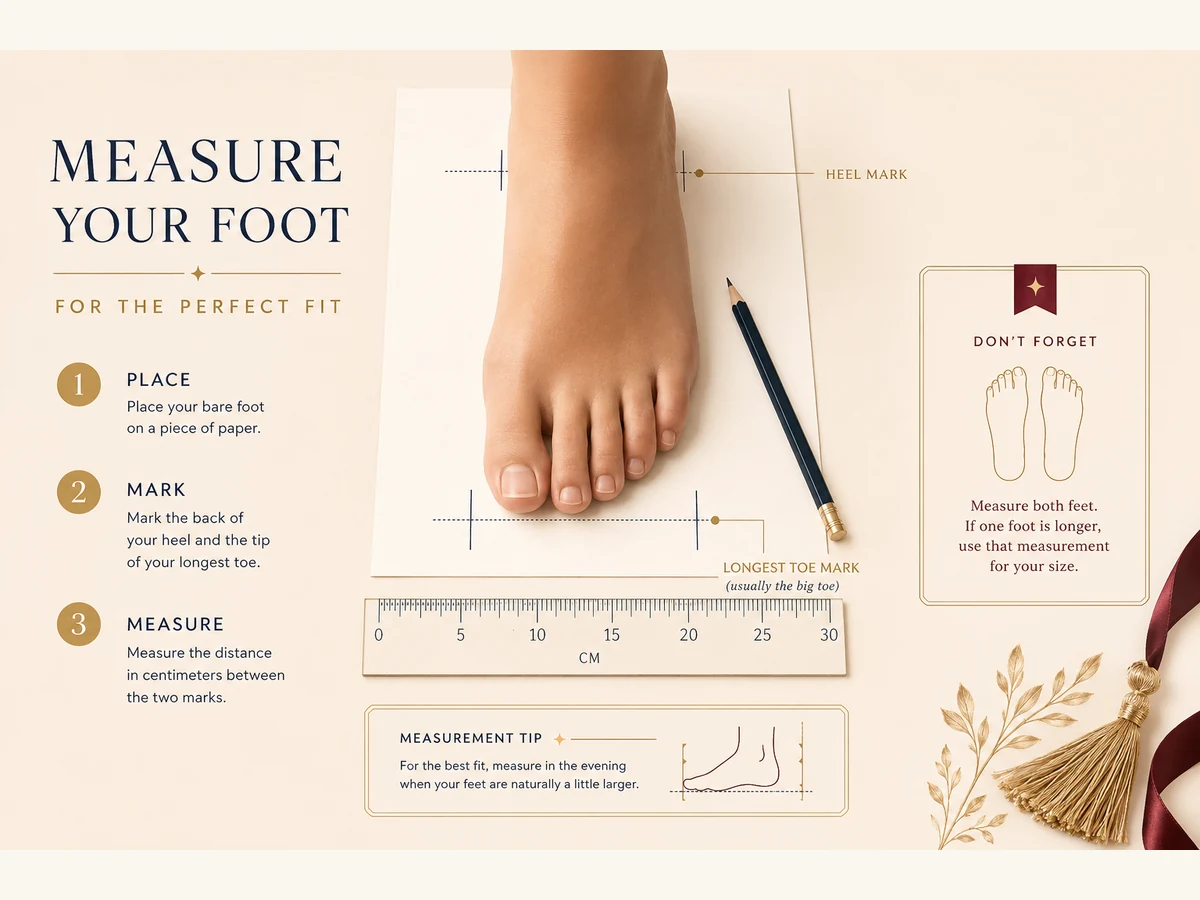
- Measure at the end of the day. Feet swell slightly as the day goes on, so a late-afternoon or evening measurement is more realistic. Wear the socks or hosiery you would dance in.
- Trace each foot. Stand on a sheet of paper with your weight on the foot and trace around it, keeping the pencil upright.
- Measure length and width. Measure the longest length (heel to longest toe) and the widest point in centimeters, for both feet.
- Use the larger foot. Most people have two slightly different feet—size to the bigger one.
- Compare to the current brand chart. Match your measurements to the specific brand and model’s current size chart. Remember there is no universal ballroom shoe conversion.
How snug is “snug”?
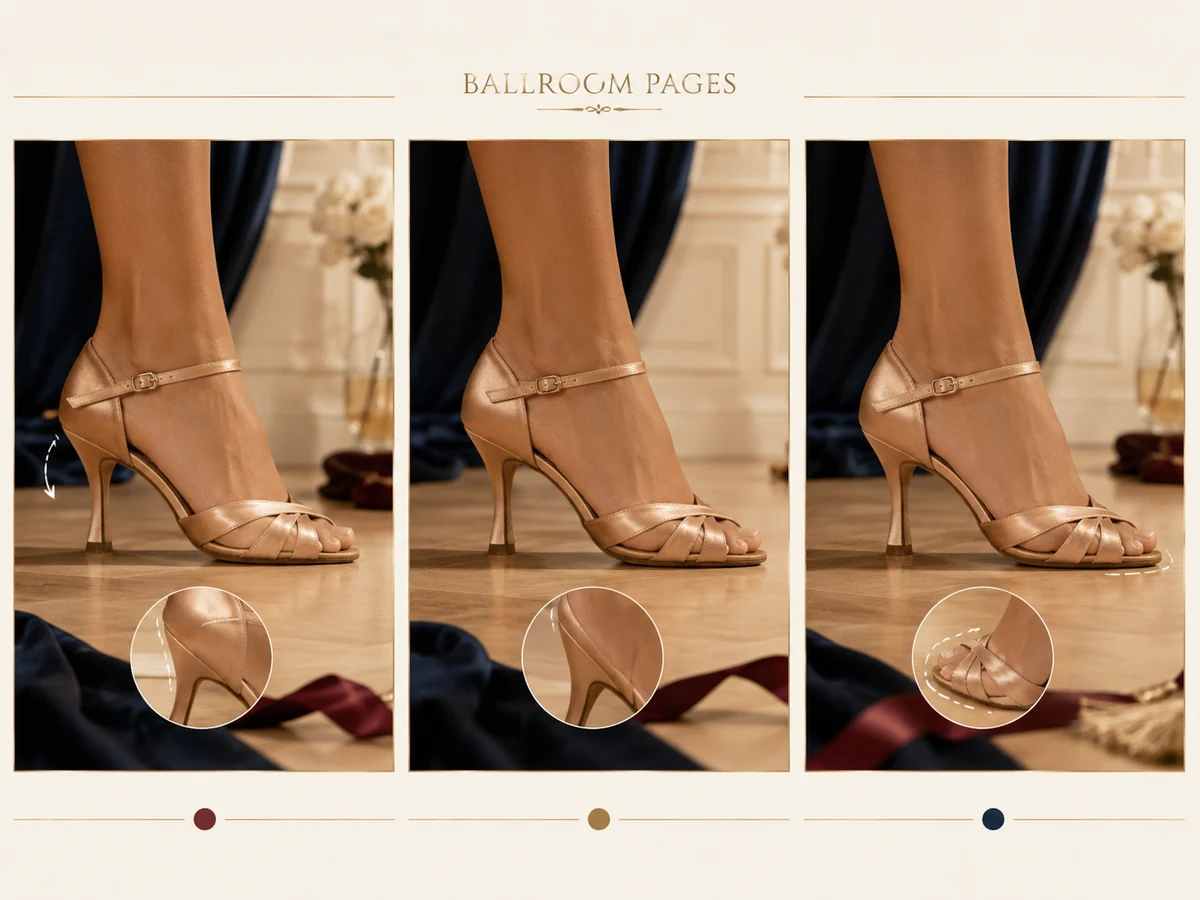
| Area | Too loose | Secure (goal) | Too tight |
|---|---|---|---|
| Heel | Slips or gaps when you rise | Held in place; minimal movement | Pinches or rubs painfully |
| Toes | Slide forward; gap at the front | Reach near the edge, lying flat | Curled, jammed, or numb |
| Width | Foot shifts side to side | Supported across the ball | Bulging, burning, or pinching |
| Strap | Loose even on the tightest hole | Holds the foot without digging in | Cuts into the skin |
| Overall | Foot moves inside the shoe | Feels like part of your foot | You want them off after a minute |
Fit by shoe type
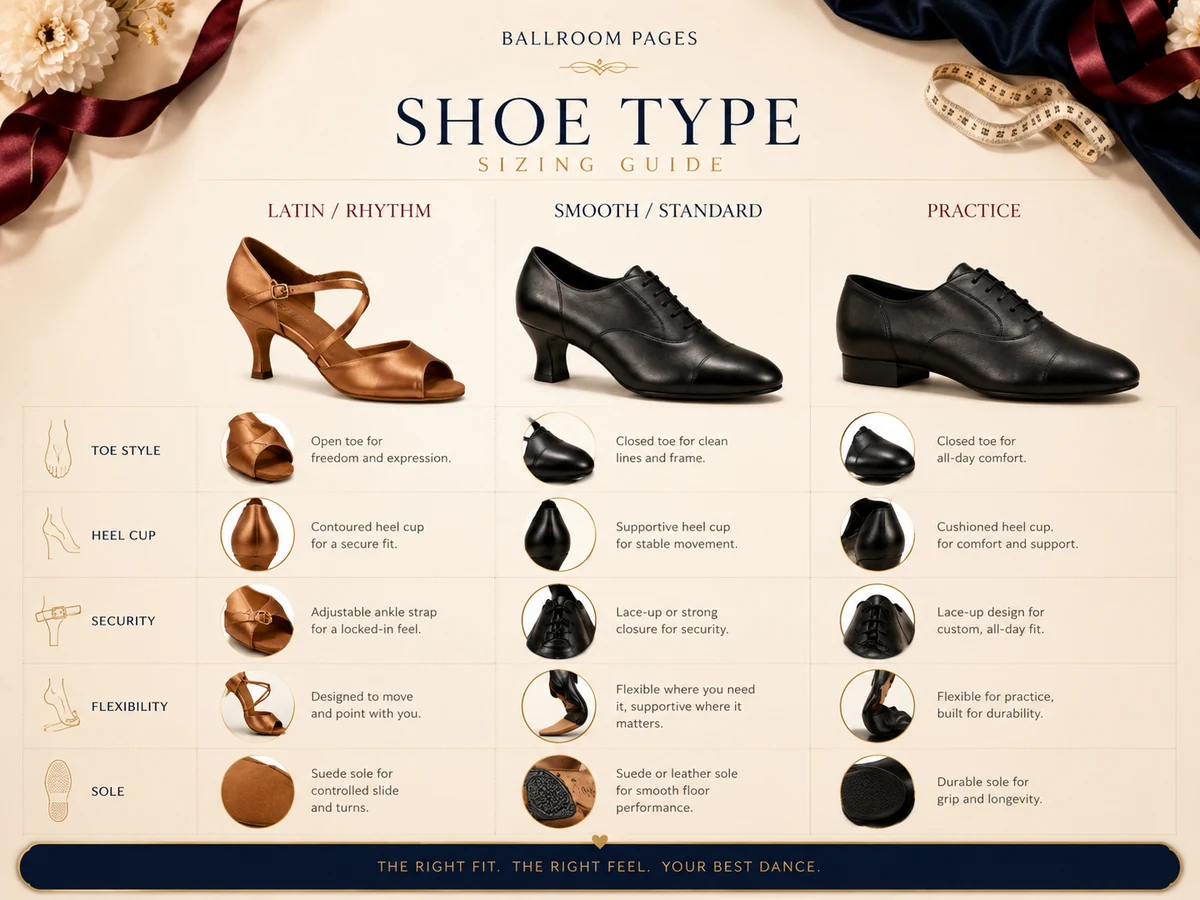
The same size label can feel different across shoe types because each is built for a different job. Compare Latin vs ballroom in detail in the gear hub guides.
Latin / Rhythm (open-toe)
Often fitted close, with toes reaching near the front edge for articulation and support. A higher heel changes balance, so confirm the look and feel with your teacher.
Smooth / Standard (closed-toe)
Closed-toe court styles still fit securely but usually feel a little more enclosed. Heel height is typically lower than Latin.
Practice shoes
Often roomier and more cushioned for longer sessions, with a lower, stable heel. A good first purchase for many beginners.
Men’s ballroom shoes
Generally a lower heel and a more enclosed last; still aim for a secure, non-sliding fit with the toes comfortable.
Choosing your first pair? Start with ballroom dance shoes for beginners. A dedicated Latin-vs-ballroom and practice-shoe comparison is planned in the gear hub.
Sizing by goal
What you are buying for changes how you should weigh comfort, security, and style.
| Goal | Prioritize | Note |
|---|---|---|
| First lessons | Comfort + a stable, lower heel | A practice or beginner shoe lowers the learning curve. See the first lesson guide. |
| Social dancing | All-night comfort + secure fit | You will be on your feet a while; favor support over a dramatic heel. |
| Wedding first dance | Comfort + the right look for the outfit | See wedding dance shoes and the wedding dance guide. |
| Competition / performance | A precise, secure, style-appropriate fit | Ask your teacher or coach which model and size suits your level and style. |
Online ordering strategy
Ordering online works well if you prepare. The biggest risks are guessing the size and accidentally voiding a return by scuffing the soles.
- Measure both feet first and size to the larger one.
- Compare to that exact brand and model’s current chart, not a generic one.
- Read the retailer’s return and exchange policy before you order (policies vary—do not assume).
- When the shoes arrive, try them indoors on a clean, soft surface.
- Do not wear suede-soled shoes outdoors or scuff the soles if you might return them.
- Keep packaging and tags until you are sure you are keeping them.
- If unsure between two sizes, ask the retailer which the model tends to run, or your teacher.
In-store fitting strategy
A specialist dance-shoe fitter is one of the best resources you have. If you can try in person:
- Go later in the day with your dance socks or hosiery.
- Try more than one size and width in the same model.
- Stand, rise onto the balls of your feet, and shift weight side to side.
- Check heel hold, toe room, width, and strap pressure (use the try-on checklist below).
- Walk a few steps and, if the shop allows, mark a simple weight change.
- Tell the fitter your goal, your level, and any foot concerns.
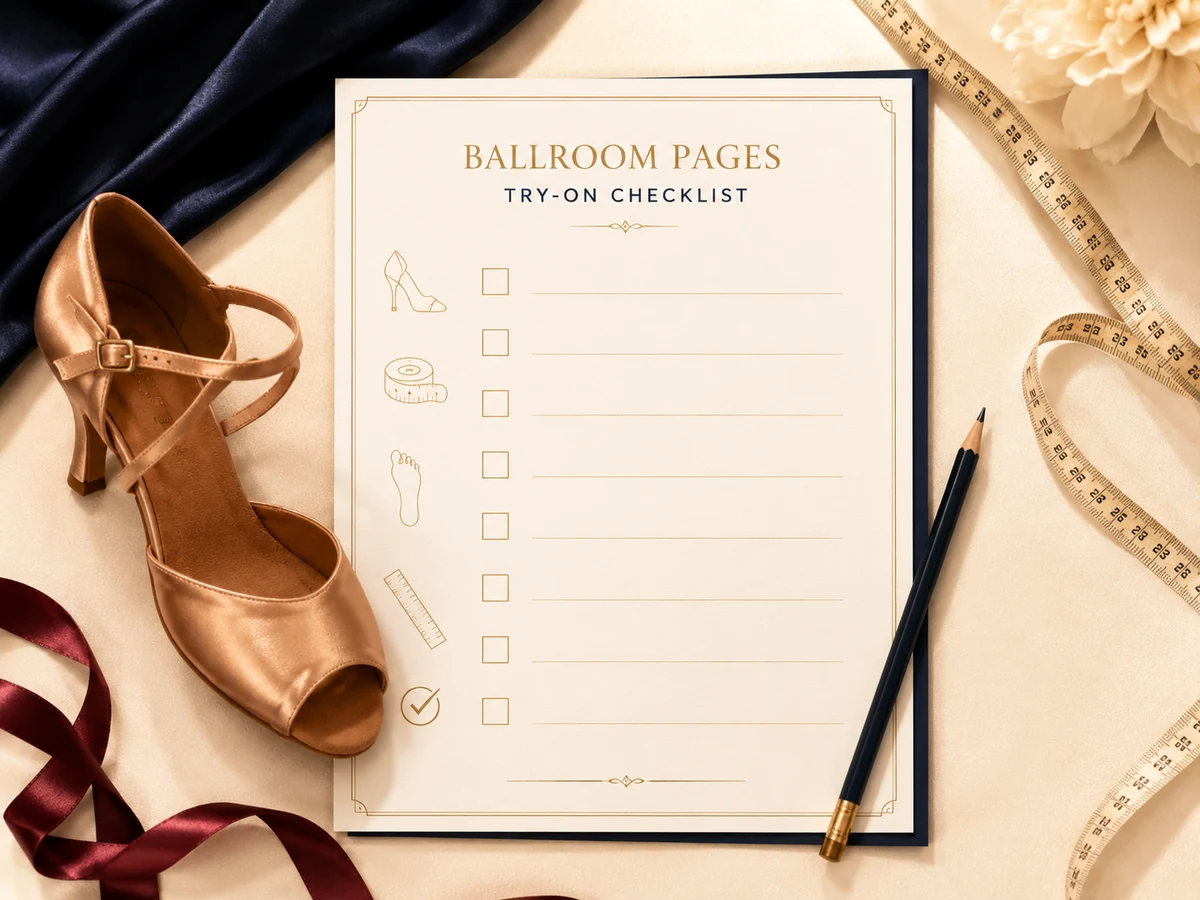
Take the try-on checklist with you
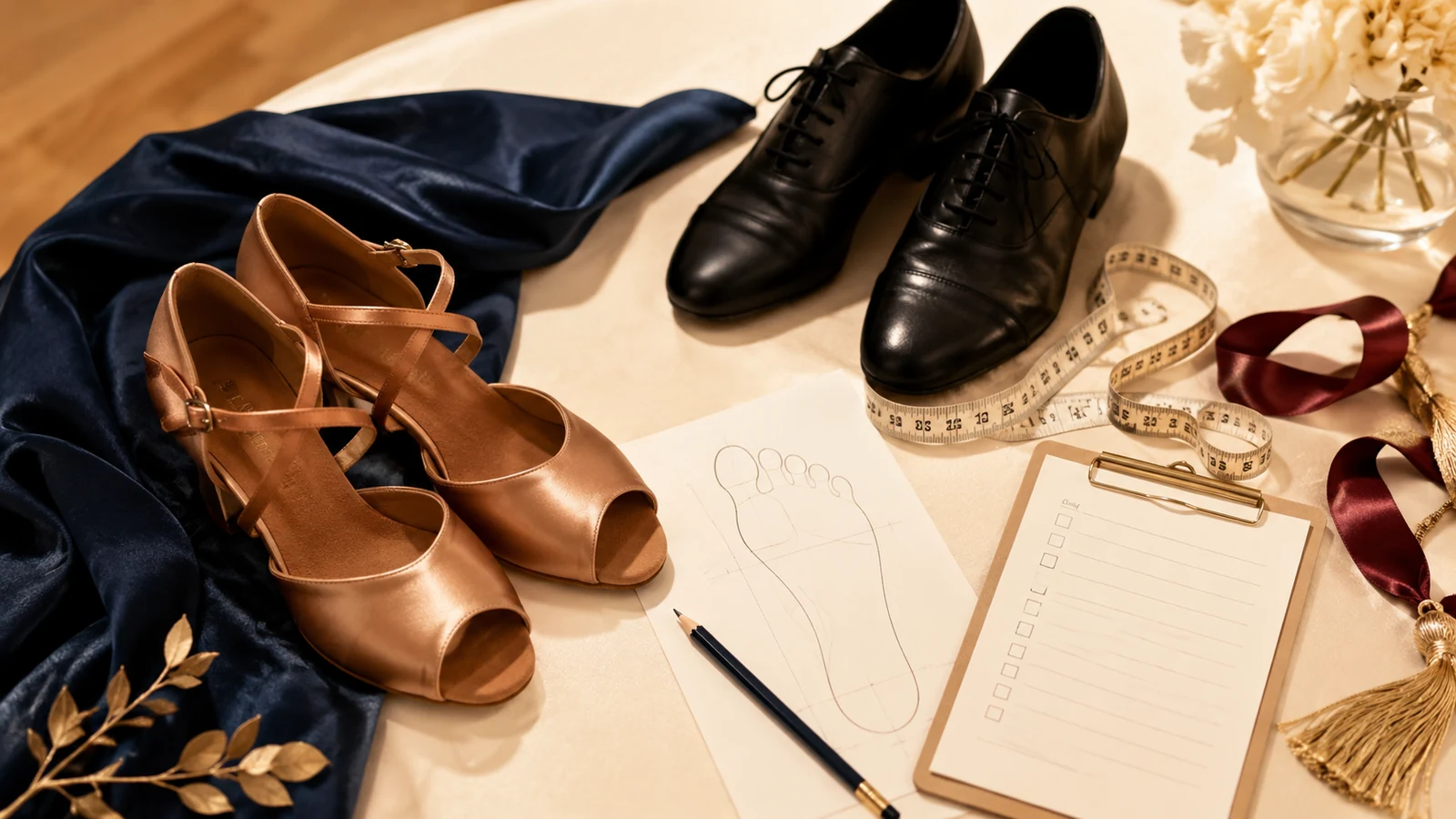
Download the Ballroom Dance Shoe Sizing Checklist—measure, compare, try on, and decide with confidence.
Get the Shoe Sizing ChecklistCommon fit problems and fixes
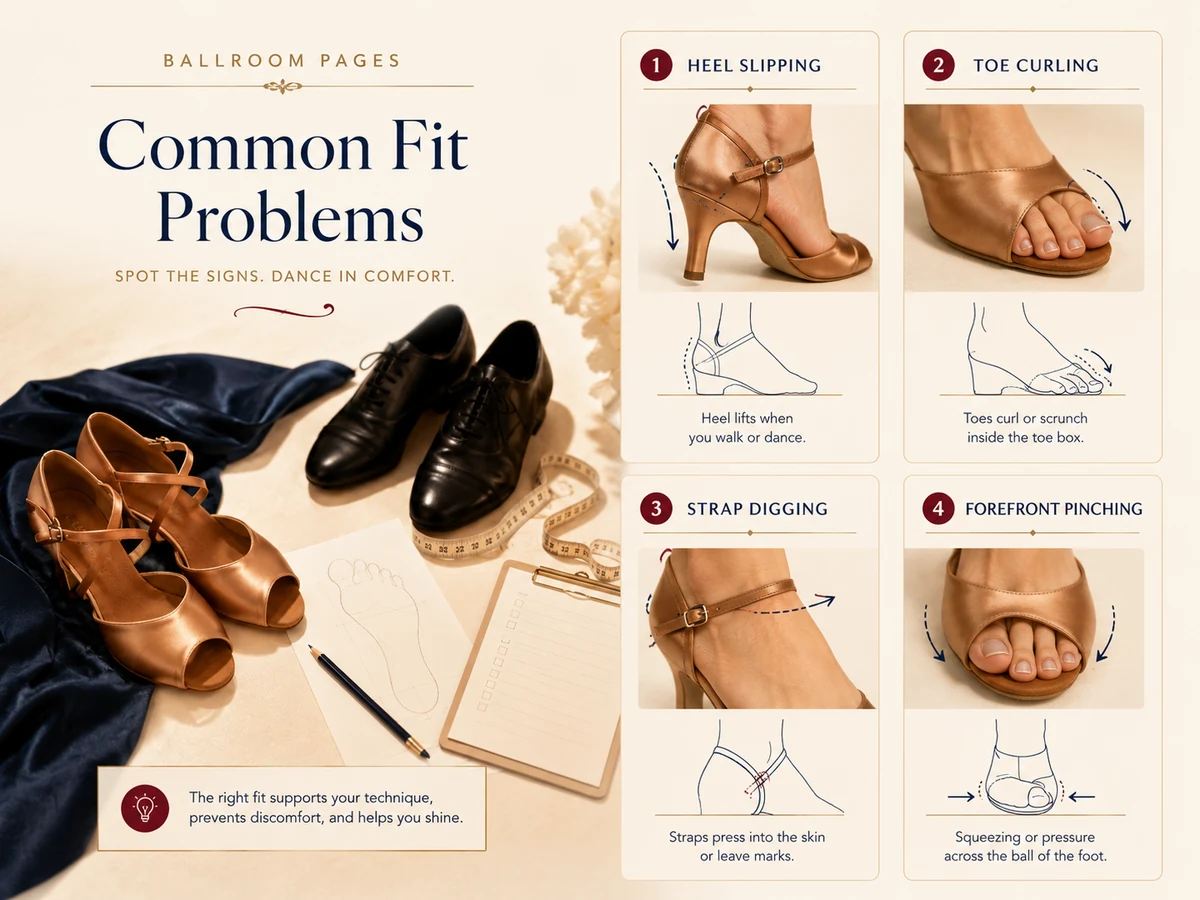
| Problem | Likely cause | What to try |
|---|---|---|
| Heel slip | Too long/wide, loose strap, or shape mismatch | Tighten the strap; try a smaller or narrower size or a different model |
| Toes curling or jammed | Too short or wrong toe shape | Try a half size up or a rounder toe shape |
| Forefoot pinching / burning | Too narrow across the ball | Look for a wider width or a roomier model |
| Strap digging in | Strap placement or too tight | Adjust the hole; consider a different strap style |
| Foot sliding inside | Too big or too wide overall | Size down or narrower; confirm against the chart |
| Arch or sole discomfort | Support or cushioning mismatch | Consider a practice shoe or different model; see a professional if pain persists |
Break-in and first-week expectations
Leather dance shoes can ease and mold slightly to your foot over the first week of light wear, but they do not change size dramatically. Buy for a secure fit now, not a fit you hope to stretch into.
- Wear them in short sessions at first, on a clean indoor surface.
- Expect a little snugness to relax—not pain to disappear.
- Brush a suede sole gently to maintain grip; never take suede soles outdoors.
- If a shoe is painful when new, treat that as a sizing/shape problem, not a break-in problem.
Test your fit with one song
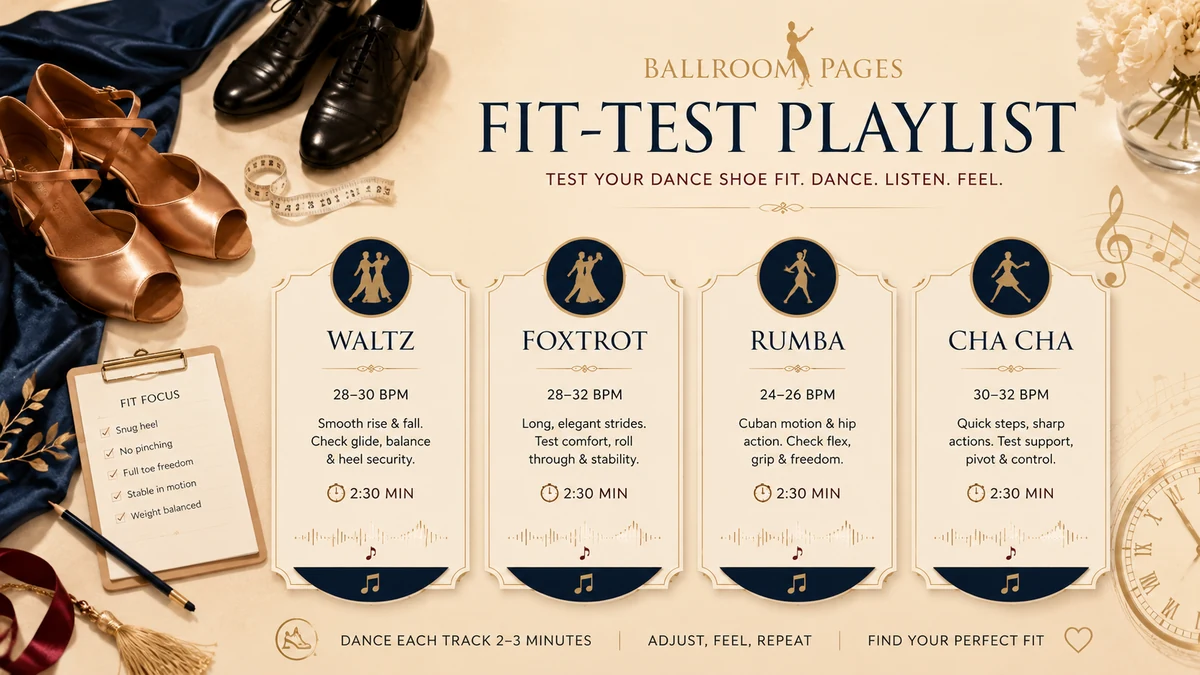
Once you have a secure-feeling pair—and only if the return policy allows an indoor try-on—a single calm song per dance tells you more than standing still. Keep it gentle on a clean, soft surface so the soles stay return-safe.
What each dance reveals
Waltz or Foxtrot
Heel security and balance through rise and lower.
Rumba
Foot articulation and forefoot comfort at a slow tempo.
Cha Cha
Strap hold and ball-of-foot pressure on quick weight changes.
Swing / Jive
Only if the fit already feels stable and the shoes are return-safe.
Playlist links are being refreshed. Use the Ballroom Pages music hub for current practice playlists, check speeds on the tempo chart, or follow BallroomPages Music on Telegram.