Men’s ballroom attire at a glance
| Situation | Best starting outfit | Upgrade when ready | Avoid |
|---|---|---|---|
| First lesson | Fitted T-shirt, polo, or casual button-down; chinos, dress trousers, or flexible slacks | Entry-level dance shoes or smooth-soled dress shoes | Stiff jeans, rubber soles, oversized shirts |
| Regular practice | Breathable shirt, stretch trousers, dance pants, or comfortable slacks | Practice shoes, dance trousers, fitted stretch shirt | Heavy jackets, hot fabrics, belts that dig in |
| Social dancing | Smart casual or dressy casual depending on venue | Dress shirt, vest, polished trousers, good dance shoes | Gym-only look unless the event is very casual |
| Wedding dance lesson | Practice clothes plus wedding-day shoes when possible | Rehearse in suit/tux pieces or similar restrictions | Waiting until wedding day to test shoes or suit |
| Showcase | Polished look chosen with teacher/studio | Performance shirt, trousers, vest, jacket, or costume elements | Last-minute tailoring, untested shoes |
| Competition | Confirm level/style rules first | Syllabus outfit, Latin/Rhythm outfit, tux, tails, or formalwear as appropriate | Buying tails or Latin costume before confirming rules |
What men’s ballroom dance attire means
“Men’s ballroom attire” is a broad, practical category—not a single uniform. It runs from a comfortable shirt and trousers for a first lesson all the way to a tailsuit for a high-level Standard competition. What the pieces share is that they are chosen to support movement (arms up, torso rotating, legs stepping and traveling) while looking right for the setting.
What to wear by situation
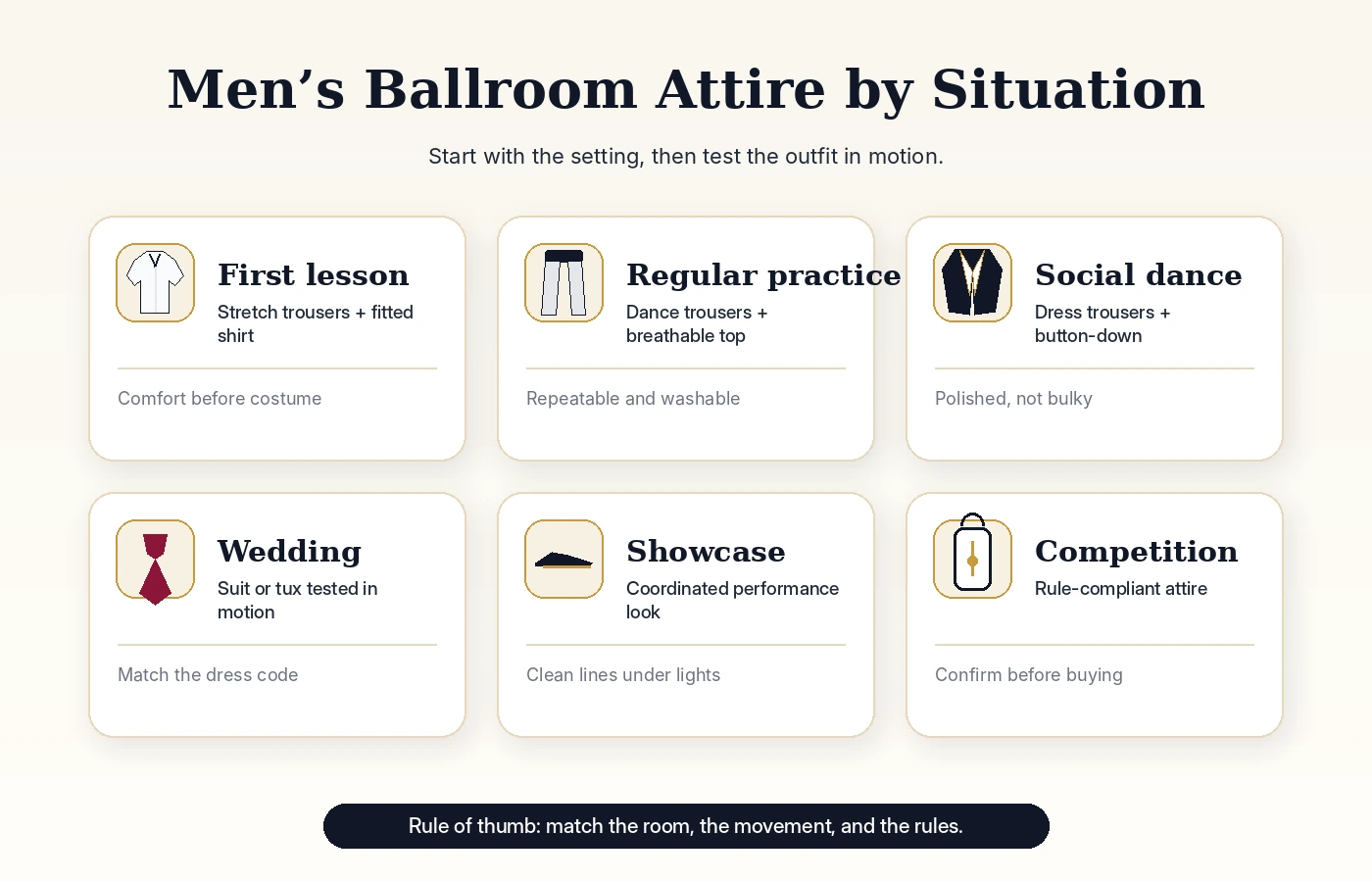
First lesson
Comfortable, movement-friendly clothing and secure smooth-soled shoes. No special gear needed.
Regular practice
Breathable top, stretch-friendly trousers, secure waistband, dance-appropriate shoes.
Social dancing
Smart casual to dressy, depending on the venue and crowd.
Wedding dance
Practice in something like your wedding silhouette and shoes well before the day.
Showcase / performance
A polished, intentional look chosen with your teacher or studio.
Competition
Style- and level-appropriate, rule-compliant attire—confirm before buying.
What to wear to your first ballroom dance lesson
Keep it simple. The goal is to move and learn, not to look like a competitor. A fitted T-shirt, polo, or casual button-down with chinos, dress trousers, or flexible slacks is plenty. Run this quick check before you head out:
- You can lift your arms overhead comfortably.
- You can take a wide side step without the trousers restricting you.
- You can rotate your torso freely.
- Your shoes stay secure on your feet.
- Your soles do not over-grip the floor (no rubber/sticky soles).
- You feel comfortable and not too hot.
For a deeper first-lesson walkthrough, read what to wear to your first ballroom lesson and the ballroom dance for beginners guide.
Men’s ballroom practice attire
Once you practice regularly, comfort and movement are everything. A reliable formula:
Sweat management matters over a long session—breathable fabrics and a spare shirt help. For shoes that pair with practice clothes, see ballroom practice shoes, and structure your sessions with a practice routine.
Men’s ballroom social dance attire
Social dressing depends on the venue. Read the room (or the invitation) and aim for comfortable, secure clothing you can dance in all evening.
Studio social
Usually smart casual: a clean shirt and comfortable trousers with your dance shoes.
Hotel ballroom / formal dance
Dress shirt and polished trousers, often with a vest or jacket. Lean dressier when unsure.
Latin night / mixed social
Dressy but breathable—a fitted shirt that moves, and shoes you can pivot in.
Brush up on floor courtesy with dance etiquette.
Wedding dance attire for grooms and guests
For the groom
Practice in something close to your wedding silhouette—jacket, waistcoat, and stiff trousers all change how you move. Bring your wedding-day shoes to lessons once you have them, and test a dip or lift (if any) in the real pieces before the day.
For guests
Dress for the wedding’s formality, but choose shoes and trousers you can actually dance in if you plan to hit the floor.
Plan the first dance with the wedding dance guide and coordinate footwear in wedding dance shoes.
Showcase and performance attire
Showcases sit between social and competition. The look should be polished and support the choreography, but it should always be teacher- or studio-approved—they know the venue, the lighting, and what reads well on the floor. Rehearse in the actual outfit and shoes; do not save tailoring or new shoes for the day of the performance.
Competition attire: what changes?
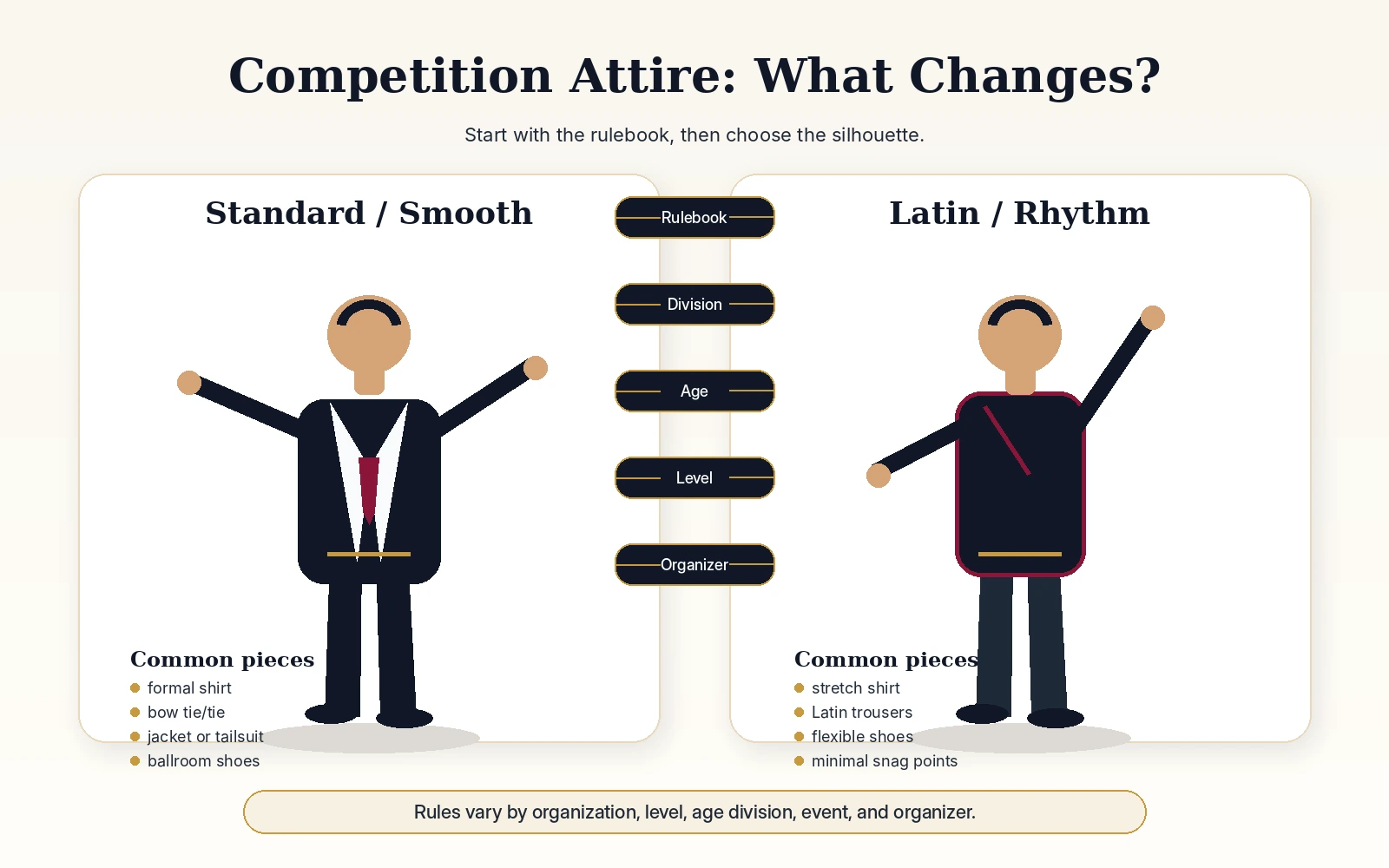
Competition attire rules are not universal. What is expected or allowed depends on the organization, event, level, division, age category, syllabus or open status, dance family, and organizer. Newcomer and syllabus categories in particular often limit decoration and styling. Always confirm the current rules for your specific event—and ask your teacher—before buying tails, a Latin costume, or any specialized outfit.
In general terms, men’s competition attire can range from a simple syllabus outfit (shirt and trousers) up through a vest or jacket, a tuxedo, or a tailsuit for higher-level Standard, with closer-fitting flexible attire for Latin/Rhythm. Because specifics change by year and organizer, this guide does not state any rule as universal—use the sources below as starting points. See the competitions hub and competition categories for context.
Ballroom/Smooth vs Latin/Rhythm attire
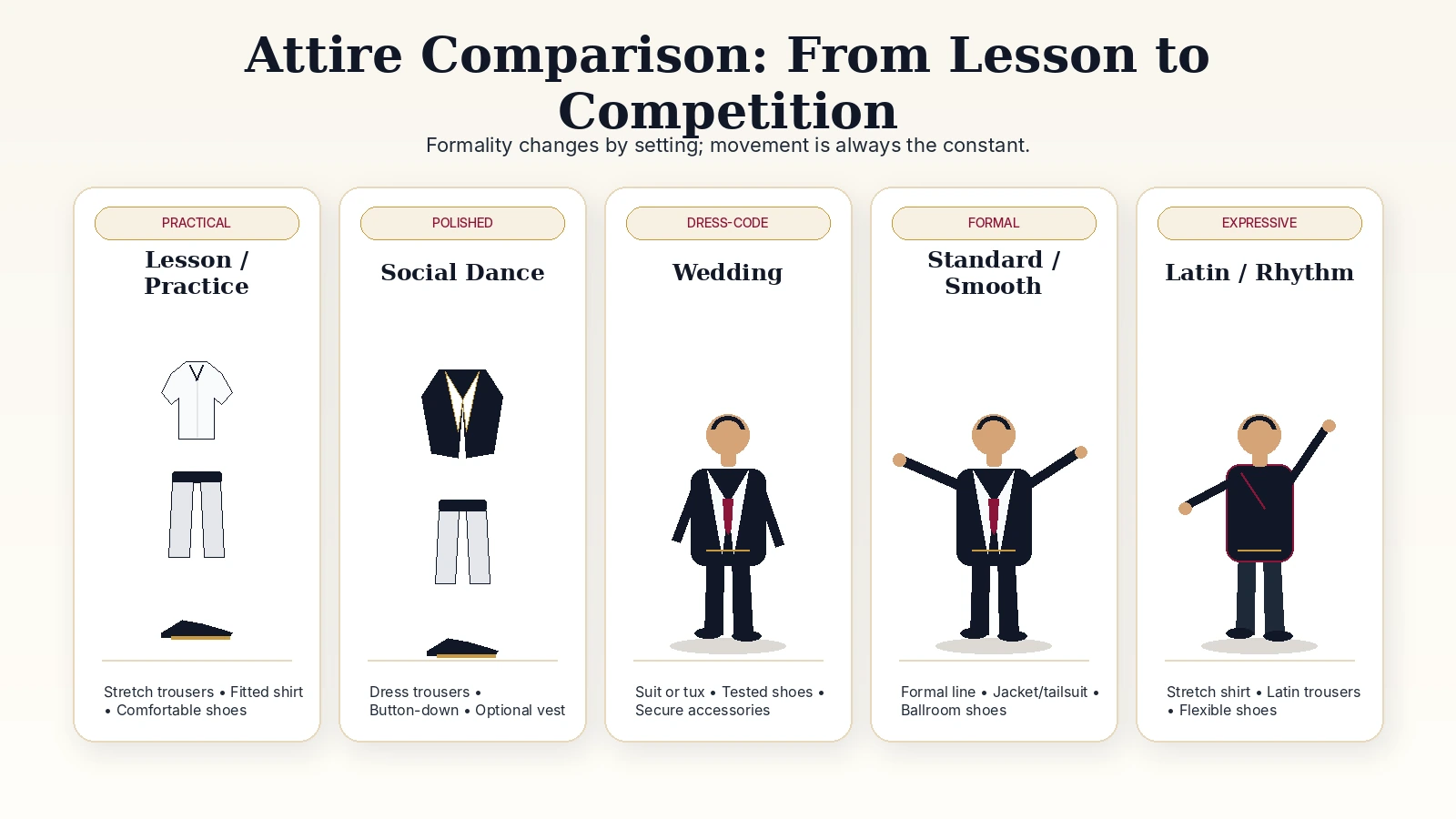
| Context | Typical emphasis | Notes |
|---|---|---|
| American Smooth | Formal, structured; dress trousers, shirt, vest/jacket; tux at higher levels | Supports a strong frame; allows some open work at higher levels |
| International Standard | Most formal; tailsuit at higher levels | Closed-hold dances; strong, lifted posture |
| American Rhythm | Closer-fitting, flexible; stretch shirt and trousers | Shows movement and dynamic action |
| International Latin | Closest-fitting, most flexible; Latin shirt and trousers | Built for big, articulate movement |
| Social dance | Smart casual to dressy by venue | Comfort and security for a whole evening |
| Wedding dance | Driven by the wedding outfit | Rehearse in a similar silhouette and shoes |
Key garment categories
Dance trousers
Cut and fabric made for movement, often with a flattering line and stretch.
Dress trousers
A polished option for socials and formal settings; check stretch and rise for dancing.
Practice pants
Comfortable, breathable, stretch-friendly trousers for long sessions.
Button-down shirts
Versatile from lesson to social; choose a fit that lets the arms move.
Stretch dance shirts
Fitted, breathable shirts that stay tucked and move with you.
Latin/Rhythm shirts
Closer-fitting and flexible to show dynamic movement.
Vests
Add polish for socials, showcases, and Smooth/Standard looks.
Jackets
Dressier settings; confirm the arms and shoulders are not restricted.
Tailcoats / formal competitionwear
Higher-level Standard; buy only after confirming event rules and your needs.
Belts, suspenders, bow ties, ties, cufflinks
Finishing touches—keep them secure so nothing catches or digs in.
Undershirts
Help with sweat and comfort under shirts; choose breathable, low-bulk options.
Socks
Smooth, mid-to-long socks that stay up and pair with your shoes.
Shoes
The biggest difference-maker. See shoes for beginners and shoe sizing.
Fit and movement checklist
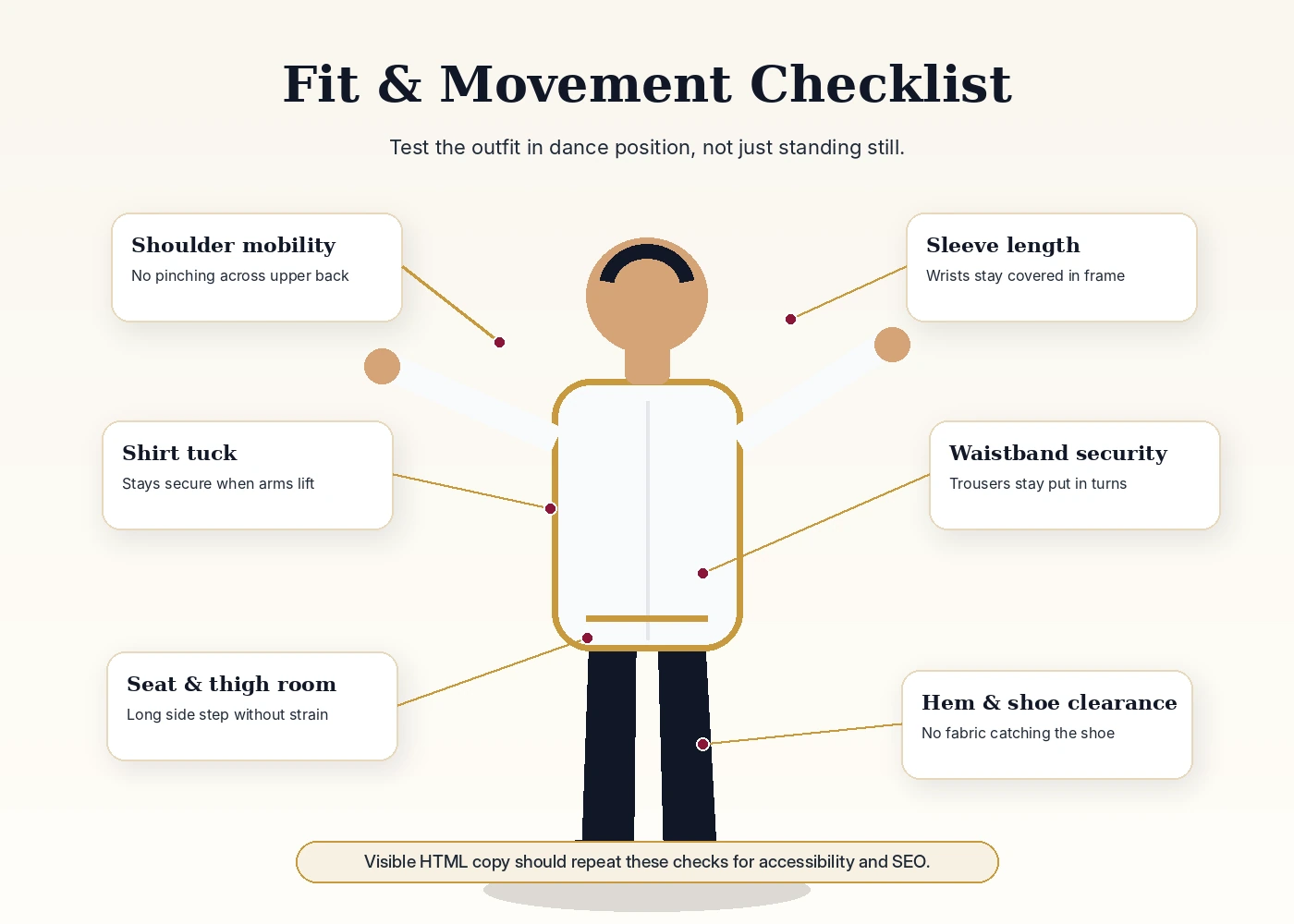
- Shoulders: jackets and shirts let you raise and extend the arms without pulling.
- Sleeves: long enough to stay put with arms up; not so long they bunch.
- Shirt length: stays tucked through movement.
- Waistband: secure but does not dig in when you bend or rotate.
- Seat & thigh: room to step wide and lower without strain.
- Trouser hem: breaks cleanly on your dance shoes—no dragging or catching.
- Shoe clearance: hem and trouser width work with your shoe and heel.
- Stretch: fabric moves with you where you need it.
- Breathability: you stay comfortable through a full song or round.
What not to wear
- restrictive suits that limit the arms or stride,
- rubbery soles that grip the floor,
- slippery shoes you cannot control,
- stiff jeans,
- shorts in formal contexts,
- untucked, flapping shirts,
- oversized shirts,
- bulky jackets that restrict movement,
- dragging hems,
- loose accessories that can catch on your partner,
- brand-new shoes worn for the first time on an important day.
Budget tiers: what to buy first
Build your wardrobe in stages. This guide is brand-neutral and does not name products or prices.
- Closet starterUse what you already own: a fitted shirt and flexible trousers for a first lesson.
- Shoe-firstThe highest-impact upgrade—proper dance shoes change how you move. See shoes for beginners.
- Practice upgradeAdd stretch dance trousers and a fitted, breathable practice shirt for regular sessions.
- Occasion polishA dress shirt, vest, and polished trousers for socials, weddings, and showcases.
- CompetitionSyllabus, Latin/Rhythm, tux, or tails as appropriate—only after confirming your event’s rules.
Common buying mistakes
Buying competitionwear too soon
Fix: start simple; buy specialized attire once your goals and rules are clear.
Choosing looks over movement
Fix: test arms up, rotation, and a wide step before buying.
Rubbery, grippy shoes
Fix: use smooth-soled or proper dance shoes that pivot.
Practicing wedding dance only in gym clothes
Fix: rehearse in a wedding-like silhouette and your real shoes.
Assuming Latin/Rhythm and Standard/Smooth are the same
Fix: match the attire to the family you’re dancing.
Ignoring sweat
Fix: choose breathable fabrics and bring a spare shirt.
Over-accessorizing
Fix: keep accessories secure and minimal so nothing catches.
Waiting too long for tailoring
Fix: book alterations early—not the week of the event.
Care, packing, and maintenance
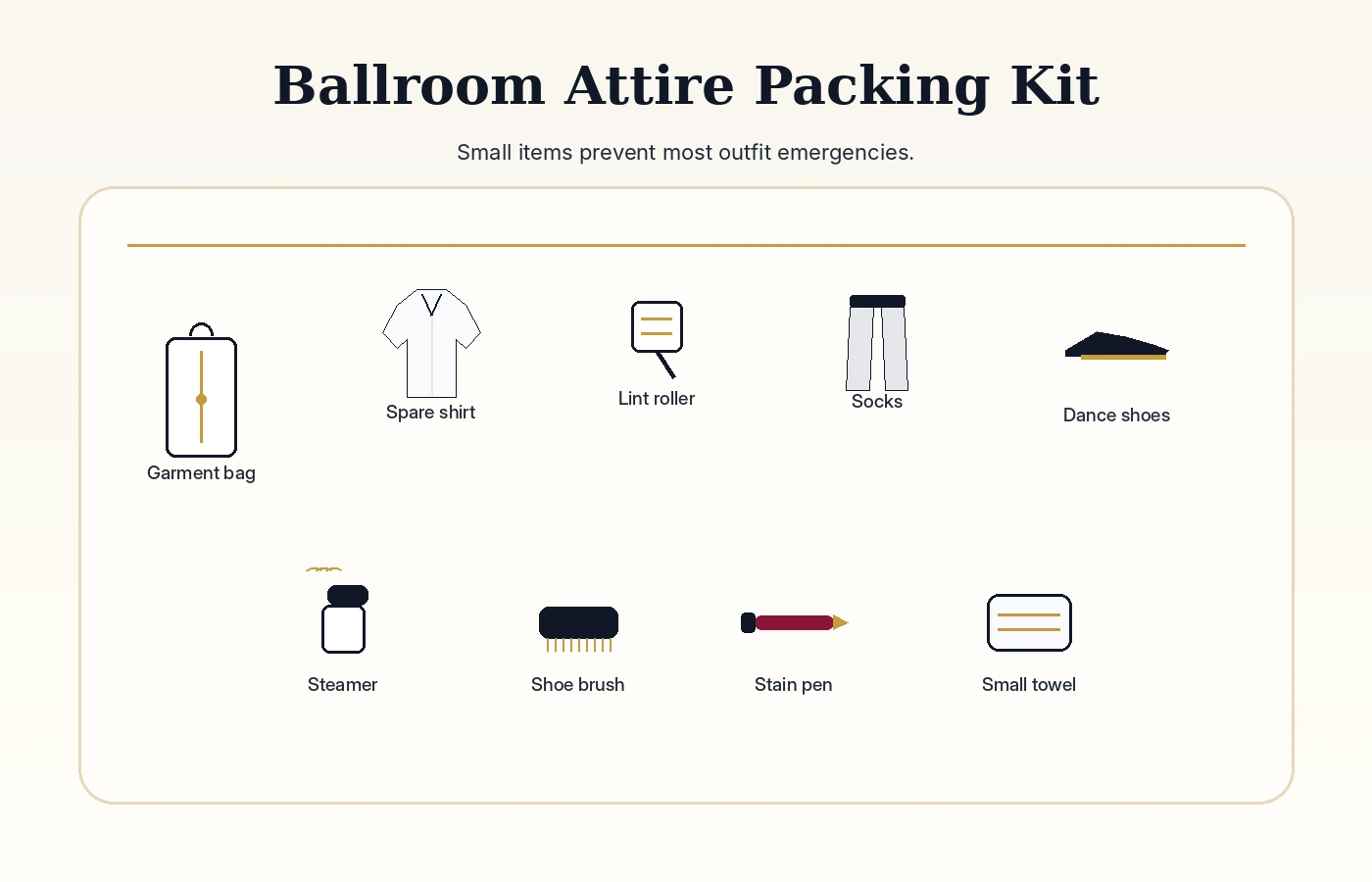
Lessons & socials
- Shirt + spare shirt
- Trousers
- Dance shoes + shoe bag
- Socks
- Deodorant, water
- Shoe brush
Weddings
- Suit/tux pieces in a garment bag
- Wedding-day shoes (broken in)
- Lint roller, stain pen
- Spare socks
- Small repair kit
Showcases & competitions
- Garment bag for the outfit
- Steamer or wrinkle plan
- Backup shirt, socks, accessories
- Shoe brush + heel tips
- Repair kit (pins, thread, glue)
Practice with Ballroom Pages music once you’re dressed to move
A good outfit helps your body move. Music helps your body know when to move. Use Ballroom Pages Music & Timing playlists to practice walking onto the floor, taking frame, starting on time, holding posture through a full song, practicing rounds, switching between Smooth/Standard and Rhythm/Latin energy, testing whether your outfit feels too hot or stiff, and calming nerves before a wedding, showcase, or competition.
Practice playlists & platforms
Ballroom Pages Playlists
Per-dance practice playlists by style and platform — the verified hub.
Smooth / Standard practice
Hold frame and posture through a full song.
Rhythm / Latin practice
Test stretch and movement in your outfit.
BallroomPages Music on Telegram
Playlist updates and listening channel.
Practice with the Ballroom Pages Music & Timing playlists, and learn how to count ballroom dance music.