
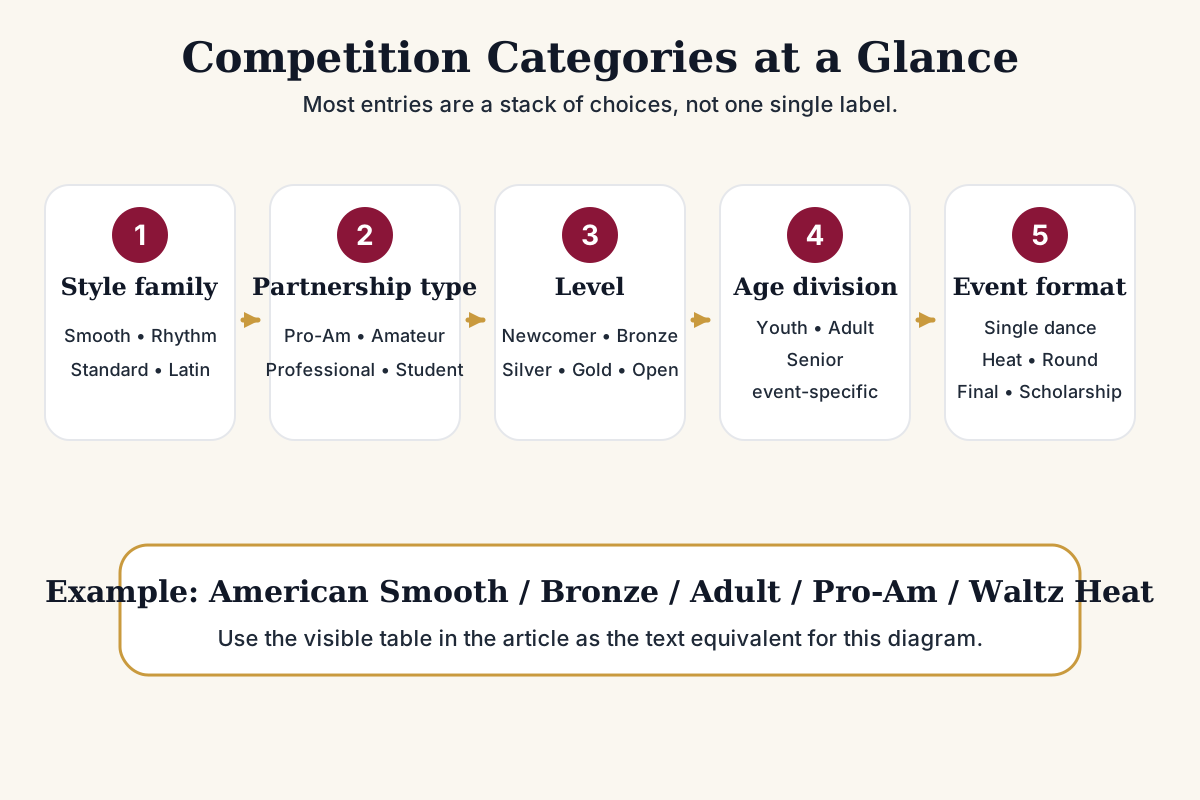
Competition categories at a glance
A category is built by combining choices across several dimensions. The diagram and table below show how those pieces fit together. The specific options—and the words used for them—vary by competition and governing body.
| Style family | Partnership type | Level | Age division | Dance | Format |
|---|---|---|---|---|---|
| American Smooth | Pro-Am | Newcomer | Youth | Waltz | Single-dance heat |
| American Rhythm | Amateur couple | Bronze | Adult | Cha Cha | Multi-dance event |
| International Standard | Professional couple | Silver | Senior | Tango | Scholarship |
| International Latin | Student-student | Gold | Masters | Rumba | Championship |
| Social / club / specialty | Solo / formation | Open | (varies) | Foxtrot | Showcase / final |
Read each row as a menu of options, not a fixed mapping—real entries mix one choice from several columns. Exact labels and bands differ by organizer.
Category, event, heat, round, style, level and age division: what is the difference?
These words get used loosely, but on a registration form they mean specific things.
- Category
- The overall grouping you enter, built from style, partnership, level, age, and format.
- Event
- The specific competition category being contested (for example, Adult Pro-Am Bronze Smooth Waltz).
- Heat
- A scheduled group of entries dancing on the floor at the same time. A popular event may be split into multiple heats.
- Round
- A stage of a larger event—such as a first round, semi-final, or final—used when there are too many couples to dance at once.
- Style
- The dance family, such as American Smooth, American Rhythm, International Standard, or International Latin.
- Level
- Your proficiency tier, such as Newcomer, Bronze, Silver, Gold, or Open. Definitions vary by organization.
- Age division
- The age band you compete in (youth, adult, senior, and so on). Exact bands vary by event.
- Syllabus
- A category restricted to figures approved for the level (and often lower levels).
- Open
- A category with more choreographic freedom than syllabus, within the event’s rules.
For more terms, see the ballroom dance glossary.
Ballroom competition style categories
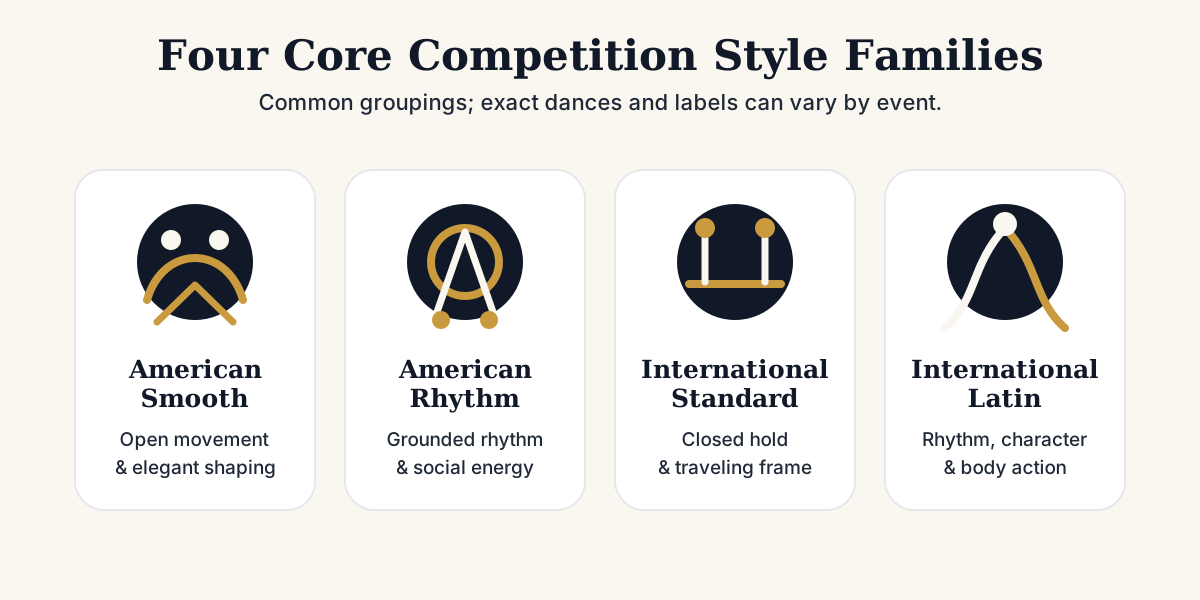
The style family is usually the first choice on an entry. The four main competitive families—plus social and specialty categories—each have their own dances and conventions.
American Smooth
Waltz, Tango, Foxtrot, Viennese Waltz, often allowing open and separated movement at higher levels. Explore Waltz, Tango, and Foxtrot.
American Rhythm
Cha Cha, Rumba, East Coast Swing, Bolero, Mambo, with its own styling and figures. Explore Cha Cha and Rumba.
International Standard
Waltz, Tango, Viennese Waltz, Slow Foxtrot, Quickstep, typically danced in a closed hold throughout.
International Latin
Samba, Cha Cha Cha, Rumba, Paso Doble, Jive, with different technique and counts from American Rhythm.
Social and club styles
Some events offer social or club-style categories (and dances like Salsa or Hustle) with their own rules. Availability varies widely by event.
Specialty, showcase, formation & solo
Choreographed showcases, formation teams, theatrical/cabaret, and solo categories appear at some events. Each has its own format and rules.
Compare every family in ballroom dance styles.
Pro-Am, amateur, professional, student-student and other entry types
The partnership type describes who is dancing together and who is being judged.
Pro-Am
An amateur student dances with a professional partner (often their teacher); the student is the judged competitor. See the Pro-Am ballroom dance guide.
Amateur couple
Two amateur dancers compete together as a couple.
Professional couple
Two professionals compete together in professional divisions.
Student-student
Two students dance together where an event offers the category.
Mixed proficiency
Some events allow partners of different levels to enter specific categories; rules vary.
Solo / showcase / formation
Solo, showcase, and formation entries that are not standard couple competition.
Newcomer, Bronze, Silver, Gold, Open and scholarships
The level (or proficiency class) tells the competition roughly how advanced your figures and technique are. The names below are common, but their exact boundaries are defined differently by each organization.
Newcomer
A beginner-friendly category offered by some events; definition and time limits vary.
Bronze
An early syllabus level focused on foundational figures and technique.
Silver
An intermediate syllabus level that usually adds figures, shaping, and continuity.
Gold
An advanced syllabus level with more demanding figures and stronger expectations.
Open
More choreographic freedom than closed syllabus. Open does not mean “anything goes”—event rules still apply.
Championship & scholarship
Higher-stakes multi-dance categories. Scholarships often carry larger fees and awards. Both are optional and event-specific.
For a deeper explanation of the syllabus tiers, read Bronze, Silver, and Gold ballroom levels explained.
Ballroom dance age divisions
Age divisions group dancers so they compete against peers of a similar age—commonly youth, adult, senior, and masters bands, often with sub-bands. But the exact ages, labels, and how they combine with levels are not standardized.
Age divisions are not universal. Always check the rulebook and registration page for the specific event. Two competitions may use the same label (for example “Senior”) for different age ranges, and some events split or combine bands depending on entries.
Because of that, this guide intentionally does not publish a single official age chart. Confirm your division with your teacher and the event’s current rules.
Heats, rounds, finals, championships and scholarships
The format describes how your event is run on the day.
- Heat
- A scheduled group of entries dancing at the same time. You may dance many short heats across a day.
- Round
- A stage of a larger event when there are too many couples to dance at once.
- Callback
- Being selected to advance from one round to the next.
- Final
- The last round, where placements are decided among the remaining couples.
- Single-dance event
- One dance contested on its own (for example, Bronze Waltz). A common low-pressure starting point.
- Multi-dance event
- Several dances entered together and often scored as a set.
- Scholarship
- A higher-stakes multi-dance category, often with a larger fee and an award.
- Championship
- A premier multi-dance title category with its own eligibility and rules.
Connect timing and stamina work to your format with the music & timing guides and a solid frame and posture.
Syllabus vs open: why it matters
This distinction trips up more first-timers than almost anything else. A syllabus category generally restricts you to figures approved for your level (and often lower levels), so a beautiful step can still be illegal if it is above your level. An open category gives more choreographic freedom—but still within the event’s rules. The exact restrictions and definitions vary by organization and event.
The syllabus tiers themselves are covered in Bronze, Silver, and Gold ballroom levels.
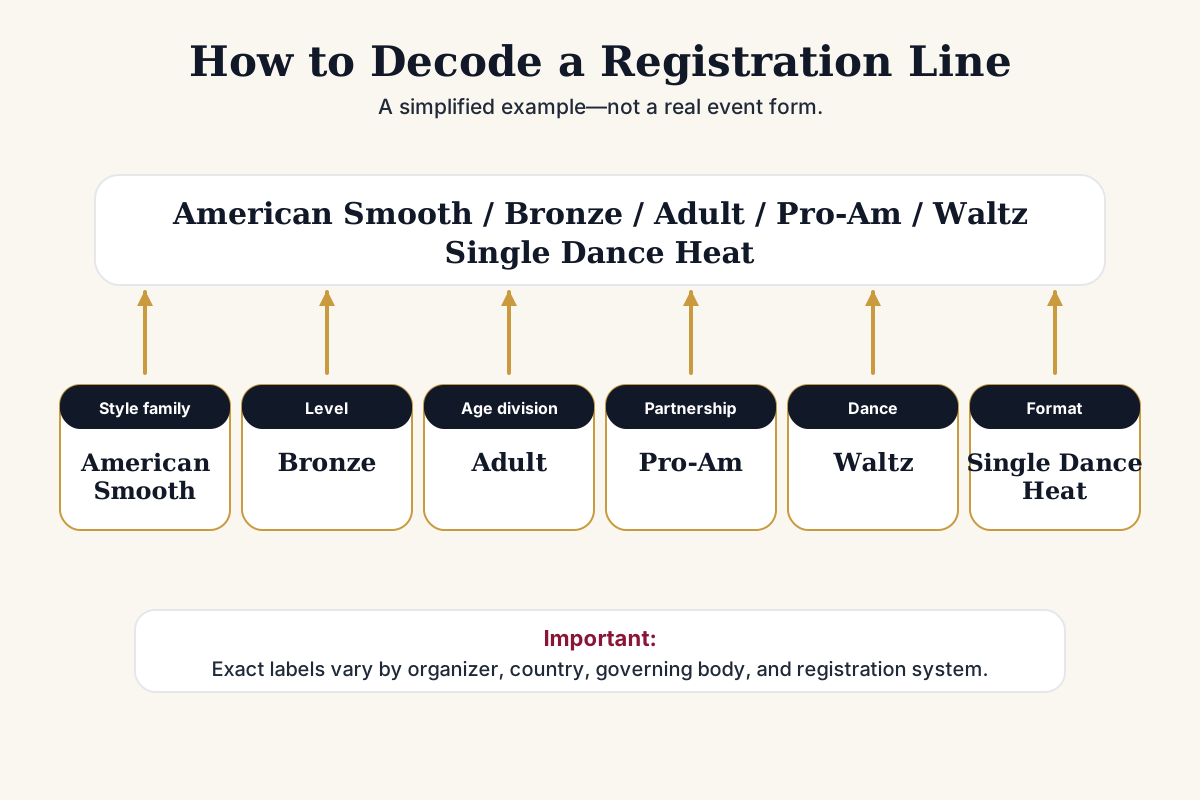
How to decode a category like “American Smooth / Bronze / Adult / Pro-Am / Waltz”
Once you know the pieces, a category line reads like a sentence. Here is the same example annotated.
| Part | What it tells you |
|---|---|
| American Smooth | The style family (Waltz, Tango, Foxtrot, Viennese Waltz). |
| Bronze | The proficiency level (foundational syllabus). |
| Adult | The age division you compete in. |
| Pro-Am | The partnership type—you (the student) dance with a professional and are the judged competitor. |
| Waltz | The specific dance being contested. |
| Single Dance Heat | The format—one dance, danced in a scheduled heat. |
Which category should you enter first?
There is no single right answer—your teacher knows your dancing best—but these starting points are common.
First-time Pro-Am student
Often a single-dance heat at the lowest offered level in one style, kept small to learn the experience. See the Pro-Am guide.
Amateur couple
Usually the lowest proficiency class for your age division, in one style family, building up dances over time.
Parent of a youth competitor
Confirm the youth age band and level with the teacher and event; keep first entries simple and fun.
Returning competitor
Re-enter at a level you can dance cleanly today, not the level you reached years ago.
Social dancer trying a first competition
A single-dance Newcomer or Bronze heat in your strongest dance is a friendly first step.
Bring the right questions to your teacher
Download the First Competition Category Checklist to confirm your style, level, age division, dances, deadlines, and fees before you register.
Download the First Competition Category ChecklistWhat to ask your teacher or competition organizer
Bring this list to your next lesson or send it to the organizer before you register:
- Which style and dances should I enter?
- Single-dance or multi-dance?
- Is a scholarship or championship appropriate for me yet?
- Which level should I enter?
- Is the event syllabus or open?
- Are my steps allowed for the level?
- Which age division do I belong in?
- Can I enter adjacent levels or age groups?
- What are the fees?
- What are the registration deadlines?
- What is the schedule, and when do I dance?
- What attire is expected for my level and style?
- What is the check-in process?
- How many heats should I be ready to dance?
Common mistakes when choosing ballroom competition categories
| Mistake | Why it causes problems | Better choice |
|---|---|---|
| Entering the wrong level | You may be over-matched or technically ineligible | Confirm your level with your teacher and the rules |
| Confusing a heat with an event | You misread the schedule and your readiness | Remember: event = category; heat = a scheduled group dancing together |
| Assuming Bronze/Silver/Gold mean the same everywhere | Figures legal at one event may not be at another | Check the specific organization’s syllabus |
| Forgetting age-division rules | You enter a band you are not eligible for | Confirm the event’s age bands before registering |
| Entering too many dances | Stamina and timing suffer; cost climbs | Start small and add entries as you improve |
| Ignoring syllabus restrictions | Illegal figures risk disqualification | Ask “syllabus or open?” and check your steps |
| Waiting until competition day to understand the schedule | Missed heats and avoidable stress | Read the schedule and plan check-in in advance |
Practice with competition music and timing playlists
Practicing to steady, style-appropriate music helps you internalize timing and stamina for your category. These Ballroom Pages music guides cover count, tempo, and verified playlist links by dance; browse everything in the Ballroom Pages playlists hub and the Music & Timing section.
Practice music by style family
American Smooth practice
Waltz, Tango, Foxtrot, Viennese Waltz.
American Rhythm practice
Cha Cha, Rumba, Swing, Bolero, Mambo.
International Standard practice
Waltz, Tango, Viennese Waltz, Foxtrot, Quickstep.
International Latin practice
Samba, Cha Cha, Rumba, Paso Doble, Jive.
Platforms
BallroomPages Music on Telegram
Spotify / Apple Music / YouTube
Find verified per-dance playlists in the hub.
Sources
This guide explains competition categories in general terms and does not reproduce any organization’s official rules. For authoritative, current details, consult your teacher and the relevant rulebooks, which may include:
- WDSF — DanceSport disciplines and style families.
- USA Dance — rulebook and event rules.
- NDCA — National Dance Council of America rulebook.
- American Dancer — newcomer competition guidance.
- Google Search Central — structured data, breadcrumb, FAQ, and image SEO guidance.
Organization names are provided as places to verify current rules; this page does not reproduce or claim to represent their official requirements, which vary by organizer, country, year, and event.