What Pro-Am ballroom dance means
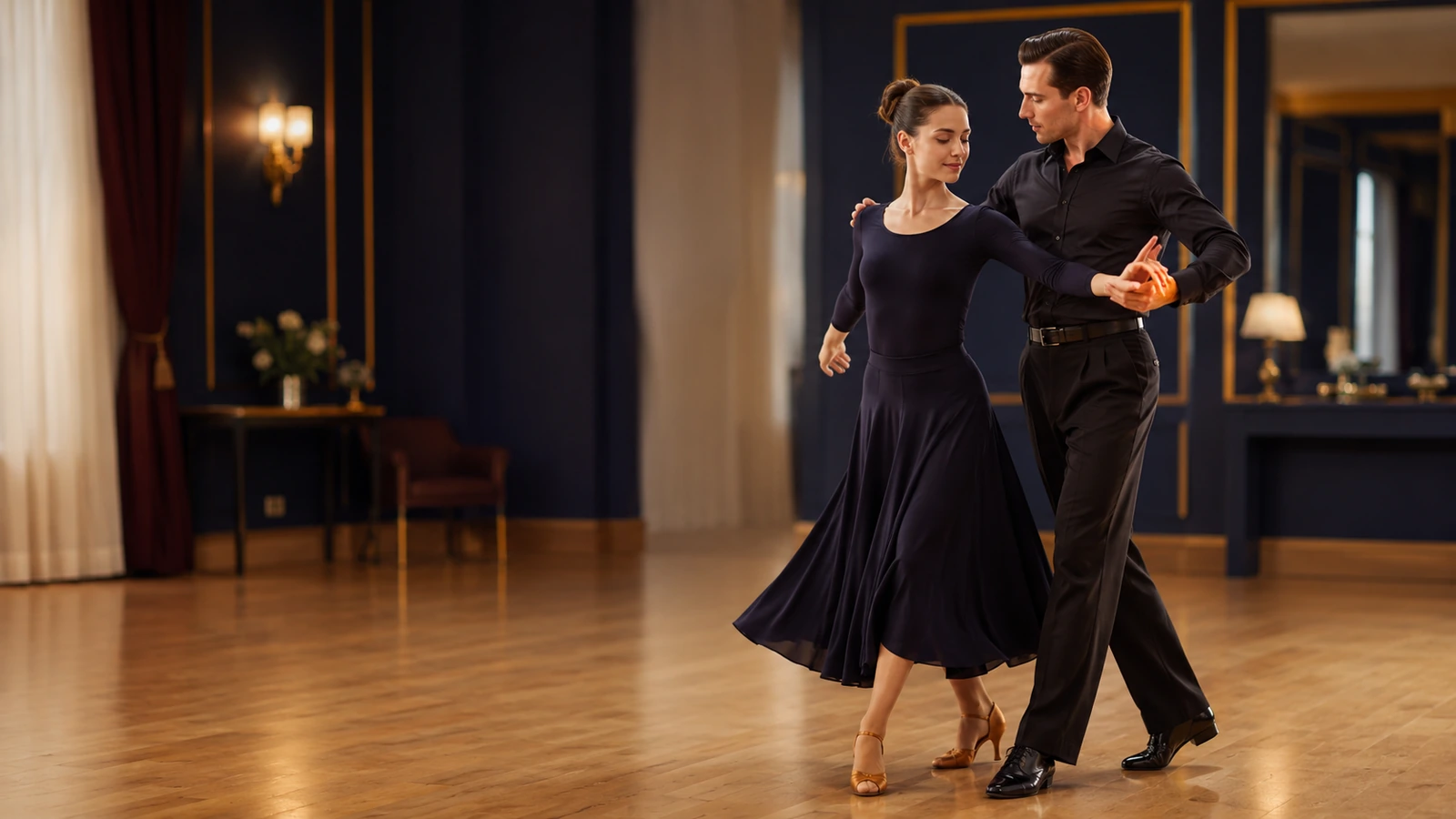
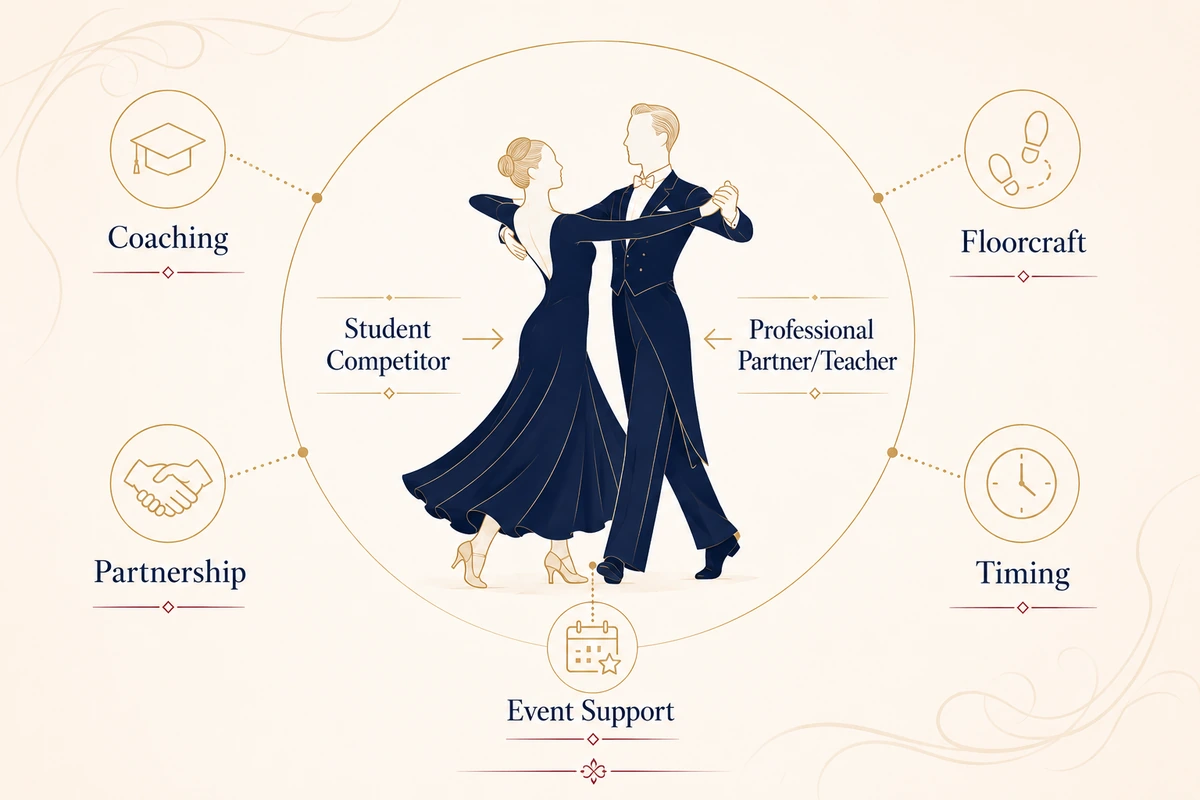
“Pro-Am” is short for Professional-Amateur. In a Pro-Am entry, an amateur student dances with a professional partner—most often their own teacher—and the student is the competitor being judged. The professional leads or follows as needed, helps navigate the floor, and supports the performance, but the recognition and placement belong to the student.
This is different from the image many people have of competitive ballroom, where two highly trained dancers compete together. Pro-Am exists specifically so that adult learners can experience competition with the support of an expert partner.
How Pro-Am is different from amateur, professional, and social dancing
It helps to see Pro-Am next to the other ways people dance.
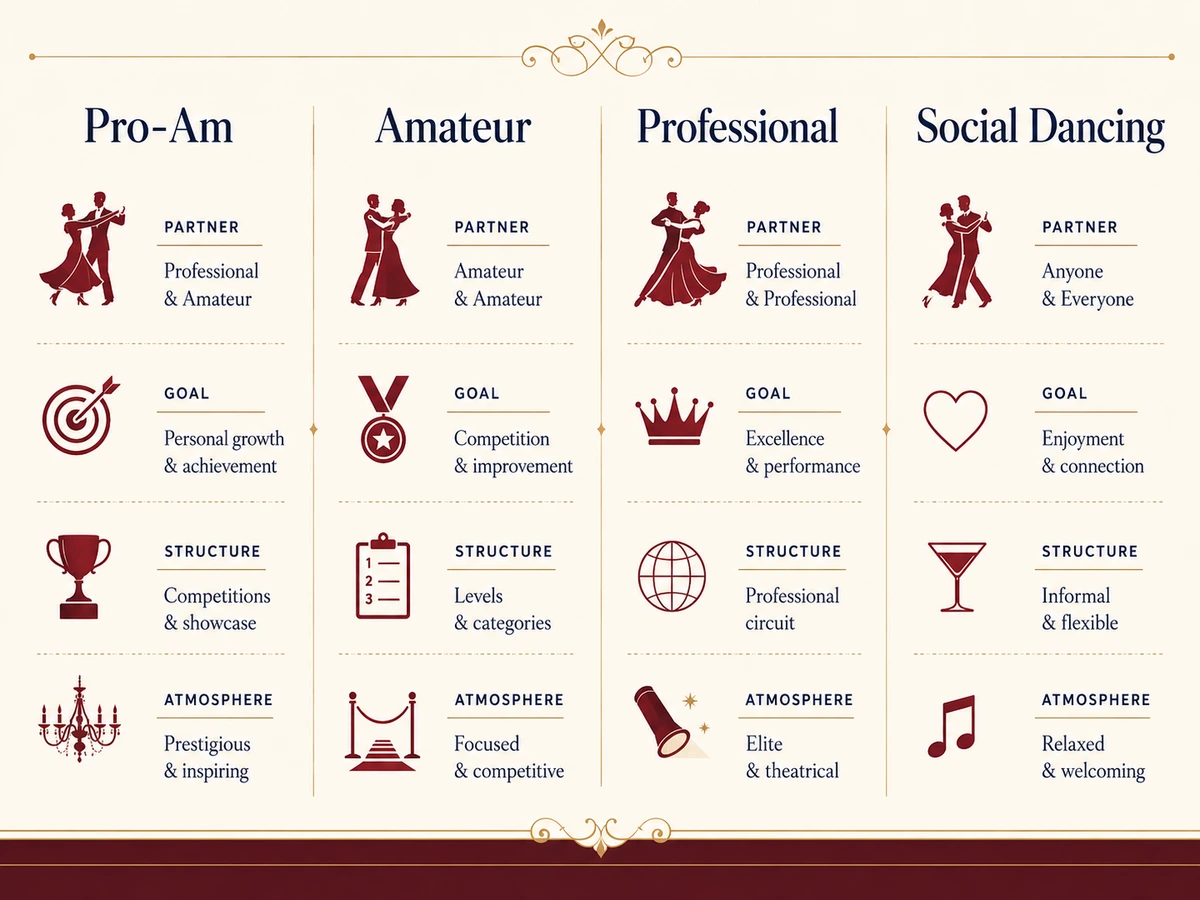
| Format | Who dances | Who is judged | Typical setting |
|---|---|---|---|
| Pro-Am | Amateur student + professional partner | The student | Competitions and showcases |
| Amateur | Two amateurs | Both, as a couple | Amateur DanceSport events |
| Professional | Two professionals | Both, as a couple | Professional divisions |
| Social | Anyone, informally | No one | Socials, parties, weddings |
If you are mostly dancing for fun and connection, the social dancing path may suit you for now. Pro-Am is the step many adult students take when they want a performance goal with expert support.
Who Pro-Am is for
Pro-Am is popular with adult ballroom students because it removes some of the hardest parts of competing for a newer dancer: finding an amateur partner of a similar level, and navigating a busy floor alone. It can suit:
- Adult students who take regular lessons and want a goal to work toward.
- Beginner and intermediate dancers curious about competition without committing to an amateur partnership.
- Wedding and social dancers who caught the bug and want to keep growing.
- Returning dancers easing back into performance.
It is less suited to dancers who want a low-cost hobby with no performance goal, or who prefer purely social dancing. New to ballroom entirely? Start with ballroom dance for beginners first.
How a Pro-Am competition works
The exact structure varies by event, but the general flow is recognizable. You and your teacher choose the dances, level, and number of entries. The event groups dancers into heats—short rounds where several couples dance the same dance at the same time—and you dance your entries across the day according to the schedule. Judges watch and mark, and results are released by the organizer.
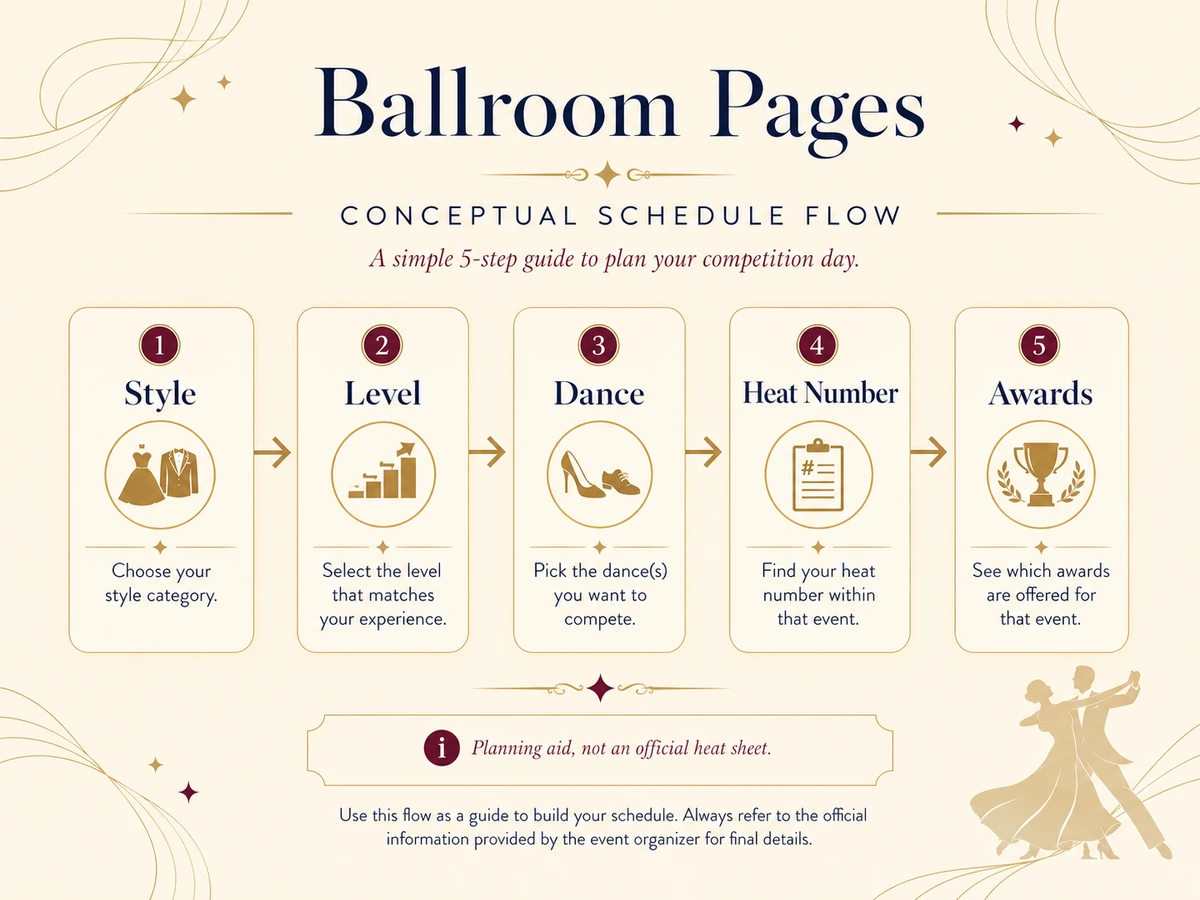
Heats are usually short, so a Pro-Am day is often many brief dances with waiting in between rather than one long performance. The number of judges, how marks work, and how results are reported differ by organizer, so confirm the format for your specific event rather than assuming a universal system.
Pro-Am levels, heats, scholarships, multi-dance events, and categories
Pro-Am entries are organized along several dimensions, and the specifics vary by event:
Proficiency level
Syllabus levels such as Bronze, Silver, and Gold describe how advanced your figures are. See Bronze, Silver, and Gold explained.
Single-dance heats
One dance at a time—for example a Bronze Waltz heat. A common, low-pressure way to start.
Multi-dance events
Several dances entered together (for example a Smooth or Rhythm multi-dance). More demanding on stamina.
Scholarships
Optional, higher-stakes multi-dance categories some events offer. Not required to compete.
Age groups
Many events group dancers by age. The exact bands vary by organizer.
Style families
American Smooth, American Rhythm, International Standard, and International Latin. Browse ballroom dance styles.
Because these categories combine differently at every event, do not assume one event’s structure applies to another. For the full breakdown, see ballroom dance competition categories.
What the professional partner does
The professional is your teacher, partner, and on-floor support. Typically they:
- Choose the dances, level, and routine with you.
- Lead or follow so you can focus on your own dancing.
- Navigate the floor and protect you from collisions where possible.
- Coach you in lessons and steady your nerves on the day.
- Handle much of the logistics around entries and scheduling.
Even with that support, your dancing is what is judged—so the partnership works best when you have practiced your part thoroughly. Build the connection with lead and follow and a strong frame and posture.
What the student/amateur dancer is responsible for
- Knowing your own steps, timing, and technique well enough to dance them under pressure.
- Practicing between lessons, including on your own—see the ballroom technique guides.
- Your attire, shoes, grooming, and packing.
- Your budget and entry decisions, made with your teacher.
- Arriving prepared, warmed up, and on time for your heats.
- Floorcraft awareness and good sportsmanship.
Lock in timing with the tempo chart and music & timing guides, and practice on your own between lessons.
How much Pro-Am ballroom can cost
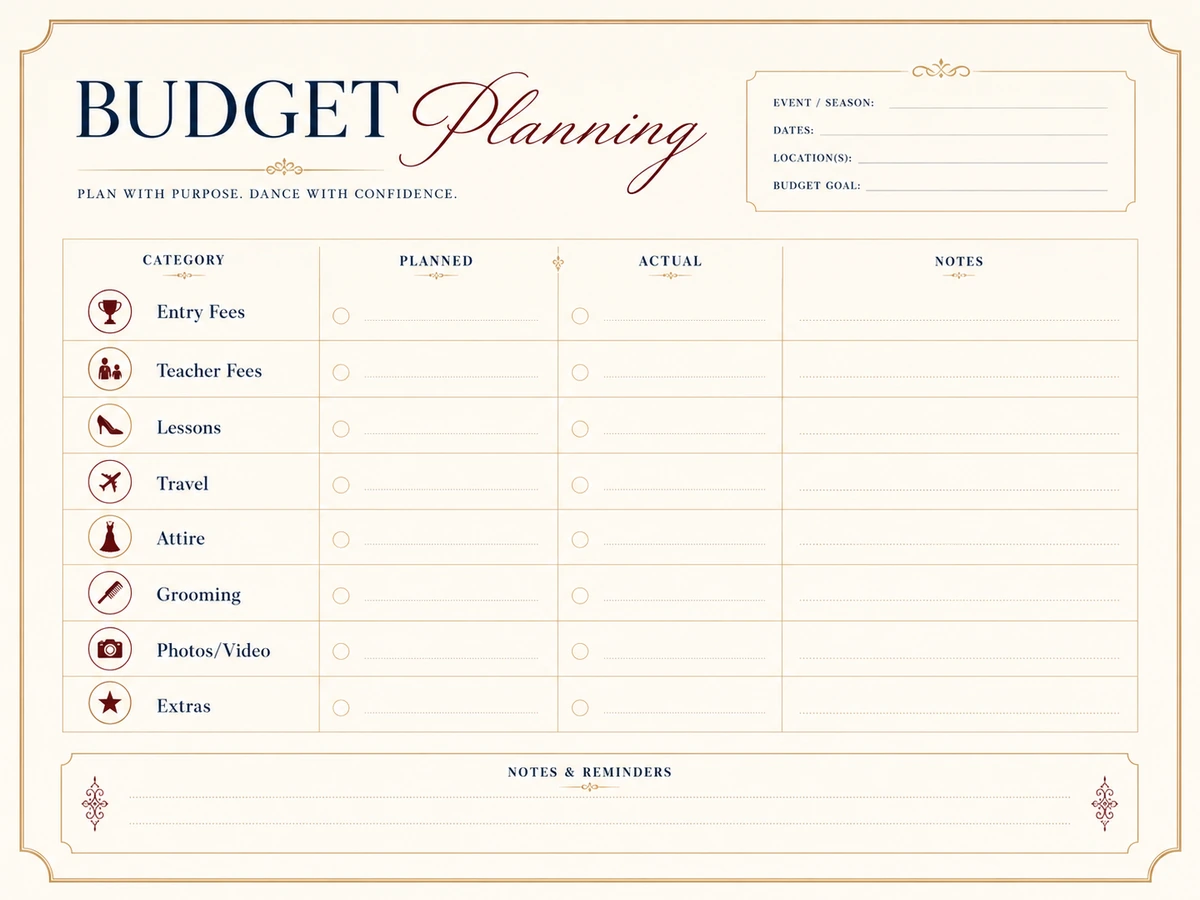
The cost categories to plan for usually include:
| Category | What it covers |
|---|---|
| Entry & heat fees | Registration plus a fee per heat/entry, set by the organizer. |
| Professional / coaching fees | Your teacher’s time for lessons, the event day, and sometimes travel. |
| Travel & lodging | Transport, hotel, and meals if the event is not local. |
| Attire & shoes | Competition-appropriate clothing and dance shoes; can be rented, bought, or reused. |
| Grooming & extras | Hair, makeup, tan, and optional extras such as photos or video. |
| Scholarships & multi-dance | Optional higher-stakes entries that add to the total. |
Plan your Pro-Am budget
The Pro-Am First Competition Checklist includes a simple budget worksheet so you can estimate entries, coaching, travel, attire, and extras for your event—before you commit.
Download the checklist & budget worksheetWhat to ask before signing up
Because so much varies by event, a short conversation with your teacher answers most questions. Useful ones include:
- Am I ready, and which level and dances do you recommend?
- How many heats should I enter for a first event?
- What are your fees for lessons and the event day?
- What is the all-in estimated budget, including travel and attire?
- Which event, organizer, and sanctioning body is this, and where are the current rules?
- What attire and shoes are appropriate for my level and style?
- What does the schedule and day-of routine look like?
Pro-Am preparation timeline
This is a general planning aid, not a fixed rule. Adjust it with your teacher based on your level, the event date, and how often you practice.
- 8–12 weeks outDecide with your teacher on the event, level, dances, and rough budget. Confirm the event’s current rules.
- 6–8 weeks outLock the routines and start consistent practice. Sort attire and shoes early.
- 3–4 weeks outPolish timing, quality, and stamina. Practice your part with music, then with your teacher.
- 1–2 weeks outRun-throughs, finalize packing, confirm the schedule, and rest enough to arrive fresh.
- Event weekLight, calm practice. Hydrate, sleep, pack the night before, and plan your arrival time.
Get the step-by-step first-competition checklist
Download the Pro-Am First Competition Checklist to track your prep, packing, and day-of plan in one printable page.
Download the Pro-Am First Competition ChecklistWhat to expect on competition day
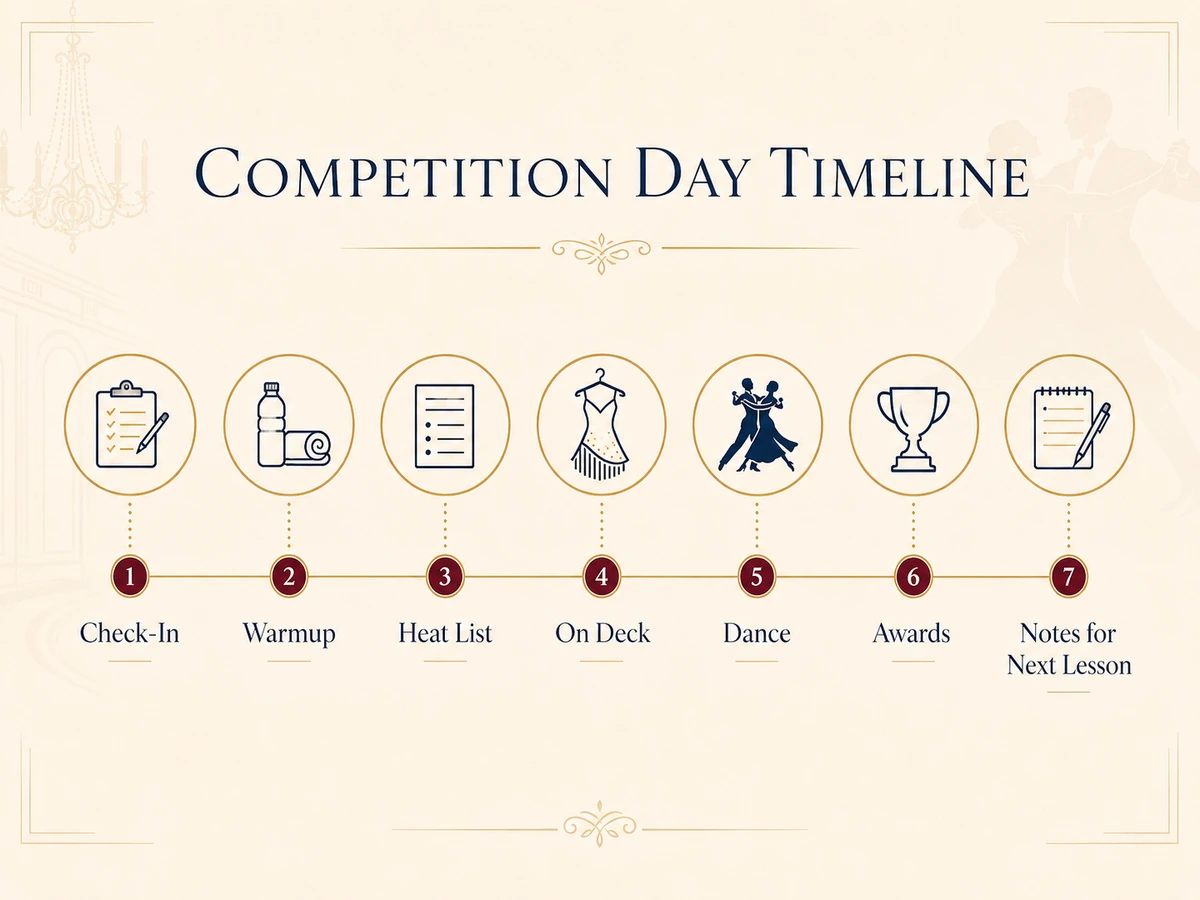
A Pro-Am day is usually a mix of short bursts of dancing and longer stretches of waiting. Plan to arrive early, get ready calmly, warm up before your first heat, and stay loose between heats. Your teacher will guide you to the floor and tell you when you are on. Most first-timers find that the experience feels long but the dancing itself flies by.
- Arrive with margin—parking, check-in, and getting ready take longer than expected.
- Eat and hydrate sensibly; a long day needs steady energy.
- Warm up before heats and keep moving gently between them.
- Watch for your heat numbers and listen for announcements.
- Breathe, smile, and treat results as feedback, not a verdict.
Attire, shoes, grooming, and packing
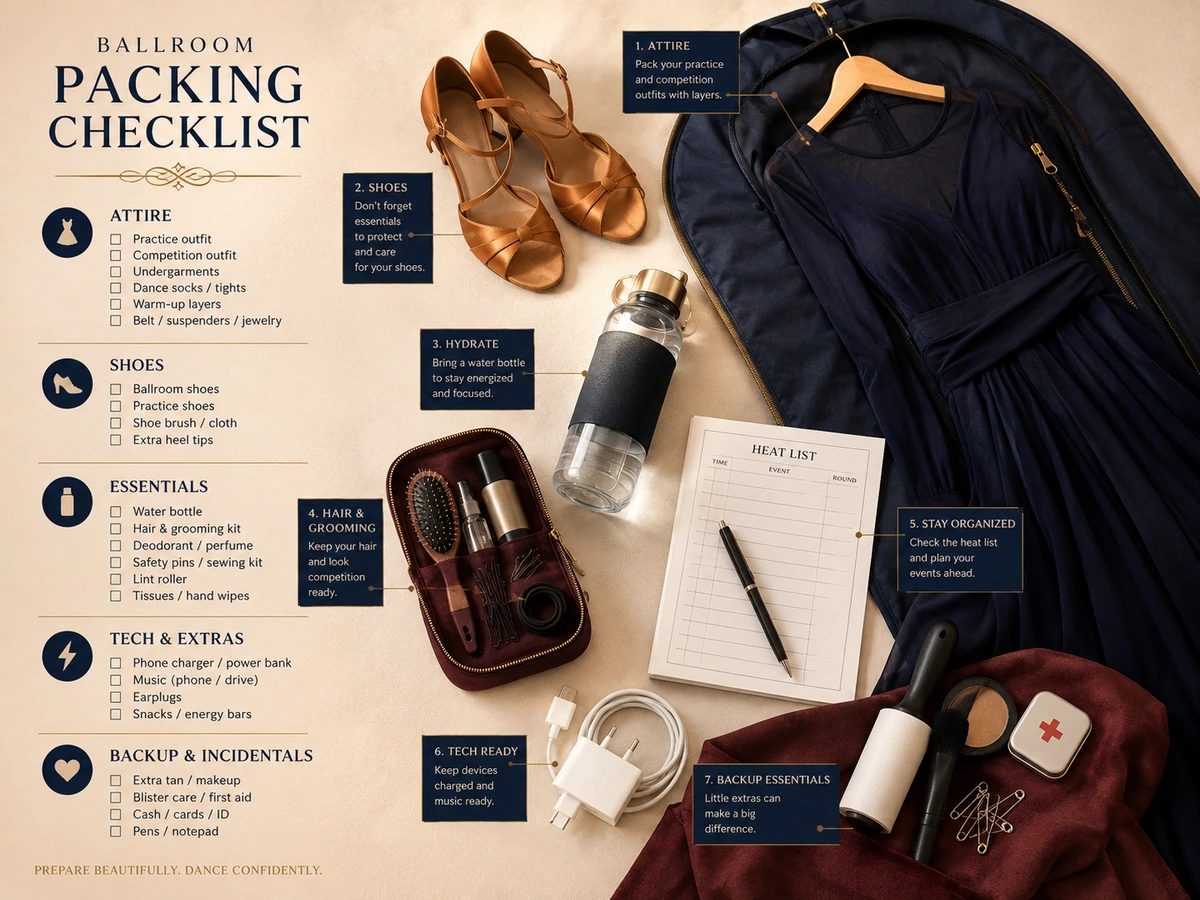
Attire expectations differ by level, style, and event, and some events publish dress guidance. Newer dancers often keep it simple and tasteful; bigger costuming usually comes later. Start with proper ballroom dance shoes for beginners, and browse the broader gear guides for attire.
Pack the night before. A simple kit includes your shoes, attire, grooming items, water and snacks, any documents or schedule the event provides, and small fixes (safety pins, brush, blister care). Confirm what your event requires.
Pro-Am etiquette and floorcraft
Good competition etiquette is mostly common courtesy: respect other couples on the floor, give space, avoid blocking, thank your teacher and the organizers, and accept results graciously. Your professional handles most of the navigating, but staying aware helps you both. The same floorcraft and courtesy ideas from dance etiquette apply, scaled up for a busy competition floor.
Pros and cons of Pro-Am
| Pros | Cons |
|---|---|
| Expert partner leads, navigates, and supports you | Can be expensive once entries, coaching, and travel add up |
| Accessible for adult and newer dancers | Costs and rules vary and are not always transparent up front |
| Clear goal that accelerates your learning | A long day with lots of waiting between short heats |
| No need to find an amateur partner of your level | Performance pressure can feel intense at first |
| Welcoming, supportive community at many events | You still must know your own dancing well |
Ballroom Pages playlists for Pro-Am practice
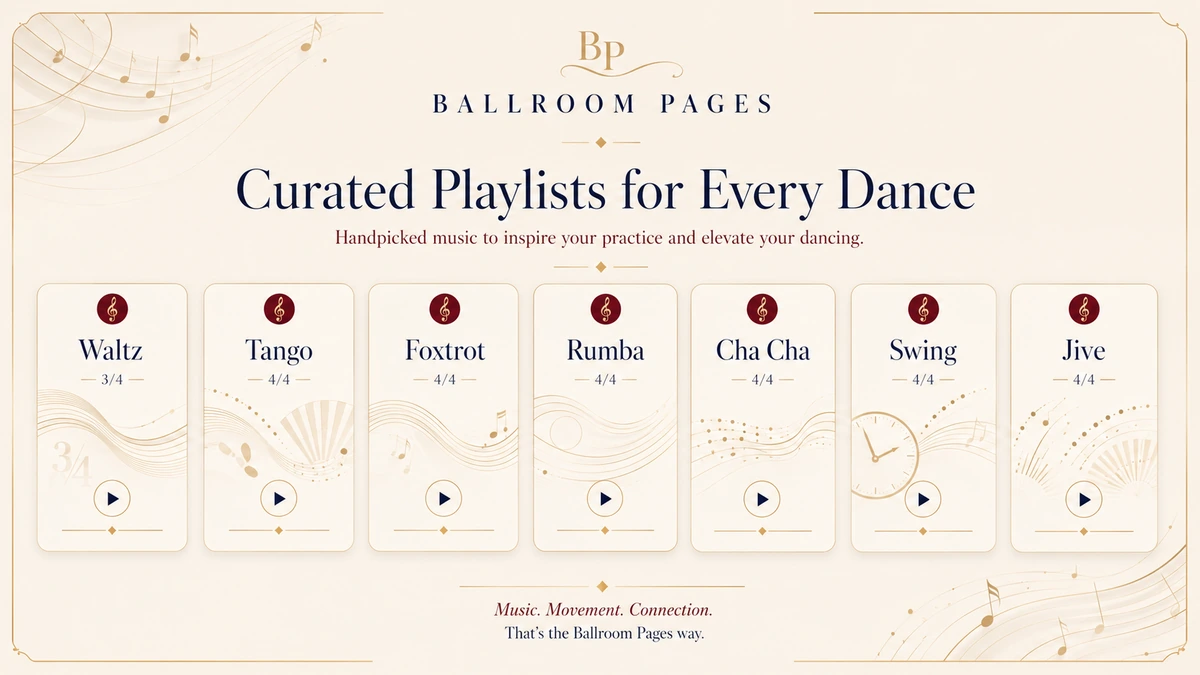
Build timing and quality at home, then refine partnership and corrections with your teacher. Browse everything in the Ballroom Pages playlists hub, and check speeds on the tempo chart.
Standard / Smooth — Spotify & Apple Music
Slow Waltz
Slow Foxtrot
Tango
Rhythm / Latin & more
Cha Cha & Rumba
Count, tempo & verified playlists.
Swing, Jive & Samba
Practice tempos by dance.
More resources & archive
BallroomPages Music on Telegram
Legacy music archive
Sources and rule-check notes
This guide explains Pro-Am in general terms and does not reproduce or claim to represent any organization’s official rules, fees, or eligibility. For authoritative, current details, consult your teacher and the relevant rulebooks and event rules, which may include:
- NDCA — National Dance Council of America Rule Book (current year).
- USA Dance — DanceSport Ballroom Division Rulebook.
- USA Dance — Nationals Pro-Am event rules.
- USA Dance — Code of Conduct at a Competition.
- WDSF — competition rules and dress regulations, where relevant.
- Event-specific entry and rules examples (for instance, individual competition organizers’ entry pages and rulebooks).
Organization and event names are provided as places to verify current rules and costs; this page does not reproduce their official requirements, fees, or eligibility, all of which vary by organizer, country, year, level, and event.