What is Jive?
Jive is a fast, energetic ballroom dance in the International Latin family. It has a bright, springy feeling, quick footwork, and a rhythm that makes the dance feel playful and athletic.
In DanceSport, Jive sits alongside Samba, Cha Cha, Rumba, and Paso Doble as one of the five International Latin dances. That can surprise beginners, because Jive’s roots are not “Latin” in the same way as Samba or Rumba. Jive developed through American Swing and Jitterbug influences before becoming codified inside the ballroom competition world.
That is the simplest way to understand it: Jive is Swing-related in heritage, but International Latin in ballroom competition context.
For beginners, that distinction matters. You do not need to learn every Swing dance to understand Jive, and you do not need to treat Jive as the same thing as East Coast Swing, Lindy Hop, or West Coast Swing. Start by learning the Jive rhythm, then compare the related dances once the timing makes sense.
Why Jive is in International Latin
International Latin is not just a geography label. In ballroom, it is also a competition category with a defined group of dances, technique expectations, and syllabus figures. Jive became part of that world and is now taught, judged, and practiced as a ballroom Latin dance.
The result is a dance with two identities:
- historically connected to Swing and Jitterbug;
- structurally organized inside International Latin ballroom.
A good Jive guide should honor both.
Jive vs Swing: related, but not the same
Jive and Swing are related, but they answer different dance questions.
Swing is a broad family of social dances connected to Swing music and jazz-era partner dancing. East Coast Swing, West Coast Swing, Lindy Hop, Balboa, Shag, and related forms can all sit under the Swing umbrella depending on context.
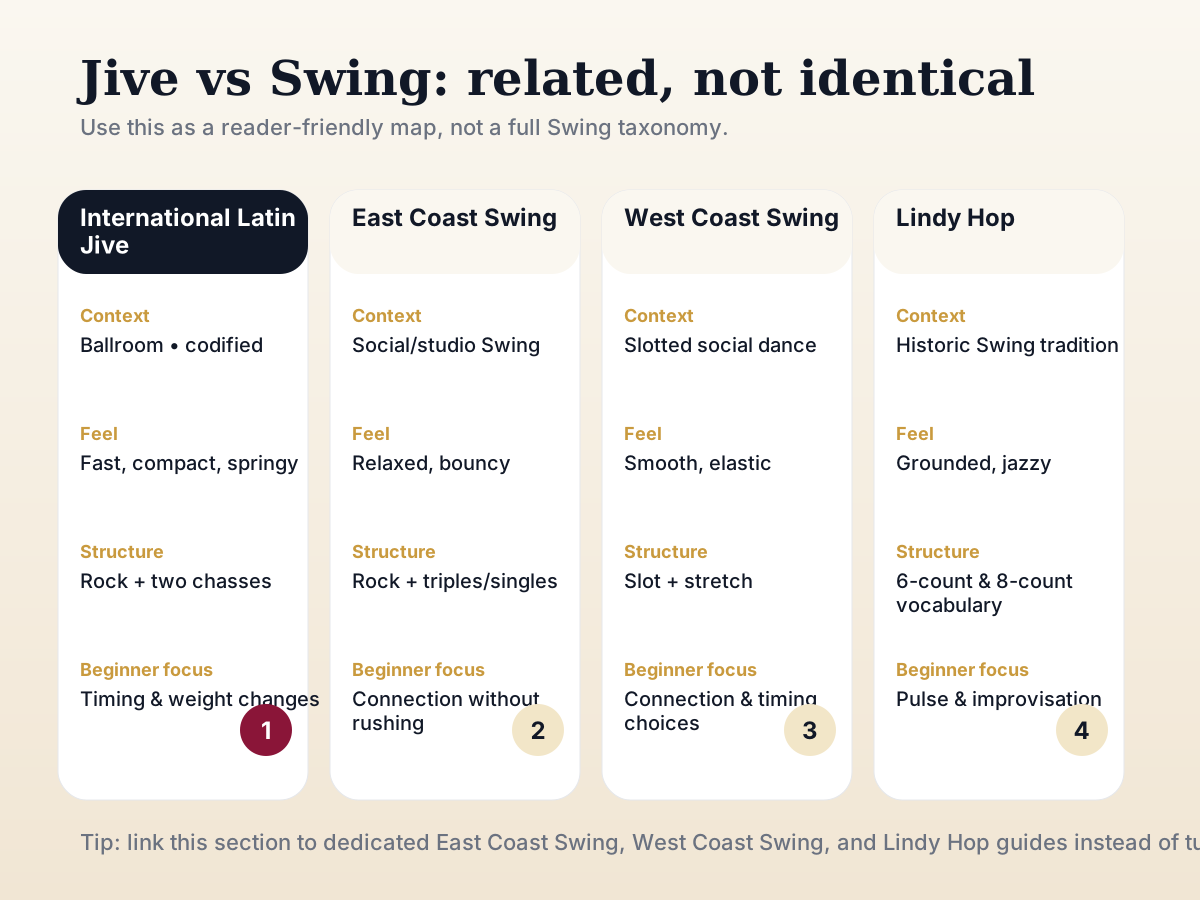
International Latin Jive is a specific ballroom dance. It has a competition identity, a more codified syllabus, a fast tempo, compact chassés, and a recognizable bright bounce action. It borrows from Swing history, but it is not a replacement for every Swing style.
| Comparison point | International Latin Jive | East Coast Swing | West Coast Swing | Lindy Hop |
|---|---|---|---|---|
| Best context | Ballroom lessons, Latin syllabus, DanceSport, energetic showcase dancing | Social dancing, beginner Swing, rhythm dancing, wedding / social use | Social dance floors, contemporary music, slotted partner dancing | Swing dance communities, jazz music, historical Swing dance |
| Typical feel | Fast, springy, compact, rhythmic | Relaxed, bouncy, approachable | Smooth, elastic, conversational | Grounded, swinging, improvisational, rhythmically rich |
| Basic rhythm / movement | Rock step + two chassés, often counted 1-2, 3-a-4, 5-a-6 | Often triple steps and a rock step; teaching styles vary | Danced in a slot with stretch and compression | Swing-era jazz movement; 6-count and 8-count vocabulary |
| Beginner challenge | Speed, stamina, clean weight changes | Timing and partner connection without rushing | Connection, timing choices, and slot discipline | Rhythm, pulse, and 6-count / 8-count vocabulary |
When should you learn Jive instead of Swing?
Learn Jive if your goal is International Latin, ballroom competitions, a fast showcase dance, or a clear ballroom syllabus path.
Learn East Coast Swing if you want a more social, accessible Swing dance that appears often in studios, weddings, and casual partner-dance settings.
Compare West Coast Swing if you want a smoother contemporary social dance with a slotted feel.
Explore Lindy Hop history if you want the historical Swing dance tradition and jazz-based social improvisation.
What Jive feels like
Jive feels like controlled excitement.
The body has a springy rhythm, but the steps should not become wild or heavy. Good Jive is not about throwing the legs around. It is about clear weight changes, compact footwork, rhythmic bounce, and energy that stays organized.
A beginner-friendly image: think “small, quick, and musical” before “big, flashy, and athletic.”
Jive can look explosive when advanced dancers perform it, especially in competition. But the foundation is simple:
- hear the beat;
- transfer weight clearly;
- keep the steps compact;
- keep the knees alive;
- let the rhythm build before the styling gets bigger.
Jive timing, rhythm, and count
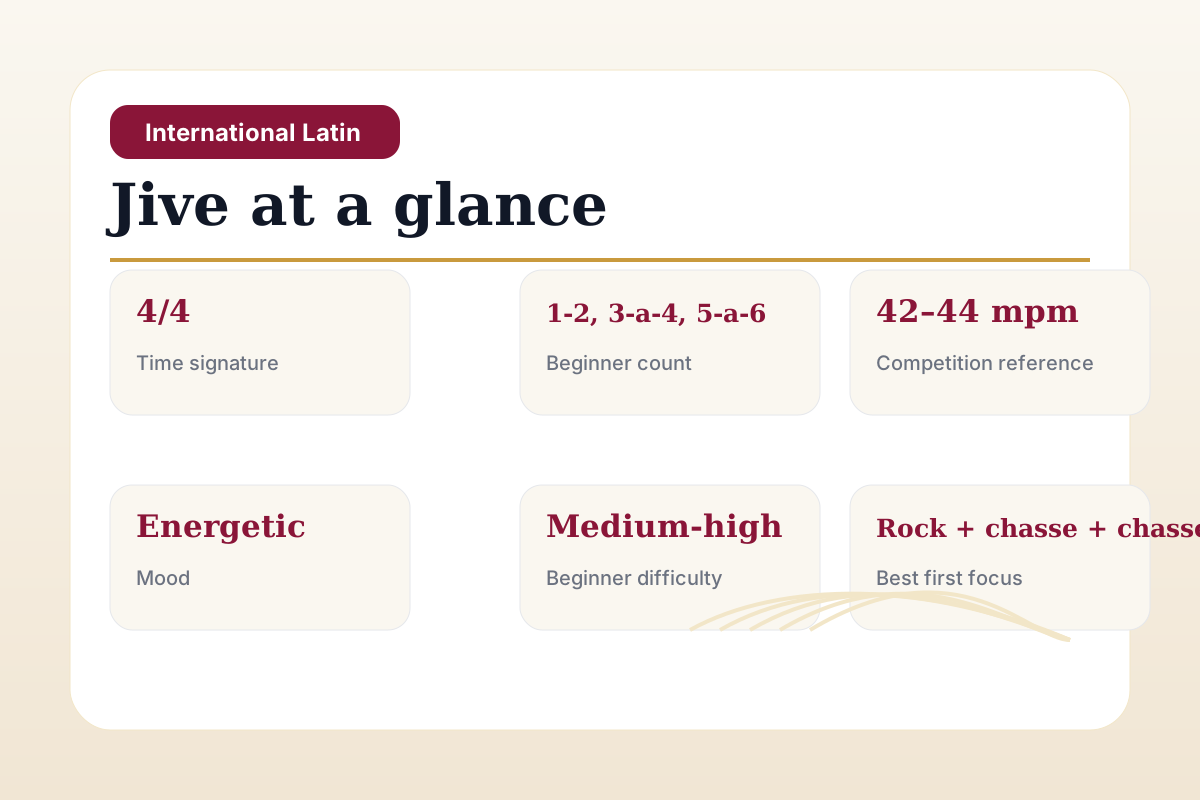
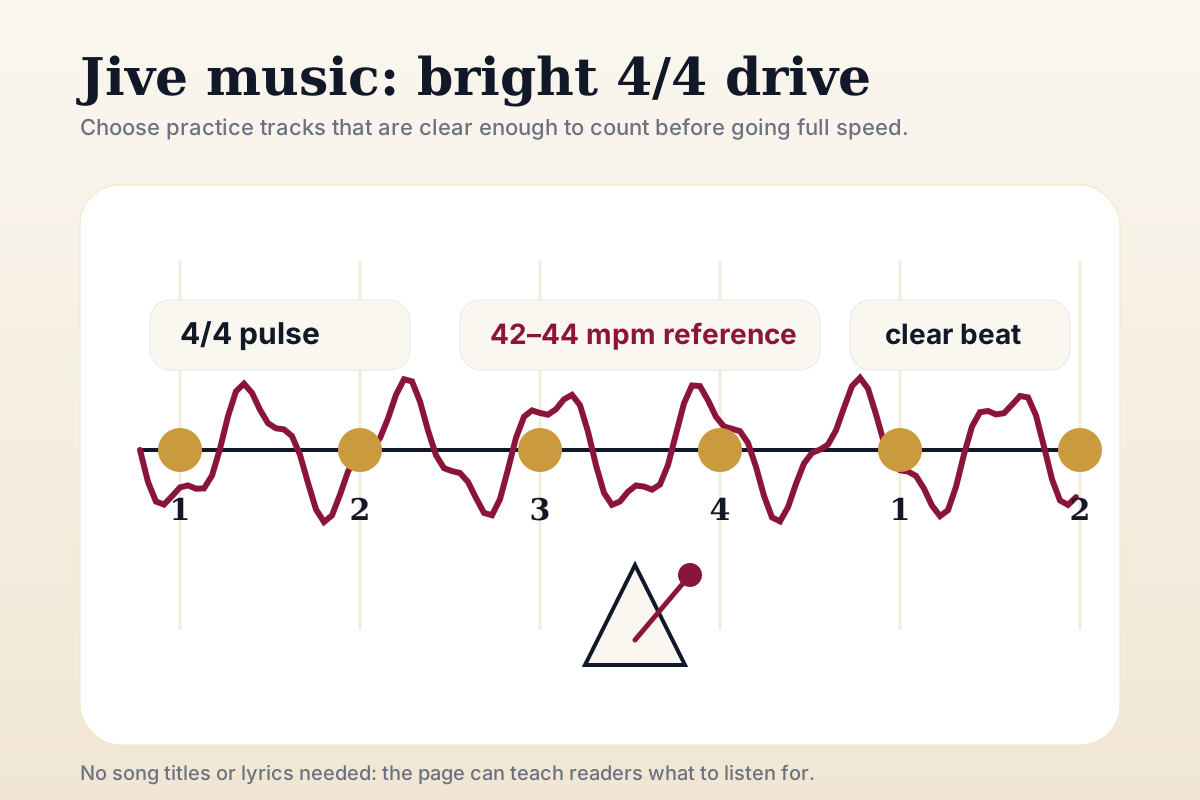
Jive is danced in 4/4 time. That means the music is organized in groups of four beats, even though the basic pattern is often taught across six counts.
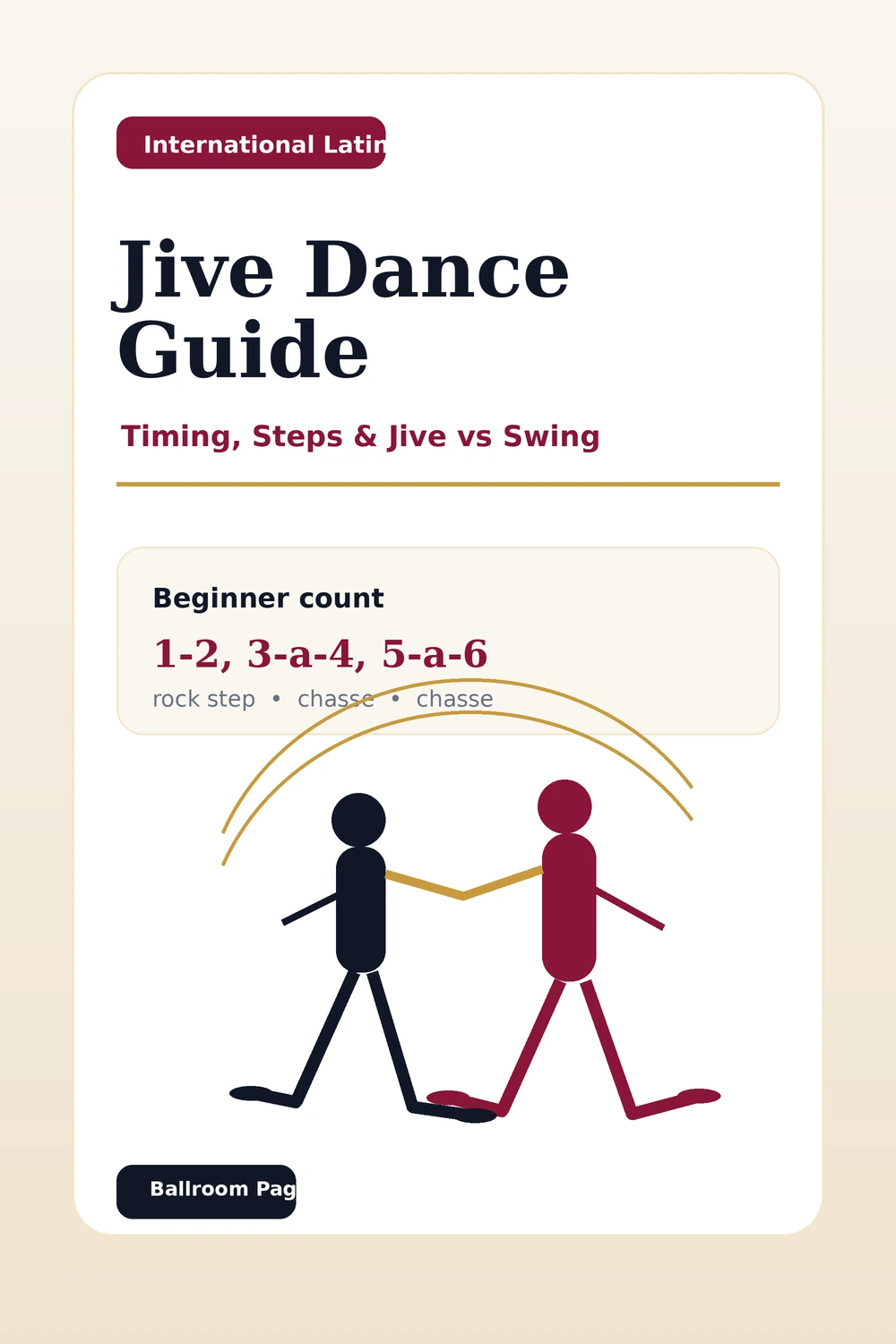
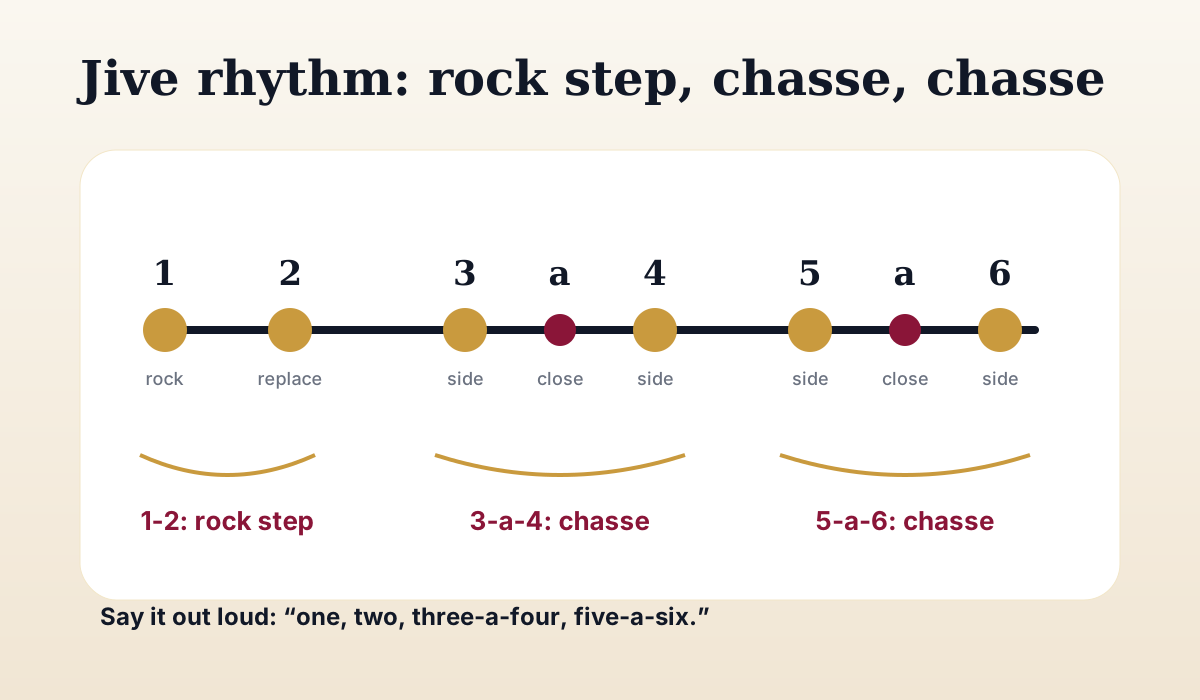
The basic count: 1-2, 3-a-4, 5-a-6
A common beginner count is 1-2, 3-a-4, 5-a-6. In plain language:
- 1-2 = rock step
- 3-a-4 = chasse or triple action
- 5-a-6 = chasse or triple action
You may also see this written as QQ, QaQ, QaQ. The “Q” means quick. The “a” is a small split count that makes the chasse feel sharper and more syncopated than simply stepping evenly through the rhythm.
Do not worry if that feels technical at first. Beginners should start by speaking the count out loud:
“Rock, replace, tri-ple-step, tri-ple-step.”
Then try: “One, two, three-a-four, five-a-six.”
Time signature and tempo
Competition references often place International Jive around 42–44 measures per minute. Since Jive is in 4/4, that works out to roughly 168–176 beats per minute.
For practice, especially as a beginner, you can start slower. The goal is not to survive a competition tempo on day one. The goal is to keep the rhythm clear without bouncing heavily, rushing the rock step, or kicking before the body is balanced.
Beginner rhythm drill
Try this without music first:
- Clap or count: 1-2, 3-a-4, 5-a-6.
- Step lightly in place on 1-2.
- Add a small side-close-side action for 3-a-4.
- Add the opposite side-close-side action for 5-a-6.
- Keep the steps small enough that you could repeat the pattern without losing balance.
If the count falls apart, slow down. Jive rewards clarity more than speed.
Basic Jive steps for beginners
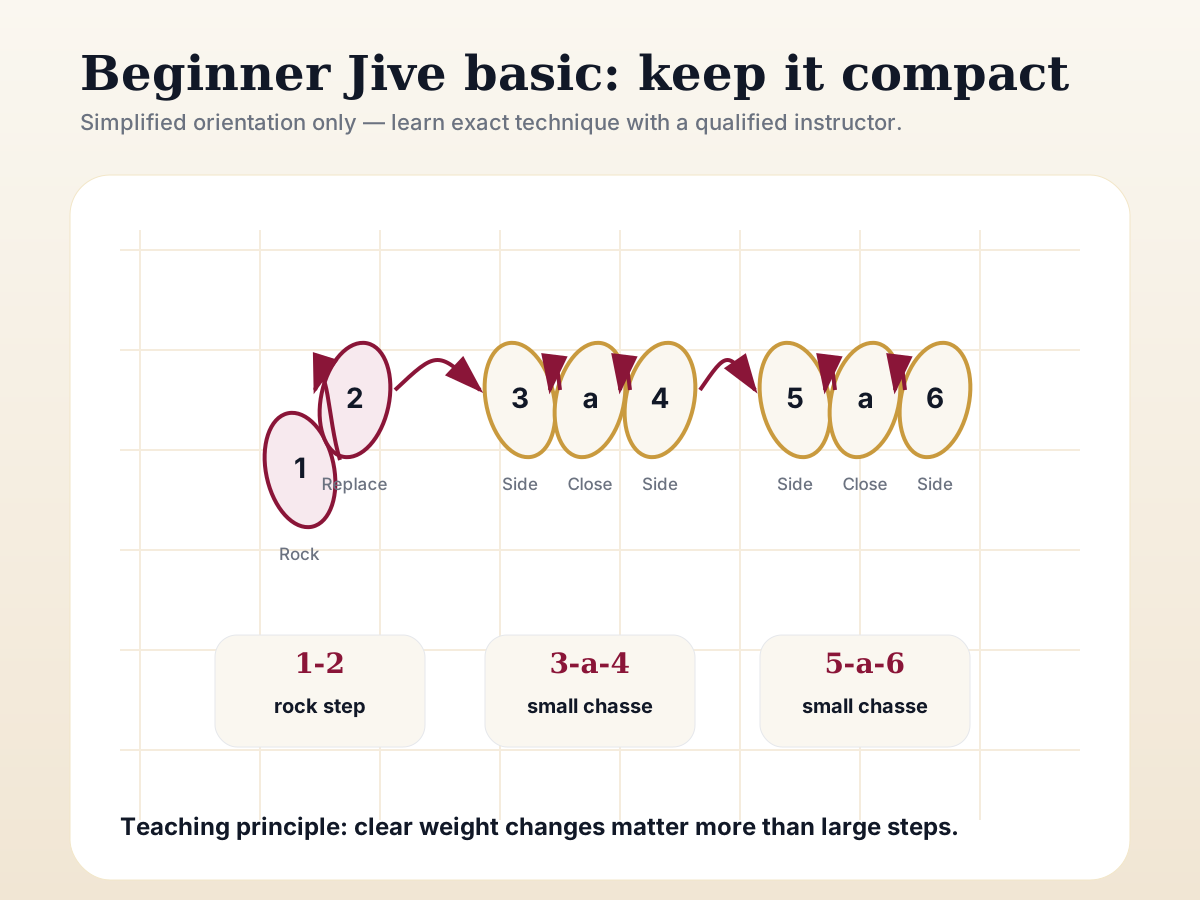
Beginners should start with the rhythm and basic weight changes before trying big kicks, spins, or competition styling. The most useful first idea is: rock step + chasse + chasse.
Basic rhythm structure
| Count | Action |
|---|---|
| 1-2 | Rock back and replace weight. This creates the elastic feeling that starts the pattern. |
| 3-a-4 | Take a compact chasse / triple action to one side. |
| 5-a-6 | Take a compact chasse / triple action to the other side. |
Keep it small. The biggest beginner mistake is trying to make Jive look exciting by traveling too much. Jive gets its energy from rhythm, not from taking giant steps.
Basic in Place and Fallaway Rock
Basic in Place is a common starting figure in International Style Jive. It lets you practice the Jive rhythm without worrying about traveling across the floor. Use it to learn clear weight changes, compact chassés, staying upright without getting stiff, keeping the bounce controlled, and hearing the 1-2, 3-a-4, 5-a-6 rhythm.
Fallaway Rock is another important beginner figure. It keeps the rock-step feeling but introduces a partner-facing relationship and direction change that helps Jive feel more like a partner dance.
For beginners, the teaching goal is not to memorize every syllabus figure at once. The goal is to build a reliable rhythm base so later figures do not feel frantic.
Glossary support: Rock Step, Chassé, Syncopation.
Jive kicks, flicks, and why beginners should start small
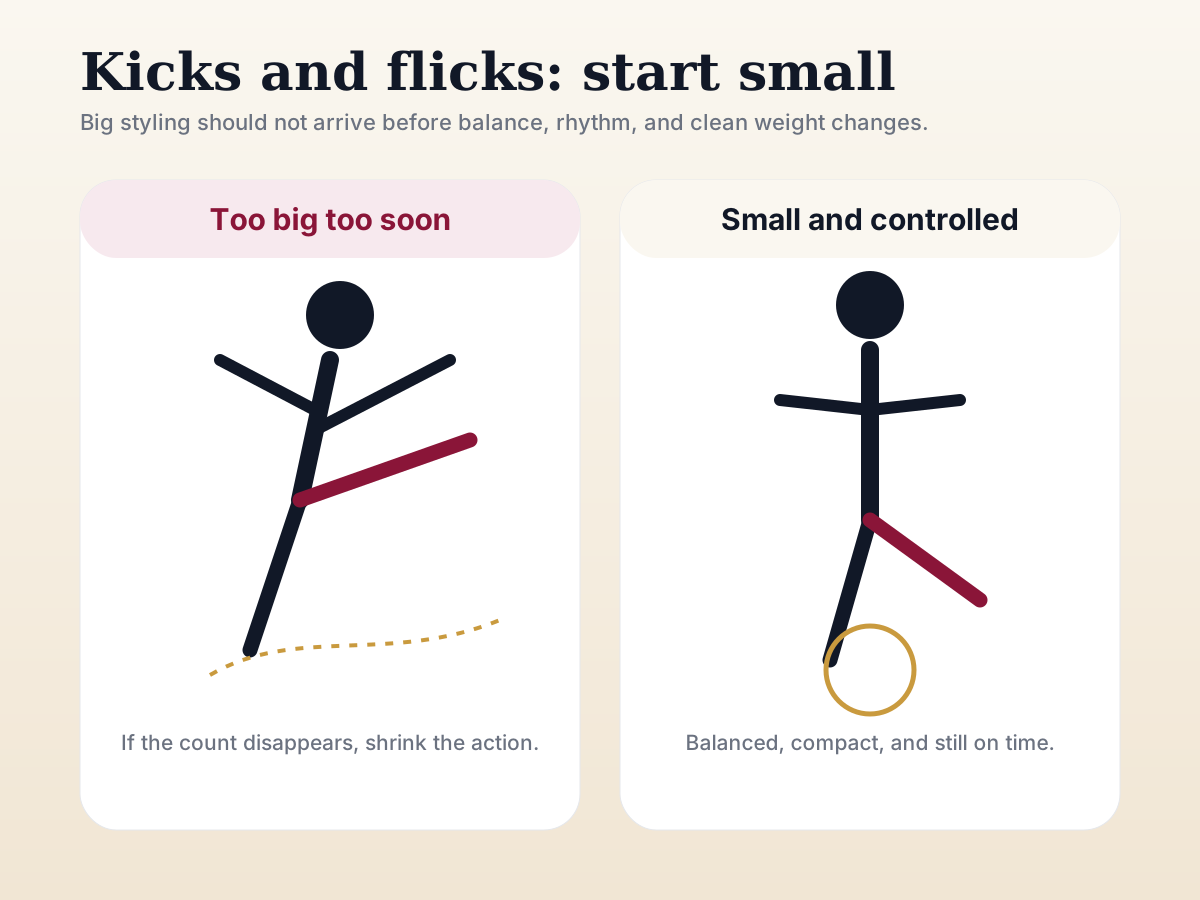
Kicks and flicks are part of the recognizable Jive look, especially in competition and performance. They give the dance sparkle, sharpness, and speed. But they are not the first thing beginners should chase.
Before big kicks or flicks, build:
- balance on the standing leg;
- clear weight transfer;
- relaxed knees;
- compact chassés;
- steady timing;
- controlled posture;
- awareness of your partner and the space around you.
A “flick” should not feel like throwing the leg as hard as possible. It should feel quick, placed, and rhythmically connected to the body. A “kick” should not pull you off balance or make the upper body collapse.
Jive music and song feel
Jive music feels fast, bright, rhythmic, and driving. The pulse should make you want to move, but the rhythm still needs to be clear enough to count.
Good practice music for beginners should have:
- a steady 4/4 beat;
- a clear backbeat or rhythmic drive;
- enough energy to feel like Jive;
- not so much speed that the basics become messy.
What to listen for
Listen for the steady beat first. Before stepping, try clapping 1-2, 3-a-4, 5-a-6. If you can clap the count, you are more likely to step it cleanly.
For a new dancer, a slightly slower practice track is often more useful than a competition-speed track. Once the body understands the rhythm, faster songs become less intimidating.
Want help hearing the beat? Read the Ballroom Pages guide to counting ballroom music and use the tempo chart to compare Jive with Cha Cha, Samba, Rumba, and Swing.
Jive in competition
In competition, Jive is part of the International Latin category with Samba, Cha Cha, Rumba, and Paso Doble. It often appears late in a Latin round, which is one reason dancers associate Jive with stamina.
The dance needs:
- clean rhythm;
- fast but controlled footwork;
- visible energy;
- compact chassés;
- sharp accents;
- strong partner awareness;
- performance quality without losing timing.
For beginners, competition Jive can look intimidating. The solution is not to copy the biggest kicks you see online. Start with timing, body control, and small rhythm drills. Competition styling should sit on top of a stable basic, not replace it.
Jive for social dancing
Jive can be danced socially, but the context matters.
In a ballroom studio, “Jive” may mean International Latin Jive. In a social Swing setting, dancers may be thinking of East Coast Swing, Lindy Hop, West Coast Swing, or another Swing form. In some places, “jive” is also used more loosely to refer to Swing-like dancing.
That means the best social-dance question is not just “Do you know Jive?” A better question is: “Are we doing ballroom Jive, East Coast Swing, or another Swing style?” That small clarification prevents confusion and helps both partners find the same rhythm.
Is Jive good for weddings?
Jive can be a fun wedding dance if the couple wants a high-energy, playful, upbeat moment. It works best when:
- the song is fast and rhythmic;
- the couple wants a lively routine;
- the dress and shoes allow quick movement;
- the couple has enough time to practice;
- the choreography stays compact and safe.
Jive is usually not the easiest choice for a traditional slow first dance. Many couples are better served by Waltz, Rumba, Foxtrot, Nightclub Two Step, or a simple slow-dance structure.
But Jive can work beautifully as:
- a surprise upbeat section;
- a second dance after a slow first dance;
- a reception entrance;
- a playful routine for a couple with dance experience;
- a short choreographed moment instead of a full-song routine.
Not sure what dance fits your song? Use the wedding song-to-dance guide
Common beginner mistakes
| Mistake | Why it happens | Better approach |
|---|---|---|
| Taking steps that are too big | Jive feels fast because the music is fast | Keep the chassés compact; energy comes from rhythm, not travel |
| Rushing the rock step | The 1-2 feels like a throwaway | Give the rock step its time so the rest of the pattern stays calm |
| Kicking before the body is balanced | Kicks look exciting in videos | Build rhythm and balance first; add kicks later |
| Bouncing too heavily | Dancers confuse spring with jumping | Think elastic, not jumpy |
| Forgetting the “a” count | The split count feels unfamiliar | Keep the “a” in 3-a-4 and 5-a-6; do not flatten it into three even steps |
| Confusing all Swing styles with Jive | The names overlap socially | Remember International Latin Jive has its own ballroom context and technique |
| Letting the upper body collapse | The legs get busy and posture slips | Stay lifted without becoming stiff |
Beginner practice plan
Use this as a simple first-week plan. Keep sessions short and repeatable.
| Day | Focus | What to do |
|---|---|---|
| Day 1 | Count and clap | Clap 1-2, 3-a-4, 5-a-6; say “rock, replace, tri-ple-step, tri-ple-step”; practice without music first |
| Day 2 | Basic rhythm in place | Step the rhythm in place; keep the knees soft; make every weight change clear |
| Day 3 | Add compact side chassés | Practice 3-a-4 to one side and 5-a-6 to the other; keep the steps small |
| Day 4 | Add music slowly | Choose a slower, clear practice track; count out loud; stop if the feet start guessing |
| Day 5 | Try partner connection | Practice with a light hand hold; keep the rhythm small; do not pull, shove, or over-lead |
| Day 6 | Add a tiny flick shape | Keep it small; focus on balance; do not sacrifice the count |
| Day 7 | Review and repeat | Record a short clip if comfortable; check that steps are small, the count is clear, and you are balanced; repeat the week before increasing speed |