What is Lindy Hop?
Lindy Hop is a social partner dance in the swing family. It is most closely associated with swing-era jazz, Harlem dance culture, and the Savoy Ballroom.
In plain English, Lindy Hop is a rhythmic, playful partner dance where two people use connected movement, shared timing, and musical improvisation to dance to swing music. It can be relaxed and social, high-energy and athletic, or performance-ready—but beginners should start with rhythm, connection, and simple patterns.
On Ballroom Pages, Lindy Hop is included as a social partner dance style page. It is not a core ballroom syllabus dance, and it is not a duplicate of East Coast Swing, West Coast Swing, Jive, or generic “swing.”
Start here if you want to understand what Lindy Hop is before comparing it with other dance styles.
Lindy Hop, swing dance, jitterbug, and East Coast Swing
The word swing can be confusing because people use it in several ways.
- Sometimes “swing” means swing music.
- Sometimes it means a broad family of dances.
- Sometimes it means a beginner studio dance such as East Coast Swing.
- Sometimes it is used casually for almost any upbeat partner dance with a swing feel.
Lindy Hop is one specific dance in that larger swing world.
Jitterbug is another historical term that has been used in different ways. Sometimes it describes dancers. Sometimes it describes swing dancing generally. Sometimes it overlaps with Lindy Hop in older sources. For a beginner, the safest rule is this: do not assume that “jitterbug,” “swing,” “East Coast Swing,” and “Lindy Hop” always mean the same thing.
East Coast Swing is related, but distinct. It is often taught as a simpler, ballroom-studio-friendly swing dance and is commonly built around 6-count patterns. Lindy Hop has a deeper connection to swing-era jazz, 6-count and 8-count mixing, swingouts, and Harlem social dance history.
West Coast Swing is also related, but it developed into a more slotted dance with a different modern social-dance culture and music range.
Jive is a ballroom Latin competition dance with swing lineage, but it is not the same as social Lindy Hop.
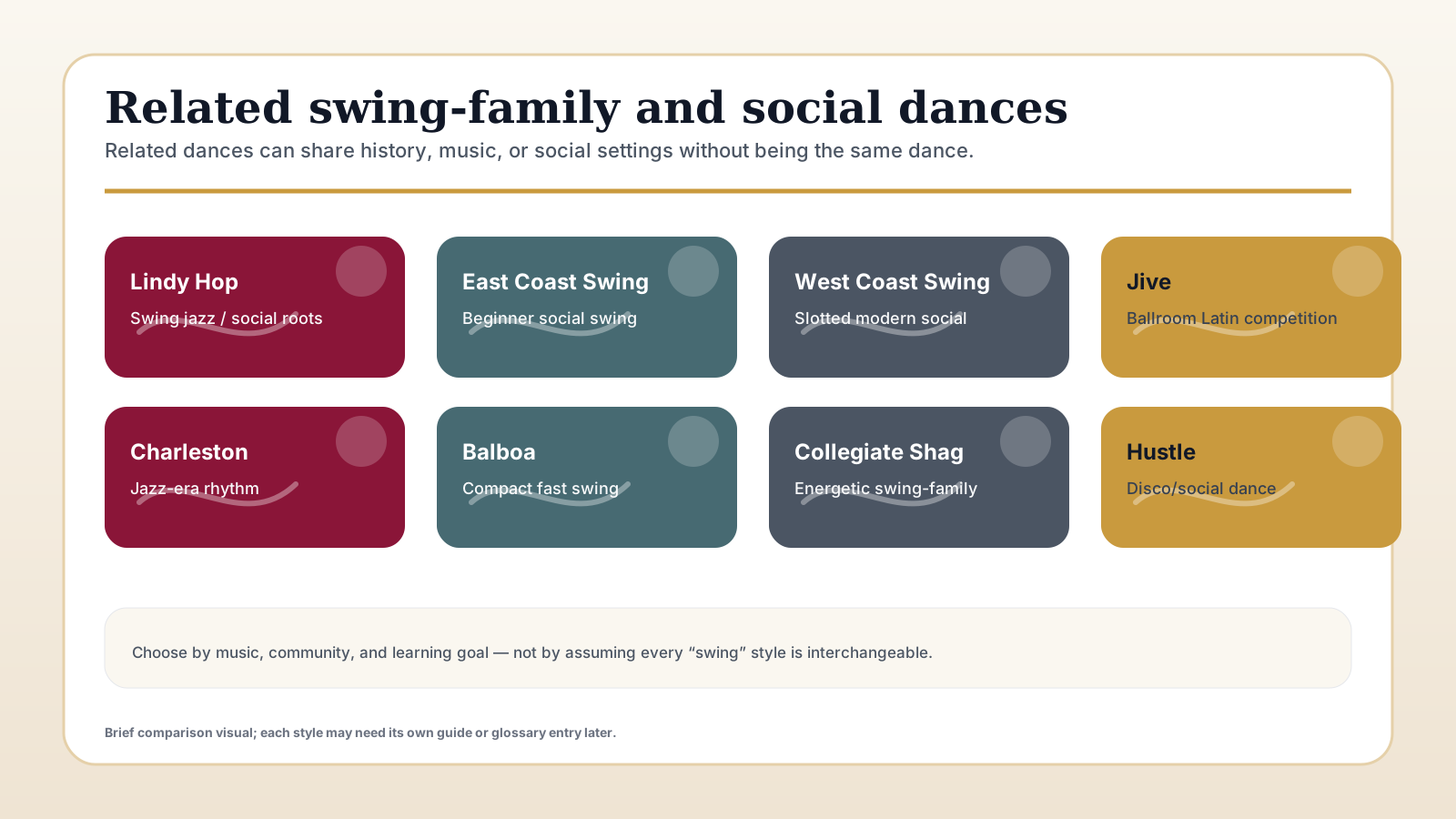
Charleston, Balboa, and Collegiate Shag are related swing-era or swing-family dances. They deserve their own pages or glossary entries if Ballroom Pages expands that part of the site.
Where Lindy Hop comes from
Lindy Hop’s story belongs in Harlem, in Black American social dance culture, and in the swing-era jazz world of the late 1920s and 1930s.
The Savoy Ballroom is central to that history. It was one of Harlem’s great dance spaces, famous for jazz, swing bands, social dancing, contests, and dancers whose innovations shaped American partner dance. The dance grew in a community where music and movement were deeply connected.
Important historical names include Frankie Manning, Norma Miller, Shorty Snowden, Herbert “Whitey” White, and Whitey’s Lindy Hoppers.
Frankie Manning helped popularize and develop Lindy Hop as a dancer, choreographer, performer, and later teacher. Norma Miller, sometimes called the “Queen of Swing,” was another major Savoy Ballroom dancer and storyteller. Whitey’s Lindy Hoppers helped bring the dance to stages, films, and international audiences, but their roots were social: they were Savoy dancers first.
The name “Lindy Hop” is commonly linked to Charles Lindbergh’s 1927 transatlantic flight and is often attributed to dancer Shorty Snowden. Sources vary on the exact date and wording, so the careful version is: Lindy Hop emerged in Harlem in the late 1920s and early 1930s, with its name commonly connected to Lindbergh’s “hop” across the Atlantic.
This page should not treat Lindy Hop as a costume trend or a generic “vintage” aesthetic. The dance is part of Black American cultural history and should be presented with care.
Why Lindy Hop is not a core ballroom dance
Lindy Hop is not a core ballroom syllabus dance in the same way that Waltz, Foxtrot, Tango, Rumba, Cha Cha, or Jive are taught in many ballroom competition systems.
That does not make it less important. It simply means the category is different.
Ballroom Pages includes Lindy Hop because readers need a clear way to compare ballroom, social, swing, wedding, and partner dances in one learning library. Many people encounter Lindy Hop through dance studios, college swing clubs, social dance communities, wedding receptions, live jazz nights, or online searches for “swing dance.”
On this site, Lindy Hop belongs under Dance Styles, Social Dancing, Ballroom Music and Timing, and Lead and Follow.
It should not be mislabeled as American Smooth, International Standard, or International Latin. It can be compared with East Coast Swing, West Coast Swing, and Jive without pretending they are the same dance.
What Lindy Hop feels like
Lindy Hop feels rhythmic, grounded, playful, and social.
The dance has a pulse. It often uses triple steps, rock steps, step-step actions, and elastic partner connection. Good Lindy Hop feels like a conversation with the music and with your partner, not like memorizing a rigid sequence.
A beginner version may feel compact and simple:
- small steps,
- relaxed posture,
- comfortable connection,
- clear rhythm,
- and enough space to move without bumping into other dancers.
A more advanced version may include swingouts, circles, faster tempos, musical breaks, jazz steps, Charleston elements, and performance material. But none of that means beginners need aerials.
Lindy Hop music and timing
Lindy Hop is closely connected to swing jazz. Beginners should listen for a steady pulse, a swinging rhythm feel, and musical phrases that give the dance shape.
The most important point: the music comes first.
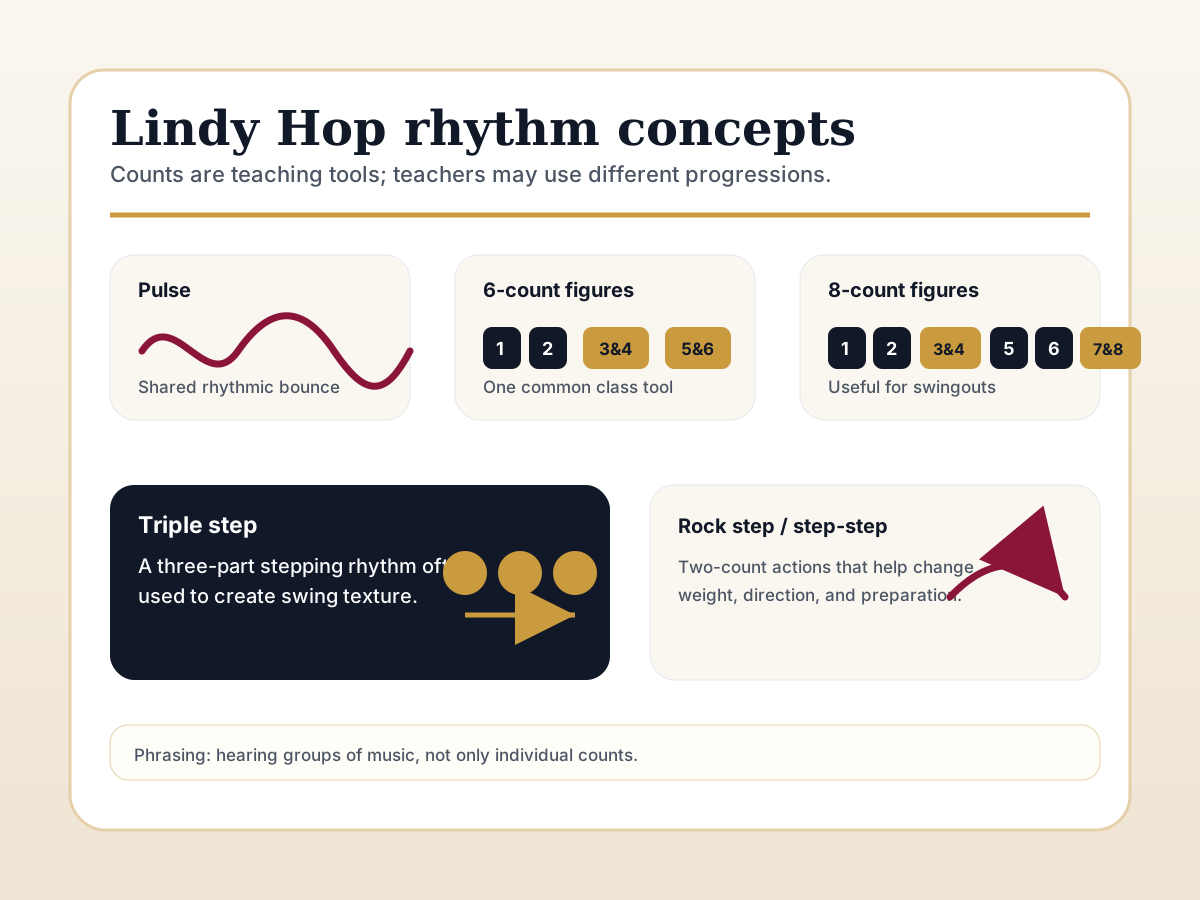
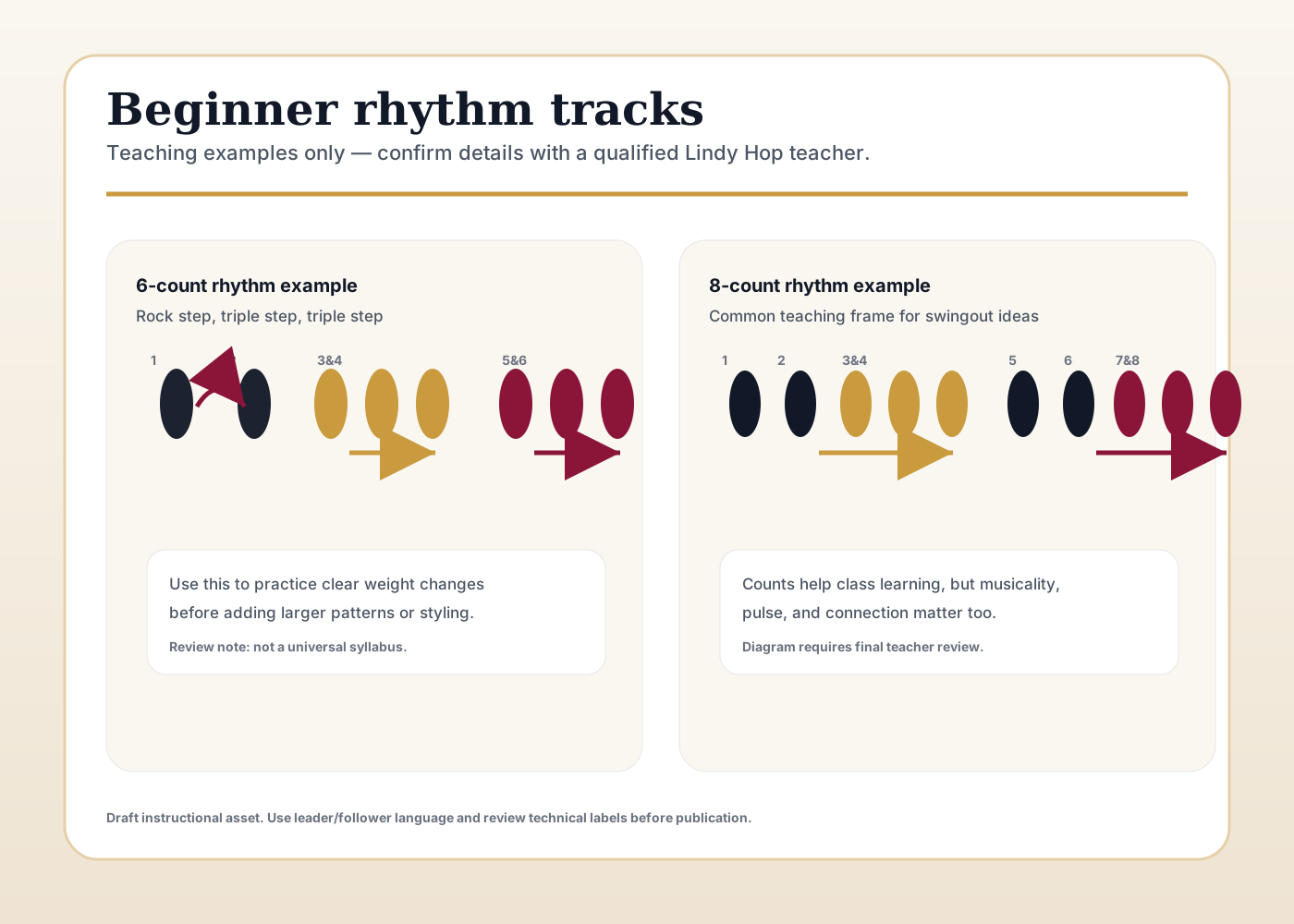
Teachers often introduce Lindy Hop through counts because counts make class easier. But the dance is not only a count. Counts are tools for learning rhythm, partner timing, and musical structure.
| Concept | Beginner explanation | Why it matters |
|---|---|---|
| Pulse | The shared rhythmic bounce or grounded timing you and your partner feel together | Helps the dance feel connected to swing music |
| 6-count figures | Common beginner patterns often counted across six beats | Useful for passes, tuck turns, and simpler social patterns |
| 8-count figures | Common Lindy Hop patterns often counted across eight beats | Important for swingouts, circles, and many classic shapes |
| Triple step | A three-part stepping rhythm often taught as “tri-ple-step” | Creates swing texture and movement quality |
| Rock step or step-step | A two-count action that changes weight and prepares direction | Helps create rhythm and movement changes |
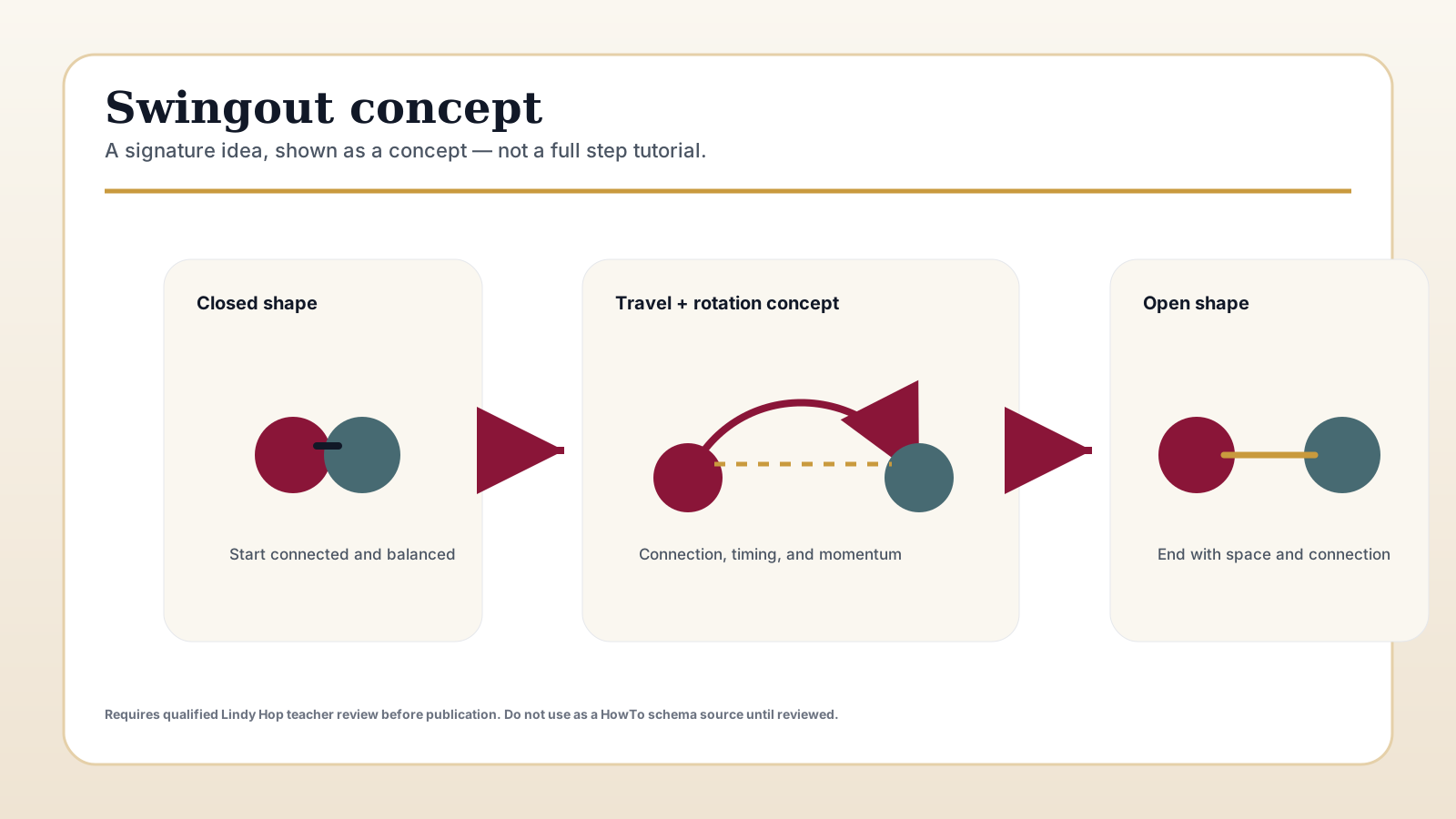
| Swingout | A signature Lindy Hop concept often taught as an 8-count figure | Important, but not something beginners need to master immediately |
| Phrasing | Hearing groups of music rather than only individual counts | Helps dancers make musical choices |
Different teachers and communities may teach these ideas in different orders. Some start with 6-count basics. Some start with 8-count basics. Some focus first on pulse, rhythm, and social dancing before naming every structure.
For more timing help, see how to count ballroom dance music and the ballroom dance tempo chart, or visit the ballroom music and timing hub.
A Ballroom Pages Lindy Hop playlist is coming soon.
Lindy Hop basics for beginners
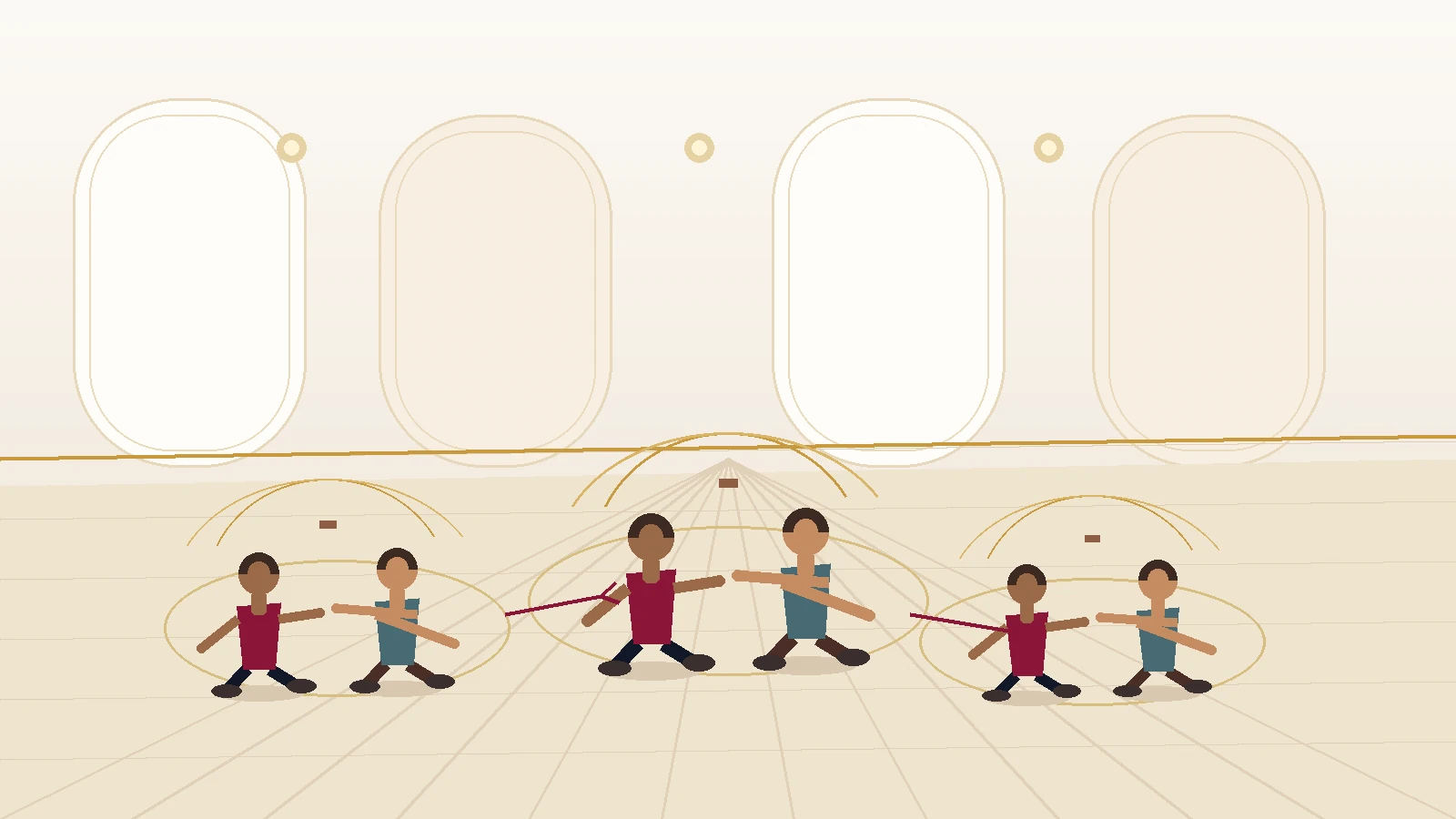
The first goal is not to perform. The first goal is to feel the rhythm, connect comfortably, and move safely with another person.
Learn the roles
Lindy Hop uses leader and follower roles. The leader suggests timing, direction, and movement ideas. The follower responds, contributes rhythm and style, and keeps their own balance. Both partners listen to the music and to each other. These are dance roles, not gender rules.
Start with posture and connection
Keep your posture relaxed and athletic. Avoid locking your knees, lifting your shoulders, or gripping your partner. Your arms should feel alive but not stiff. Connection should guide movement, not pull or force it.
Practice pulse and rhythm
Before learning a long pattern, practice stepping to the music. Try clapping or tapping steady beats. Then practice simple weight changes and triple-step rhythms.
A common beginner rhythm idea is: rock step, triple step, triple step. Another common 8-count idea uses rock step, triple step, step-step or rock step, triple step. Teachers may use slightly different wording. That is normal. Follow your instructor’s language and focus on moving your weight clearly.
Learn simple patterns before swingouts
Beginners may start with 6-count basics, open and closed position, simple passes, tuck turns, and rhythm drills. Some classes introduce 8-count basics early. Others wait.
The swingout is one of the signature Lindy Hop ideas, but it is not the first thing you need to perfect. It uses rhythm, partner connection, momentum, and timing. Learn it with a qualified teacher and expect it to take practice.
Practice notes
- Practice rhythm alone before practicing with a partner.
- Keep steps small.
- Avoid yanking with the arms.
- Stay balanced over your own feet.
- Ask your partner if the connection feels comfortable.
- Use music that is slow or moderate enough for practice.
- Do not add aerials, drops, or tricks to beginner practice.
See also frame and posture basics, lead and follow in ballroom dance, and the ballroom dance glossary.
Lindy Hop social dance etiquette
Lindy Hop is a social dance, so how you treat people matters as much as the steps.
- Ask clearly before dancing.
- Accept or decline dances respectfully.
- Respect partner comfort and boundaries.
- Use clear, gentle connection instead of pulling.
- Keep your movement compact on crowded floors.
- Watch nearby dancers and adapt your patterns.
- Do not do aerials, lifts, drops, or tricks on social floors unless the context is explicitly appropriate, both partners are trained, both partners consent, and there is safe space.
- Do not teach or correct your partner during a social dance unless they ask.
- Thank your partner when the song ends.
A good social dancer makes the dance feel safe, musical, and enjoyable. That is more important than showing every pattern you know.
For more, read social dance etiquette, the broader social dancing guide, and lead and follow in ballroom dance.
Lindy Hop vs swing
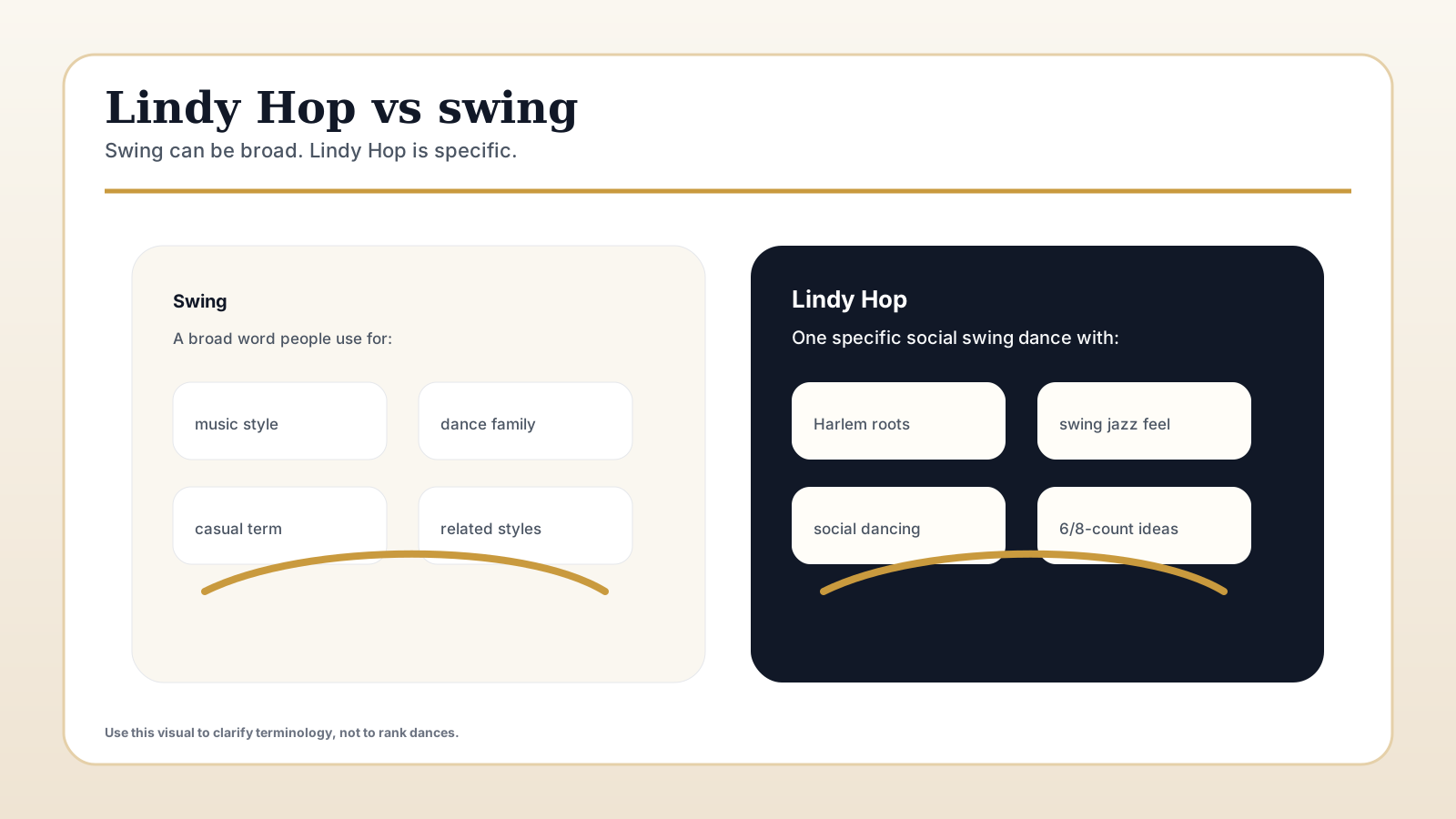
This is the key beginner distinction: swing can be an umbrella. Lindy Hop is a specific dance.
| Term | What it usually means | Beginner note |
|---|---|---|
| Swing music | A jazz music style associated with swing rhythm and big bands | Many swing dances are danced to swing music |
| Swing dance | A family or umbrella term for several related dances | Can include Lindy Hop, East Coast Swing, West Coast Swing, Balboa, Shag, Charleston, Jive-related forms, and more |
| Lindy Hop | A specific social swing dance rooted in Harlem and swing-era jazz | Historically central, but not the same as every swing dance |
| Jitterbug | A historical/casual term used in different ways | Can overlap with Lindy Hop or swing generally, depending on context |
| East Coast Swing | A related but distinct swing dance often taught in ballroom/social studios | Often simpler for beginners and common in reception/social settings |
| West Coast Swing | A related but distinct slotted social swing dance | Often danced to blues, pop, R&B, country, and contemporary music |
| Jive | A ballroom Latin competition dance with swing lineage | Not the same as social Lindy Hop |
No style is “better.” The right choice depends on your music, your goals, and the social dance community you want to join.
Lindy Hop vs East Coast Swing, West Coast Swing, Jive, Charleston, Balboa, and Hustle
| Dance | Best music feel | Movement feel | Social use | Beginner path |
|---|---|---|---|---|
| Lindy Hop | Swing jazz, live band feel, rhythmically rich music | Grounded, elastic, playful, improvisational; mixes 6-count and 8-count ideas | Swing socials, Lindy events, live jazz nights, community dance floors | Start with pulse, rhythm, connection, simple patterns, then swingout |
| East Coast Swing | Upbeat swing or swing-like music | Bouncy, compact, often simpler 6-count patterns | Ballroom studios, parties, weddings, beginner social dancing | Often easier as a first “swing” dance |
| West Coast Swing | Blues, R&B, pop, country, contemporary, and swing-influenced music | Slotted, elastic, smooth, conversational | Modern WCS socials and competitions | Learn slot, anchor, stretch, and 6/8-count patterns |
| Jive | Fast, energetic competition music | Sharp, high-energy, Latin competition styling | Ballroom/Latin competition and studio contexts | Best when learning International Latin or competition dance |
| Charleston | Jazz/swing-era rhythm, solo or partnered contexts | Kicks, rhythm, jazz movement | Often blended into Lindy Hop or taught separately | Useful related skill; deserves its own guide |
| Balboa | Fast swing music, compact social floors | Close, compact, precise footwork | Balboa and swing communities | Great for crowded/fast music, but distinct from Lindy Hop |
| Collegiate Shag | Upbeat swing-era music | Energetic, rhythmic, often higher-knee character | Swing communities and vintage dance events | Related future topic, not the same as Lindy Hop |
| Hustle | Disco and upbeat social dance music | Rotational, club/social dance feel | Parties, receptions, social dance floors | Better for disco/pop reception music than swing jazz |
Use this table as a starting point, not a rulebook. If your goal is social swing dancing with jazz roots, Lindy Hop is a strong choice. If your goal is an easier reception dance, East Coast Swing may be more practical. If your goal is International Latin competition, Jive is the correct comparison. You can also compare Lindy Hop with West Coast Swing, explore Hustle for disco and social dance music, or Country Two Step for social dance crossover.
Common beginner mistakes
| Mistake | Fix |
|---|---|
| Thinking Lindy Hop is only aerials and tricks | Start with rhythm, connection, and simple social patterns. Aerials are advanced and context-specific |
| Confusing Lindy Hop with all swing dancing | Remember that swing is a broad word. Lindy Hop is one dance in the swing family |
| Taking steps too large | Keep your steps small enough to stay balanced and avoid bumping into other dancers |
| Pulling with the arms | Use comfortable connection through posture, timing, and body movement. Do not yank your partner |
| Trying to master the swingout before understanding rhythm and connection | Learn pulse, 6-count and 8-count ideas, closed/open position, and simple partner movement first |
| Ignoring the music | Listen to swing jazz. Clap the pulse. Notice phrases, breaks, and energy changes |
| Forgetting floorcraft | Choose patterns that fit the space. Protect your partner and the people around you |
| Treating history as optional decoration | Learn where the dance comes from. Lindy Hop’s Black American and Harlem roots are part of the dance’s meaning |
Beginner practice tips
- Practice rhythm alone. Tap the beat, clap simple rhythms, and practice triple steps without a partner.
- Listen to swing music. Do not only count. Listen for pulse, phrasing, breaks, and call-and-response energy.
- Practice comfortable connection. With a partner, work on gentle connection without gripping or pulling. Both people should feel balanced.
- Keep early patterns simple. Start with basic 6-count or 8-count material, passes, tuck turns, and open/closed position changes.
- Treat the swingout as a project. It is important, but it takes time. Learn it slowly and revisit it often.
- Go social before you feel perfect. Social dancing teaches timing, floorcraft, and confidence. You do not need to know everything before attending a beginner-friendly swing social.
- Learn etiquette early. Being kind, safe, and respectful will make you a better dancer faster than memorizing more moves.
Is Lindy Hop good for weddings or receptions?
Lindy Hop can be great for wedding receptions when the music has a swing or jazz feel and the couple wants upbeat, playful social dancing.
It is usually not the easiest default for a slow romantic first dance. Many first-dance songs are better matched to Foxtrot, Rumba, Nightclub Two Step, East Coast Swing, or simple slow dancing, depending on the meter, tempo, and feel.
Lindy Hop works best at weddings when:
- the song swings,
- the couple likes jazz or swing music,
- there is enough space to move safely,
- the choreography stays social and manageable,
- and nobody assumes aerials or tricks are required.
For first-dance planning, see the wedding dance guide. For reception dancing, Lindy Hop can be a joyful choice when the music fits.
Is Lindy Hop useful for social dancing?
Yes. Lindy Hop is one of the most important social swing dances. You may encounter it at:
- swing dance nights,
- live jazz events,
- college swing clubs,
- community socials,
- studio dance parties,
- Lindy Hop workshops,
- and swing dance festivals.
For beginners, social dancing is where the dance starts to make sense. You learn to adapt to different partners, hear the music more clearly, and choose patterns that fit the floor. The goal is not to impress everyone. The goal is to share a musical, respectful, connected dance.
Is Lindy Hop a ballroom dance?
It depends on how strictly someone is using the word “ballroom.”
Lindy Hop is not a core ballroom syllabus dance like Waltz, Foxtrot, Rumba, Cha Cha, or Jive. It is primarily a social swing dance with major historical and cultural importance.
It belongs on Ballroom Pages because this site helps readers compare ballroom, Latin, rhythm, wedding, social, and partner dances in one clear learning library. Readers searching for “swing” often need to understand Lindy Hop alongside East Coast Swing, West Coast Swing, Jive, Hustle, and other partner dances.
So the careful answer is: Lindy Hop is ballroom-adjacent and often taught in studios or social dance communities, but it should be presented as a social swing dance, not as a core American Smooth, American Rhythm, International Standard, or International Latin syllabus dance.
Related dances to try next
Charleston, Balboa, and Collegiate Shag are related swing-era or swing-family dances that may become future Ballroom Pages guides or glossary entries.