What is Hustle?
Hustle is a social partner dance that grew out of disco-era club dancing and remains useful for modern social dancing, parties, and wedding receptions. In partner Hustle, two dancers use leader and follower roles, compact steps, turns, hand changes, and a smooth connection to move with danceable 4/4 music.
A beginner can think of Hustle as: a smooth, upbeat partner dance for dance-floor music.
It is not the same thing as West Coast Swing, East Coast Swing, Salsa, Cha Cha, Nightclub Two Step, or Rumba. It may share some practical social-dance ideas with those dances, such as turns, partner connection, and adapting to music, but it has its own count, history, feel, and use case.
On Ballroom Pages, Hustle belongs in Dance Styles / Social / Wedding because it helps people dance in real-life social settings, especially receptions, parties, studio socials, and mixed partner-dance events.
Where Hustle comes from
Hustle is strongly connected to the disco era, but it should not be reduced to a costume cliché or a single movie scene. Dance-history sources connect Hustle to New York City disco culture, Latino communities, partner dancing, and the broader return of touch dancing during the 1970s.
Van McCoy and the Soul City Symphony’s 1975 recording “The Hustle” helped take an existing dance craze into broader popular culture. The dance’s history includes partner forms, line-dance forms, Latin Hustle, New York Hustle, and other regional or teaching labels.
For beginners, the practical takeaway is simple: Hustle has disco-era roots, but partner Hustle is still a useful social dance today.
What Hustle feels like
Hustle feels smooth, upbeat, and turn-friendly. It is usually danced to music with a steady pulse, so the partnership can move through turns, hand changes, and compact patterns without traveling too far.
Inside the partnership, Hustle should feel clear rather than forceful. The leader gives direction and timing. The follower responds with balance and their own weight changes. The connection should help the movement, not drag the follower through turns.
Beginners often notice three things right away:
- Hustle has more turns than many beginner social dances.
- The count may feel unusual at first because of the syncopation.
- The dance looks best when the steps are compact and smooth.
Think “quick, smooth, connected” rather than “big, bouncy, and dramatic.”
Hustle timing and how to count it
Hustle timing can be confusing because teachers and communities may count it differently.
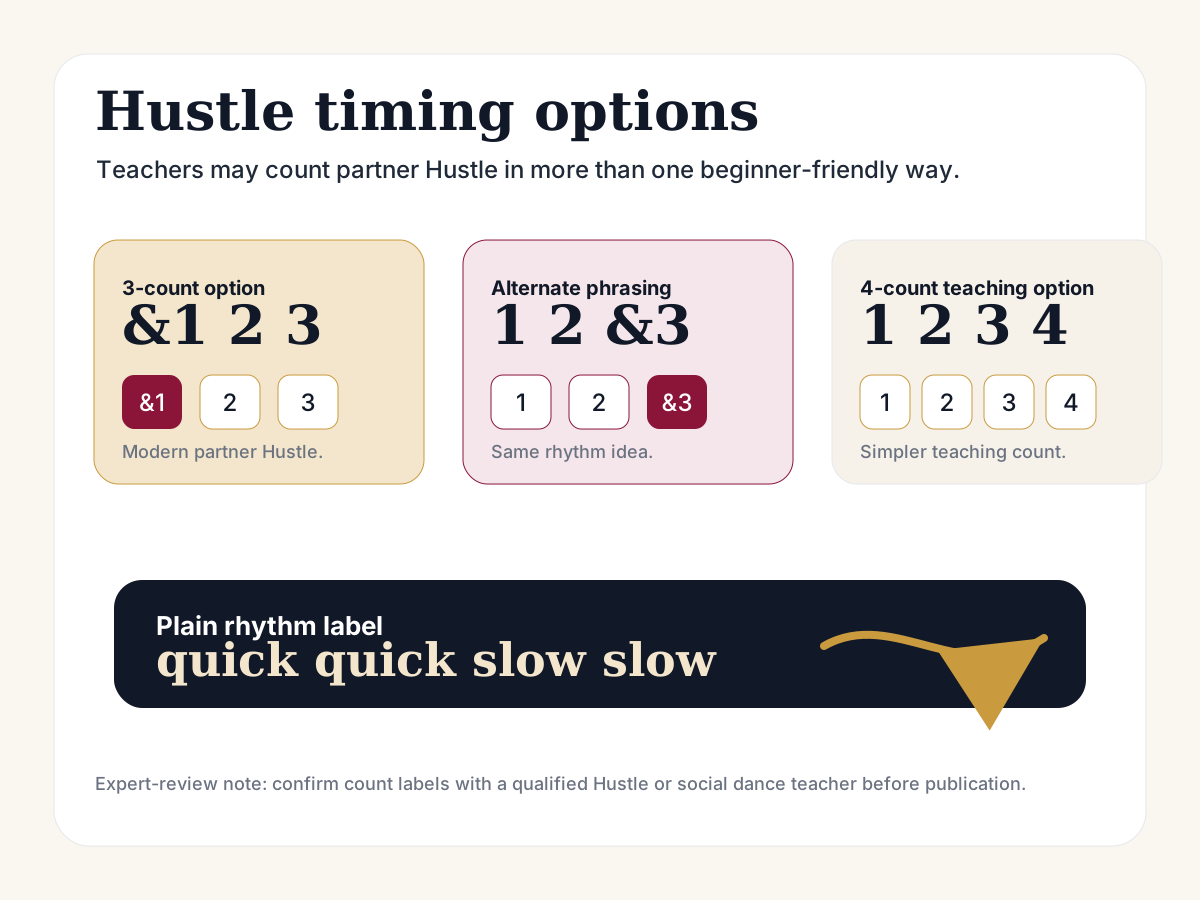
Many modern partner Hustle classes use a syncopated 3-count pattern such as &1 2 3 or 1 2 &3. A beginner-friendly way to hear that is:
- two quicker weight changes,
- followed by two slower walking or settling steps,
- repeated with the music.
Some studios also teach a 4-count Hustle first (1 2 3 4). That can help beginners move on every beat before learning the syncopated version.
| Timing language | Example count | Beginner meaning |
|---|---|---|
| 3-count Hustle | &1 2 3 | A syncopated version often associated with modern / New York-style partner Hustle. |
| Alternate 3-count phrasing | 1 2 &3 | Another common way teachers explain the same quick/slow idea. |
| 4-count Hustle | 1 2 3 4 | A simpler teaching version where beginners step more evenly on the beat. |
| Quick/slow language | quick quick slow slow | A plain-English way to understand the rhythm without obsessing over numbers. |
Beginner note: Ask your teacher, “Are we counting this as &1 2 3, 1 2 &3, or 4-count?” That one question can prevent a lot of confusion.
For more help, read how to count ballroom dance music and use the ballroom dance tempo chart.
Basic Hustle steps for beginners
Hustle uses leader and follower roles. These are dance roles, not gender rules. Either role can be danced by anyone. A beginner does not need flashy spins right away. Start with the building blocks.
Ready position
Many beginner classes start in an open hand connection, facing your partner. Stand tall but relaxed. Keep your shoulders down, your elbows soft, and your steps small enough that you can change direction. Think: “available connection,” not “gripping.”
Weight changes
Hustle depends on clear weight changes. That means each step should actually transfer your weight from one foot to the other. If you tap without changing weight when the pattern needs a step, the next movement becomes harder. Practice slowly before adding music.
Basic rhythm
A common beginner rhythm is often described as ball-change, walk, walk or quick quick slow slow. The exact footwork can vary by teacher and count system, so treat this as a plain-English orientation rather than one universal beginner syllabus.
Compact turns
Hustle is turn-friendly, but turns should not be yanked. A leader should create a clear path and timing. A follower should keep balance and avoid throwing themselves through the turn. Good turns feel guided, not forced.
Hand connection
Use a comfortable hand connection. Avoid squeezing, twisting wrists, or pulling hard. Hustle can have quick turns and hand changes, so both partners need responsive arms and clear timing.
Practice note: Practice the rhythm first. Then practice one basic pattern. Then add a simple underarm turn. Only after that should you worry about styling, faster music, or multiple turns.
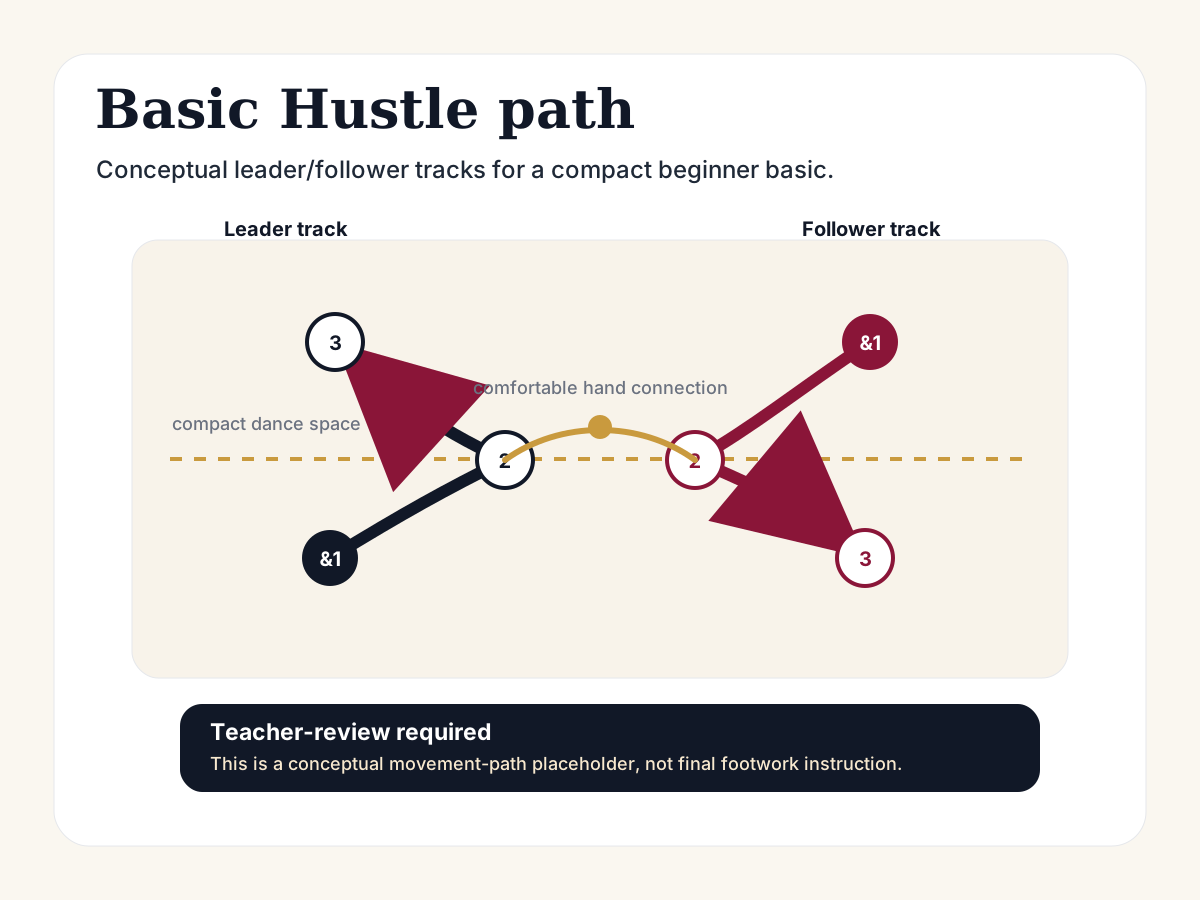
For partner-connection fundamentals, see lead and follow and frame and posture, and browse the ballroom dance glossary for terms.
Hustle music
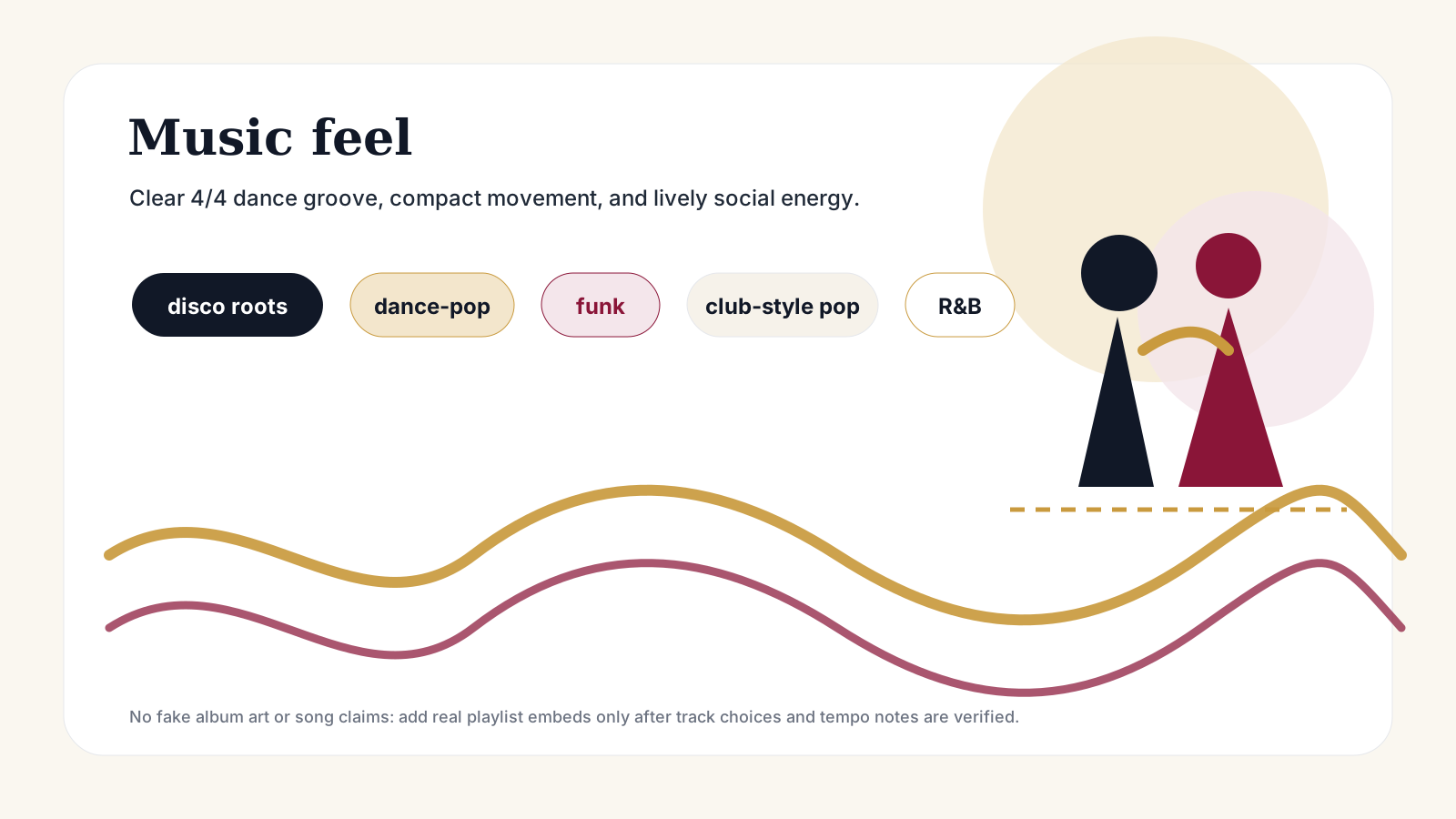
Hustle is most strongly associated with disco and dance-beat music, but it can also work with contemporary dance-pop, funk, club-style pop, and some R&B when the tempo and groove fit.
The important beginner question is not “Is this song officially a Hustle song?” It is: can I hear a steady 4/4 beat and move the basic rhythm comfortably?
Hustle is usually danced to clear 4/4 dance music with a steady groove. Beginner-friendly tempos often fall roughly around the low 100s to mid-120s BPM, but exact ranges vary by teacher, community, and event.
A Ballroom Pages Hustle practice playlist is coming soon.
For more music help, visit the Music & Timing hub, the ballroom dance tempo chart, and how to count ballroom dance music.
Hustle for social dancing
Hustle is useful socially because it is compact, energetic, and adaptable. It can work at studio socials, parties, nightclubs, wedding receptions, and mixed social dance events when the music has a clear dance beat.
Beginner etiquette matters as much as beginner footwork.
Hustle social etiquette basics
- Ask before dancing.
- Accept “no” politely.
- Respect your partner’s comfort and role preference.
- Keep steps compact.
- Use clear, gentle connection.
- Avoid yanking through turns.
- Avoid repeated spins if your partner looks uncomfortable.
- Stay aware of nearby couples.
- Adapt to the music and crowd.
- Do not teach or correct your partner during a social dance unless they asked.
- Thank your partner at the end.
For more, read dance etiquette for social dancing, the broader social dancing guide, and lead and follow.
Hustle for weddings and receptions
Hustle can be a great wedding reception dance when the song is upbeat, danceable, and fun. It works especially well when a couple wants something more connected than freestyle dancing but less formal than a traditional ballroom routine.
It can also work for:
- party-style first dances,
- reception entrances,
- parent/party dances,
- wedding guest dancing,
- choreographed “surprise” dance moments,
- upbeat social dancing after dinner.
Hustle is usually not the default choice for a slow romantic first dance. If the song is slow, sweeping, or intimate, Nightclub Two Step, Rumba, Foxtrot, or Waltz may fit better.

For planning, use the wedding dance guide and what dance fits your wedding song.
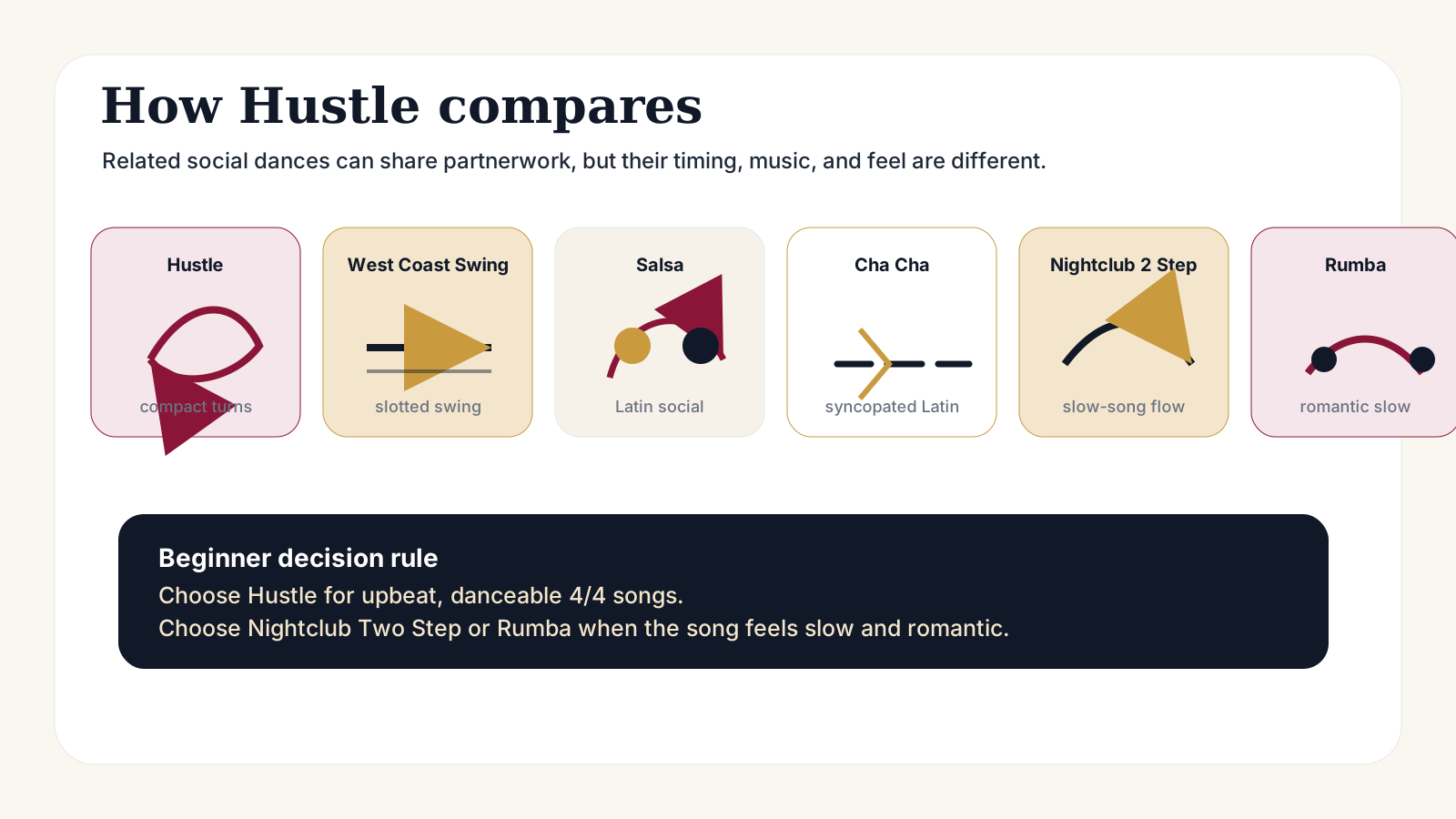
Hustle vs West Coast Swing, East Coast Swing, Salsa, Cha Cha, Nightclub Two Step, and Rumba
| Dance | Timing feel | Movement feel | Music feel | Social / wedding use | Beginner learning path |
|---|---|---|---|---|---|
| Hustle | Often syncopated 3-count such as &1 2 3 or 1 2 &3; some 4-count teaching | Smooth, compact, turn-friendly, energetic | Disco, dance-pop, funk, club-style pop, some R&B | Great for parties and upbeat receptions | Learn count, weight changes, compact basic, hand connection, simple turn |
| West Coast Swing | Common 6-count and 8-count patterns | Smooth, elastic, slotted | Blues, R&B, pop, contemporary, country, funk | Strong social dance; reception use when groove fits | Learn slot, anchor, sugar push / push break, side pass, connection |
| East Coast Swing | Often 6-count; single / double / triple rhythm versions | Bouncy or lilty, spot / circular | Swing, rock-and-roll, upbeat social music | Good for social parties and lively wedding songs | Learn rock step, triple / single rhythm, turns |
| Salsa | Salsa timing systems vary by community | Latin social dance with turns and body rhythm | Salsa and Latin music | Strong Latin social scene; wedding use when song fits | Learn basic step, timing, turns, partner connection |
| Cha Cha | Often counted with cha-cha syncopation | Sharp, playful, Latin / Rhythm feel | Cha Cha, Latin pop, some danceable pop | Good for social / studio dancing; some reception songs | Learn basic rhythm, chasse, timing, compact action |
| Nightclub Two Step | Usually quick-quick-slow or related syncopated phrasing | Smooth, relaxed, romantic | Slow / mid-tempo ballads, soft rock, country love songs | Excellent first-dance fit for many slow songs | Learn side basic, rock step, relaxed hold, simple turns |
| Rumba | Slower Latin / Rhythm timing | Romantic, grounded, expressive | Slow Latin, pop ballads, romantic music | Strong first-dance option for many slow songs | Learn box / basic timing, weight transfer, simple turns |
| Foxtrot | Slow / quick timing depending on style | Smooth, traveling, classic | Swingy standards, classic pop, some jazz | Strong wedding / social option for classic songs | Learn basic timing, frame, promenade / social patterns |
Practical rule: choose Hustle when the song feels upbeat and danceable. Choose Nightclub Two Step or Rumba when the song feels slow and romantic. Choose West Coast Swing when the groove feels elastic and slotted. Choose Salsa or Cha Cha when the music clearly calls for Latin timing and feel.
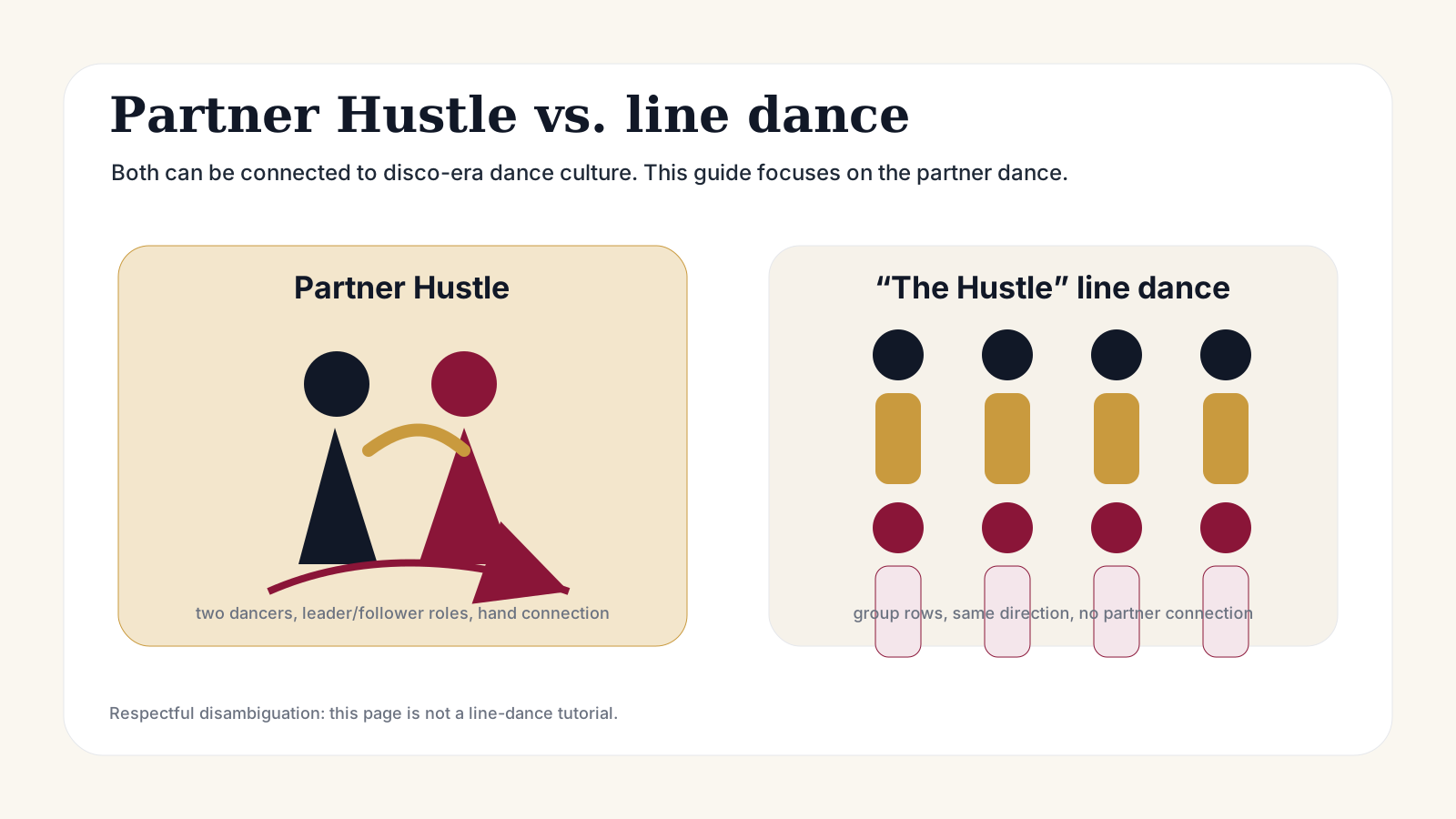
Partner Hustle vs “The Hustle” line dance
The word “Hustle” can refer to more than one thing.
This page focuses on partner Hustle: a social partner dance with leader/follower roles, hand connection, turns, and rhythm patterns.
The phrase “The Hustle” can also refer to line-dance or solo/freestyle versions associated with disco-era popular culture.
Both are part of the broader disco-dance story. They are not the same learning path.
Common beginner mistakes
| Mistake | Why it happens | Fix |
|---|---|---|
| Rushing the count | Trying to move before the beat is clear | Clap or step the rhythm slowly before adding partnerwork |
| Taking steps too large | Big steps make turns and hand changes harder | Keep the basic compact. Hustle works best when you can redirect smoothly |
| Pulling with the arms during turns | Yanking the follower through a turn | Use timing, body direction, and a comfortable hand connection |
| Ignoring the music’s pulse | Doing patterns without hearing the beat | Walk to the music first. Add the syncopated rhythm after you can hear the pulse |
| Trying too many turns too soon | Copying advanced dancers before the basic rhythm feels natural | Master one basic and one clean turn before adding faster combinations |
| Confusing Hustle with West Coast Swing or Salsa | Using WCS anchor habits or Salsa timing and calling it Hustle | Respect each dance’s count, music, and movement identity |
| Forgetting floor awareness | Spinning or traveling into nearby couples at receptions or socials | Shrink your movement when the floor is crowded |
Beginner practice tips
- Practice the rhythm alone. Clap or step &1 2 3, then try 1 2 &3, then try a simple 1 2 3 4. Notice which version your teacher uses.
- Practice clean weight changes. Every step should have a clear weight transfer. Do not fake the step with only a tap unless the pattern specifically calls for it.
- Practice compact movement. Put a small rectangle of tape on the floor or imagine dancing on a small rug. Keep your steps inside it.
- Practice one turn at a time. Do one basic. Add one simple turn. Stop. Reset. Repeat.
- Practice with a partner slowly. Use a comfortable hand connection. Do not grip. Do not twist wrists. Count out loud while practicing.
- Practice listening. Try walking to different dance-pop or disco-style songs. Notice which songs make the rhythm easier or harder.
- Practice etiquette. Ask politely. Respect no. Thank your partner. Keep your movements comfortable and safe.
Is Hustle good for weddings?
Yes, Hustle can be excellent for weddings when the song is upbeat, danceable, and reception-friendly. It can work well for:
- reception dancing,
- upbeat first dances,
- party-style choreography,
- parent dances with a lively song,
- group dance moments,
- couples who want something playful and social.
Song choice matters. Hustle is usually not the best default for a slow romantic song. If your song is a ballad, consider Nightclub Two Step, Rumba, Foxtrot, or Waltz instead.
Use what dance fits your wedding song to match the song before choosing the dance.
Is Hustle useful for social dancing?
Yes. Hustle is useful because many social events play danceable 4/4 music that does not feel like Waltz, Foxtrot, Salsa, or slow Rumba.
Hustle gives you a partner-dance option for:
- disco-inspired music,
- dance-pop,
- funk,
- upbeat reception songs,
- studio socials,
- mixed social dance events,
- parties where freestyle dancing is common but you want a partner structure.
A beginner can become socially comfortable before becoming technically advanced. The first goal is not to impress people. The first goal is to hear the beat, keep the connection comfortable, stay aware of the floor, and make the dance enjoyable for both partners.
Is Hustle a ballroom dance?
Hustle is best described as a social partner dance with disco-era roots. It is often taught in ballroom and social dance studios, and it appears in some social-dance competition/event contexts.
But it should not be described as the same thing as American Smooth, American Rhythm, International Latin, or International Standard unless a specific syllabus, studio, or event source says so in context.
It belongs on Ballroom Pages because Ballroom Pages covers ballroom and partner dance learning broadly, including social and wedding dances that help people dance in real life.