What is Country Two Step?
Country Two Step is a country-western social partner dance where two dancers move together around the floor, usually in a counterclockwise flow called the line of dance.
In plain English, it is: a traveling country partner dance built from walking steps, quicks and slows, turns, and social floorcraft.
It is often danced in country bars, honky-tonks, dance halls, ballroom/social dance studios, and wedding receptions. The dance is practical because it gives you a partner structure for upbeat country music instead of leaving you to freestyle or stand still.
On Ballroom Pages, Country Two Step belongs in Dance Styles / Social. It is included as a country/social crossover style, not as a duplicate of Nightclub Two Step, Country Swing, West Coast Swing, East Coast Swing, Hustle, Foxtrot, Waltz, or line dancing.
A beginner does not need to know every wrap, spin, or variation to understand the dance. Start with four ideas:
- Country Two Step travels around the floor.
- The common beginner rhythm is quick quick slow slow.
- Partners use leader and follower roles.
- Floorcraft matters as much as steps.
Country Two Step, Texas Two Step, Country Western Two-Step, and Progressive Two-Step
The name can be confusing because people use several related terms. For this page, the canonical name is Country Two Step, matching the Ballroom Pages style taxonomy.
| Term | Beginner-friendly meaning |
|---|---|
| Country Two Step | The canonical name used on Ballroom Pages for this country-western / social partner dance. |
| Texas Two Step | Often used as another name for Country Two Step, especially in Texas or country dance contexts. |
| Country Western Two-Step | A descriptive term for the same broad dance family. |
| Two-Step | Common shorthand, but potentially confusing because several dances include “two step” in the name. |
| Progressive Two-Step | Often used to emphasize that the dance travels around the floor. |
| Nightclub Two Step | A different dance, usually slower and better suited to ballads. |
| Triple Two / Triple Two Step | A different country-western dance with triple-step rhythm. |
Practical rule: if a class, bar, or studio says “Two Step” in a country-western context, ask whether they mean Country/Texas Two Step, Nightclub Two Step, Triple Two, or a local variation.
Where Country Two Step comes from
Country Two Step has a layered history. Older “two-step” dances existed before the modern country-western dance, and sources connect the broader two-step idea with older ballroom/social dances, Foxtrot, One Step, polka, waltz, and country dance-hall culture.
Modern Texas/Country Two Step history is less tidy. Exact origin stories vary, and this guide avoids saying the dance was invented by one person or in one single place.
For beginners, the useful takeaway is simple: Country Two Step grew into a practical country-western partner dance for real social floors. It has connections to older social dances, but modern Country Two Step has its own music culture, line-of-dance floorcraft, and country-social identity.
Why Country Two Step is a country/social crossover dance
Country Two Step sits between country-western dance culture and broader social partner dancing. You may encounter it in:
- country bars,
- honky-tonks,
- dance halls,
- country-western dance events,
- ballroom and social dance studios,
- wedding receptions,
- country-themed parties,
- mixed partner-dance socials.
That is why Ballroom Pages treats it as a country/social crossover style. It helps people dance in real-life settings, even though it is not the same thing as Waltz, Foxtrot, Rumba, Cha Cha, or other core ballroom syllabus dances.
This is not gatekeeping. It is clarity. A ballroom student can benefit from learning Country Two Step, and a country-bar dancer can benefit from ballroom-style timing, posture, lead/follow, and floorcraft explanations. The page welcomes both audiences.
What Country Two Step feels like
Country Two Step feels like smooth travel with rhythm underneath it. Instead of dancing mostly in place, the couple moves around the room with traffic.
At a beginner level, it should feel:
- relaxed rather than stiff,
- compact rather than huge,
- connected rather than forceful,
- rhythmic rather than rushed,
- social rather than showy.
The leader is responsible for direction, timing, and floor awareness. The follower responds with their own balance, steps, and timing. Both partners should stay comfortable.
Turns and wraps are part of the fun, but they are not the first goal. First, learn how to move with the music, travel with the line of dance, and avoid running into people.
Country Two Step timing and how to count it
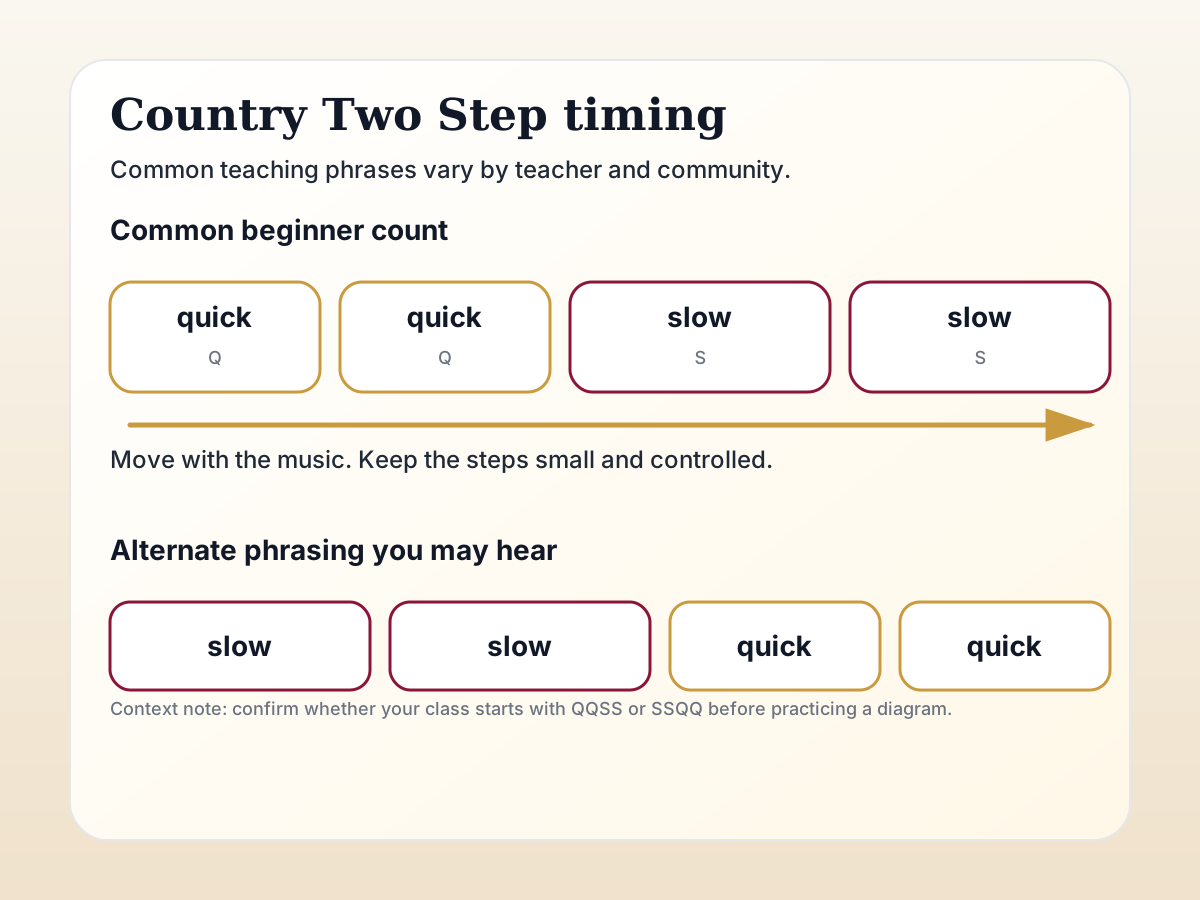
Many beginner classes count Country Two Step as quick quick slow slow. A simple way to feel that is:
- quick: a shorter step,
- quick: another shorter step,
- slow: a longer or held step,
- slow: another longer or held step.
Some teachers count with numbers. Some start with the quicks. Some communities or teachers may start with the slows. This is why you may hear quick quick slow slow or slow slow quick quick. Both can appear in real dance communities. The important beginner skill is not arguing about the phrase. It is matching the teacher, music, partner, and room.
| Timing language | Example | Beginner meaning |
|---|---|---|
| Common beginner count | quick quick slow slow | Most common plain-English way to describe the social basic. |
| Alternate phrasing | slow slow quick quick | Used by some communities or teachers; still part of Two Step timing language. |
| Competition context | QQSS, QQS QQS, QQQQSS | UCWDC uses these timing families in a competition context. |
| Number count | often taught with counts such as 1, 2, 3, 5 | A way to show that the slow steps take more time; exact teaching language varies. |
Beginner note: Ask your teacher, “Do we start with quick quick or slow slow?” That one question can prevent a lot of confusion.
For more help, read how to count ballroom dance music and use the ballroom dance tempo chart.
Basic Country Two Step steps for beginners
Country Two Step uses leader and follower roles. These are dance roles, not gender rules. Either role can be danced by anyone. A beginner does not need big spins or complicated wraps right away. Start with the building blocks.
Ready position
Many classes begin with partners facing each other in a comfortable closed or open hold. Keep your posture upright but relaxed. Keep your elbows soft. Avoid squeezing or hanging on your partner. Think: “available connection,” not “gripping.”
Weight changes
Each step should actually transfer your weight. If you only tap without moving weight, the next step becomes confusing. Practice slowly before adding speed.
Forward and backward basic
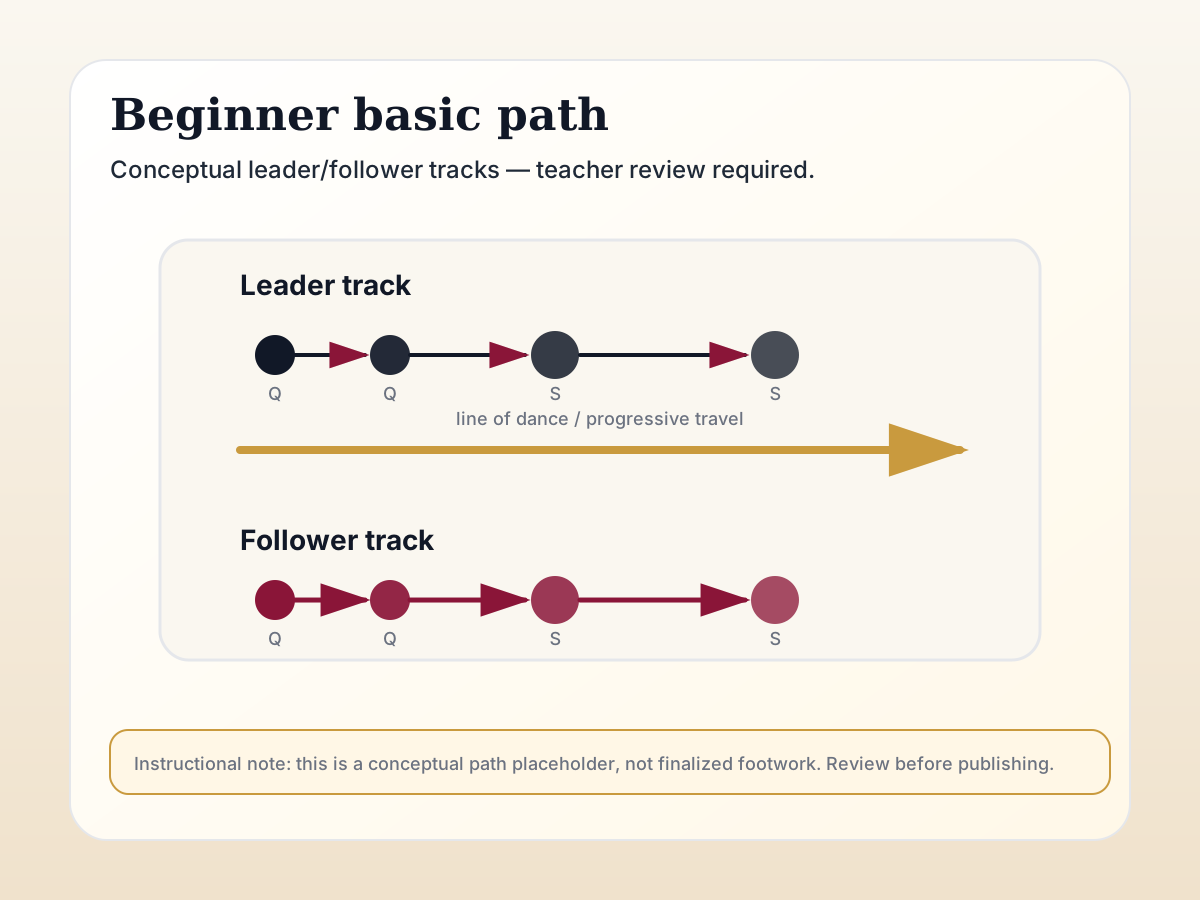
A common beginner basic has one partner traveling forward while the other travels backward. The pair moves with the line of dance, usually counterclockwise around the room. The common rhythm is quick quick slow slow. Keep the steps small. Small steps make it easier to stay on time, turn safely, and adjust to a crowded floor.
Turns
Country Two Step includes turns, but turns should not be yanked. The leader should create clear timing and space. The follower should keep balance and avoid throwing themselves through the turn. Good turns feel guided, not forced.
Promenade and travel
You may hear positions such as promenade, sweetheart, wrap, skater, or shadow. These are ways partners can orient themselves while traveling. Beginners do not need to master every position immediately. Learn the basic, a simple turn, and line-of-dance travel first.
Practice note: Start with rhythm. Then add walking. Then add direction. Then add a simple turn. Only after that should you worry about wraps, styling, faster music, or crowded-floor patterns.
For partner-connection fundamentals, see lead and follow and frame and posture, and browse the ballroom dance glossary for terms.
Line of dance and floorcraft
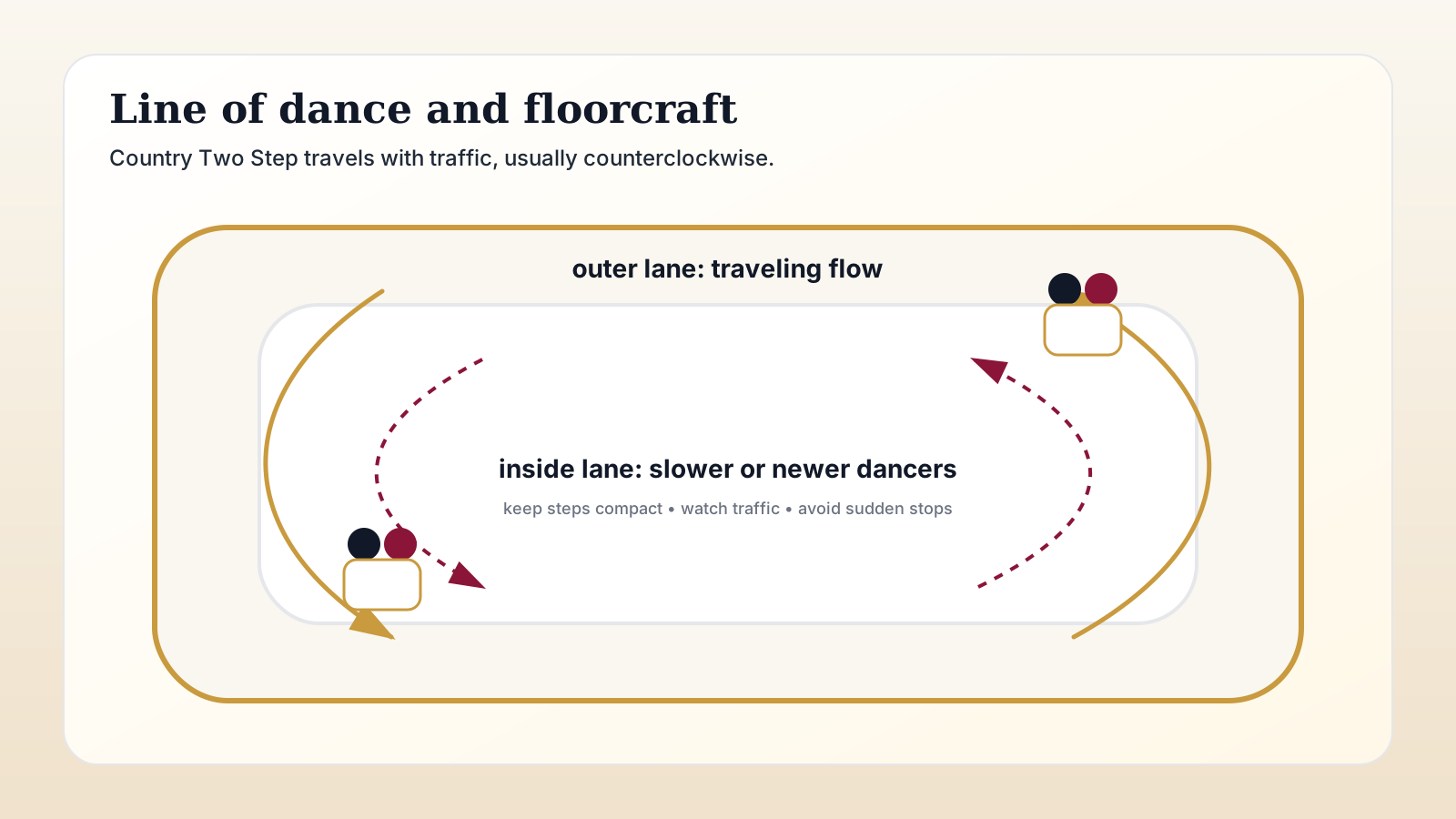
The line of dance is the flow of traffic on the dance floor. In progressive dances like Country Two Step, couples generally move counterclockwise around the room.
Imagine a track around the outside of the dance floor. Two Step travels around that track. If you stop suddenly, take huge steps, or turn against traffic without looking, other couples have to dodge you.
Beginner floorcraft rules
- Follow the counterclockwise flow of traffic.
- Keep steps compact.
- Do not stop suddenly in the line of dance.
- Avoid big patterns on crowded floors.
- Watch the couple ahead of you.
- Leave space before turning.
- Move toward the inside lane if you are slower or newer.
- Do not carry drinks onto the floor.
- Apologize if you bump someone.
- Adjust to the room, crowd, and music.
For more, read dance etiquette for social dancing and lead and follow.
Country Two Step music
Country Two Step usually works best with country or country-western music that has a clear beat and enough drive for traveling steps.
The key question is not “Is this the perfect song?” It is: can I hear a steady beat and move quick quick slow slow without rushing or dragging?
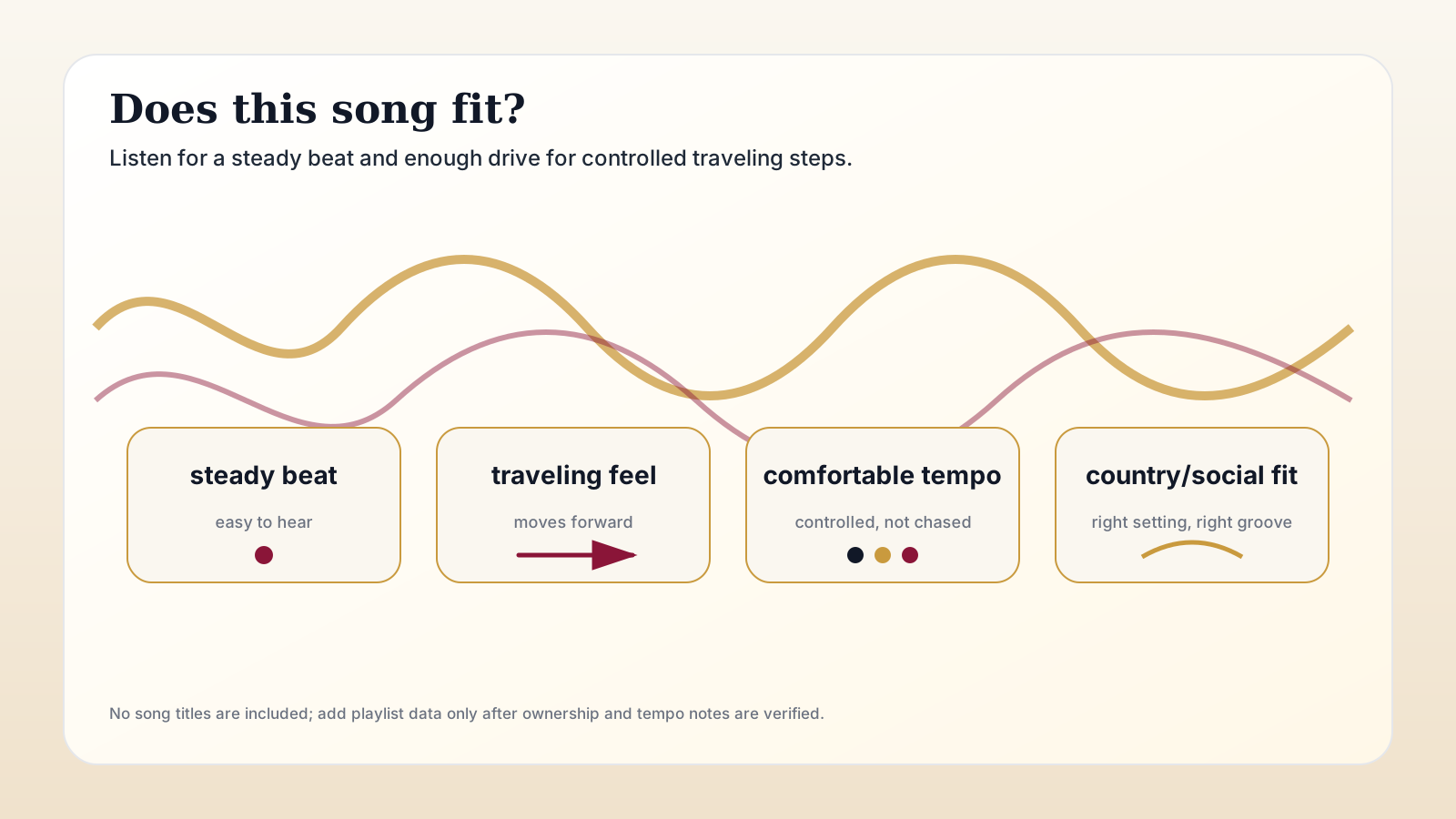
Does this song fit?
- Can you hear a steady beat?
- Does it feel comfortable for traveling steps?
- Does the speed allow small, controlled movement?
- Does the song fit a country/social dance setting?
- Can you keep your steps calm instead of chasing the tempo?
Tempo ranges vary by social setting and competition context. Do not treat one competition range as the only acceptable social tempo.
A Ballroom Pages Country Two Step playlist is coming soon.
For more music help, visit the Music & Timing hub, the ballroom dance tempo chart, and how to count ballroom dance music.
Country Two Step for social dancing
Country Two Step is useful socially because it gives you a partner-dance structure for country music and country-adjacent social settings. You may use it at:
- country bars,
- honky-tonks,
- dance halls,
- country-western dance socials,
- studio parties,
- wedding receptions,
- country-themed events,
- mixed social dance floors.
Beginner etiquette matters as much as beginner footwork.
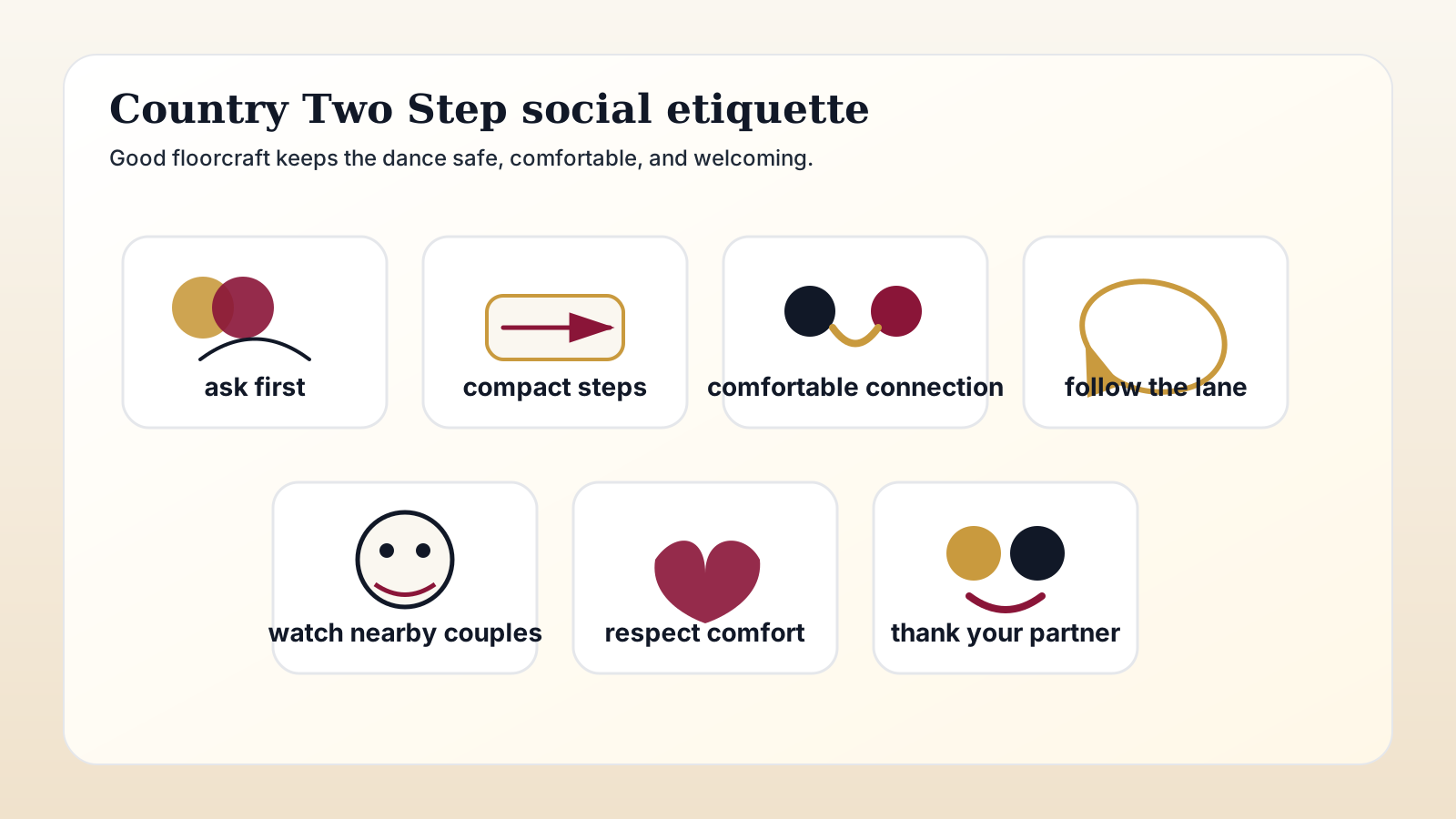
Country Two Step social etiquette basics
- Ask before dancing.
- Accept “no” politely.
- Respect partner comfort.
- Use clear, gentle connection.
- Keep steps compact.
- Avoid yanking through turns.
- Follow the line of dance.
- Stay aware of nearby couples.
- Adapt to the music and crowd.
- Do not teach or correct your partner during a social dance unless they asked.
- Thank your partner at the end.
For more, read the social dancing guide, dance etiquette for social dancing, and lead and follow.
Country Two Step for weddings and receptions
Country Two Step can be a strong wedding reception dance when the song is upbeat, country, country-pop, or country-adjacent and has a clear traveling beat. It can work well for:
- country-themed weddings,
- upbeat first dances,
- reception entrances,
- parent/party dances,
- guest dancing after dinner,
- choreographed “surprise” dance moments,
- couples who want something social and practical.
It is not the best answer for every slow romantic song. If the song is slow, sweeping, or intimate, Nightclub Two Step, Rumba, Foxtrot, Waltz, or simple slow dancing may fit better.
For planning, see the wedding dance guide.
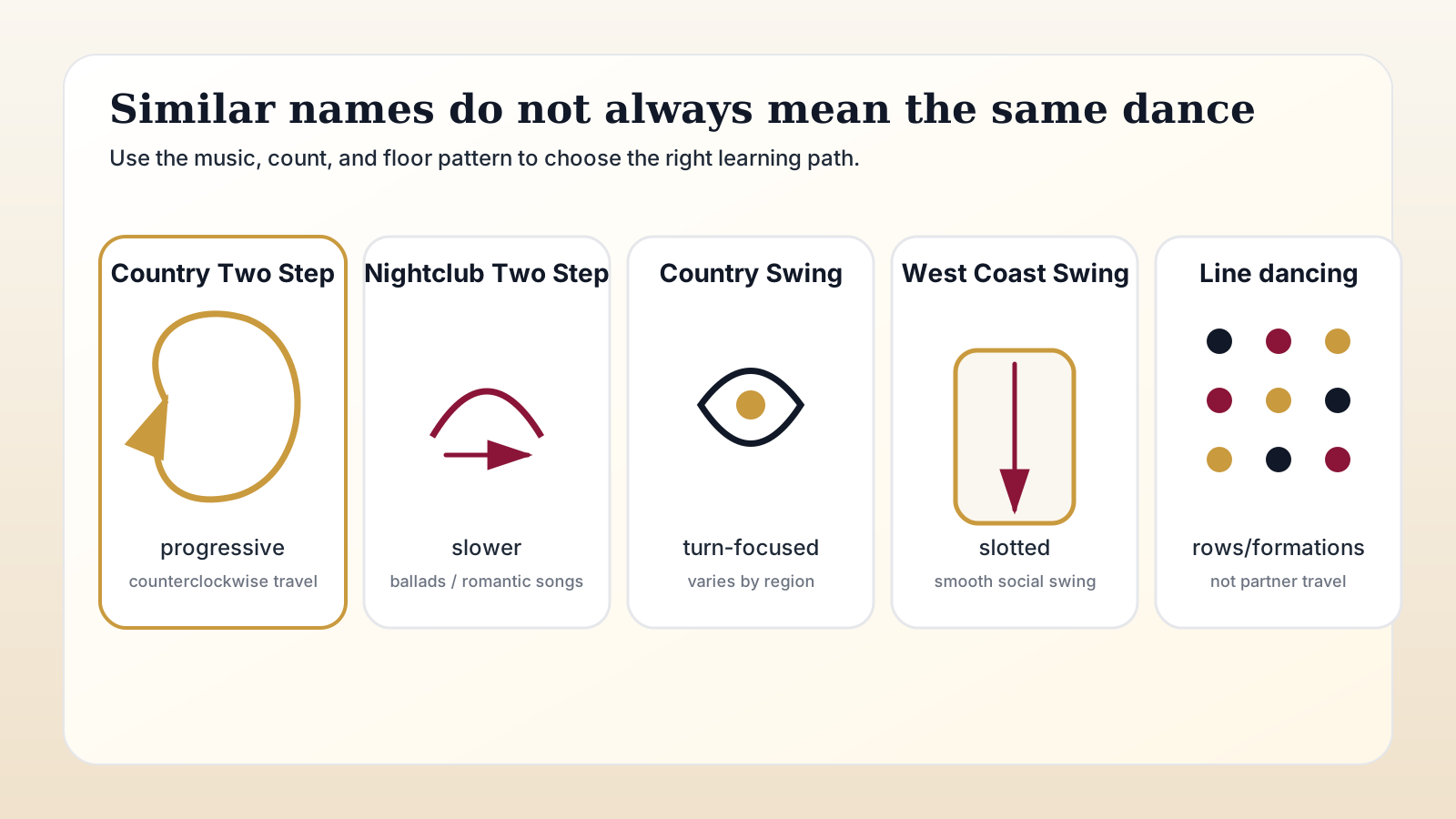
Country Two Step vs Nightclub Two Step, Country Swing, West Coast Swing, East Coast Swing, Hustle, Foxtrot, Waltz, and line dancing
| Dance | Timing feel | Travel pattern | Music feel | Social / wedding use | Beginner learning path |
|---|---|---|---|---|---|
| Country Two Step | Commonly quick quick slow slow; variations exist | Progressive; travels counterclockwise around the floor | Country, country-western, country-pop, clear traveling beat | Country bars, dance halls, weddings, receptions | Learn count, small steps, line of dance, simple turns, floorcraft |
| Nightclub Two Step | Slower, often quick-quick-slow style phrasing | Usually more stationary / linear than Country Two Step | Ballads, slow country, soft rock, romantic songs | Excellent for many first dances and slow reception songs | Learn side basic, relaxed hold, simple turns |
| Country Swing | Varies widely by region and venue | Often more stationary or turn-focused; may include spins/dips in some bar styles | Country and country-adjacent music | Country bars and social settings | Learn safety, partner comfort, basic swing/turn patterns; avoid tricks early |
| West Coast Swing | Common 6- and 8-count patterns | Slotted | Blues, R&B, pop, country, contemporary, funk | Strong social dance; reception use when groove fits | Learn slot, anchor, side pass, sugar push / push break, connection |
| East Coast Swing | Often 6-count, single/double/triple rhythm versions | Spot / circular | Swing, rock-and-roll, upbeat social music | Good for lively party or wedding songs | Learn rock step, basic rhythm, turns |
| Hustle | Often syncopated 3-count or 4-count teaching | Compact, turn-friendly social partner dance | Disco, dance-pop, funk, club-style pop | Great for upbeat parties and receptions | Learn count, compact steps, hand connection, simple turn |
| Foxtrot | Slow/quick timing depending on style | Progressive ballroom / social dance | Swingy standards, classic pop, jazz, some wedding songs | Strong social / wedding option for classic songs | Learn frame, basic timing, promenade / social patterns |
| Waltz / Country Waltz | 3/4 timing | Progressive / rotational | Waltz music, country waltz songs | Strong for 3/4 wedding or country songs | Learn 1-2-3 timing, rotation, frame |
| Line dancing | Usually group choreography | Rows or formations, not partner line-of-dance travel | Country, pop, social dance music | Great for group wedding / reception dancing | Learn the choreography and floor formation |
Practical rule: choose Country Two Step when the song feels country, upbeat enough for traveling steps, and the floor supports progressive movement. Choose Nightclub Two Step when the song is slow and romantic. Choose line dancing when the group is dancing in rows. Choose Country Swing or West Coast Swing only when the music and venue support those different movement patterns.
Common beginner mistakes
| Mistake | Why it happens | Fix |
|---|---|---|
| Confusing Country Two Step with Nightclub Two Step | Assuming every “Two Step” is the same dance | Ask whether the class or song calls for Country/Texas Two Step, Nightclub Two Step, Triple Two, or another local version |
| Taking steps too large | Big steps make turns, timing, and floorcraft harder | Keep steps small enough that you can control your direction |
| Ignoring the line of dance | Stopping, backing up, or cutting across traffic without awareness | Move with the counterclockwise flow and watch the couple ahead of you |
| Rushing the count | Chasing fast country music instead of settling into the rhythm | Clap or walk quick quick slow slow slowly before dancing with a partner |
| Pulling with the arms during turns | Yanking your partner through spins or wraps | Use clear timing, body direction, and gentle hand connection |
| Trying Country Swing tricks before learning Two Step basics | Adding dips, lifts, drops, or fast spins too soon | Master rhythm, floorcraft, and basic turns first |
| Forgetting floor awareness in a busy venue | Dancing like you are alone on the floor | Shrink your patterns, use the inside lane if needed, and protect your partner |
Beginner practice tips
- Practice the rhythm alone. Clap or walk quick quick slow slow, then try slow slow quick quick. Notice which version your teacher uses.
- Practice small walking steps. The basic should feel controlled. You do not need to cover a huge distance to look like you are dancing.
- Practice line-of-dance awareness. Imagine the dance floor as a counterclockwise track. Practice traveling around the outside, then moving to the inside lane as if letting faster dancers pass.
- Practice one turn at a time. Do one basic. Add one simple turn. Reset. Repeat.
- Practice with a partner slowly. Use a comfortable hand connection. Do not grip. Do not twist wrists. Count out loud while practicing.
- Practice listening. Try walking to country songs with a clear beat. Notice which songs make the quicks and slows feel natural.
- Practice etiquette. Ask politely. Respect “no.” Thank your partner. Keep your movement comfortable and safe.
Is Country Two Step good for weddings?
Yes, Country Two Step can be excellent for weddings when the song is upbeat, country, country-pop, or country-adjacent and the couple wants a social, lively, partner-dance feel. It can work well for:
- country-themed receptions,
- upbeat first dances,
- parent dances with a country song,
- guest dancing,
- group social moments,
- couples who want a dance that feels fun rather than formal.
Song choice matters. If the song is a slow ballad, Country Two Step may feel too busy or too fast. In that case, Nightclub Two Step, Rumba, Foxtrot, Waltz, or simple slow dancing may be a better fit.
Use the wedding dance guide to match the dance to the song before choosing choreography.
Is Country Two Step useful for social dancing?
Yes. Country Two Step is one of the most useful partner dances for country/social environments because it gives you a way to move with a partner around the floor when the music has a clear country beat.
It teaches valuable social dance skills:
- hearing the beat,
- changing weight clearly,
- traveling with floor traffic,
- using comfortable connection,
- leading and following turns,
- adjusting to crowded rooms,
- dancing with different partners.
A beginner can become socially comfortable before becoming technically advanced. The first goal is not to impress people. The first goal is to stay on time, move safely, respect your partner, and enjoy the music.
Is Country Two Step a ballroom dance?
Country Two Step is best described as a country-western social partner dance and country/social crossover dance.
It is often taught in ballroom and social dance studios, and it appears in country-western competition contexts such as UCWDC. But it should not be described as the same thing as American Smooth, American Rhythm, International Standard, or International Latin syllabus dances unless a specific source or event context supports that framing.
It belongs on Ballroom Pages because Ballroom Pages covers ballroom and partner dance learning broadly, including social and wedding dances that help people dance in real life.
Related dances to try next
Prefer a Latin social dance instead? Salsa offers different music, timing, body rhythm, and a different social scene. A dedicated Country Waltz page may be added if the Ballroom Pages taxonomy later approves one.