
Ballroom Glossary · Timing
Slow Quick Quick
Slow Quick Quick is a ballroom timing pattern that means one longer count followed by two shorter counts. It is often written as S-Q-Q and is commonly connected with Foxtrot and Smooth Foxtrot instruction.
In many beginner ballroom contexts, Slow Quick Quick means “hold or move through the slow for two beats, then take two quicker one-beat actions.”
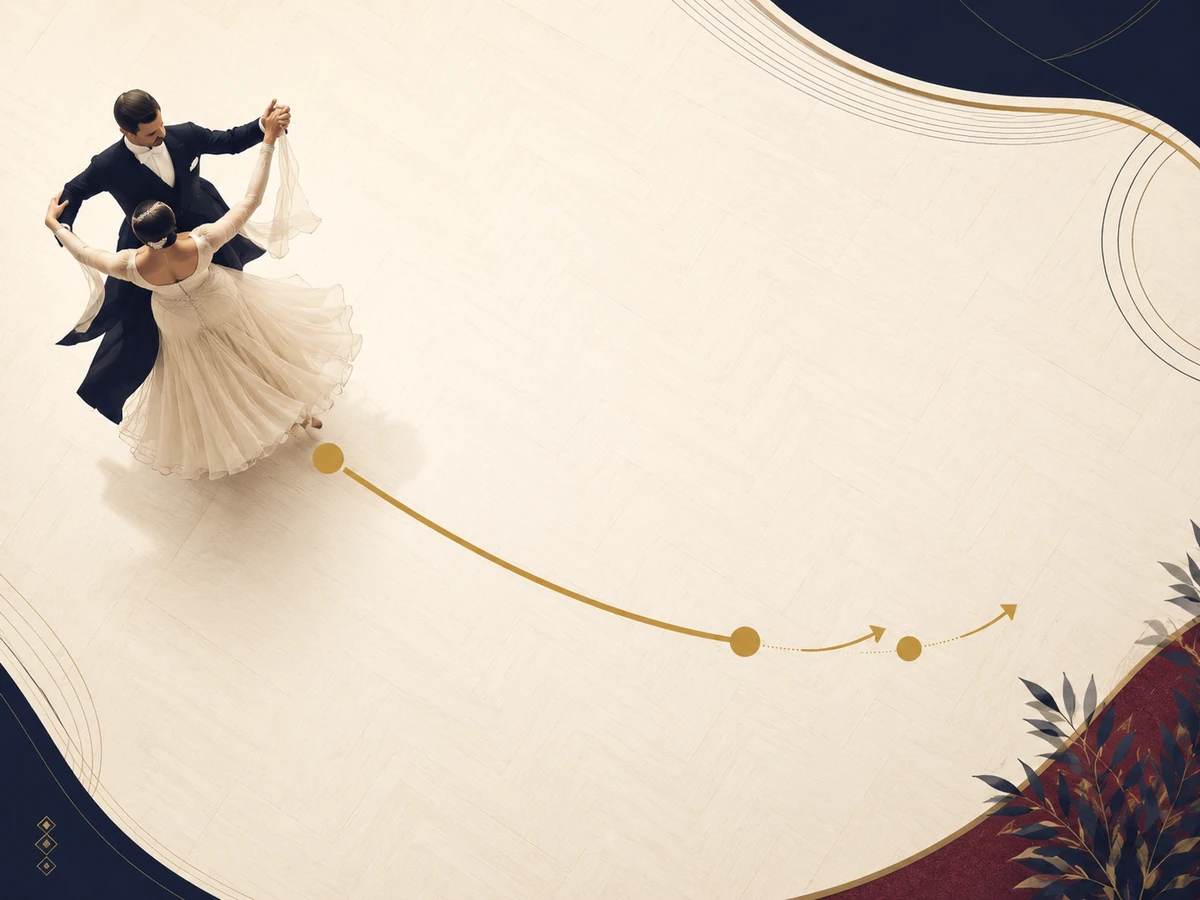
Quick definition of Slow Quick Quick
Slow Quick Quick
- Also written as
- SQQ or S-Q-Q
- Used for
- Rhythm and counting in ballroom dance
- Commonly connected with
- Foxtrot / Smooth Foxtrot
- Basic idea
- One longer count followed by two shorter counts
- Beginner translation
- Take your time on the slow, then move through the two quicks.
What Slow Quick Quick means
Slow Quick Quick is not a dance style. It is a way teachers and dancers describe rhythm.
Instead of counting only with numbers, a ballroom teacher might say “slow, quick, quick” to help you feel how long each part of the movement lasts. The word slow usually gives you more time. The word quick usually gives you less time.
That makes S-Q-Q useful for beginners because it turns timing into plain language. You are not trying to memorize a complicated music theory term. You are learning to hear a longer action followed by two shorter actions.
How to count Slow Quick Quick
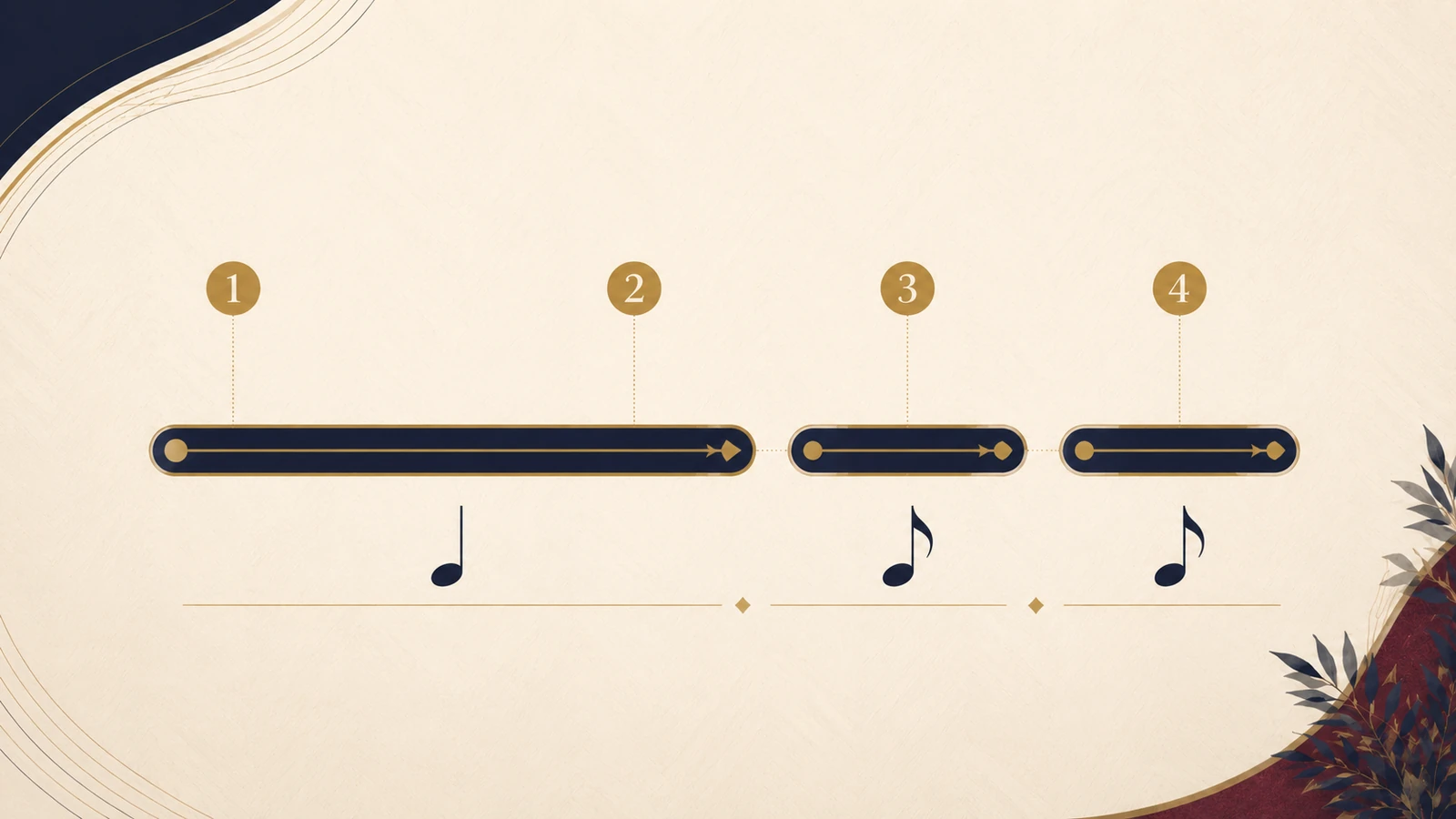
In many beginner Foxtrot contexts, a slow is counted over two beats of music, and a quick is counted over one beat. That means S-Q-Q can fit across four beats like this:
- Beat 1–2Slow
- Beat 3Quick
- Beat 4Quick
“Sloooow — quick — quick”
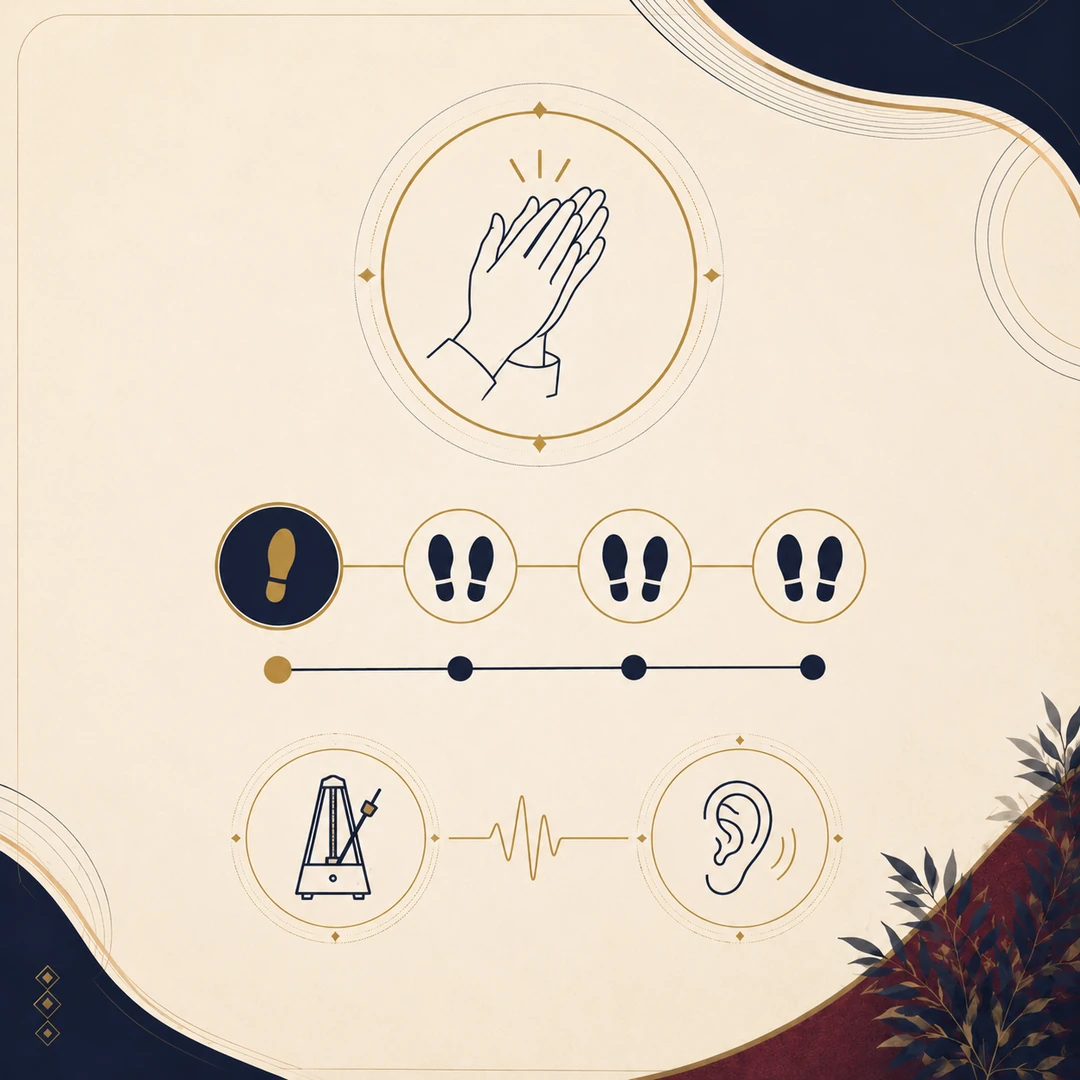
A simple way to practice is to clap or walk it:
- Slow: clap and let two beats pass
- Quick: clap once
- Quick: clap once
Teacher note: Do not count only the words. Listen for the beat first, then place “slow, quick, quick” on top of the beat. The music comes first; the words help you organize what you hear.
Where you’ll hear it
You will most often see Slow Quick Quick discussed in connection with Foxtrot and Smooth Foxtrot. It is part of the broader language of ballroom timing, especially when teachers explain the difference between longer and shorter actions.
That does not mean every Foxtrot figure is always S-Q-Q. Foxtrot can be counted in different slow-and-quick combinations depending on the figure, style, and teaching context.
Helpful next reads:
Beginner example
Imagine walking across the room while saying:
Slow — quick — quick
On the slow, give yourself more time. Let the movement feel unhurried. On the two quicks, keep the rhythm moving forward without rushing or freezing.
This is not meant to teach a full Foxtrot pattern by itself. It is a simple rhythm exercise so your body can feel the difference between a longer count and two shorter counts.
Common mistakes
1. Rushing the slow
Many beginners say “slow” but move as if it were quick. Let the slow have space.
2. Making every step the same length of time
If everything feels equal, the rhythm disappears. The slow and quicks should not feel identical.
3. Counting words without hearing the beat
“Slow quick quick” only helps if it matches the music. Listen first.
4. Confusing slow with lazy
Slow does not mean heavy, late, or lifeless. It means you have more time to move with control.
5. Overthinking the pattern
S-Q-Q should eventually feel musical. Practice it enough that the rhythm becomes simple.
Practice tips
Try these drills before worrying about full choreography:
Clap S-Q-Q
Clap once across two beats for the slow, then once on each quick.
Walk S-Q-Q
Walk naturally while saying “slow, quick, quick” out loud.
Use a metronome
Set a steady beat and place S-Q-Q across four beats.
Speak it first
Say “sloooow, quick, quick” before moving.
Practice with Foxtrot music
Start by listening. Tap the beat, then add the S-Q-Q words.
Hear Slow Quick Quick in Foxtrot music
Foxtrot playlists for practicing Slow Quick Quick
Foxtrot music is one of the best places to practice hearing slow-and-quick timing. Start with one playlist, listen for the steady beat, then try clapping or walking S-Q-Q.
Smooth Foxtrot Playlist
Smooth, steady Foxtrot tracks for hearing the longer slow and the two quicks. Listen first, tap the beat, then layer S-Q-Q on top.
Smooth Foxtrot Playlist Slow Foxtrot (Apple) YouTube Music Foxtrot Ballroom Pages Music on Telegram
More options on the Music & Timing hub: Smooth Foxtrot, Slow Foxtrot, and full Foxtrot playlists across Spotify, Apple Music, and YouTube Music.
FAQ
Slow Quick Quick FAQ
What does Slow Quick Quick mean?
Slow Quick Quick is a spoken timing pattern. It usually means one longer count followed by two shorter counts.
How many beats is Slow Quick Quick?
In many beginner Foxtrot contexts, Slow Quick Quick fits across four beats: the slow takes two beats, then each quick takes one beat.
What dance uses Slow Quick Quick?
Slow Quick Quick is commonly connected with Foxtrot and Smooth Foxtrot instruction, though slows and quicks appear in other ballroom timing contexts too.
Is Slow Quick Quick the same as Foxtrot?
No. Foxtrot is a dance. Slow Quick Quick is a rhythm/counting pattern that may be used inside Foxtrot instruction.
How do I practice Slow Quick Quick?
Start by clapping it, then walking it, then trying it with Foxtrot music. Listen for the beat first.
What is the difference between slow and quick?
A slow usually lasts longer than a quick. In many beginner ballroom contexts, a slow is two beats and a quick is one beat.
Is Slow Quick Quick hard for beginners?
Not once you feel the beat. The hardest part is usually rushing the slow or counting the words without listening to the music.
Editorial source note
Ballroom timing can vary by dance, figure, syllabus, teacher, and social context. This glossary entry explains the beginner-friendly meaning of Slow Quick Quick, with special attention to Foxtrot and Smooth Foxtrot. Ballroom Pages follows an editorial policy of education-first guidance. Updated May 22, 2026.