
What American Smooth and International Standard mean
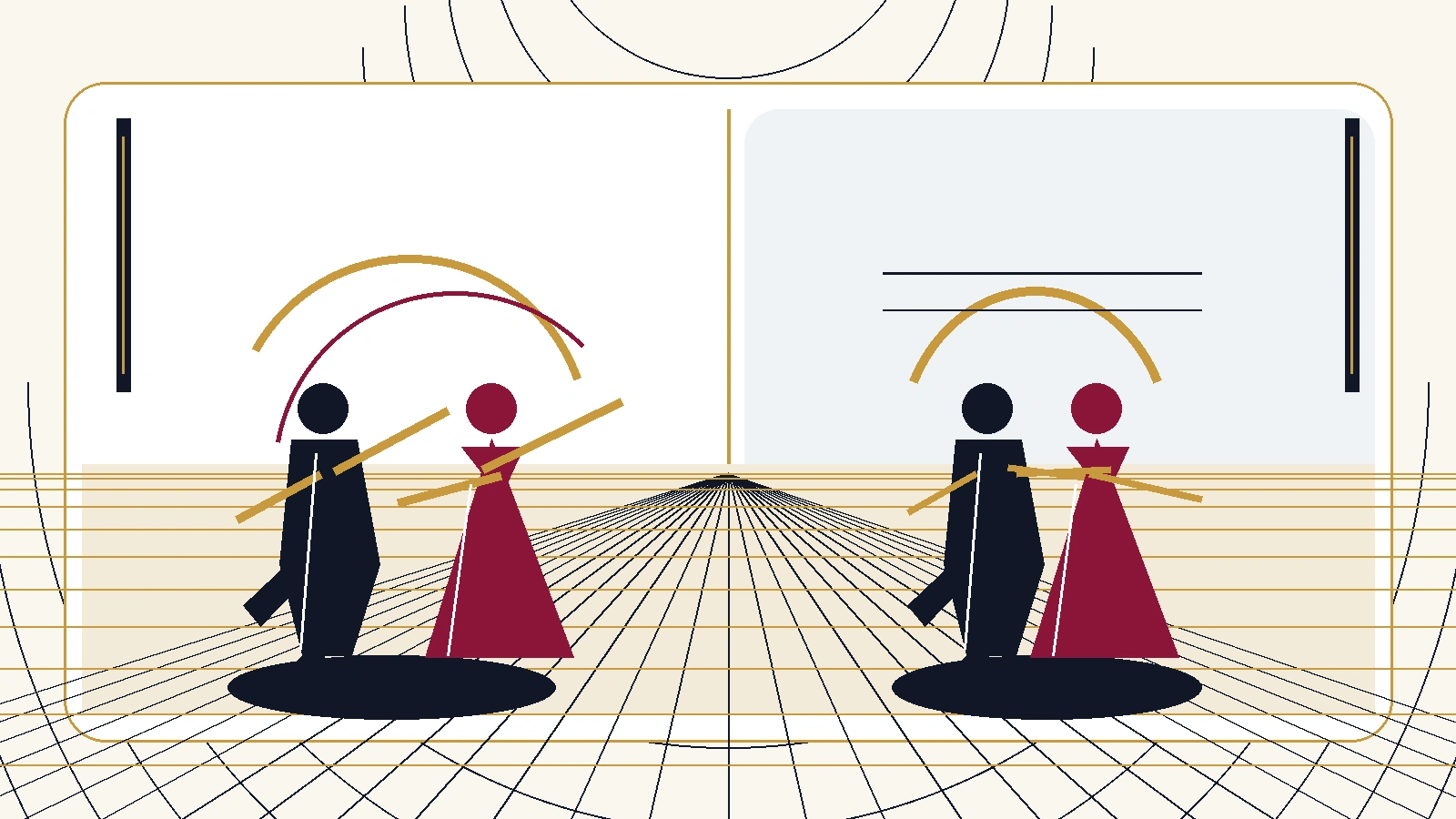
American Smooth and International Standard are ballroom style families, not single dances. A style family is a way of grouping dances that share teaching traditions, competition categories, musical expectations, and partnership conventions.
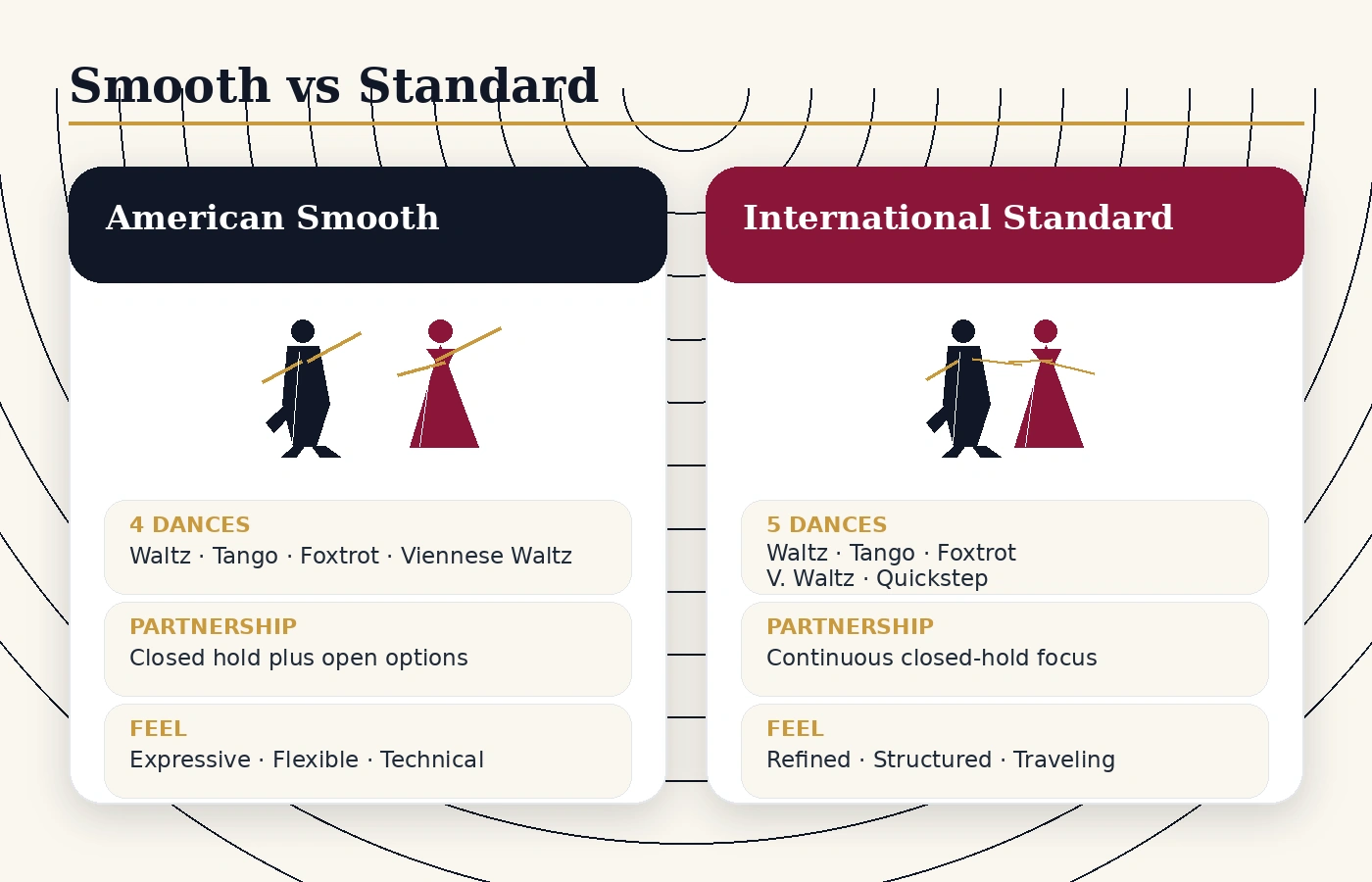
American Smooth is an American-style ballroom family. It commonly includes Waltz, Tango, Foxtrot, and Viennese Waltz.
International Standard is an International-style ballroom family. It commonly includes Waltz, Tango, Viennese Waltz, Slow Foxtrot, and Quickstep. Some beginner materials shorten “Slow Foxtrot” to “Foxtrot,” but the context matters.
Want the broader picture across all four families? Read the American vs International ballroom overview, or browse the full ballroom dance styles hub.
The main difference in one sentence
American Smooth opens the partnership more often; International Standard keeps the partnership more continuously organized through closed-hold ballroom technique.
That sentence is useful, but it is not the whole story. Smooth still needs frame, posture, timing, and connection. Standard still has shaping, character, and expression. The difference is not “free versus strict” or “easy versus hard.” It is a difference in how each style family allows dancers to express the music while moving together.
Which dances are in American Smooth and International Standard?
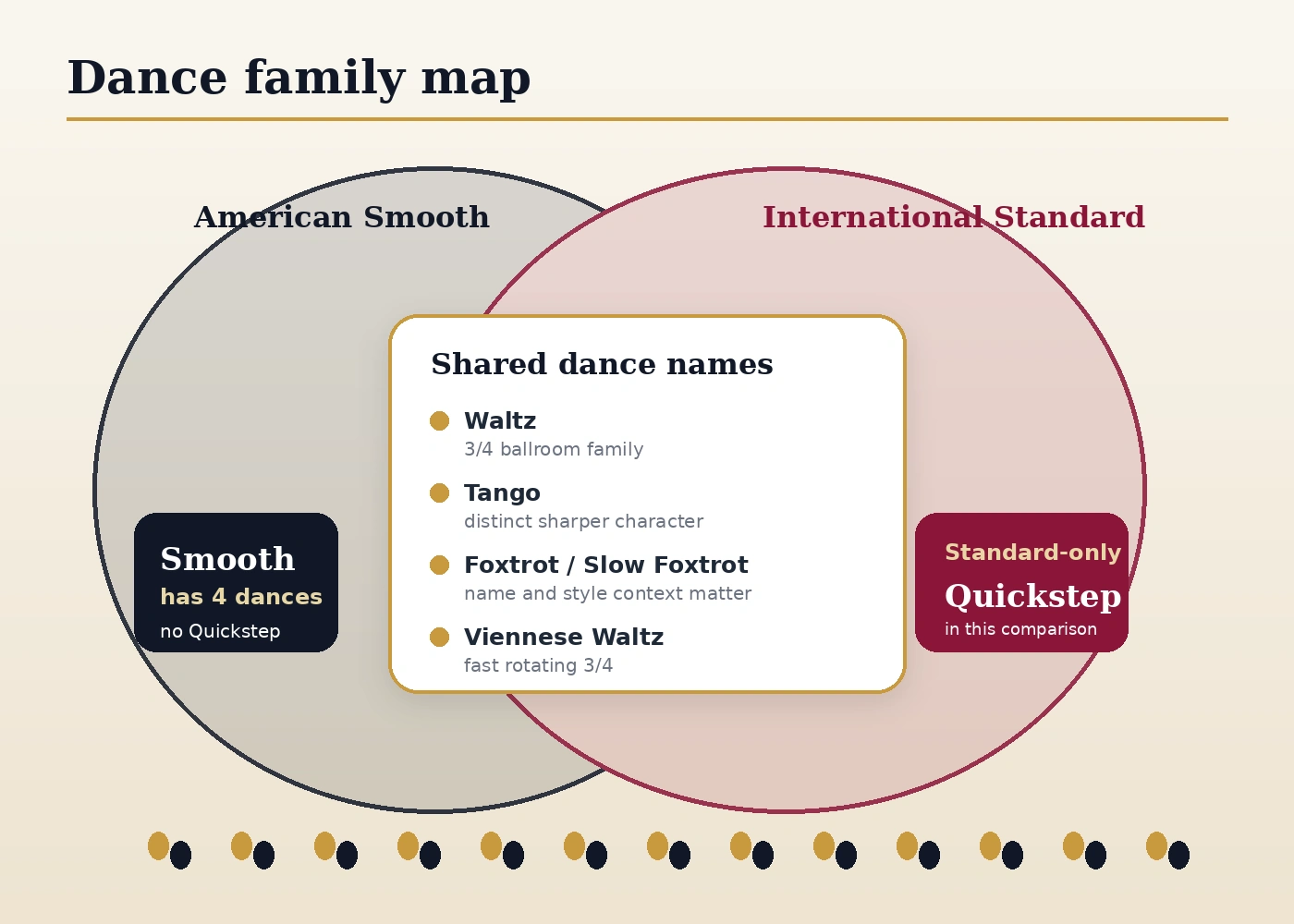
| Dance | American Smooth | International Standard | Note |
|---|---|---|---|
| Waltz | Yes | Yes | Shared dance name, but style and syllabus expectations can differ. |
| Tango | Yes | Yes | Shared dance name; Tango has a sharper character and should not be treated like flowing Waltz. |
| Foxtrot / Slow Foxtrot | Foxtrot | Slow Foxtrot / Foxtrot | Naming and timing context matter. |
| Viennese Waltz | Yes | Yes | Shared dance name, different style context. |
| Quickstep | No | Yes | Quickstep is Standard-only in this comparison. |
Hold, frame, and partner position
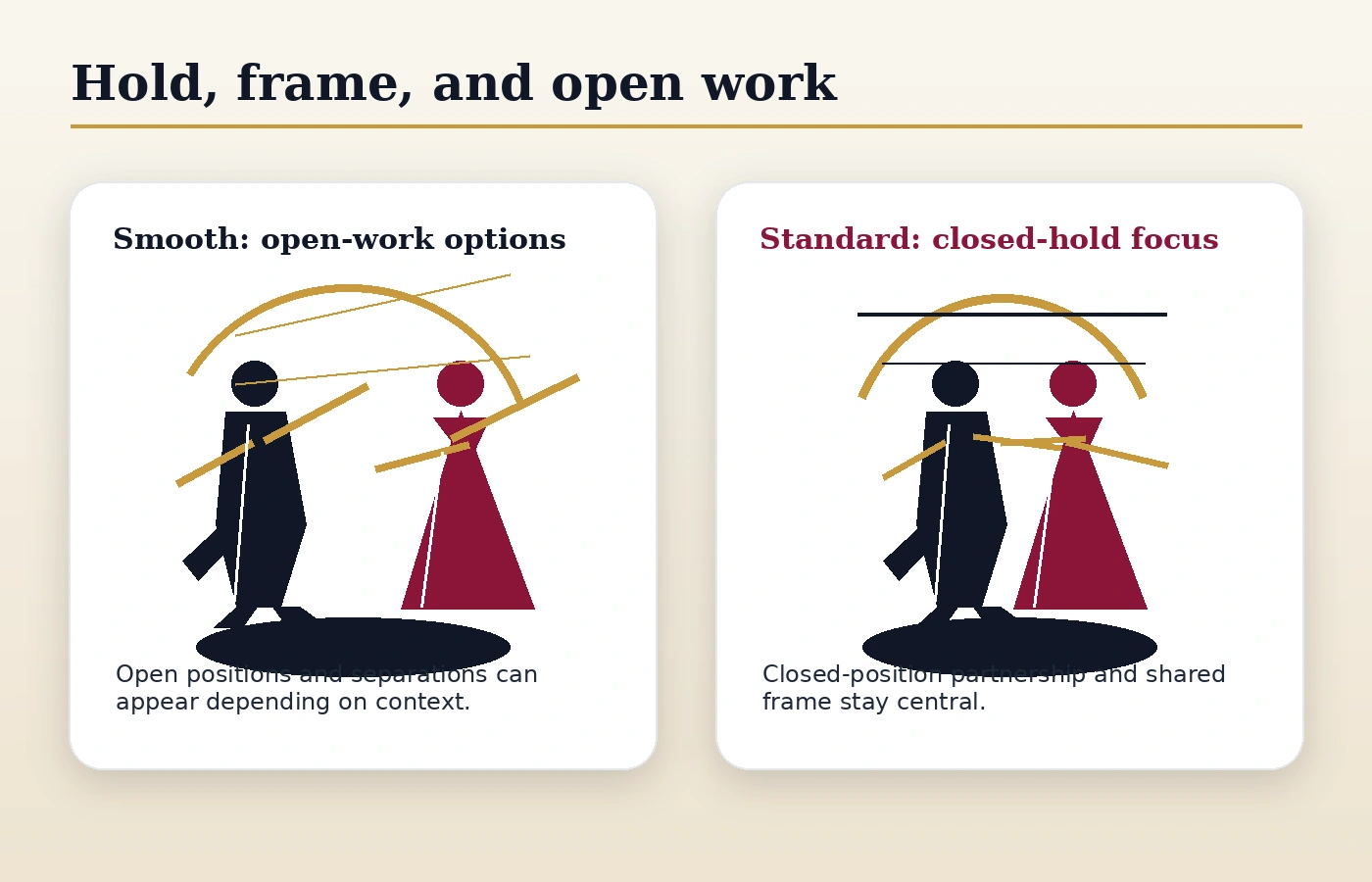
In International Standard, the partnership is strongly associated with closed ballroom position and a more continuous shared frame in competition and syllabus contexts. That is why Standard often feels like two dancers traveling as one unit.
American Smooth can also use closed hold, but it often allows dancers to move into open positions, side-by-side work, shadow positions, underarm turns, and separations depending on level, choreography, syllabus, and organization. Smooth is not “no frame.” It is frame plus more ways to open and return.
Build the underlying skills with frame and posture and lead and follow, and learn the positions in the glossary: closed position and open position.
Open work, shaping, and choreography
Smooth often gives dancers more visible choreographic options: underarm turns, apart work, picture lines, shadow actions, and expressive shapes. This can make Smooth feel more theatrical or social-dance friendly to beginners.
Standard expresses musicality through shared movement, timing, swing or drive where appropriate, controlled shaping, rotation, and dance-specific character while preserving a more consistent partnership structure. Standard is not less expressive; it is expressive through different constraints.
Music and timing comparison
The shared dance names do not mean the music, count, tempo, or syllabus expectations are identical. Smooth Waltz and Standard Waltz may both use 3/4 music, but the way dancers use frame, shaping, and choreography can differ. Foxtrot naming can be especially confusing because International Standard often says Slow Foxtrot, while American Smooth commonly says Foxtrot.
| Dance | Family | What to listen for |
|---|---|---|
| Waltz | Shared | 3/4 and a 1-2-3 feel. |
| Tango | Shared | Stronger, dramatic phrasing. |
| Foxtrot / Slow Foxtrot | Shared name, different context | Use dance-specific guides for exact counts. |
| Viennese Waltz | Shared | Faster 3/4 and rotation-focused feel. |
| Quickstep | Standard only | Brighter, faster ballroom energy. |
For more, explore Ballroom Music & Timing and learn how to count ballroom dance music.
Practice the difference with music
Music helps the Smooth vs Standard difference feel more real. Start by listening to the same dance name in both playlist families. Hear Smooth Waltz and Standard Waltz back to back. Then try Tango, Foxtrot, and Viennese Waltz. Quickstep is a helpful clue because it belongs to International Standard, not American Smooth.
-
American Smooth playlists
Smooth Waltz, Tango, Foxtrot, and Viennese Waltz on Spotify.
Smooth Waltz Smooth Tango Smooth Foxtrot Smooth Viennese Waltz
-
Standard / Ballroom playlists
Standard Waltz, Tango, Viennese Waltz, Slow Foxtrot, and Quickstep on Spotify.
Standard Waltz Standard Tango Standard Viennese Waltz Slow Foxtrot
-
Compare the shared dances
Play the same dance name back to back. Example: Smooth Waltz vs Standard Waltz, then Tango.
Smooth Waltz 2 Standard Waltz 2 Smooth Tango 2 Standard Tango 2
-
Quickstep: the Standard-only clue
If a playlist is full of bright, fast Quickstep, you are in International Standard territory.
-
More platforms & Telegram
Apple Music and YouTube versions are being verified. Follow along on Telegram and browse the full library.
BallroomPages Music on Telegram Browse all playlists Apple Music URLs to verify YouTube URLs to verify
Where the difference matters
Competition
Competitions organize dances into style families, levels, and rules. Rule details vary by organization, event, syllabus, and level. Do not present competition-specific restrictions as universal social-dance rules.
Studio lessons
Many US studios introduce American Smooth because it adapts well to social dancing, weddings, and varied choreography. International Standard may be taught when the student wants International Style technique or competition preparation.
Wedding dance
Smooth-style vocabulary often helps wedding couples because it can include open work, underarm turns, and expressive shapes.
Social dancing
Social floors are practical. Use the style that fits the music, floor space, partner comfort, and lesson context.
Technical training
Standard can help dancers focus deeply on posture, frame, closed-position partnership, floorcraft, and precise musical movement.
Which style should beginners learn first?
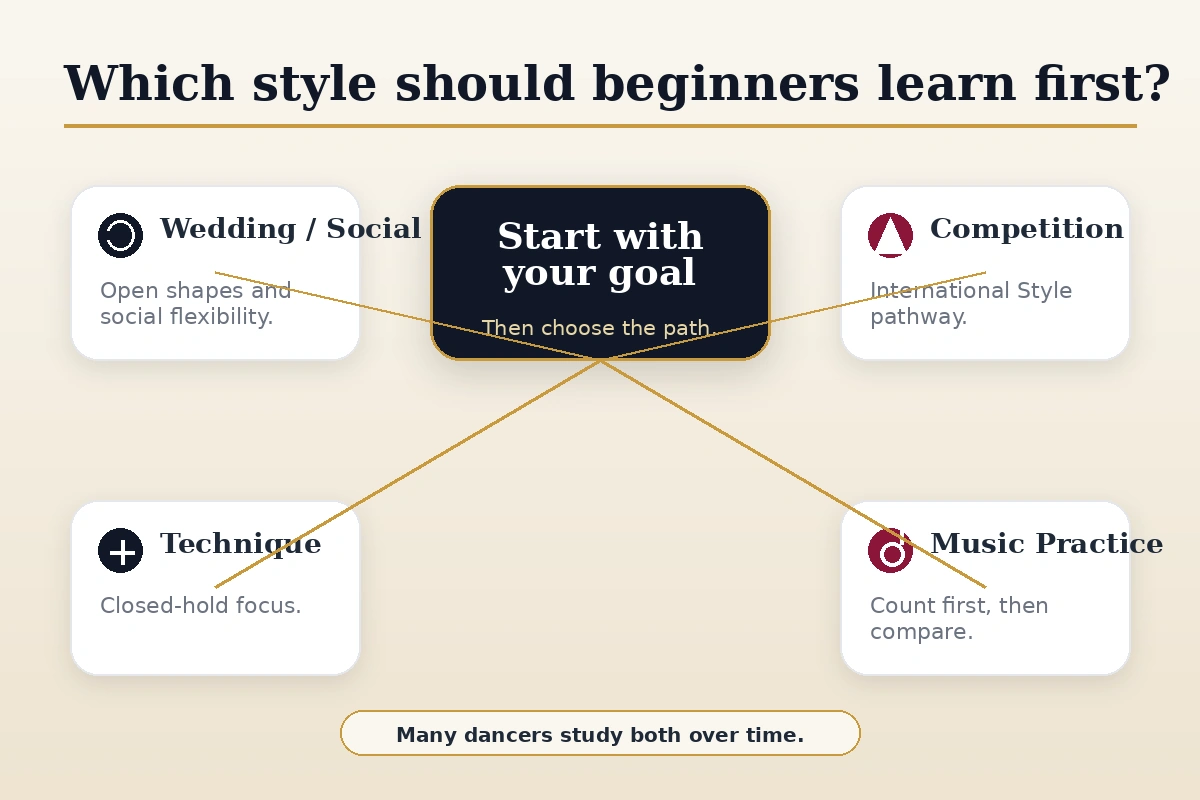
There is no single best answer. Choose based on your goal.
- Choose American Smooth first if your main goal is social dancing, wedding dance, expressive shapes, or practical studio dancing.
- Choose International Standard first if your main goal is International Style competition, closed-hold technique, or a highly structured technical pathway.
- Learn both if you want a fuller understanding of ballroom movement.
- Start with one or two dances, not the entire category. Waltz and Foxtrot are common beginner entry points, but the best choice depends on the teacher, music, and goal.
Common beginner misunderstandings
- Smooth and Standard are the same because they share dance names.
Fix: They overlap, but the style-family rules and movement choices differ.
- American Smooth is less technical.
Fix: Smooth is technical in a different way. Open work still requires frame, timing, balance, and partnership.
- International Standard is just old-fashioned.
Fix: Standard is a refined International Style category with its own competition and teaching traditions.
- Quickstep is in American Smooth.
Fix: Quickstep belongs to International Standard in this comparison.
- Open work means the frame disappears.
Fix: Smooth can open, but good frame and connection still matter.
- Closed hold means no expression.
Fix: Standard expresses through timing, shape, partnership, dance character, and musical control.
- Competition rules apply to every social floor.
Fix: Social dancing, studio teaching, syllabus events, and open competition choreography can differ.
- Every shared dance is counted the same in both styles.
Fix: Use dance-specific pages and the tempo chart for exact counts, tempos, and syllabus context.
Related guides and next steps
See the broader American vs International ballroom overview and the companion American Rhythm vs International Latin comparison.