
Glossary
Hold in Ballroom Dance
Before a single step happens, two people have to agree on how to stand together—where the hands go, how close the bodies are, which way everything faces. That agreement is the hold (or dance hold), and it is the first thing a teacher fixes and the last thing to fall apart when you’re tired. Here is what the hold is, the main kinds you’ll meet, how it differs from the frame, and the beginner habits that quietly wreck it.
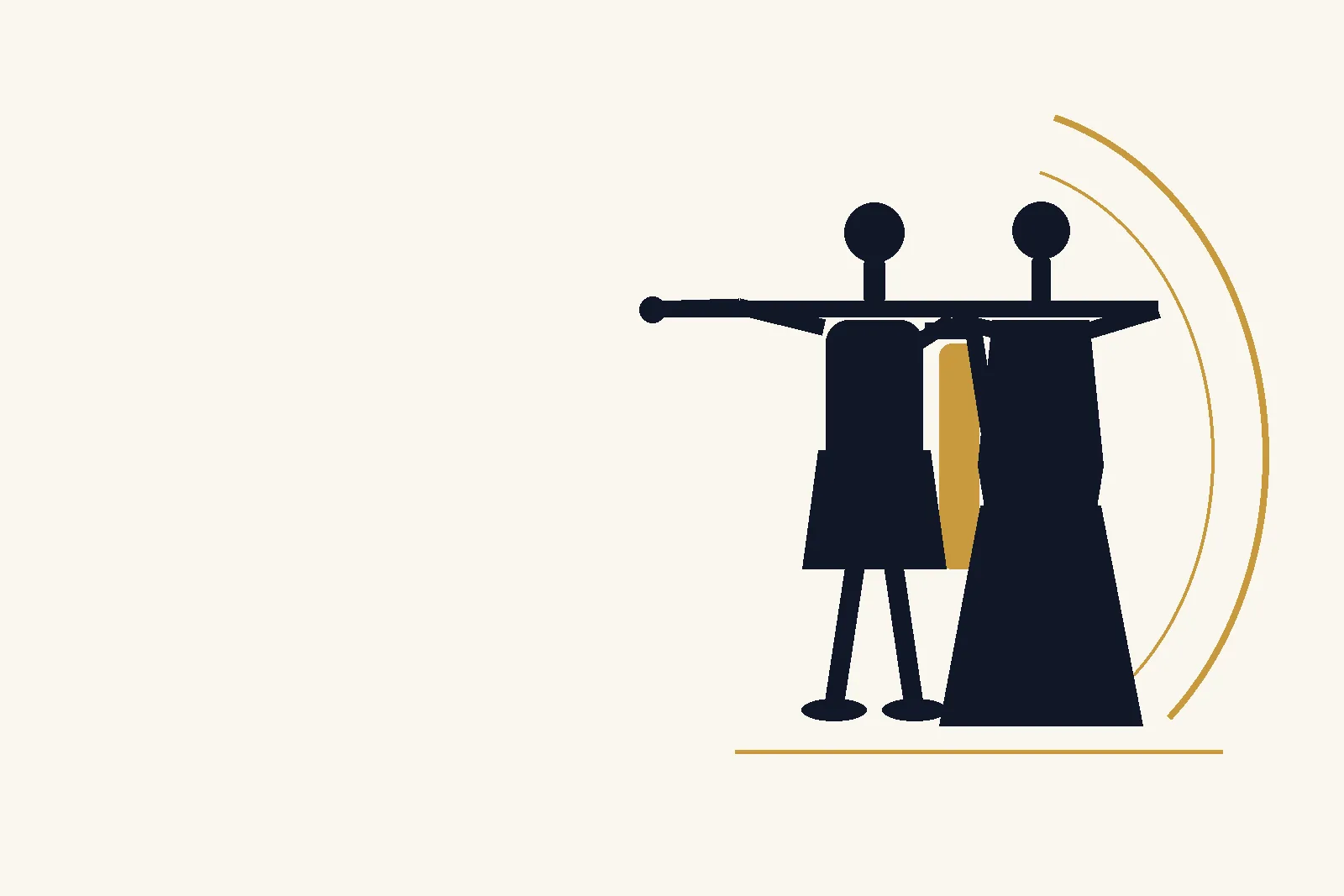
Definition of the dance hold
Hold
- Skill category
- Position & partnering (all dances)
- Also called
- Dance hold; the hold
- Companion term
- Frame (the structure inside it)
- Related terms
- frame, closed position, open hold, promenade position, connection
The hold is how two partners take position together—the arrangement of arms, hands, and body contact that connects them. The closed hold anchors the Standard dances; open holds appear in Latin and social dancing. The hold is the position; the frame is the toned structure that keeps it working.
A handshake tells you a lot in one second. So does a dance hold.
What the hold means in ballroom
The hold is the shape two dancers make before and during movement—how the arms are arranged, where the hands rest, and how much the bodies touch. It is the physical contract of the partnership: it tells each dancer where the other is, keeps the couple travelling as one unit, and carries every signal that passes between them. Change the hold and you change the whole feel of the dance.
Beginners often meet the word on day one, because you cannot take a step together until you have taken a hold together. A good hold feels comfortable and quietly firm—present without gripping. It also sits on top of good posture: the hold is the arms and contact, but it only works if the bodies underneath are tall and balanced.
Hold vs frame: what’s the difference?
Dancers use these two words almost interchangeably, but they are not the same thing—and separating them clears up a lot of confusion:
| Hold (the position) | Frame (the structure) |
|---|---|
| Where the arms, hands, and bodies are placed | The toned shape that keeps them there |
| You can be in a closed, open, or promenade hold | The frame stays firm in any of them |
| Describes the type of connection | Describes the quality of it |
| Changes between figures | Should not collapse between figures |
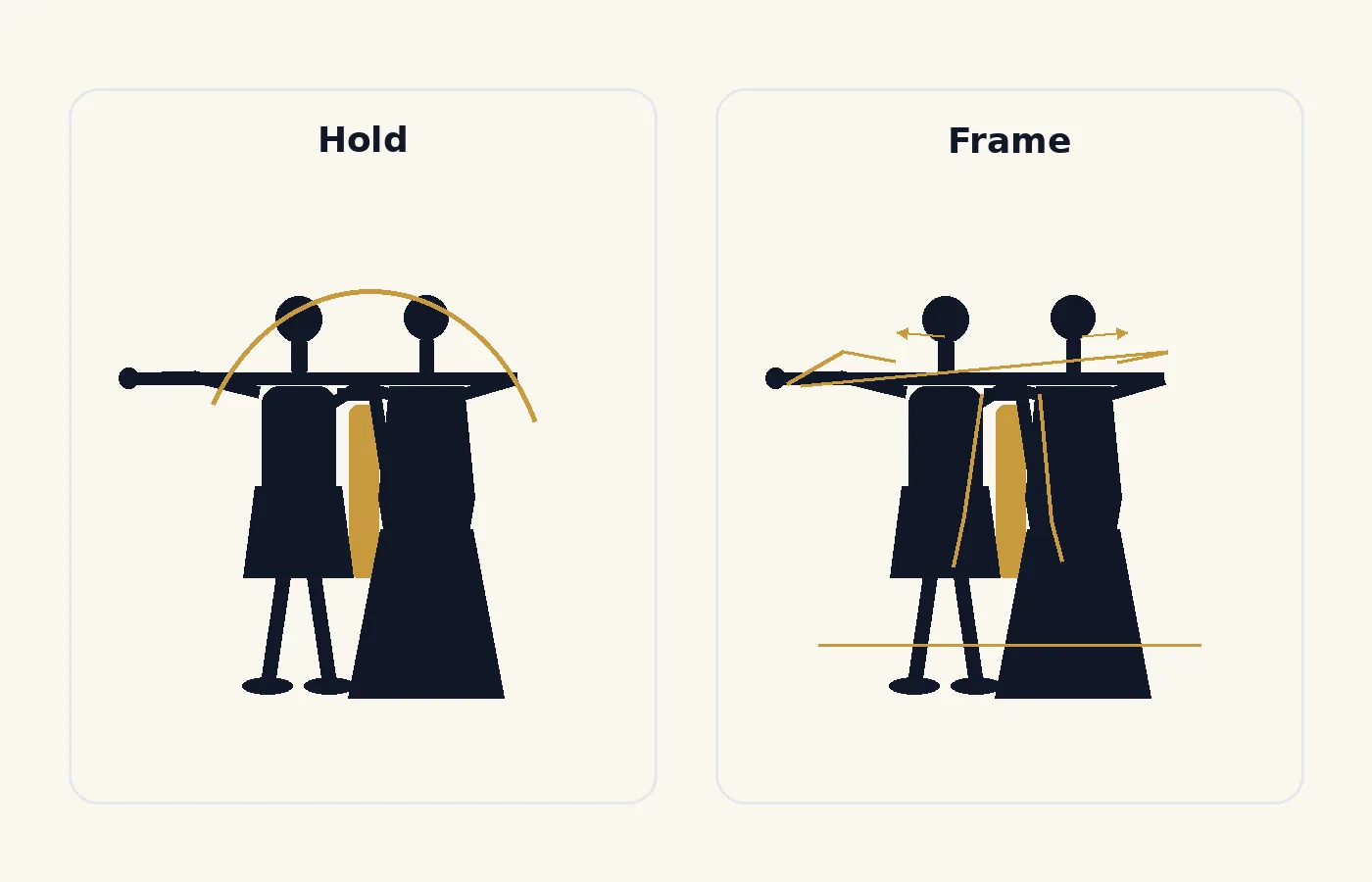
Quick way to remember it: you take a hold and you keep a frame. The hold is the pose; the frame is the muscle tone that stops the pose from going soft.
The main types of hold
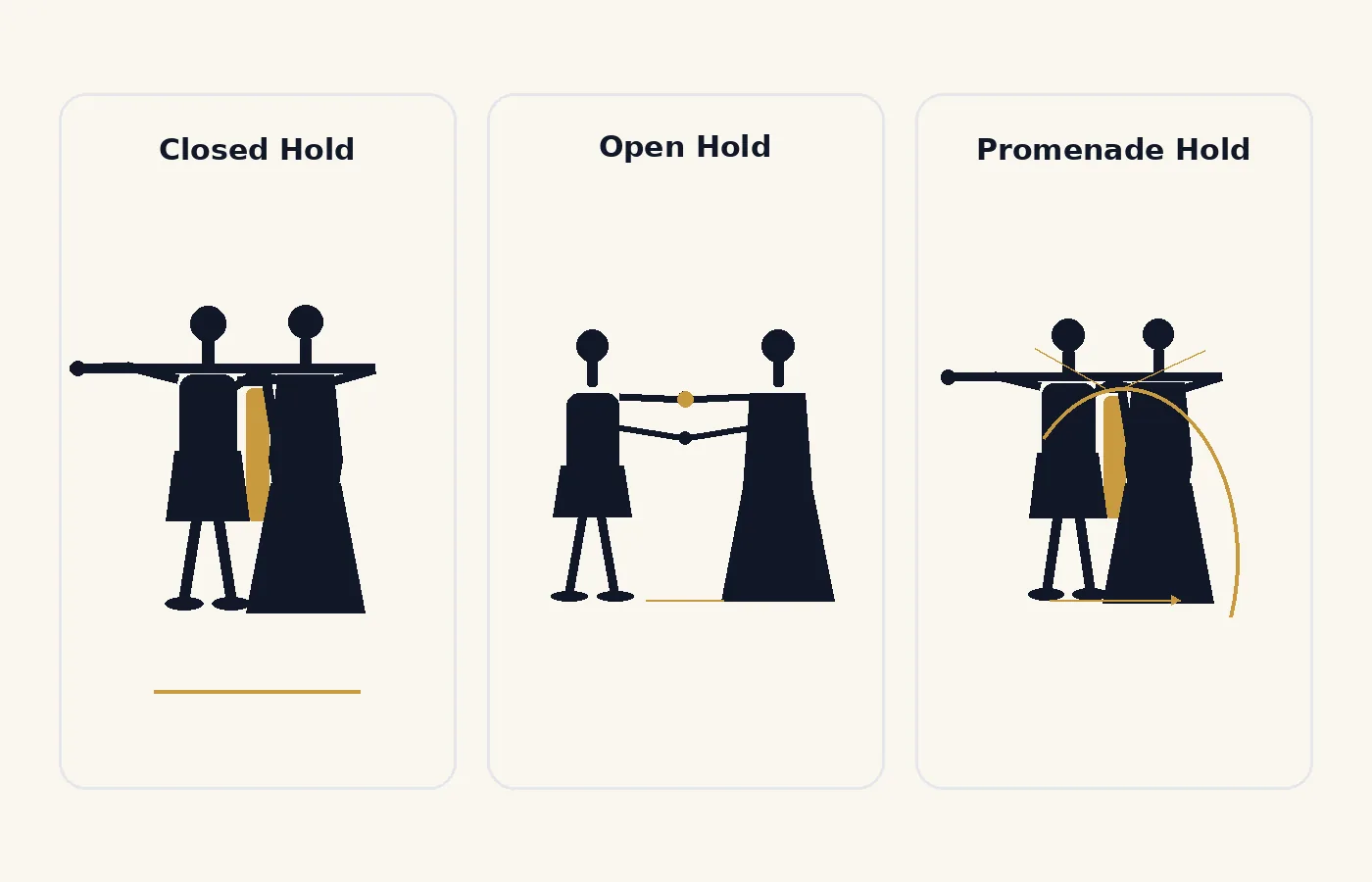
You’ll meet three holds again and again—plus a few variations:
Holds you’ll use most
- Closed hold. Full body-contact position of the Standard dances—the closed position where partners face and offset slightly.
- Open hold. Partners apart, joined by one or both hands—the open position common in Latin and social dancing, where turns and space happen.
- Promenade hold. The couple opens into a “V” to travel along the same line—see promenade position.
Beyond these, you’ll see double-hand holds, one-hand holds, and shadow holds in specific figures—but closed, open, and promenade are the backbone. Most dances move between two or three of them without ever losing the connection.
Hold by dance style
Each family of dances has a home hold:
The closed hold, up close
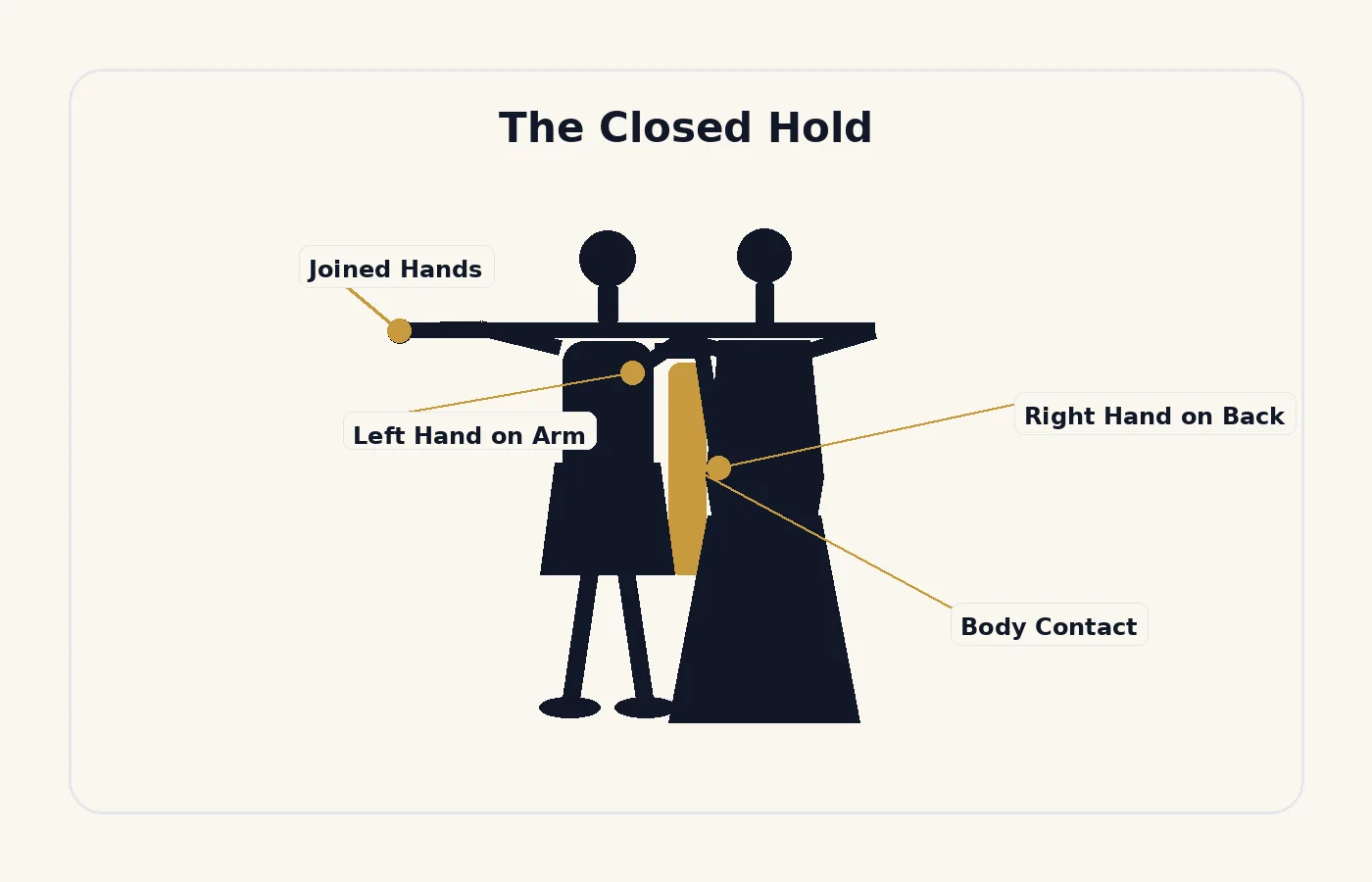
The closed hold is the one beginners spend the most time on, so it is worth knowing its shape. The partners stand slightly offset—not squarely nose to nose—with gentle body contact through the middle. One person’s right hand rests on the other’s back, below the shoulder blade; the other’s left hand rests on the upper arm or shoulder; and the remaining hands join and extend out to the side at about eye-to-shoulder height. The elbows stay up and forward so the arms make a rounded, supported shape rather than hanging. None of it should feel clamped—the contact is firm but breathing, and it all rests on tall posture and a steady frame.
Common dance-hold mistakes
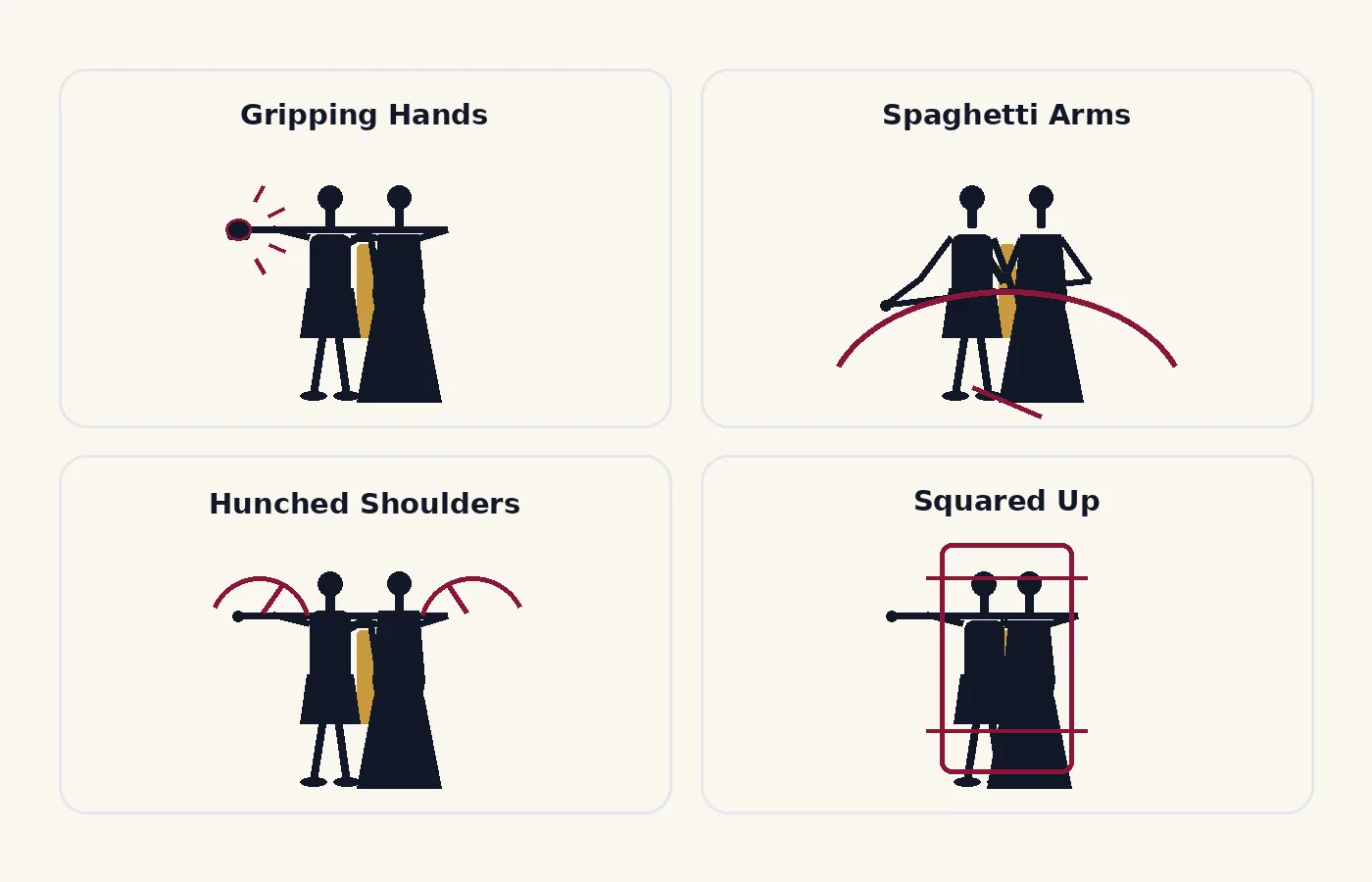
Gripping or squeezing the hands
Fix: The hands rest and connect—they don’t clamp. A death grip blocks the lead instead of carrying it. Firm palms, soft fingers.
Collapsing the arms (“spaghetti arms”)
Fix: With no tone the hold goes limp and signals get lost. Keep a light, consistent muscle tone through the frame—present, not stiff.
Hunching the shoulders up
Fix: Shoulders stay down and wide; the elbows do the lifting. Raised shoulders wreck the topline and tire you out fast.
Standing squarely, chest to chest
Fix: The closed hold is slightly offset so the feet can travel. Square up and you block each other’s movement.
Practice a better hold
The hold is easiest to fix slowly, before music adds pressure:
- Wall hold. Take up your side of a closed hold against a wall or mirror, checking elbows up, shoulders down, and a tall spine—no partner needed.
- Tone check. With a partner, hold still and gently test the connection—each of you offers a little resistance so the arms feel “alive” but never rigid.
- Open-close drill. Move slowly from a closed hold to an open hold and back, keeping the connection unbroken the whole time.
-
Waltz (the closed hold)
Slow 3/4 swing—time to settle a tall, steady closed hold.
-
Rumba (open holds)
Slow Latin—practise opening and closing the hold cleanly.
-
Frame & posture guide
The structure and topline the hold depends on—build them first.
-
BallroomPages Music (Telegram)
Mixed-style practice tracks. Partnering drills coming soon.
FAQ
Dance Hold FAQ
What is a hold in ballroom dance?
The hold (or dance hold) is the way two partners take position together—the arrangement of arms, hands, and body contact that connects them and lets them move as one. The main kinds are the closed hold, open holds, and promenade.
What is the difference between a hold and a frame?
The hold is the position partners take—closed, open, or promenade. The frame is the toned structure of the arms and torso that keeps that position firm. You take a hold; you keep a frame. A hold with no frame goes soft and loses the lead.
What are the main types of dance hold?
Closed hold (full body contact, used in the Standard dances), open hold (partners apart, joined by one or both hands, common in Latin and social dancing), and promenade hold (the couple opens into a V to travel). Double-hand and one-hand holds are variations you meet in specific figures.
How firm should a dance hold be?
Firm but breathing—present, never clamped. You want enough tone that a lead travels through the hold, but soft enough that the hands and arms stay comfortable. Gripping blocks the connection; going limp loses it.
Do Latin and Standard use the same hold?
No. The Standard dances live in a closed hold with full body contact throughout. Latin and rhythm dances use more open and one-hand holds, closing and opening as figures require, which leaves room for turns and hip action.
Editorial
Sources and review notes
This glossary entry should be reviewed by a qualified ballroom instructor before launch. The dance hold is a foundational partnering topic—the descriptions follow widely used syllabus conventions, but the closed-hold placement details and the per-style characterizations deserve expert verification before being treated as teaching material.
This is beginner orientation, not a substitute for instruction. Ballroom Pages follows an editorial policy of education-first guidance. Questions? Contact us. Updated July 9, 2026.