
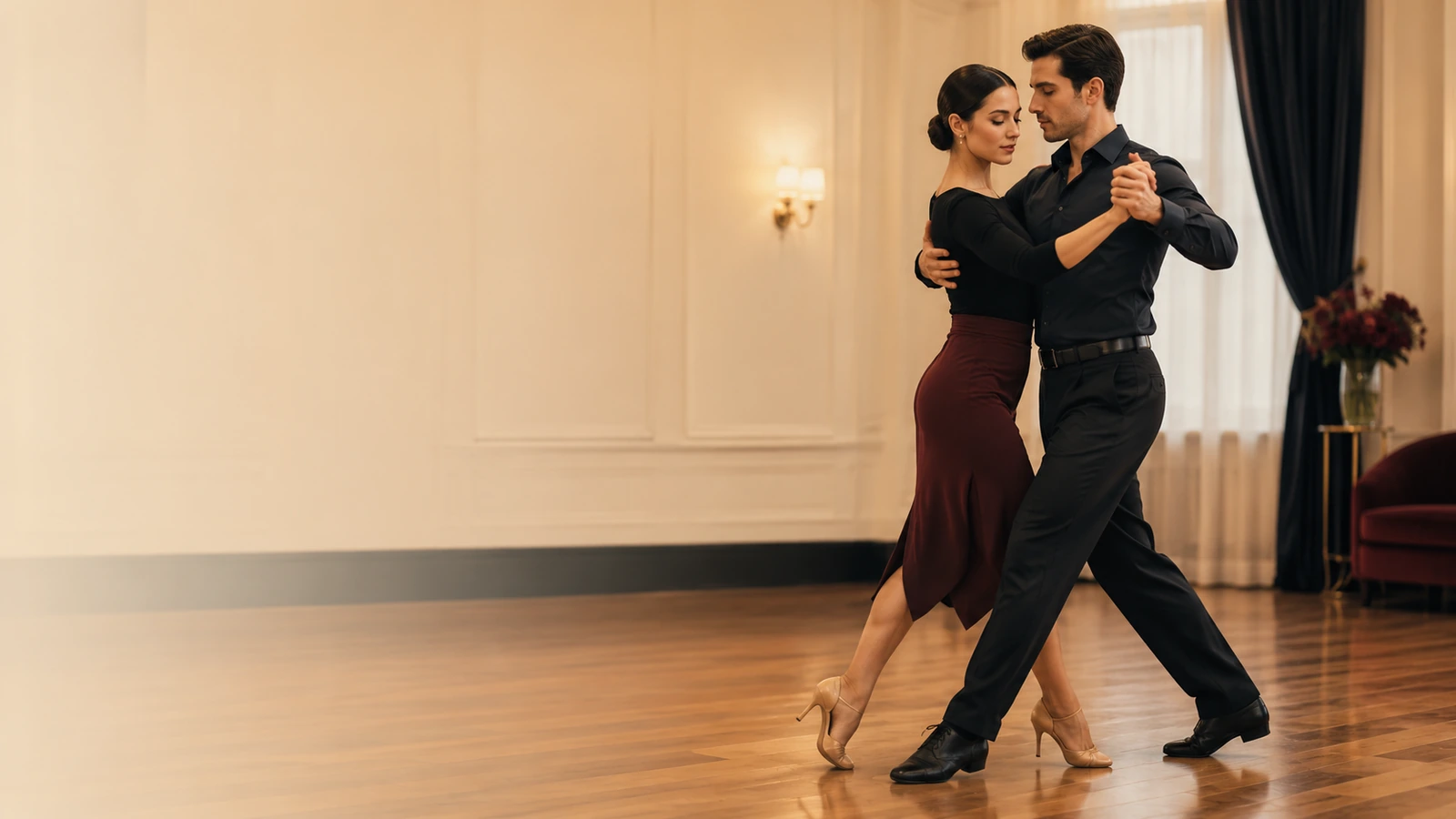
What “basic movement” means in ballroom Tango
In ballroom Tango, the basic movement is the beginner foundation you practice first. It is a simple, repeatable pattern that helps you feel the timing, hold a comfortable frame, and move with a partner before you add figures such as promenade or turns.
This page is intentionally narrow. It is not the full syllabus, it is not a complete figure library, and it is not Argentine Tango. For the broad overview—history, styles, music, and where Tango fits—read the full ballroom Tango guide. This article focuses only on the first beginner movement and how to practice it.
How ballroom Tango movement feels
Ballroom Tango feels compact, deliberate, grounded, directional, and controlled. The movement travels with intention rather than floating or bouncing. Compared with smooth, rise-and-fall dances like Waltz or Foxtrot, Tango stays lower and more level.
You do not need to stomp, snap your head, or perform dramatic clichés to dance Tango well. Those are stylings that come much later, if at all. As a beginner, aim for calm, clear steps and steady timing. The character of Tango grows naturally once the basics feel comfortable.
Before you step: posture, frame, knees, connection, and direction
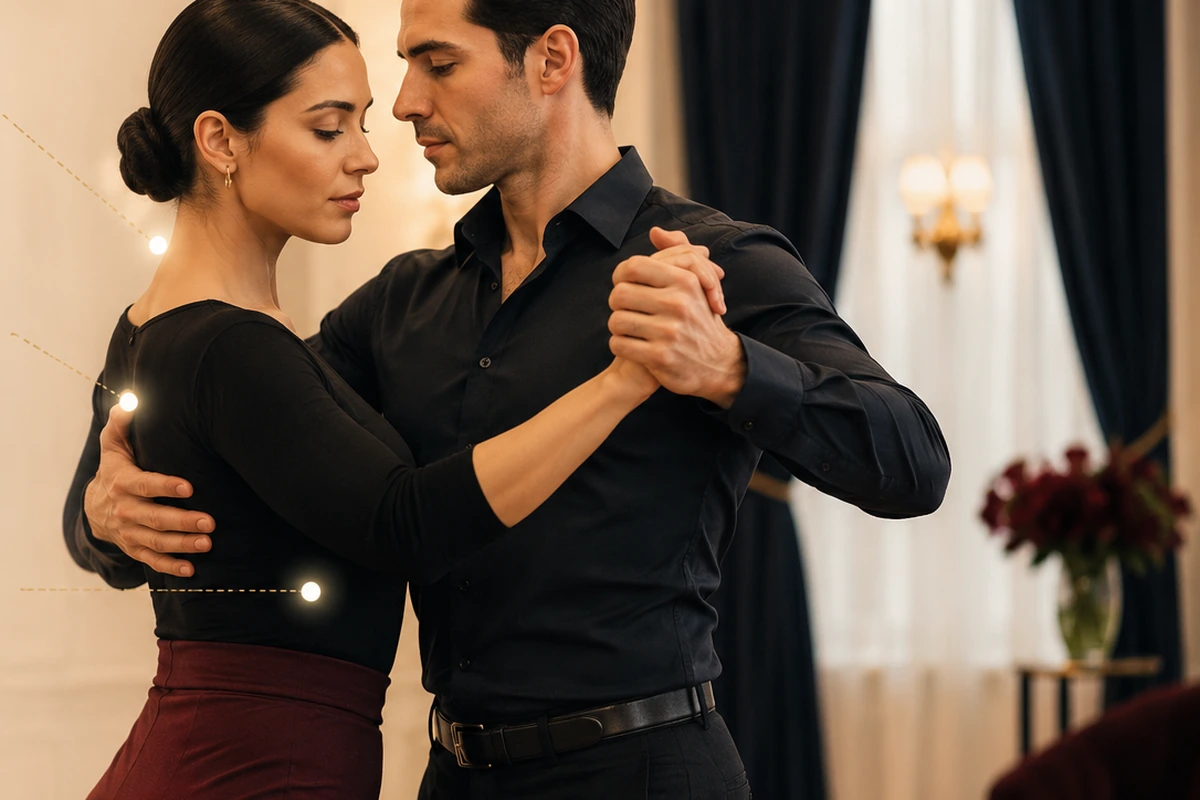
Set up your body before you worry about footwork. A few basics make everything easier:
- Upright posture. Stand tall and balanced, with your weight supported through your own feet rather than leaning on your partner.
- Stable frame. Keep a supported, organized shape through the arms and upper body—awake but not rigid.
- Soft knees. A slight give in the knees keeps movement grounded and controlled.
- Partner connection. Stay gently connected so timing and direction can travel between partners without pulling.
- Direction awareness. Know which way you are moving and keep steps compact so you stay balanced.
To build these habits, read ballroom frame and posture and lead and follow in ballroom dance.
Leader and follower basic movement breakdown
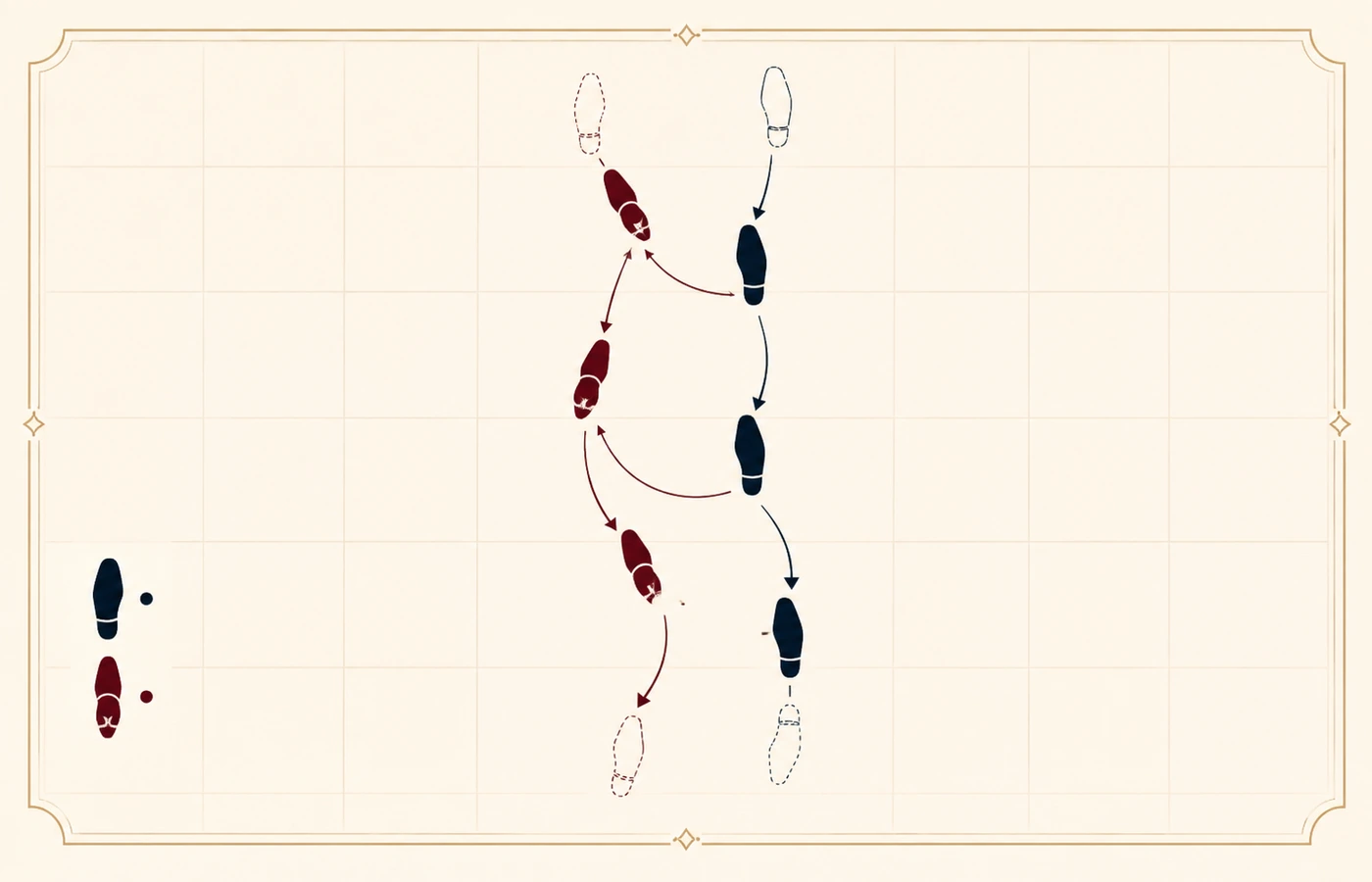
The table below describes the beginner basic movement by rhythm and role, not by prescribing exact foot placements. The leader initiates the timing and direction; the follower responds while maintaining balance and connection. Keep steps small and walk “into” the floor with control.
| Count | Rhythm | Leader | Follower | Practice note |
|---|---|---|---|---|
| 1 | Slow (2 beats) | Begin a compact walking step in the line of movement | Respond by moving with the leader, staying balanced | Take your time; do not rush the slow. |
| 2 | Slow (2 beats) | Continue a second compact walking step | Match the leader’s timing and direction | Keep the step small and grounded. |
| 3 | Quick (1 beat) | Shorten into the first quick | Follow into the first quick, staying connected | Quicks are light and compact, not hurried. |
| 4 | Quick (1 beat) | Continue the second quick | Continue the second quick in balance | Stay level—avoid bouncing. |
| 5 | Slow (2 beats) | Settle the movement and collect your balance | Settle and re-center with the leader | Finish calmly before repeating. |
Counts, timing, rhythm feel, and music practice
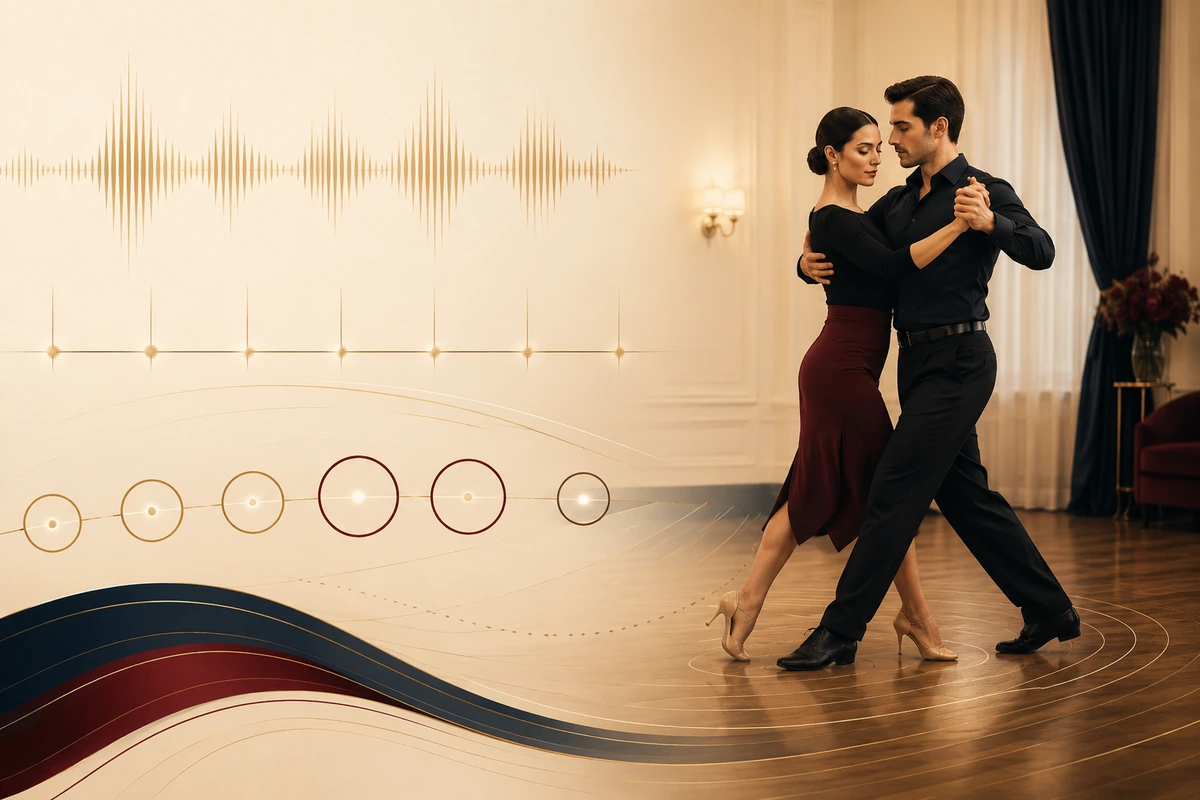
Ballroom counting uses two simple ideas: a slow takes two beats, and a quick takes one beat. Beginner ballroom/American Tango basic movement is often practiced as slow-slow-quick-quick-slow (SSQQS).
- SSlow · 2
- SSlow · 2
- QQuick · 1
- QQuick · 1
- SSlow · 2
Syllabus and competition contexts contain many additional figures and timing options. SSQQS is a beginner entry point, not the only Tango timing. American Style Tango is commonly treated as 4/4 in syllabus references, while International Standard Tango shares the same broad family with its own technique expectations.
If counting is new, start with how to count ballroom dance music, then check reference tempos on the ballroom tempo chart.
Step-by-step practice drill
- Drill 1 — Count and clap the rhythm. Say “slow, slow, quick, quick, slow” and clap it until it feels even.
- Drill 2 — Practice solo weight changes slowly. Shift your weight in the SSQQS rhythm without traveling far.
- Drill 3 — Practice with a partner in a stable frame. Keep a calm frame and small steps; do not travel too far.
- Drill 4 — Try with slow Tango music. Match your count to a slow track before speeding up.
- Drill 5 — Reset and repeat with smaller steps. If it feels rushed, make everything smaller and start again.
Common beginner mistakes and fixes
| Mistake | Fix |
|---|---|
| Rushing the quicks | Count aloud and slow down. |
| Taking steps too large | Keep compact Tango steps. |
| Looking down | Use peripheral awareness and reset your posture. |
| Collapsing the frame | Return to the frame and posture guide. |
| Forcing the lead | Practice clear timing and direction instead of muscle. |
| Ignoring the music | Practice clapping the count before dancing. |
Tango basic movement vs promenade vs Argentine Tango
Basic movement is the first practice foundation in closed position—the pattern you use to build timing, frame, and connection.
Promenade is a position and action where partners open slightly into a V-like shape and travel in the same general direction. It comes after the basic movement feels comfortable. Learn the term in the promenade position glossary entry.
Argentine Tango is a separate dance with its own music, technique, and social setting. It should not be mixed with ballroom Tango instruction. This page does not teach Argentine Tango ochos, giros, sacadas, or milonga technique. If you are curious about that tradition, see the Argentine Tango guide instead.
Practice with music: Ballroom Pages Tango playlists
Once you can count the basic movement slowly, practice hearing the Tango rhythm with music. Start by clapping or walking the count before dancing with a partner, then use the curated Ballroom Pages Tango playlists to build confidence with tempo, phrasing, and rhythm feel.

-
Tango on Spotify
Two curated Tango playlists for counting and rhythm-feel practice.
-
American Smooth Tango on Spotify
American Smooth-flavored Tango tracks for the beginner basic context.
-
Apple Music & YouTube
Apple Music and YouTube/YouTube Music Tango playlists are being verified before launch.
Apple Music URL to verify YouTube URL to verify
-
Ballroom Pages Music on Telegram
Follow along for new practice playlists and timing tips.
For more, explore Ballroom Music & Timing, learn how to count ballroom dance music, and check the ballroom tempo chart.
When to move on to promenade, turns, and closed-position refinements
You are ready to add more when you can check off this list:
- You can count the rhythm without rushing.
- You can maintain frame and posture.
- You can move without looking down.
- You can keep steps compact.
- You can reset with your partner.
- You can hear the Tango feel in music.
When those feel steady, return to the full Tango guide for the next figures, and learn the promenade position as your next building block.