
What is Merengue?
Merengue is a lively Dominican social partner dance and music tradition. In many beginner classes, it is taught with a simple step on each beat, which makes it one of the most approachable Latin dances for new dancers.
In plain English: Merengue is a social Latin dance where you keep a steady rhythm with small weight changes, then add turns, direction changes, and partner connection.
On Ballroom Pages, Merengue belongs on a canonical dance-style page because many beginners encounter it through social dancing, Latin nights, ballroom studios, beginner lessons, and wedding receptions. This page is not a replacement for Salsa, Bachata, Mambo, Cha Cha, or Rumba. Each of those dances has its own rhythm, music, and learning path.
Merengue is also not just “filler” between other dances. It teaches useful beginner skills: hearing a beat, changing weight clearly, keeping steps compact, connecting with a partner, and relaxing enough to enjoy the music.
Where Merengue comes from
Merengue is strongly associated with the Dominican Republic and Dominican cultural identity. It began as a social and folk tradition before becoming widely known in ballroom and social dance settings.
A respectful beginner summary is: Merengue is a Dominican music and dance tradition with deep social, cultural, and community roots.
Merengue may be easy to start, but the music and cultural tradition are rich. At social events, Merengue can feel joyful and accessible; in cultural contexts, it carries history, identity, and community meaning. The goal here is not a long academic history — it is to give beginners enough context to dance with respect, curiosity, and accuracy.
Why Merengue is beginner-friendly
Merengue is beginner-friendly because the first rhythm is usually clear: step, step, step, step.
That steady structure helps new dancers avoid one of the hardest beginner problems: guessing when to move. Instead of learning syncopation first, beginners can practice transferring weight on every beat.
Merengue also uses small steps. You do not need to travel far, kick high, dip, or spin dramatically. A comfortable beginner version can fit on a small social floor.
Merengue helps beginners practice:
- Hearing a steady beat
- Changing weight clearly
- Moving with a partner
- Keeping steps compact
- Turning without rushing
- Respecting partner comfort
- Building social confidence
Still, beginner-friendly does not mean automatic. The dance becomes better when the steps are quiet, the posture stays lifted, and the connection feels relaxed instead of forced.
What Merengue feels like
Merengue feels lively, bright, and social. The movement is often compact, upright, and rhythmic, with the body settling into each weight change.
The first sensation is usually a steady pulse: left, right, left, right or 1, 2, 3, 4.
The rhythm can feel like walking or marching in place, but good Merengue should not become heavy stomping. The steps stay small. The knees stay soft. The body responds to the music without bouncing wildly.
In partnerwork, the leader suggests direction, turns, and timing. The follower keeps balance, responds to the lead, and maintains comfortable connection. Both roles share responsibility for rhythm and floor awareness.
Merengue can be playful and party-friendly, but it should still feel respectful. Beginners do not need overly sensual styling, dips, tricks, or competition shapes to enjoy it.
Merengue timing and how to count it
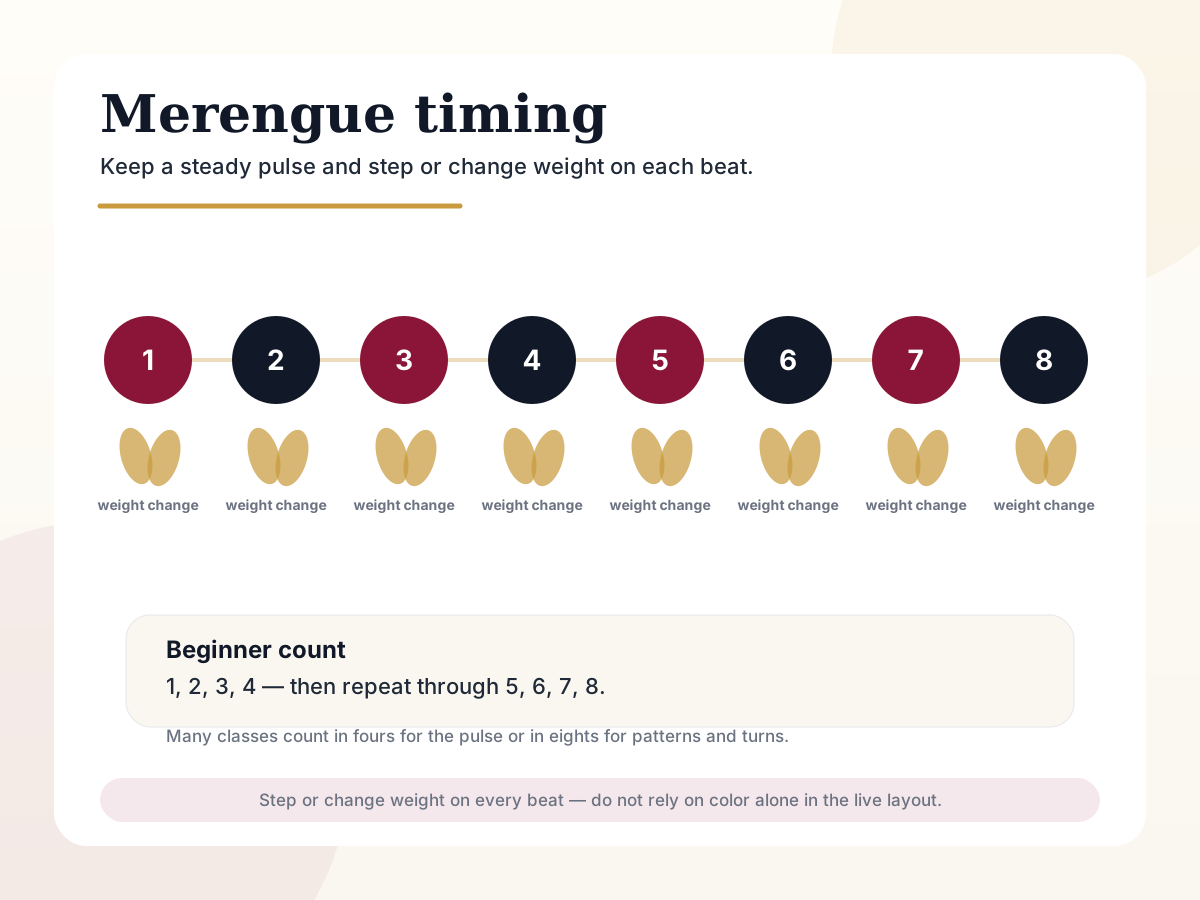
Most beginner Merengue classes use a simple even count. The easiest way to start is 1, 2, 3, 4. You can also count in eights: 1, 2, 3, 4, 5, 6, 7, 8. In many beginner versions, you make a small step or weight change on every count.
| Count | Beginner action |
|---|---|
| 1 | Step and change weight |
| 2 | Step and change weight |
| 3 | Step and change weight |
| 4 | Step and change weight |
| 5 | Step and change weight |
| 6 | Step and change weight |
| 7 | Step and change weight |
| 8 | Step and change weight |
Timing note
Teachers and communities may describe Merengue timing differently. Some talk in 2-beat or 4-beat language. Some count in eights because it is easier for patterns and turns. For beginners, the practical idea is the same: keep a steady pulse and change weight clearly on each beat.
For more help, read how to count ballroom dance music and use the ballroom tempo chart as a reference.
Basic Merengue steps for beginners
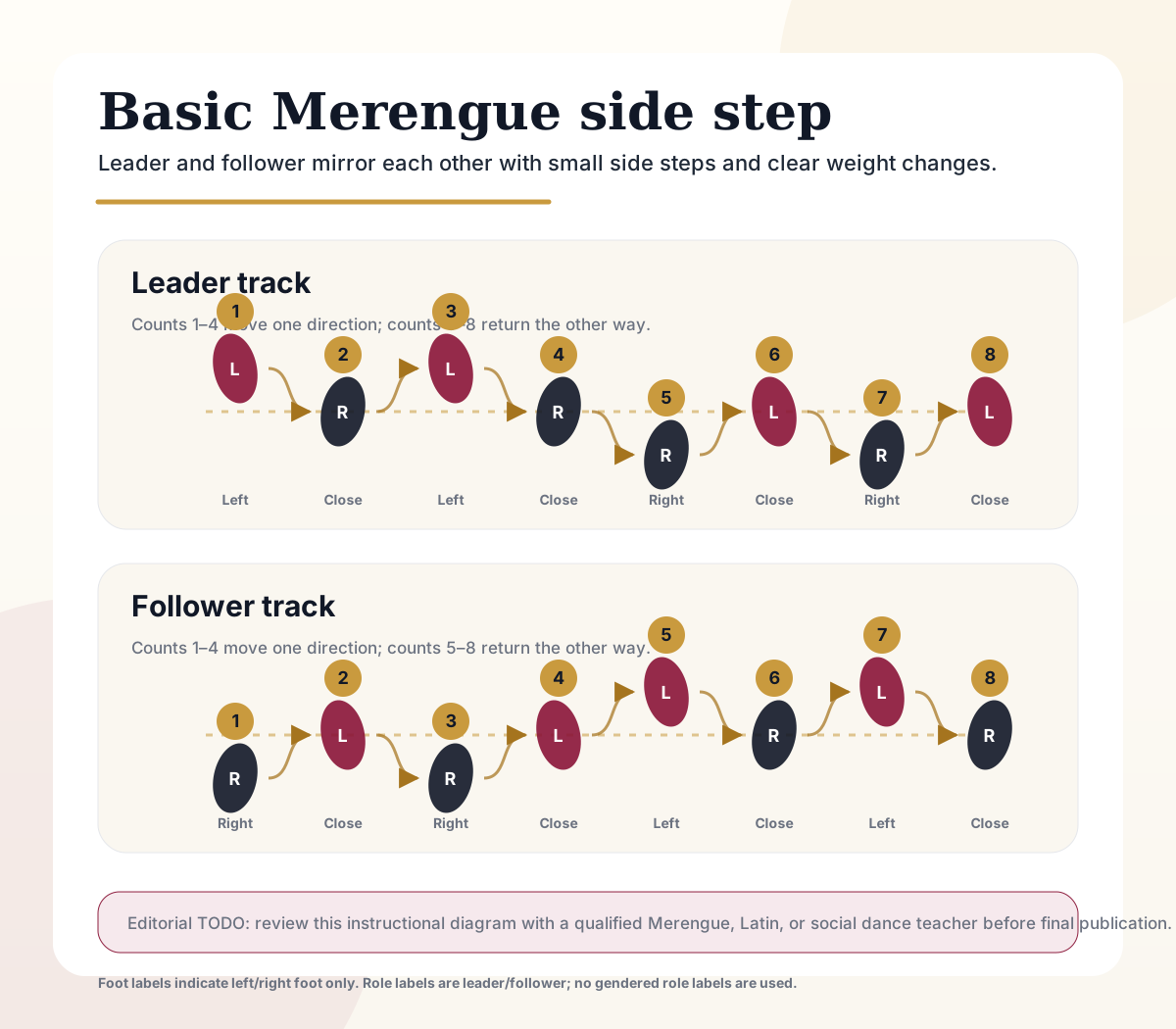
The beginner Merengue basic is built from small weight changes. Start with the side basic before worrying about turns. Leader and follower roles are not gendered — anyone can learn either role.
| Count | Leader | Follower (mirrors) |
|---|---|---|
| 1 | Step side left with the left foot | Step side right with the right foot |
| 2 | Close the right foot toward the left, changing weight | Close the left foot toward the right, changing weight |
| 3 | Step side left with the left foot again | Step side right with the right foot again |
| 4 | Close the right foot toward the left, changing weight | Close the left foot toward the right, changing weight |
| 5 | Step side right with the right foot | Step side left with the left foot |
| 6 | Close the left foot toward the right, changing weight | Close the right foot toward the left, changing weight |
| 7 | Step side right with the right foot again | Step side left with the left foot again |
| 8 | Close the left foot toward the right, changing weight | Close the right foot toward the left, changing weight |
Practice notes
- Keep your steps small. If your feet travel too far, the dance becomes harder to control.
- Change weight fully. Merengue is not just tapping one foot. Each count should feel like a clear weight change.
- Keep the upper body comfortable. Do not lock the arms or pull the partner.
- Use gentle connection. The leader should suggest direction. The follower should not have to be dragged through a turn.
For partner-connection fundamentals, see lead and follow basics, and browse the ballroom dance glossary for terms.
Merengue music
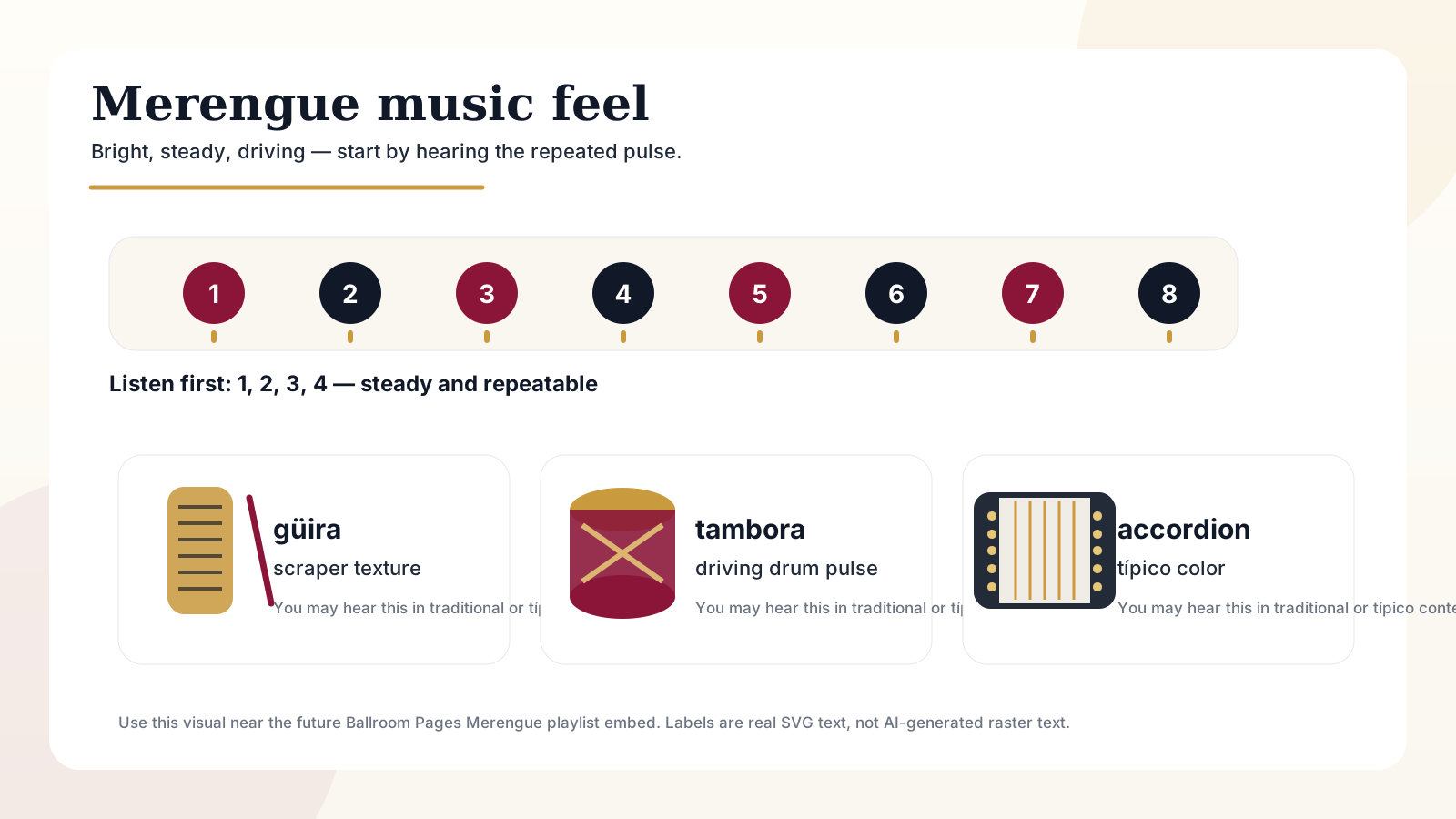
Merengue music feels steady, bright, and driving. Beginners can start by listening for the repeated pulse rather than trying to identify every instrument.
You may hear percussion and scraper textures, such as güira or charrasca, drum sounds such as tambora, and in Merengue típico contexts, accordion. Modern Merengue arrangements may include additional instruments and fuller band textures.
Beginner listening approach:
- First, find the steady beat.
- Second, count 1-2-3-4.
- Third, step small enough that you can stay with the music.
- Fourth, notice the energy of the song without letting excitement make your steps too big.
A Ballroom Pages Merengue practice playlist is coming soon.
For more music help, visit the Music & Timing hub, the ballroom tempo chart, and how to count ballroom dance music.
Merengue for social dancing
Merengue is very useful socially because it gives beginners a quick way to join the rhythm without memorizing complicated patterns. It can work well at Latin socials, studio parties, community events, mixed ballroom socials, and wedding receptions.
At a first social, a beginner can do a lot with:
- A small side basic
- A simple turn
- Clear timing
- Comfortable partner connection
- Good floor awareness
- Respectful etiquette
Beginner etiquette
- Ask before dancing. A simple “Would you like to dance?” is enough.
- Respect a “no.” Someone may be tired, taking a break, or not comfortable with that dance.
- Keep steps small. Social floors can be crowded.
- Respect partner comfort. Do not force close hold, styling, turns, dips, or body movement.
- Use clear, gentle connection. Leading is not pulling.
- Avoid teaching on the social floor unless your partner clearly asks for help.
- Watch the space around you. Do not send your partner into another couple.
- Thank your partner when the dance ends.
For more, read the social dancing guide, dance etiquette for social dancing, and lead and follow basics.
Merengue vs Salsa, Bachata, Mambo, Cha Cha, and Rumba
| Dance | Practical timing difference | Feel | Social use | Beginner learning path |
|---|---|---|---|---|
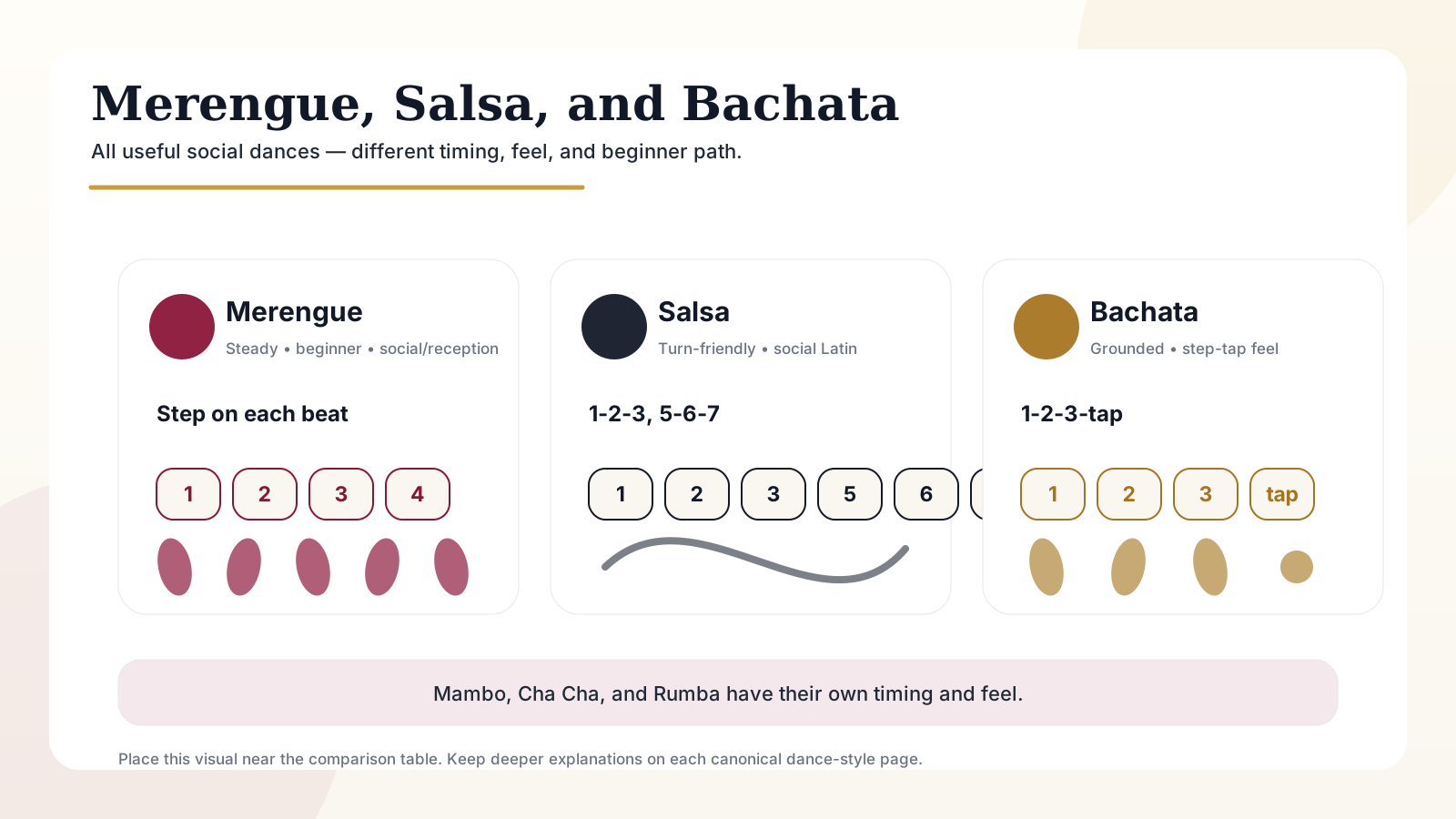
| Merengue | Often stepped on every beat; commonly counted 1-2-3-4 or in eights | Steady, lively, compact, party-friendly | Very useful for beginners, Latin nights, mixed socials, receptions | Start here for rhythm, weight changes, and relaxed partner connection |
| Salsa | Often taught 1-2-3, 5-6-7, with On1 and On2 timing systems | Energetic, turn-friendly, rhythmically layered | Very strong at Salsa socials and Latin nights | Learn after or alongside Merengue if you want more timing and turn complexity |
| Bachata | Often taught as three steps and a tap over four counts | Grounded, close, side-to-side, playful or romantic depending on style | Very strong at Latin socials | Good next dance if you like Latin music but want a different step-tap feel |
| Mambo | Often associated with break-on-2 timing | Smooth, classic, precise, rhythmically demanding | More niche socially; important in ballroom / rhythm and Salsa-adjacent contexts | Best after you are comfortable hearing beats and changing weight |
| Cha Cha | Uses syncopated cha-cha-cha action | Bright, crisp, playful, compact | Studio, ballroom, and Latin social contexts | Learn when you are ready for syncopation |
| Rumba | Slower and more romantic; timing varies by style | Smooth, expressive, controlled | Strong for studio and wedding contexts | Better fit than Merengue for many slow romantic songs |
Want to go deeper? Compare Merengue with Salsa, learn Bachata next, see how Merengue differs from Mambo, compare Merengue with Cha Cha, or try Rumba for slower Latin songs.
Common beginner mistakes
| Mistake | Why it happens | Fix |
|---|---|---|
| Taking steps too large | Side steps travel too far and pull the partnership off balance | Keep your feet underneath you. Imagine dancing in a small square |
| Stomping instead of changing weight | The rhythm becomes heavy and loud | Step with control and transfer weight smoothly |
| Ignoring the beat | Moving randomly because the dance seems simple | Count 1-2-3-4 out loud before adding turns |
| Pulling with the arms | The leader drags the follower through turns | Use gentle connection, body direction, and timing |
| Holding the frame too stiffly | The partnership feels tense | Stand tall, soften the elbows, and keep the hands relaxed |
| Trying too many turns too early | Patterns become more important than rhythm | Practice one simple turn, then return to the basic |
| Confusing Merengue with Salsa or Bachata | Applying Salsa breaks or Bachata taps to Merengue music | Listen for the steady Merengue pulse and step on each beat |
Beginner practice tips
- Solo rhythm practice. Play a Merengue track or a steady practice beat. Count 1-2-3-4. Step left, right, left, right with small weight changes.
- Side basic drill. Practice four steps to the left and four steps to the right. Keep the steps small and smooth.
- Partner comfort drill. Practice in open hold. Keep the connection light. The goal is to move together without squeezing or pulling.
- Turn timing drill. Try one simple underarm turn over several counts. Do not rush. Return to the basic immediately after.
- Social confidence tip. At a party or reception, you do not need many patterns. A small basic, a comfortable turn, and good etiquette can be enough to enjoy the dance.
Is Merengue good for weddings or receptions?
Merengue can be excellent for wedding receptions, especially when the goal is upbeat, beginner-friendly party dancing. It is also useful when guests want to join in without learning complicated steps.
Merengue is usually not the default choice for a slow romantic first dance. If the song is soft, sweeping, or slow, another dance may fit better.
Good wedding or reception uses for Merengue:
- Upbeat reception dancing
- Latin party songs
- A simple group-friendly dance moment
- A fun second dance after a slower first dance
- Beginner-friendly dancing for guests
Less ideal uses:
- Slow romantic ballads
- Songs without a clear Merengue feel
- First dances that need a soft, dramatic, or elegant mood
- Choreography built around dips or tricks without coaching
For broader planning, start with the wedding dance guide.
Is Merengue useful for social dancing?
Yes. Merengue is one of the most useful beginner social dances because it helps you get comfortable moving with a partner and hearing a steady beat.
It is also a bridge into other Latin dances. After Merengue, many dancers find it easier to approach Salsa, Bachata, Cha Cha, or Mambo because they already understand weight changes, rhythm, and partner connection.
At a social, Merengue is especially helpful because it can stay compact. That makes it easier to adapt to crowded floors and mixed-skill partners.
Is Merengue a ballroom dance?
Merengue is best described as a social Latin / Caribbean partner dance that is often taught in ballroom and partner-dance studio settings.
It belongs on Ballroom Pages because many readers encounter it through ballroom studios, social dance events, beginner partner classes, and receptions. But it should not be described as the same thing as core International Latin or American Rhythm syllabus dances.
The careful answer is: Merengue is ballroom-adjacent and studio-friendly, but it is primarily a social Latin / Caribbean partner dance rather than a core International Latin or American Rhythm championship dance.