What is the Mambo?
Mambo is a fast Latin partner dance known for sharp timing, quick breaks, compact movement, and high-energy music.
In ballroom, Mambo belongs to the American Rhythm family with Cha Cha, Rumba, East Coast Swing, and Bolero. In social dance settings, the word “Mambo” can also be used in a looser way, especially around Salsa On2 or New York-style Salsa communities.
That is why Mambo can feel confusing at first. The same word may mean:
- American Rhythm Mambo in a ballroom studio.
- Social Mambo or Salsa On2 in a Salsa community.
- Mambo music or older Mambo dance history in a music context.
For this Ballroom Pages guide, the main focus is ballroom and social Mambo for beginners, especially the timing, basic rhythm, and practical comparison with Salsa.
A simple way to remember it: Mambo is a fast, rhythm-driven Latin dance that usually asks you to wait through count 1 and break on count 2. Historically, Mambo was popularized by Pérez Prado and developed in the 1940s as a marriage between son and swing.
What Mambo feels like
Mambo feels alert, compact, and rhythmically alive. It is not a slow, floating dance. It is not a relaxed walking dance. It has energy, but good beginner Mambo should not feel wild or oversized.
Think:
- small steps;
- quick weight changes;
- grounded rhythm;
- clear breaks;
- lifted posture;
- relaxed knees;
- playful musical accents.
The most common beginner mistake is trying to make Mambo exciting by moving too much. Mambo already has plenty of energy in the music. Your job is to keep your body organized enough to stay on time.
A beginner-friendly image: Mambo should feel like a sharp rhythmic conversation with the music—not a race across the floor.
Mambo timing and how to count it
Mambo is danced in 4/4 time, but the beginner rhythm does not usually start by stepping on count 1.
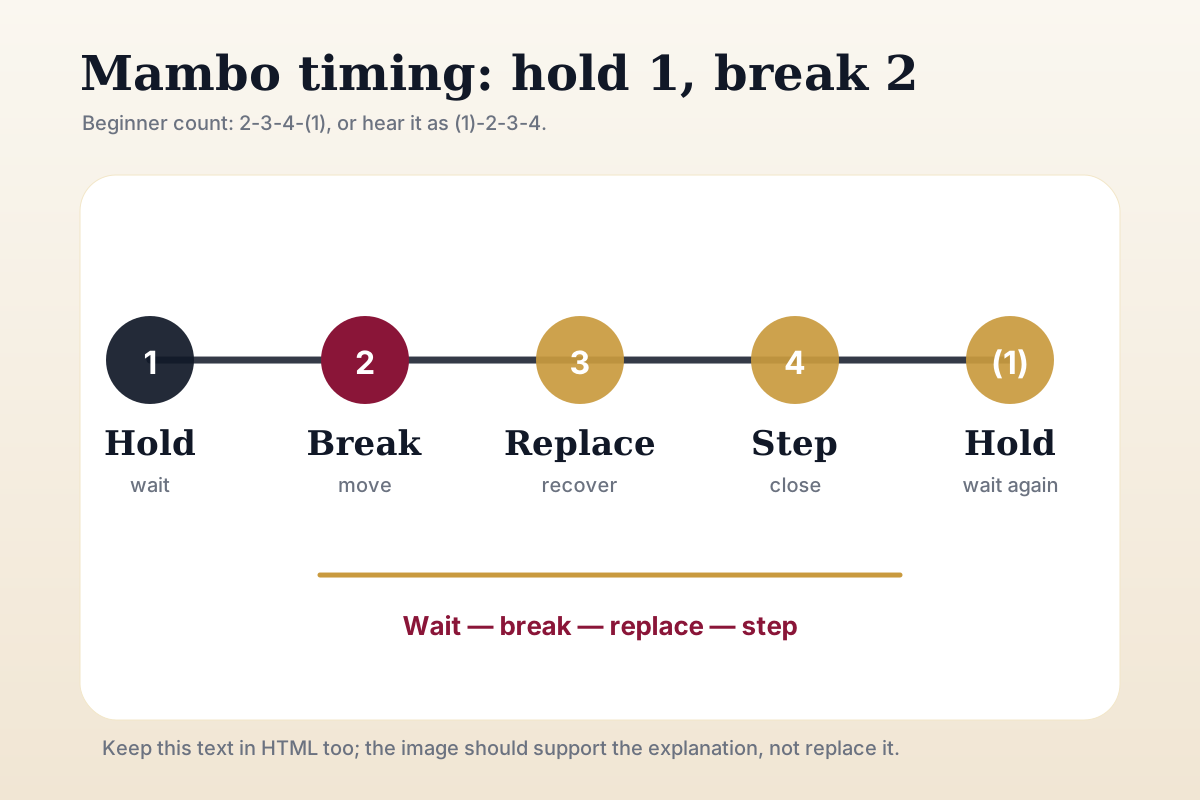
Instead, many ballroom Mambo basics are counted: 2-3-4-(1). Or, if you want to hear the hold first: (1)-2-3-4.
The count 1 is usually held. The first clear break step happens on count 2.
| Count | Action | Cue |
|---|---|---|
| 1 | Hold or collect | Wait |
| 2 | Break step | Break |
| 3 | Replace weight | Replace |
| 4 | Step or close | Step |
| 1 | Hold | Wait again |
Another useful spoken version is: Wait, break, replace, step. Or: Quick, quick, slow.
The “slow” is not slow because Mambo is lazy. It is “slow” because that weight change carries through the next held count.
Why beginners struggle with Mambo timing
Most beginners want to step as soon as they hear count 1. Mambo asks you to do something different: hear count 1, stay calm, and move on count 2.
That creates a slightly delayed, syncopated feeling. Once you feel it, Mambo becomes much easier. Until then, it may feel like you are always late. You are not late. You are learning to wait.
Practice note
Before you try music, say this out loud: “One — two — three — four. Hold — break — replace — step.” Then clap only on 2 — 3 — 4. Once that feels natural, add small steps.
Basic Mambo steps for beginners
Beginners should treat the Mambo basic as a timing and weight-change exercise before turning it into a performance step. The first goal is not speed. The first goal is knowing exactly when your weight changes.
Basic rhythm structure
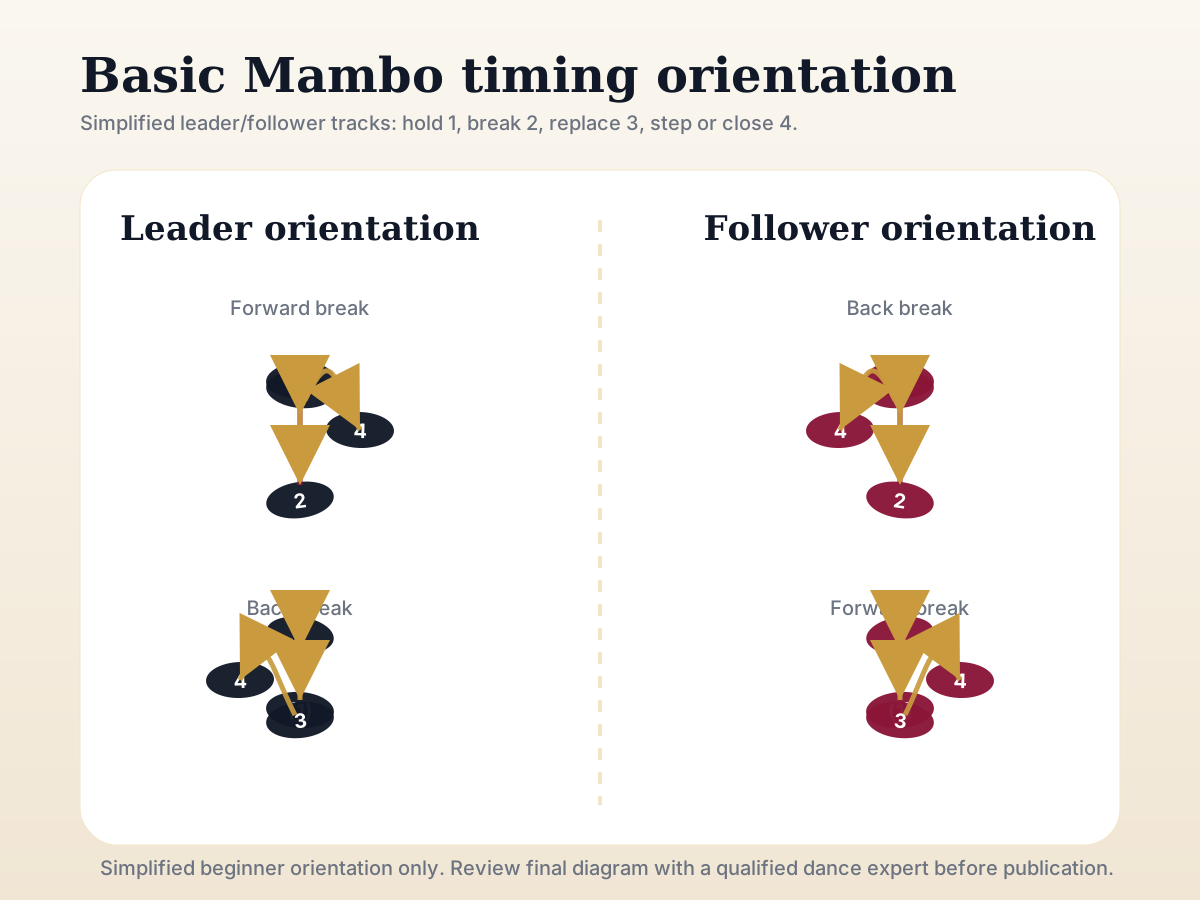
The simplest beginner pattern is: Break — replace — step — hold. Or counted: 2 — 3 — 4 — (1).
| Count | Leader (left foot free) | Follower (right foot free) |
|---|---|---|
| 1 | Hold | Hold |
| 2 | Break forward on the left foot | Break back on the right foot |
| 3 | Replace weight back to the right foot | Replace weight forward to the left foot |
| 4 | Step or close the left foot | Step or close the right foot |
| 1 | Hold | Hold |
| 2 (reverse) | Break back on the right foot | Break forward on the left foot |
| 3 (reverse) | Replace weight forward to the left foot | Replace weight back to the right foot |
| 4 (reverse) | Step or close the right foot | Step or close the left foot |
Practice notes
- Keep the steps small. Mambo moves quickly, and big steps make the timing harder.
- Stay lifted, but do not lock the body. Let the knees stay responsive.
- Do not pull your partner into the break. A good connection should feel clear, not forceful.
- Count out loud longer than you think you need to. Mambo timing becomes easier when your voice teaches your feet.
For partner-connection fundamentals, see lead and follow basics, and browse the ballroom dance glossary for terms like break step and replace.
Mambo vs Salsa
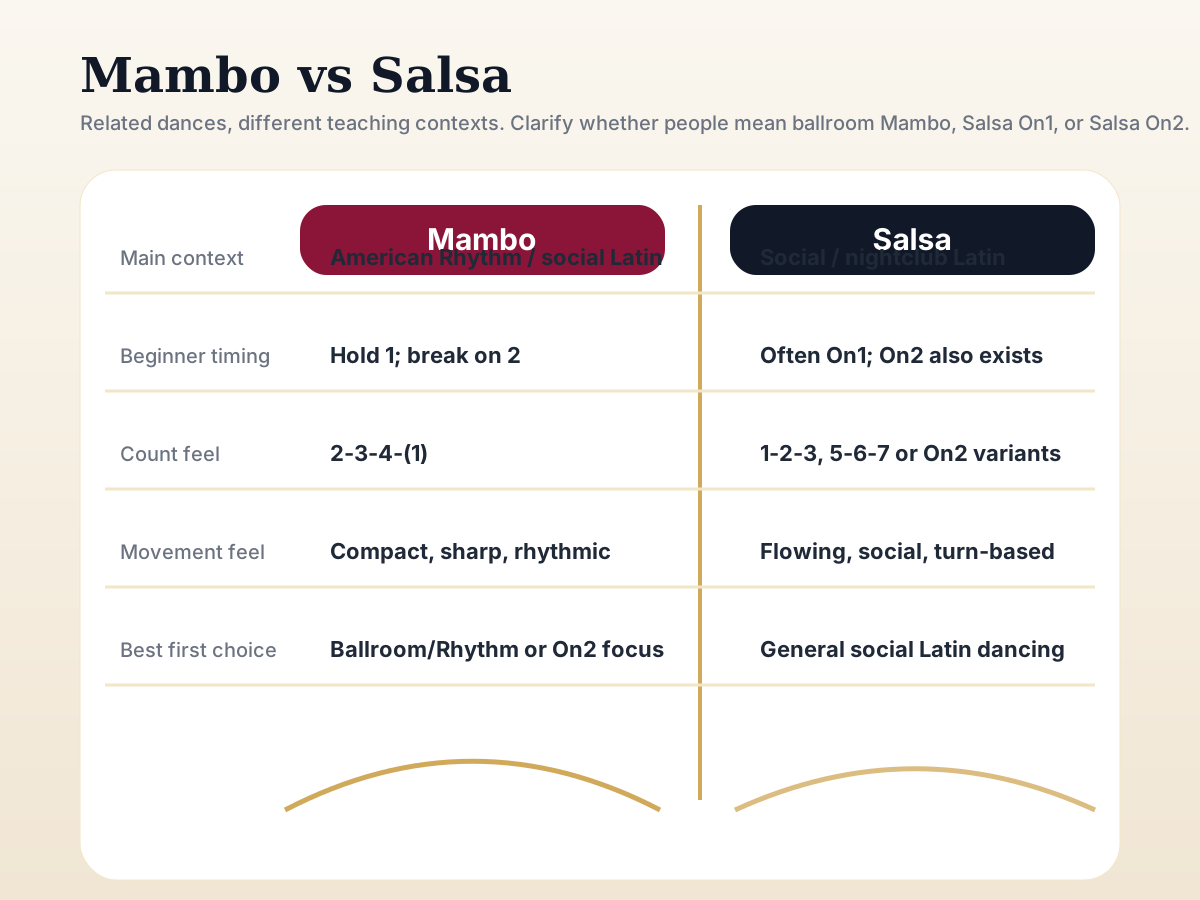
Mambo and Salsa are related, but they are not always the same dance. The practical difference depends on context.
In a ballroom studio, Mambo often means American Rhythm Mambo: compact, fast, codified, and usually breaking on 2. In many social dance communities, Salsa is the broader everyday dance. It can be danced On1, On2, or in other regional styles. Some dancers also use “Mambo” to mean Salsa On2 or New York-style timing.
That means the best question is not only, “Is this Mambo or Salsa?” A better question is: are we talking about ballroom Mambo, Salsa On1, Salsa On2, or a specific social Salsa style?
| Topic | Mambo | Salsa |
|---|---|---|
| Main page identity | American Rhythm / Social Latin dance | Social / Nightclub Latin dance |
| Common beginner timing | 2-3-4-(1), break on 2 | Often 1-2-3, 5-6-7 for Salsa On1; On2 also exists |
| Count feel | Wait on 1, move on 2 | Depends on style and timing |
| Ballroom context | Yes, American Rhythm | Usually social / nightclub; may appear in some competition or club contexts |
| Social context | Yes, but terminology varies | Very common social dance |
| Movement feel | Compact, sharp, rhythmic, fast | Social, flowing, turn-based, varies by style |
| Beginner challenge | Waiting through count 1 and finding the 2 | Learning timing, partner patterns, and style vocabulary |
| Best first choice if unsure | Learn Mambo if you are in American Rhythm or specifically studying On2 timing | Learn Salsa if your goal is general social Latin dancing |
Which should you learn first?
Learn Mambo first if:
- your ballroom teacher is working through American Rhythm;
- you want to understand break-on-2 timing;
- you are preparing for a rhythm showcase or competition;
- you like sharp, fast Latin movement.
Learn Salsa first if:
- your main goal is social dancing;
- your local scene is Salsa-heavy;
- you want a broader club/social dance vocabulary;
- you are comparing Latin dances for parties, travel, or casual events.
The two can support each other. Learning Mambo can improve your sense of On2 timing. Learning Salsa can make Mambo feel more socially connected. Just do not assume every Salsa dancer means the same thing when they say “Mambo.”
Mambo music
Mambo music is fast, bright, and rhythmically dense. It often has a driving Latin percussion feel, strong accents, and a sense of forward energy. Competition references commonly center American Rhythm Mambo around 47 MPM / 188 BPM, and some studio and reference sources list Mambo in a broader 188–204 BPM range. For beginners, practice slower than competition tempo until the count is stable.
For beginners, the best practice music is not the most exciting song. It is the clearest song. Choose practice music where:
- the beat is easy to hear;
- the tempo is manageable;
- you can count 1-2-3-4 without guessing;
- you can feel the hold on 1;
- you can break on 2 without rushing.
What to listen for
Start by counting: 1 — 2 — 3 — 4. Then say: Hold — break — replace — step. If you cannot keep the count while standing still, do not add turns yet.
Playlist (coming soon)
A future Ballroom Pages Mambo Practice Playlist will include slower practice options first, competition-tempo examples separately, and approximate BPM labels once verified.
For broader timing help, visit Ballroom Music & Timing and the ballroom tempo chart.
Common beginner mistakes
| Mistake | Why it happens | Fix |
|---|---|---|
| Stepping on count 1 | You hear the music and immediately step on 1 | Say “hold” on 1 and move on 2 |
| Taking steps that are too big | You travel too far and arrive late | Keep the break small enough that you can recover easily |
| Confusing Mambo with every kind of Salsa | You assume they are always interchangeable | Ask whether the context is ballroom Mambo, Salsa On1, Salsa On2, or another social Salsa style |
| Forcing the lead | Leaders pull the follower into the break | Use timing, body direction, and light connection. Do not yank |
| Guessing the rhythm instead of counting | Your feet move quickly but not consistently | Count out loud. Speed is not useful until the rhythm is stable |
| Adding turns too early | You add underarm turns before both partners can hold the timing | Keep the basic clean for several songs before adding rotation |
| Losing posture when the music speeds up | The upper body collapses as the feet rush | Stay lifted, keep steps small, and breathe through the hold |
Beginner practice tips
- Start without music. Count slowly: 1 — 2 — 3 — 4. Then add the words: hold — break — replace — step.
- Clap before stepping. Clap on 2, 3, and 4. Stay silent on 1. This trains the wait.
- Use tiny steps. Your break step should be small enough that you can recover without hopping.
- Practice both directions. Practice forward breaks and back breaks so the rhythm does not depend on only one direction.
- Record 20 seconds. A short video can reveal whether you are stepping on 1, taking steps too big, or losing posture.
- Add partner connection last. First learn your own timing. Then practice with a partner using a light connection and small movement.
Is Mambo good for weddings?
Mambo can be a fun wedding choice when the couple wants something upbeat, playful, and unexpected. It works best for:
- a reception entrance;
- a surprise upbeat section after a slow intro;
- a second dance;
- a short choreographed routine;
- couples who already like Latin music;
- confident movers who have time to practice.
Mambo is usually not the easiest choice for a slow romantic first dance. Many couples will find Rumba, Foxtrot, Waltz, or Nightclub Two Step easier for that mood.
A good wedding compromise is: start with a slow, simple dance, then switch into a short Mambo section for energy.
Is Mambo useful for social dancing?
Yes, but context matters.
In a ballroom studio social, Mambo may be called as an American Rhythm dance. In a Salsa club or social Latin scene, “Mambo” may mean Salsa On2 or New York-style timing. In casual conversation, some people may use Mambo and Salsa loosely.
Is Mambo used in ballroom competitions?
Yes. Mambo is used in American Rhythm competition contexts.
Competition Mambo is more codified than casual social dancing. Dancers focus on timing, rhythm, posture, compact movement, partner connection, and recognizable figures. Beginners should not copy advanced competition styling before they can dance the basic timing calmly.
The order of priorities is:
- Hear the count.
- Hold 1.
- Break on 2.
- Keep steps compact.
- Maintain partner comfort.
- Add styling later.