
Ballroom Glossary
What Is a Reverse Turn in Ballroom Dance?
A Reverse Turn is a ballroom turning figure or figure family that usually turns left / counterclockwise from the leader’s perspective. You will hear the term in dances such as Waltz, Viennese Waltz, Foxtrot, Quickstep, and Tango, but the exact steps and timing change by dance and style.
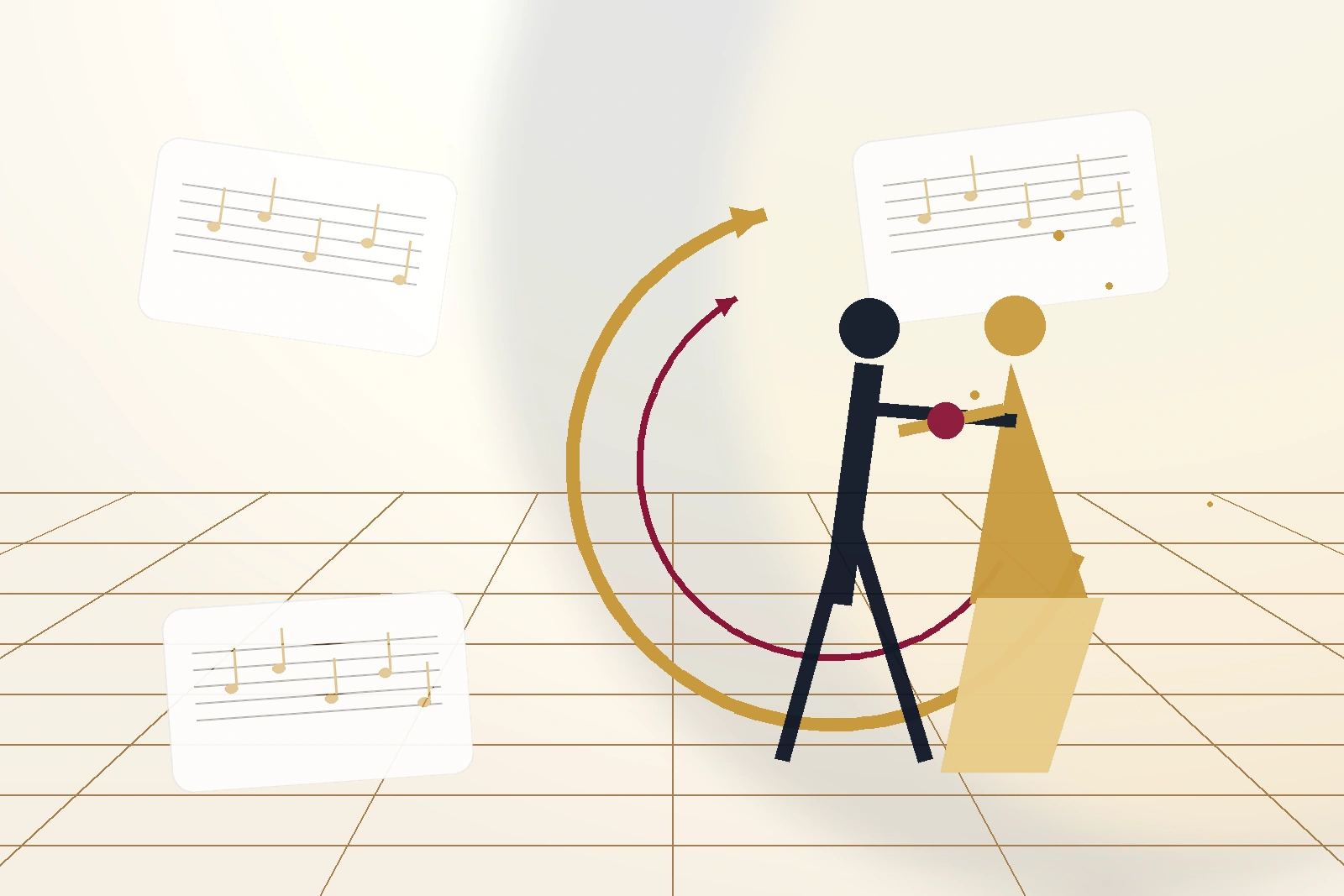
Quick definition of Reverse Turn
Reverse Turn
- Pronunciation
- REE-vurs turn
- Plain-English meaning
- A left-turning ballroom figure or figure family.
- Direction
- Usually left / counterclockwise from the leader’s perspective in many ballroom contexts.
- Companion term
- Natural Turn, which generally turns right / clockwise.
- Commonly seen in
- Waltz, Viennese Waltz, Foxtrot / Slow Foxtrot, Quickstep, Tango, and related Standard/Smooth contexts.
- Skill level
- Beginner concept; execution can range from beginner to advanced depending on the dance, syllabus, and speed.
- Related terms
- Natural Turn, Line of Dance, Closed Position, Open Reverse Turn, Closed Reverse Turn, CBM, Rise and Fall, Sway, Pivot, Rotation, Alignment.
A Reverse Turn is a ballroom dance figure that usually turns the couple to the left, or counterclockwise, from the leader’s perspective. It is the directional companion to a Natural Turn, which generally turns right. The exact footwork, count, rise and fall, and amount of turn depend on the dance.
What is a Reverse Turn?
A Reverse Turn is a named ballroom figure, and also a directional idea used in many figure names. In plain English, it tells you that the movement is generally turning left rather than right.
That directional clue is useful because ballroom students often hear figure names before they understand the pattern. Once you know that “reverse” usually means left-turning, names like Reverse Turn, Open Reverse Turn, Quick Open Reverse, Reverse Pivot, and Double Reverse Spin become less mysterious.
A Reverse Turn is not one universal step. A Waltz Reverse Turn, Viennese Waltz Reverse Turn, Foxtrot Reverse Turn, Quickstep Quick Open Reverse, and Tango Open Reverse Turn all have different timing, character, body action, and technical details.
Why the Reverse Turn matters
Reverse Turn matters because it appears in common step names across several ballroom dances. It helps students understand direction, alignment, rotation, and the relationship between left-turning and right-turning figures.
It also helps prevent a common beginner mistake: thinking that “reverse” means the dancer simply moves backward. In ballroom terminology, reverse usually describes the turning direction, not whether a particular person steps forward or backward on a specific count.
How a Reverse Turn works
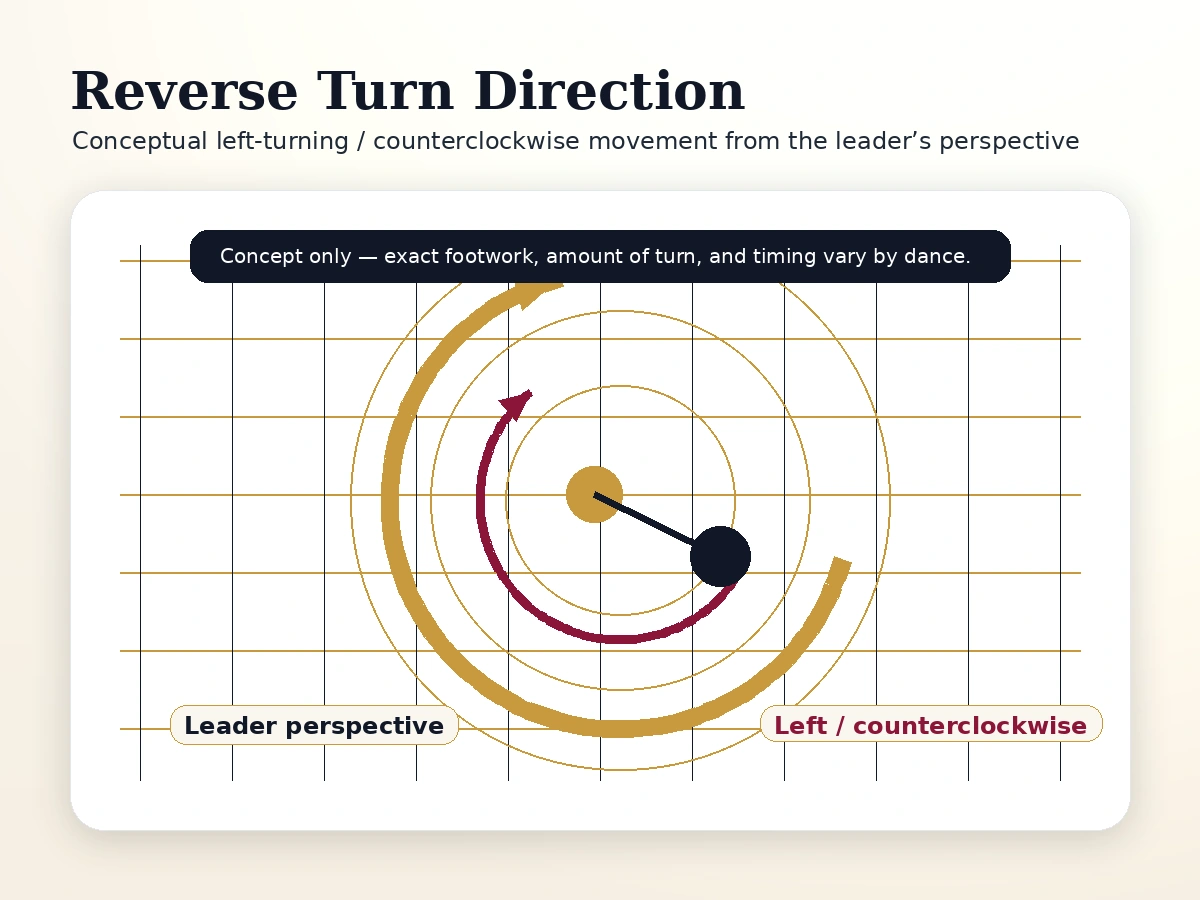
In many ballroom contexts, a Reverse Turn rotates the couple left / counterclockwise from the leader’s perspective. One partner may be moving forward while the other moves backward at different moments, but the couple’s shared turn is left-turning.
The exact details vary:
- Waltz: usually introduced with 1-2-3 phrasing and rise/fall.
- Viennese Waltz: faster, more rotational, and not a beginner speed for most new dancers.
- Foxtrot / Slow Foxtrot: smoother traveling action with Foxtrot timing, often connected to Feather Finish language.
- Quickstep: related reverse figures may use quicker timing and should not be forced into a Waltz count.
- Tango: Open Reverse and Basic Reverse contexts have a sharper Tango character and different timing.
Do not force rotation with the arms. A useful Reverse Turn depends on posture, frame, timing, weight changes, and dance-specific technique — see frame and posture and lead and follow.
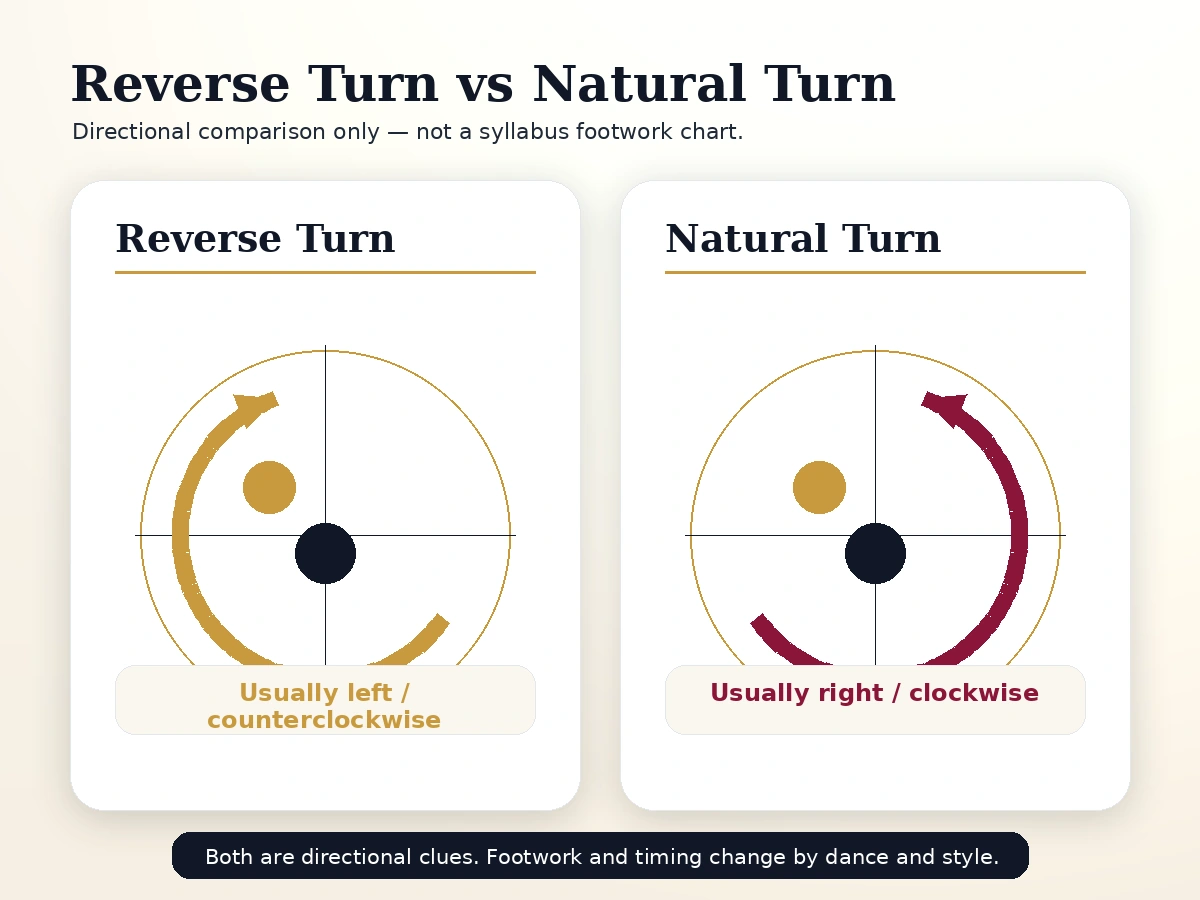
Reverse Turn vs Natural Turn
| Term | General direction | Beginner meaning | Common contexts | Caution |
|---|---|---|---|---|
| Reverse Turn | Usually left / counterclockwise from the leader’s perspective | A left-turning ballroom figure or figure family | Waltz, Viennese Waltz, Foxtrot, Quickstep, Tango reverse figures | Footwork and timing vary by dance |
| Natural Turn | Usually right / clockwise from the leader’s perspective | A right-turning ballroom figure or figure family | Waltz, Viennese Waltz, Foxtrot, Quickstep, related Tango/Foxtrot terms | Do not assume the same amount of turn in every dance |
Both terms are common in ballroom. They are directional clues, not complete instructions.
Where you may see a Reverse Turn
| Dance | How it appears | Beginner note |
|---|---|---|
| Waltz | Reverse Turn is commonly taught as an early left-turning figure. | Learn direction and count before worrying about full technical detail. |
| Viennese Waltz | Reverse Turn is part of the core rotary vocabulary, but speed makes it harder. | Do not start at full Viennese Waltz speed. |
| Foxtrot / Slow Foxtrot | Reverse Turn may appear with Feather Finish language and smooth traveling movement. | Do not count it like Waltz; learn Foxtrot timing separately. |
| Quickstep | Quick Open Reverse and related reverse figures appear in syllabus contexts. | Learn basic Quickstep timing first. |
| Tango | Open Reverse Turn and Basic Reverse Turn appear in Tango contexts, with different character and timing. | Keep Tango character separate from Waltz/Foxtrot softness. |
| American Smooth / Standard | Reverse-turning ideas appear across traveling dances and syllabus systems. | Treat the term as a directional clue, then check the dance-specific guide. |
How to count a Reverse Turn
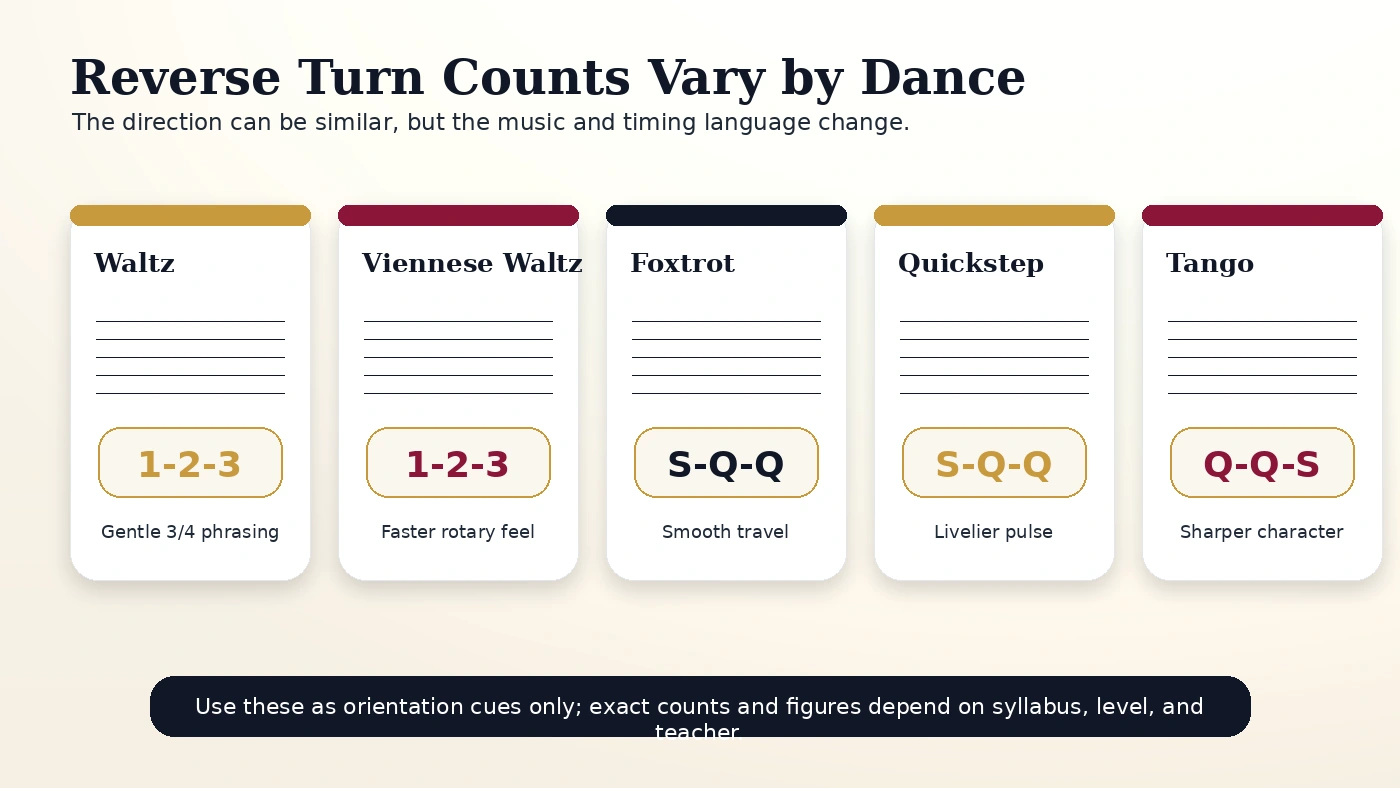
The count depends on the dance.
- Waltz and Viennese Waltz often use 1-2-3 phrasing. A full six-step idea may be counted 1-2-3, 1-2-3.
- Foxtrot / Slow Foxtrot uses Foxtrot timing, often written with slow and quick values depending on the figure and syllabus context.
- Quickstep uses its own quick timing system. A Quick Open Reverse may use S-Q-Q-style language in some references.
- Tango uses Tango-specific timing. Some reverse figures may use quick/slow combinations such as Q-Q-S or more advanced timing.
This glossary page explains the term. It should not replace dance-specific instruction. To build the underlying skill, read how to count ballroom dance music.
Practice Reverse Turn awareness with music
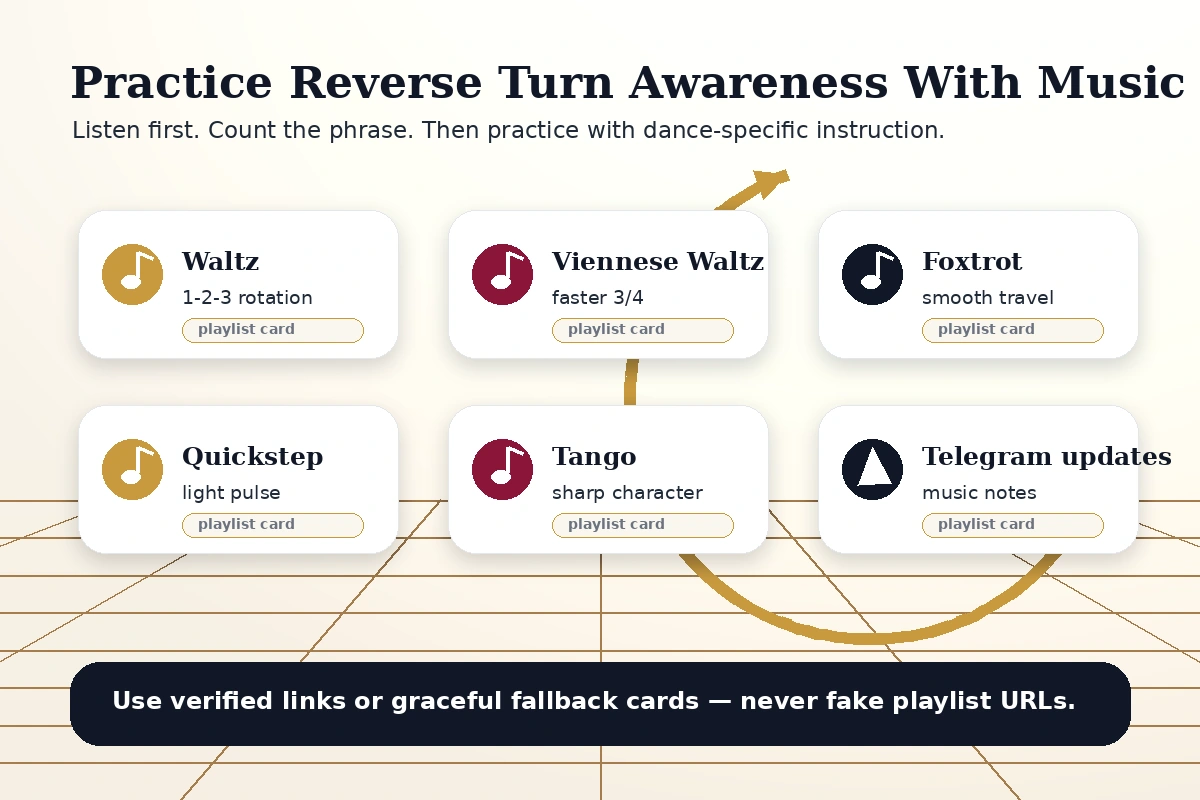
You do not need to dance a full Reverse Turn immediately to start understanding it. Begin by listening.
Choose a clear Waltz track and count 1-2-3. Notice how the music supports rotation without rushing. Later, compare that feeling with Viennese Waltz, Foxtrot, Quickstep, and Tango playlists.
- Listen before you dance.
- Clap or count the music first.
- Practice direction awareness without forcing rotation.
- Use dance-specific instruction for exact steps.
- Keep the upper body calm and avoid steering with the arms.
Waltz
Best for hearing slow 1-2-3 rotation patterns.
Viennese Waltz
For faster rotation awareness only after basics are comfortable.
Foxtrot / Slow Foxtrot
For smooth traveling movement and Foxtrot timing.
Quickstep
For Quickstep pulse after the reader understands basic timing.
Tango
For hearing a sharper character and different timing approach.
Music & Timing
The hub for tempo, counting, and the full playlist library, plus the Telegram channel.
Common beginner misunderstandings
“Reverse means I walk backward.”
Reverse usually describes the turning direction, not one person’s step direction.
“Every left turn is a Reverse Turn.”
Reverse Turn is a ballroom term and figure name; some left turns have different names.
“The Waltz version works in every dance.”
Each dance has its own timing, footwork, character, and syllabus context.
“I should rotate as much as possible.”
Over-rotation can make timing, balance, and partner connection worse.
“I lead it by pulling.”
Direction should come through posture, frame, body timing, and instruction, not arm pulling.
“Viennese Waltz speed is the goal right away.”
Build directional awareness slowly before full-speed rotation.
“I should look down to check my feet.”
Looking down usually disrupts posture and balance.
“Natural and Reverse are advanced terms.”
They are simple directional clues, even when execution becomes advanced.
This page builds awareness; it does not replace instruction. If movement causes pain, numbness, dizziness, or persistent discomfort, stop and consult a qualified instructor or healthcare professional as appropriate.
Reverse Turn vs similar terms
| Term | What it means |
|---|---|
| Reverse Turn | General left-turning ballroom figure or figure family. |
| Natural Turn | General right-turning companion term. |
| Left Turn | Plain-language direction; not always a named ballroom figure. |
| Open Reverse Turn | A reverse-turning figure with an “open” finish/relationship depending on dance context. |
| Closed Reverse Turn | A related reverse-turning term in some syllabus contexts. |
| Reverse Pivot | A pivoting action with reverse/left-turning character. |
| Spin Turn | A different named figure; may be natural or reverse depending on the figure. |
| CBM | Contra body movement; often involved in turning figures, but not the same thing as the turn. |
Mini practice drill
Try this gently and slowly:
Identify the rotation
Stand tall and notice left rotation versus right rotation without stepping.
Count a slow Waltz phrase
Say 1-2-3, 1-2-3 at a relaxed tempo.
Tiny turning awareness
Use a small, controlled turning-awareness exercise, not a full figure.
Listen and clap
Play a Waltz playlist and clap the count before dancing.
Add footwork with a teacher
Practice full footwork only with dance-specific instruction, and keep your frame calm without forcing your partner.
This drill is for awareness, not medical advice or a substitute for instruction. If movement causes pain, numbness, dizziness, or persistent discomfort, stop and check with a qualified instructor or healthcare professional as appropriate.
By dance
How much does a reverse turn turn?
| Dance | Typical amount of turn | Can it be overturned? |
|---|---|---|
| Waltz | About 3/4 over six steps | Yes, within syllabus limits |
| Viennese Waltz | Fixed 1/2 per bar (full turn per two bars) | No — the amount is fixed by the technique |
| Foxtrot | Roughly 1/4 to 3/8 per half | Yes, in advanced variations |
| Quickstep | Roughly 1/4 to 3/8 across the chassé reverse | Yes, within limits |
| Tango | Roughly 1/4 to 3/8 across the open reverse | Limited — Tango turns are compact by design |
FAQ
Reverse Turn FAQ
What does Reverse Turn mean in ballroom dance?
A Reverse Turn is generally a left-turning ballroom figure or figure family. In many ballroom contexts, it turns counterclockwise from the leader’s perspective.
Which direction does a Reverse Turn go?
A Reverse Turn usually turns left / counterclockwise from the leader’s perspective. Always check the dance-specific context because details vary.
Is a Reverse Turn the opposite of a Natural Turn?
Yes, in the basic directional sense. Reverse generally means left-turning, while Natural generally means right-turning.
Is a Reverse Turn the same in Waltz, Foxtrot, Quickstep, and Tango?
No. The directional idea is similar, but the timing, footwork, rise/fall, character, and syllabus details vary by dance.
What dances use a Reverse Turn?
You may hear Reverse Turn or reverse-turning figure names in Waltz, Viennese Waltz, Foxtrot, Quickstep, Tango, and related Standard/Smooth contexts.
Does “reverse” mean the dancer moves backward?
No. Reverse usually describes the direction of the turn. In a partner figure, one dancer may move forward while the other moves backward at different moments.
Can beginners learn a Reverse Turn?
Yes, beginners can learn the concept early, especially in Waltz. Full execution may be beginner, intermediate, or advanced depending on the dance and figure.
How do you count a Reverse Turn?
The count depends on the dance. Waltz and Viennese Waltz often use 1-2-3 phrasing; Foxtrot, Quickstep, and Tango use different timing systems.
In which dance is it impossible to overturn a reverse turn without disregarding the technique?
The Viennese Waltz. Its reverse turn has a fixed amount of turn—the couple rotates a precise half turn per bar, continuously—so there is no room to add rotation without breaking the figure’s technique. In Waltz, Foxtrot, Tango, and Quickstep, reverse turns may be underturned or overturned within syllabus limits.
How much turn is in a reverse turn?
It varies by dance. As a syllabus guide: Waltz makes about three-quarters of a turn over six steps; Viennese Waltz makes a fixed half turn per bar (a full turn every two bars); Foxtrot and Quickstep reverse figures commonly make between a quarter and three-eighths per half; Tango’s open reverse turn makes about a quarter to three-eighths across the figure. Exact amounts depend on the version danced and the syllabus.
Editorial
Sources and review notes
This glossary entry synthesizes ballroom terminology and figure references from Dance Central, BallroomDancers.com, Imperial Dance, and other dance education sources. Reverse Turn details vary by dance style, syllabus, teacher, level, body type, and social or competitive context. Final technical diagrams should be reviewed by a qualified ballroom instructor, experienced competitor, adjudicator, or equivalent ballroom professional before launch.
Sources
- Dance Central — Waltz Reverse Turn
- Dance Central — Viennese Waltz Reverse Turn
- Dance Central — Foxtrot Reverse Turn
- Dance Central — Quickstep Quick Open Reverse
- Dance Central — Tango Open Reverse Turn
- Dance Central — Alignment Diagram
- Ballroom Pages legacy music page — original Telegram, Spotify, Apple, and YouTube playlist ecosystem.
This is dance terminology, not medical advice. Ballroom Pages follows an editorial policy of education-first guidance. Questions? Contact us. Updated May 22, 2026.