
Glossary
Open Reverse Turn in Ballroom Dance
Watch any Tango—from a first social lesson to a world final—and you will see the open reverse turn within seconds. It is the dance’s go-to left-turning figure: sharp, compact, and finished with the feet passing “open” instead of closing. Here is what the figure is, what makes a finish open, the difference between lady outside and lady in line, and how to dance it without drifting off balance.
Definition of open reverse turn
Open Reverse Turn
- Most at home in
- Tango
- Skill category
- Figures & turns
- Companion term
- Closed reverse turn (the closing finish)
- Related terms
- reverse turn, promenade position, closed position, CBM
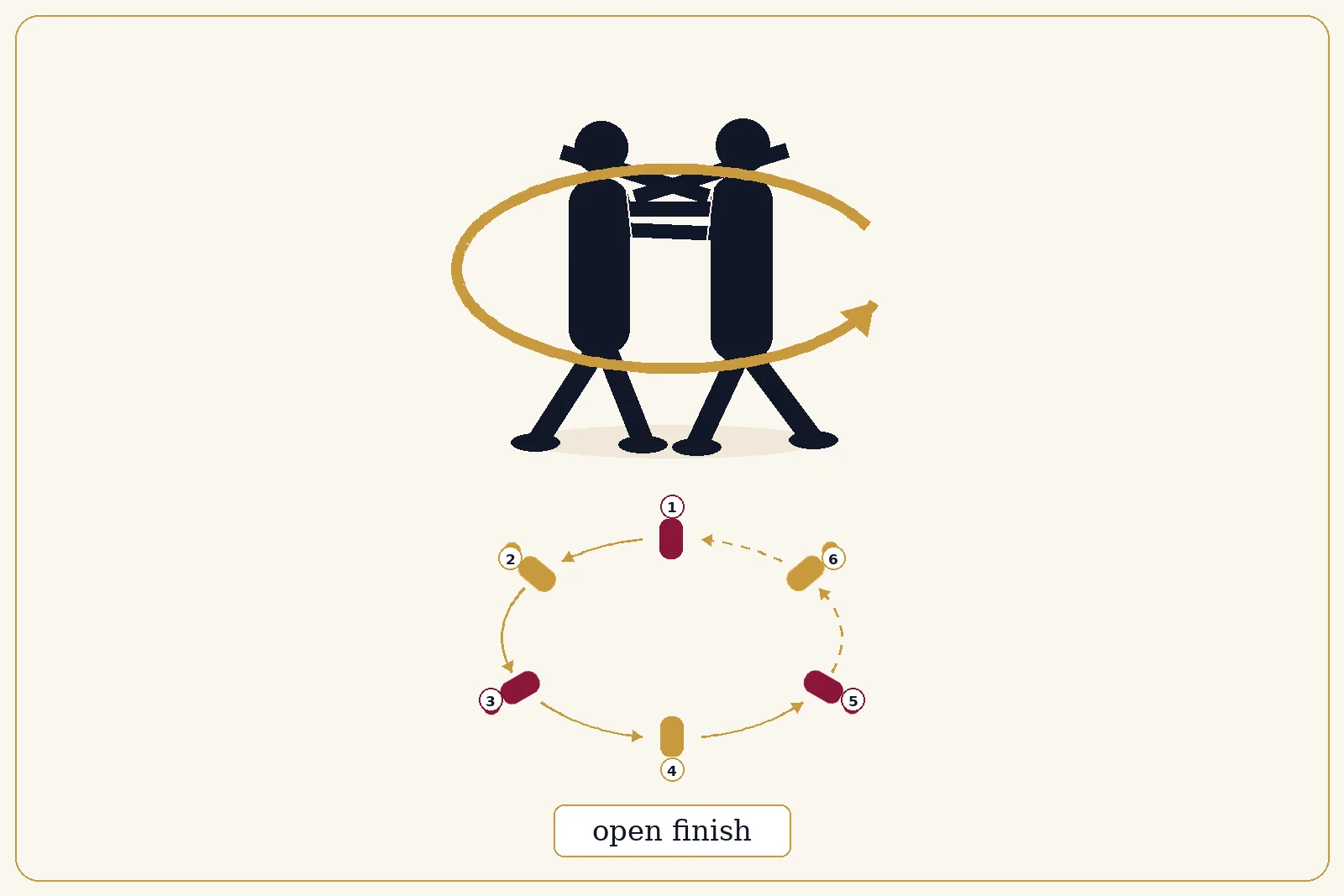
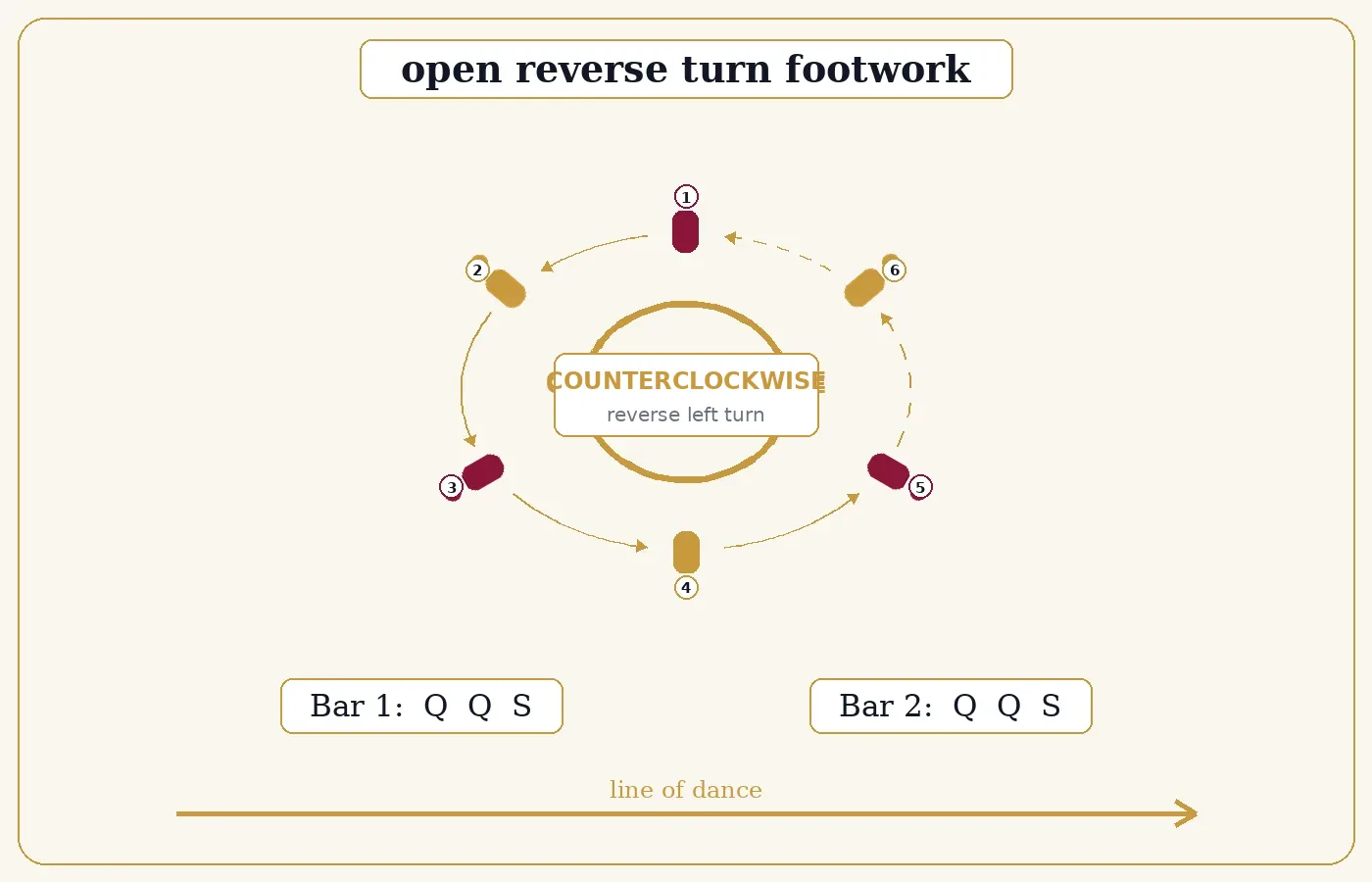
The open reverse turn is a ballroom figure, most at home in Tango, that turns the couple to the left (counterclockwise) and finishes with the feet passing open instead of closing. It is danced with the follower outside the leader (“lady outside”) or in line, typically to quick-quick-slow timing over two bars.
“Reverse” tells you the direction—left. “Open” tells you the finish—the feet pass.
What the open reverse turn is
Ballroom turns come in two directions: natural (right) and reverse (left). The open reverse turn is the left-turning figure that Tango dancers reach for first and use most—it appears in the routines of brand-new dancers and world champions alike.
Like most reverse turns, it has a forward half and a backward half: the leader steps forward on the left foot and turns left, then completes the rotation moving backward while the follower dances the complementary halves. What sets it apart is the finish. Instead of the feet closing together at the end, they pass—an “open” finish—which keeps the couple moving and gives Tango its restless, prowling character.
Why it’s called “open”: open vs closed finishes
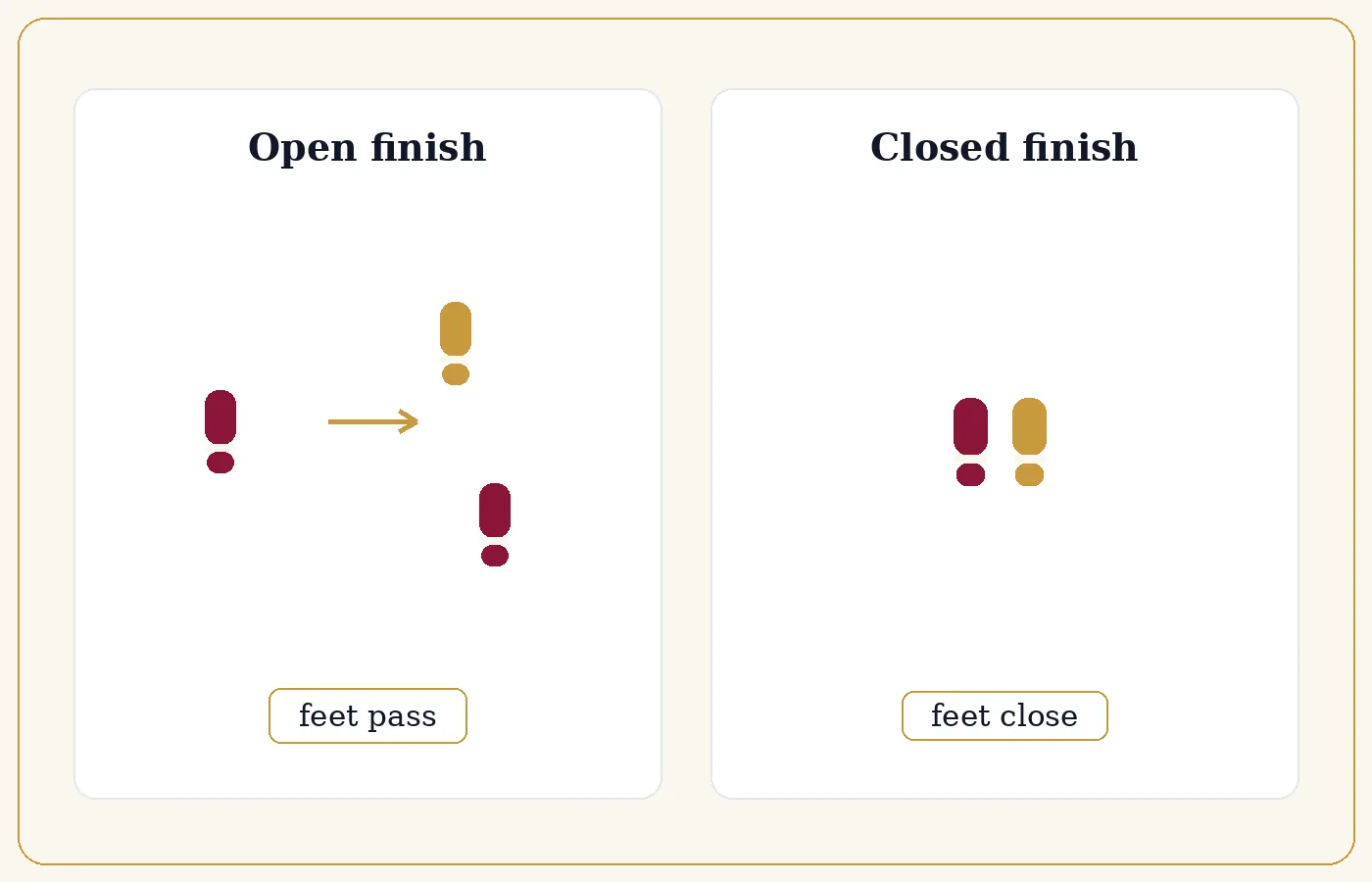
“Open” and “closed” describe what the feet do at the end of a turning figure. It is one of the most useful distinctions in ballroom, because whole families of figures differ only by their finish.
| Open finish | Closed finish |
|---|---|
| The feet pass each other | The feet close together |
| Often finishes with the follower outside | Finishes with partners in line |
| Keeps the movement traveling | Collects the couple, ready to restart |
| Open reverse turn | Closed reverse turn |
The steps, in plain English
Six steps over two bars of Tango, counted quick-quick-slow, quick-quick-slow. Here is the leader’s pattern for the most common version (lady outside):
Bar one — the forward half (Q, Q, S)
- Step 1 (Q): Left foot forward, turning left, with the body leading the rotation (CBM).
- Step 2 (Q): Right foot to the side, still turning—the follower is guided to step outside the leader.
- Step 3 (S): Left foot back, now backing the line of dance.
Bar two — the backward half (Q, Q, S)
- Step 4 (Q): Right foot back, continuing the left rotation.
- Step 5 (Q): Left foot to the side and slightly forward.
- Step 6 (S): Right foot forward—an open finish, feet passing, ready for the next figure.
Remember Tango’s ground rules while you dance it: stay flat (no rise and fall), keep the frame compact, and let the quicks be genuinely quick. The slow at the end of each bar is where the figure breathes.
Lady outside vs lady in line
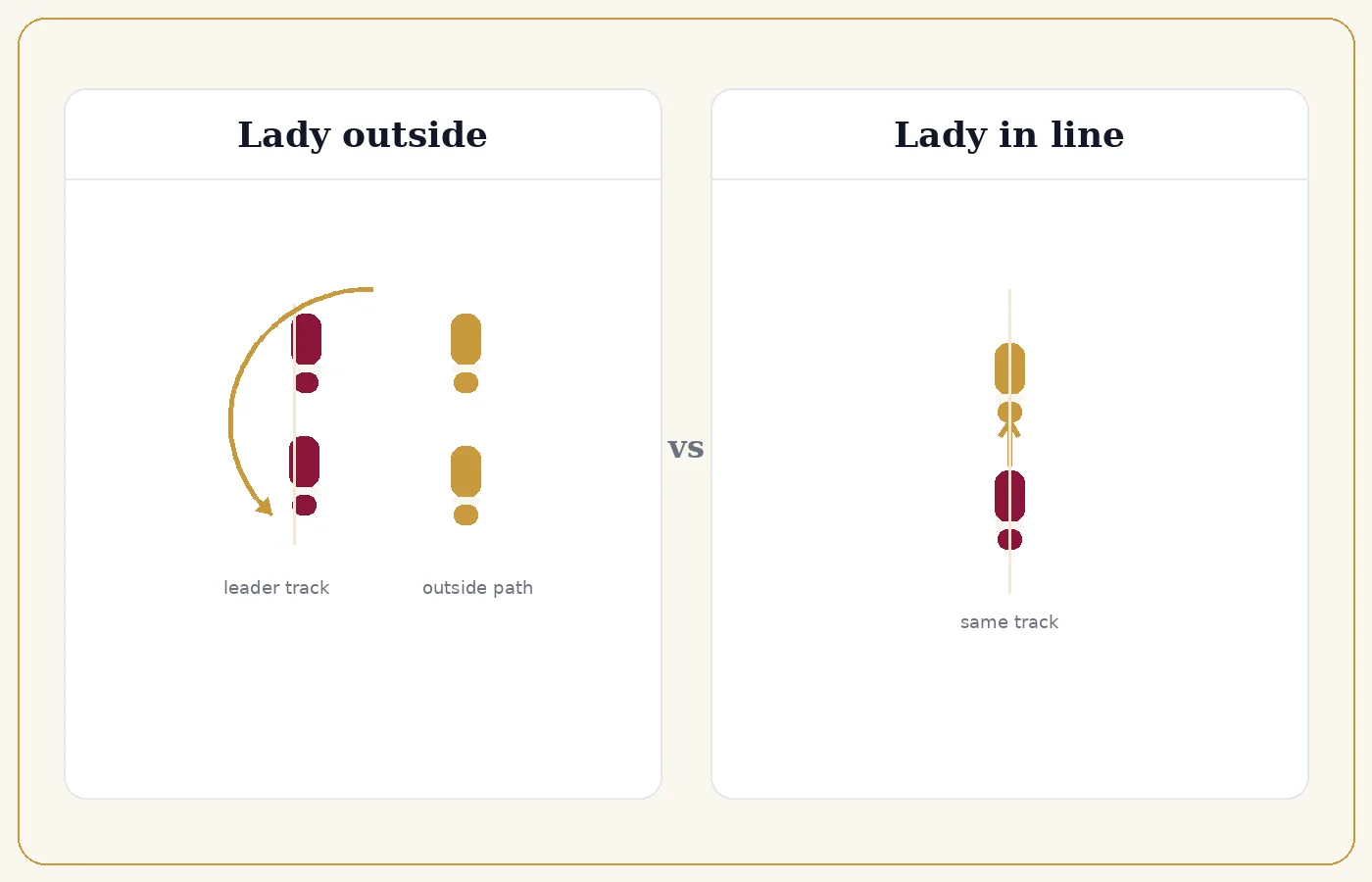
The open reverse turn comes in two syllabus versions, named for where the follower travels in the middle of the figure:
- Lady outside — the follower steps past the leader’s right side (outside partner position) rather than straight at them. This is the version most people learn first and use most, and it is the slightly harder one: dancing outside partner without losing body contact takes practice.
- Lady in line — the follower stays directly in front of the leader throughout. Simpler geometry, same turn.
Both finish open. If your studio just says “open reverse turn,” they almost always mean lady outside. The positions themselves—closed position, outside partner, promenade position—are worth knowing on their own; the figure moves through them.
Common open reverse turn mistakes
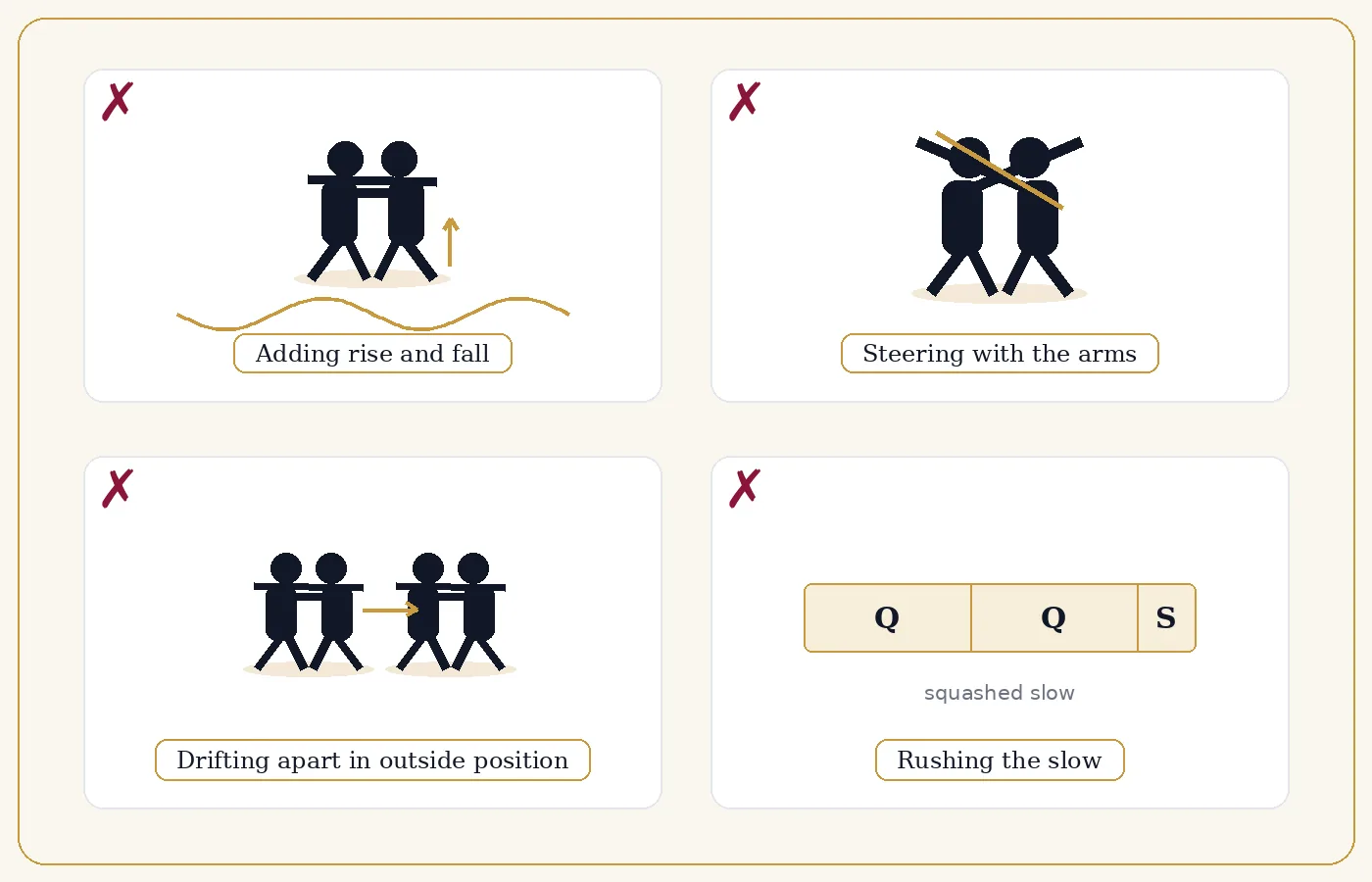
Adding Waltz-style rise and fall
Fix: Tango stays flat. Keep the knees softly flexed and glide level through the whole figure—no lifting on the quicks.
Steering the turn with the arms
Fix: The rotation starts in the body with CBM. The frame transmits the turn; it doesn’t create it.
Losing contact in outside partner position
Fix: “Outside” means the feet track outside—the bodies stay connected. Keep your center oriented to your partner as the follower passes.
Rushing the slows
Fix: QQS means the slow gets two beats. Let it land; the pause is what makes the quicks look sharp.
Practice the open reverse turn
Drill the shape slowly before you add Tango’s speed:
- Walk it without music. Six steps, calling the count out loud: quick-quick-slow, quick-quick-slow.
- Solo shadow practice. Dance your own part along a wall to keep the left rotation honest.
- Then add the music. Tango’s beat is heavy and regular—let it place the quicks for you.
-
Tango (home of the figure)
Grounded, staccato 4/4—practice the QQS count until it’s automatic.
-
Tango guide
The style behind the figure: character, hold, and basic patterns.
-
Lead & follow
How turns are actually communicated—essential for outside partner work.
-
BallroomPages Music (Telegram)
Mixed-style practice tracks. Figure drills coming soon.
FAQ
Open Reverse Turn FAQ
What is an open reverse turn?
A ballroom figure—most at home in Tango—that turns the couple to the left and finishes with the feet passing open instead of closing. It takes two bars, danced quick-quick-slow, quick-quick-slow, with the follower outside the leader or in line.
Why is it called “open”?
“Open” describes the finish: the feet pass each other at the end of the figure instead of closing together. A reverse turn whose feet close at the end is a closed reverse turn.
What is the difference between lady outside and lady in line?
In the lady-outside version the follower steps past the leader’s right side in outside partner position; in the in-line version the follower stays directly in front. Lady outside is the version most people learn first and use most, and the one usually meant by “open reverse turn.”
What is the timing of the open reverse turn?
In Tango it is danced quick-quick-slow, quick-quick-slow (QQS QQS) over two bars of 4/4—each quick takes one beat and each slow takes two.
Is the open reverse turn only danced in Tango?
Tango is where the name is most standard, but the idea—a left-turning figure with an open, passing finish—appears across the ballroom dances. Foxtrot and Quickstep have open-finishing reverse figures of their own; the open-vs-closed finish concept transfers everywhere.
Editorial
Sources and review notes
This glossary entry should be reviewed by a qualified ballroom instructor before launch. Step descriptions and timing follow widely used syllabus conventions (ISTD-style International Tango); studios vary in which version of the figure they teach first and how they name the finishes.
This is beginner orientation, not a substitute for instruction. Ballroom Pages follows an editorial policy of education-first guidance. Questions? Contact us. Updated July 9, 2026.