
Glossary
Closed Reverse Turn in Ballroom Dance
Every turning figure has to end somehow—and in ballroom, the ending has a name. A closed reverse turn is a left-turning figure that finishes with the feet closing together, collecting the couple neatly in closed position. It is the tidy sibling of the open reverse turn, and understanding the difference unlocks how whole figure families are named. Here is what “closed” really means, where each dance uses it, and how to close your feet without stalling the dance.
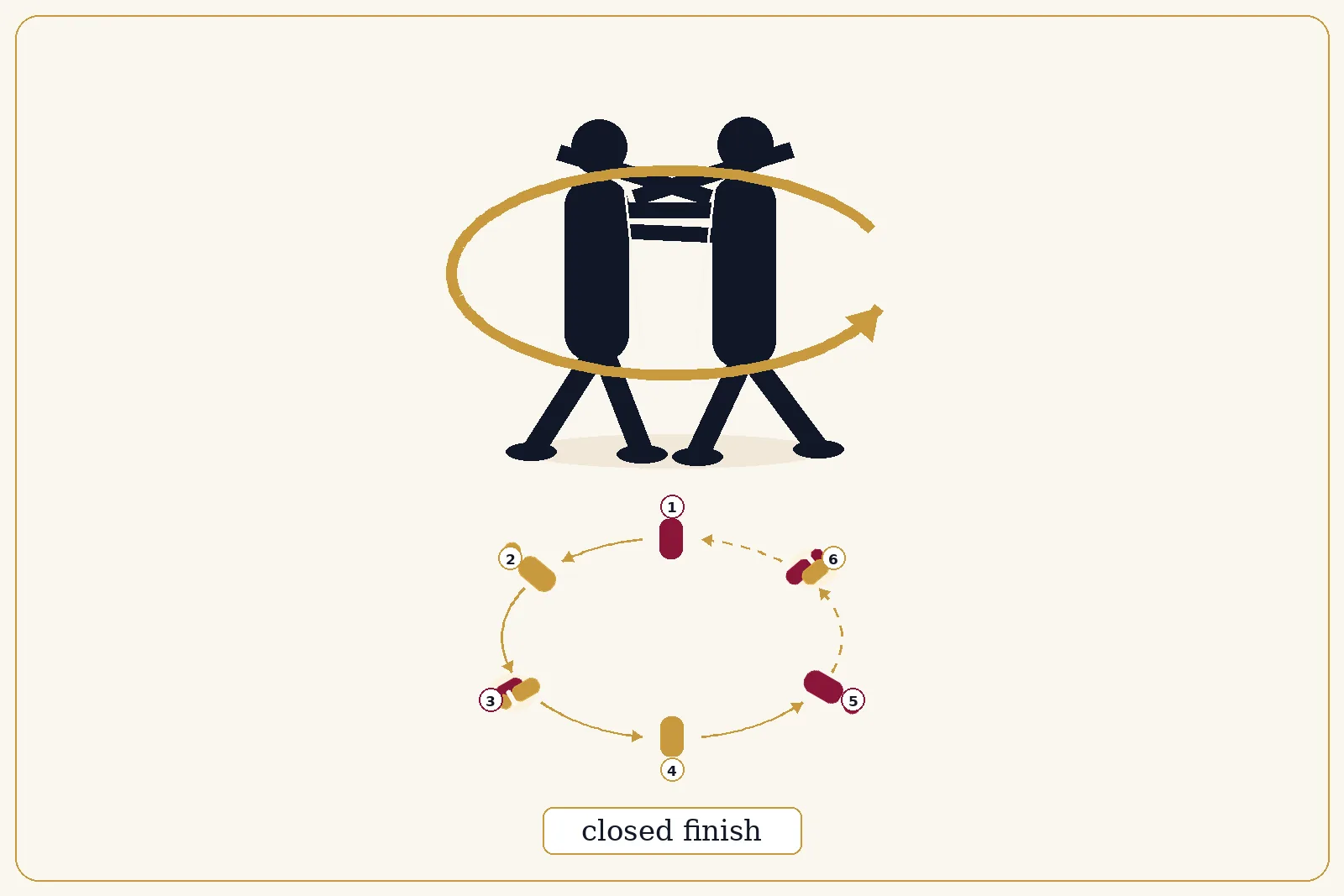
Definition of closed reverse turn
Closed Reverse Turn
- Key concept
- The closed finish (feet close together)
- Skill category
- Figures & turns
- Companion term
- Open reverse turn (the passing finish)
- Related terms
- reverse turn, closed position, chassé, CBM
A closed reverse turn is a ballroom figure that turns the couple to the left (counterclockwise) and finishes with the feet closing together—a closed finish—leaving the partners collected in closed position. The Waltz reverse turn closes its feet by design; in Tango, the closed reverse turn is the reverse turn danced with a closing finish.
“Closed” is the finish, not the hold: the feet come home at the end of the turn.
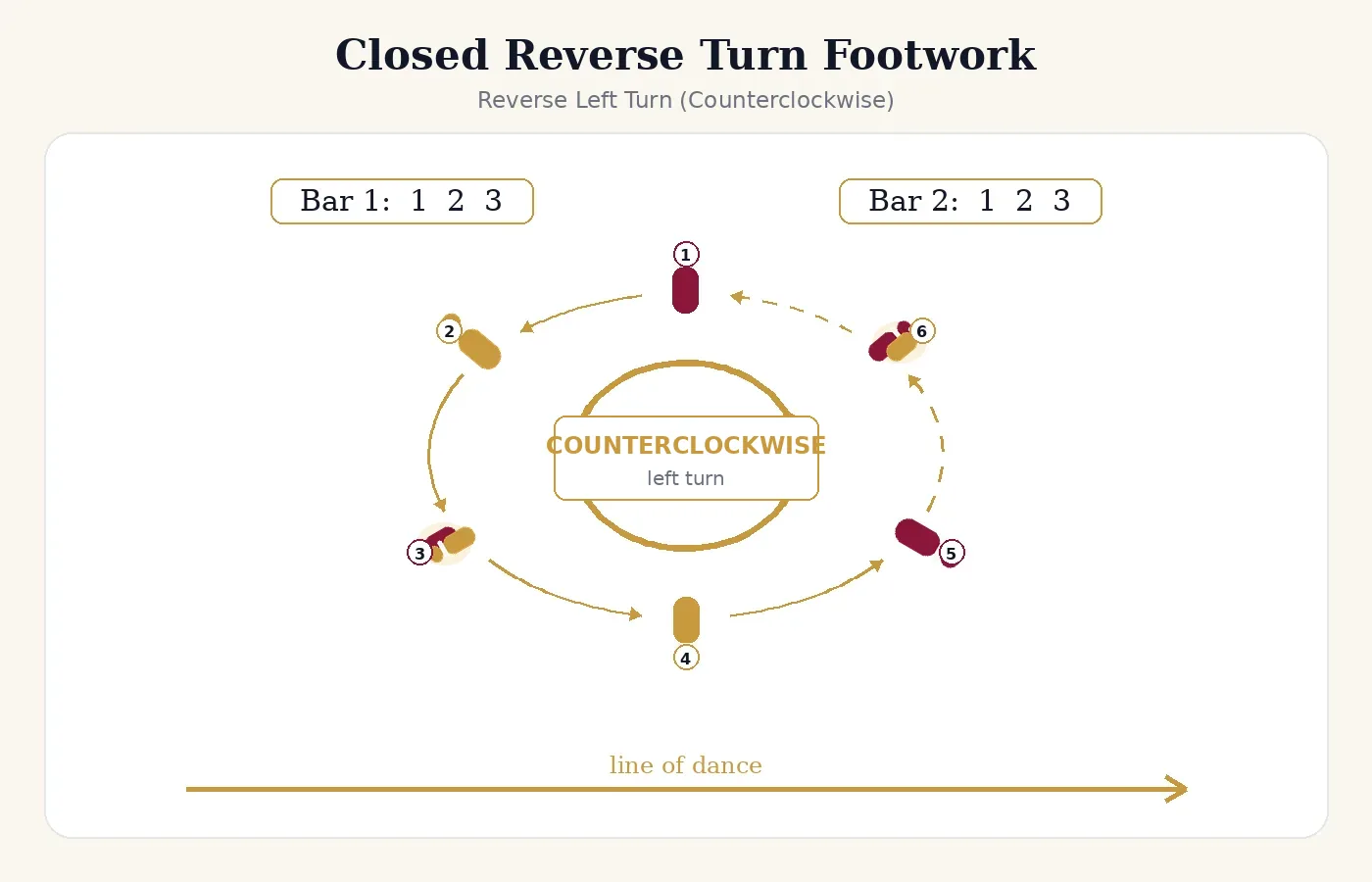
What the closed reverse turn is
Take the two words in reverse order. Reverse means the figure rotates to the left—counterclockwise—the opposite of a natural turn. Closed describes how it ends: on the final step, the moving foot closes to the standing foot with a change of weight, and the couple finishes collected, partner in line, in closed position.
If you have danced a Waltz reverse turn, you already know the feeling—its feet close on beat 3 of each bar, which is exactly the closing action we are talking about. In Tango, “closed reverse turn” is a specific named figure that pairs with the open reverse turn: same left rotation, different ending. Once you can tell the two finishes apart, syllabus names across every dance suddenly make sense—closed changes, closed promenade, open finish, open impetus: the words are doing the same job everywhere.
The closed finish vs the open finish
The finish is a one-step difference with a big practical effect:
| Closed finish | Open finish |
|---|---|
| The feet close together with a weight change | The feet pass each other |
| Finishes partner in line | Often finishes with the follower outside |
| Collects the couple—a neutral restart point | Keeps the movement traveling |
| Closed reverse turn | Open reverse turn |
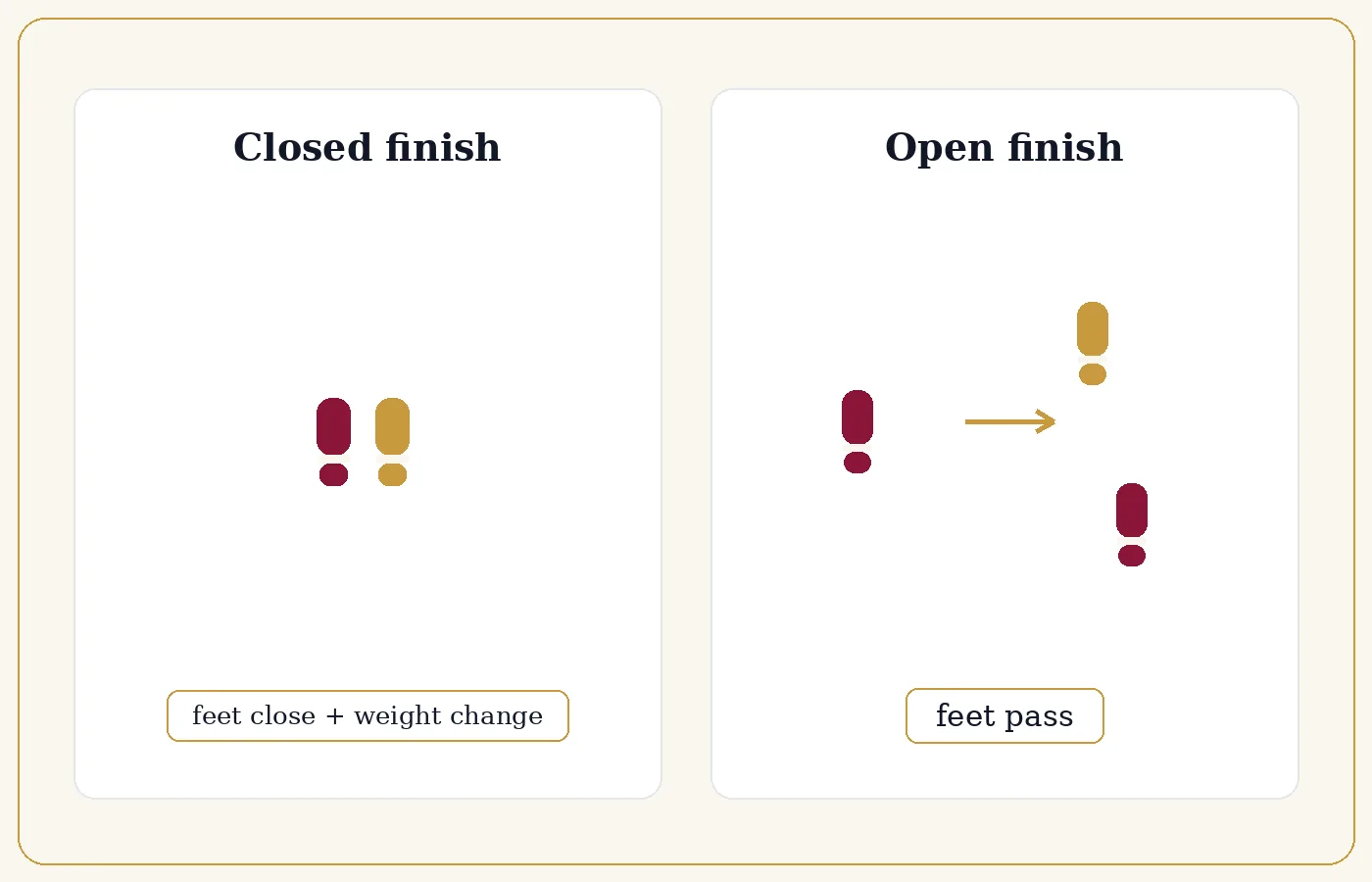
Neither finish is “better.” Closed finishes give you control and a clean restart—ideal when learning, or on a crowded floor. Open finishes keep momentum flowing—which is why dances that prize continuous travel lean on them more as you advance.
The steps, in plain English
The clearest beginner example is the Waltz reverse turn, danced over two bars. Here is the leader’s pattern (the follower mirrors):
Bar one — the forward half (1, 2, 3)
- Step 1: Left foot forward, turning left, body leading the rotation (CBM).
- Step 2: Right foot to the side, continuing to turn.
- Step 3: Left foot closes to the right foot—first closed finish; the leader now backs the line of dance.
Bar two — the backward half (1, 2, 3)
- Step 4: Right foot back, still turning left.
- Step 5: Left foot to the side.
- Step 6: Right foot closes to the left foot—second closed finish; the couple is collected and ready for the next figure.
In Tango the closed reverse turn follows the same logic at Tango’s flat, staccato character and quick-quick-slow timing—the defining moment is still that final closing step with a full change of weight.
The closed finish by dance style
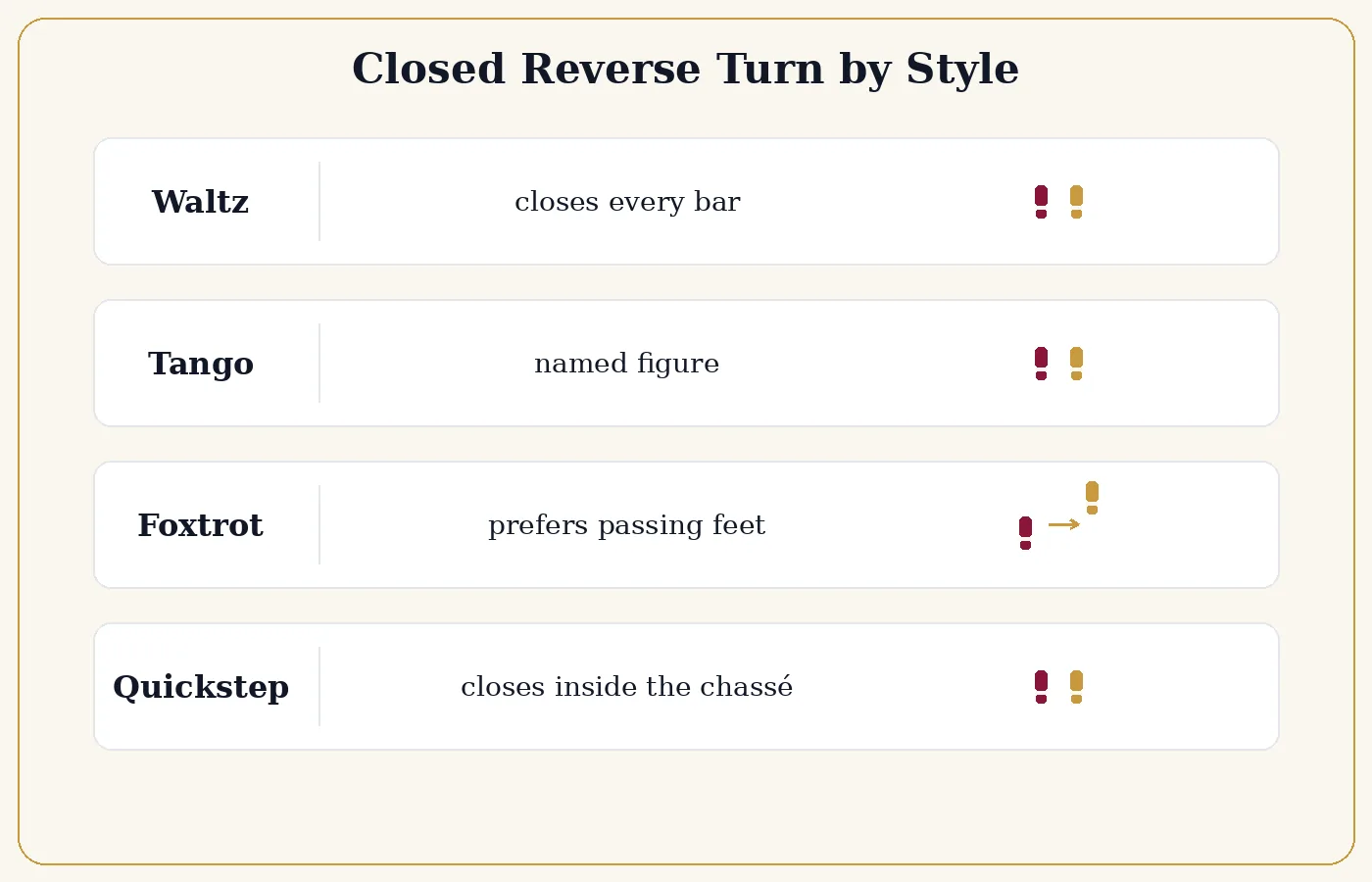
| Dance | What happens |
|---|---|
| Waltz | The basic reverse turn closes the feet at the end of each bar—closed finishes are the default |
| Tango | “Closed reverse turn” is a named figure, paired with the open reverse turn |
| Foxtrot | Prefers passing feet—its reverse turn ends in a feather-style open finish |
| Quickstep | Reverse turning figures often pair with a chassé, closing feet on the way |
Common closed reverse turn mistakes
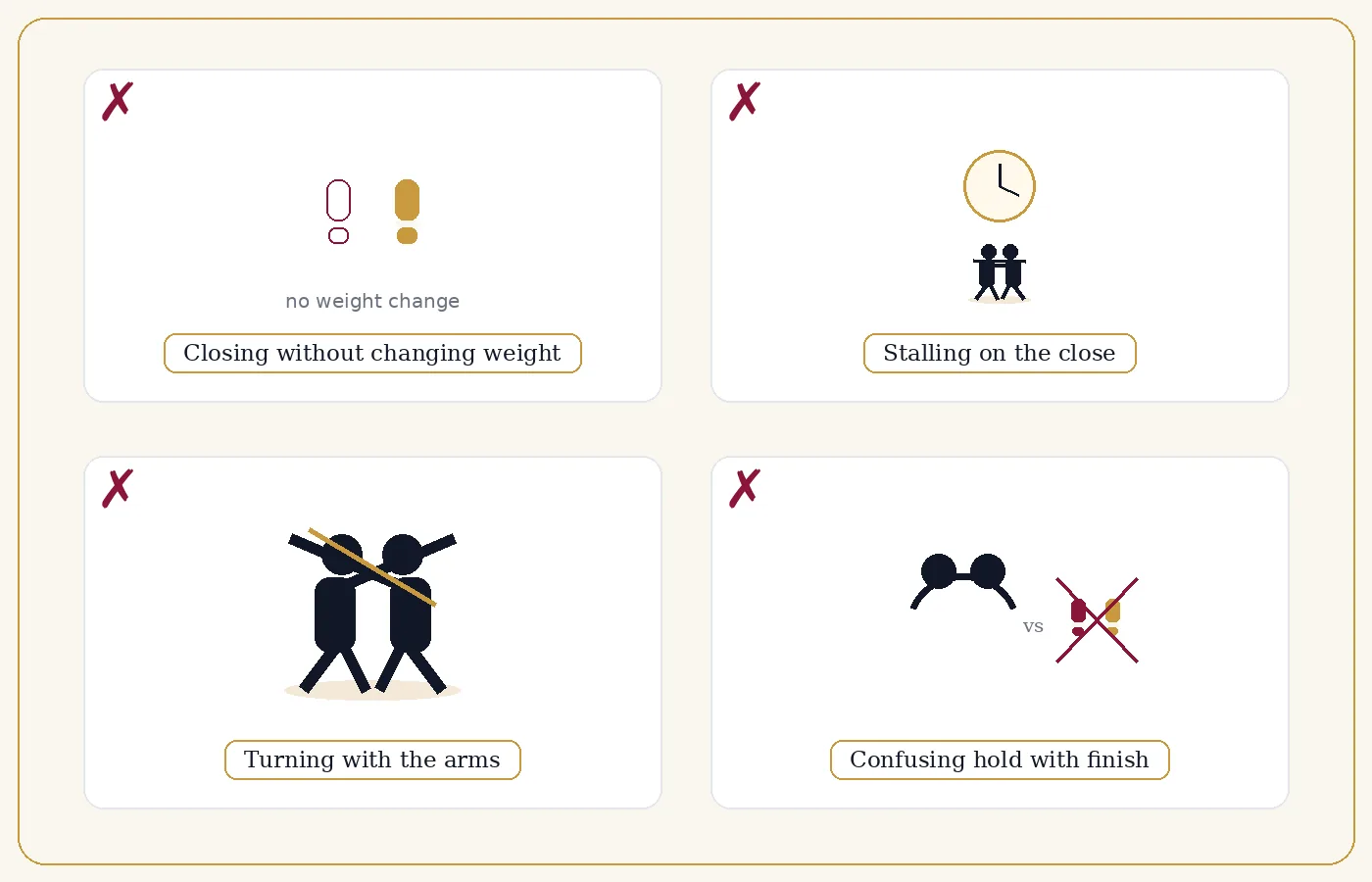
Closing the feet without changing weight
Fix: A closed finish includes a full weight change onto the closing foot. Close-and-stand leaves you on the wrong foot for the next figure.
Stalling on the close
Fix: The close is a landing, not a parking spot. Collect, breathe, and let the next figure begin—the music keeps moving.
Turning with the arms instead of the body
Fix: Start the rotation with CBM and keep the frame steady—the turn travels through the body, not the hands.
Confusing the hold with the finish
Fix: “Closed” here describes the feet, not the embrace. You can dance an open finish in closed position—the words name different things.
Practice the closed finish
Closing the feet cleanly is a skill of its own:
- Slow-motion closes. Step side, then drag the closing foot in and change weight fully, checking your balance before moving on.
- Waltz reverse turns around a square. Two bars per side—the closes keep you honest at every corner.
- Alternate finishes. Once both feel stable, dance a closed finish, then an open one, and feel the difference in momentum.
-
Waltz (the reference example)
The clearest closed-footed reverse turn—feel the close on every “3.”
-
Tango (the named figure)
Practice the closing finish at Tango’s flat, staccato character.
-
Technique library
Frame, posture, and partnering skills that make clean closes possible.
-
BallroomPages Music (Telegram)
Mixed-style practice tracks. Figure drills coming soon.
FAQ
Closed Reverse Turn FAQ
What is a closed reverse turn?
A ballroom figure that turns the couple to the left and finishes with the feet closing together—a closed finish—leaving the partners collected in closed position. In Tango it is a specific named figure; in Waltz, the basic reverse turn closes its feet by design.
What is the difference between a closed and an open finish?
In a closed finish the moving foot closes to the standing foot with a change of weight, finishing partner in line. In an open finish the feet pass each other, often with the follower stepping outside, and the movement keeps traveling.
Which dances use the closed reverse turn?
The closing idea appears everywhere. Waltz closes the feet in its basic reverse turn; Tango names the closed reverse turn as a figure alongside the open reverse turn; Quickstep closes feet inside its chassé-based reverse figures. Foxtrot is the outlier—it prefers passing feet.
Is the Waltz reverse turn a closed reverse turn?
Effectively, yes—the basic Waltz reverse turn finishes each half by closing the feet, which is exactly a closed finish. The term “closed reverse turn” as a figure name is most standard in Tango, but the action is the same.
Do the feet actually touch in a closed finish?
They come together side by side—close enough to touch—and, crucially, the weight changes onto the closing foot. The weight change is what makes it a real close rather than a tap; without it you start the next figure on the wrong foot.
Editorial
Sources and review notes
This glossary entry should be reviewed by a qualified ballroom instructor before launch. Finish terminology and step descriptions follow widely used syllabus conventions (ISTD-style International Standard); figure names and levels vary between syllabi—Tango’s closed-footed reverse turn appears at different levels in different systems.
This is beginner orientation, not a substitute for instruction. Ballroom Pages follows an editorial policy of education-first guidance. Questions? Contact us. Updated July 9, 2026.