
Glossary
Ball Change in Ballroom Dance
If you’ve taken a Jive, Cha Cha, or jazz class, you’ve heard it called out like a heartbeat: “ball change, ball change.” A ball change is a quick, cheeky little two-part weight change—onto the ball of one foot, then straight back onto the other—squeezed into half a beat. It’s tiny, it’s everywhere, and it’s the engine behind syncopated footwork. Here is exactly what it is, how it’s counted, and how to keep it light.
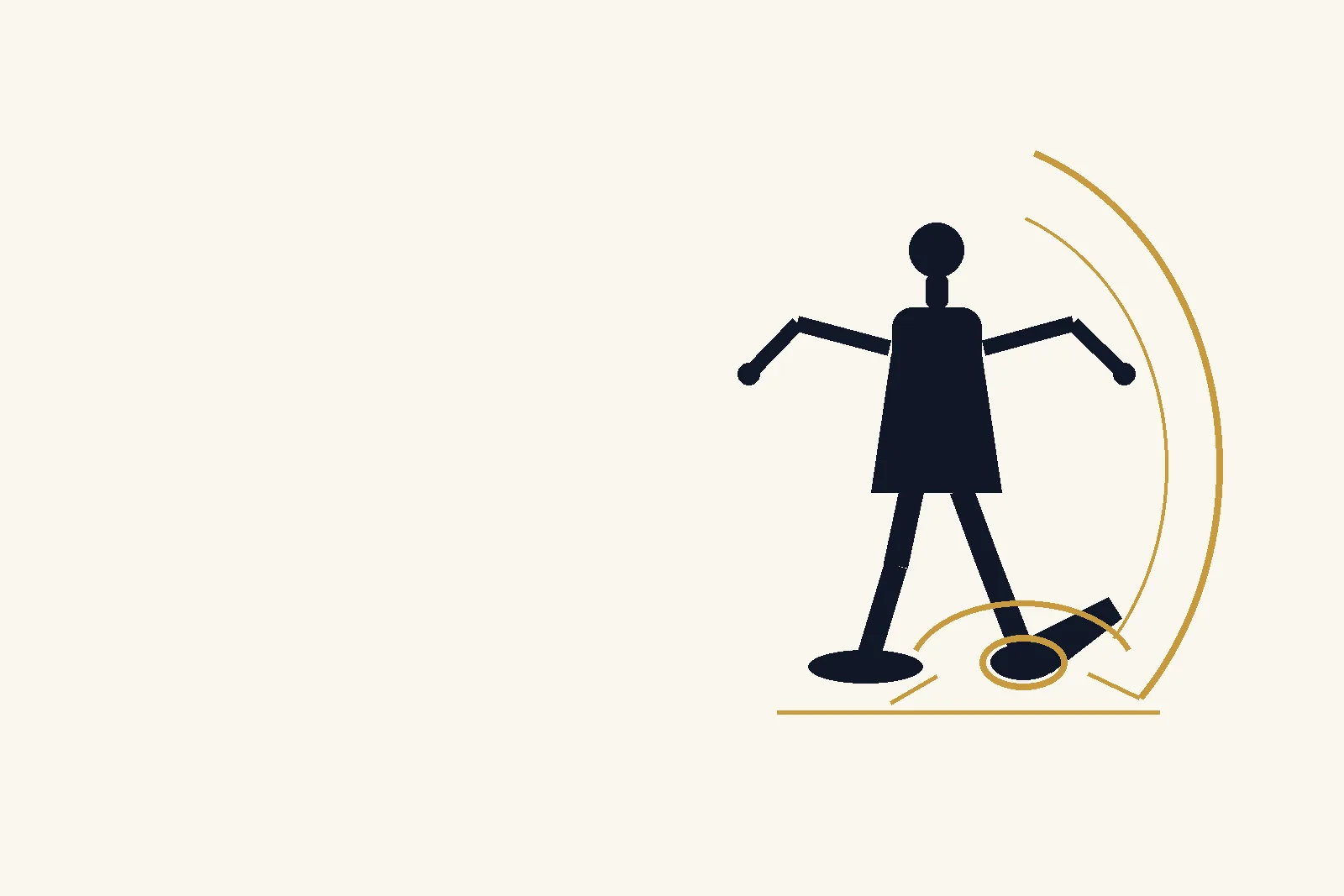
Definition of the ball change
Ball Change
- Skill category
- Steps & rhythm (syncopated)
- Also called
- Ball-change; kick ball change (variant)
- Companion term
- Weight transfer (what it’s made of)
- Related terms
- weight transfer, triple step, rock step, syncopation, quick timing
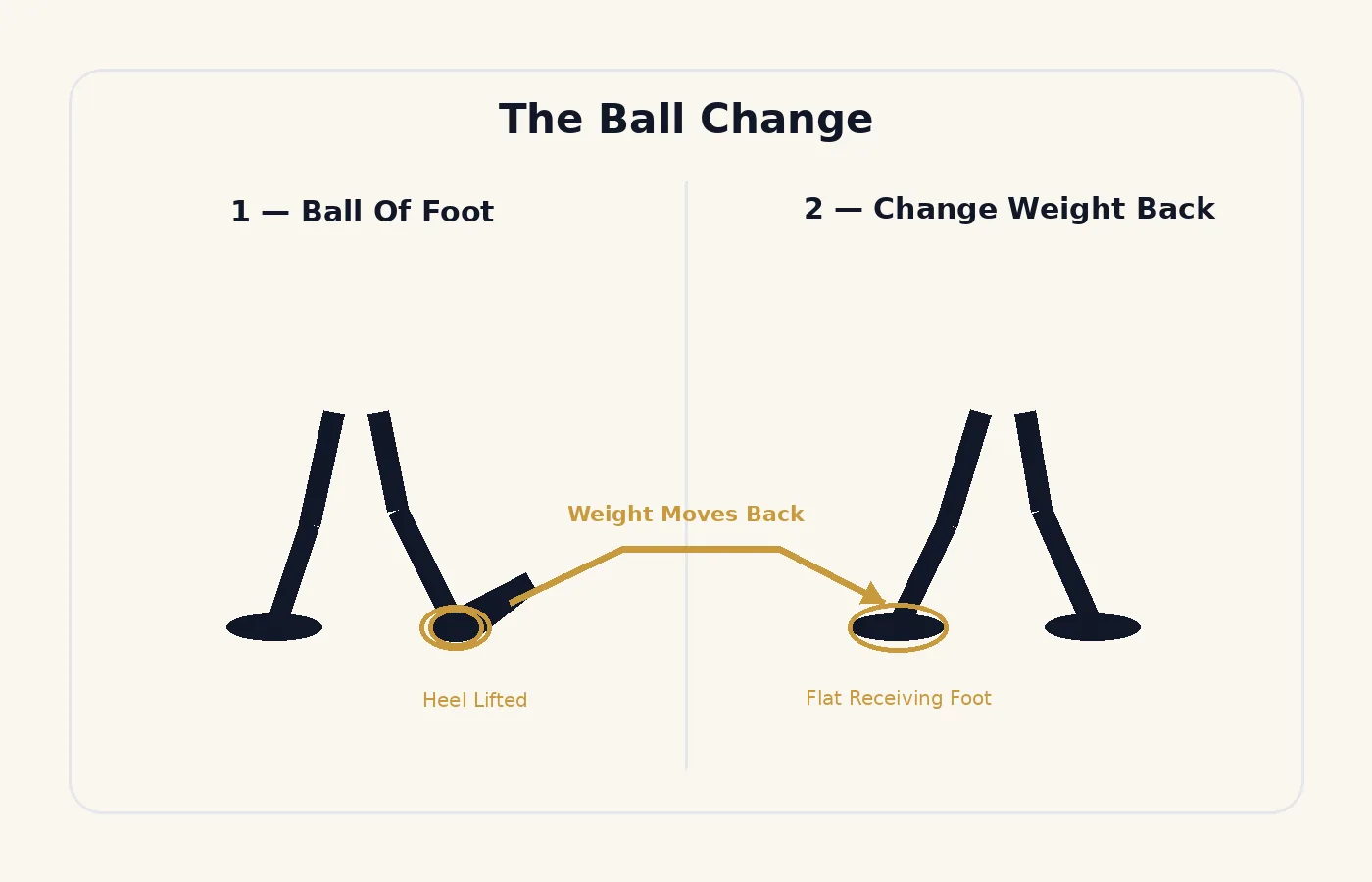
A ball change is a quick two-part weight change: step onto the ball of one foot, then immediately change your weight back onto the other foot—usually on a syncopated “and-one.” Two fast weight transfers in the space of a single step.
Two little weight changes, one quick breath of music. Say it out loud: “and—one.”
What a ball change means in dance
A ball change packs two weight changes into one quick moment. You place the ball of one foot down—often behind you or in place, taking your weight for just an instant—and then change your weight straight back onto the other foot. Because it happens on a fast “and” count, it feels like a single springy action rather than two separate steps, and it gives footwork that bouncy, syncopated snap.
It is one of the most portable moves in dance. The same little ball change you learn in a Jive or Cha Cha class turns up in swing, salsa, musical-theatre routines, and cheerleading. Once your body knows the “and-one” feeling, you start spotting it everywhere.
How a ball change is counted
The counting is the whole trick—it is a syncopated action that borrows time from the “and” between beats:
| Count | What happens |
|---|---|
| “and” (&) | Step onto the ball of one foot—quick and light, taking your weight for an instant |
| “one” (1) | Change your weight back onto the other foot, landing on the beat |
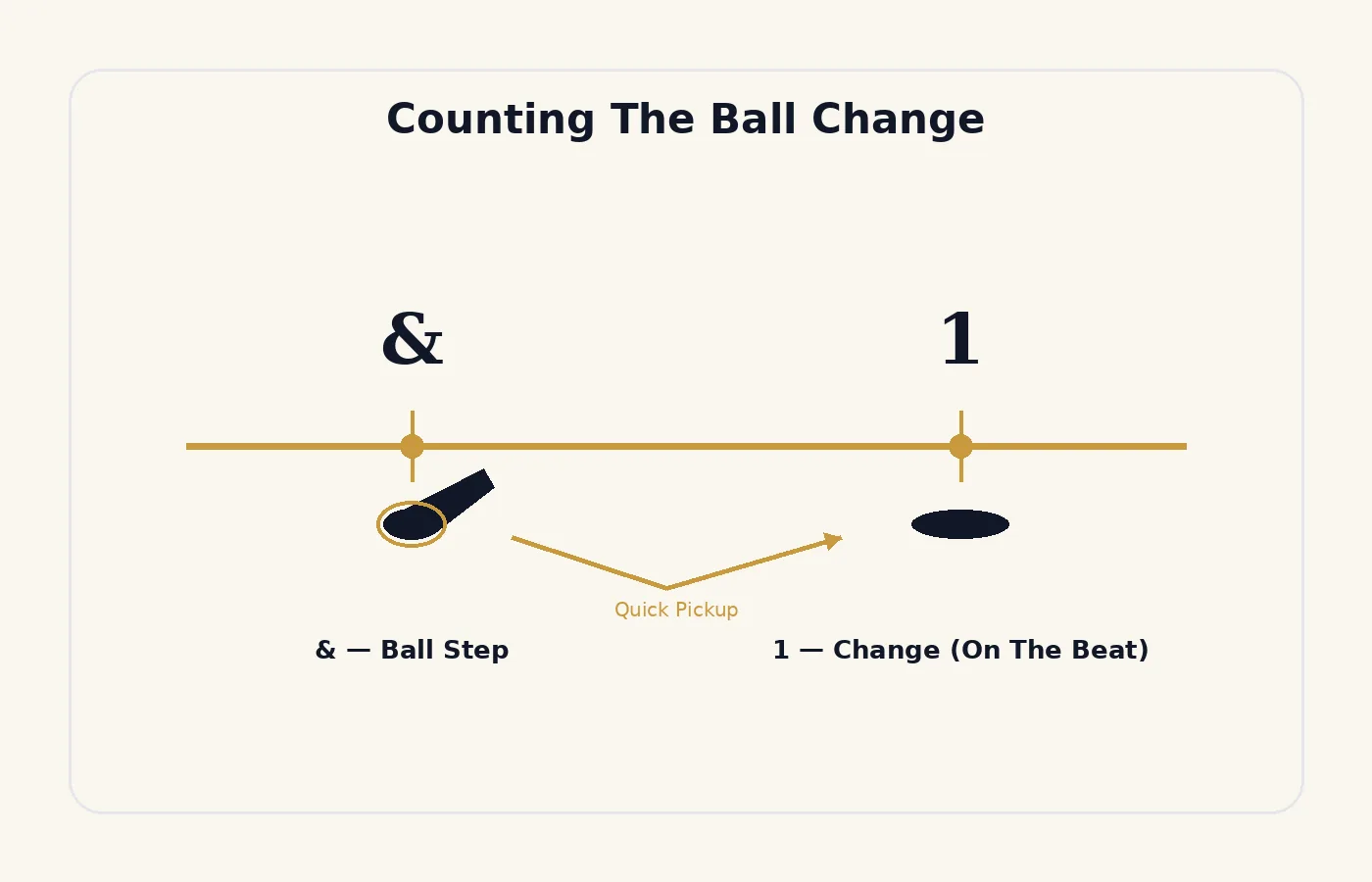
The “and” is fast and the “one” is on the beat—so a ball change actually finishes on the count, not before it. Rushing the “one” is the most common way it goes wrong.
How the ball change works
Three things keep it light and clean:
What makes a good ball change
- On the ball. The first step lands on the ball of the foot, not flat—that’s what keeps it springy and quick.
- Small and under you. It is a compact change of weight, usually right under the body—not a big travelling step.
- Two real transfers. Both parts genuinely take weight. If the second one doesn’t fully transfer, you’re left stranded on the wrong foot for the next move.
Done well, the ball change is barely visible—a quick, bouncy pulse that resets your feet so the next step starts cleanly. It is close kin to the rock step and the triple step: all three are small weight-change patterns that live on the “and” counts.
The kick ball change
The most famous version adds a kick on the front: kick—ball—change. You kick one foot (count “a” or the upbeat), step onto the ball of that same foot as it comes back, then change weight to the other foot on the beat. It is a jazz and musical-theatre staple—you have seen it in a hundred stage routines—and it is the same core action as a plain ball change, just with a kick tacked onto the front for flair. If you can dance a ball change, the kick ball change is one added kick away.
Ball change by dance style
Same “and-one” action, worn a little differently in each dance:
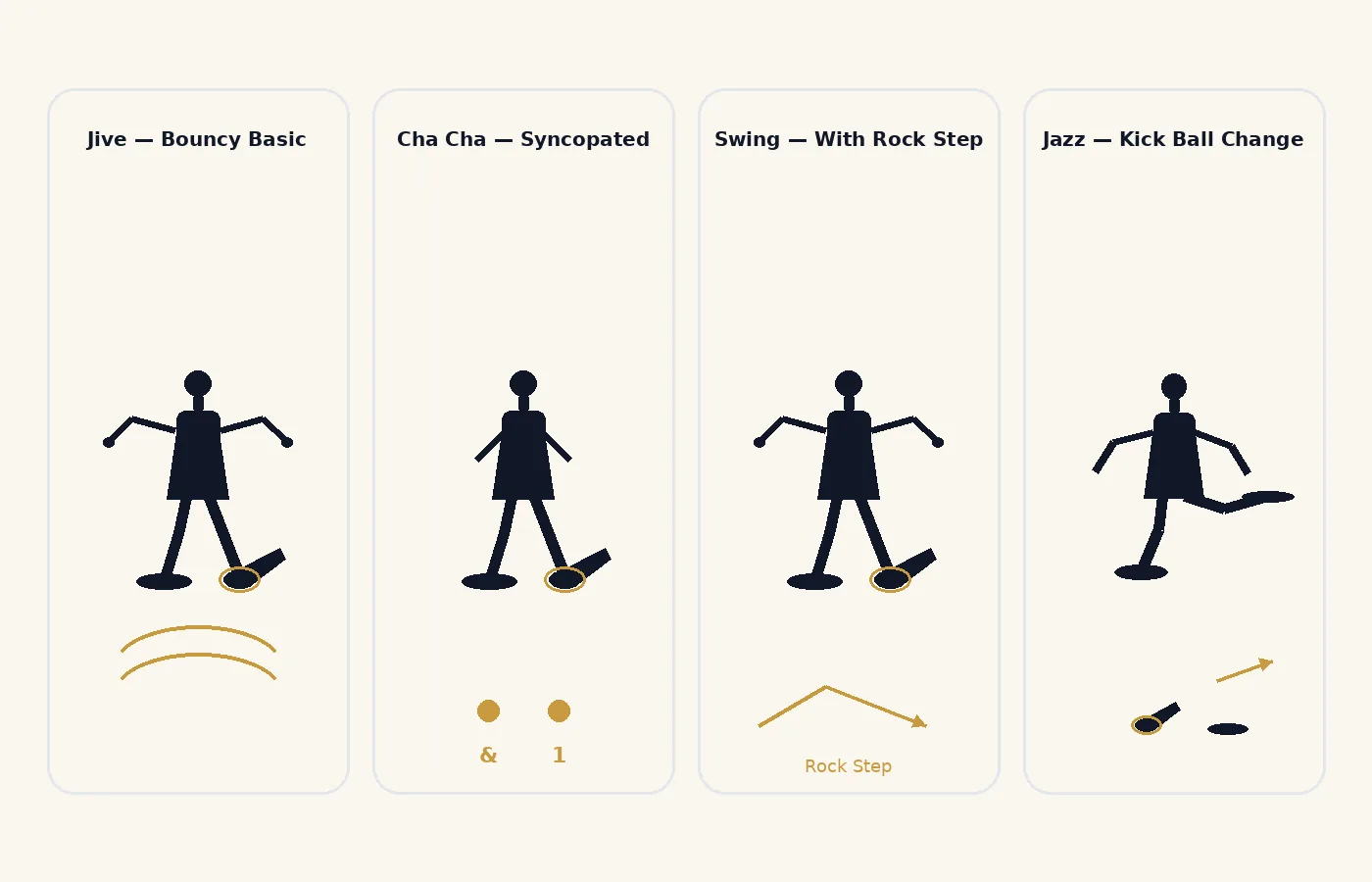
Common ball-change mistakes
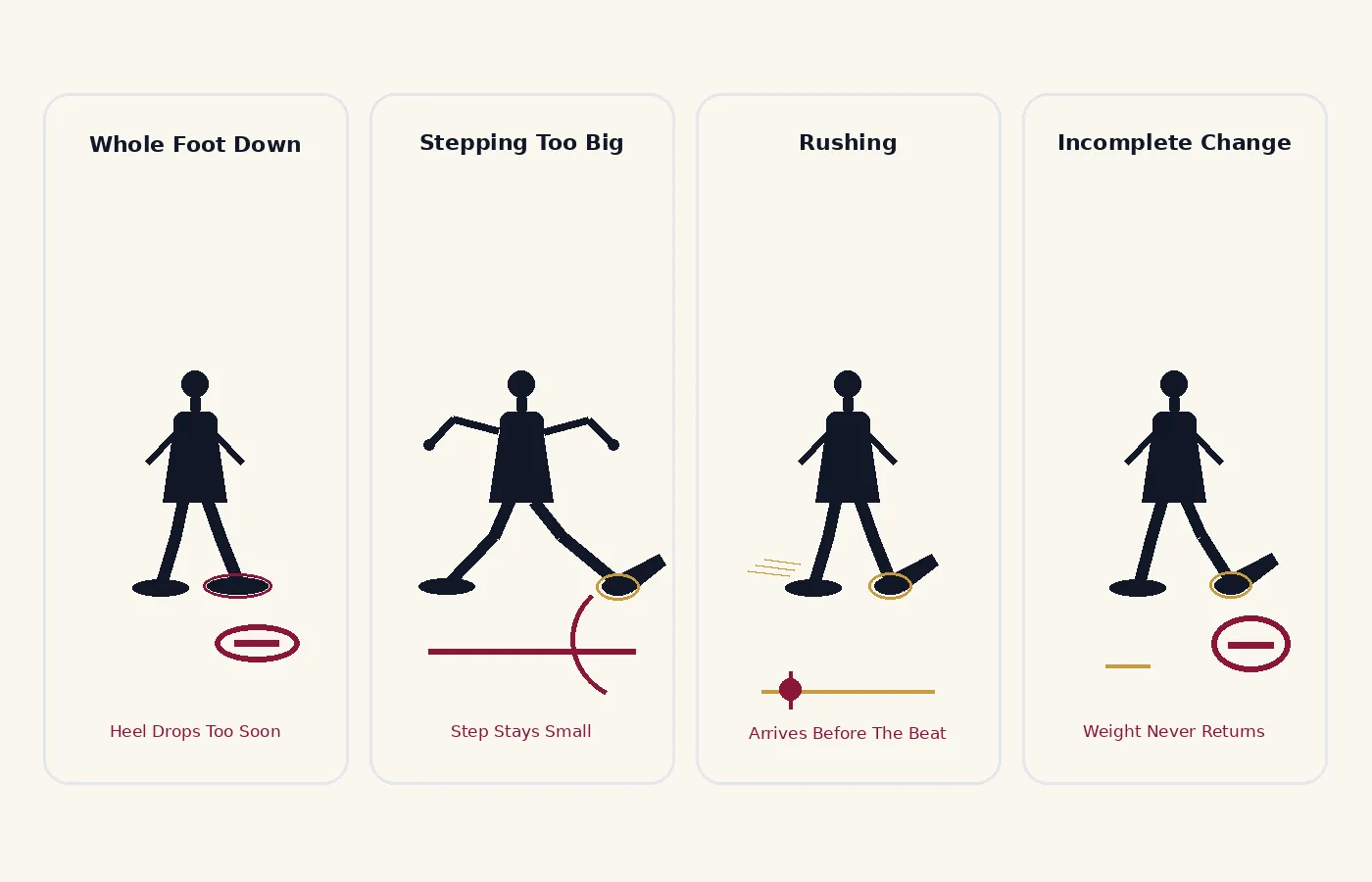
Putting the whole foot down
Fix: The first step is on the ball of the foot, not flat. A flat foot kills the spring and slows the change.
Stepping too big
Fix: A ball change is small and stays under you. A big travelling step turns it into a rock step or a lunge.
Rushing the “one”
Fix: The change back lands on the beat. The “and” is the quick part; don’t let the “one” arrive early.
An incomplete change
Fix: Both steps take real weight. If the second doesn’t fully transfer, your next step starts on the wrong foot.
Practice the ball change
It’s a rhythm skill—drill it out loud and slow:
- Say it and step it. Standing in place, chant “and–one” and match it: ball of the right foot on “and,” weight back to the left on “one.” Repeat both directions.
- Ball first. Exaggerate landing on the ball of the foot so the flat-foot habit never forms—then let it get small and natural.
- Add the kick. Once “and-one” is automatic, add a small kick before it for a kick ball change—kick, ball, change.
-
Quickstep (bright & bouncy)
Upbeat swing tempo—good energy for practising the springy “and-one.”
-
Jive & swing guides
The bouncy dances where the ball change lives—see it in context.
-
Weight transfer & rock step
The building blocks—a ball change is two quick weight changes.
-
BallroomPages Music (Telegram)
Mixed-style practice tracks. Rhythm drills coming soon.
FAQ
Ball Change FAQ
What is a ball change in dance?
A ball change is a quick two-part weight change: you step onto the ball of one foot and immediately change your weight back onto the other foot, usually on a syncopated “and-one” count. It gives footwork a light, springy, syncopated feel.
How do you count a ball change?
Most often “and-one” (&1): the ball step happens on the quick “and,” and the change back to the other foot lands on the beat, “one.” The action finishes on the count, not before it.
What is a kick ball change?
A kick ball change is a ball change with a kick added on the front: kick, then step on the ball of that foot, then change weight to the other foot on the beat. It is a jazz and musical-theatre staple, built on the same core action as a plain ball change.
Which dances use the ball change?
Lots of them: Jive, Cha Cha, East Coast and West Coast Swing, salsa, and—as the kick ball change—jazz, musical theatre, and cheer. It is one of the most portable rhythm actions in dance.
What is the difference between a ball change and a rock step?
Both are small two-part weight changes, but a rock step rocks the weight back and forward with a bit more travel and body movement, while a ball change is smaller, lighter, on the ball of the foot, and usually squeezed onto an “and” count. In swing they often appear together.
Editorial
Sources and review notes
This glossary entry should be reviewed by a qualified dance instructor before launch. The ball change spans ballroom, swing, and jazz—the descriptions follow widely used conventions, but the exact counts and per-style usage (especially the kick ball change) deserve expert verification before being treated as teaching material.
This is beginner orientation, not a substitute for instruction. Ballroom Pages follows an editorial policy of education-first guidance. Questions? Contact us. Updated July 9, 2026.