
Glossary
Hip Action in Latin Dance
The hips are what everyone notices in Latin dancing—and what almost every beginner tries to fake. The secret professionals know: you never push your hips. The movement comes from your legs. Here is what Latin hip action really is, why it starts at the knees, how each rhythm dance uses it, and the mistakes that make it look forced.
Definition of hip action
Hip action
- Pronunciation
- hip AK-shun
- Skill category
- Technique & body
- Companion term
- Cuban motion (the engine of hip action)
- Related terms
- Cuban motion, Latin motion, weight transfer, leg action, knees, settle
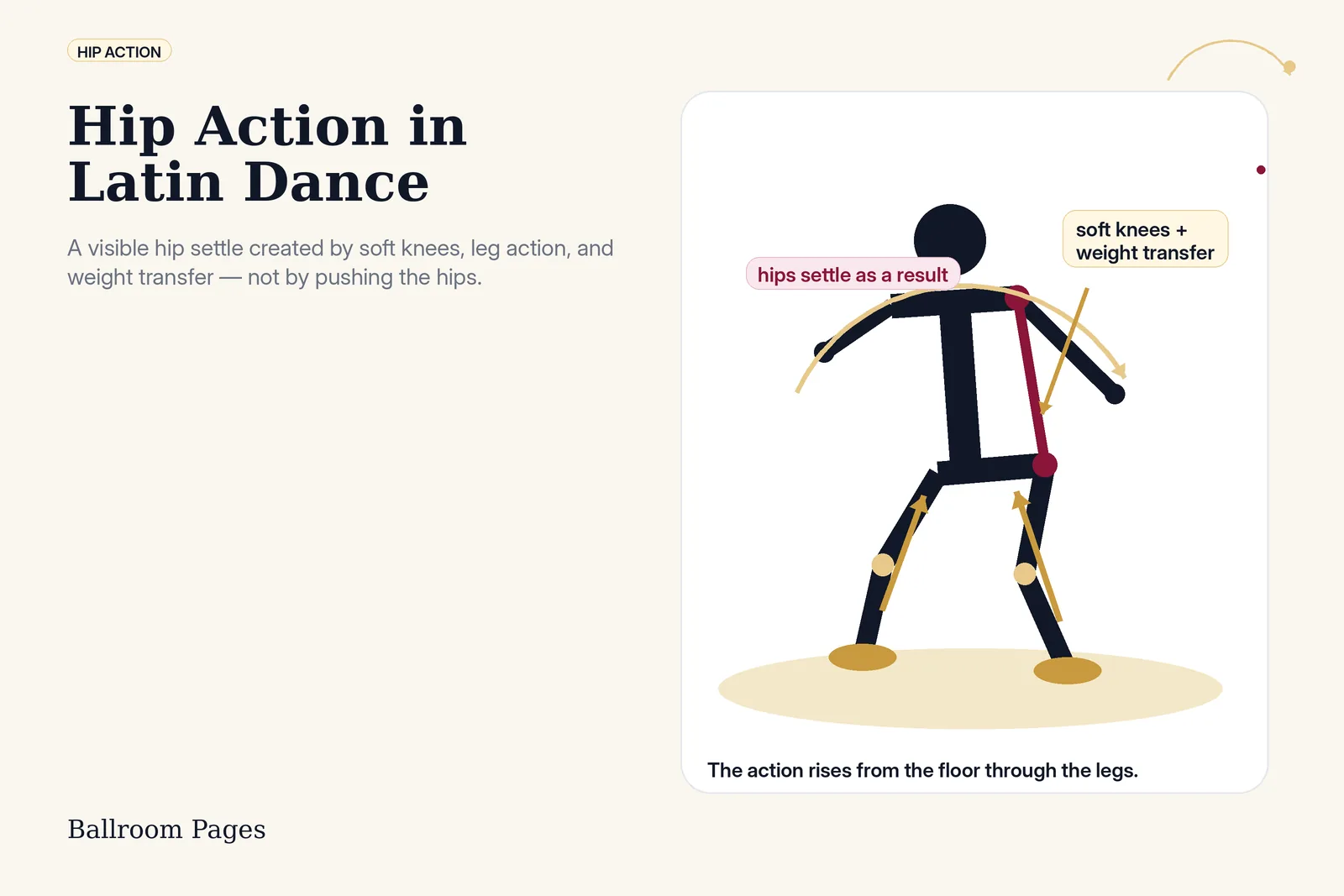
In Latin ballroom dance, hip action is the rhythmic movement of the hips that gives Rumba, Cha Cha, and other rhythm dances their look. Despite the name, it is created by the legs—bending and straightening the knees with each weight transfer—not by pushing the hips. It is the visible result of Cuban motion.
You do not make hip action. You let it happen—from the legs up.
What hip action means in Latin dance
Hip action is the rolling, settling movement of the hips that gives Latin dancing its unmistakable feel. In dances like Rumba and Cha Cha, the hips move continuously with the rhythm, and it is the first thing an audience sees.
But hip action is a result, not an effort. It is what your body produces when your legs do their job correctly. Understanding that one idea is the difference between hip action that looks natural and hip action that looks forced.
The key truth: it is a leg action
Here is the point most beginners miss: Latin hip action comes from the legs, not the hips. The hips move because the knees bend and straighten as your weight transfers from one foot to the other. You do not push the hips out; you let them respond to what the legs are doing.
Think of climbing a flight of stairs. Each step is taken with a bent knee that straightens as you rise. That same bend-and-straighten, done on a flat floor with your weight settling onto each leg, is what swings the hips. Chase the hips directly and you get a stiff wiggle; work the legs and the hips move on their own.
How hip action works
Four things happen together on every Latin step:
The hip-action sequence
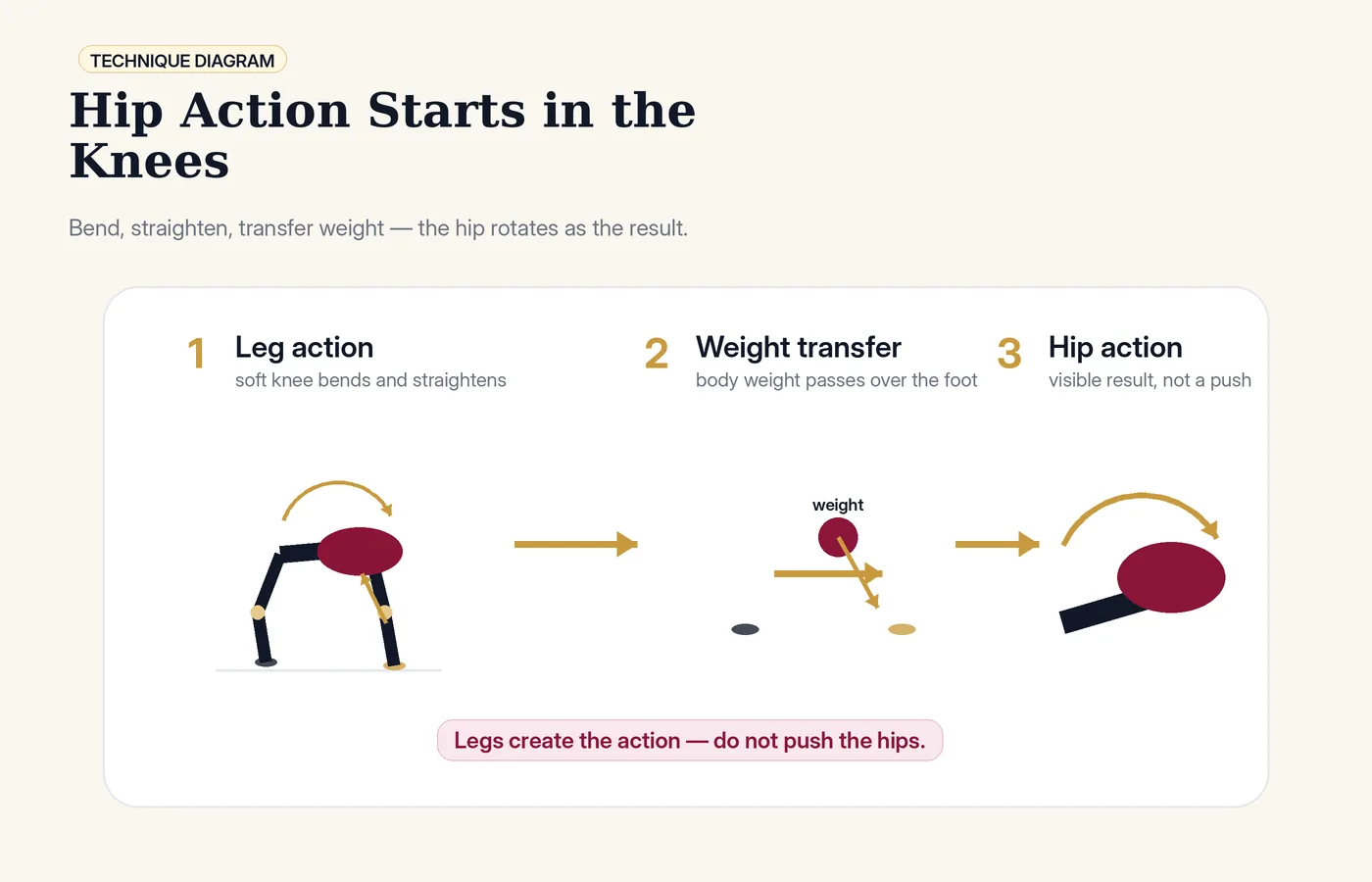
- Soft knees. The knees stay slightly bent at all times—never locked.
- Transfer weight. Move your weight fully onto the stepping foot.
- Straighten the leg. As weight arrives, the receiving leg straightens, which lifts and rotates that hip.
- Settle. The hip settles over the standing leg, ready for the next transfer.
Repeated with the music, this bend-transfer-straighten-settle cycle produces the smooth figure-eight the hips trace in Rumba and Cha Cha.
Hip action vs Cuban motion vs Latin motion
Three terms that overlap so much they are often used interchangeably. The clean way to separate them:
| Term | What it refers to |
|---|---|
| Hip action | The visible hip movement (the result) |
| Cuban motion | The specific leg-and-knee technique that creates it (the engine) |
| Latin motion | The whole grounded, hip-led body action of the Latin dances (the overall look) |
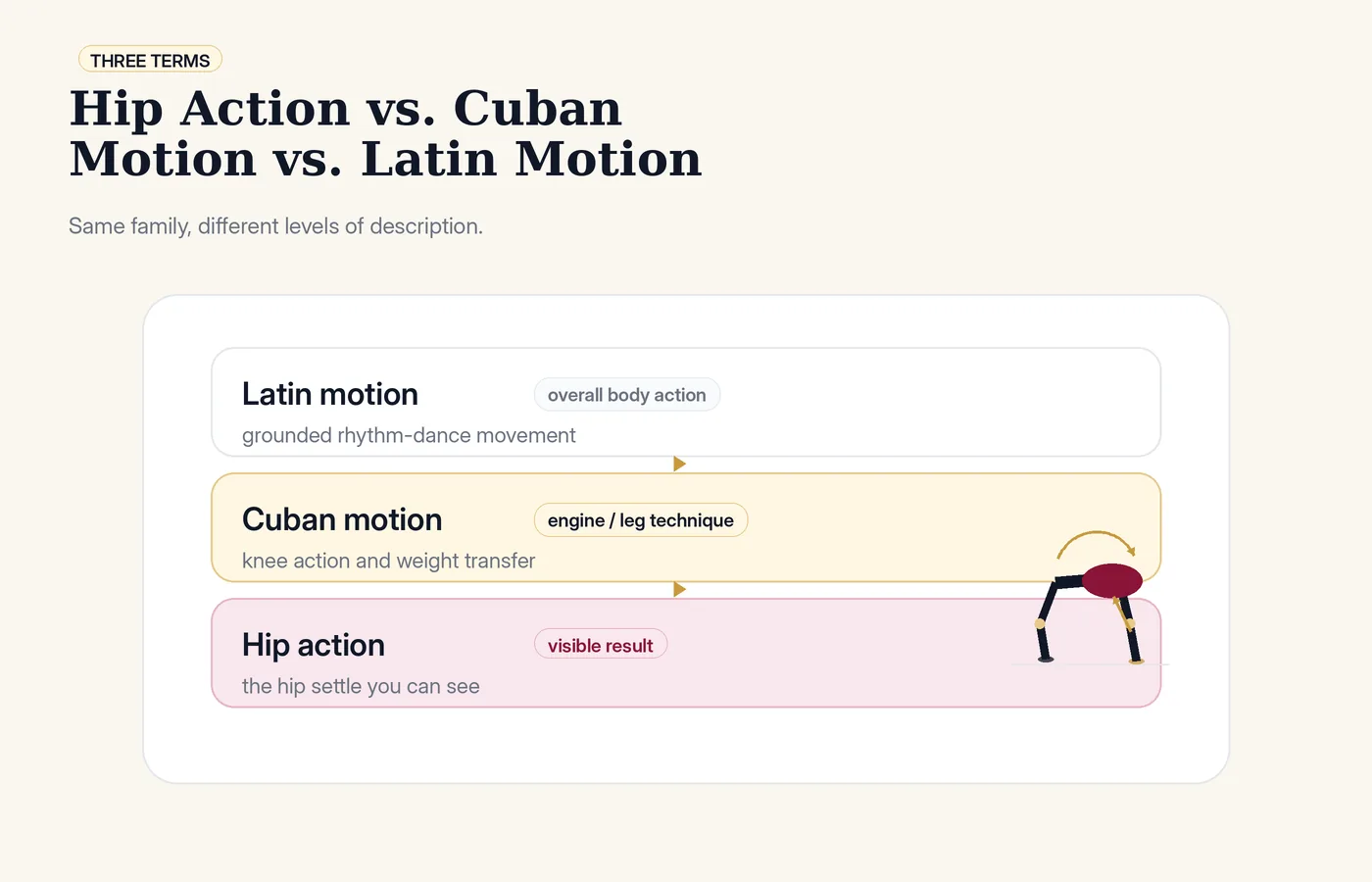
So: Latin motion is the big picture, Cuban motion is the mechanism, and hip action is what you see. Same movement, three levels of zoom.
Hip action by dance
Common hip-action mistakes
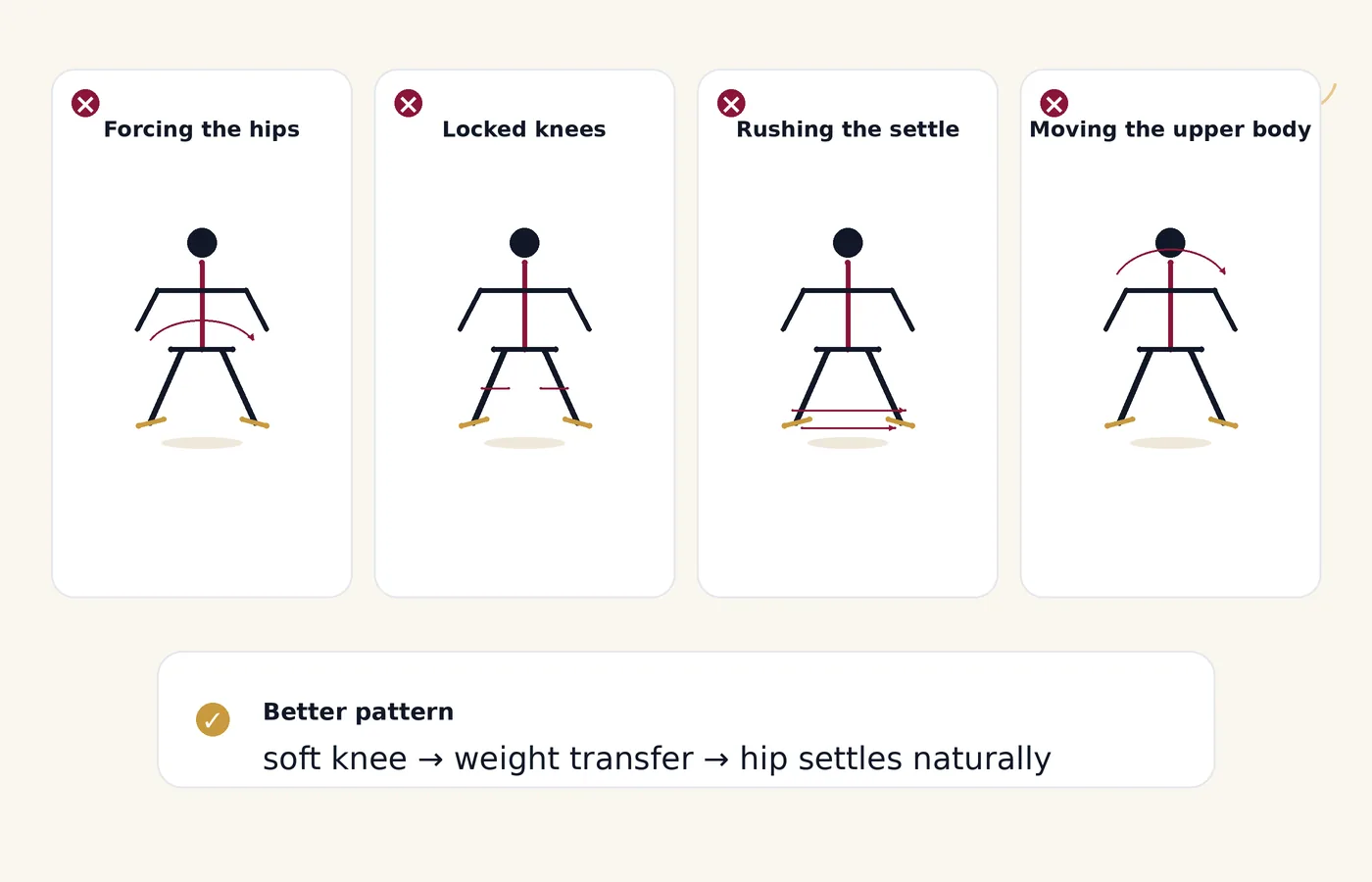
Forcing the hips
Fix: Stop pushing. Work the knees and weight transfer and let the hips follow. Forced hips always look stiff.
Locked knees
Fix: Keep the knees soft at all times. Straight, locked legs cannot produce hip action.
Rushing the settle
Fix: Let the hip fully settle onto the standing leg before the next step. The pause is the look.
Moving the upper body
Fix: Keep the torso quiet and tall. Hip action lives below the ribs, not in the shoulders.
Not committing weight
Fix: Full weight transfer is what rotates the hip. Half weight gives half the action.
Practice hip action
Build hip action from the legs, slowly, on your own:
- Knee bends in place. Feet slightly apart, transfer weight side to side by bending and straightening the knees. Watch the hips move on their own.
- Cuban walks. Walk forward with soft knees, straightening each leg as weight arrives. Keep the torso still.
- Slow Rumba. Practice the basic at low tempo, letting each hip fully settle before moving on.
-
Rumba (learn it here)
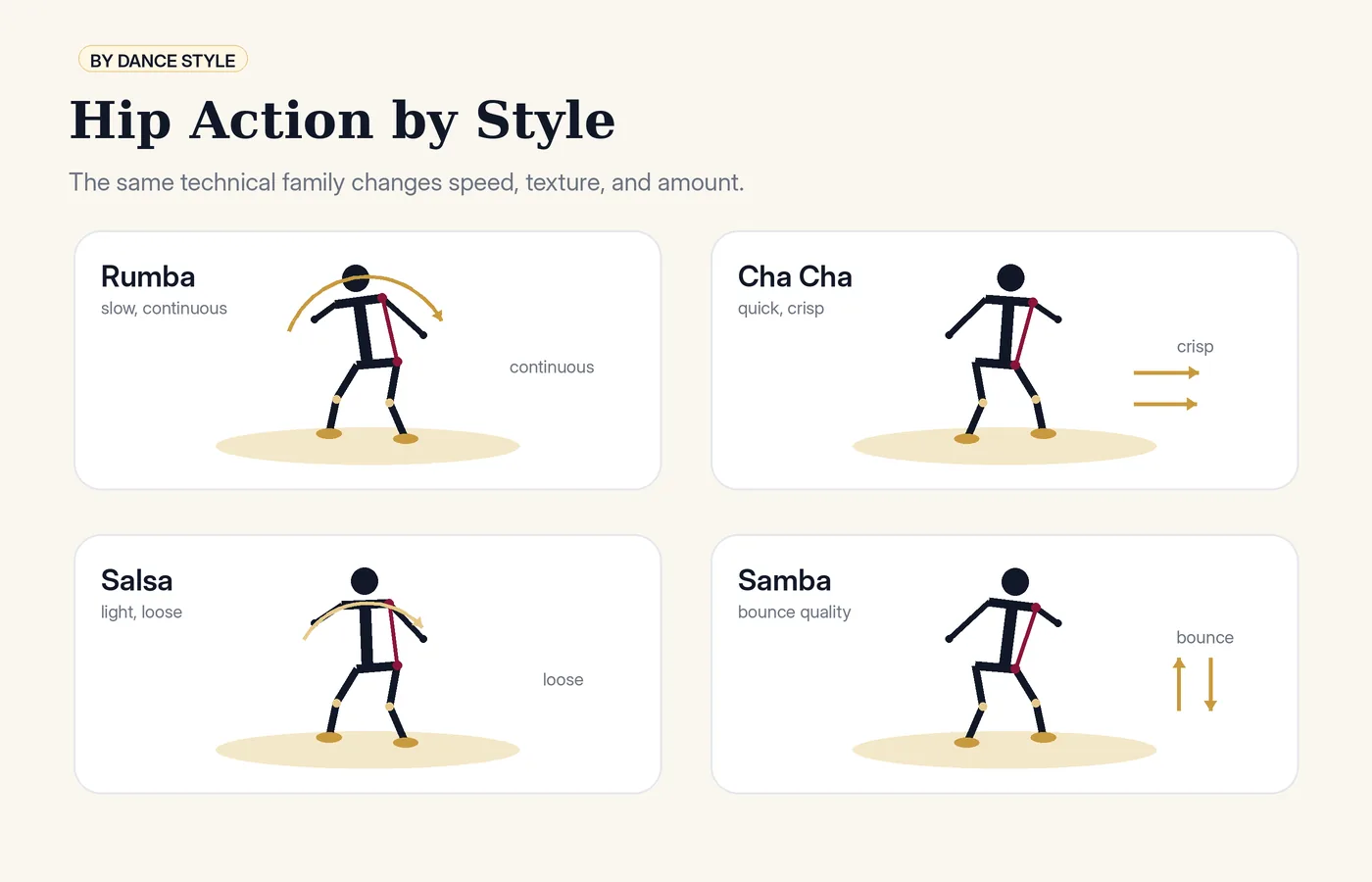
Slow 4/4. The clearest, most forgiving place to build hip action.
-
Cha Cha (quicker settles)
Same action, faster. Practice crisp hip settles on each step.
-
Cuban motion (the how)
Read the companion guide to the leg technique behind hip action.
-
BallroomPages Music (Telegram)
Mixed-style practice tracks. Latin hip drills coming soon.
If your hips feel stuck, stop thinking about hips entirely for a week. Drill soft knees and full weight transfer instead—the hips almost always free up on their own.
FAQ
Hip action FAQ
What is hip action in Latin dance?
Hip action is the rhythmic movement of the hips in the Latin and rhythm dances. It is created by the legs—bending and straightening the knees during weight transfer—not by pushing the hips. It is the visible result of Cuban motion.
How do you get natural hip movement in dance?
Stop trying to move the hips directly. Keep the knees soft, transfer your weight fully onto each foot, and let the receiving leg straighten. The hips will roll and settle on their own. Working the legs is the whole secret.
Is hip action the same as Cuban motion?
They are two views of the same thing. Cuban motion is the leg-and-knee technique; hip action is the visible hip movement it produces. Latin motion is the broader term for the whole body action of the Latin dances.
Why do my hips look stiff when I dance?
Almost always because you are forcing the hips or dancing on locked knees. Soften the knees, commit your full weight to each step, and let the hip settle. Stiff hips are a leg problem, not a hip problem.
Which dance is best for learning hip action?
Rumba. It is slow and continuous, so you have time to feel the knees, weight transfer, and settle that create hip action. Once it is comfortable in Rumba, it transfers to Cha Cha, Salsa, and the rest.
Editorial
Sources and review notes
This glossary entry should be reviewed by a qualified ballroom instructor before launch. Hip-action and Cuban-motion descriptions follow widely accepted conventions from NDCA, WDC, and American Rhythm syllabus materials. The point that hip action originates in the legs is standard teaching—confirm the specifics with your coach.
This is dance terminology, not medical advice. If a movement causes hip or knee pain, stop and consult a qualified instructor or physiotherapist. Ballroom Pages follows an editorial policy of education-first guidance. Questions? Contact us. Updated July 9, 2026.