What is Cuban Motion?
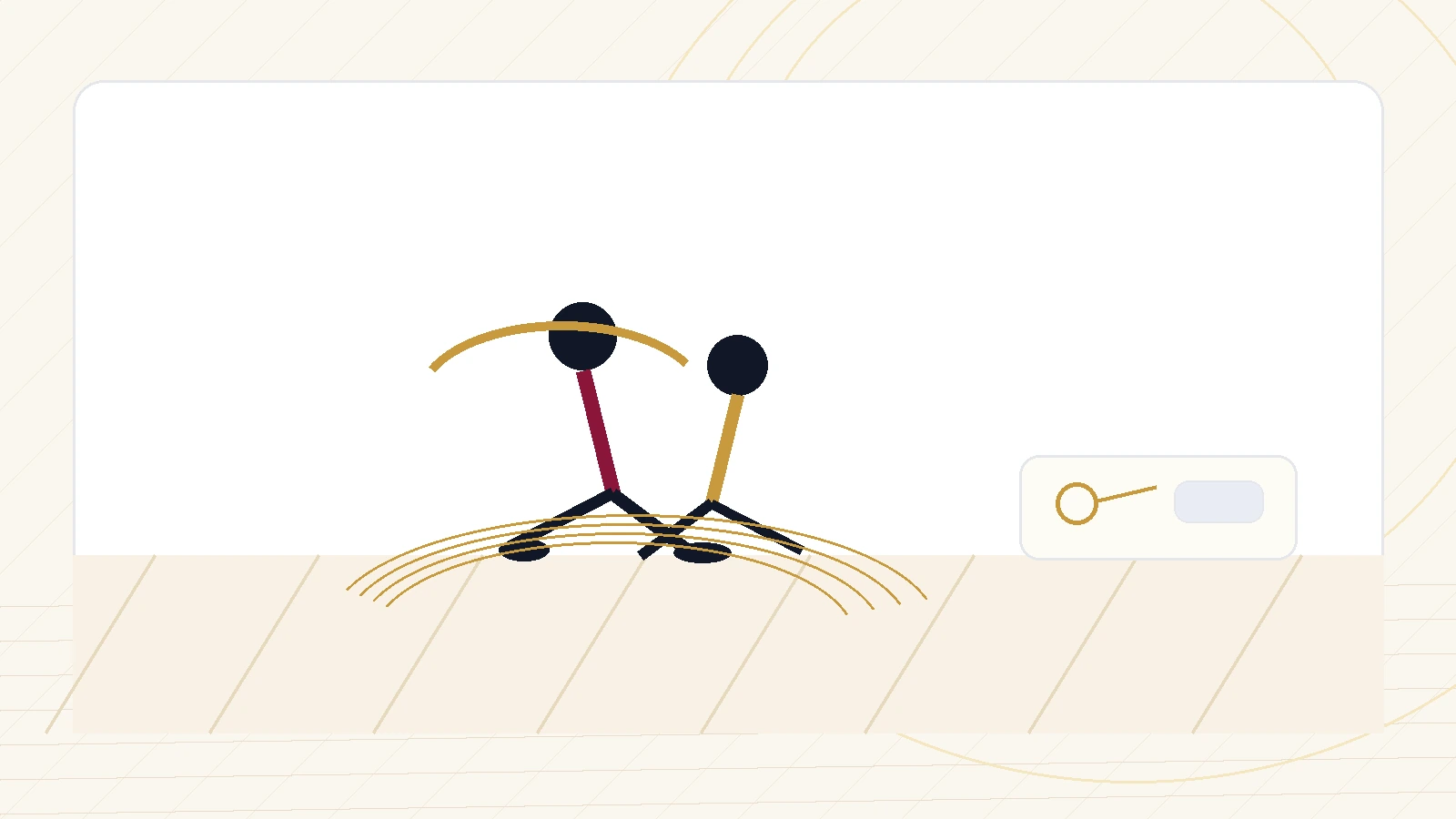
Cuban Motion is a body action used in many Latin, Rhythm, and social Latin contexts. In plain English, it is the coordinated movement that happens when your body transfers weight from one standing leg to the other and the pelvis or hips respond to that transfer. It is not the same as decorative hip styling. Styling is something you may add later. Cuban Motion is more fundamental: it helps the step feel grounded, rhythmic, and connected to the music.
You can read a short definition in the ballroom dance glossary; this page goes deeper into how to practice it.
Where Cuban Motion shows up
Cuban Motion appears across several Latin/Rhythm dances, but it does not look identical in each one. Use the dance guides for style-specific detail.
| Dance | How it appears | Beginner cue | Avoid |
|---|---|---|---|
| Rumba | Slow, controlled body action with clear weight changes | Finish the weight transfer before exaggerating the hip | Forcing a side-to-side sway |
| Cha Cha | Similar body action coordinated with quicker rhythm and chassé timing | Keep steps small and timing clear | Letting the hip action make you late |
| Mambo | Rhythm-driven action with quicker changes | Stay grounded and keep the beat | Throwing the upper body around |
| Bolero | Slower, more sustained Rhythm action, often with rise/fall influence | Keep movement smooth and supported | Collapsing into the hip or lower back |
| Salsa / social Latin | Hip/body action may appear, but social styles vary widely | Let the rhythm and weight change lead | Assuming ballroom Cuban Motion looks identical in every salsa style |
| American Rhythm | Relevant to Cha Cha, Rumba, Mambo, Bolero, and related Rhythm contexts | Ask your teacher how your studio teaches Rhythm leg action | Mixing every system into one rule |
| International Latin | Style-specific body action in International Latin contexts | Learn style-specific technique from a qualified teacher | Assuming Rhythm and Latin use identical body action |
How Cuban Motion actually works
Cuban Motion is easiest to understand as a chain, not as one isolated hip trick.
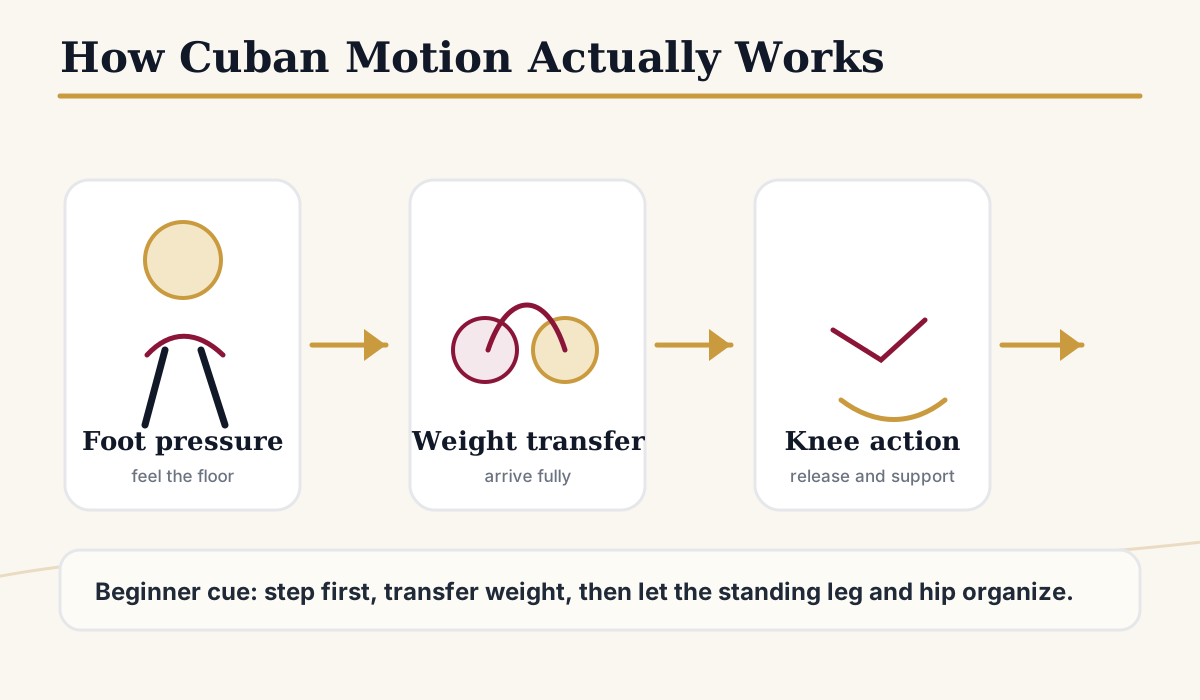
| Part | What it does | Beginner cue |
|---|---|---|
| Foot pressure | The foot connects to the floor and gives the body a base. | Feel the floor before moving the hip. |
| Weight transfer | The body moves fully from one foot to the other. | Know which foot has your weight. |
| Knee release and straightening | The leg action helps the hip respond naturally. | Let one knee release while the other leg supports. |
| Hip settling / rotation | The hip responds after the weight arrives. | Let it happen; do not shove it. |
| Rib cage and spine | The upper body stays organized, not collapsed. | Stay tall and relaxed. |
| Posture / frame | Cuban Motion should not destroy balance, frame, or partner connection. | Keep your body available to your partner. |
| Timing | The body action must fit the count and rhythm. | Slow practice first, then music. |
Build the surrounding skills with frame and posture and lead and follow, so the body action supports the leader and follower connection rather than disrupting it.
What Cuban Motion should feel like
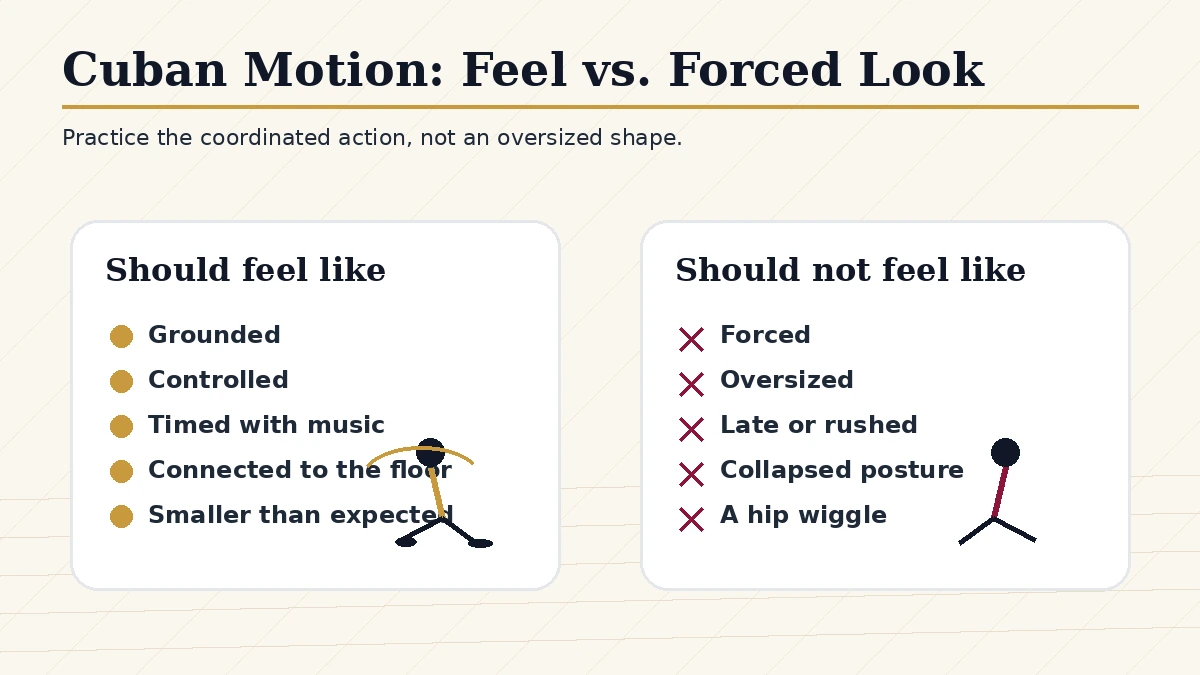
| It should feel | Not |
|---|---|
| Grounded | Wobbly |
| Controlled | Thrown or forced |
| Connected to the floor | Floating with no weight change |
| Smaller than beginners expect | Oversized for the camera |
| Timed with the music | Late because the hips are moving too much |
| Supported through posture | Collapsed into the lower back |
| Coordinated through the whole body | Isolated as a hip wiggle |
Beginner Cuban Motion drills
Practice these slowly, small, and pain-free. Start without music, then add a slow track only once you can balance and count the action.
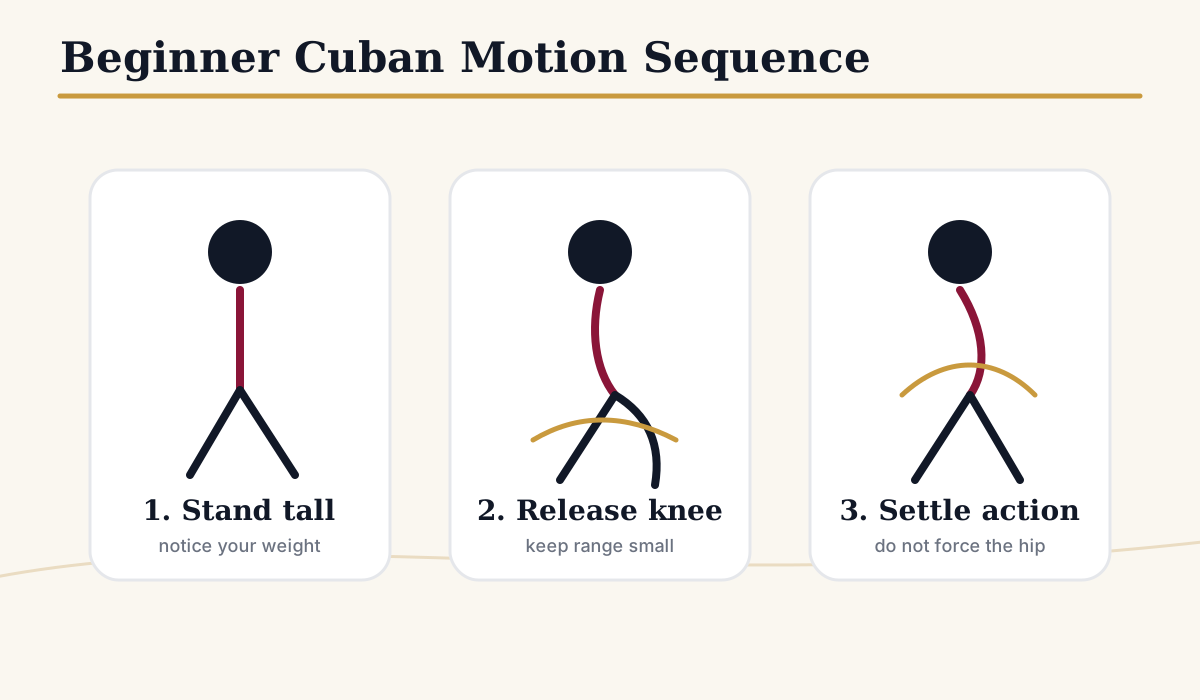
1. Weight shift drill
Goal: feel complete weight transfer.
Stand with feet under hips. Shift weight to one foot, then the other. Say which foot has weight.
Count: slow 1-2-3-4 or no music. Watch for: moving hips without moving weight. Safety: keep range small; use a chair or wall lightly for balance if needed.
2. Knee release / straighten drill
Goal: understand leg action.
With weight on one foot, let one knee release while the other leg supports; alternate slowly.
Count: 4 slow counts each side. Watch for: locking or bouncing knees. Safety: do not force knee depth.
3. Side-to-side Rumba action drill
Goal: connect weight, knee, and hip.
Step side, transfer weight, allow controlled hip settling, close or collect.
Count: slow-quick-quick or your teacher’s assigned Rumba count. Watch for: swaying hips before stepping. Safety: reduce size and count aloud.
4. Forward / backward walk drill
Goal: build Cuban Motion into walking.
Take small forward/back steps. Land, transfer, settle, then move.
Count: slow counts first, then Rumba music. Watch for: rushing into the next step. Safety: pause between steps.
5. Slow Rumba box / basic action drill
Goal: apply the action to a familiar pattern.
Use a simple Rumba basic your teacher has shown you. Focus on one weight change at a time.
Count: your teacher’s assigned count. Watch for: trying to style every moment. Safety: practice only the taught pattern.
6. Cha Cha timing drill
Goal: keep body action coordinated at quicker speed.
Mark the Cha Cha basic slowly. Keep steps small and count before adding hip action.
Count: 1-2-3-cha-cha or 2-3-4&1 depending on teacher/system. Watch for: hip action making the chassé late. Safety: slow down; use clapping first.
7. Mirror / music drill
Goal: check posture and timing.
Record 10 seconds or practice in a mirror. Look for balance, not perfection.
Count: one slow song segment. Watch for: self-criticism or overcorrection. Safety: review one cue only, then stop.
For more structure, build these into a ballroom dance practice routine. New to ballroom? Start with ballroom dance for beginners and the first ballroom dance lesson guide.
Cuban Motion timing: when does the hip action happen?
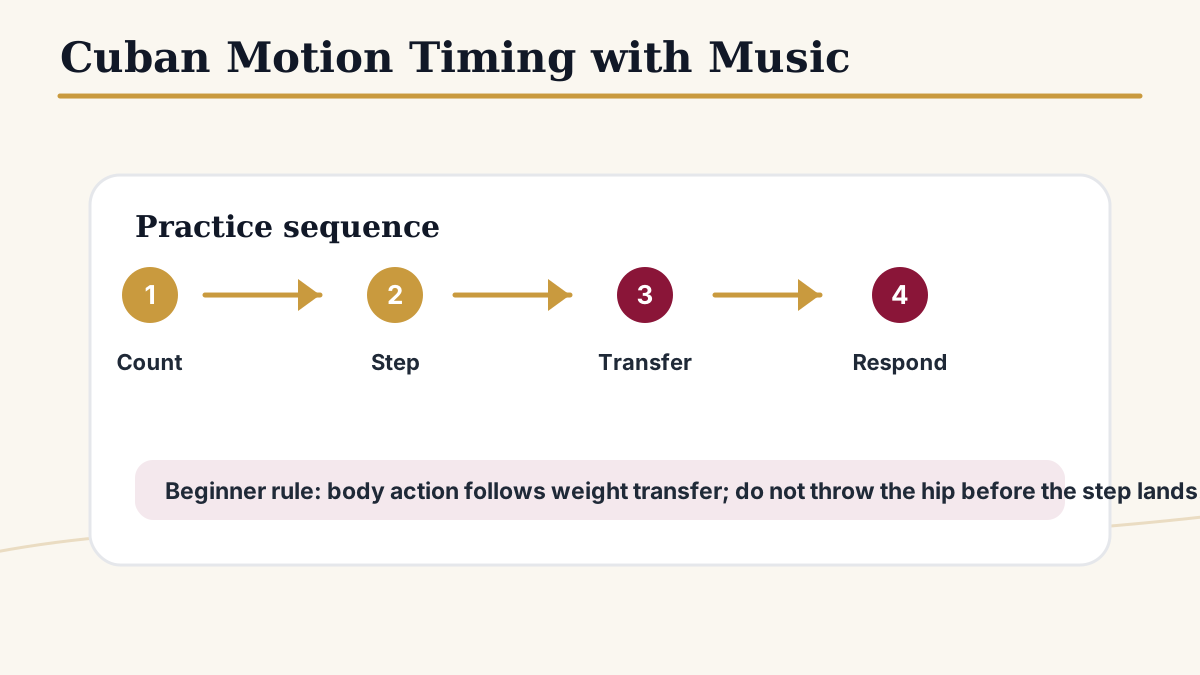
The most useful beginner rule is: body action follows weight transfer. Do not throw the hip before the step lands. Step, transfer weight, then let the leg and hip organize over the standing foot. In Rumba practice, you often have more time to feel the weight change. In Cha Cha, the rhythm moves faster, so the same idea must be smaller and more coordinated.
Build the underlying skill with how to count ballroom dance music and check speeds on the ballroom dance tempo chart.
Practice Cuban Motion with a simple checklist
Download the Cuban Motion Drill Sheet for a printable beginner checklist on weight transfer, knee action, timing, common mistakes, and teacher questions.
Download the drill sheetPractice Cuban Motion with Rumba, Cha Cha, and Latin/Rhythm music
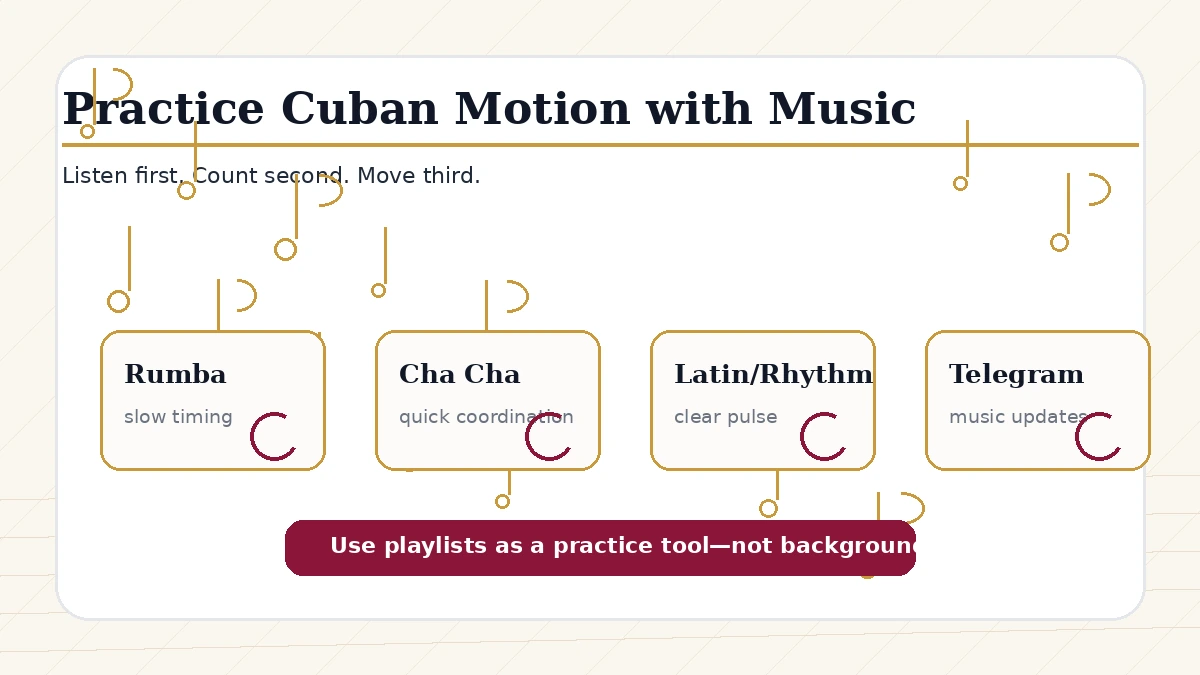
Cuban Motion makes more sense when you practice slowly with music that has a clear rhythm. Start by listening without moving. Count the beat. Mark the weight transfer. Then add the body action. Use playlists as a practice tool, not as background noise.
- Listen first: find the pulse.
- Count second: say the count before moving.
- Move third: shift weight and keep the action small.
- Review last: ask whether timing, balance, or forced hip movement caused trouble.
Spotify — International Latin
Cha Cha by Ballroom Pages
Cha Cha 2 by Ballroom Pages
Rumba by Ballroom Pages
Rumba 2 by Ballroom Pages
Spotify — American Rhythm
American Rhythm Cha-Cha 1
American Rhythm Cha-Cha 2
American Rhythm Rumba 1
American Rhythm Rumba 2
Apple Music — International Latin
Cha Cha by Ballroom Pages
Cha Cha 2 by Ballroom Pages
Rumba by Ballroom Pages
Rumba 2 by Ballroom Pages
YouTube / YouTube Music
Rhythm Cha Cha (YouTube)
Find the Rhythm Cha Cha selection in the full playlist hub.
Rhythm Rumba (YouTube)
Find the Rhythm Rumba selection in the full playlist hub.
More resources
BallroomPages Music on Telegram
All Ballroom Pages playlists
More: Ballroom Music & Timing, the Ballroom Pages playlists, the ballroom dance tempo chart, and how to count ballroom dance music.
Cuban Motion in Rumba vs Cha Cha
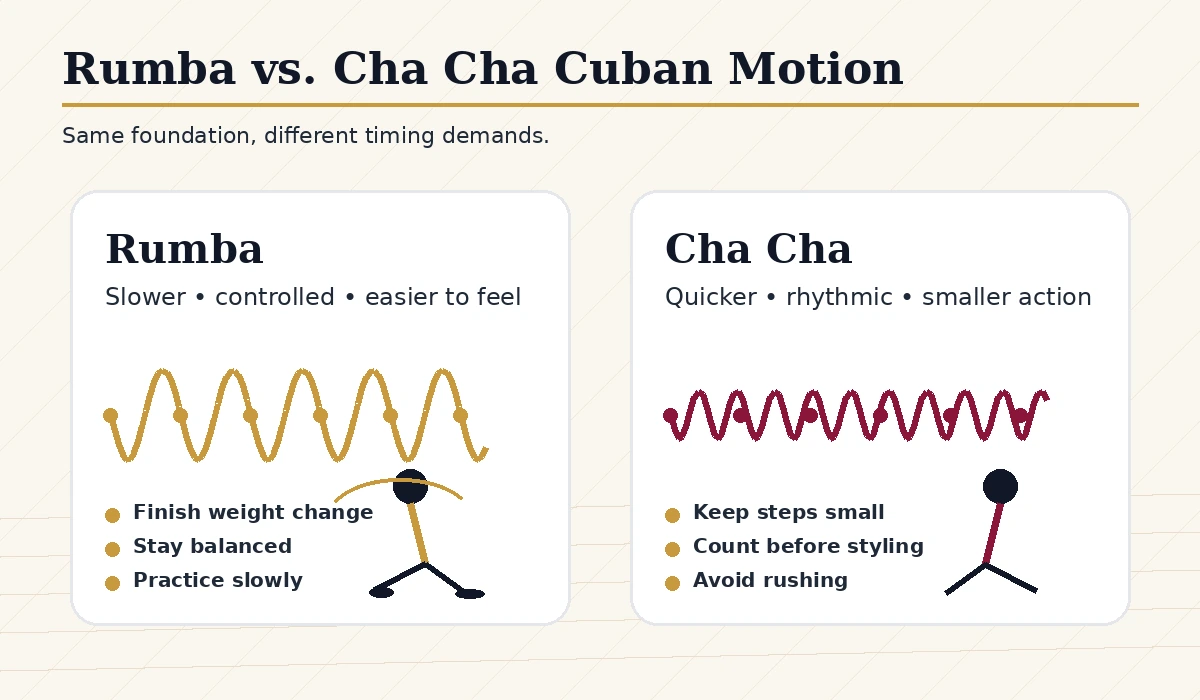
| Topic | Rumba | Cha Cha |
|---|---|---|
| Beginner feel | Slower, more controlled, easier for body-action awareness | Quicker, more rhythmic, easier to rush |
| Practice focus | Finish the weight change and stay balanced | Keep steps small and stay on count |
| Common mistake | Over-swaying or posing the hip | Letting hip action make the chassé late |
| Good first drill | Side-to-side weight shifts | Slow Cha Cha timing without speed |
| Related guide | Rumba dance guide | Cha Cha dance guide |
American Rhythm vs International Latin: does Cuban Motion change?
Related hip/body actions appear in both systems, but the technique, timing, leg action, and styling can differ. Do not reduce either system to “move the hips more.”
| Context | Takeaway | Ask your teacher |
|---|---|---|
| American Rhythm | Often a beginner’s first ballroom context for Cuban Motion through Rumba and Cha Cha | “How do you want me to use my knees and weight transfer in this syllabus?” |
| International Latin | More technical and style-specific; do not reduce it to “move hips more” | “When should the leg action and hip action happen in this figure?” |
| Social Latin | Varies by dance, region, teacher, and social setting | “How much body action is natural for this style and setting?” |
| Wedding dance basics | Keep it simple and comfortable; do not force advanced styling | “Can this movement fit our song and choreography safely?” |
Go deeper with American Rhythm vs International Latin and the broader American vs International ballroom overview. Planning a wedding? Use what dance fits your song and the wedding dance guide.
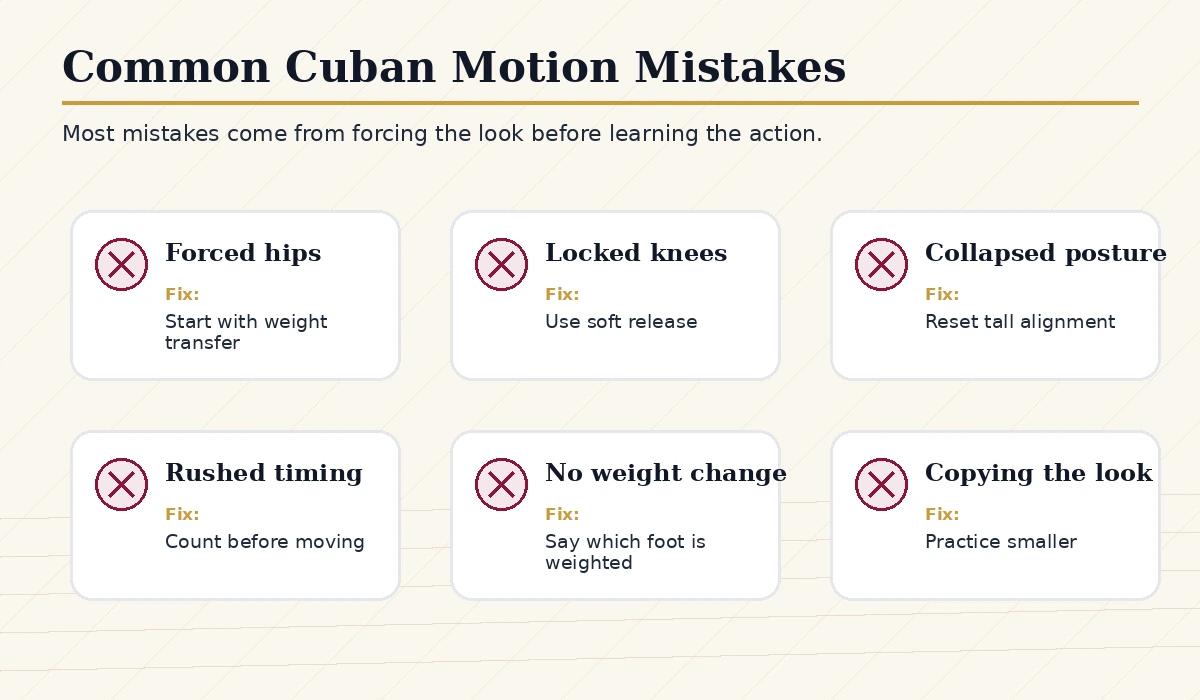
Common Cuban Motion mistakes and fixes
| Mistake | What it looks like | Why it happens | Fix | Drill |
|---|---|---|---|---|
| Forcing hips side to side | Big sway with no control | Starting from the hip instead of the feet | Practice weight shifts without trying to “show” the hips | Weight shift drill |
| Locking knees | Stiff legs, blocked motion | Fear of bending or overcorrecting posture | Practice soft release and standing-leg awareness | Knee release drill |
| Bending knees too much | Bouncy or squat-like movement | Trying to create motion by dropping | Keep movement small and tall | Side-to-side drill |
| Losing posture | Chest collapses, back arches | Overfocusing on hips | Reset head, ribs, and spine | Mirror drill |
| Moving upper body instead of transferring weight | Shoulders swing, feet stay unclear | No complete weight change | Say which foot has weight after every step | Weight shift drill |
| Practicing too fast | Timing falls apart | Music is too quick too soon | Slow down or use no music first | Slow music drill |
| Ignoring the beat | Nice movement but not danceable | No count awareness | Count out loud before stepping | Timing drill |
| Copying the look | Movement looks exaggerated and unnatural | Watching performance clips without understanding mechanics | Practice smaller and ask for feedback | 10-minute routine |
| Twisting painfully | Pinching or strain | Forcing range or rotation | Stop, reduce range, ask an instructor or appropriate medical professional | See safety note |
Safety and comfort notes
Practice Cuban Motion small, slow, and pain-free. Do not force turnout, hip range, knees, or lower back. Do not push through pain. If the movement causes pain, stop and consult a qualified instructor or an appropriate medical professional. This guide is educational, not medical advice.
10-minute Cuban Motion practice routine
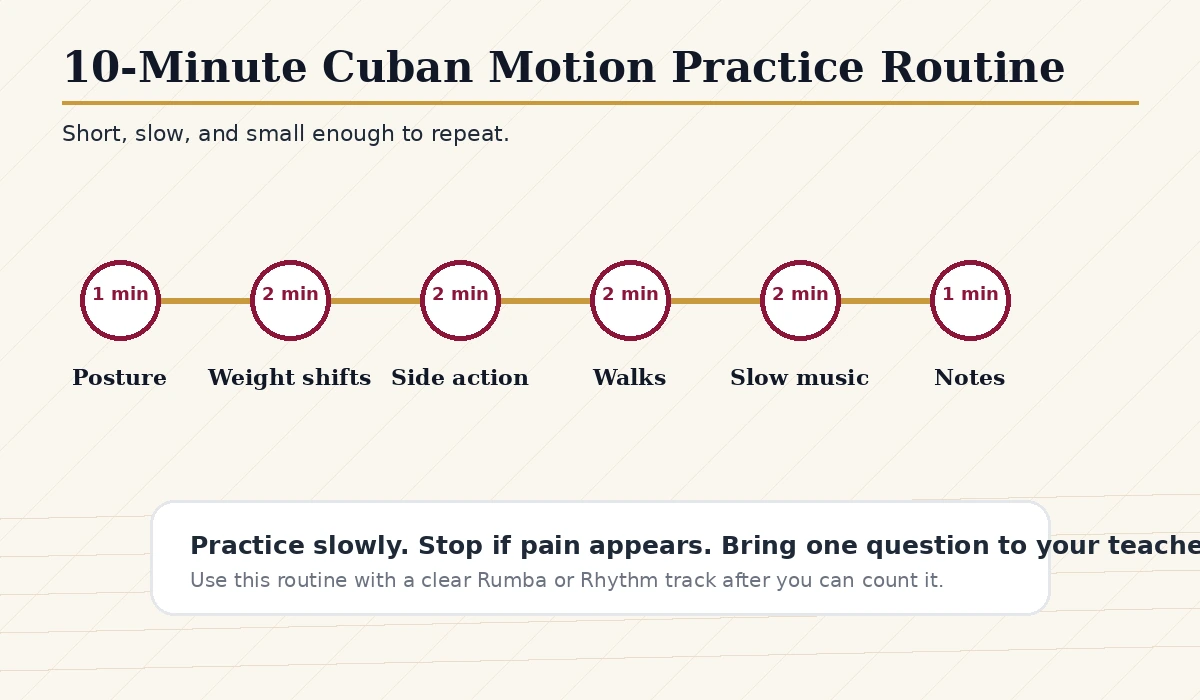
- 1 minPosture / standing alignmentStand tall, soften tension, and notice which foot has weight.
- 2 minWeight shiftsShift side to side slowly. Say “left” or “right” as weight arrives.
- 2 minSide-to-side actionAdd gentle knee release and controlled hip settling. Keep it small.
- 2 minForward / back walksTake small steps forward and back. Finish each weight transfer.
- 2 minSlow music practiceUse a slow Rumba or clear Rhythm track. Count before moving.
- 1 minNotes / checklistWrite one cue that helped and one question for your teacher.
Expert demo / video
Video demo to add after instructor review. No owned or approved Cuban Motion demo is available yet, so no video is embedded and no VideoObject schema is included.