
Glossary
Latin Motion in Ballroom Dance
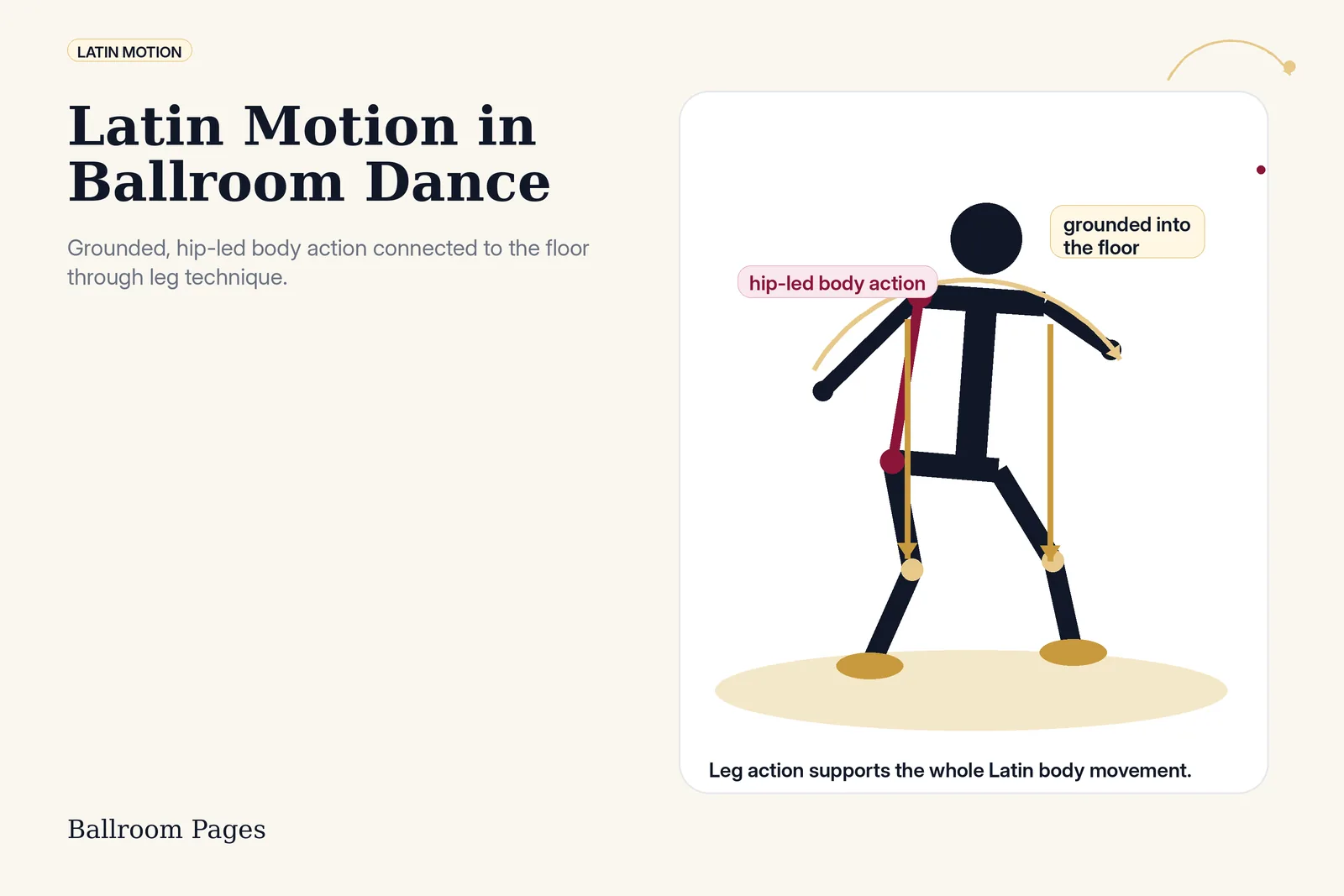
Latin motion is the reason Rumba and Cha Cha look and feel so different from Waltz. It is the grounded, hip-led body action that runs through all the Latin and rhythm dances—and it is built, layer by layer, from the legs up. Here is what Latin motion really is, the stack of technique that creates it, how it differs from Standard, and how to build it.
Definition of Latin motion
Latin motion
- Pronunciation
- LAT-in MOH-shun
- Skill category
- Technique & body
- Companion term
- Cuban motion (the engine of Latin motion)
- Related terms
- Cuban motion, hip action, weight transfer, leg action, settle, posture
In ballroom dance, Latin motion is the characteristic body action of the Latin and rhythm dances—the grounded, hip-led look of Rumba, Cha Cha, and Salsa. It is produced by leg action and weight transfer through soft knees (Cuban motion), which creates the visible hip action.
Latin motion is the whole picture. Cuban motion is the engine. Hip action is what you see.
What Latin motion means in ballroom dance
Latin motion is the umbrella term for how the body moves in the Latin and rhythm dances. It is the grounded, hip-led quality that makes Rumba, Cha Cha, and Salsa feel connected to the floor and driven from the hips, rather than lifted and gliding like the Standard dances.
It is not a single move. It is the combined effect of several techniques working together—leg action, weight transfer, Cuban motion, and hip action—all producing one recognizable look.
The Latin motion stack
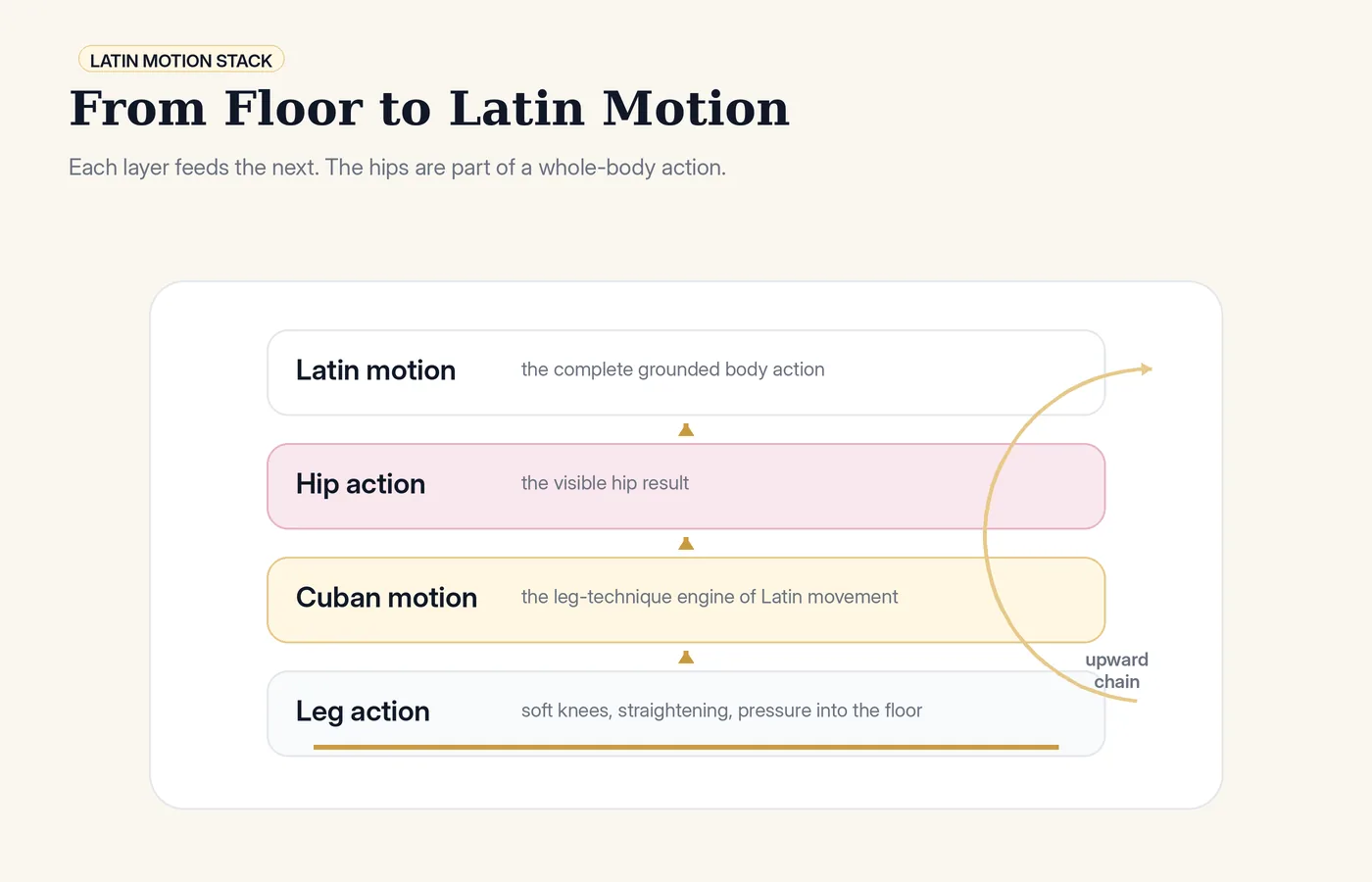
The clearest way to understand Latin motion is as a stack, built from the floor up. Each layer creates the next:
From the floor up
- Leg action. Soft knees bending and straightening as weight transfers foot to foot.
- Cuban motion. That leg action rotates the hips around the spine—the specific technique.
- Hip action. The visible result: the rolling, settling hip movement the audience sees.
- Latin motion. The whole thing together, expressed through the dance.
This is why chasing the top of the stack (the hips) never works. You build Latin motion from the bottom—the legs—and the rest follows.
Latin motion vs Standard body action
The two great families of ballroom move in opposite ways. Understanding the contrast makes both clearer:
| Latin motion | Standard body action |
|---|---|
| Grounded, into the floor | Lifted, rising and falling |
| Hip-led, driven by leg action | Swing-led, driven by body flight |
| Weight settles onto each leg | Weight swings through the feet |
| Torso quiet, hips alive | Whole body travels as one |
| Rumba, Cha Cha, Salsa, Samba | Waltz, Foxtrot, Quickstep |
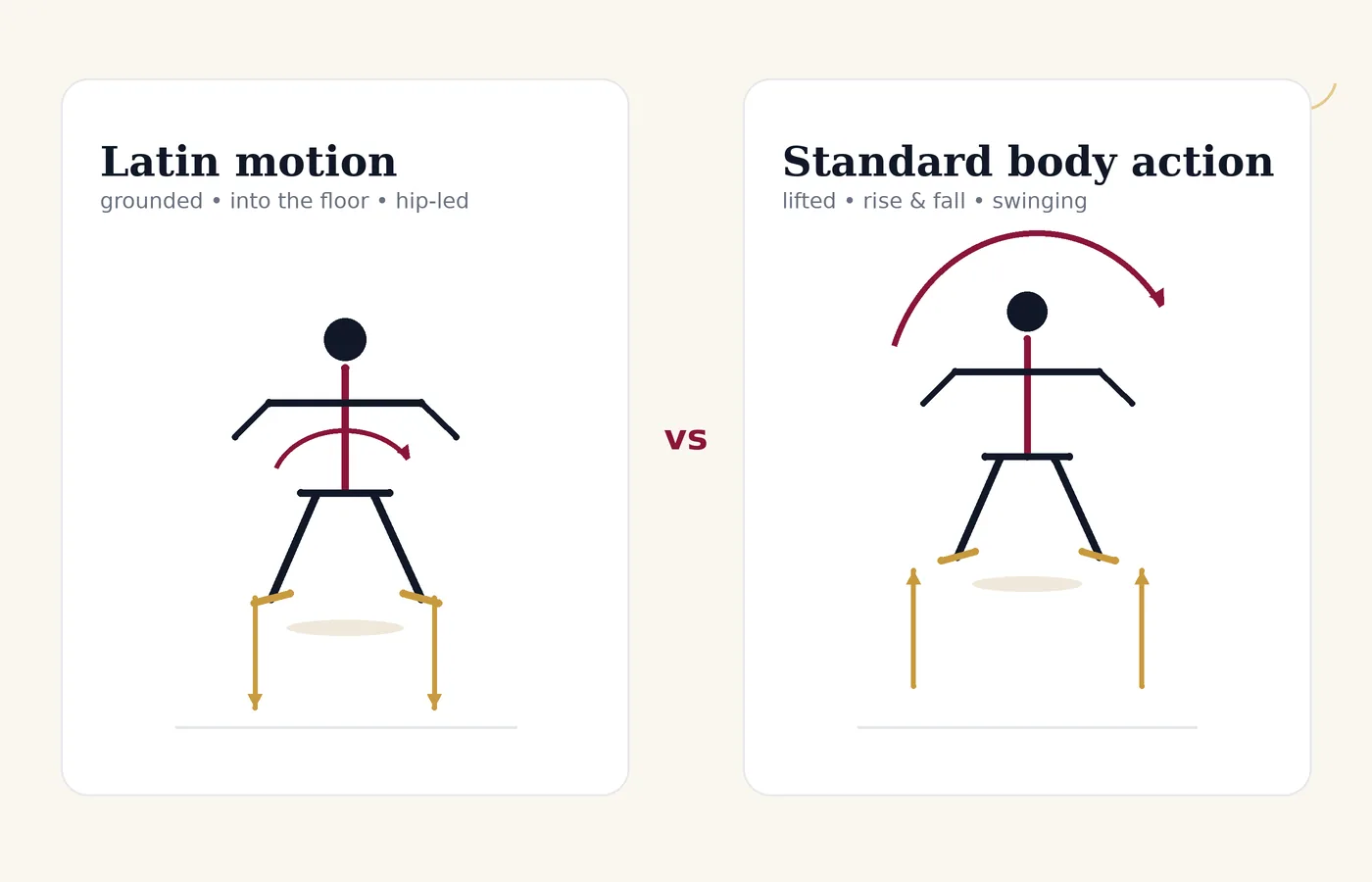
Neither is better—they are different tools for different music. But dancing Latin with Standard body action (or vice versa) is one of the fastest ways to look out of place.
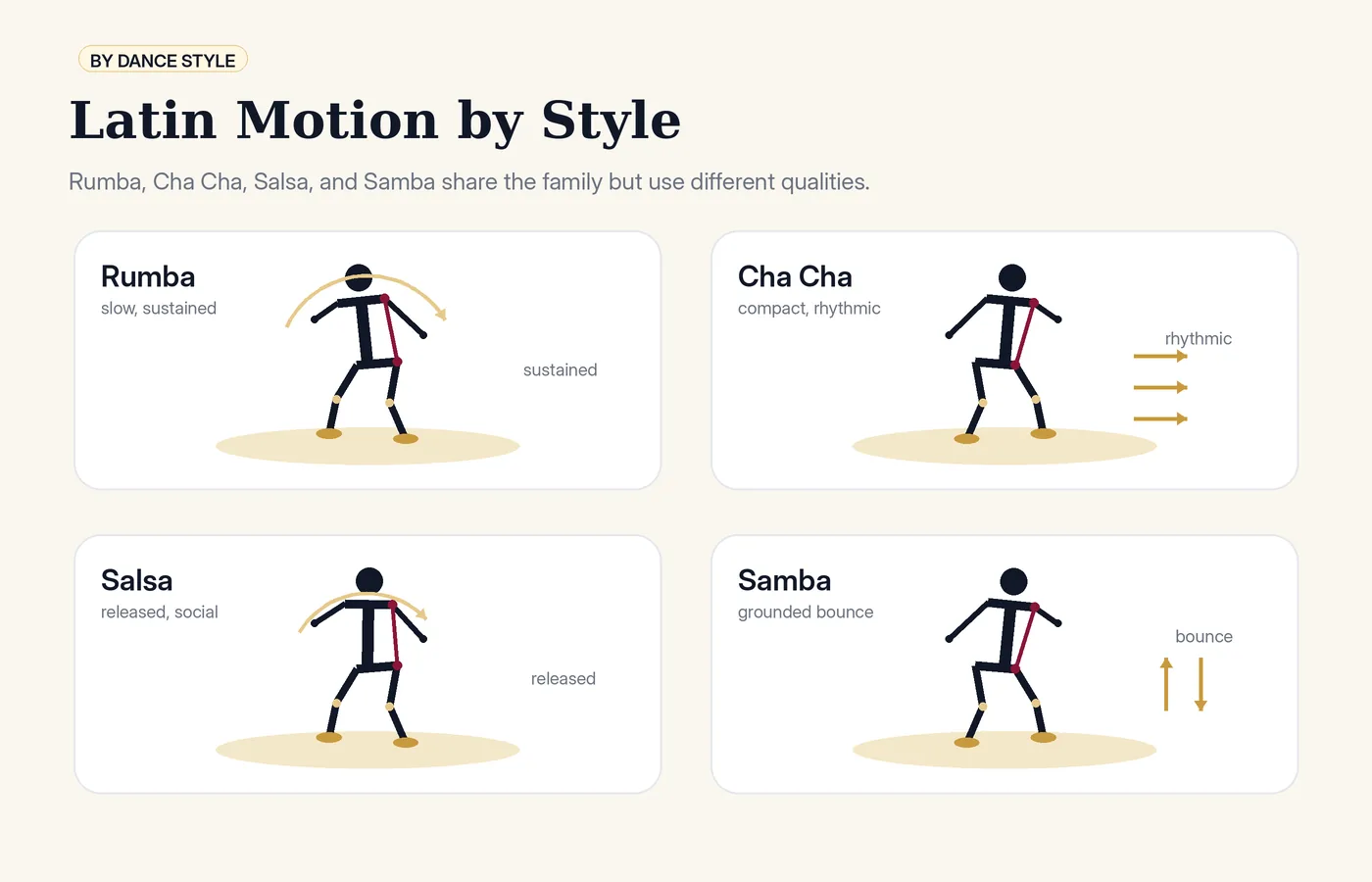
Latin motion by dance
Common Latin motion mistakes
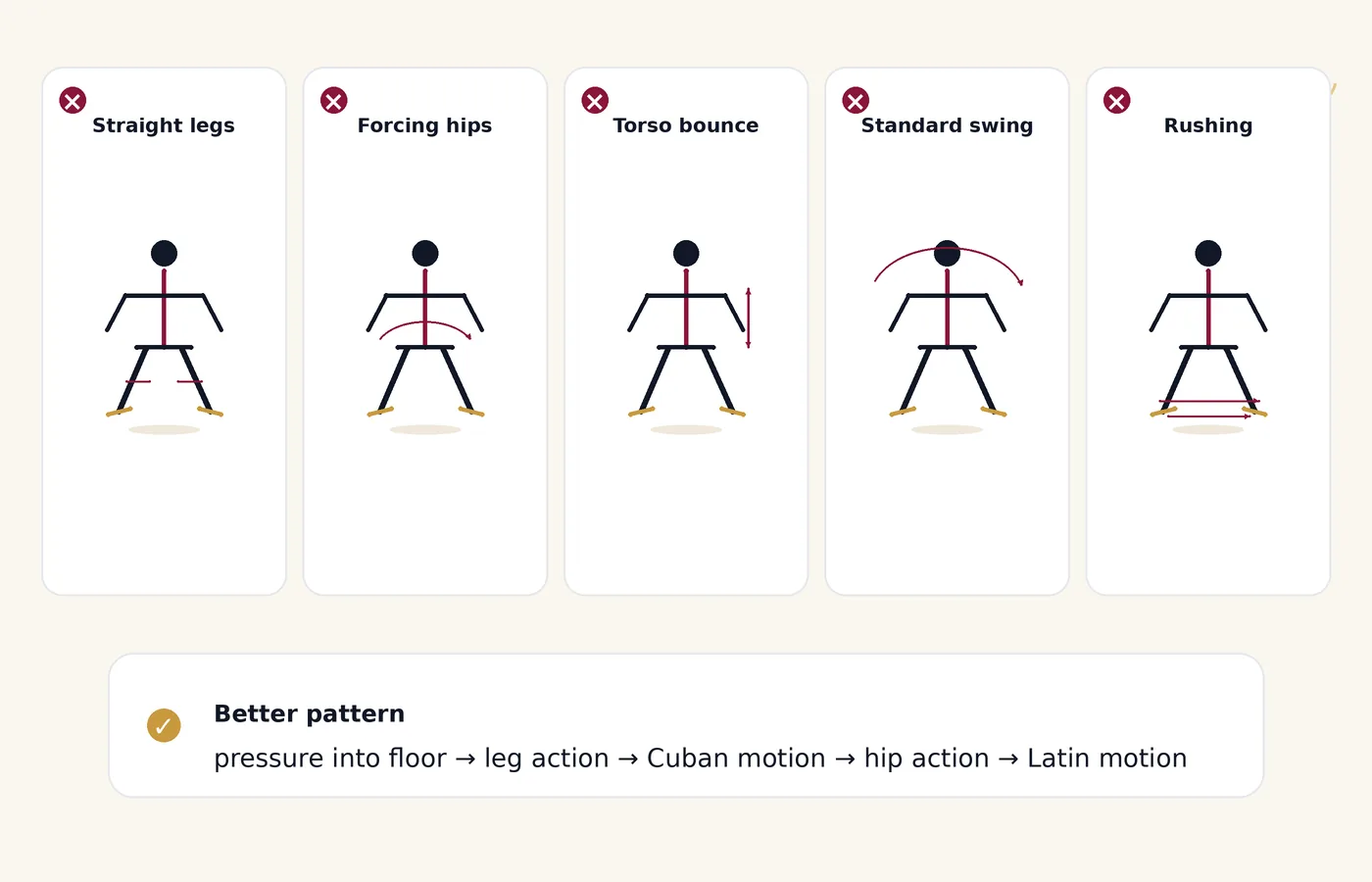
Dancing on straight legs
Fix: Latin motion is impossible on locked knees. Keep them soft so the legs can create the action.
Forcing the hips
Fix: Work the legs and weight transfer; let the hips respond. Pushing the hips looks manufactured.
Bouncing the torso
Fix: Keep the upper body tall and quiet. Latin motion lives in the legs and hips, not the shoulders.
Using Standard swing
Fix: Stay grounded and settle into each step. Latin motion goes into the floor, not up and over it.
Rushing
Fix: Let weight fully arrive and the hip settle before the next step. The unhurried settle is the whole quality.
Practice Latin motion
Build the stack from the bottom, slowly:
- Weight-transfer walks. Slow side-to-side transfers with soft knees. Feel the hips move as a result of the legs.
- Cuban walks forward. Straighten each leg as weight arrives, torso tall and still.
- Slow Rumba basic. The whole stack at low tempo, letting each settle complete before moving on.
-
Rumba (Latin motion home)
Slow 4/4. The best dance to build and feel the full Latin motion stack.
-
Cha Cha (faster)
Same action at speed. Practice crisp settles between quick steps.
-
Cuban motion (the engine)
Read the companion guide to the leg technique behind Latin motion.
-
BallroomPages Music (Telegram)
Mixed-style practice tracks. Latin drills coming soon.
If your Latin dancing feels flat, the fix is almost never the hips. Go back to soft knees and full weight transfer—the bottom of the stack—and Latin motion tends to appear on its own.
FAQ
Latin motion FAQ
What is Latin motion in ballroom dance?
Latin motion is the characteristic body action of the Latin and rhythm dances—the grounded, hip-led look of Rumba, Cha Cha, and Salsa. It is produced by leg action and weight transfer through soft knees (Cuban motion), which creates the visible hip action.
Is Latin motion the same as Cuban motion?
They are closely related. Cuban motion is the specific leg-and-knee technique; Latin motion is the broader term for the whole body action of the Latin dances, of which Cuban motion is the engine and hip action is the visible result.
How is Latin motion different from Standard?
Latin motion is grounded and hip-led, driven by leg action and settling weight. Standard body action is lifted and swinging, driven by body flight and rise and fall. One goes into the floor; the other rises and travels over it.
How do I get better Latin motion?
Build the stack from the bottom: soft knees, full weight transfer, and letting each step settle. Do not chase the hips—work the legs and the hips follow. Slow Rumba is the best place to practice.
Which dances use Latin motion?
The Latin and rhythm dances—Rumba, Cha Cha, Salsa, Bolero, and Mambo—use Cuban-motion-based Latin motion. Samba uses a related bounce action rather than pure Cuban motion, so it has its own version of the feel.
Editorial
Sources and review notes
This glossary entry should be reviewed by a qualified ballroom instructor before launch. Latin-motion and Cuban-motion descriptions follow widely accepted conventions from NDCA, WDC, and American Rhythm and International Latin syllabus materials. Terminology varies slightly by organization—confirm the specifics with your coach.
This is dance terminology, not medical advice. If a movement causes pain, stop and consult a qualified instructor or physiotherapist. Ballroom Pages follows an editorial policy of education-first guidance. Questions? Contact us. Updated July 9, 2026.