
Glossary
Lock Step in Ballroom Dance
Watch a Quickstep couple skim across the floor and you’ll see their legs snap together and cross for a beat, tight as scissors, before flowing on. That crossing is a lock step: a step where one foot locks in behind (or in front of) the other. It looks like a chassé that got its feet tangled on purpose—and it’s one of the most satisfying actions in ballroom once it clicks. Here is what the lock step is, the forward and back versions, and how to keep the cross clean.
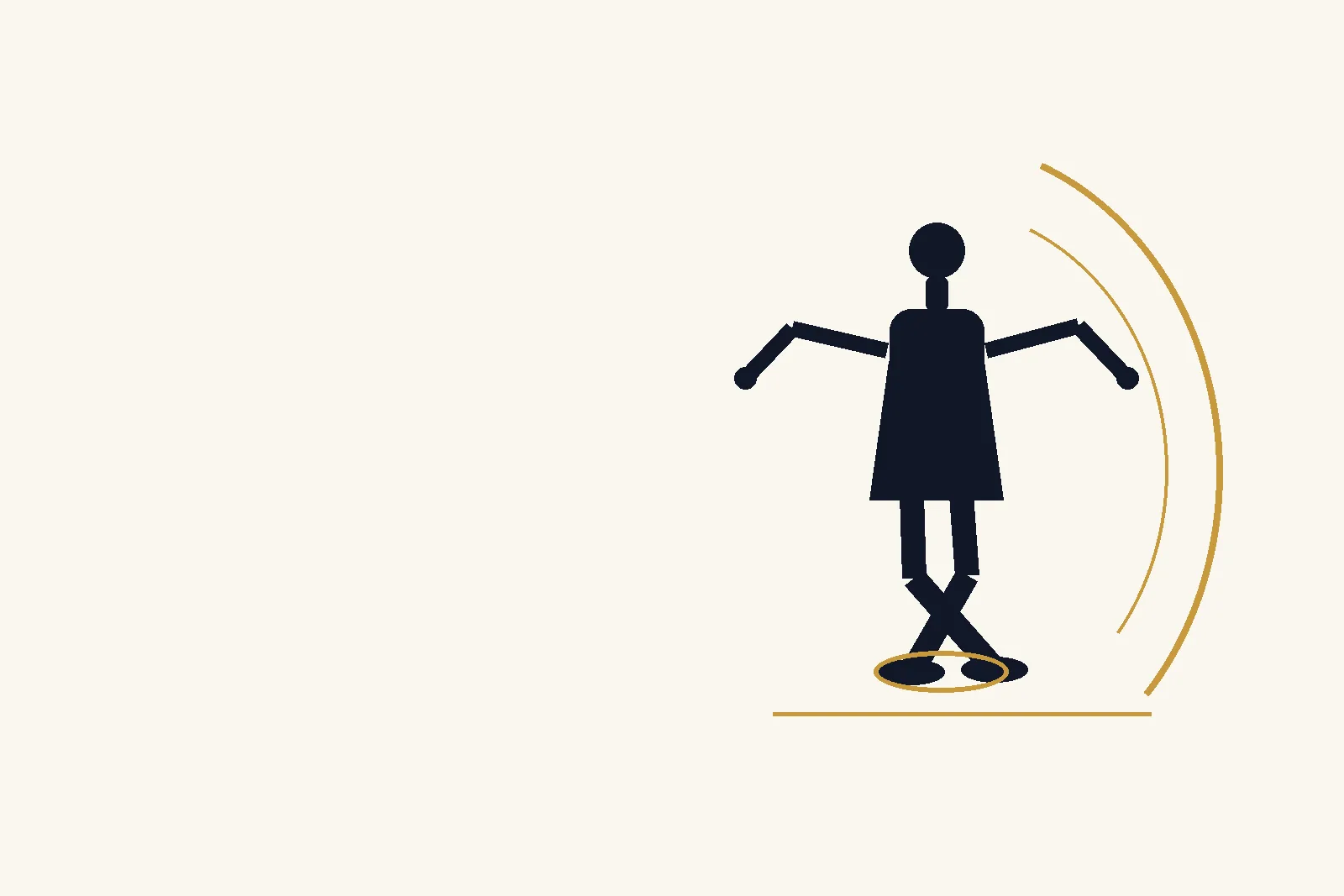
Definition of the lock step
Lock Step
- Skill category
- Steps & figures (progressive)
- Also called
- Lock; forward/back lock
- Companion term
- Chassé (its close cousin)
- Related terms
- chassé, triple step, rise and fall, quick timing, Quickstep
A lock step is a step where the moving foot crosses and locks tightly behind the standing foot (going forward) or in front of it (going back), crossing the legs into a compact, locked shape. It is a first cousin of the chassé—same idea, but the feet cross instead of just closing.
A chassé closes the feet; a lock crosses them. That’s the whole trick.
What a lock step means in ballroom
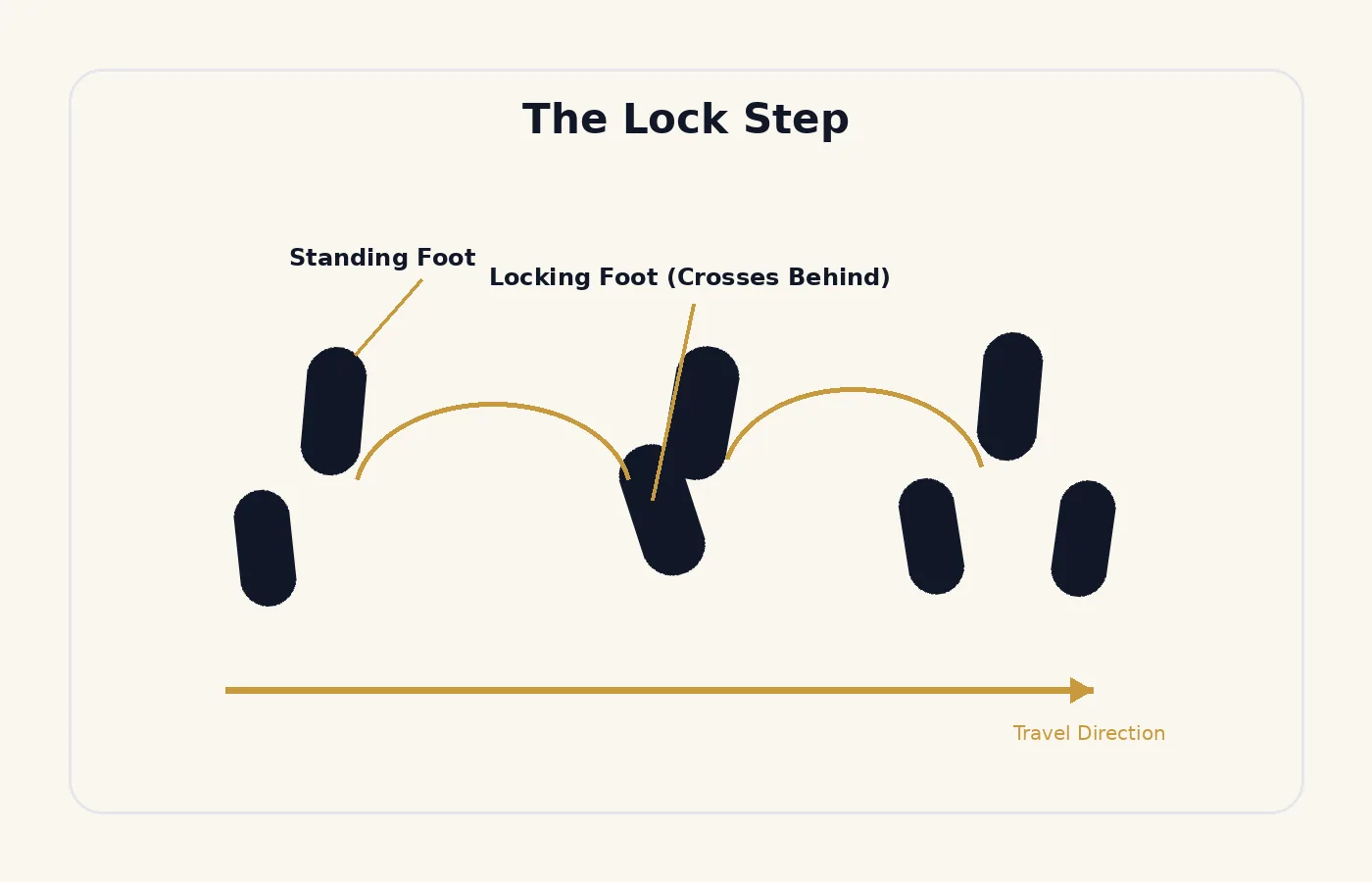
A lock step is a small, precise action: as you travel, the moving foot passes and crosses the standing foot, then the two lock together for a moment with the legs crossed and the knees close. It is the crossing that makes it a “lock”—the feet don’t just come side by side (that would be a chassé), they cross and hold, tight and compact, before the next step releases.
Locks are how the traveling dances get their skimming, gliding quality. Because the feet cross rather than pass, the couple covers ground smoothly without a big open stride, and the compact shape reads as neat and controlled. You’ll usually meet the lock step early in Quickstep, where forward and backward lock steps are bread-and-butter figures.
Forward lock vs back lock
Same crossing action, two travel directions—and the foot that crosses changes:
| Forward lock (travelling forward) | Back lock (travelling back) |
|---|---|
| The back foot crosses behind the front foot | The front foot crosses in front of the back foot |
| Feels like it “chases” and tucks in | Feels like it draws in and crosses over |
| Common in the Quickstep forward lock | Common in the Quickstep back lock and Cha Cha |
| Rises through the cross | Stays compact and grounded |
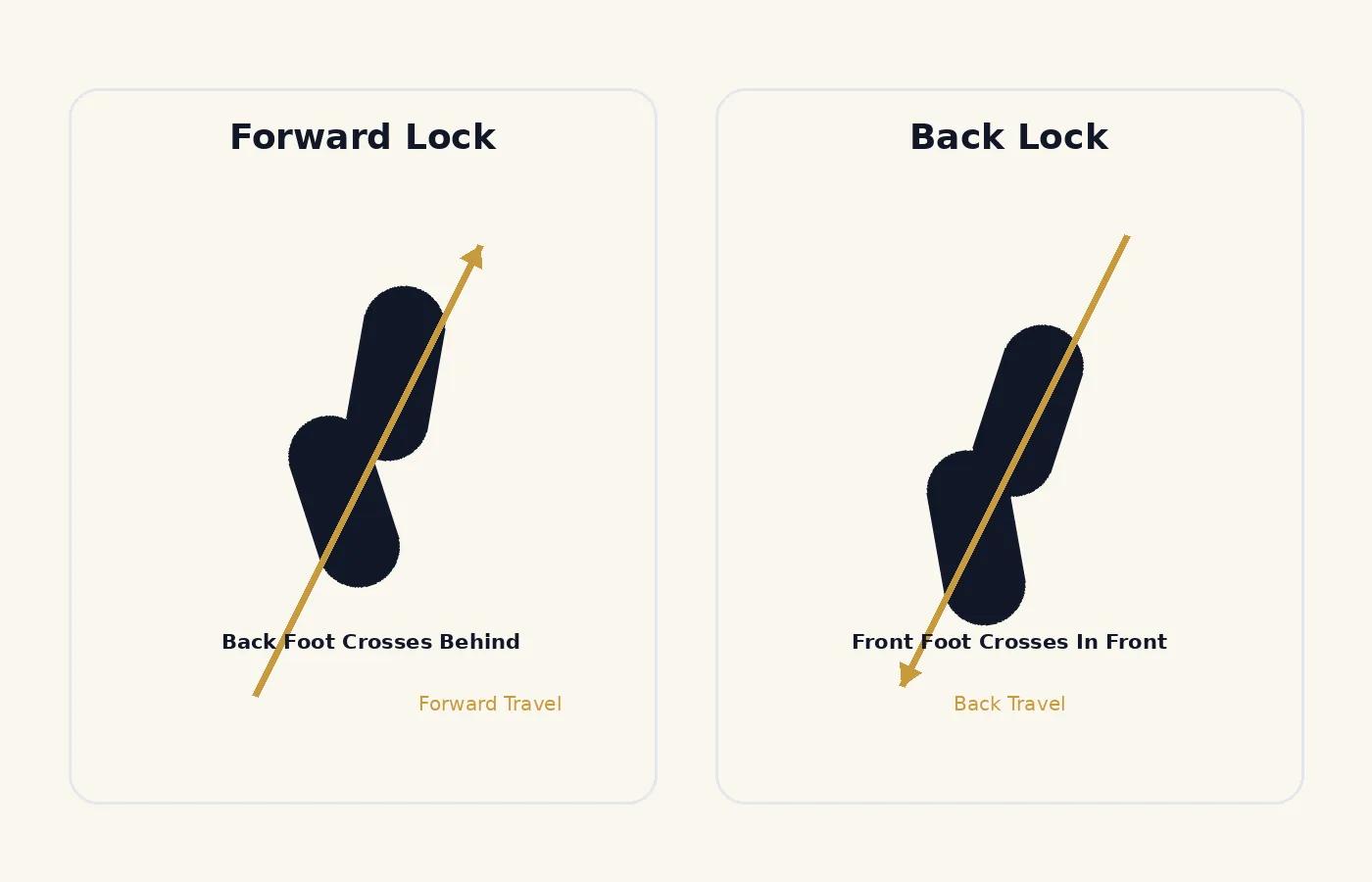
Easy rule of thumb: the foot that crosses is always the one “behind” the direction of travel—it chases the leading foot and tucks in behind it going forward, or crosses over in front of it going back.
How the lock step works
Three things make a clean lock:
What makes a good lock step
- A real cross. The feet cross and touch—no daylight between them. A gap turns the lock into a sloppy near-miss.
- Compact knees. The knees stay close and slightly flexed so the lock looks tucked and controlled, not splayed.
- Quick-and rhythm. Most locks ride a quick-and-quick count—the “and” is the fast little lock between the two travelling steps.
In the swinging Standard dances the lock also rides the rise and fall: the forward lock lifts gently through the cross and lowers out of it, which is what gives Quickstep its light, skimming bounce.
Lock step by dance style
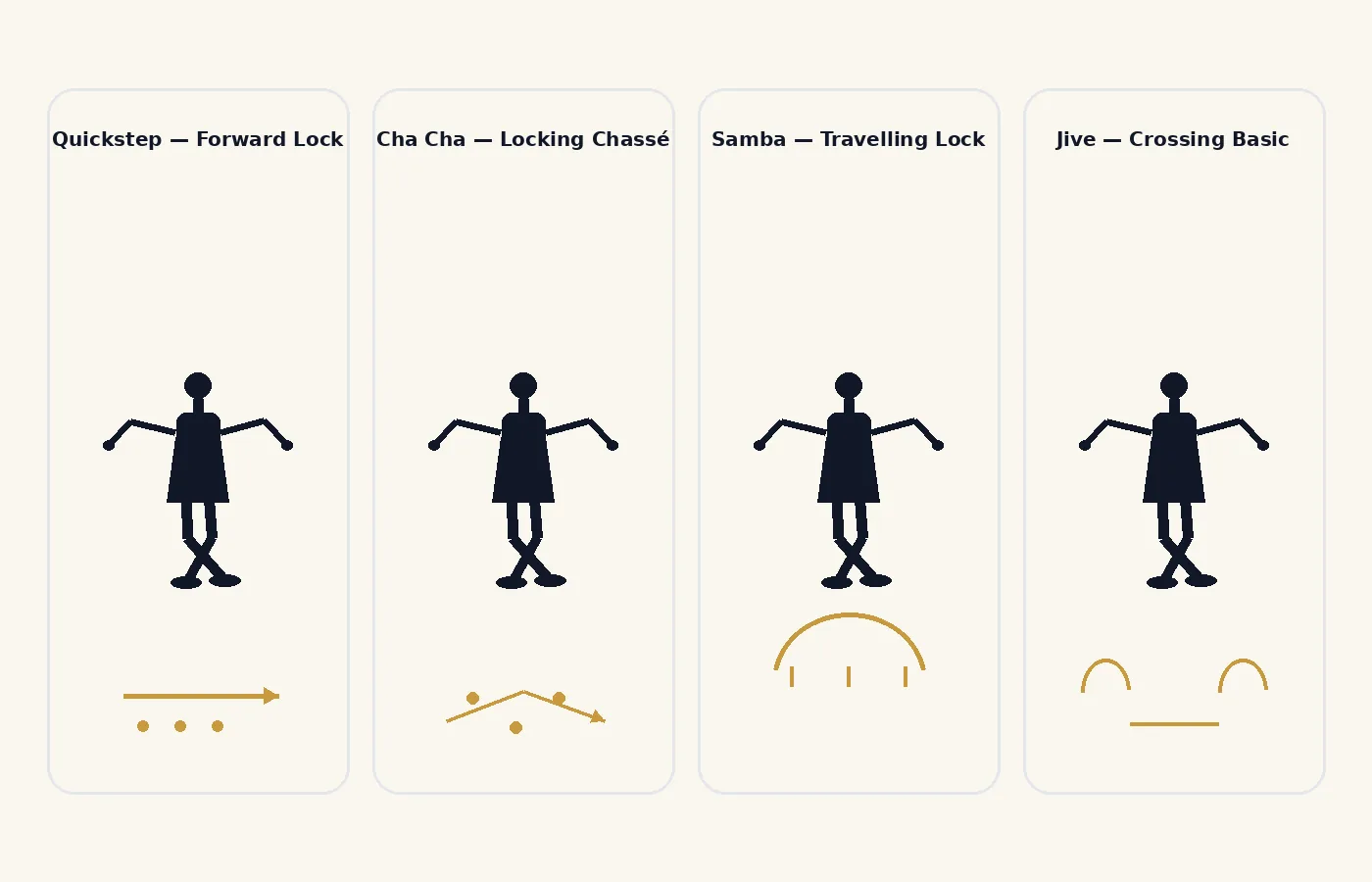
The lock shows up across both Standard and Latin, with a different flavor each time:
Lock step vs chassé: the one distinction
These two get mixed up constantly, and the difference is a single thing: a chassé closes the feet together; a lock step crosses them. Both are “side-together”-style travelling actions on a quick-and-quick rhythm, and both keep you compact and moving. But in a chassé the closing foot arrives beside the other with feet parallel, while in a lock step it crosses behind or in front so the legs actually cross. If you can dance a chassé, you are one small change—cross instead of close—away from a lock step. That is why teachers so often introduce them back to back.
Common lock-step mistakes
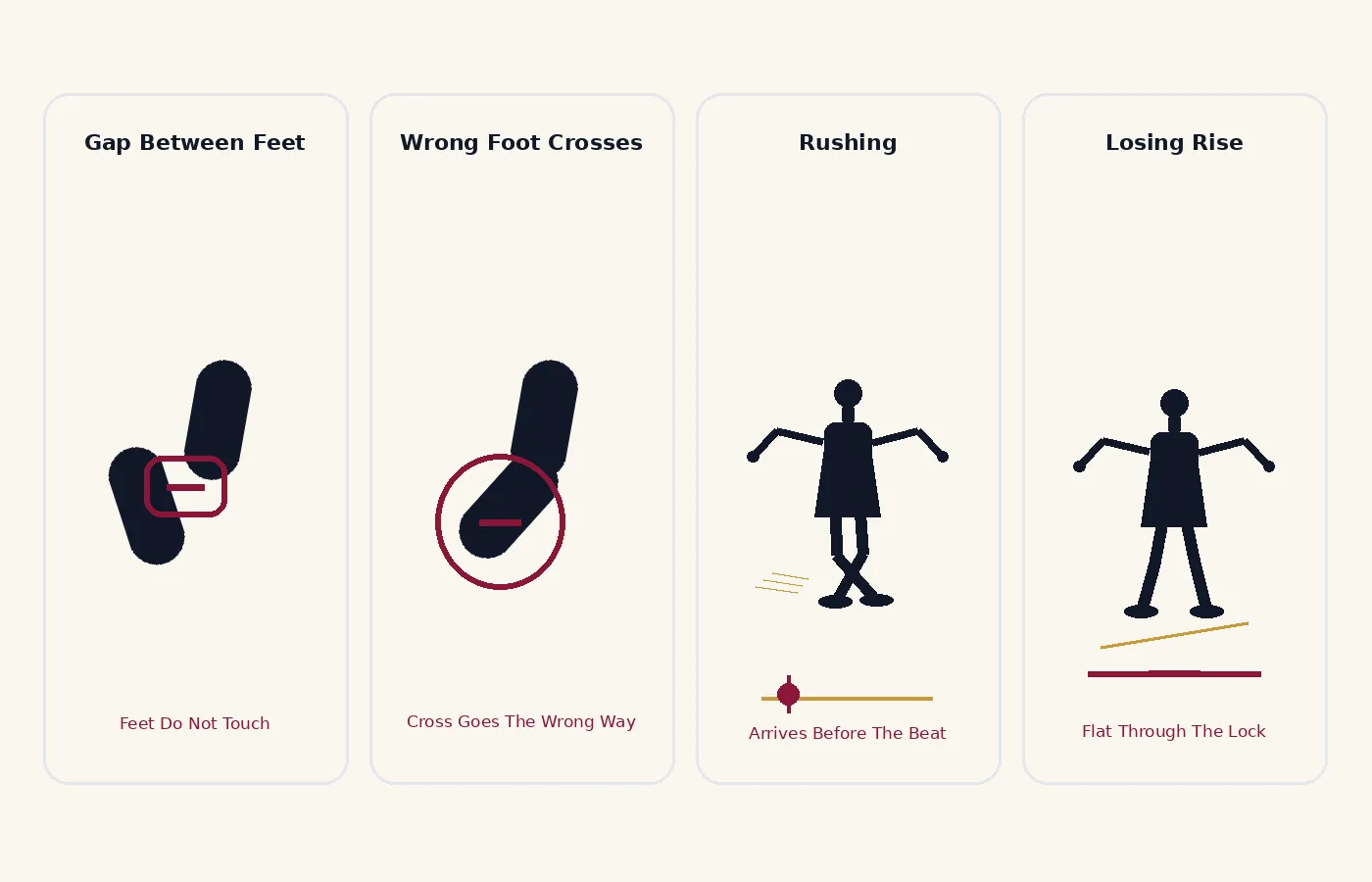
Leaving a gap between the feet
Fix: The feet must actually cross and touch. If there’s daylight between them it’s a loose chassé, not a lock. Cross fully.
Crossing the wrong foot
Fix: Going forward, the back foot crosses behind; going back, the front foot crosses in front. Say it before you dance it.
Rushing the lock
Fix: The lock is the fast “and”, but it still needs a clear cross. Slow the whole figure down until the cross is crisp, then add speed.
Losing the rise
Fix: In Quickstep the forward lock lifts through the cross. Keep the rise and fall alive so it skims instead of trudging.
Practice the lock step
Locks reward slow, exact repetition before you add speed:
- Cross and hold. Standing still, slowly cross one foot tightly behind the other and hold the locked shape—feel the feet touch and the knees stay close.
- Chassé to lock. Dance a slow side chassé, then repeat it crossing the closing foot instead—feel the exact moment “close” becomes “lock.”
- Forward locks down the floor. Walk a slow forward lock step (step, lock behind, step) in a straight line, keeping the cross tight and the rise gentle.
-
Quickstep (home of the lock)
Bright, skimming tempo—the natural music for forward and back locks.
-
Chassé & triple step
The close-footed cousins—learn these and the lock is one change away.
-
Rise & fall guide
The swing the Quickstep lock rides—keep it alive through the cross.
-
BallroomPages Music (Telegram)
Mixed-style practice tracks. Footwork drills coming soon.
FAQ
Lock Step FAQ
What is a lock step in dance?
A lock step is a step where the moving foot crosses and locks tightly behind the standing foot (travelling forward) or in front of it (travelling back), crossing the legs into a compact position. It is closely related to the chassé, but the feet cross instead of just closing.
What is the difference between a lock step and a chassé?
In a chassé the closing foot arrives beside the other with the feet parallel; in a lock step it crosses behind or in front so the legs cross. Same quick-and-quick travelling feel—the only difference is close versus cross.
Which foot crosses in a lock step?
Travelling forward, the back foot crosses behind the front foot. Travelling backward, the front foot crosses in front of the back foot. Either way it is the foot “behind” the direction of travel that tucks in and crosses.
Which dances use the lock step?
Most famously Quickstep, in its forward and back lock steps. It also appears in Cha Cha (the compact chassé danced as a lock), Samba, and Jive, where crossing, locking actions are part of the travelling basics.
What is the timing of a lock step?
Most lock steps ride a quick-and-quick rhythm: two travelling quick steps with a fast “and” lock between them. The “and” is the quick little cross, so the whole action stays light and skimming.
Editorial
Sources and review notes
This glossary entry should be reviewed by a qualified ballroom instructor before launch. The lock step is a technique-and-figure topic—the descriptions follow widely used syllabus conventions, but the per-style figure details and the exact footwork of forward and back locks deserve expert verification before being treated as teaching material.
This is beginner orientation, not a substitute for instruction. Ballroom Pages follows an editorial policy of education-first guidance. Questions? Contact us. Updated July 9, 2026.