
Glossary
Promenade Walk in Ballroom Dance
In most closed-hold dancing the couple faces each other. Then the music opens up, the pair swing into a “V,” and they stride off together looking the same way like two people walking arm in arm down a boulevard. Those steps are the promenade walk—the travelling walk taken in promenade position. It is the signature look of Tango and shows up all across the Standard dances. Here is what it is, how it works, and how to keep the V clean.
Definition of the promenade walk
Promenade Walk
- Skill category
- Steps & position (Standard)
- Also called
- Promenade; PP walks
- Companion term
- Promenade position (the shape it’s walked in)
- Related terms
- promenade position, closed position, outside partner, CBM, alignment
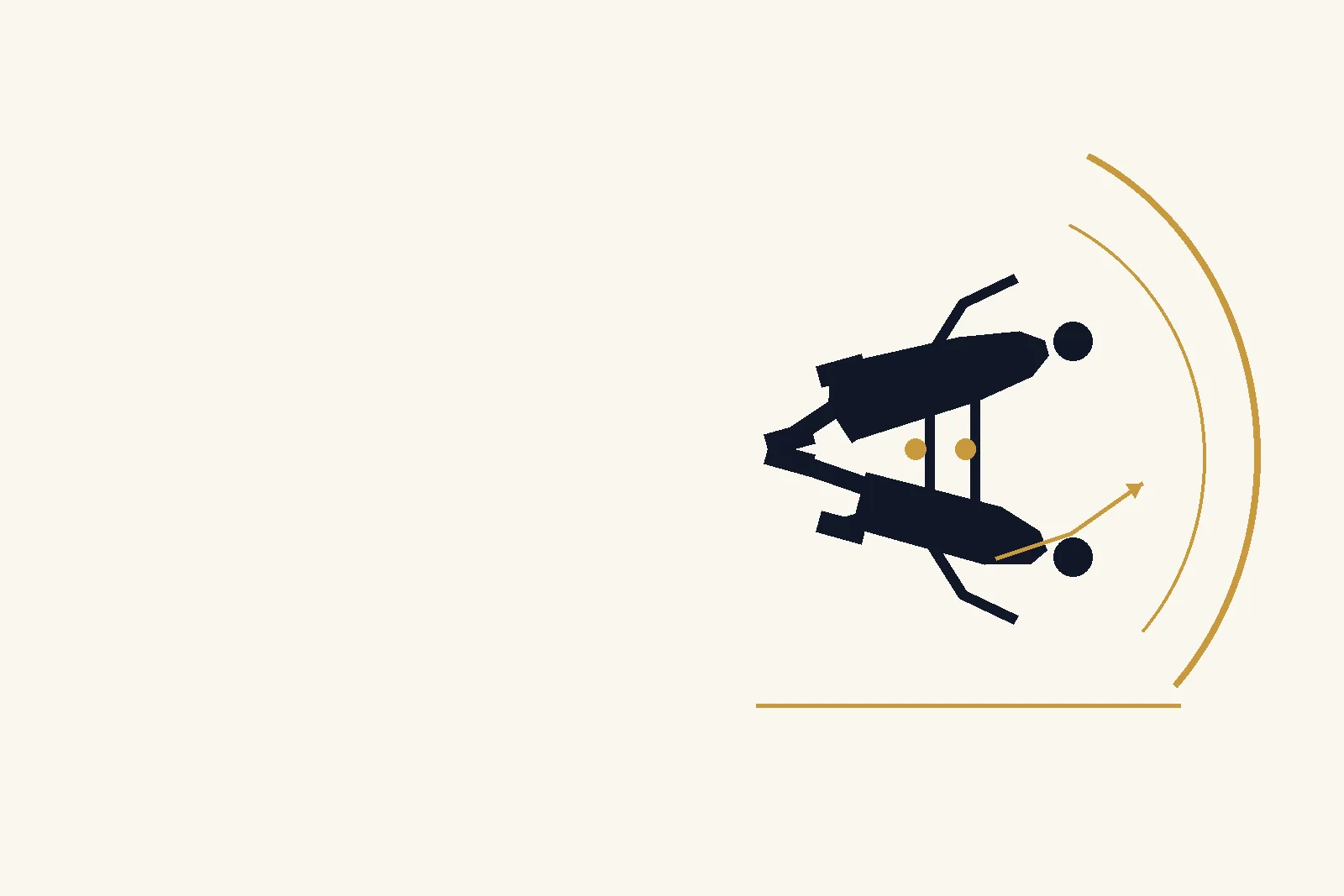
A promenade walk is the walking steps a couple takes in promenade position—the open “V” where the partners keep contact on one side, open the other, and travel together toward the open end. It is the promenade position set in motion.
Two people, one direction, an open V—strolling down the floor arm in arm.
What a promenade walk means in ballroom
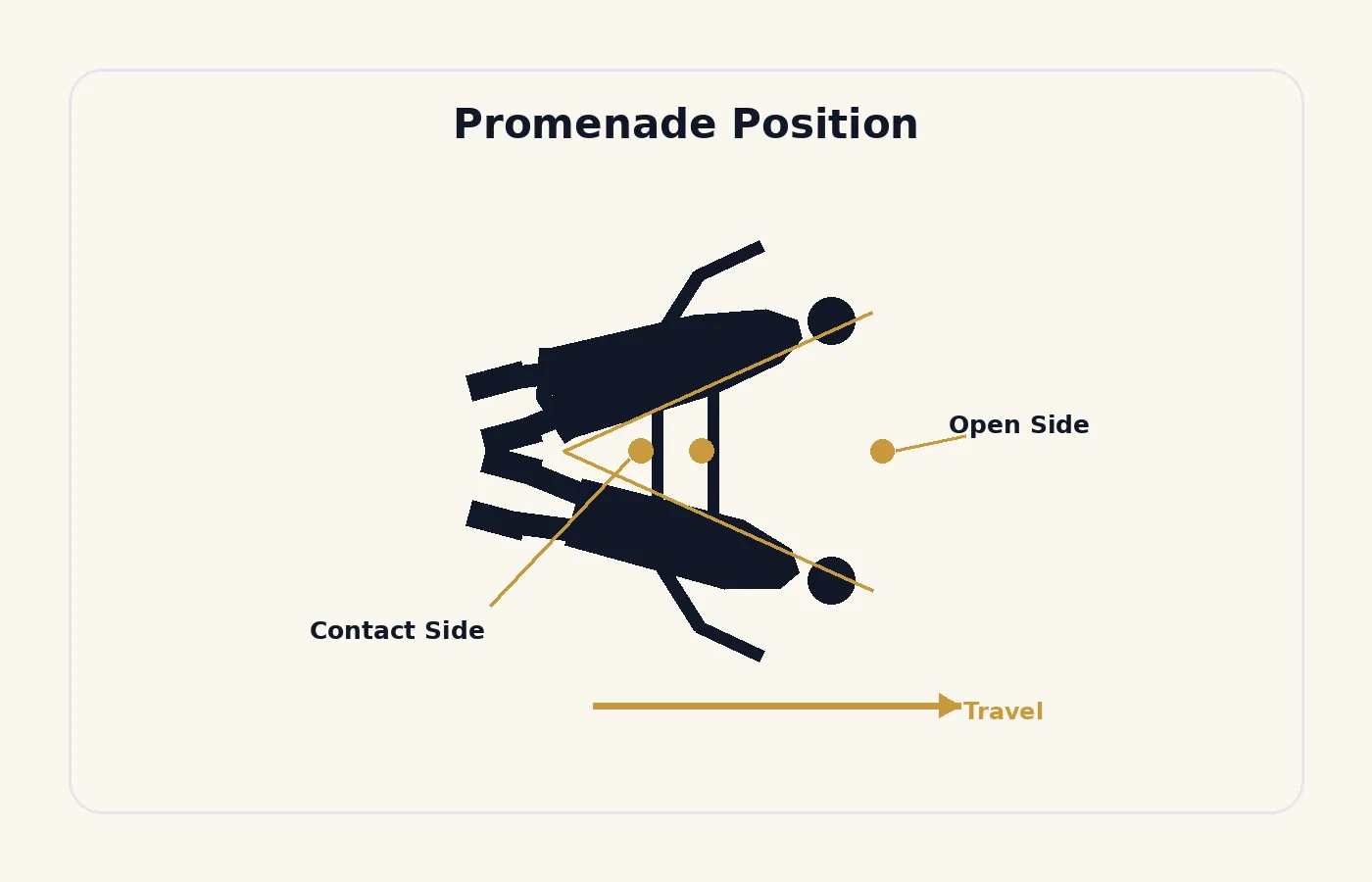
A promenade walk is simply travelling on foot while the couple is opened into promenade position—the “V” shape. Instead of facing each other as in closed position, the partners keep gentle contact down one side of the body and open the other side out, so both are looking and moving toward the open end of the V. The steps that carry them along in that shape are the promenade walks.
It is one of the most elegant pictures in ballroom—two dancers striding the floor as a matched pair—and it is a workhorse, too. Promenade figures let a couple travel a long way down the line of dance while showing an open, presentational line to the room. You meet it early in Tango and keep meeting it in Waltz, Foxtrot, and Quickstep.
Promenade position vs promenade walk
These two names get used loosely, but keeping them apart makes the figure click:
| Promenade position (the shape) | Promenade walk (the movement) |
|---|---|
| The open “V” the couple stands in | The travelling steps taken in that V |
| Contact on one side, open on the other | Both partners stride toward the open end |
| A position you can hold still | What you do to move along the floor |
| See promenade position | The walks that carry you through it |
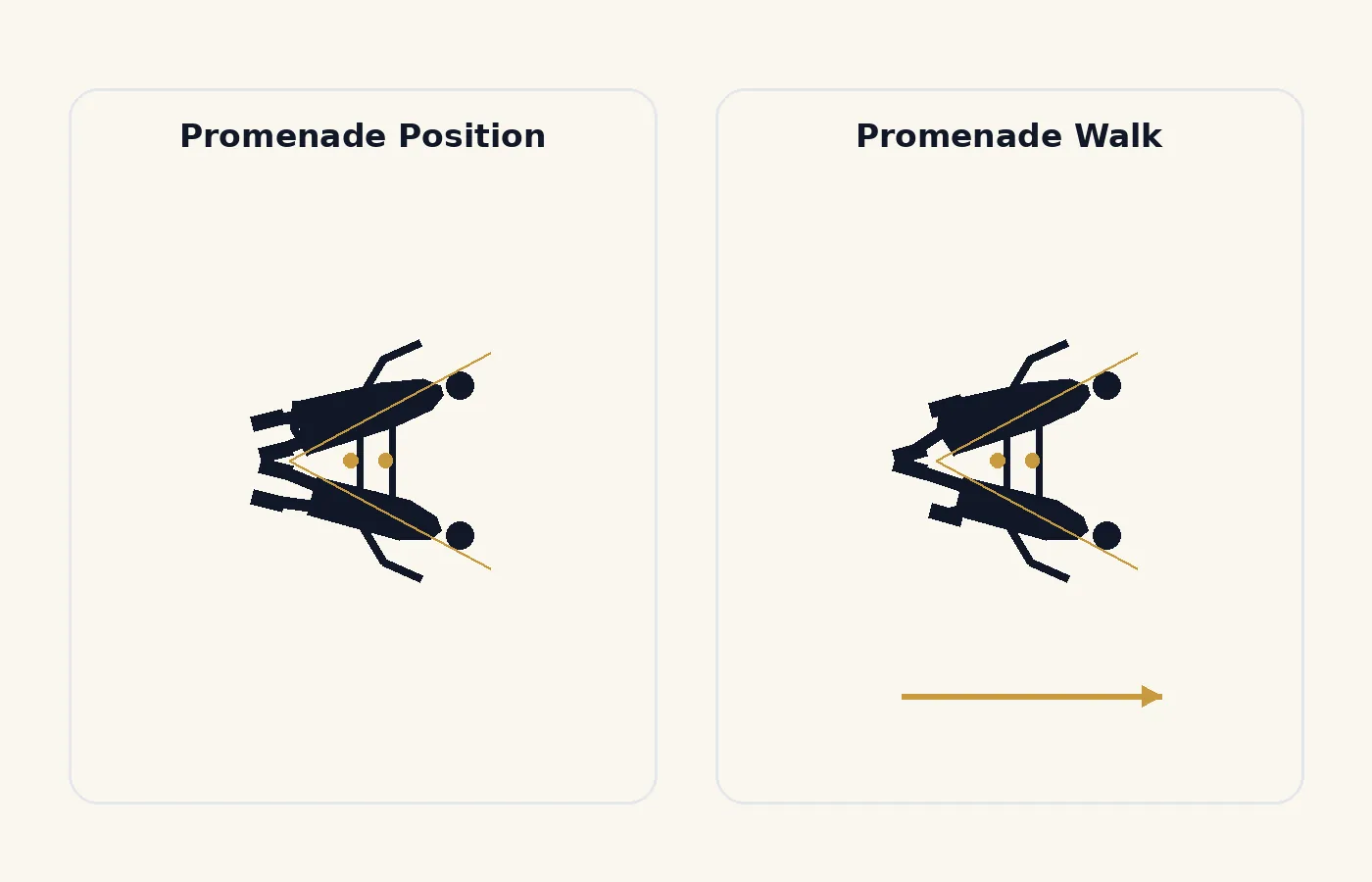
Think of it like a doorway: promenade position is opening the door into a V; the promenade walk is stepping through it together. The shape comes first, then the travel.
How the promenade walk works
Three things keep the V clean while you travel:
What makes a good promenade walk
- Open from the body. The V comes from turning the bodies, not from letting go—the contact down one side stays, the other side opens.
- Travel toward the open end. Both partners step in the direction the V points, moving as one matched pair rather than pulling apart.
- Keep the frame. The frame and connection stay intact through the open shape—the couple opens, it doesn’t separate.
Getting into and out of the shape usually uses contra body movement: the bodies rotate to open into the V and rotate back to close. That is why promenade figures feel so linked to closed position and outside partner—they are all variations on how the two bodies are oriented as they travel.
Promenade walk by dance style
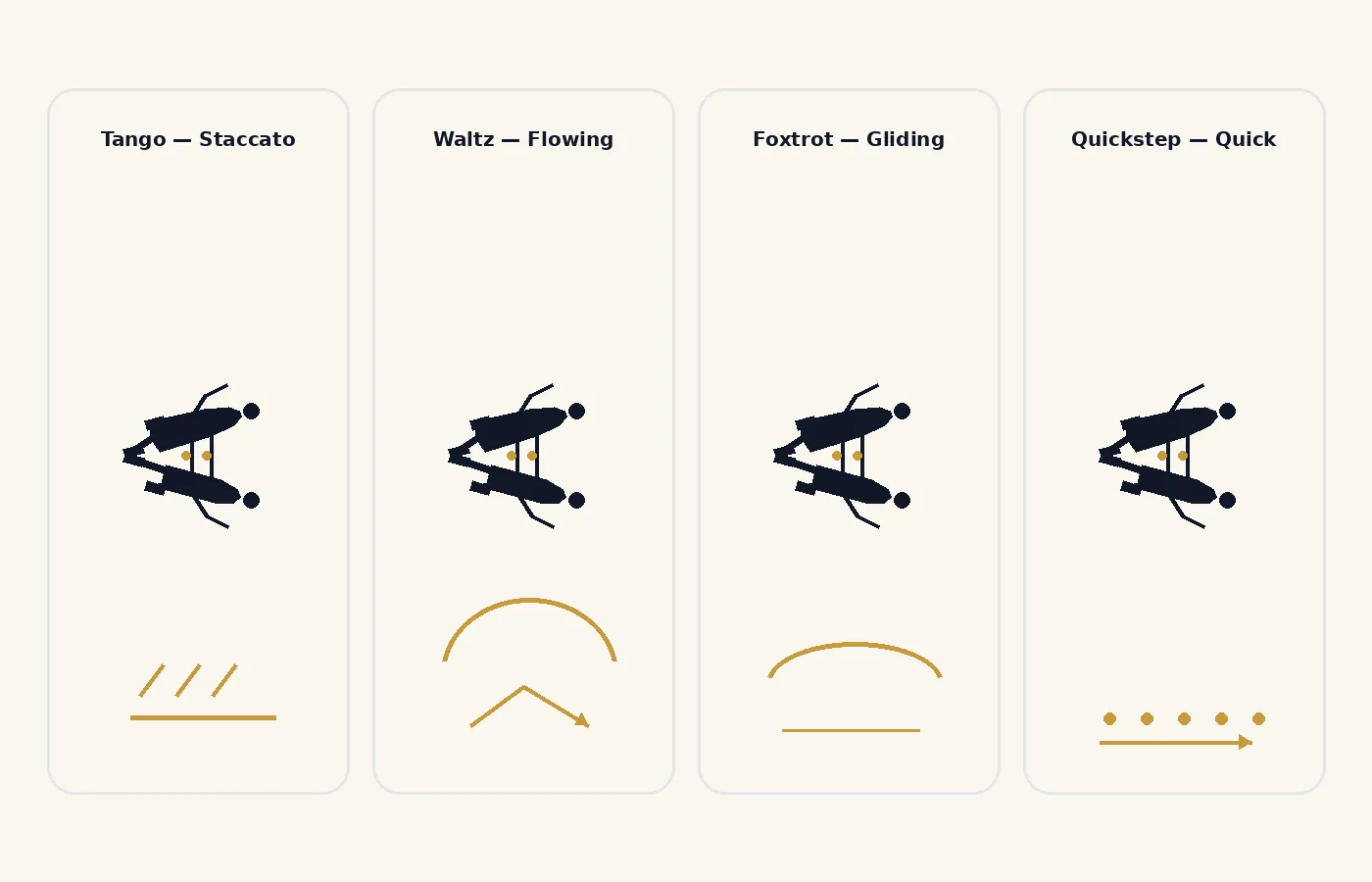
The same open V, walked with a different accent in each dance:
The Tango promenade
If the promenade walk has a home, it is Tango. The Tango promenade is sharper and more grounded than the swinging Standard dances—no rise, a staccato quality, and a crisp open of the head into the V. The famous Promenade Link opens the couple into promenade and then snaps them back to closed position with Tango’s trademark accent. It is the move most people picture when they picture Tango: the dramatic sideways stride, heads turning as one. Learn the promenade walk cleanly and a huge amount of Tango—and of Standard dancing generally—opens up.
Common promenade-walk mistakes
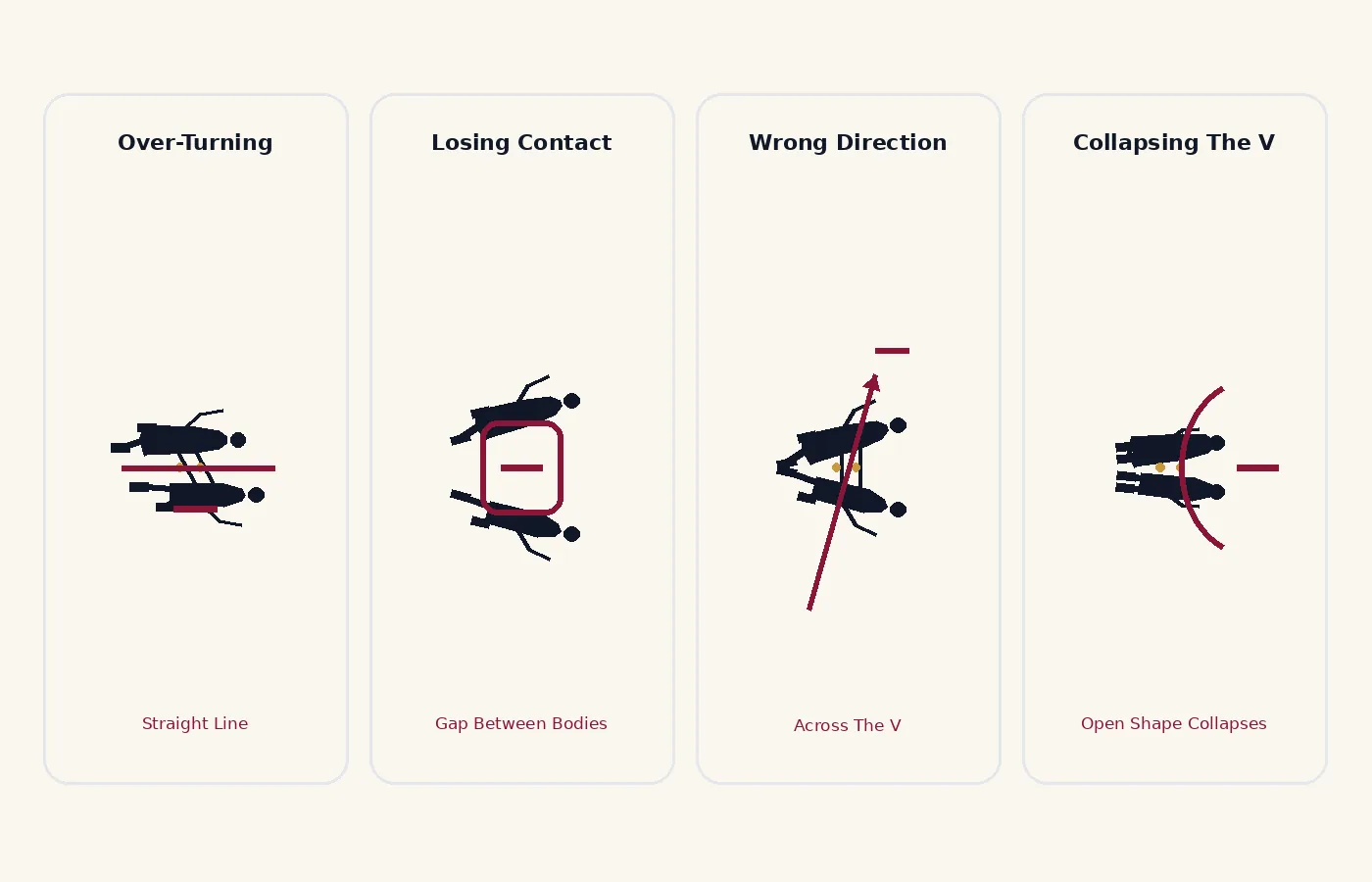
Over-turning into the V
Fix: The open is a moderate turn of the bodies, not a full twist to face the same wall. Keep it a “V,” not a straight line side by side.
Losing contact as you open
Fix: One side stays connected the whole time. If the couple separates, it is no longer a promenade—keep the frame alive.
Walking the wrong way
Fix: You travel toward the open end of the V, not across it. Aim both bodies down that open line.
Collapsing the shape
Fix: Keep posture tall and the V distinct. A slumped promenade loses the open, presentational line that makes the figure work.
Practice the promenade walk
Build the shape first, then travel it:
- Open and hold. From a mirror, practise opening one side of your body into a “V” and holding the shape—tall, open, contact side imagined as intact.
- Walk the V. Once the shape is comfortable, take slow walks toward the open end, keeping the upper body open and steady.
- Open–close–open. With a partner, move slowly from closed position to promenade and back, using CBM to open and close without losing contact.
-
Tango (the promenade home)
Staccato 2/4—the natural music for a sharp, grounded promenade.
-
Waltz (flowing promenades)
Slow 3/4 swing—feel the promenade open and rise.
-
Position & shape guide
Where the walk lives—learn the V and its cousins first.
-
BallroomPages Music (Telegram)
Mixed-style practice tracks. Standard-figure drills coming soon.
FAQ
Promenade Walk FAQ
What is a promenade walk in ballroom dance?
A promenade walk is the walking steps a couple takes while in promenade position—the open “V” shape where the partners keep contact on one side, open the other, and travel together toward the open end. It is most characteristic of Tango and appears throughout the Standard dances.
What is the difference between promenade position and a promenade walk?
Promenade position is the shape—the open “V” the couple stands in. The promenade walk is the movement—the travelling steps taken in that shape. The position is something you can hold still; the walk is what carries you along the floor.
Which way do you travel in a promenade?
Toward the open end of the “V.” Both partners face and step in the direction the open side points, moving as a matched pair down the line of dance—not across the V or apart from each other.
Which dances use the promenade walk?
It is most famous in Tango, whose staccato promenade is a signature look, and it also appears in Waltz, Foxtrot, and Quickstep as open, travelling figures. It is a Standard/Smooth idea rather than a Latin one.
Is the promenade walk hard for beginners?
The tricky part is opening into the “V” from the body without losing contact or over-turning. Once your contra body movement is reliable, opening and closing the promenade becomes natural—so most teachers build the shape slowly before adding travel.
Editorial
Sources and review notes
This glossary entry should be reviewed by a qualified ballroom instructor before launch. The promenade walk is a technique-and-figure topic—the descriptions follow widely used syllabus conventions, but the per-style figure details and the exact mechanics of opening and closing the promenade deserve expert verification before being treated as teaching material.
This is beginner orientation, not a substitute for instruction. Ballroom Pages follows an editorial policy of education-first guidance. Questions? Contact us. Updated July 9, 2026.