
Glossary
Weight Transfer in Ballroom Dance
Strip ballroom down to its smallest true unit and you do not find a step—you find a weight transfer: your body weight moving fully from one foot to the other. Every figure in every dance is just weight transfers, timed and shaped. Master this one action and footwork, balance, and lead-and-follow all start to click; skip it and you spend years “dancing in the cracks” between your feet. Here is what weight transfer really is, and how to feel it.
Definition of weight transfer
Weight Transfer
- Skill category
- Fundamentals & movement (all dances)
- Also called
- Weight change, transfer of weight
- Companion term
- Cuban motion (transfer, delayed)
- Related terms
- weight change, ball change, lead and follow, timing, Cuban motion
Weight transfer is moving your body weight fully from one foot to the other. It is the action underneath every step: commit the weight and the free foot can move, you stay balanced, and your partner gets a clear signal to read.
You already do it every time you walk. Dancing just makes it deliberate, timed, and shared.
What weight transfer means in ballroom
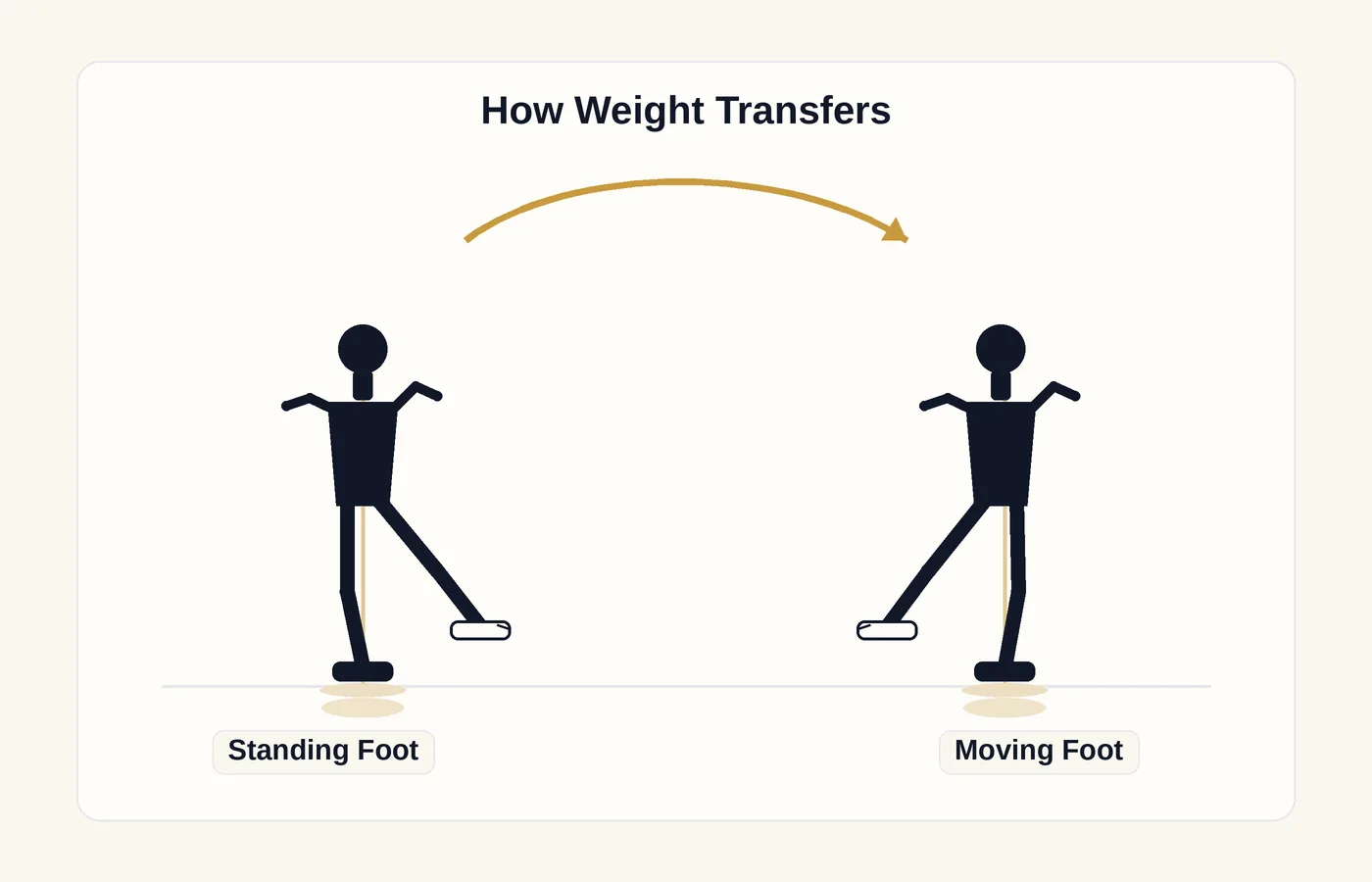
Watch your own feet as you walk across a room. With every stride your weight rolls off the back foot, travels over a moving foot, and lands wholly on the front foot—which instantly becomes the new standing foot so the other can swing through. That is a weight transfer, and you have done it thousands of times without naming it. Ballroom takes the same action and makes it deliberate: transfers happen on a beat, in a chosen direction, with a partner reading each one.
This is why weight transfer is the most useful idea a beginner can hold onto. A figure like a box step or a natural turn looks like a shape to memorize, but underneath it is simply a sequence of weight transfers with timing attached. Get the transfers clean and the shapes almost dance themselves; leave them half-finished and no amount of arm styling will make the figure feel right.
Full vs partial weight: the distinction that matters
Not every foot placement takes weight. Knowing the difference is what keeps you balanced and readable:
| Full transfer (a weight change) | Partial (a tap, touch, or point) |
|---|---|
| All your weight arrives over the new foot | Weight stays on the standing foot |
| The other foot is now free to move | The touching foot cannot lead anywhere |
| You could lift the old foot off the floor | Lifting the free foot would not disturb balance |
| Your partner feels a clear change to follow | Signals “wait” or “prepare,” not “go” |
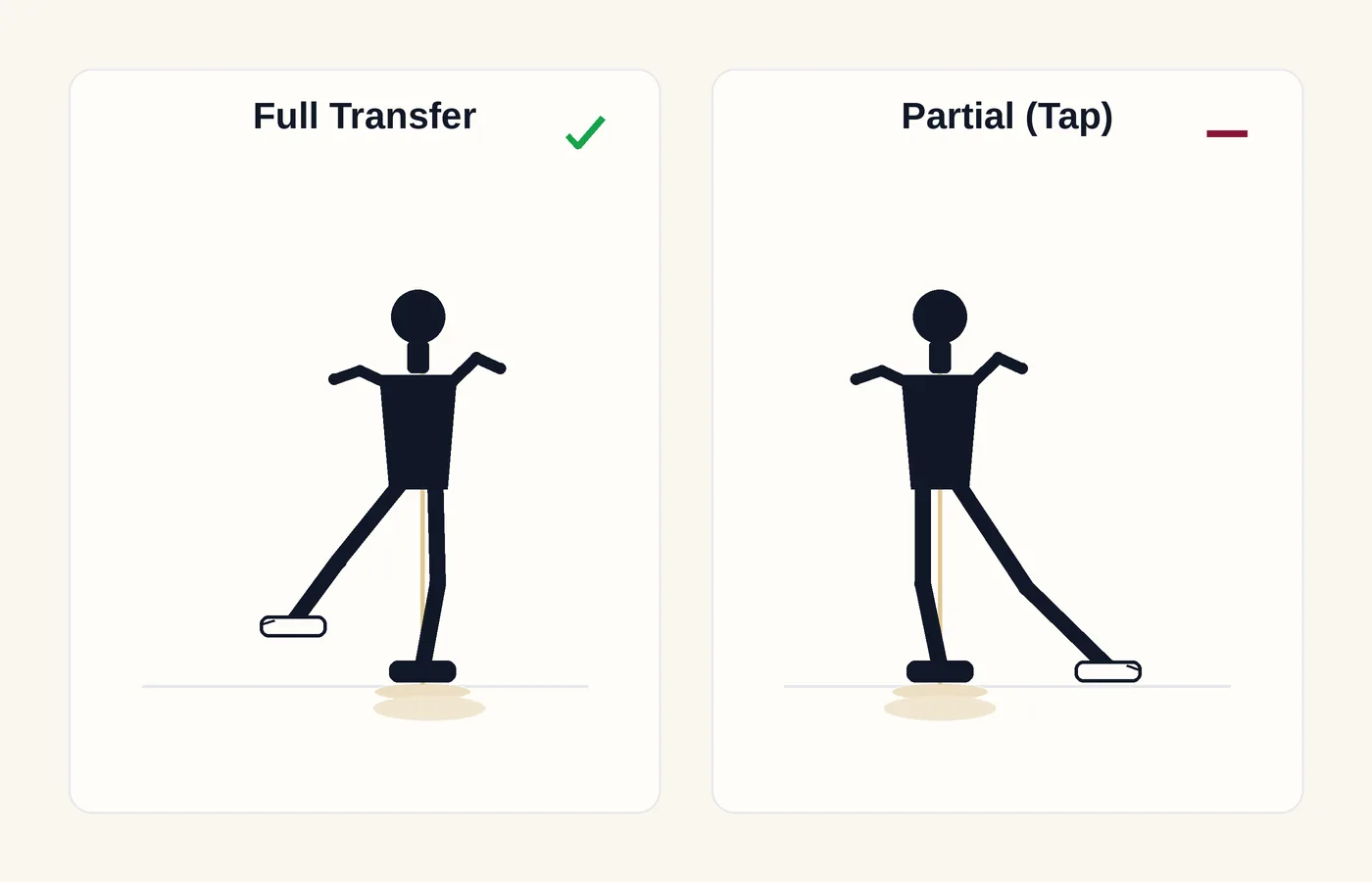
A quick self-test: after any step, try to lift the foot you just left. If it comes up freely, you made a full transfer. If you wobble, your weight is still split between both feet—the classic beginner “in the cracks” habit.
How weight transfer actually works
Three jobs, one action:
What a clean transfer does
- Frees the moving foot. Only once your weight is fully committed can the other foot leave the floor without you falling—so the next step is possible at all.
- Keeps you balanced. Landing wholly over one foot puts you on top of a stable base instead of teetering between two half-loaded feet.
- Speaks to your partner. In closed position the follower feels each weight change through the frame and connection, and mirrors it.
And one mechanism: pressure into the floor. You push through the standing foot—often rolling heel-to-toe in the smooth dances, or ball-to-flat in Latin—so the weight travels smoothly rather than dropping. Between transfers, good dancers “collect”: the feet pass close together with the ankles brushing, which keeps balance and makes the next change effortless.
Weight transfer by dance style
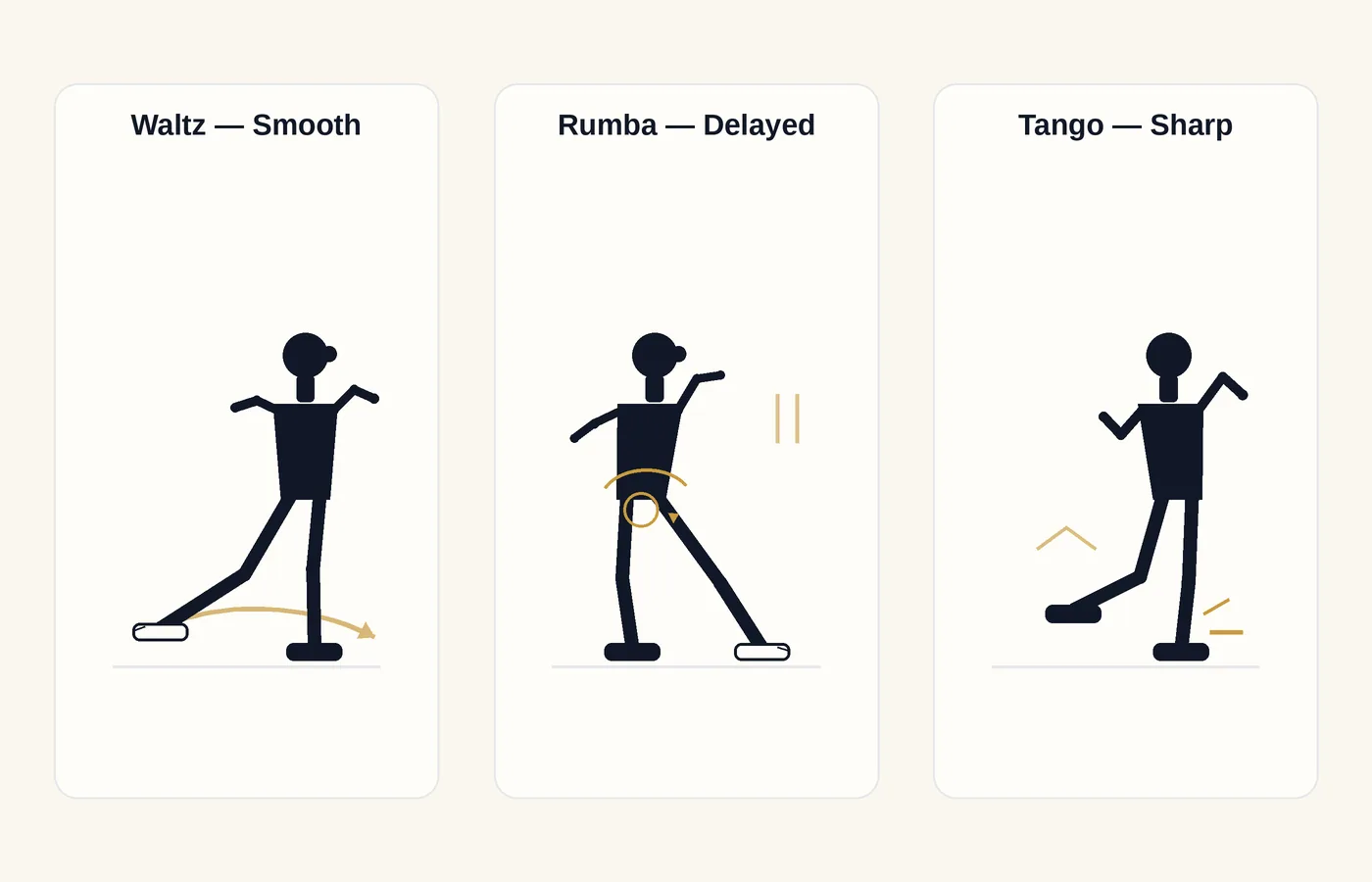
Every style transfers weight—what changes is the timing and texture of the change:
| Dance | Weight-transfer character |
|---|---|
| Waltz | Smooth and continuous—transfers flow through the rise and fall |
| Foxtrot | Long, gliding, unhurried—weight rolls seamlessly foot to foot |
| Rumba | Deliberately delayed—the pause creates Cuban motion |
| Cha Cha | Crisp and settled—each transfer “lands” with Latin motion |
| Tango | Sharp and grounded—quick, decisive, staccato changes |
Weight transfer is the language of lead and follow
Here is the idea that turns weight transfer from a footwork detail into the heart of partner dancing: the follower does not read the leader’s arms—they read the leader’s weight. When the leader commits weight onto a foot, that change travels through the frame as a clear, quiet signal, and the follower transfers to match. Nothing has to be pushed or yanked; the two dancers simply agree, transfer by transfer, which foot is free. This is why a leader who only half commits feels “mushy” to follow, and why a decisive weight change feels effortless to partner. Build clean transfers and you are building connection itself.
Common weight-transfer mistakes
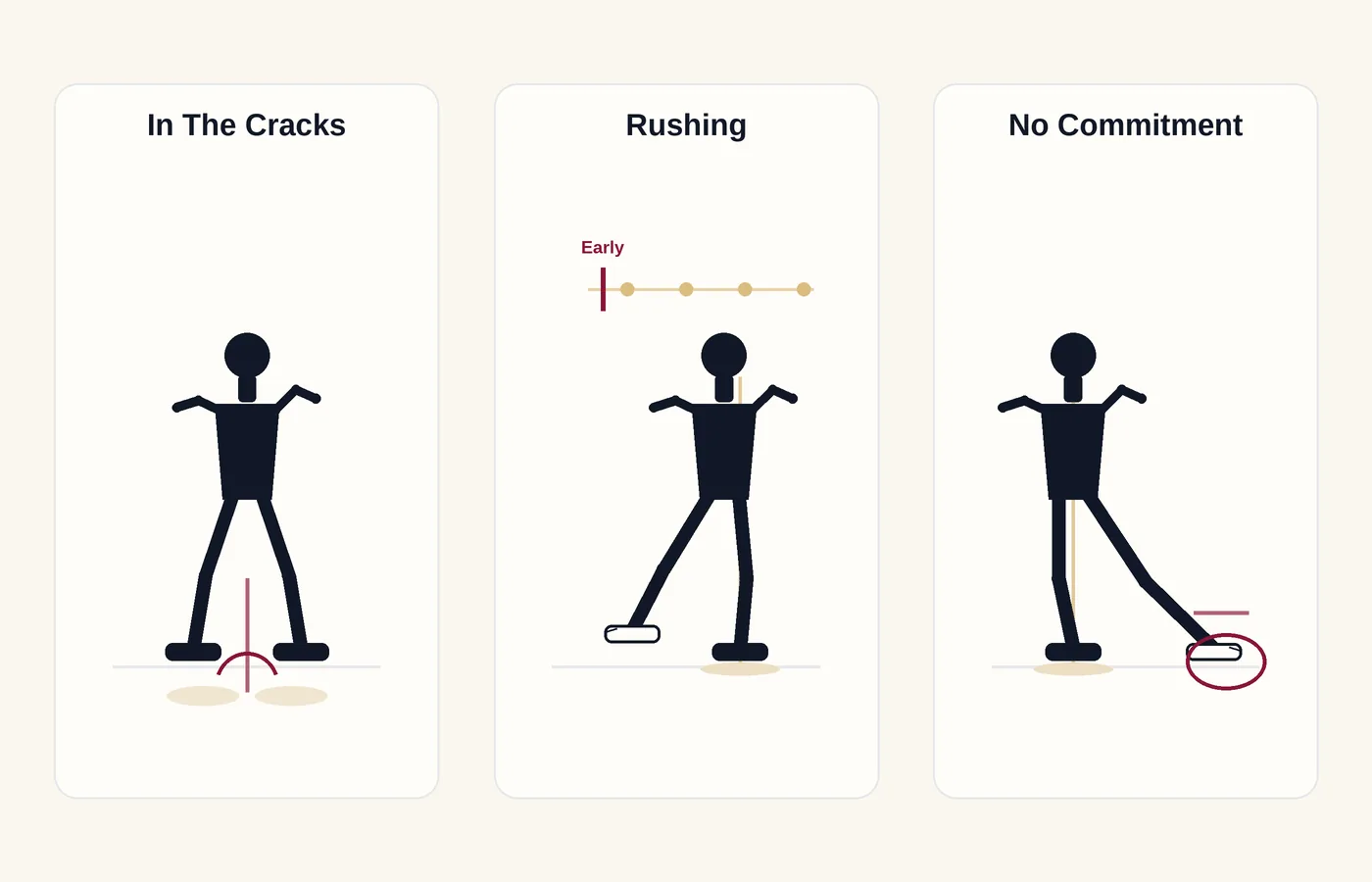
Dancing “in the cracks”
Fix: Splitting weight between both feet leaves you stuck and unreadable. Commit fully to one foot on every step—you should be able to lift the other.
Rushing the transfer
Fix: Let the weight arrive on the beat, not before it. A transfer that finishes early leaves you standing around waiting for the music.
Stepping without committing
Fix: A foot placed with no weight leads nowhere. If you mean to move next, put your weight there; if you mean to tap, keep it off.
Collapsing posture to shift weight
Fix: Push through the standing foot and keep the posture tall. The transfer happens under a steady frame, not by lurching the torso.
Practice weight transfer safely
You need no partner and no figures—just honest, slow repetition:
- Side-to-side shifts. Feet apart, slowly move all your weight to the left foot until you can lift the right, then reverse. Feel the moment it becomes fully committed.
- Lift test. Take any single step and pause. Try to raise the foot you just left. If you can’t without wobbling, transfer more—then repeat until it’s automatic.
- Metronome walks. Walk forward transferring weight exactly on each click at 60–80 BPM. Slow proves whether the change is clean; speed only hides it.
-
Rumba (feel the delay)
Slow tempo—the best music for feeling a delayed, complete transfer.
-
Waltz (smooth & continuous)
3/4 swing—transfers roll foot to foot through the rise.
-
Lead & follow guide
How the weight change becomes a signal your partner can read.
-
BallroomPages Music (Telegram)
Mixed-style practice tracks. Footwork drills coming soon.
FAQ
Weight Transfer FAQ
What is weight transfer in dancing?
Weight transfer is moving your body weight fully from one foot to the other. It is the fundamental action underneath every dance step: once your weight is committed to one foot, the other is free to move. A dance figure is essentially a series of weight transfers with timing and direction attached.
What is the difference between weight transfer and a weight change?
They mean the same thing. “Weight change” is the everyday term many teachers use for a single complete transfer of weight from one foot to the other; “transfer of weight” is the same action described more formally.
How do I know if I’ve fully transferred my weight?
Try to lift the foot you just stepped off. If it comes up freely without you wobbling, your weight is fully over the new foot. If you feel unsteady, your weight is still split between both feet—a partial transfer.
Why is weight transfer important in partner dancing?
Because it is how leading and following actually work. The follower reads the leader’s weight changes through the frame and connection, not the arms. Clear, committed transfers feel effortless to follow; half-committed ones feel vague and mushy.
How is weight transfer related to Cuban motion?
Cuban motion is what you get when you deliberately delay the weight transfer in the Latin dances. Holding the change a moment lets the hips settle and roll, producing the hip action seen in Rumba and Cha Cha. Same core action—different timing.
Editorial
Sources and review notes
This glossary entry should be reviewed by a qualified ballroom instructor before launch. Weight transfer is a foundational topic—the descriptions follow widely used syllabus conventions, but the mechanics (especially the style-by-style timing and the Cuban-motion connection) deserve expert verification before being treated as teaching material.
This is beginner orientation, not a substitute for instruction. Ballroom Pages follows an editorial policy of education-first guidance. Questions? Contact us. Updated July 9, 2026.